


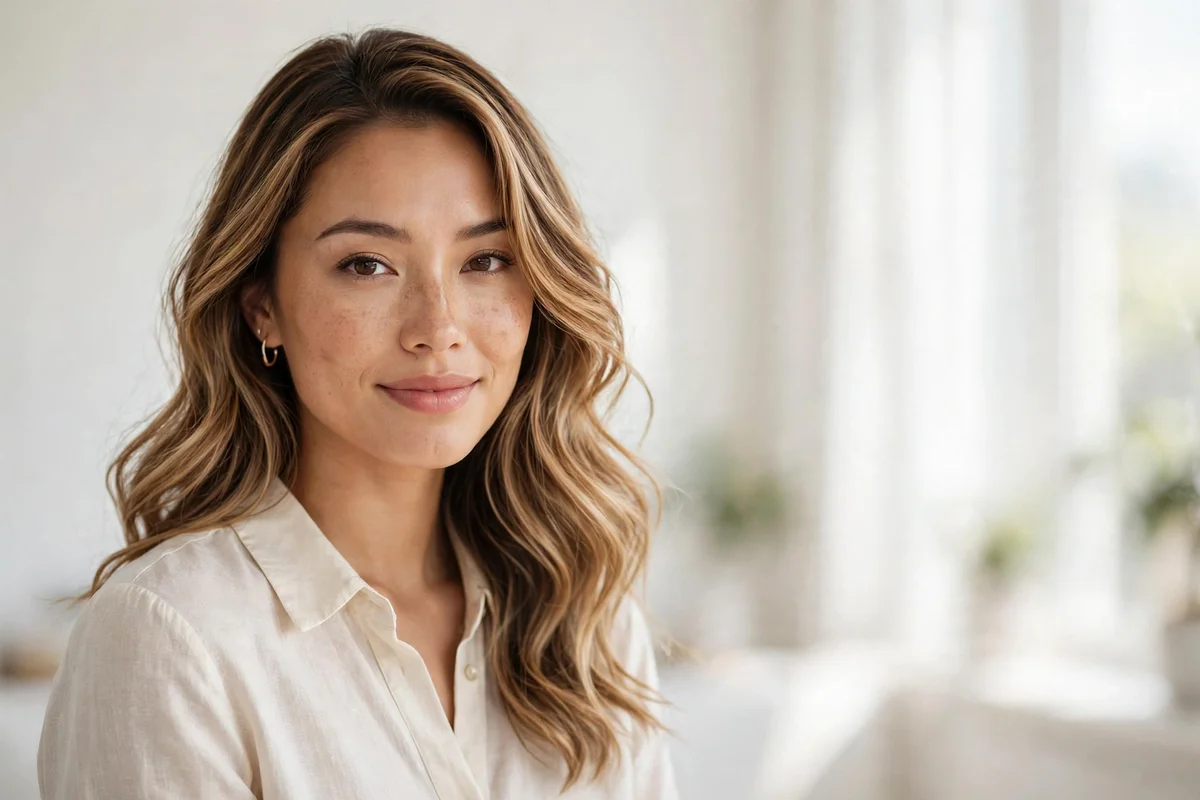
Balayage is a freehand hair painting technique where color is swept onto the surface of the hair instead of foiled through. That hand-painted approach creates a soft, blended result with no harsh lines, and it shines brightest on medium length hair. Shoulder-length and collarbone-skimming cuts give the colorist enough canvas to build dimension while keeping the grow-out easy to manage. I’ve spent a lot of time studying color trends for medium cuts, and balayage is the one technique that keeps showing up across every shade family.
This guide rounds up 30 balayage hairstyles for medium length hair, covering warm caramels, cool ash tones, bold fashion shades, and low-maintenance lived-in blends. Each idea includes what the color looks like, who it tends to suit, and a practical tip for getting it right at the salon.
Quick answer: Medium length hair is the sweet spot for balayage because the color has room to blend without overwhelming the cut. Warm shades like caramel and honey flatter warm skin tones, while ash and silver tones suit cooler complexions. Most balayage touch-ups land every 3 to 4 months.
Quick Takeaways
- Balayage is hand-painted color, so it grows out softer than traditional highlights.
- Medium length hair shows off balayage dimension better than very short or very long hair.
- Ask your stylist for a toner or gloss to dial in the exact shade you want.
- Cool ash tones fade brassiness; warm caramel tones add glow to brown bases.
- Sulfate-free shampoo and purple shampoo (for blondes) keep the color fresh between appointments.
Why Medium Length Hair Works So Well for Balayage
Very short hair doesn’t give the colorist enough length for a gradual blend, and very long hair can make balayage look heavy and expensive to maintain. Medium length, roughly chin to collarbone, sits in the middle. The colorist can paint from the mid-lengths down, leaving the roots natural, and the result looks finished in about three hours at the salon.
Another plus is styling versatility. Waves and curls break up the color and show the painted ribbons clearly, while straight styling makes the blend look glossy and seamless. The same balayage can read two different ways depending on how you style it. That flexibility is a big reason this combination stays popular.
Maintenance is where medium length balayage really earns its reputation. Since the technique keeps your natural root shade intact, regrowth blends in without a visible line. Most people stretch appointments to 12 to 16 weeks, which is much more forgiving than full foil highlights.
1. Choppy Layers with Dark Brown Balayage
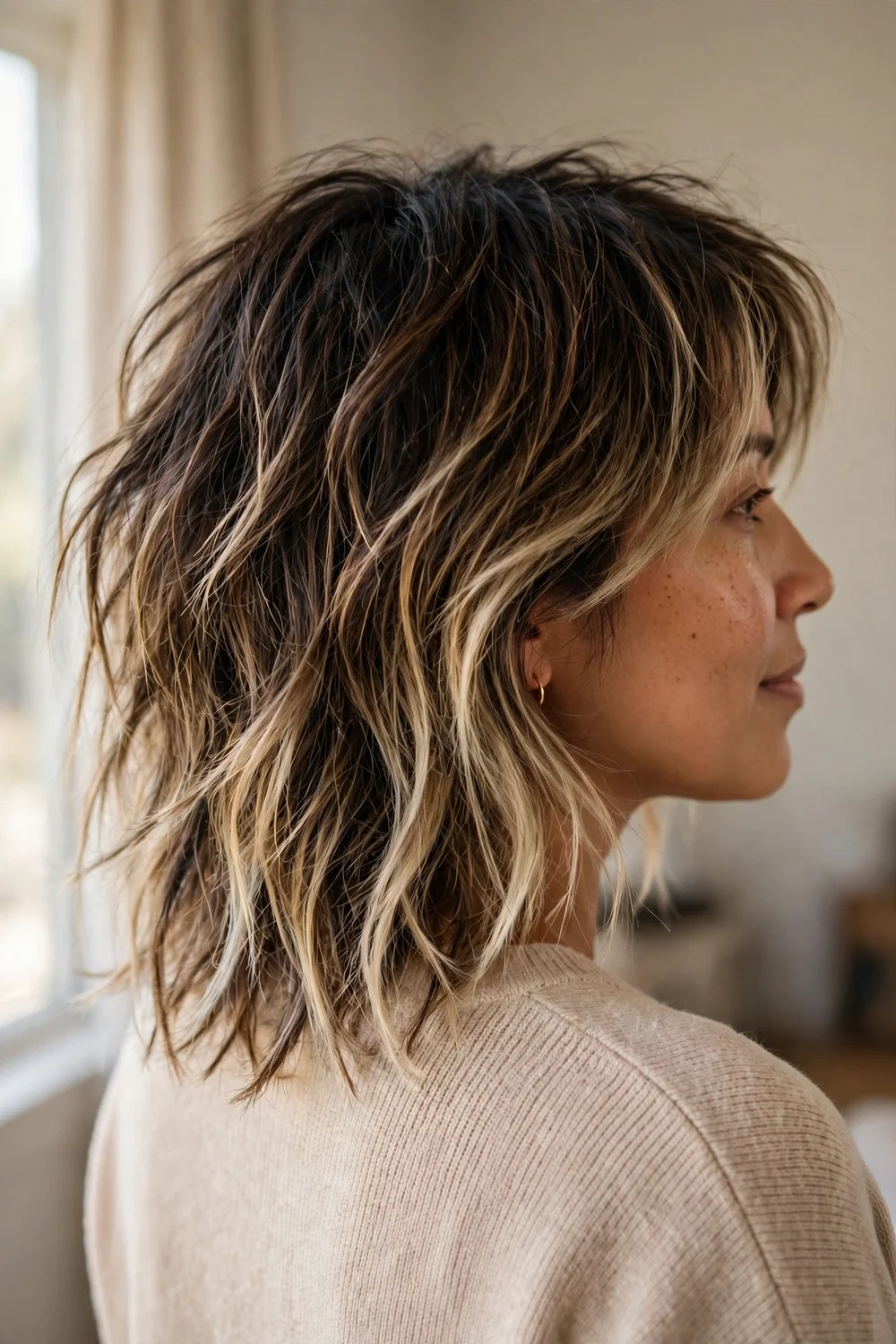
Start with a dark brown base and ask for choppy, disconnected layers through the ends. The colorist grazes the lightest blonde just through the tips, leaving the roots deep and rich. The choppy layers make the lightened ends catch light from different angles, so the balayage looks dimensional even in low lighting. This combination suits thick hair especially well because the layers remove weight while the color breaks up the density.
Try this: Work a texturizing spray through dry hair and scrunch to make the layers and the lightened ends stand out.
2. Subtle Chestnut Bob Balayage
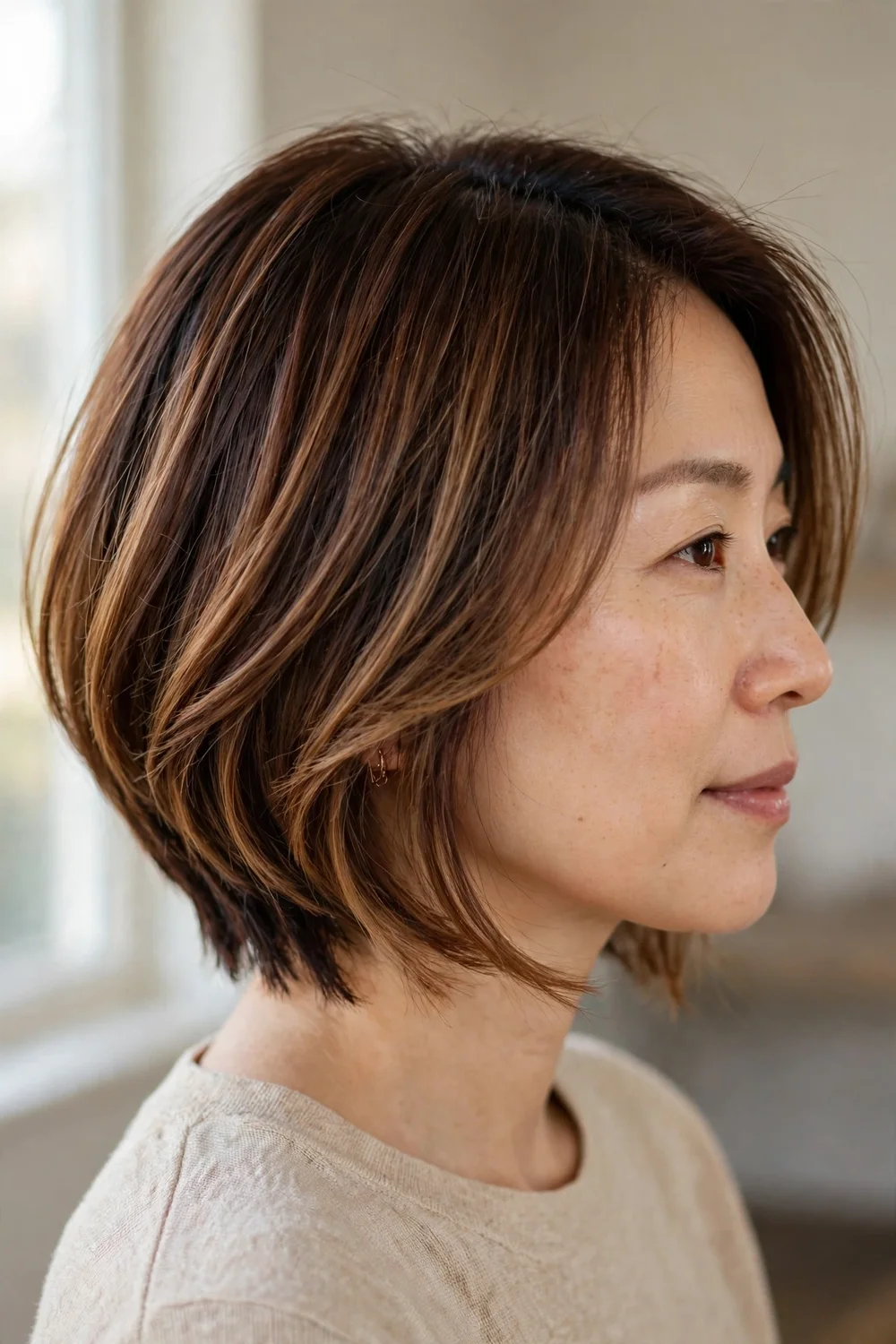
If you want color that reads natural in every setting, a subtle chestnut melt is hard to beat. The style starts with deep chestnut brown at the roots and shifts into toffee brown through the ends on a medium angled bob. Shorter layers in the back push the color forward around the face, which flatters most face shapes. The shift between the two browns is gentle, so it works in conservative offices and still looks polished at dinner.
Try this: Curl just the ends with a flat iron and add a shine serum for a glossy finish that shows the melt.
3. Auburn Balayage on Dark Hair

Dark hair takes well to auburn balayage because the warm red tones sit close to the natural base. The colorist blends shades from deep red to warm copper through the mid-lengths and ends, which gives dark hair movement without going blonde. Wavy styling shows the color best, since each wave picks up a different shade. This is a strong choice for fall and winter when richer tones feel right.
Try this: Air-dry with a diffuser and scrunch to keep the waves defined and the auburn ribbons visible.
4. Sun-Kissed Balayage
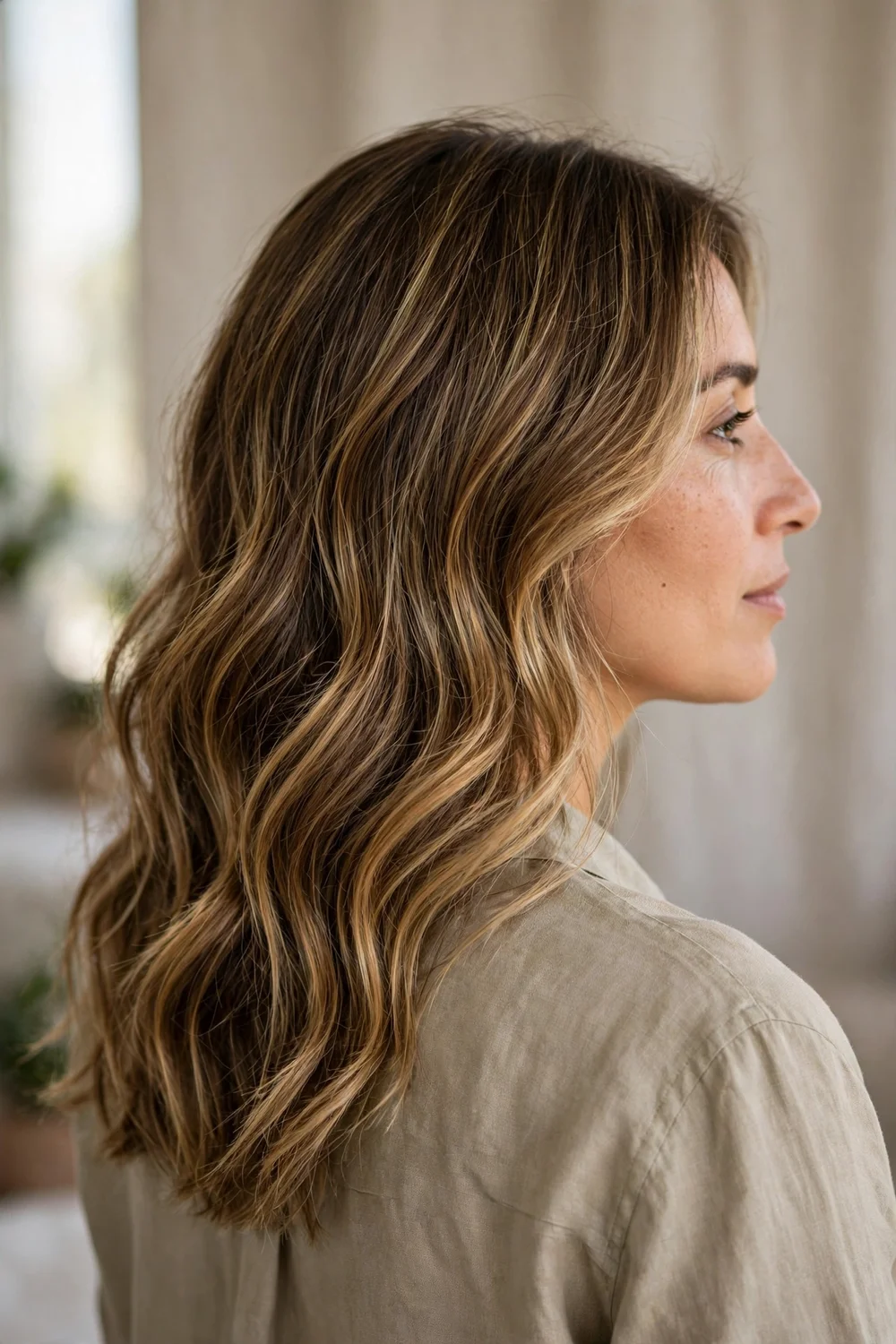
Some color jobs try to look dramatic, and this one aims for the opposite: hair that looks like you spent August outside. The colorist paints golden highlights through the outer layers and lighter pieces around the face, then leaves the inner hair mostly natural. The mix of lowlights and highlights adds depth that flat one-color hair can’t match. It suits medium brown bases best, where the golden pieces read as a natural lift rather than a color change.
Try this: Use a volumizing mousse at the roots before blow-drying to give the color lift and movement.
5. Soft Glossy Brunette Balayage

Not every balayage needs to go blonde. This version keeps the whole look in the brown family, blending soft lighter-brown ribbons into a brunette base. The result is hair that looks richer and more expensive than it actually is. Straight styling shows off the glossy finish, and the subtle contrast works on every skin tone because nothing about it fights your natural coloring. It is also the lowest-commitment option on this list.
Try this: Finish with a shine serum or a clear gloss treatment every 6 weeks to keep the brown tones luminous.
6. Caramel Wavy Balayage
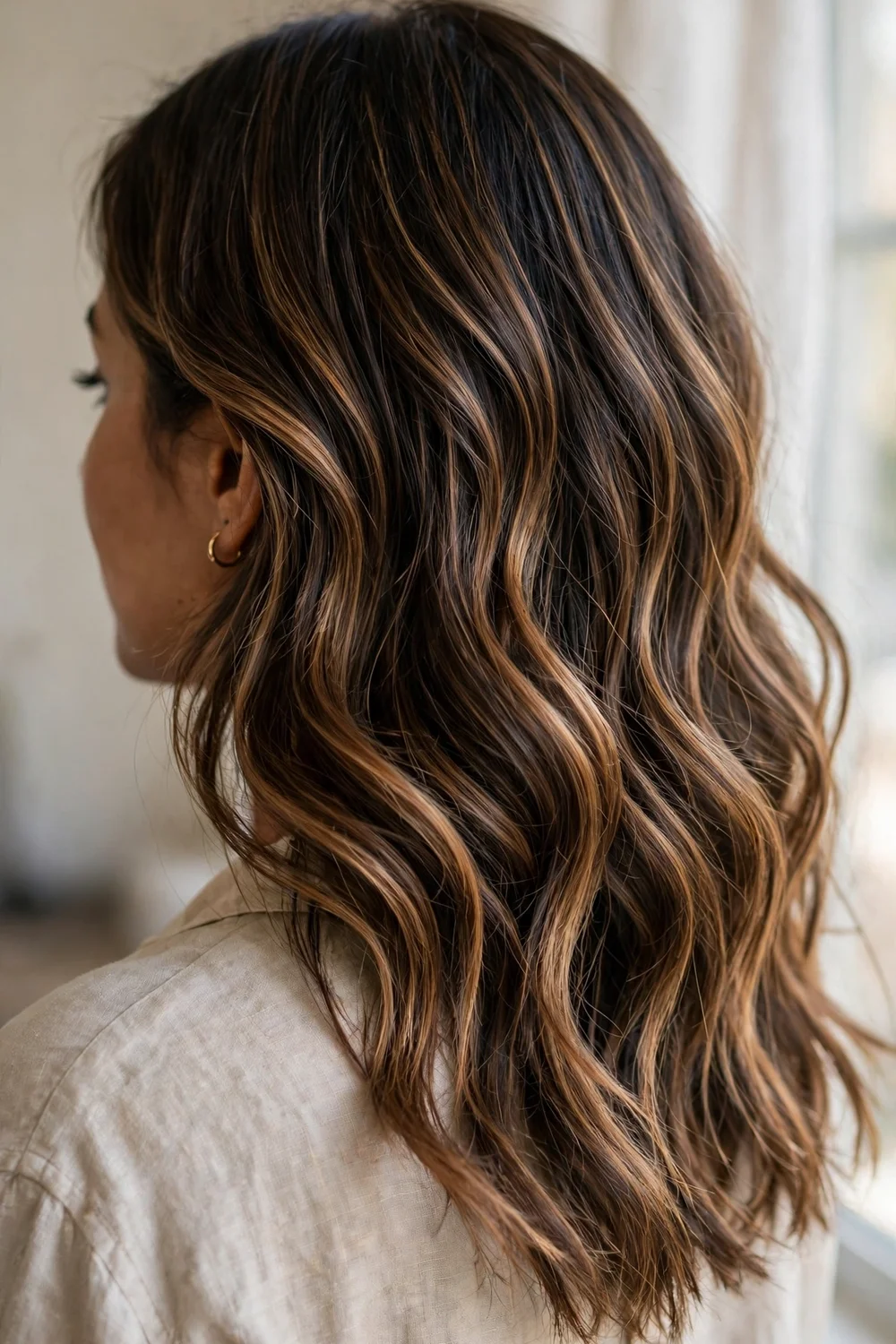
Caramel is the most requested balayage shade for brunettes, and it is easy to see why. Painted through loose waves, the caramel ribbons look like silk catching light. The colorist concentrates the caramel through the mid-lengths and ends, keeping the roots untouched for that easy grow-out. Thick-barreled curling irons or hot rollers give the waves the bounce this color needs to show its range.
Try this: Ask for the caramel a shade darker than you think you want. It always oxidizes slightly warmer than expected.
7. Subtle Blonde Balayage on a Dark Base
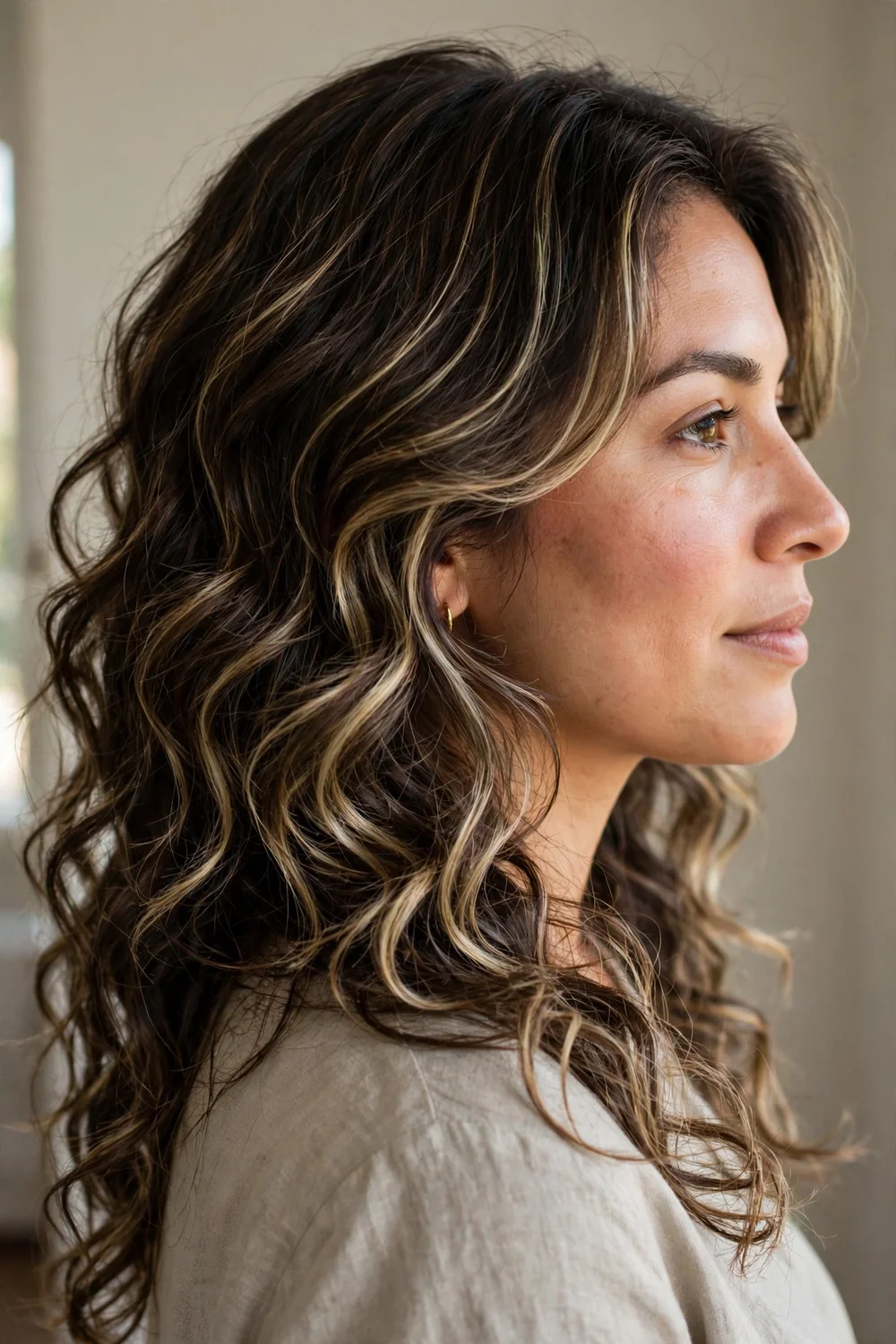
A dark or warm brown base with quiet blonde hints is the entry point for anyone nervous about going light. The colorist weaves fine blonde pieces through long layers instead of painting broad sections, so the blonde reads as texture rather than color. Loose curls or a tousled finish keep it looking soft. The darker base underneath makes the blonde pieces look brighter by contrast, which means the colorist can use less bleach.
Try this: Wash with purple shampoo once a week to stop the blonde pieces from turning brassy.
8. Blonde Layered Lob Balayage
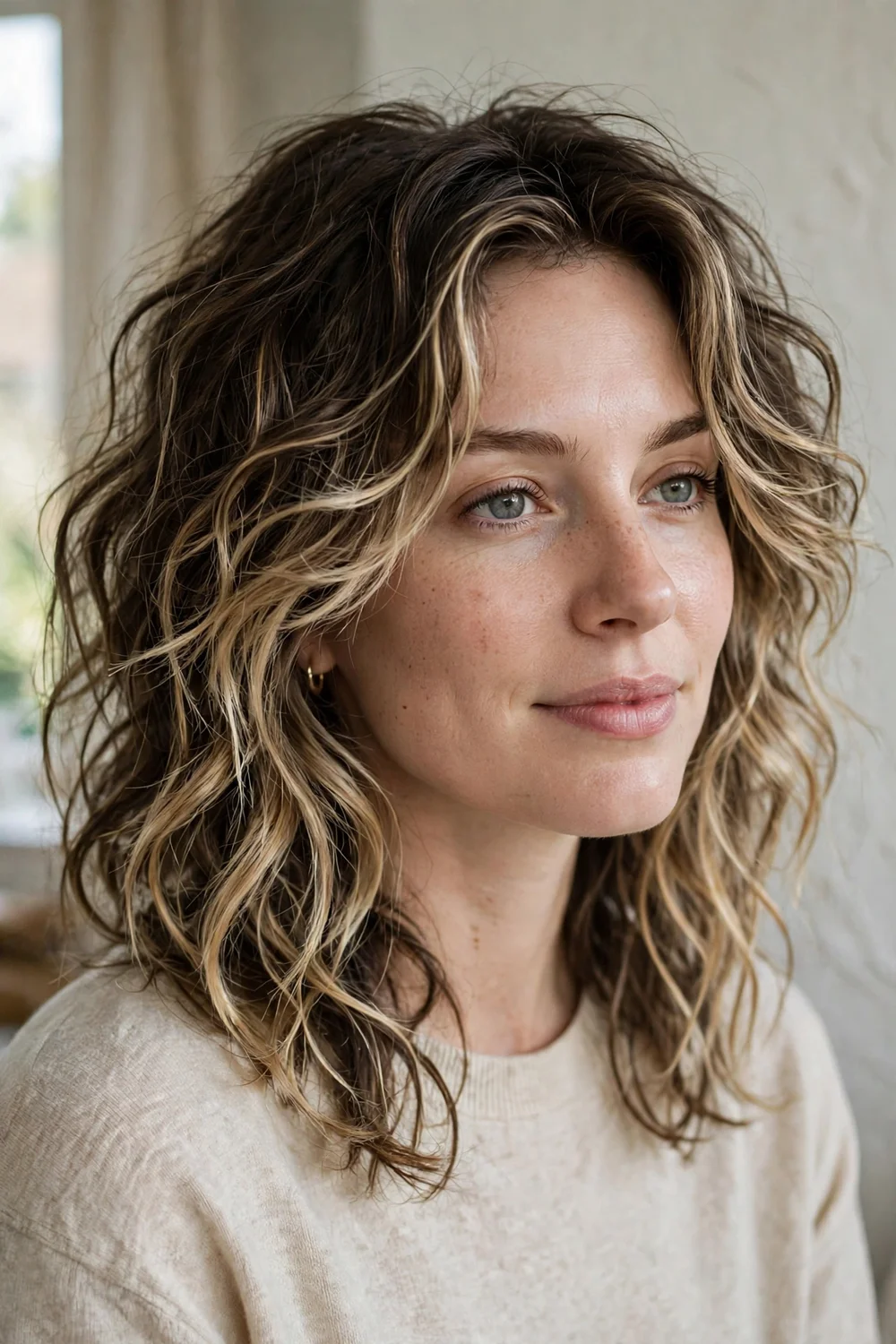
The layered lob, or long bob, is the haircut balayage was made for. Falling between the chin and collarbone, it gives the colorist a long runway for the blend. Here the blonde balayage is painted over a dark brown or deep auburn base, with the heaviest concentration through the ends. Bedhead-style curls, air-dried and scrunched, make the blonde pop. Straight hair can wear it too, but the texture really sells the color.
Try this: If your hair is straight, wrap sections around a medium curling iron and finger-brush them apart for that undone texture.
9. Cinnamon Curls
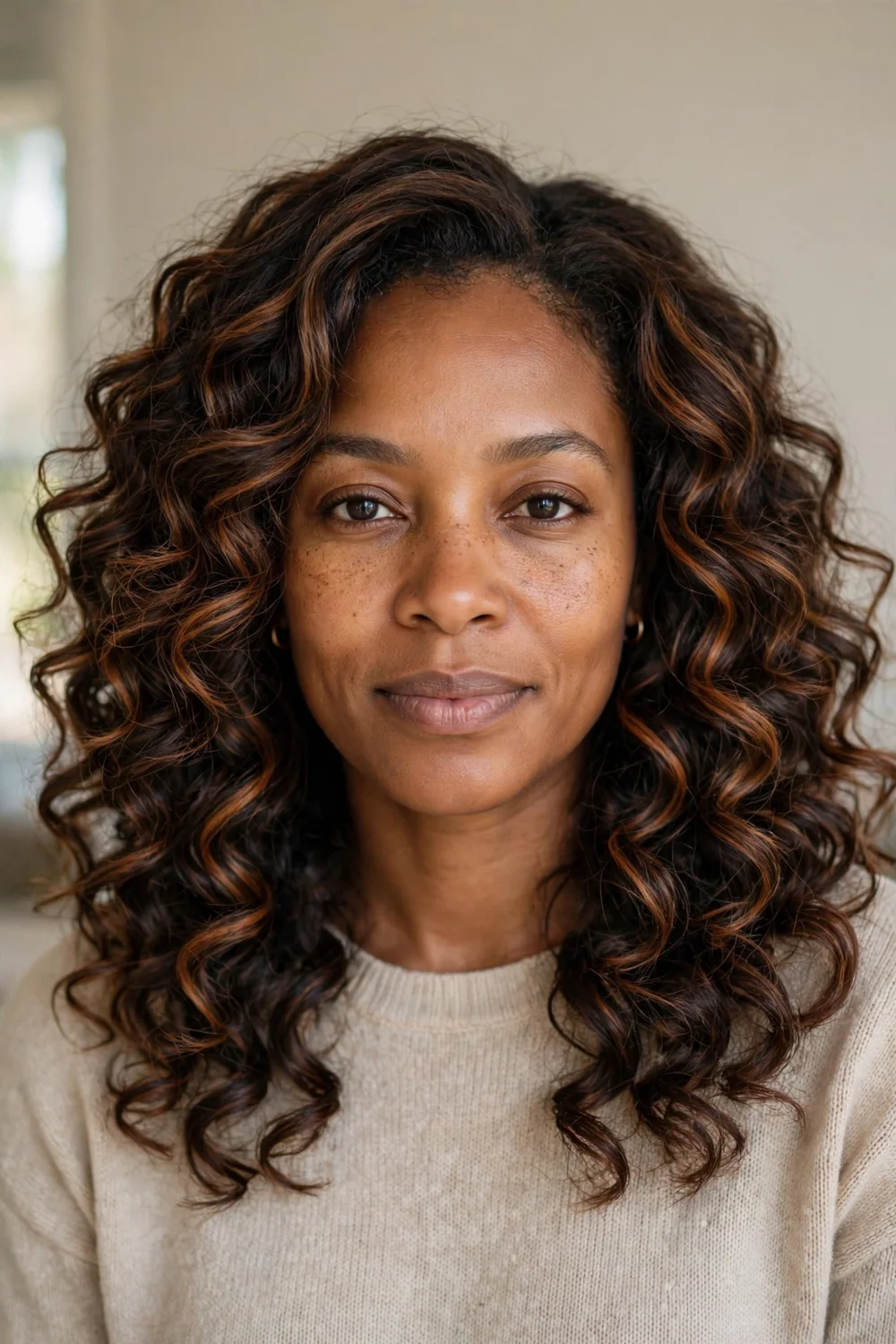
Blonde isn’t the only direction for balayage. Warm cinnamon stripes painted over brunette roots give dark hair a spicy lift that flatters warm and olive skin tones. The colorist uses thicker ribbons than a typical balayage, which makes the cinnamon read clearly against the dark base. Large-barreled curls or natural curls show the stripes at their best, since each curl separates the colors.
Try this: Curl with a large-barreled iron and leave the ends straight for a modern finish that shows the color transition.
10. Silver and Blonde Balayage
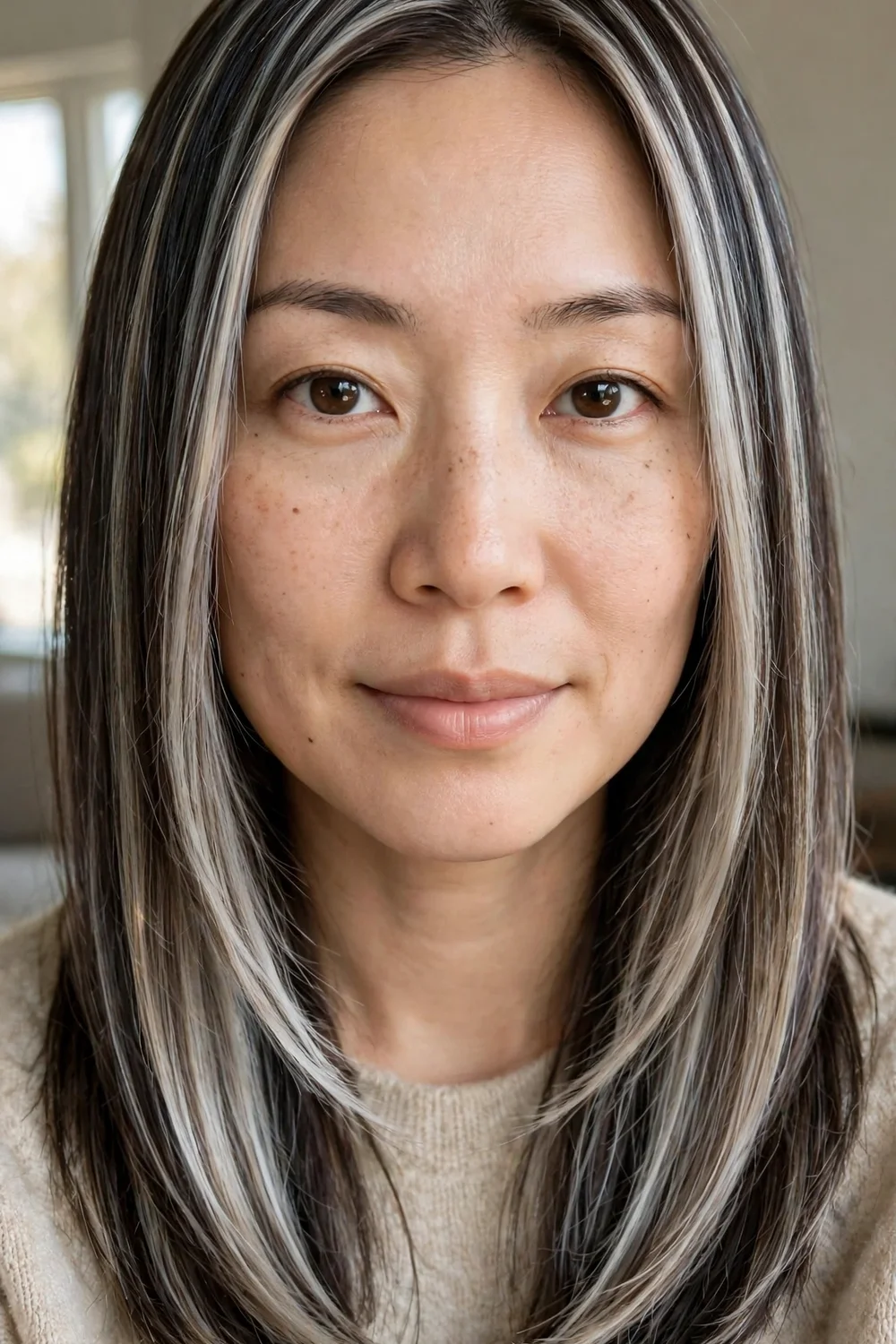
Cool-toned balayage has a loyal following, and this silver-and-blonde mix is the reason. Over a dark base, the colorist paints platinum blonde through the mid-lengths and melts it into silver toward the ends. The subtle gray tones make the blonde look brighter by contrast. Sleek, straight styling shows the gradient most clearly, though loose curls soften it nicely. Ask for a violet-based toner to keep the silver from warming up.
Try this: Use purple shampoo every second or third wash to keep the silver tones crisp.
11. Golden Patches on a Dark Base
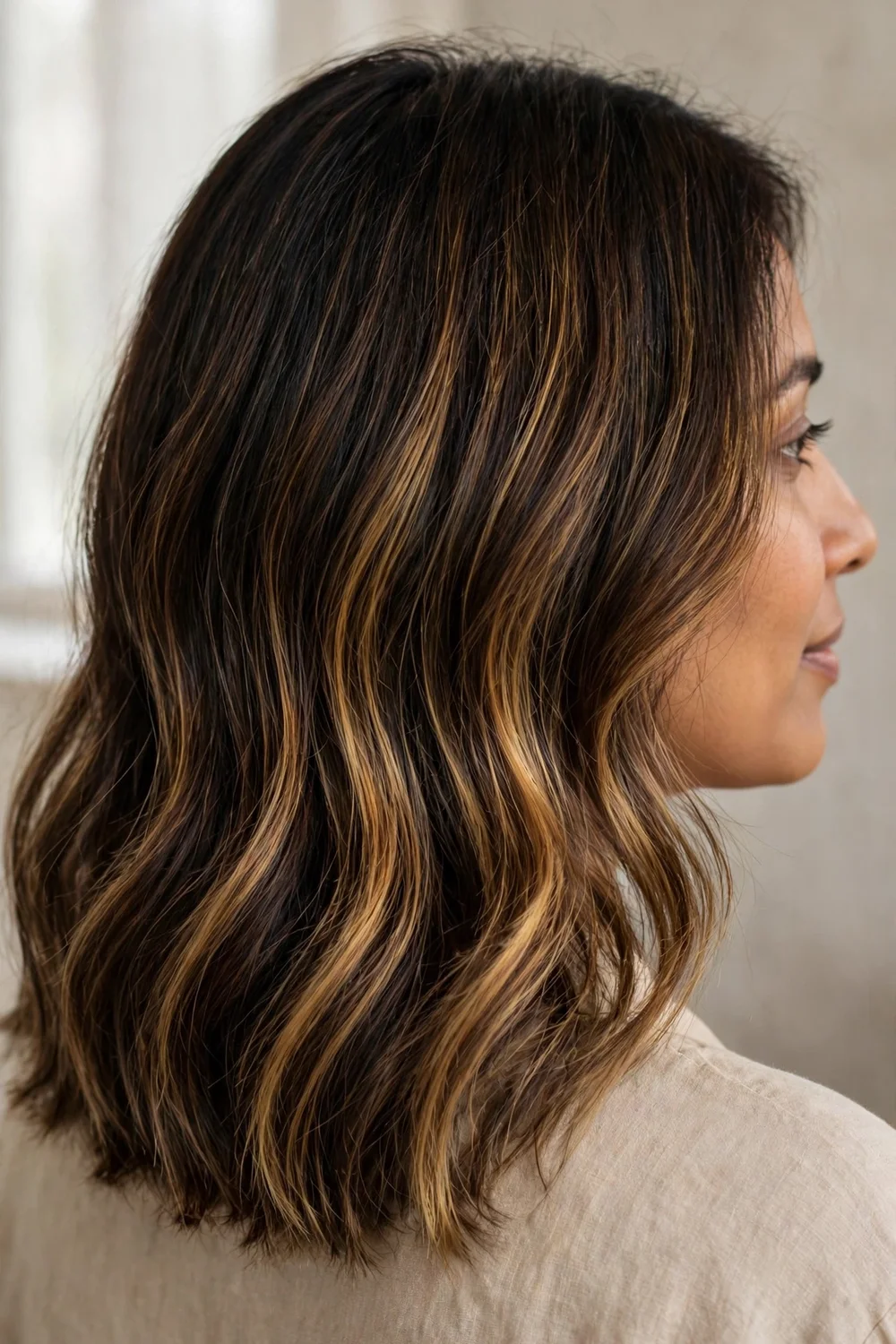
This one uses a color-melting technique rather than the usual painted ribbons. The colorist paints golden tones in soft patches over dark hair, keeping the roots fully dark. The result is simple and refined, with light appearing exactly where the colorist placed it instead of scattered through the hair. It suits anyone who wants visible color without the all-over commitment, and the dark roots keep maintenance low.
Try this: Wear it straight or with a light bend so the painted patches stay visible instead of hiding in curls.
12. Blonde Balayage on Braids

Braids and balayage are a natural pair. The twist of the braid exposes the dark base between the blonde strands, creating a two-tone effect that loose hair can’t produce. The colorist paints the blonde slightly heavier through the lengths that will be braided, since braiding compresses the color. A loose side braid or a fishtail shows the most dimension. It is also a practical way to protect the lightened ends on busy days.
Try this: Pancake the braid, gently pulling the edges wider, to spread the blonde and dark pieces apart.
13. Caramel with Peachy Shades

For a twist on standard caramel, ask the colorist to weave in peachy hues. The light caramel base keeps the look natural and work-appropriate, while the peach pieces add a warmth that catches the eye up close. It works on any texture, straight, wavy, or curly, because the color sits in the tone rather than the cut. Keep in mind that peachy tones fade faster than straight caramel, so plan a gloss refresh around week six.
Try this: Book a toner refresh halfway between full appointments to keep the peach from washing out to plain blonde.
14. Pastel Violet Balayage
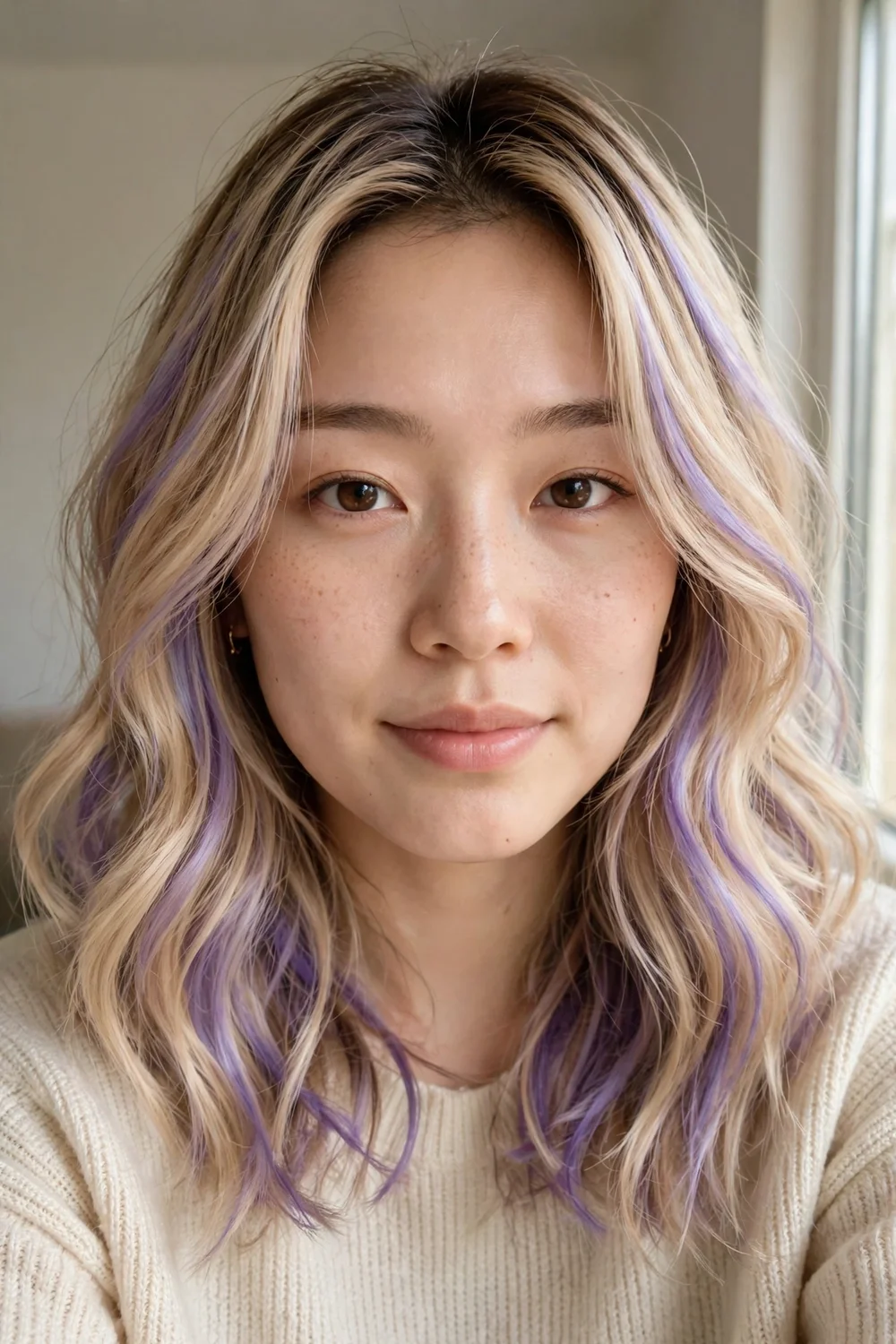
Fashion shades take more upkeep, but pastel violet earns its place with how flattering it is. The colorist first lifts the mid-lengths and ends to a pale blonde, then applies the violet dye over just those lightened sections. The delicate lavender reads feminine without being loud, and it suits most skin tones because it sits in the cool family. If you already have blonde balayage, the violet can go straight over your existing light pieces.
Try this: Wash in cool water with color-safe shampoo, since hot water strips pastel tones in just a few washes.
15. Hot Pink Balayage
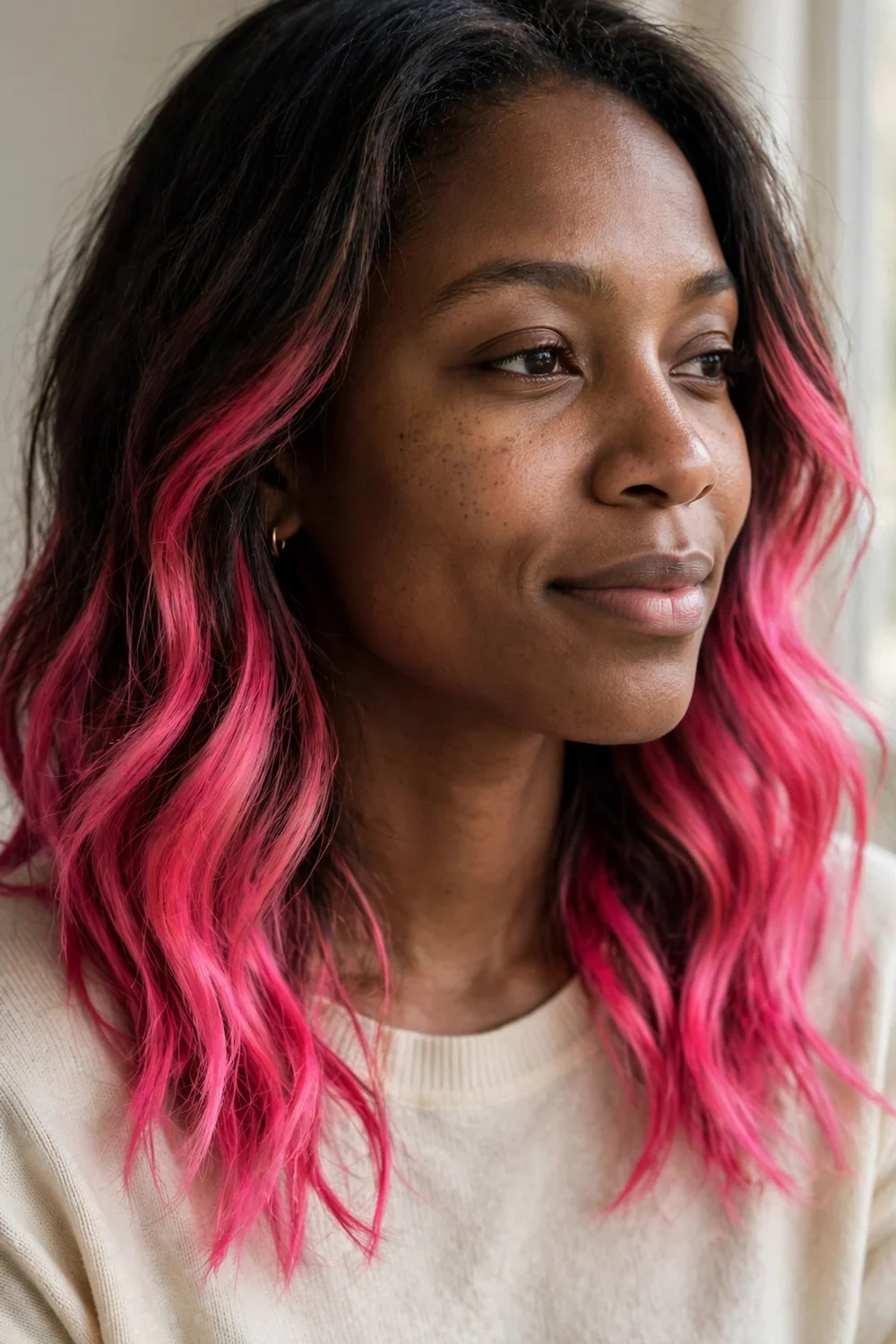
Hot pink is the loudest option on this list and makes no apologies for it. The colorist melts vivid pink from the mid-lengths to the ends over pre-lightened hair, leaving the roots dark for contrast. Dark hair needs bleaching first to get the full color payoff, so factor in the extra salon time. Straight, wavy, and curly styling all work with it. To keep the pink clean and bright, refresh the shade every few weeks with a pigmented conditioner.
Try this: Use a pink color-depositing conditioner weekly instead of waiting for the color to fade completely.
16. Dark Root Balayage
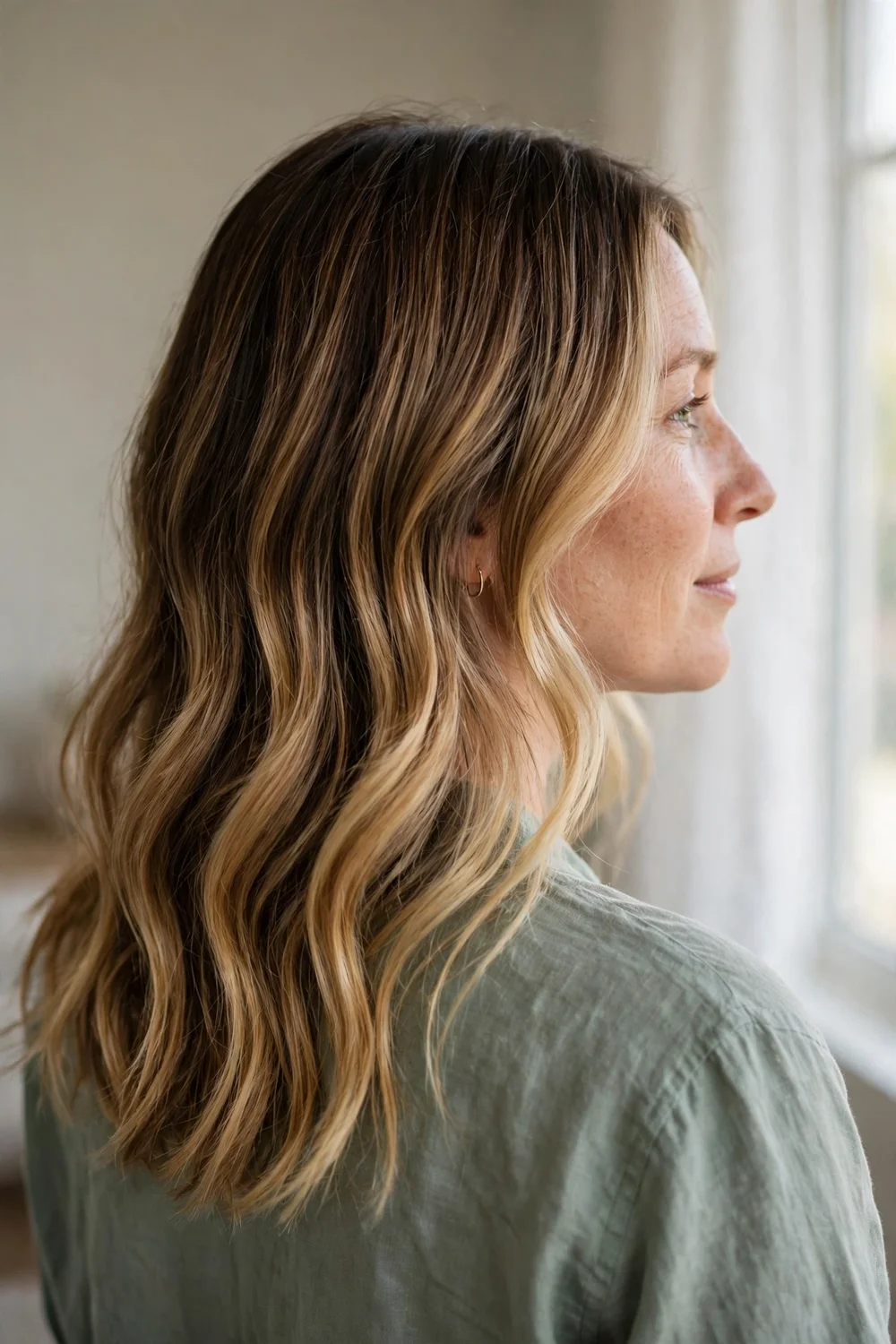
The dark root balayage, sometimes called a shadow root, is the lowest-maintenance version of this technique. The colorist leaves several inches of natural root untouched and blends the transition so gradually that regrowth becomes invisible. The lighter ends still give the sun-kissed effect, but you can go months between appointments. This is the option stylists recommend most for anyone getting balayage for the first time.
Try this: Ask for the blend to start no higher than ear level so the grow-out stays seamless for at least 4 months.
17. Caramel Mocha Balayage
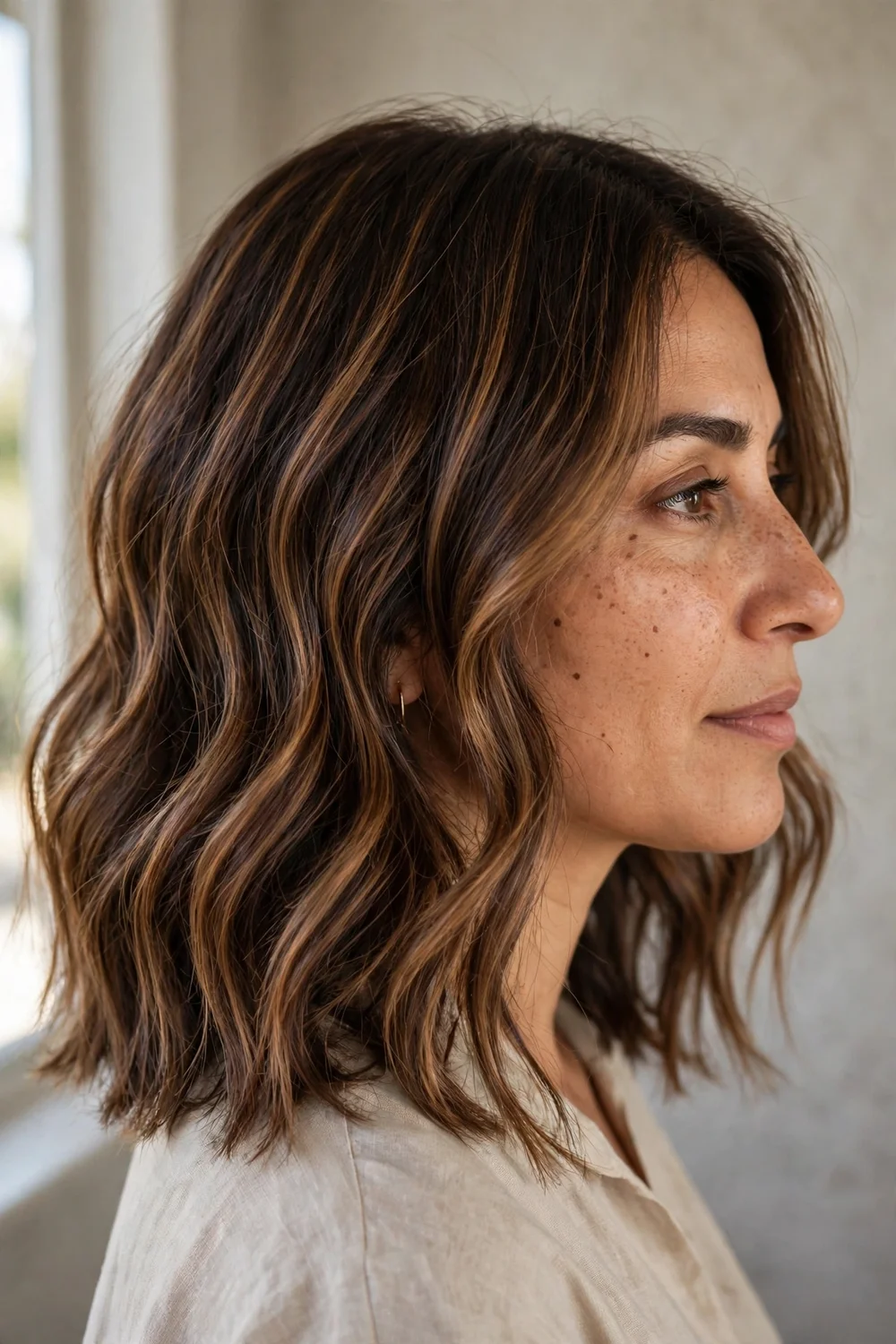
Caramel gets most of the attention, but mixing it with mocha takes the color somewhere richer. The colorist alternates caramel ribbons with deeper mocha tones through the mid-lengths, which keeps the overall effect warm without going brassy. The mocha adds the depth that makes the caramel look intentional rather than faded. This pairing suits medium and deep skin tones particularly well, though it flatters light complexions too.
Try this: Ask your stylist to show you the caramel and mocha swatches side by side so you can approve the warmth level before they start.
18. Caramel Balayage with Bleached Ends
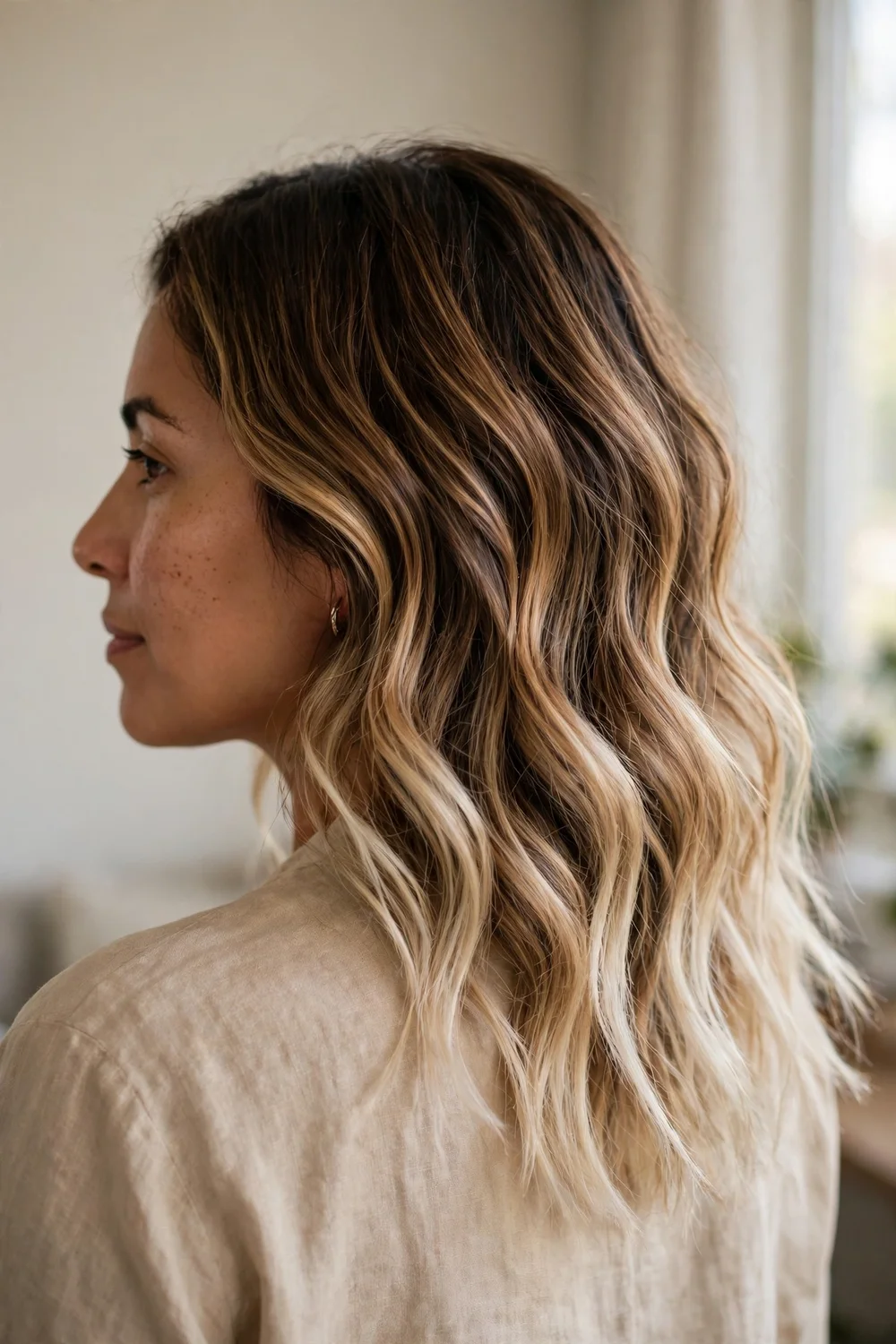
This style takes standard caramel balayage and pushes the ends further. The colorist paints caramel through the mid-lengths, then lightens the ends a few levels brighter for a bolder contrast. The brighter tips frame the face and make the hair look fuller at the bottom. It is a good middle ground between soft balayage and a full ombre. The lightened ends need extra conditioning, since bleached hair dries out faster.
Try this: Use a weekly deep-conditioning mask on the ends to keep the bleached sections from looking dry.
19. Bronde Balayage with Money Pieces
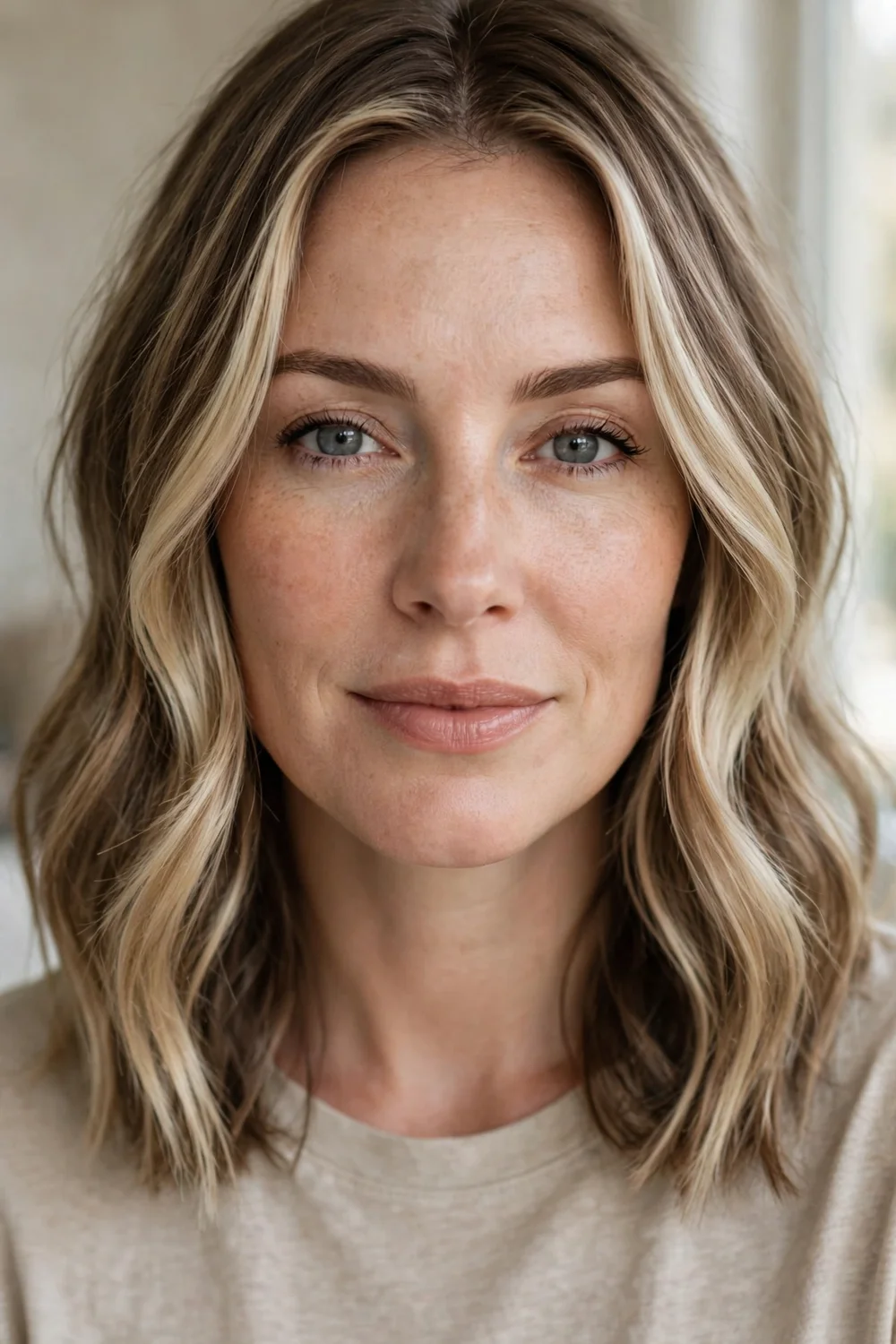
Bronde sits exactly between blonde and brunette, and it is one of the most wearable balayage shades. The colorist blends the two tones through the lengths, then adds money pieces, brighter highlights right around the face, to lift the complexion. Those face-framing pieces brighten the whole look without committing to all-over blonde. It is a smart pick for brunettes who want visible change with a natural finish.
Try this: Ask for the money pieces to start at cheek level so they brighten the face instead of the roots.
20. Bronze Partial Balayage
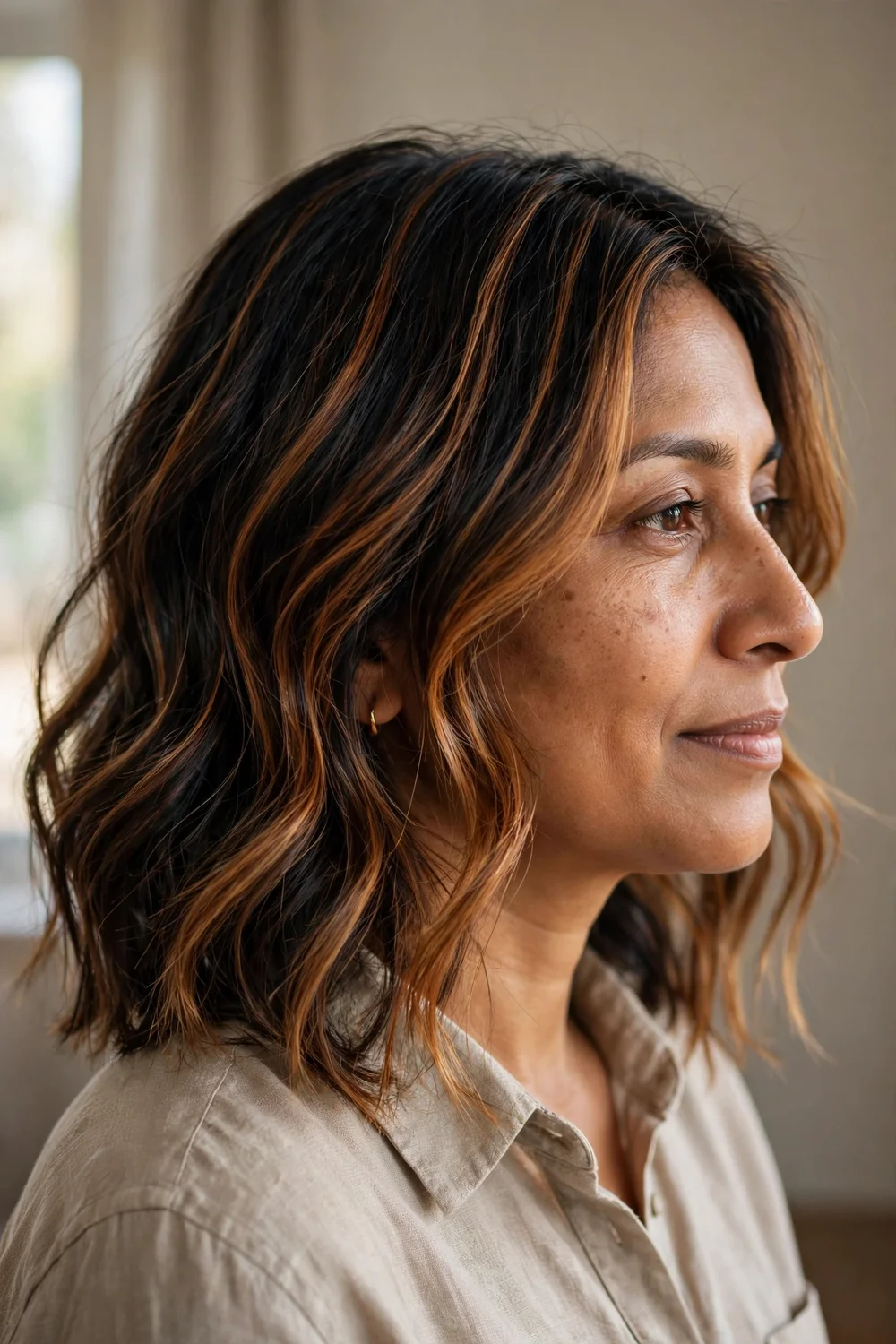
A partial balayage covers less hair than a full one, usually just the top layers and face-framing sections, which means less time in the chair and a lower bill. In bronze tones, the effect is warm and slightly metallic, adding a luxurious warmth to dark hair. The underneath layers stay natural, so the grow-out is practically invisible. This is a practical entry point if you want to try balayage without a full-day appointment.
Try this: Wear your hair parted where you normally wear it at the consultation so the partial placement lands in the right spots.
21. Ash Brown Balayage
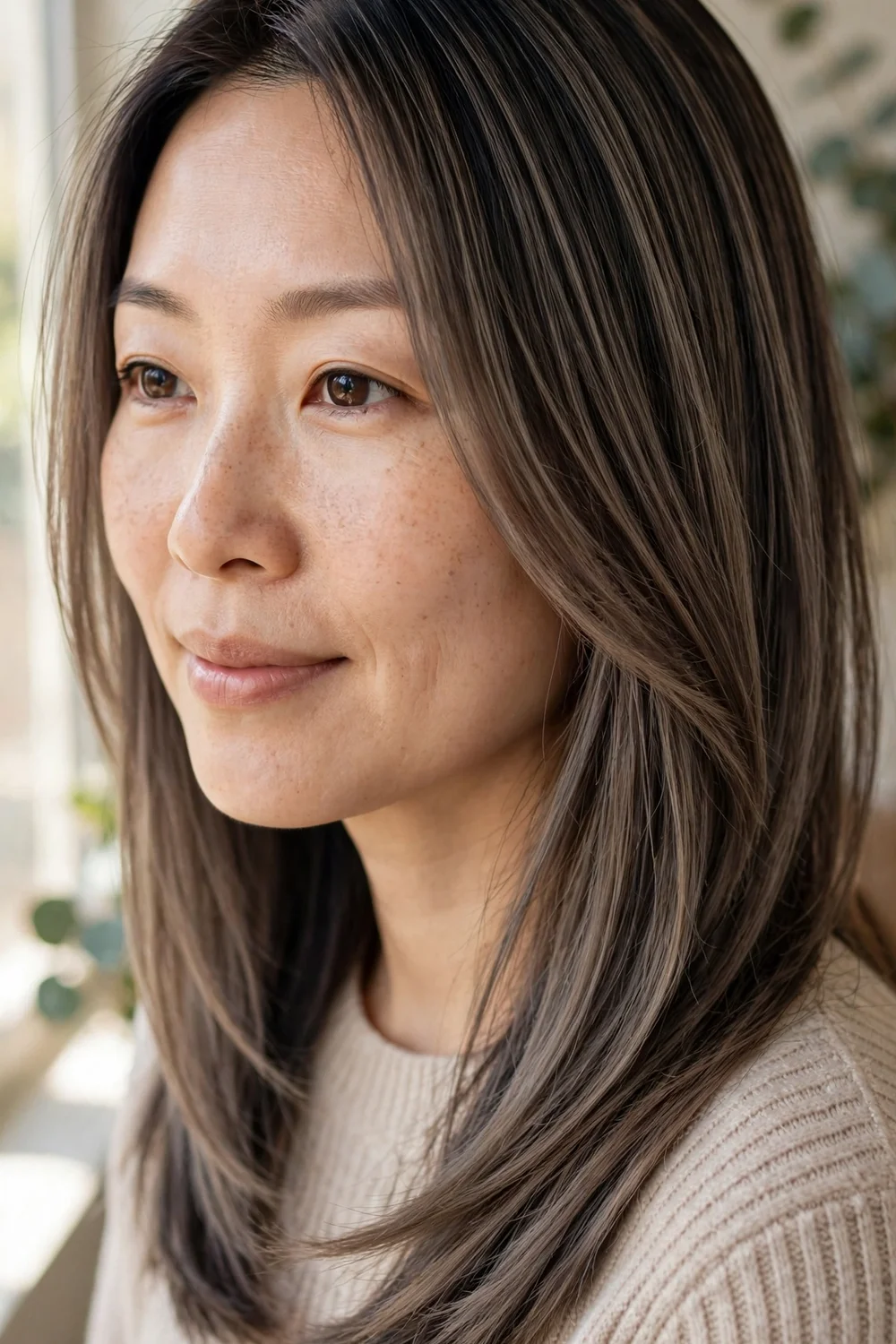
Ash brown balayage trades warmth for a cool, muted finish. The colorist blends ashy, cool-toned brown shades into the natural base, creating a sophisticated look that photographs well. It suits cool and neutral skin tones best, and it is the go-to recommendation for anyone fighting brassiness in their brown hair. Sleek, straight styling shows the cool tones most accurately, since curls can warm the appearance.
Try this: Skip the purple shampoo here and use a blue-based shampoo instead, which targets orange brassiness in brown hair.
22. Dark Violet Balayage on Black Hair
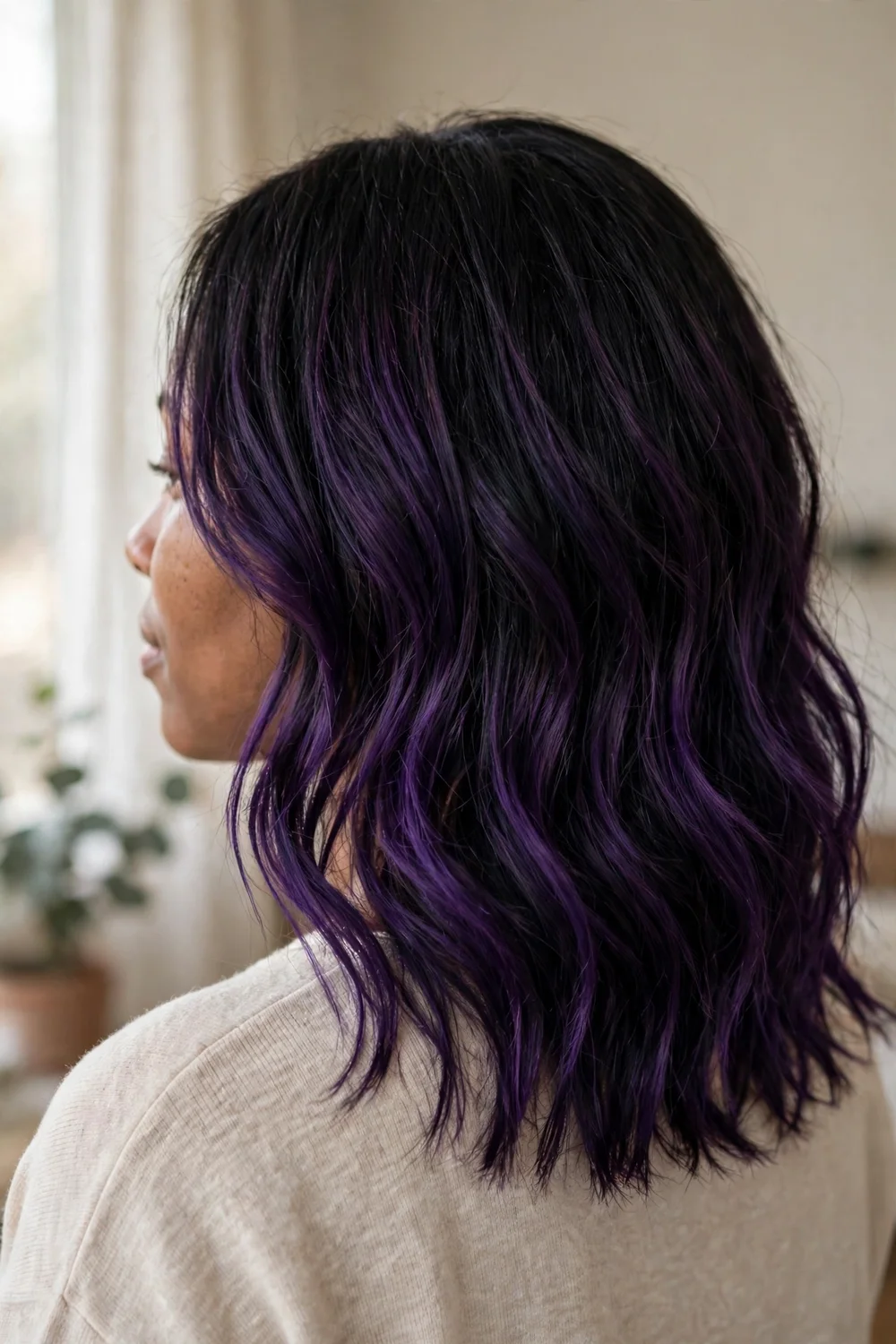
Black hair paired with dark violet balayage creates a contrast that feels bold without being loud. The violet adds a rich pop of color that shows most in sunlight and stays subtle indoors. Unlike brighter fashion shades, the dark violet doesn’t overshadow the natural black base. The colorist paints it through the mid-lengths and ends, keeping the roots untouched. It fades gradually to a softer mauve, which still looks good.
Try this: Rinse with cool water and use a sulfate-free shampoo to slow the violet fade.
23. Shiny Honey Balayage
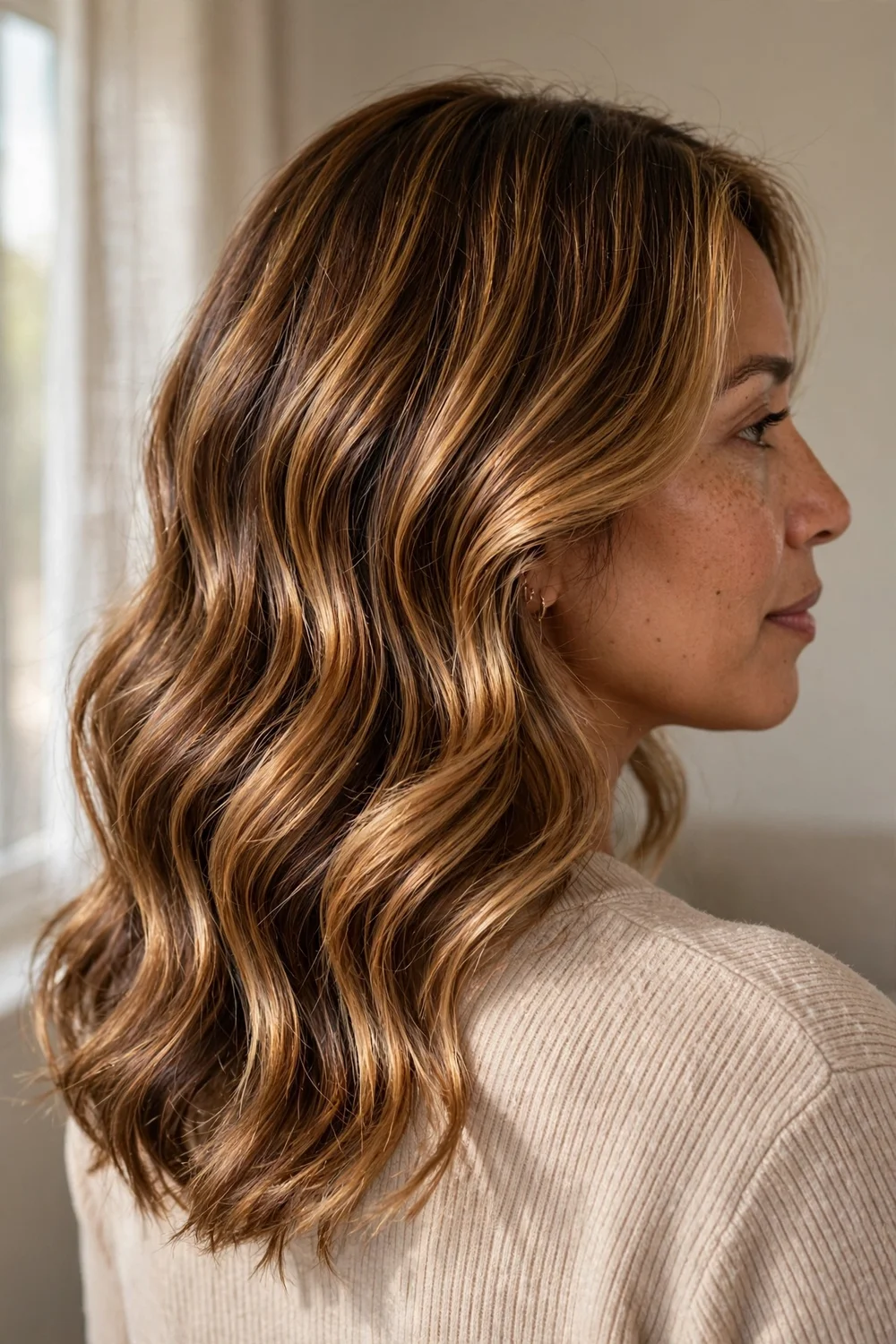
Honey balayage brings warmth without the orange risk of copper. The colorist paints honey-toned highlights through the lengths, and the result looks glossy and luminous in natural light. It flatters warm and golden skin tones, and it pairs well with summer wardrobes and sunlit settings. Because honey sits close to many natural bases, the grow-out stays soft and the color rarely turns brassy. A shine serum or gloss treatment keeps the honey tones reflective between appointments.
Try this: Ask for a honey gloss at the salon if your color starts looking dull before your next full appointment.
24. Partial Caramel Highlights for Brunettes
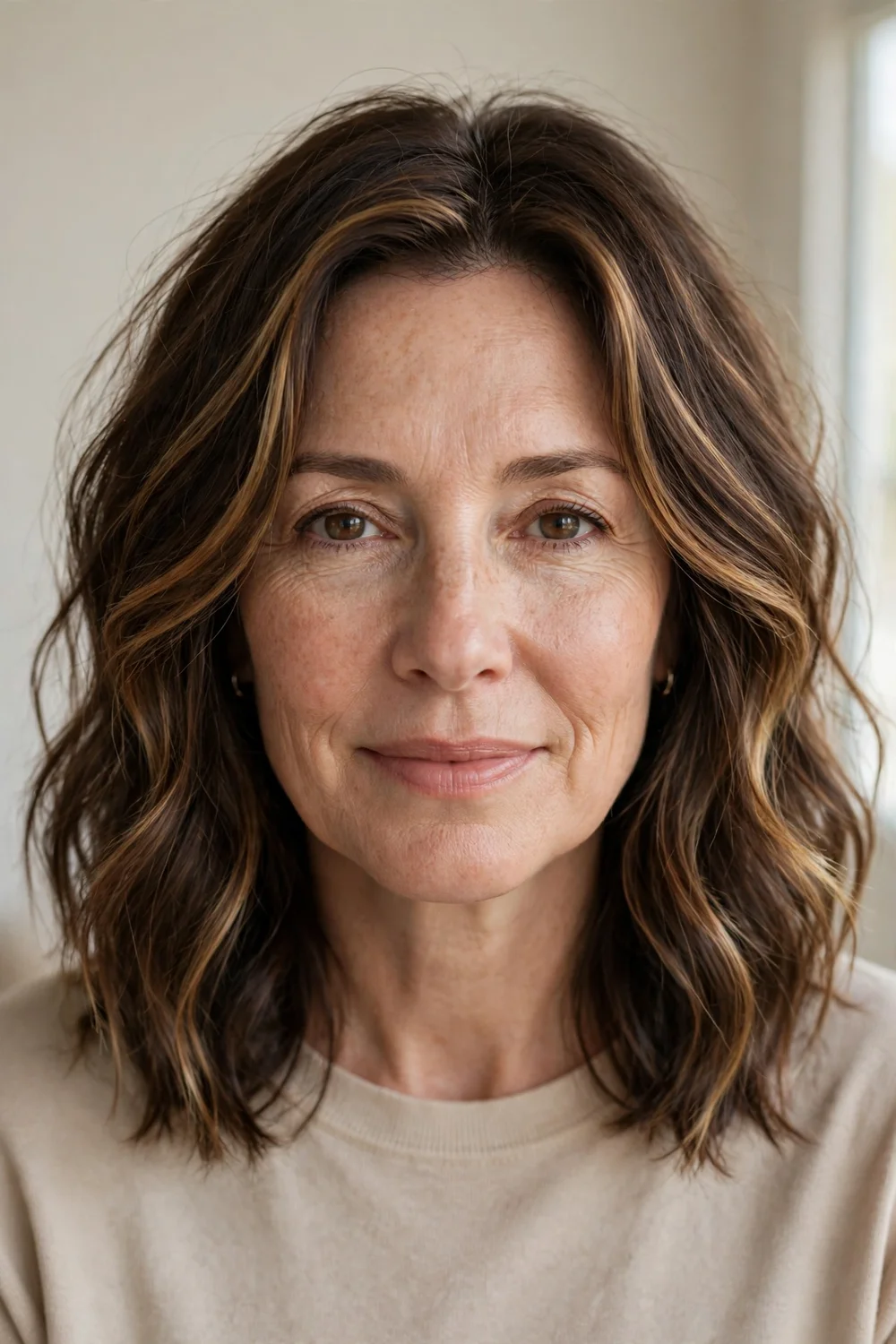
Brunettes who want brightness without a full color change do well with partial caramel highlights. The colorist places the caramel through the top and front sections only, which adds dimension around the face while the rest of the hair stays natural. The appointment runs shorter and costs less than a full balayage, and the grow-out needs almost no attention. It is one of the most requested low-commitment color services for a reason.
Try this: Bring a photo showing how much brightness you want, since “partial” means different things to different stylists.
25. Bleach Blonde Wavy Balayage
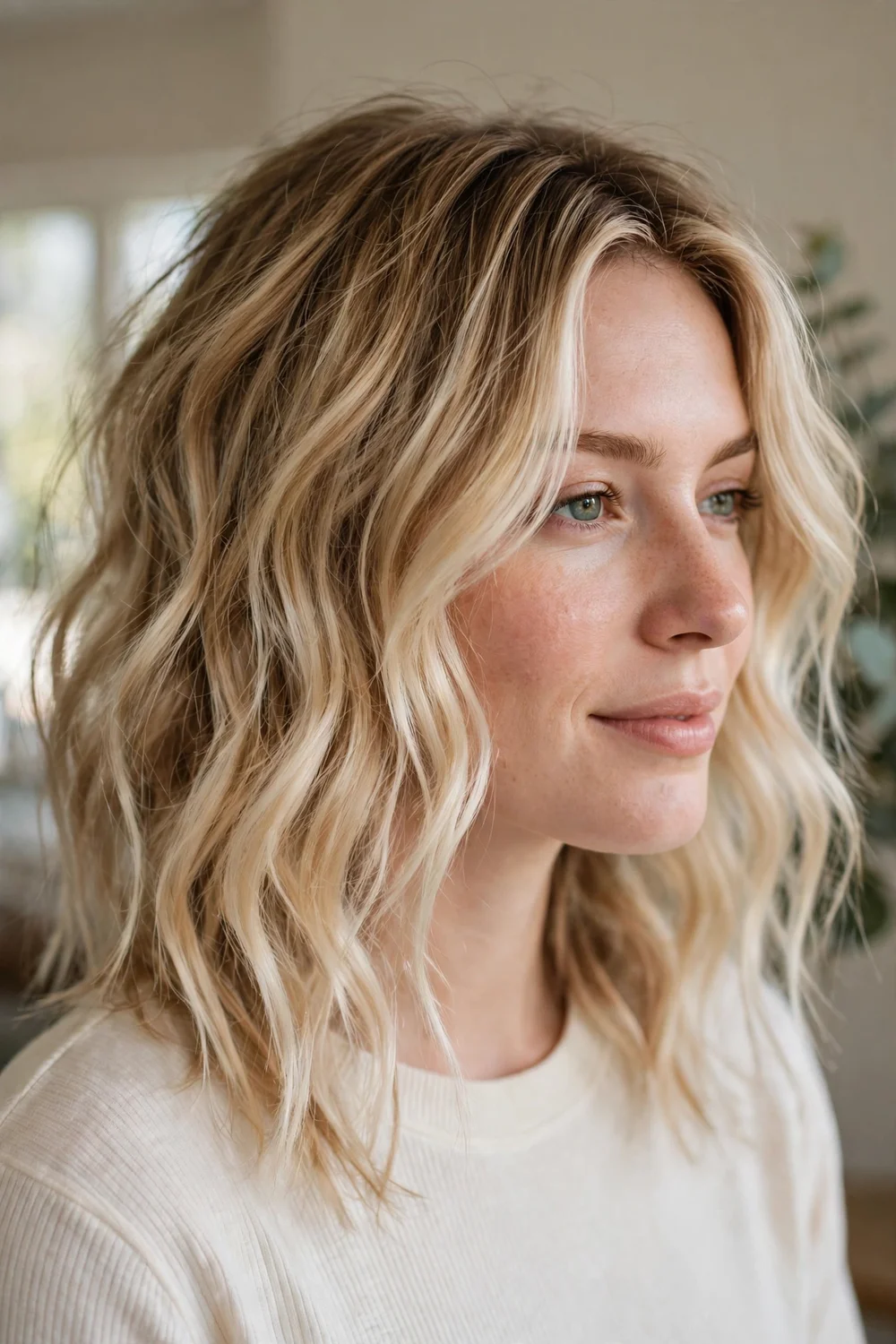
For maximum brightness, this balayage takes the blonde all the way. The colorist lifts honey blonde roots into a vivid bleached blonde through the lengths, and loose waves keep the high-lift color from looking flat. The tousled texture breaks up the blonde so it reads dimensional instead of solid. Expect more upkeep here than with softer balayage, including regular toning to control brassiness.
Try this: Alternate purple shampoo with a bonding repair shampoo to keep the bleached lengths healthy.
26. Blonde to White Balayage on a Straight Lob
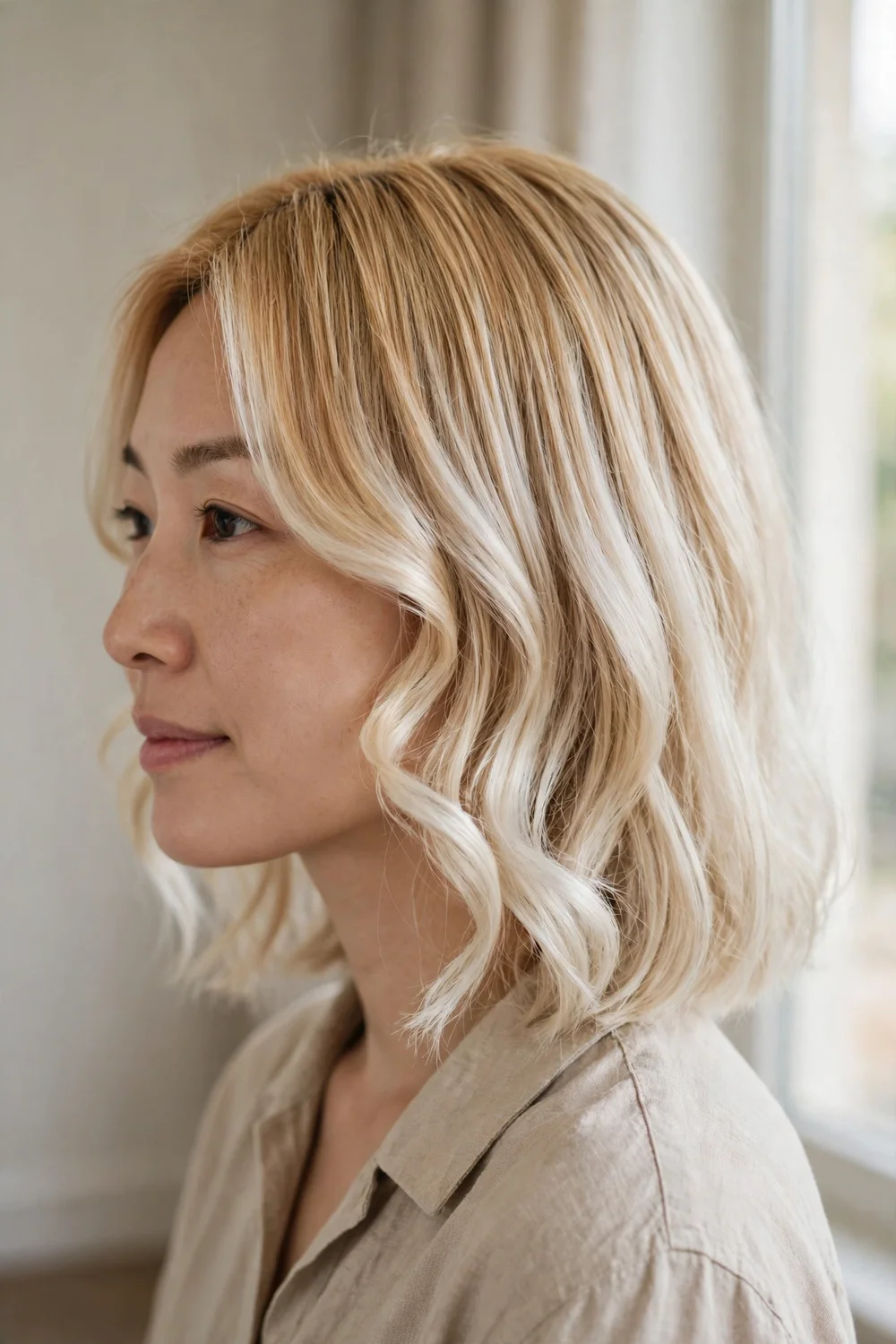
Golden blonde roots that melt into a white blonde at the tips make a striking gradient on a straight lob. The colorist keeps the blend tight and seamless so the transition reads as one continuous color shift. Curling the front sections to frame the face softens the drama slightly. This one needs a cool-based toner and regular purple shampoo, since white blonde shows warmth faster than any other shade.
Try this: Ask for an icy toner at the bowl, then maintain it at home with a silver shampoo.
27. Copper to Blonde Curly Balayage
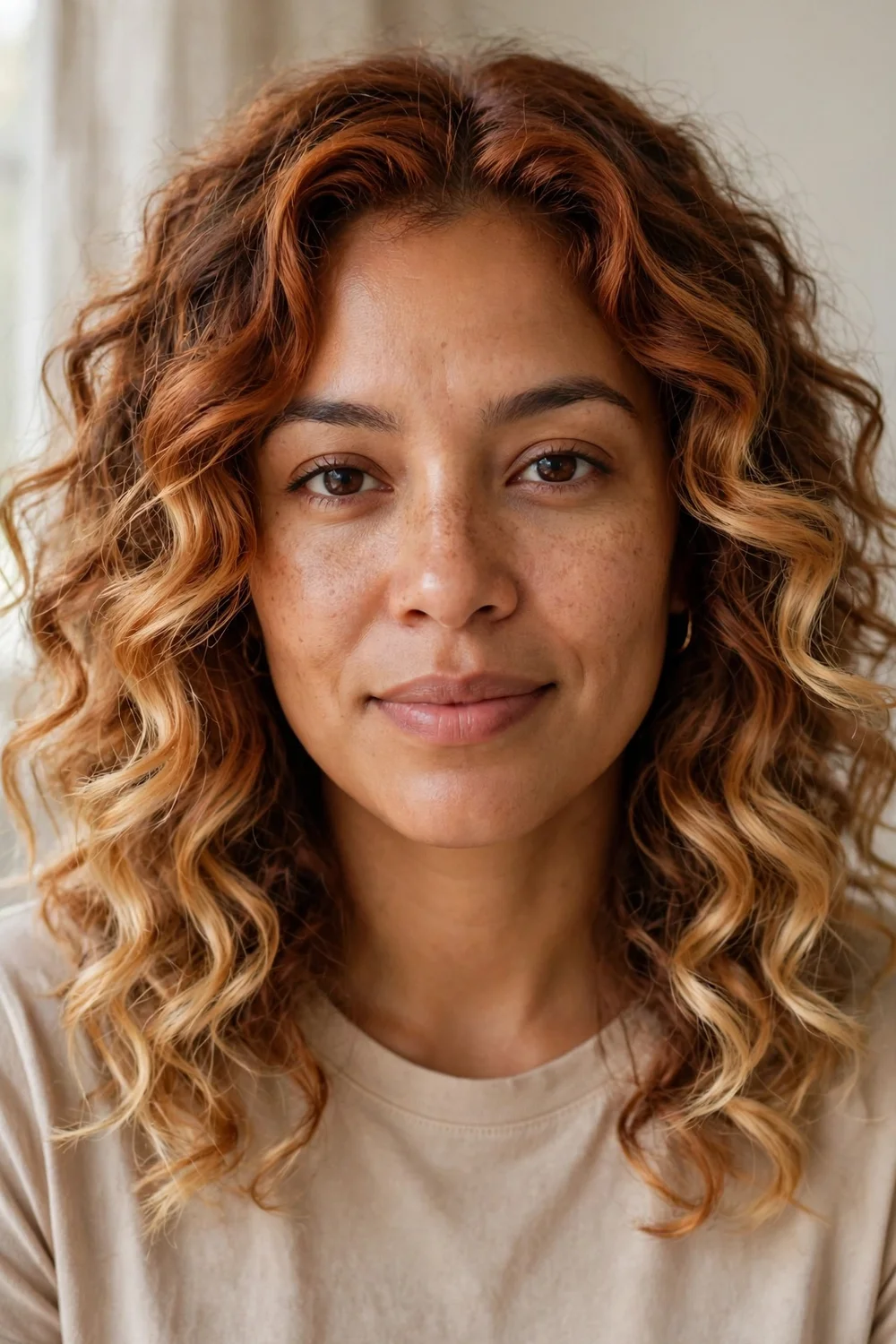
Curls show off color transitions better than any other texture, and this copper-to-blonde melt proves it. The colorist works from a warming copper at the roots to a golden blonde at the tips, and each curl displays the full gradient. A graduated cut, slightly shorter in the back, gives the color shape to follow. Loose curls with bounce keep the look playful instead of heavy.
Try this: Diffuse upside down for volume, then shake the curls loose so the copper and blonde separate.
28. Chocolate to Caramel Balayage
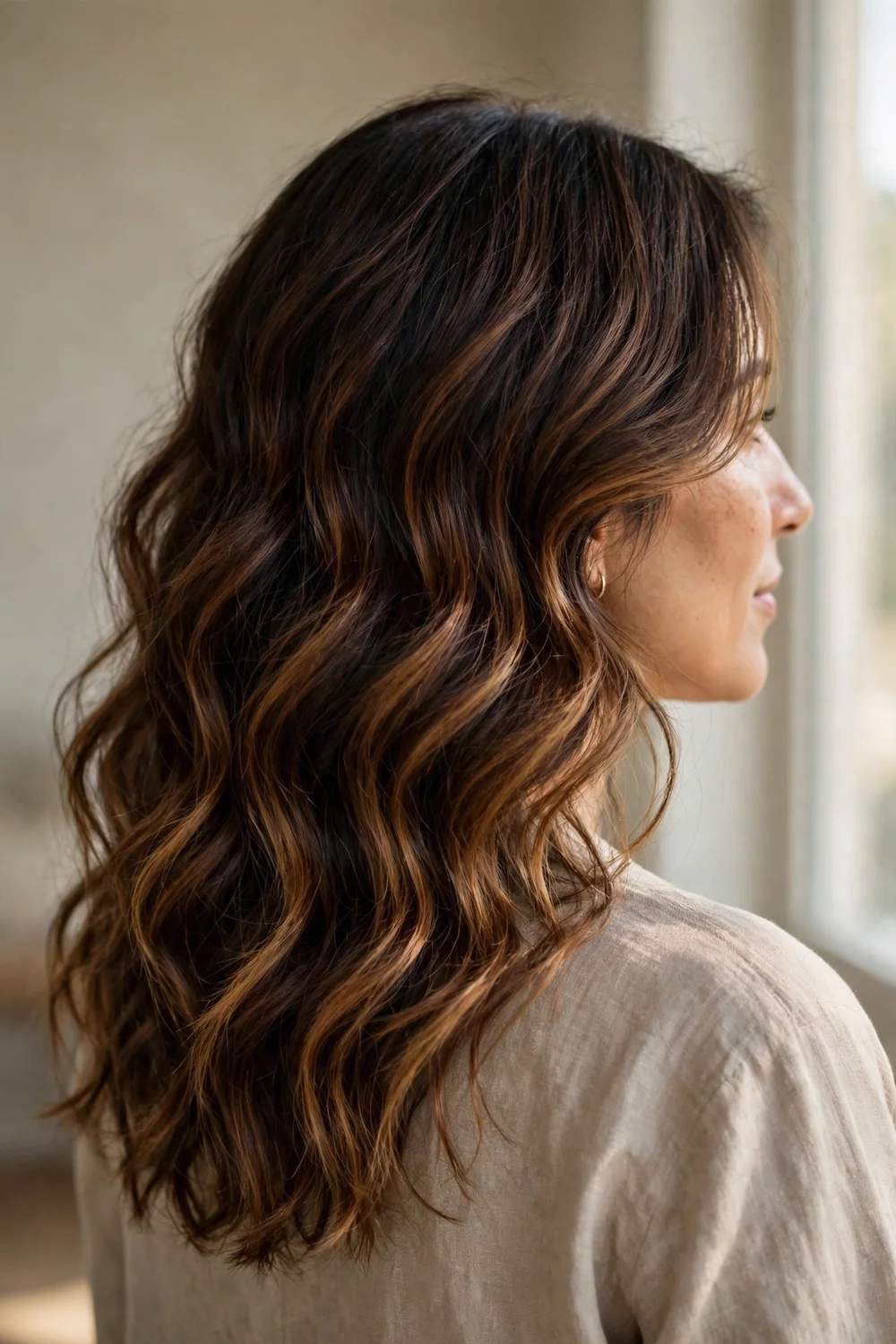
Thick hair drinks up color, and this chocolate-to-caramel melt makes the most of it. The roots stay a rich light chocolate brown while the ends shift into dark caramel, creating a sun-kissed gradient that looks natural on brunettes. A wavy lob cut, slightly shorter in the back, gives the blend its shape. Loose curls through the ends finish it with movement.
Try this: Ask your stylist to concentrate the caramel on the outer layers so it frames your face in photos.
29. Black to Blonde Balayage Melt
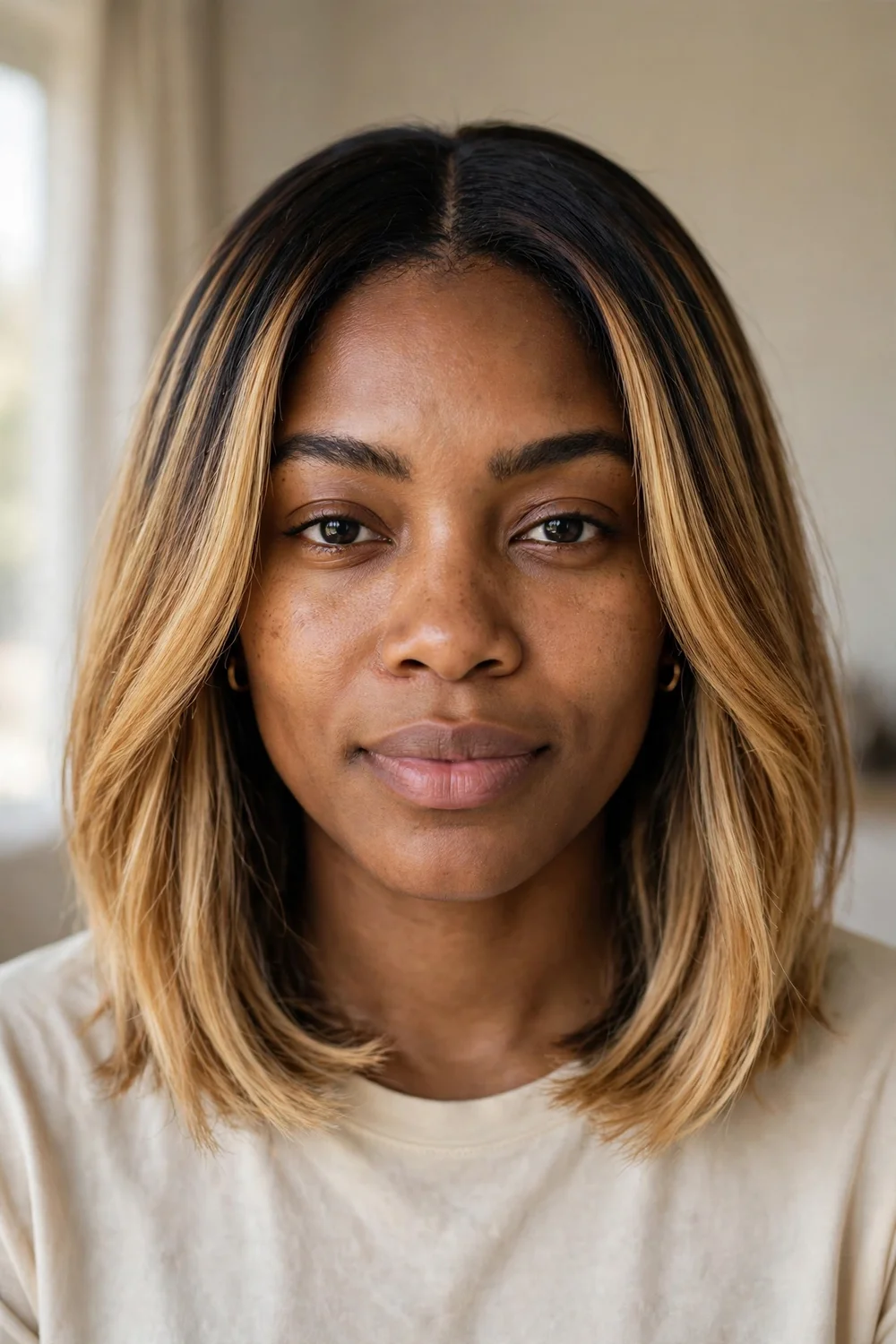
Going from black to blonde in one session is a big lift, and the balayage melt is the gentlest way to do it. The colorist blends glossy black roots into a warm blonde through the body of the hair, avoiding the harsh line a traditional ombre would leave. A center-parted long bob keeps the focus on the color gradient. This service takes the longest on this list, so plan for a half-day appointment and be honest about your hair’s coloring history.
Try this: Tell your stylist about every previous color or treatment, since old dye changes how the lift behaves.
30. Ash Balayage Beachy Waves

Beachy waves and ash balayage were made for each other. The tousled texture breaks up the cool ash tones and adds the depth that makes this style look expensive. The colorist paints ash blonde through the lengths over a darker base, and a texturizing spray gives the waves their hold. Use a curling iron on alternating sections for the most natural-looking wave pattern.
Try this: Spray texturizer on dry hair and twist random sections by hand for waves that don’t look over-styled.
Balayage Hairstyles for Medium Length Hair Comparison at a Glance
| Style | Best For | Upkeep Level | Touch-Up Timing |
|---|---|---|---|
| Choppy Layers Dark Brown Balayage | Thick hair | Low | 4-5 months |
| Subtle Chestnut Bob Balayage | Conservative settings | Low | 4-5 months |
| Auburn Balayage on Dark Hair | Warm skin tones | Medium | 3-4 months |
| Sun-Kissed Balayage | Medium brown bases | Low | 4-6 months |
| Soft Glossy Brunette Balayage | First-time color | Low | 5-6 months |
| Caramel Wavy Balayage | Brunettes | Medium | 3-4 months |
| Subtle Blonde Balayage on a Dark Base | Cautious blondes | Medium | 3-4 months |
| Blonde Layered Lob Balayage | Texture lovers | Medium | 3-4 months |
| Cinnamon Curls | Warm/olive skin | Medium | 3-4 months |
| Silver and Blonde Balayage | Cool skin tones | High | 2-3 months |
| Golden Patches on a Dark Base | Low commitment | Low | 4-6 months |
| Blonde Balayage on Braids | Active lifestyles | Medium | 3-4 months |
| Caramel with Peachy Shades | Warm complexions | Medium | 3 months |
| Pastel Violet Balayage | Fashion color fans | High | 6-8 weeks |
| Hot Pink Balayage | Bold statements | High | 4-6 weeks |
| Dark Root Balayage | First-timers | Low | 4-6 months |
| Caramel Mocha Balayage | Medium/deep skin | Medium | 3-4 months |
| Caramel Balayage with Bleached Ends | Contrast lovers | Medium | 3-4 months |
| Bronde Balayage with Money Pieces | Brunettes going lighter | Medium | 3-4 months |
| Bronze Partial Balayage | Budget-conscious | Low | 4-5 months |
| Ash Brown Balayage | Cool/neutral skin | Medium | 3-4 months |
| Dark Violet Balayage on Black Hair | Dark bases | Medium | 2-3 months |
| Shiny Honey Balayage | Warm skin tones | Low | 4 months |
| Partial Caramel Highlights for Brunettes | Low commitment | Low | 4-5 months |
| Bleach Blonde Wavy Balayage | Maximum brightness | High | 2-3 months |
| Blonde to White Balayage on a Straight Lob | Cool blondes | High | 2-3 months |
| Copper to Blonde Curly Balayage | Curly hair | Medium | 3-4 months |
| Chocolate to Caramel Balayage | Thick hair | Medium | 3-4 months |
| Black to Blonde Balayage Melt | Dramatic change | High | 3 months |
| Ash Balayage Beachy Waves | Effortless style | Medium | 3-4 months |
How to Choose the Right Balayage for You
Start with your skin’s undertone. Warm undertones glow with caramel, honey, copper, and golden blonde. Cool undertones pair better with ash, silver, and icy blonde. If you are not sure which you have, check the veins on your wrist: greenish veins usually mean warm undertones, bluish veins usually mean cool.
Next, think about your natural base. Dark hair lifts best to caramel, auburn, and copper in one session. Going blonde from dark brown or black usually takes two appointments, sometimes more, and pushing it in one sitting risks damage. An honest consultation saves you from a color that needs heavy correction later.
Finally, be realistic about upkeep. Lived-in blends like dark root balayage and soft brunette balayage can go 4 to 6 months. High-lift blondes and fashion shades need attention every 6 to 12 weeks. Pick the color you will actually maintain, not just the one you like in photos.
Mistakes to Avoid
The most common mistake is choosing a shade too far from your natural base in a single session. Hair can only lift so many levels safely at once. A good colorist will tell you when a look needs two visits. Pushing past the safe limit leads to breakage that no conditioner fixes.
Another mistake is skipping the toner. Freshly lifted hair almost always pulls warm, and the toner is what turns that warmth into the exact caramel, ash, or beige you asked for. Without it, the color looks unfinished within two weeks.
At home, the biggest error is washing too often with the wrong shampoo. Sulfate shampoos strip balayage color fast, and hot water fades fashion shades in days. Switch to sulfate-free products, wash less often, and dry shampoo between washes to stretch the color.
If you are starting from a brunette base, blonde balayage on brown hair shows how this technique plays out across 20 different shade pairings.
For the cool side of the spectrum, ash blonde balayage breaks down 13 looks with shade-matching and care tips.
If ash is your direction, ash blonde hair color ideas rounds up 30 ways to wear it, from smoky roots to icy ends.
Planning a seasonal refresh? fall blonde hair colors covers 20 warm-toned blondes that pair well with autumn cuts.
Frequently Asked Questions
How long does balayage last on medium length hair?
Most balayage lasts 3 to 6 months before needing a full touch-up, depending on the shade and how fast your hair grows. Darker, lived-in blends stretch the longest because the roots grow out without a visible line. Blonde and fashion shades fade faster and usually need a toner refresh every 6 to 12 weeks. A gloss treatment between appointments can extend the color’s life noticeably.
Is balayage or highlights better for medium length hair?
Balayage suits medium length hair better for most people because the hand-painted technique creates a softer grow-out with no harsh line at the roots. Traditional foil highlights give more uniform brightness from root to tip but show regrowth within 6 to 8 weeks. If you want a natural, low-maintenance result, choose balayage. If you want maximum brightness all over, foils do that better.
How much does balayage cost for medium length hair?
A full balayage on medium length hair typically costs between $150 and $350 at most salons, depending on the city and the stylist’s experience level. Partial balayage runs lower, often $100 to $200, since it covers less hair and takes less time. Toner or gloss refreshes between appointments usually cost $40 to $80. Always confirm the price includes the toner, since some salons list it separately.
Can you get balayage on fine medium-length hair?
Yes, and fine hair often takes balayage well because the technique adds visual dimension that makes hair look thicker. The key is keeping the lightened pieces fine and well-blended rather than chunky, since heavy sections can make fine hair look stringy. Ask your stylist for babylight-style balayage pieces and avoid over-layering, which removes the density fine hair needs.
Will balayage damage my medium length hair?
Any lightening causes some damage, but balayage is gentler than all-over bleach or full foils because the colorist doesn’t saturate every strand and leaves the roots untouched. The risk rises with how many levels you lift in one session. Using a bonding treatment during the service, like the ones most salons offer as an add-on, protects the hair’s internal structure. At home, weekly masks and heat protectant keep the lightened ends healthy.
Final Thoughts
Medium length hair and balayage belong together. The length gives the colorist room to build a real blend, and the technique keeps the grow-out painless. Whether you go with a soft brunette melt or a bold black-to-blonde gradient, bring reference photos to your appointment and be honest about how much upkeep you’ll do. The best balayage is the one you’ll still love at month four.

