

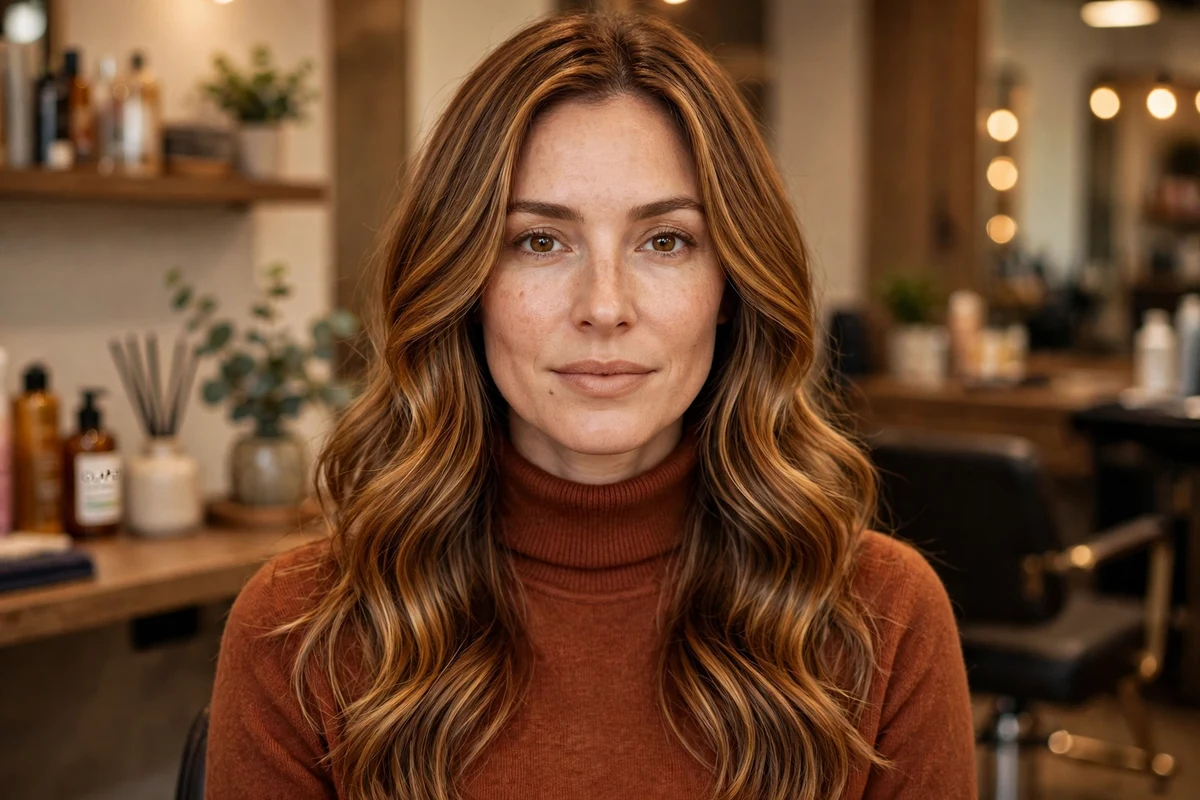
Warm fall hair colors are the shades built on gold, amber, cinnamon, and chestnut warmth. They are the part of the fall color story that flatters warm skin, warms up neutral skin, and turns faded summer hair into something richer for the colder months. This list stays on that warm side of the season on purpose.
The 26 shades below run from toasted honey blonde and almond milk blonde at the light end, through golden hour brunette and caramel-tipped balayage in the middle, to cinnamon cocoa and vintage rust at the deep end. If you want the full fall spread including the cool and dark families, the general fall hair colors guide covers every direction in one place.
Key Takeaways
- Warm fall shades are built on gold, amber, cinnamon, caramel, and chestnut tones. Cool ash and icy tones sit outside this list.
- Placement controls upkeep. Face-framing, tipped, and threaded placements keep color off the root and grow out for months.
- Red-leaning warm shades, copper, ginger, and rust, fade fastest and need a gloss at four to six weeks.
- Gloss-only shades like soft walnut brown and cinnamon cocoa brunette warm a whole head in the lowest cost band.
- Match the warmth to your skin: yellow-gold warmth suits warm skin, while red-brown warmth is the safer warm pick for cool skin.
How to Pick Your Warm Fall Shade
Start with your undertone. Warm skin with gold or olive depth carries the full list, including the golden blondes. Neutral skin suits the middle of the list, the brondes, honey brunettes, and caramel placements. Cool skin does better with red-brown warmth, cinnamon, chestnut, and rust, placed in the lengths rather than against the hairline.
Then pick by upkeep. Root-away placements and gloss shades ask for the fewest appointments, while all-over ginger, copper, and amber blonde ask for regular glosses and root work. Readers who want the copper family on its own can go deeper with the fall copper hair colors list, which covers that single family shade by shade.
1. Toasted Honey Blonde

Toasted honey blonde blends golden honey tones with soft beige ribbons and keeps a blended root, so the finish reads creamy and warm rather than bright and icy. It suits warm and neutral skin, and it is a gentle way for summer blondes to deepen their color for fall without going brunette.
Light and medium blondes reach this shade in one session with a toner and a few lowlights. The honey tone softens over time instead of turning brassy, and a warm gloss at six to eight weeks restores the golden cast.
Try this: ask for beige ribbons woven between the honey pieces. The beige keeps the gold from sliding into orange as the color ages.
Difficulty: Medium | Cost: $$ | Time: 2 to 3 hours
2. Golden Hour Brunette
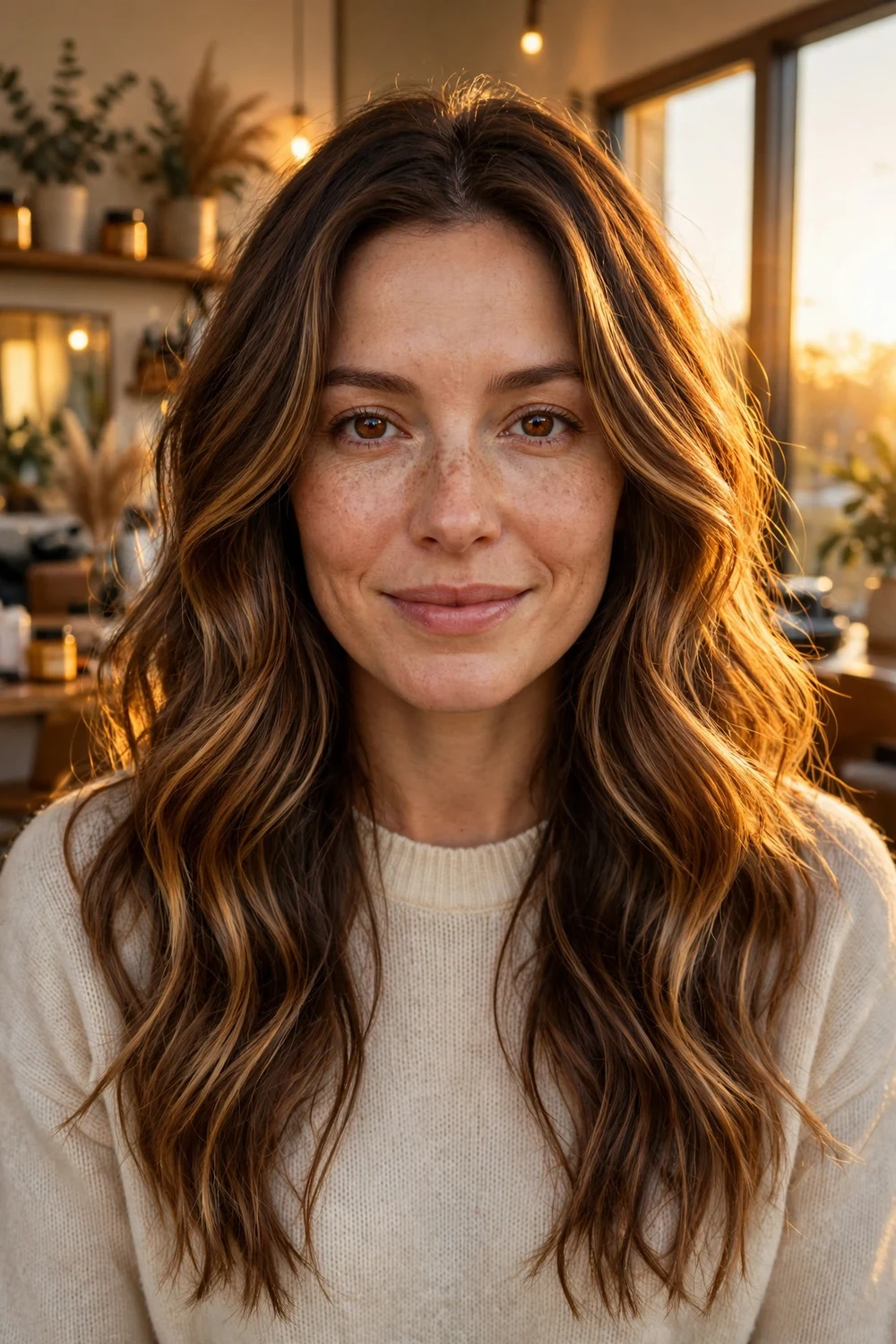
Golden hour brunette copies the way brown hair looks in late sunlight: a medium to dark brown base flecked with amber, honey, and gold pieces. The highlights sit on the surface and around the face, so the first impression stays brunette with warmth moving through it.
Natural brunettes reach this look with a modest lift on the painted pieces, and the root stays untouched. Grow-out is soft for three months or more, and a gold gloss at eight weeks keeps the flecks reading warm.
Try this: keep the brightest gold at the front and on the top layer, and leave the underneath brown. That contrast is what creates the late-light effect.
Difficulty: Medium | Cost: $$ | Time: 2 to 3 hours
3. Cinnamon Cocoa Brunette

Cinnamon cocoa brunette starts with a chocolate or cocoa base and adds a cinnamon undertone through the mid-lengths and ends. Indoors it reads brown, and in brighter light the reddish warmth shows through. It suits warm and neutral skin and gives brunettes a fall change without a full move into red.
The first few inches stay close to your natural brunette, and the cinnamon works as a tonal shift farther down, so regrowth stays quiet. A cinnamon gloss at five to six weeks refreshes the warmth, since red tones fade faster than brown tones.
Try this: ask for the cinnamon placed from the cheekbones down. Keeping it off the root area makes the whole service lower upkeep.
Difficulty: Easy | Cost: $ | Time: 1 to 2 hours
4. Amber Face-Framing Balayage

Amber face-framing balayage keeps your brunette base natural and paints a few warm amber sections around the hairline and front layers. The color begins softly near the temples and grows stronger through the cheekbone and jaw pieces, so the warmth lands exactly where it lights the face.
Only the front sections are lightened, which makes this a smaller and faster service than a full balayage. Keep the amber close to your base rather than lifting it toward blonde, and the grow-out stays diffused for months.
Try this: bring a photo of your hair in daylight. Amber reads much warmer outdoors, and your colorist can judge the right strength from a daylight shot.
Difficulty: Easy | Cost: $ | Time: 1 to 2 hours
5. Candlelit Brunette

Candlelit brunette places restrained caramel, amber, and golden brown light through the front and upper sections of a deep brunette base. The pieces are few and deliberate, so the hair glows at the edges instead of looking highlighted all over.
Because so little hair is lightened, this service is gentle on fine or fragile hair. The tone fades gradually and evenly, and a warm gloss at six weeks restores the shine that makes this shade work.
Try this: ask your colorist to place the light where your part falls and where you tuck hair behind your ears. Those are the spots that catch light first.
Difficulty: Easy | Cost: $ | Time: 1 to 2 hours
6. Chestnut with Amber Lowlights
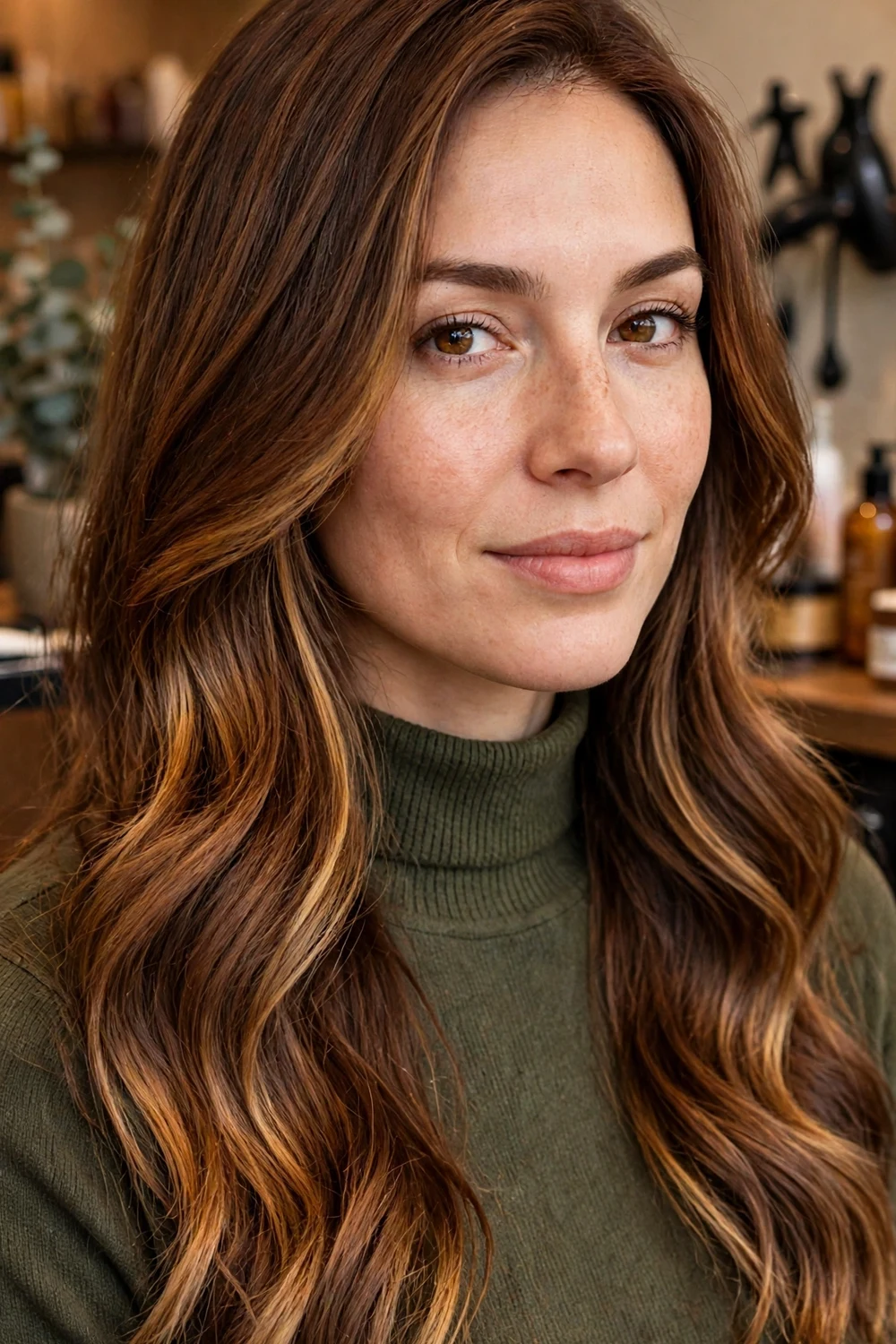
Chestnut with amber lowlights keeps the top layers a warm chestnut and paints golden amber lowlights underneath, starting midway down the hair. The top stays calmer while the deeper amber dimension shows when the hair moves or is worn up.
Lowlights add color instead of lifting it, so this service does no lightening damage. The amber underneath fades slowly, and most wearers refresh it at eight to ten weeks with a gloss through the ends.
Try this: for a quieter version, ask for amber lowlights concentrated on the very bottom layers only. The warmth then flashes only in updos and ponytails.
Difficulty: Easy | Cost: $ | Time: 1 to 2 hours
7. Maple Brown with Cinnamon Highlights

Maple brown with cinnamon highlights pairs a deep maple base with fine cinnamon reddish-brown highlights. Most of the cinnamon sits around the face, with softer pieces combed through the mid-lengths and ends for a lit, warm frame.
The maple base is a deep neutral brown, so the cinnamon reads as warmth rather than full red. Highlights this fine grow out softly, and a cinnamon gloss at six weeks keeps the red-brown tone from fading to plain brown.
Try this: ask for a comb-out technique on the highlights. Combing the color through before it processes softens every edge and removes any stripe effect.
Difficulty: Medium | Cost: $$ | Time: 2 to 3 hours
8. Chocolate Brown with Caramel Highlights
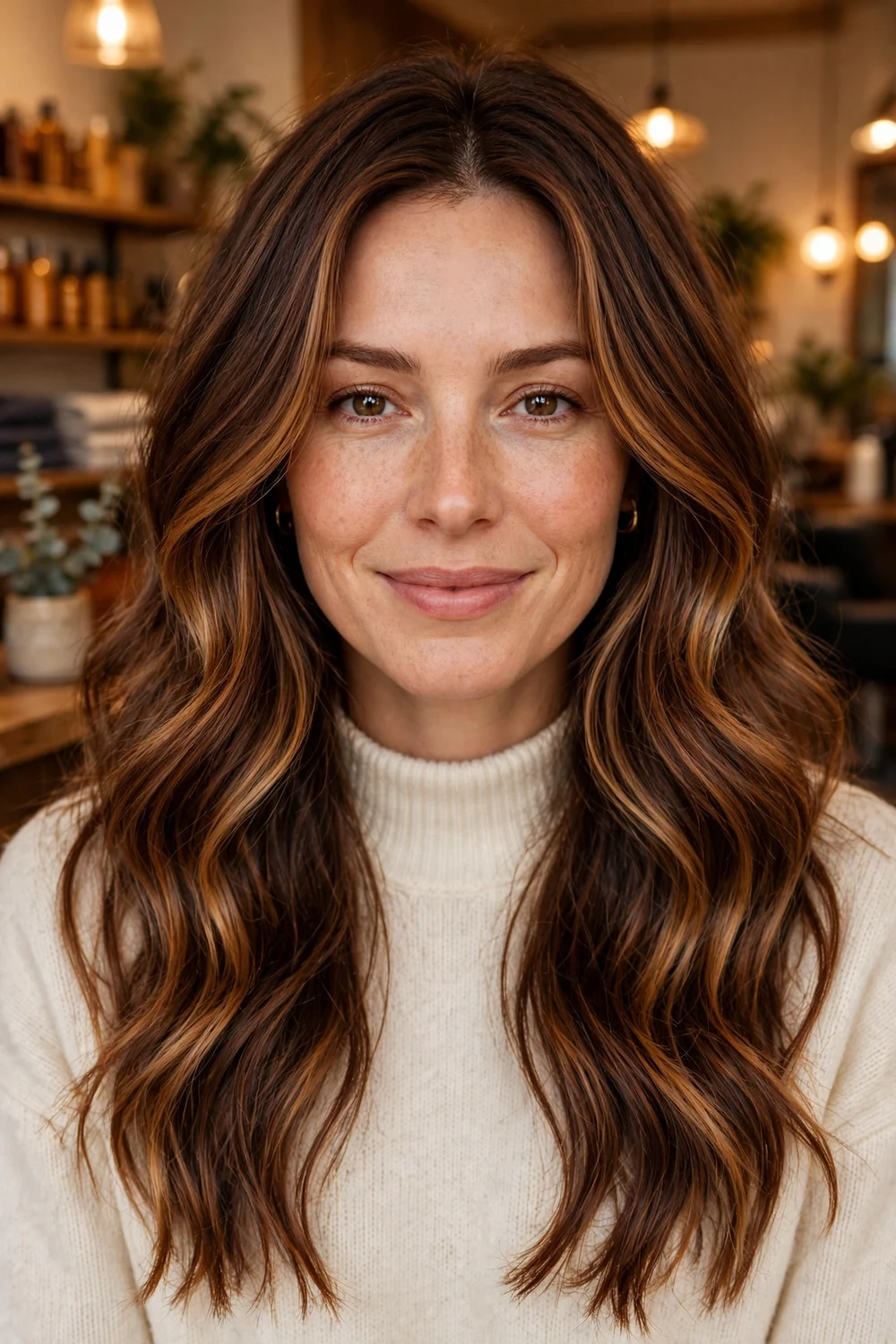
Chocolate brown with caramel highlights is the classic warm brunette update: a rich chocolate base lightened in selected pieces with warm caramel. Fine highlights around the face brighten the features, while bolder pieces through the bottom layers add contrast when the hair moves.
Keep the roots darker and the look stays polished as it grows. Light brunettes reach the caramel in one session, and dark brunettes need the pieces lifted a few levels before toning.
Try this: choose fine highlights for a soft result or chunkier ribbons for clear contrast, and tell your colorist which one before the foils go in.
Difficulty: Medium | Cost: $$ | Time: 2 to 3 hours
9. Milk Chocolate with Caramel Swirls
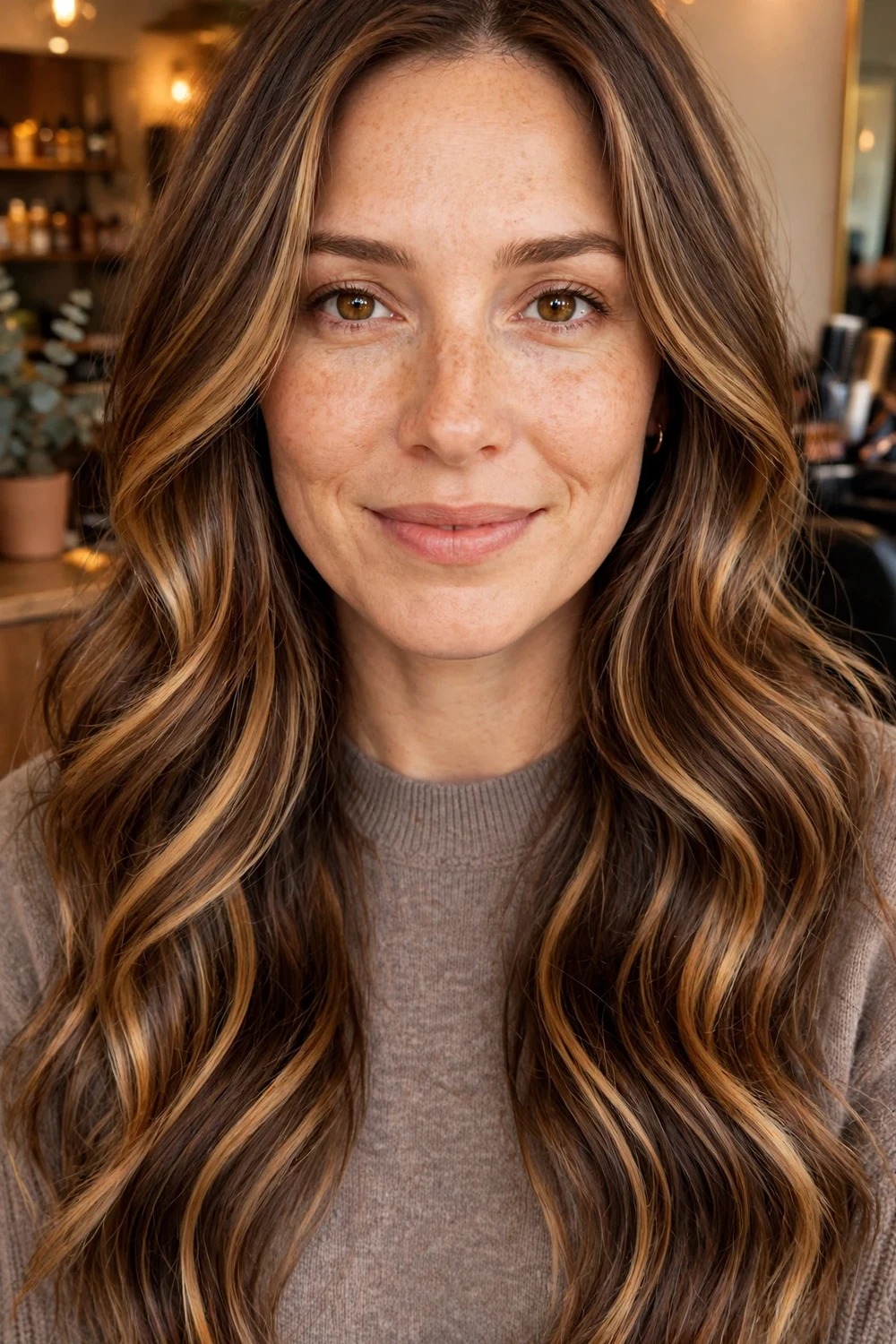
Milk chocolate with caramel swirls weaves warm caramel highlights through the top layers of a milk chocolate base, then paints caramel lowlights underneath for depth. The alternating tones mimic the dimension hair gets from sun and shadow, and the finish suits medium to dark brown hair.
A root smudge softens the top and stretches the time between appointments. The caramel holds well on brown bases, and a hydrating mask once a week keeps multi-tonal hair glossy.
Try this: ask for plenty of variation between the caramel and chocolate tones. Even spacing looks flat, while uneven spacing is what reads as swirls.
Difficulty: Medium | Cost: $$ | Time: 2 to 3 hours
10. Brown Sugar Babylights

Brown sugar babylights use a micro-weave technique to place ultra-fine highlights through chocolate or chestnut brown hair. The pieces are so fine that the hair simply looks lighter and warmer overall, the way hair lightens naturally over a summer.
Concentrate the babylights around the face and crown and leave the roots darker, and the grow-out blends for months. This is one of the lowest upkeep warm services on this list, with a gloss at eight to ten weeks as the only regular refresh.
Try this: if your hair is fine, babylights are the safest warm highlight. The tiny sections lift less hair at once and keep fine strands stronger.
Difficulty: Medium | Cost: $$ | Time: 2 to 3 hours
11. Mocha with Creamy Highlights
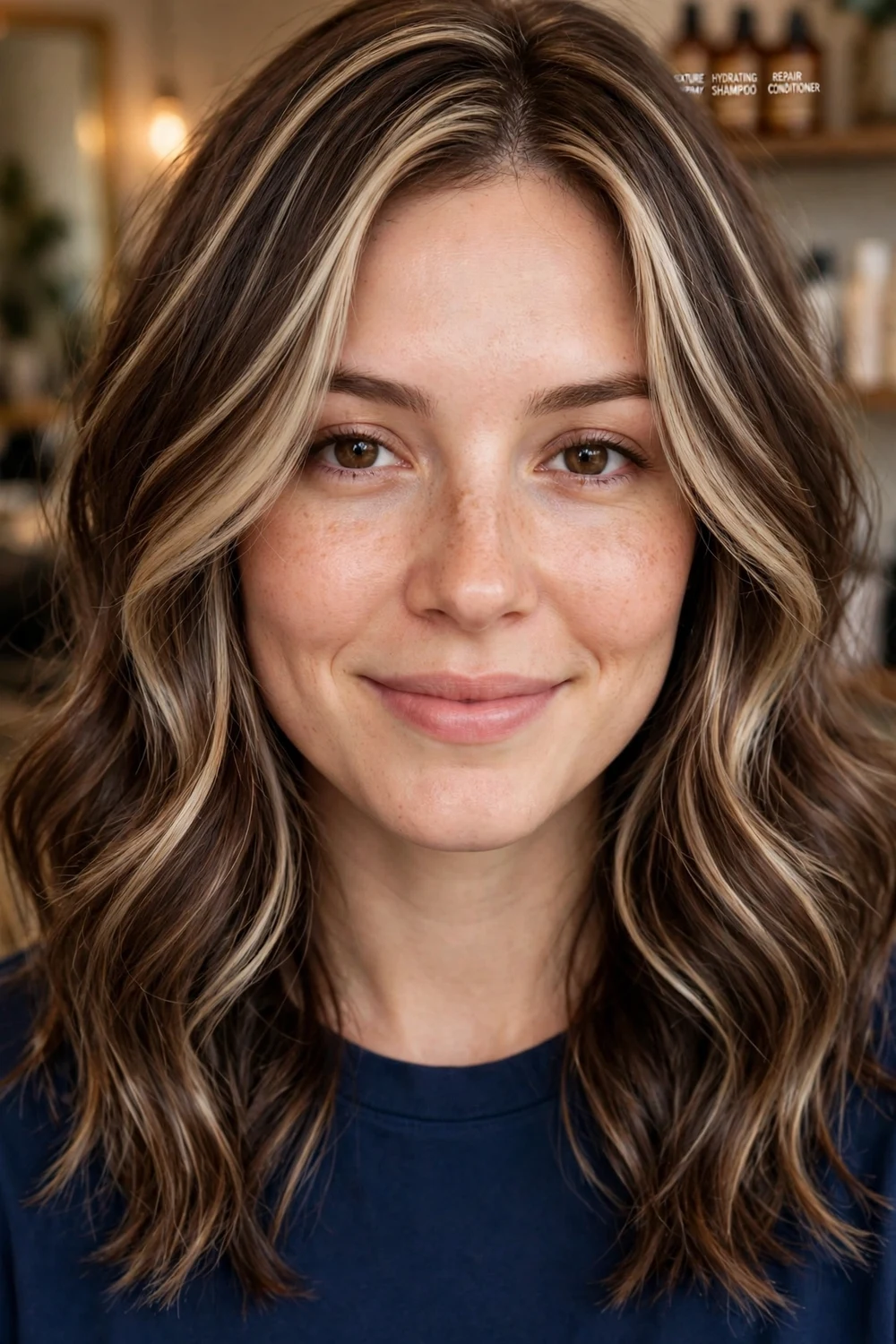
Mocha with creamy highlights weaves ultra-fine creamy beige and ivory streaks through a mocha brown base. The highlights gather around the face, where they lighten the features, and the dark and light tones together give soft contrast without a stripe pattern.
A root shadow melts the highlights into the roots for a lived-in finish. The creamy tone can cool down over time, so a warm beige gloss at six to eight weeks keeps it in the warm family.
Try this: ask for the creamy pieces kept buttery rather than pale. Pale pieces read cool, while buttery beige keeps the mocha warm.
Difficulty: Medium | Cost: $$ | Time: 2 to 3 hours
12. Rooted Toffee Brown
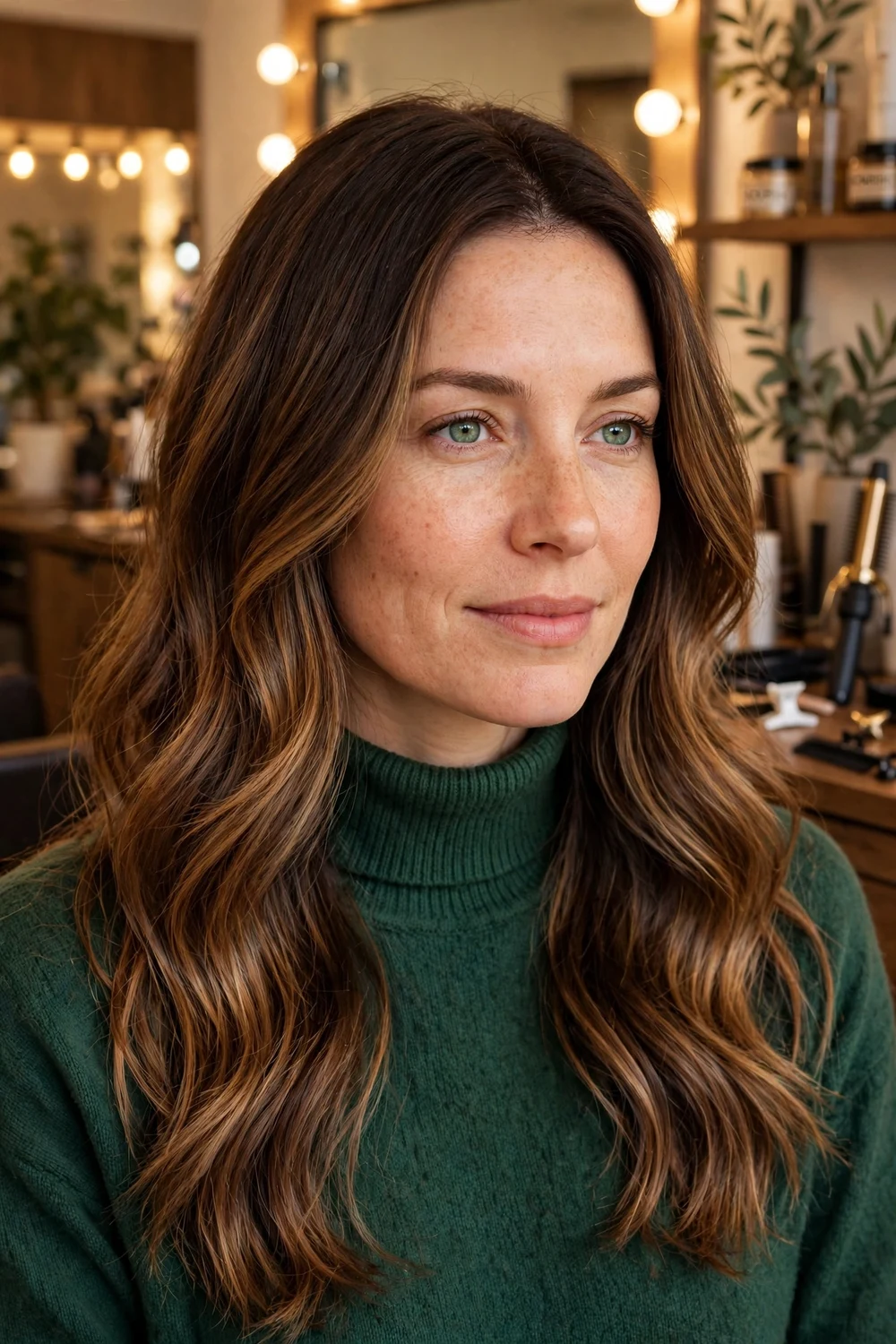
Rooted toffee brown preserves a deeper brunette root and transitions gradually into warm toffee through the mid-lengths. Around the face the color can sit slightly higher, but even those sections start with a softened root rather than a hard highlight line.
Building the depth in from day one means a missed appointment stays invisible for weeks. The toffee ends fade toward a softer caramel, which still sits comfortably in the warm family.
Try this: if you already have grown-out summer highlights, ask for a root melt into toffee toner. That converts the old blonde into this look in one visit.
Difficulty: Medium | Cost: $$ | Time: 2 to 3 hours
13. Golden Thread Brunette

Golden thread brunette weaves extremely fine golden brown pieces through a medium or deep brunette base, with most of them around the hairline and top sections where sun would lighten hair first. The first impression stays brunette, with gold showing as the hair moves.
Leave plenty of untouched brunette between the threads and the service processes far less hair than a standard highlight. The small tonal gap between thread and base also keeps regrowth quiet.
Try this: limit the threads to the top layer if your hair is thick. The untouched depth underneath makes the gold read brighter by contrast.
Difficulty: Medium | Cost: $$ | Time: 2 to 3 hours
14. Soft Walnut Brown
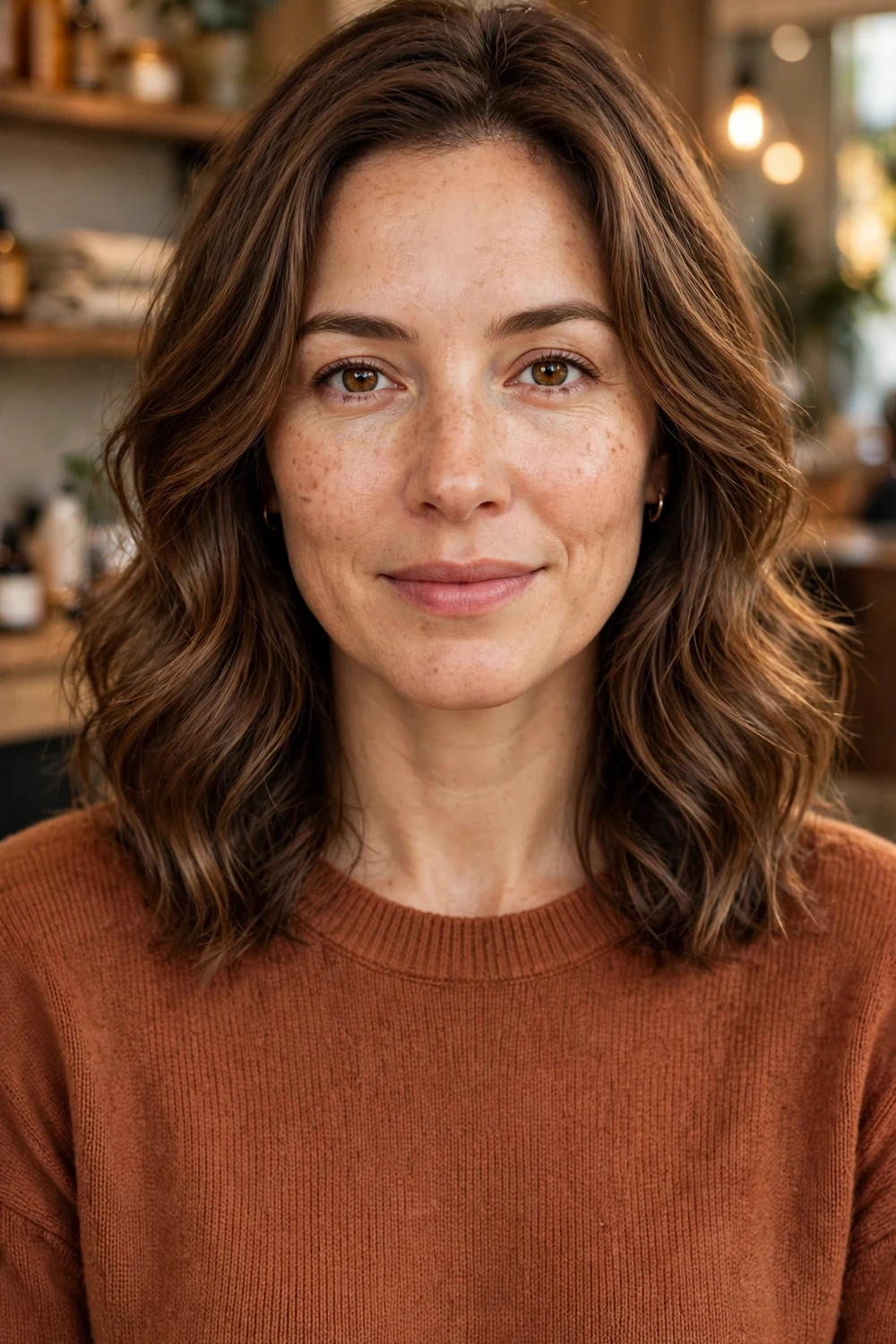
Soft walnut brown is a warm medium brown with a hint of golden depth, like the inside of a walnut shell. It suits natural brunettes in the middle range, and it works as a single warm tone rather than a highlight pattern.
A demi-permanent color or gloss can pull faded lengths back to walnut without a permanent commitment. Because the shade stays close to your natural level, new growth blends in and the color softens gradually instead of leaving a line.
Try this: choose walnut when your summer brunette has gone dull. One gloss appointment warms the whole head in under an hour of processing.
Difficulty: Easy | Cost: $ | Time: 1 hour
15. Caramel-Tipped Brunette Balayage

Caramel-tipped brunette balayage keeps most of the upper half brunette and concentrates caramel through the lower mid-lengths and ends, with a few delicate pieces traveling higher around the face. Long hair gets warm movement when it curls, while the root area stays completely untouched.
For fall, keep the caramel deeper than a summer version, closer to toasted sugar than pale gold, so the transition from brown to caramel stays smooth. The placement grows out for four months or longer.
Try this: wear your hair in your usual curl or wave pattern to the appointment. Painted placement follows how your hair actually falls.
Difficulty: Medium | Cost: $$ | Time: 2 to 3 hours
16. Warm Autumn Copper

Warm autumn copper combines rich copper tones with warm golden highlights, echoing the colors of fall leaves. It suits warm and neutral skin, and soft waves or curls show off the way the copper and gold tones trade places in the light.
Copper fades faster than brown or blonde, so plan on a copper gloss at four to five weeks. Washing in cool water and spacing out wash days slows the fade between appointments.
Try this: ask for the golden highlights kept fine and placed on the surface. Coarse golden chunks can pull this shade toward a striped finish.
Difficulty: Hard | Cost: $$$ | Time: 3 to 4 hours
17. Bright Ginger

Bright ginger is a vivid warm orange-red worn all over. Loose waves and curls suit it well because the movement adds volume and shows the full range of the ginger tone, from deeper roots to brighter ends.
Ginger sits between copper and red in upkeep: expect a gloss at four to six weeks to hold the brightness. A color-depositing conditioner in a ginger shade helps between salon visits.
Try this: if you are moving from brunette, ask for a strand test first. Ginger needs an even lift across the head, and old dark color can lift unevenly.
Difficulty: Hard | Cost: $$$ | Time: 3 to 4 hours
18. Golden Amber

Golden amber is a warm amber gold worn as an all-over tone with soft dimension from layering and light. It sits deeper than honey blonde and lighter than amber lowlights on brunette, and it suits fair to medium warm skin especially well.
All-over color means a root touch-up at five to six weeks. The amber tone fades toward gold, which keeps the grow-out warm rather than dull.
Try this: pair golden amber with long layers. Layers break up the surface so the amber reads dimensional instead of flat.
Difficulty: Medium | Cost: $$ | Time: 2 hours
19. Strawberry Honey

Strawberry honey blends strawberry blonde with honey gold tones for a warm, light result with a pink-gold cast. It suits fair and light-medium warm skin, and soft curls show the blend at its best as the strawberry and honey tones alternate.
Blondes reach strawberry honey with a toner change, while brunettes need a full lift first. The strawberry cast fades fastest, so a pink-gold gloss at five weeks keeps the balance right.
Try this: ask your colorist to keep the strawberry in the toner rather than the lift. Toner-level strawberry is easy to adjust at the next visit.
Difficulty: Medium | Cost: $$ | Time: 2 to 3 hours
20. Rich Chestnut
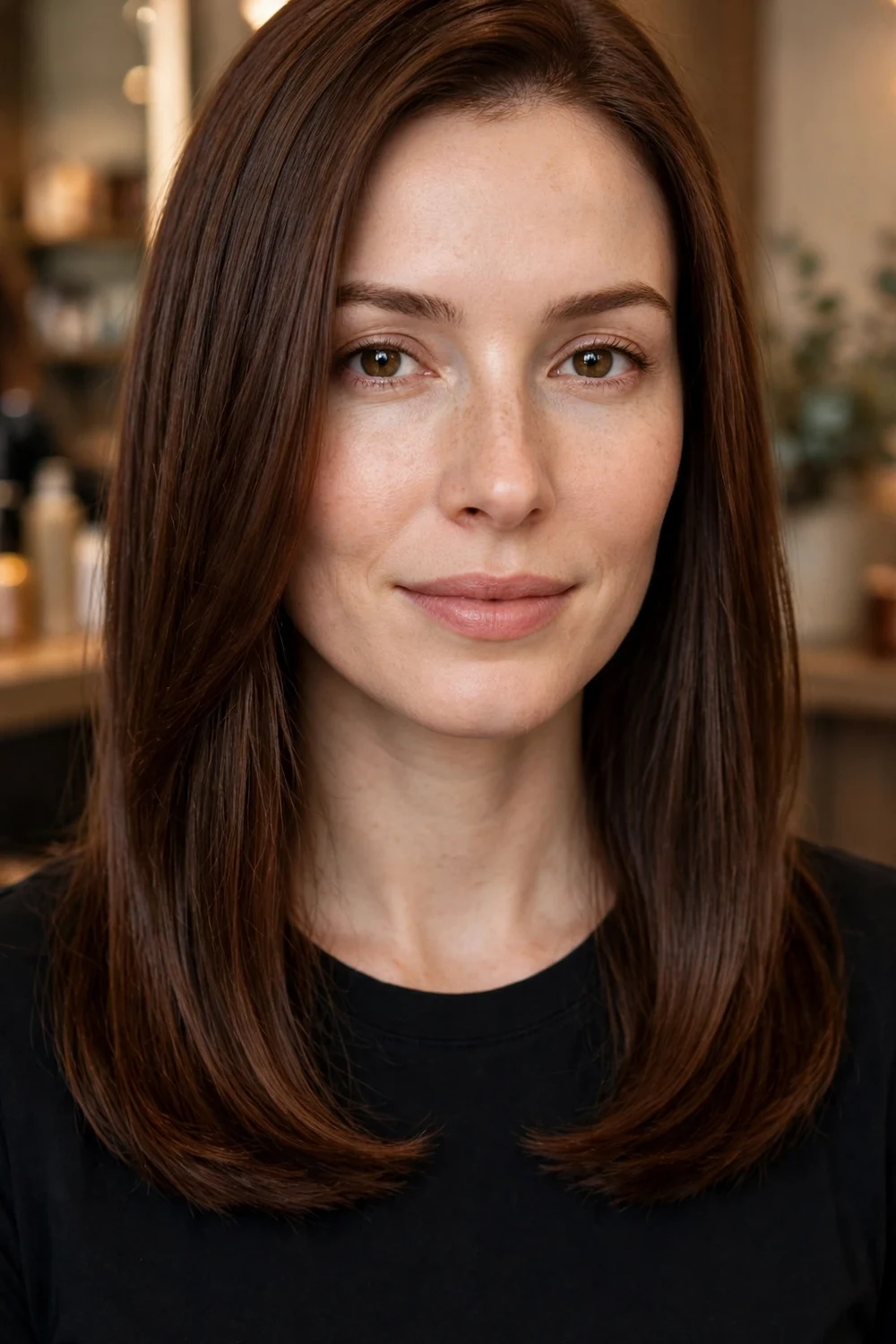
Rich chestnut is a warm, deep brown with a glossy finish, worn as a single all-over shade. It adds warmth to medium and dark bases without lightening, and it looks equally at home sleek and straight or in soft waves.
As an all-over color on a similar base, upkeep is a root touch-up at six weeks and a gloss whenever shine fades. Healthy, trimmed ends matter here, since a single shade shows dryness more than a highlighted one.
Try this: book a trim with the color. Chestnut reads richest when the ends are clean and the surface reflects light evenly.
Difficulty: Easy | Cost: $ | Time: 1 to 2 hours
21. Amber Blonde
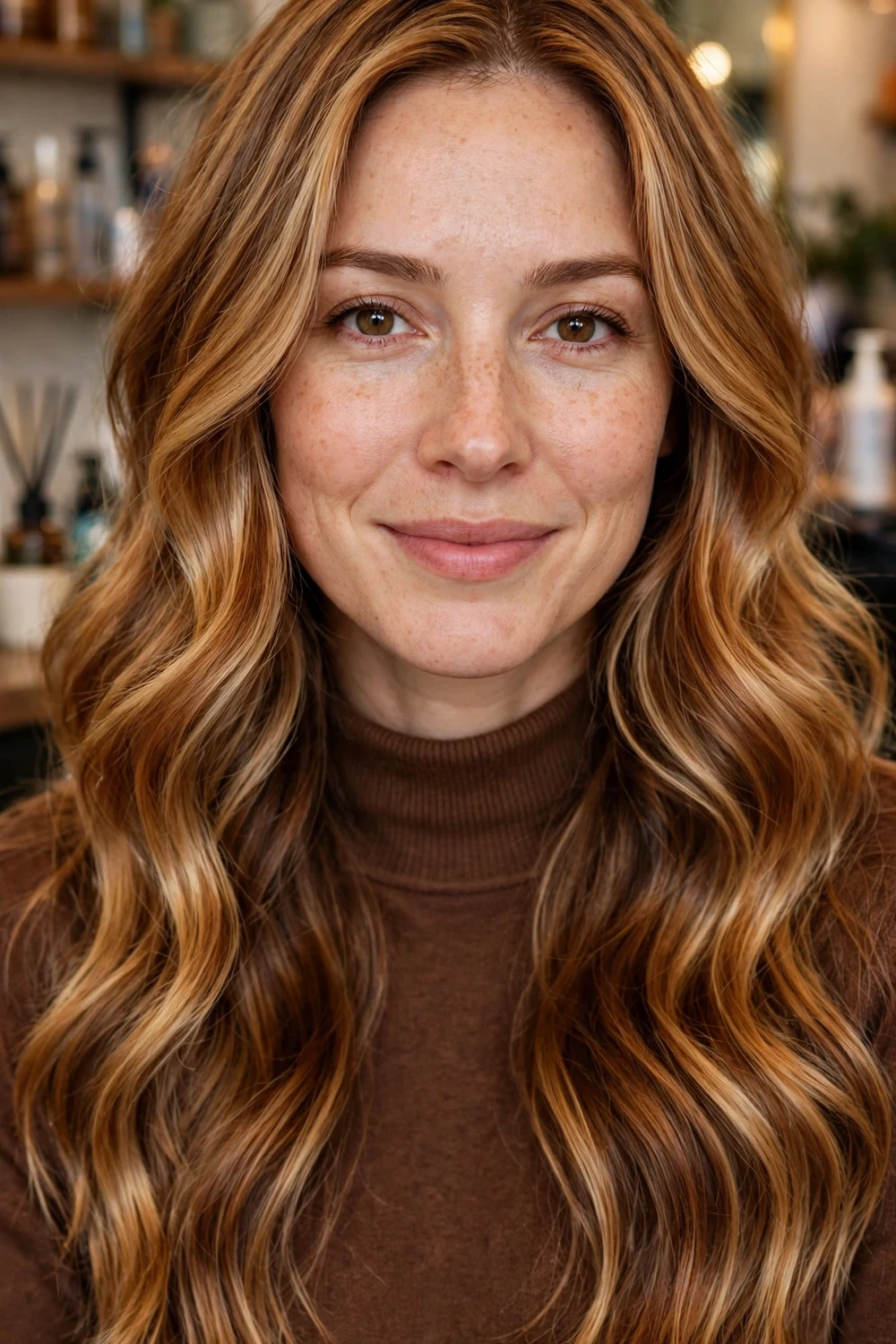
Amber blonde blends blonde with deep amber and caramel hues for a bold, warm result. The amber gives the blonde depth at the root and through the underneath, while the lighter blonde stays on the surface and around the face.
Fair to medium skin carries amber blonde best. Darker bases need a strong lift before the amber toner, which can take two sessions, and the amber depth is refreshed with a gloss at six weeks.
Try this: keep some amber underneath even if you love the light surface. Removing it makes the blonde read flat and much cooler.
Difficulty: Hard | Cost: $$$ | Time: 3 to 4 hours
22. Cinnamon Blonde

Cinnamon blonde mixes soft blonde tones with hints of cinnamon and light brown, giving blonde hair a spiced, warm cast for fall. It suits fair to medium skin that wants a seasonal change without going darker all over.
The cinnamon warmth usually comes from lowlights and a warm toner over existing blonde, so the service adds color rather than lifting more. Refresh the cinnamon lowlights at eight weeks as they soften.
Try this: if your blonde has gone too cool over summer, cinnamon lowlights alone can warm the whole head in one appointment.
Difficulty: Medium | Cost: $$ | Time: 2 to 3 hours
23. Dark Honey Brunette

Dark honey brunette keeps an overall brunette impression and adds golden honey and caramel accents through selected sections. Depth stays at the roots while warm balayage through the lengths gives the hair a reflective quality as it moves.
The honey pieces need lift, but only in the painted sections, so most of the hair stays unprocessed. A honey gloss at six to eight weeks keeps the accents golden rather than pale.
Try this: ask for the honey kept two shades lighter than your base at most. A bigger jump turns this into a blonde-leaning look with higher upkeep.
Difficulty: Medium | Cost: $$ | Time: 2 to 3 hours
24. Butter Bronde

Butter bronde sits between brunette and blonde: a buttery blend with creamy warm dimension and a blended root. It is the fall version of bronde, softer and warmer than the icy bronde shades of summer, and it suits neutral and warm skin.
Bronde can be built from either direction, by lightening a brunette or by adding lowlights to a blonde. The blended root keeps grow-out forgiving for three months, with a butter gloss at eight weeks.
Try this: decide your direction with your colorist first. Lightening up and lowlighting down land in different cost bands for the same finished shade.
Difficulty: Medium | Cost: $$ | Time: 2 to 3 hours
25. Vintage Rust
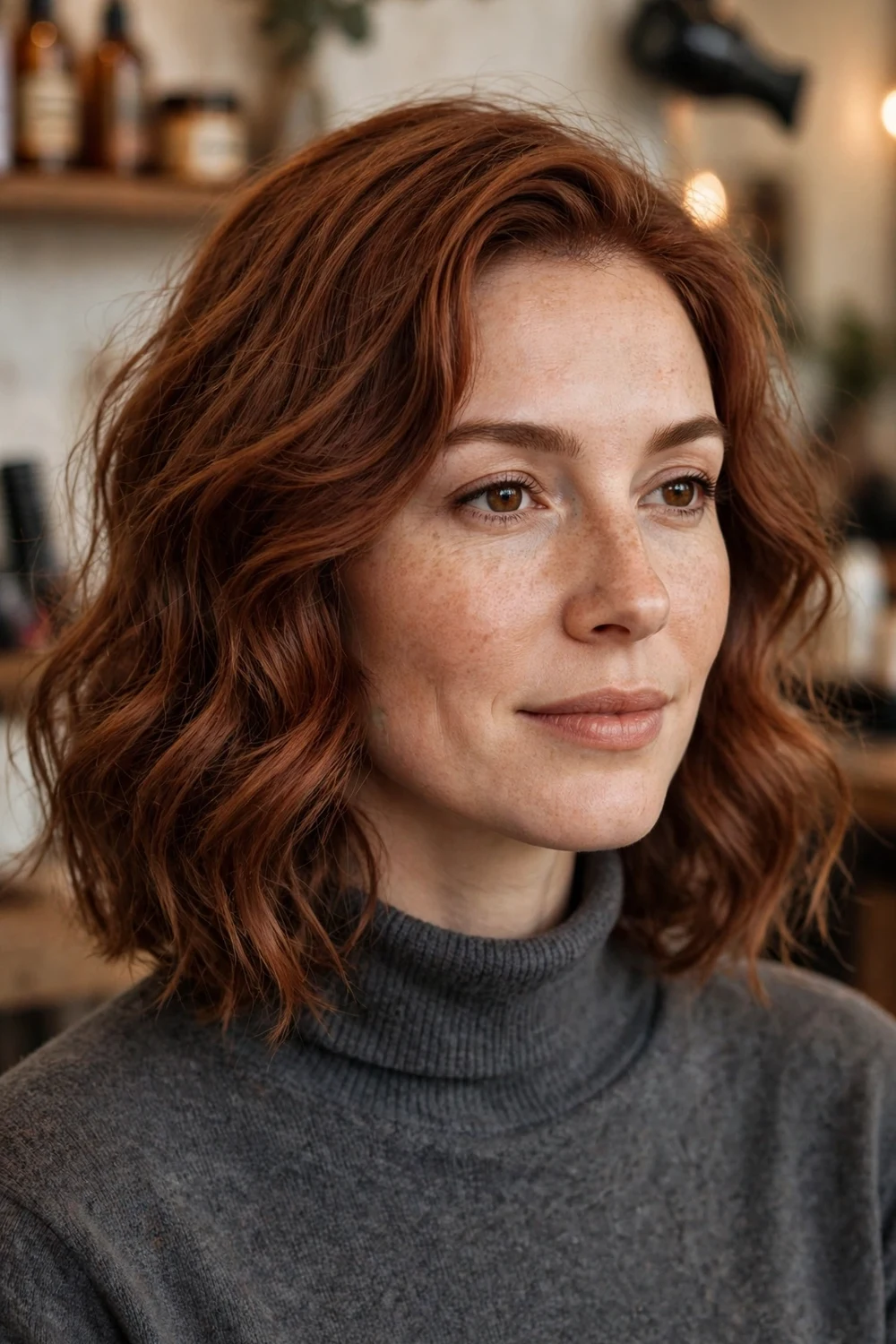
Vintage rust is a muted rust red-brown with a soft, worn-in finish. It gives red-curious readers a warm fall shade that reads calmer than bright copper or ginger, and it suits warm skin across light, medium, and deep ranges.
Rust tones fade toward a warm brown, which keeps this shade forgiving as it ages. A rust gloss at five weeks holds the red-brown balance, and the faded version still works as a warm brunette.
Try this: choose rust if you liked copper in photos but found it too bright in person. The muted version wears much closer to brunette.
Difficulty: Medium | Cost: $$ | Time: 2 hours
26. Almond Milk Blonde

Almond milk blonde is a creamy, warm off-white blonde with soft golden depth kept at the root. It gives very light hair a fall update by warming the tone and adding root depth, so the blonde reads creamy instead of stark.
Reaching this shade from a darker base takes a full blonding service, often across two sessions. Existing blondes get there with a toner and root shadow in one visit, then maintain with a gloss at six weeks.
Try this: keep the golden root shadow subtle, within one shade of the lengths. A deep shadow on very light hair can read as regrowth.
Difficulty: Hard | Cost: $$$ | Time: 3 to 4 hours
Warm Fall Shades at a Glance
| Warm family | Shades on this list | Skin tones | Upkeep |
|---|---|---|---|
| Light warm blondes | Toasted honey, almond milk, strawberry honey, cinnamon blonde | Warm and neutral | Medium to high |
| Golden brunettes | Golden hour, candlelit, dark honey, golden thread | Warm and neutral | Low to medium |
| Caramel and toffee placements | Caramel-tipped balayage, rooted toffee, chocolate caramel | Warm | Low to medium |
| Cinnamon and chestnut warmth | Cinnamon cocoa, maple cinnamon, rich chestnut, walnut | Warm, and cool skin in lengths | Low to medium |
| Copper, ginger, and rust | Warm autumn copper, bright ginger, vintage rust | Warm | High |
For the opposite end of the season, the dark fall hair colors list covers the deep espresso, black cherry, and burgundy families. Readers who prefer painted placement over all-over color can also compare the fall balayage hair colors list, where many of these same warm tones appear in balayage form.
More Ideas to Explore
Frequently Asked Questions
What makes a fall hair color warm?
A warm fall hair color carries gold, amber, copper, cinnamon, or caramel tones. Those tones reflect warm light, so the hair reads golden or red-brown rather than ashy or cool. Every shade on this list is built from those warm tones, from toasted honey blonde at the light end to cinnamon cocoa brunette at the deep end.
Which warm fall shades need the least upkeep?
The lowest upkeep options keep color away from the root: amber face-framing balayage, candlelit brunette, caramel-tipped brunette balayage, and golden thread brunette. Gloss-only shades like soft walnut brown and cinnamon cocoa brunette are also easy to maintain, since they fade evenly and refresh in a short appointment.
Can cool skin tones wear warm fall hair colors?
Yes, with the warmth placed carefully. Cool skin usually suits the deeper warm shades, such as cinnamon cocoa brunette, rich chestnut, and vintage rust, better than very golden blondes. Keeping warmth in the lengths and away from the hairline, or choosing a red-brown warmth rather than a yellow-gold warmth, helps the shade sit well with cool skin.
How do I keep warm tones from fading or turning dull?
Warm tones fade through washing and heat. Wash in lukewarm or cool water, use color-safe shampoo, and space out wash days where you can. A warm gloss at five to eight weeks, matched to your shade family, restores the gold, amber, or cinnamon tone before it fades to plain brown or pale blonde.
Should I choose a warm gloss or a full color service?
Choose a gloss if your base is already close to the shade you want and you mainly need warmth and shine added. Choose a full color service if you need lift, if you are changing depth, or if old color has to be evened out first. Many readers start with a gloss in shades like soft walnut or cinnamon cocoa, then book the fuller service once they know they like the warm direction.
Final Thoughts
Warm fall color works when the warmth is chosen on purpose: gold and honey for readers who want light, caramel and toffee placements for readers who want low upkeep, and cinnamon, copper, and rust for readers who want the deepest seasonal change. Pick the family that matches your skin and your calendar first, then the exact shade inside it. Any of the 26 shades above will carry your hair through the season in the warm direction.

