

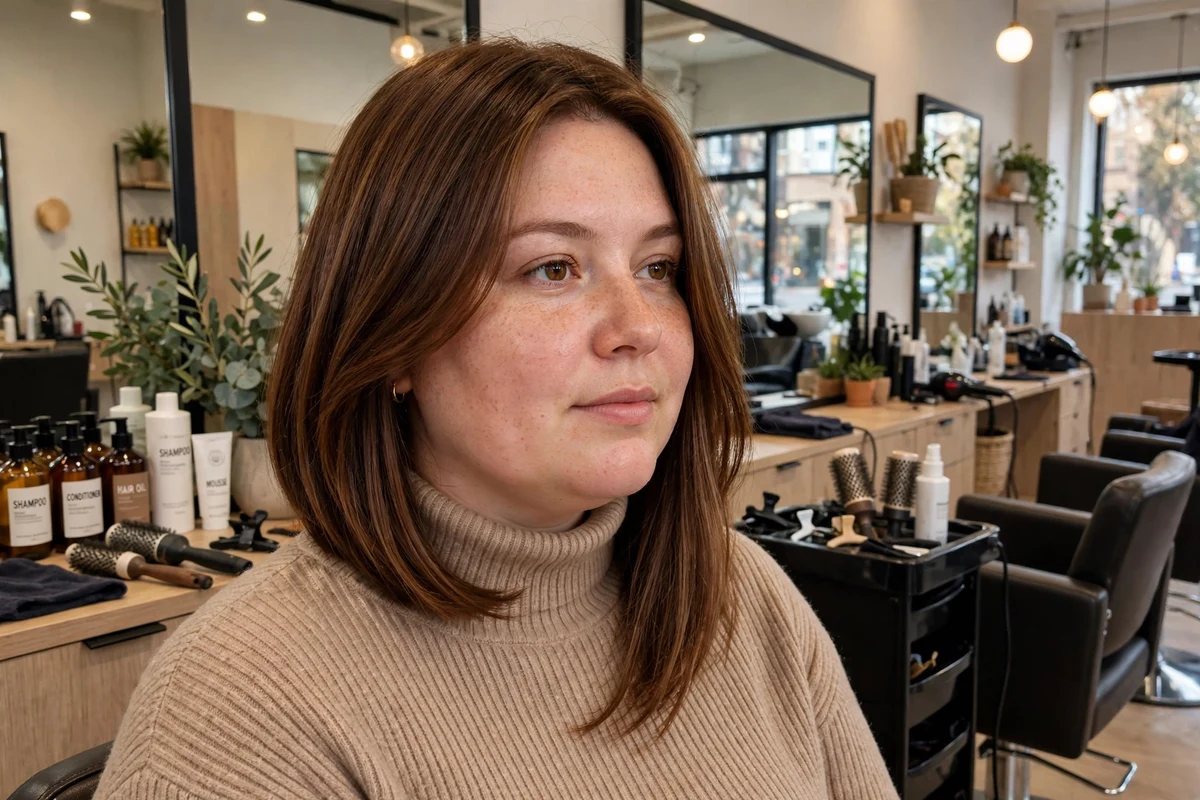
If you have a round face and you keep saving bob photos, the long bob is the version I would look at first. It keeps the clean shape of a bob, but the length falls past your chin, and that extra length changes how the whole cut sits on your face.
In this guide I have gathered long bob haircuts for round faces that use angles, asymmetry, long layers and parts to draw the eye down. Every idea below keeps the front below the jaw, skips width at the cheeks, and includes the exact detail to ask for at the salon.
Key Takeaways
- Keep the front of your lob below your chin, ideally at the collarbone, so the cut does not stop at the widest part of your face.
- Angles, deep side parts and asymmetry add diagonal lines that help a round face read longer.
- Start layers and bangs below the cheekbones, so nothing adds width at cheek level.
- Add lift at the crown only. Volume at the sides works against the shape you want.
- Waves and curls look best when they start below the cheekbones, not at the roots near the cheeks.
Short on time? The table below compares five popular picks from the list, so you can narrow your shortlist before you scroll through all of the ideas.
| Idea | Best For | Upkeep | Main Slimming Detail |
|---|---|---|---|
| Timeless Collarbone Lob with Soft Edges | Straight to wavy hair | Low | Length well past the chin |
| A-Line Angled Lob | Straight hair | Medium | Diagonal front line |
| Asymmetrical Lob with a Deep Side Part | Straight to wavy hair | Medium | Uneven lengths and a diagonal part |
| Natural Curly Lob | Curly hair | Medium | Dry length past the chin |
| Curtain Bangs Lob with Longer Front Pieces | Straight to wavy hair | Medium | Bangs that open below the cheekbones |
1. Timeless Collarbone Lob with Soft Edges

The front falls to the collarbone, well past the chin, so the eye reads length before it reads width. Keep the hem in one clean line with only the lightest softening at the corners.
Best for straight to wavy hair. Ask for the length to be checked dry and standing up, since collarbone length can ride higher once hair bounces back.
Try this: Blow dry with a paddle brush, pulling the front sections down and slightly forward. Finish with a quick pass of a flat iron on the ends only.
Difficulty: Low · Cost: $
2. A-Line Angled Lob

The back sits shorter at the nape and the front drops longer, forming a diagonal line on each side of the face. That angle is the whole point, so keep the front pieces at least two fingers below the jaw.
Best for straight or lightly wavy hair. Show your stylist where you want the longest front point to land, and ask for the angle to be visible from the side, not just the front.
Try this: Dry the back under first, then smooth the long front panels forward. A small bend at the very ends keeps the line sharp without looking stiff.
Difficulty: Medium · Cost: $$
3. Asymmetrical Lob with a Deep Side Part

One side is left noticeably longer than the other, and a deep side part sweeps hair across the forehead on a diagonal. The uneven lengths break up the round outline from every view.
Best for straight to wavy hair. Pick the longer side before the cut starts, and keep the difference clear but wearable, about an inch to an inch and a half.
Try this: Train the part for a week by blow drying it in place after each wash. Tuck the shorter side behind your ear to make the contrast read.
Difficulty: Medium · Cost: $$
4. Inverted Lob with a Lifted Back

Shorter stacked layers at the back lift the shape, while the front stays long and falls past the chin. The lift sits at the back of the head, so the sides near the cheeks stay close and calm.
Best for medium to thick hair. Ask for gradual stacking rather than a steep shelf, which can look dated and can puff out at the sides.
Try this: Blow dry the back with a small round brush for lift, then let the front fall smooth. Keep product off the cheek area so the sides stay flat.
Difficulty: Medium · Cost: $$
5. Layered Lob with Face-Framing Pieces
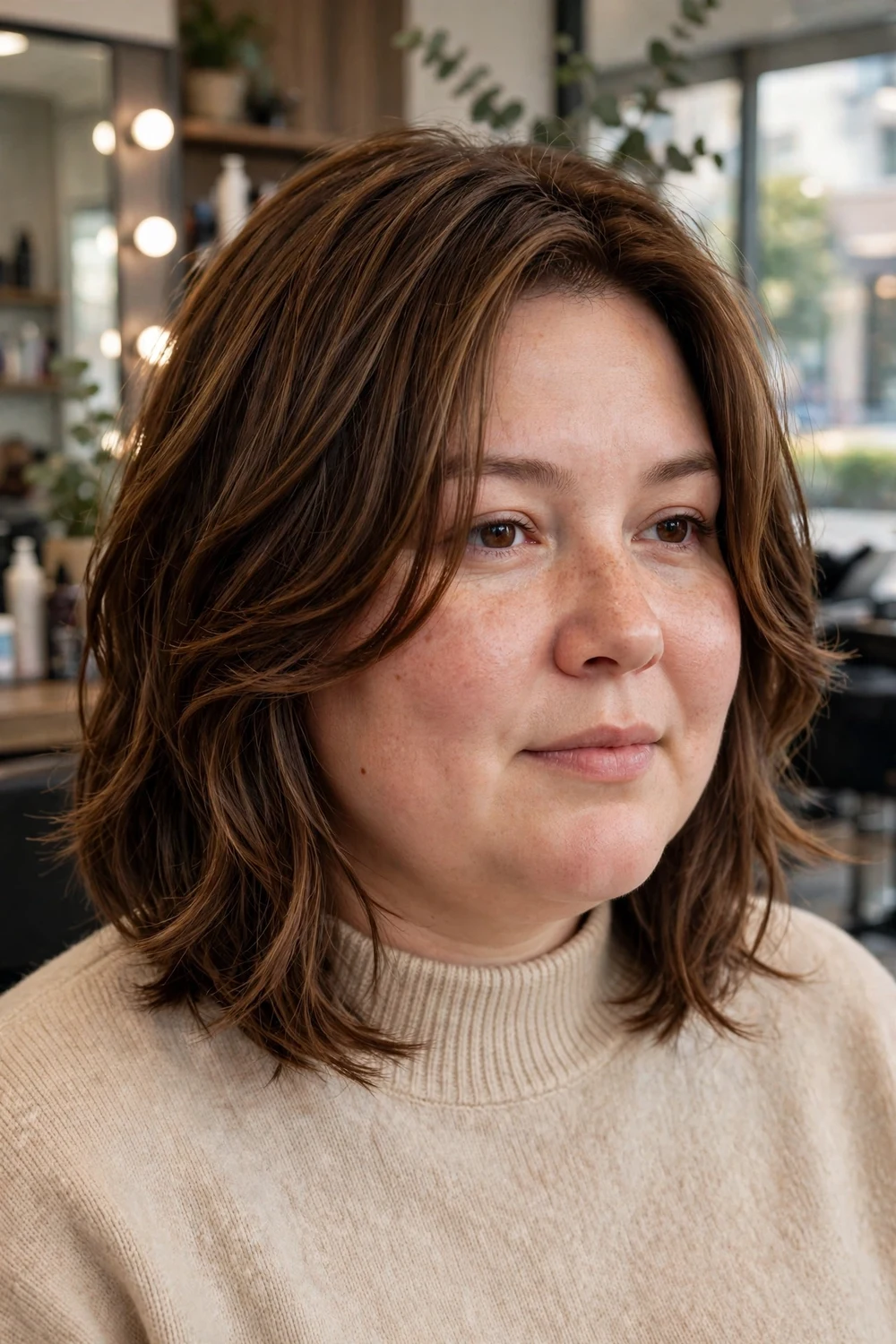
Long layers start below the cheekbones and the front pieces trace a soft line down past the jaw. Starting the layers low is the key detail, since layers that start at the cheeks add width there.
Best for most hair types. Point to the spot below your cheekbone where the first layer should begin, and ask for the framing pieces to stay long.
Try this: Scrunch in a light mousse and air dry, or add loose waves from mid-length down. Keep the first few inches near the face smooth.
Difficulty: Low · Cost: $
6. Textured Lob with Choppy Ends
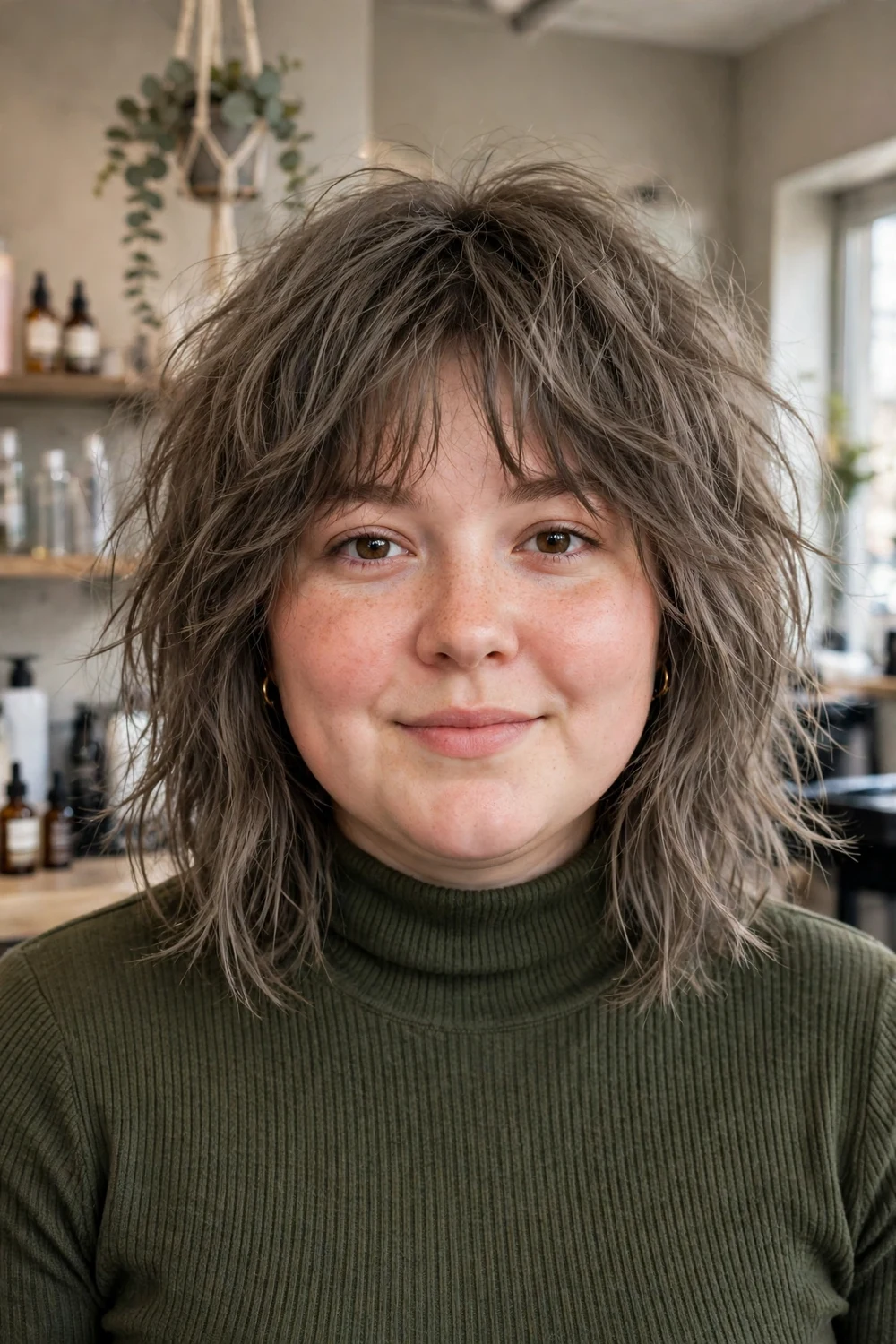
Point-cut, piecey ends stop the hem from reading as one solid horizontal line. The broken edge draws the eye down and gives fine hair movement without a lot of layering through the top.
Best for fine to medium hair. Ask for texture at the ends only, so the top and sides keep their smooth, slim shape.
Try this: Work a pea-size amount of texture cream through the ends on dry hair and pinch small sections apart. Skip heavy oils that flatten the pieces.
Difficulty: Low · Cost: $
7. Shaggy Razor-Cut Lob
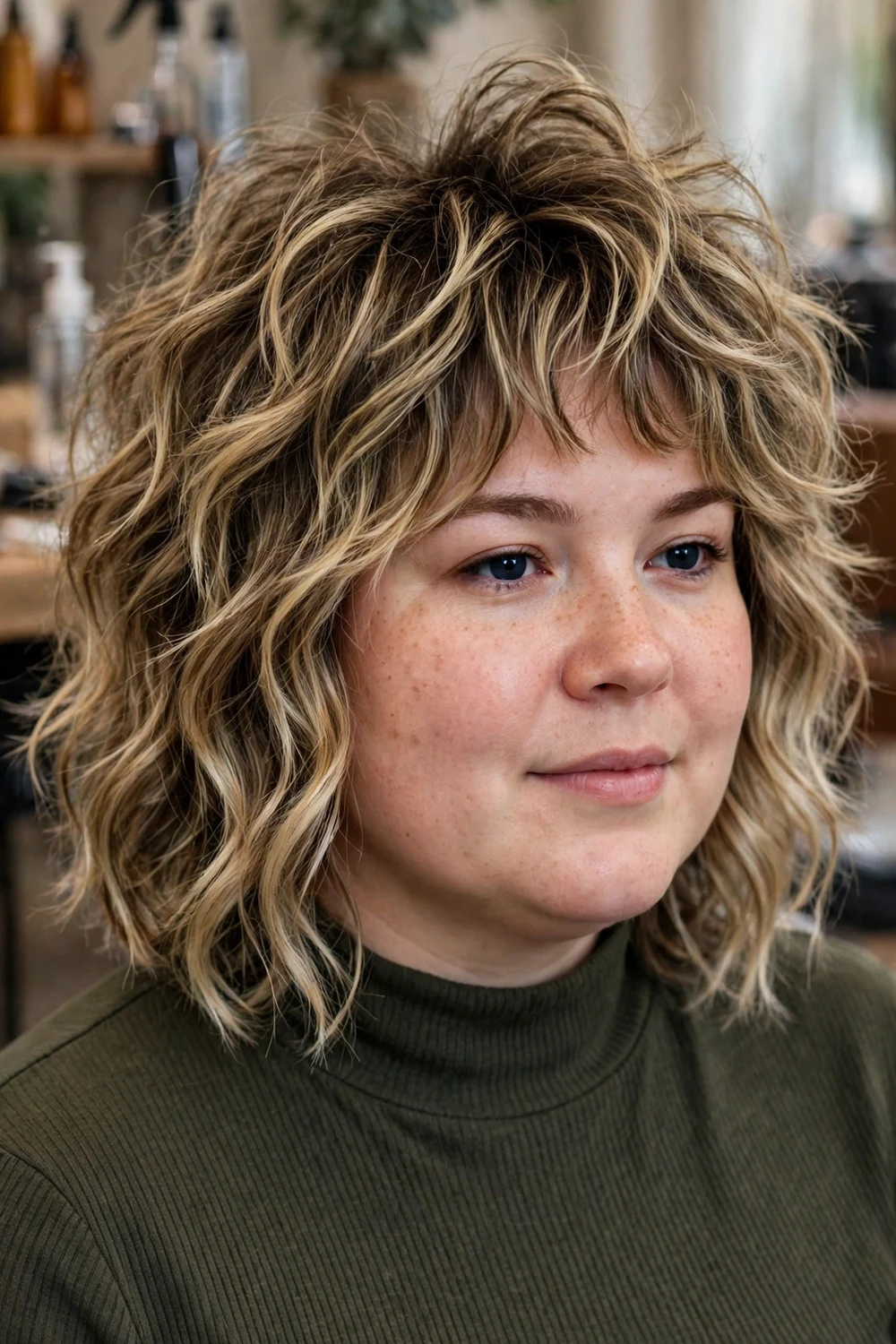
Soft shag layers and feathered ends give this lob a lived-in shape, with more lift near the crown and less bulk near the jaw. The top lift helps a round face read longer.
Best for wavy or thick hair. Ask your stylist to keep the shag layers long and to leave the front length past the chin, even after the razor work.
Try this: Diffuse wavy hair or rough dry straight hair with your fingers. A light salt spray on the ends adds separation without adding width at the cheeks.
Difficulty: Medium · Cost: $$
8. Sleek Straight Lob with a Center Part
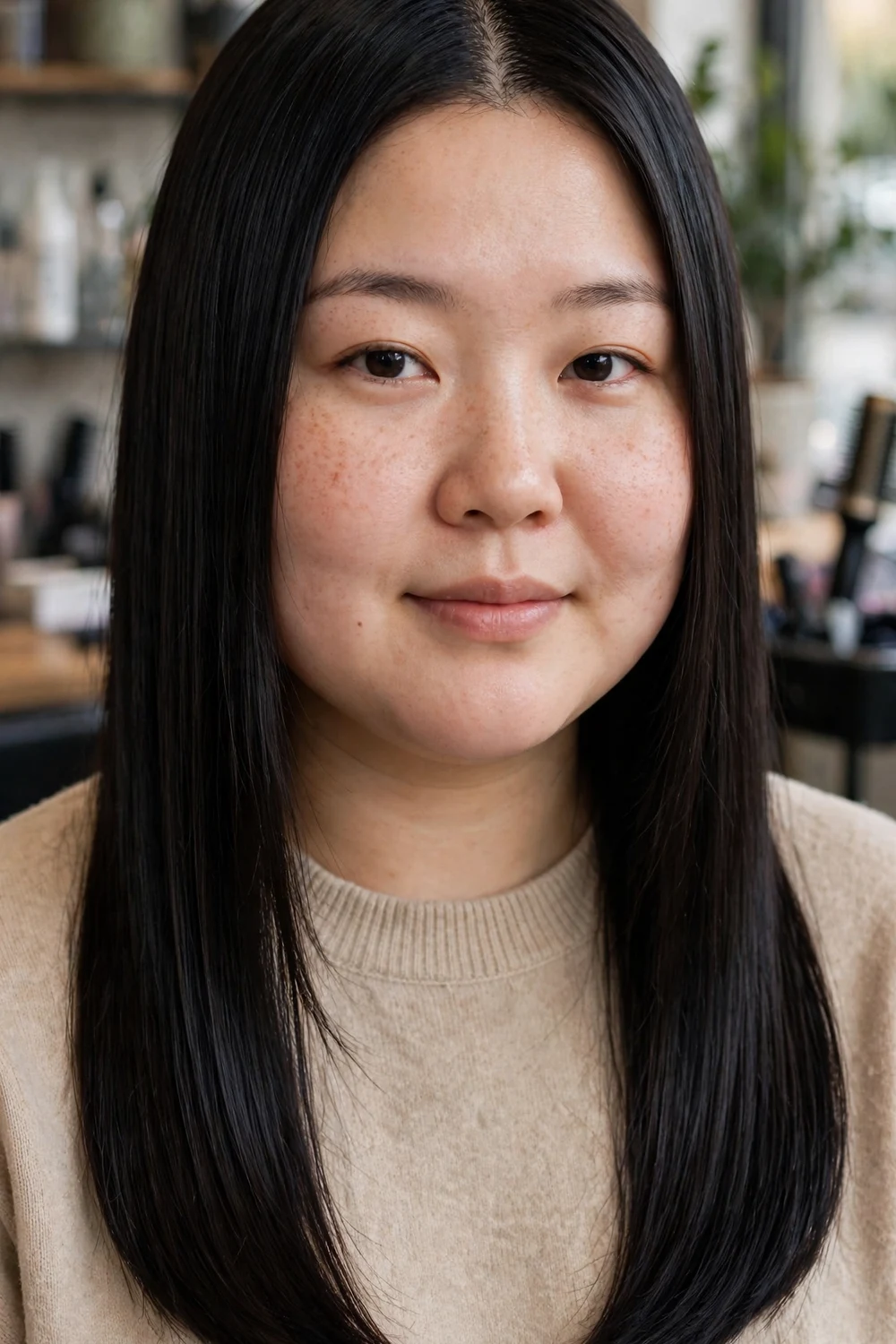
Worn past the chin, a center part splits this lob into two long front panels that frame the face in straight vertical lines. The length does the work here, so the cut needs to sit at or below the collarbone.
Best for straight hair. Keep the hem blunt and the front panels equal, and trim on a regular schedule so the line stays clean.
Try this: Flat iron in small sections from roots to ends, keeping the iron moving. Tuck both sides behind the shoulders for an even longer line.
Difficulty: Low · Cost: $
9. Blunt Lob with Beach Waves

A blunt hem gives fine hair a fuller-looking edge, while loose beach waves added through the mid-lengths keep the shape from looking boxy on a round face.
Best for fine to medium hair. Curl away from the face and leave the top three inches smooth, so waves do not start at cheek level.
Try this: Use a large-barrel iron on the mid-lengths only, then comb through with your fingers once the waves have cooled. Finish with a light hold spray.
Difficulty: Medium · Cost: $$
10. Wavy Lob with Dark Roots

Loose waves sit below the chin and a darker root area adds depth at the top of the head. The contrast keeps attention moving down the length instead of across the face.
Best for wavy hair, grown-out color. Ask for waves that start below the cheekbones, and keep the root shade close to your natural color for a soft grow-out.
Try this: Enhance natural waves with a curl cream on damp hair, or add a few loose bends with a wand and leave the ends out for a softer finish.
Difficulty: Medium · Cost: $$
11. Natural Curly Lob
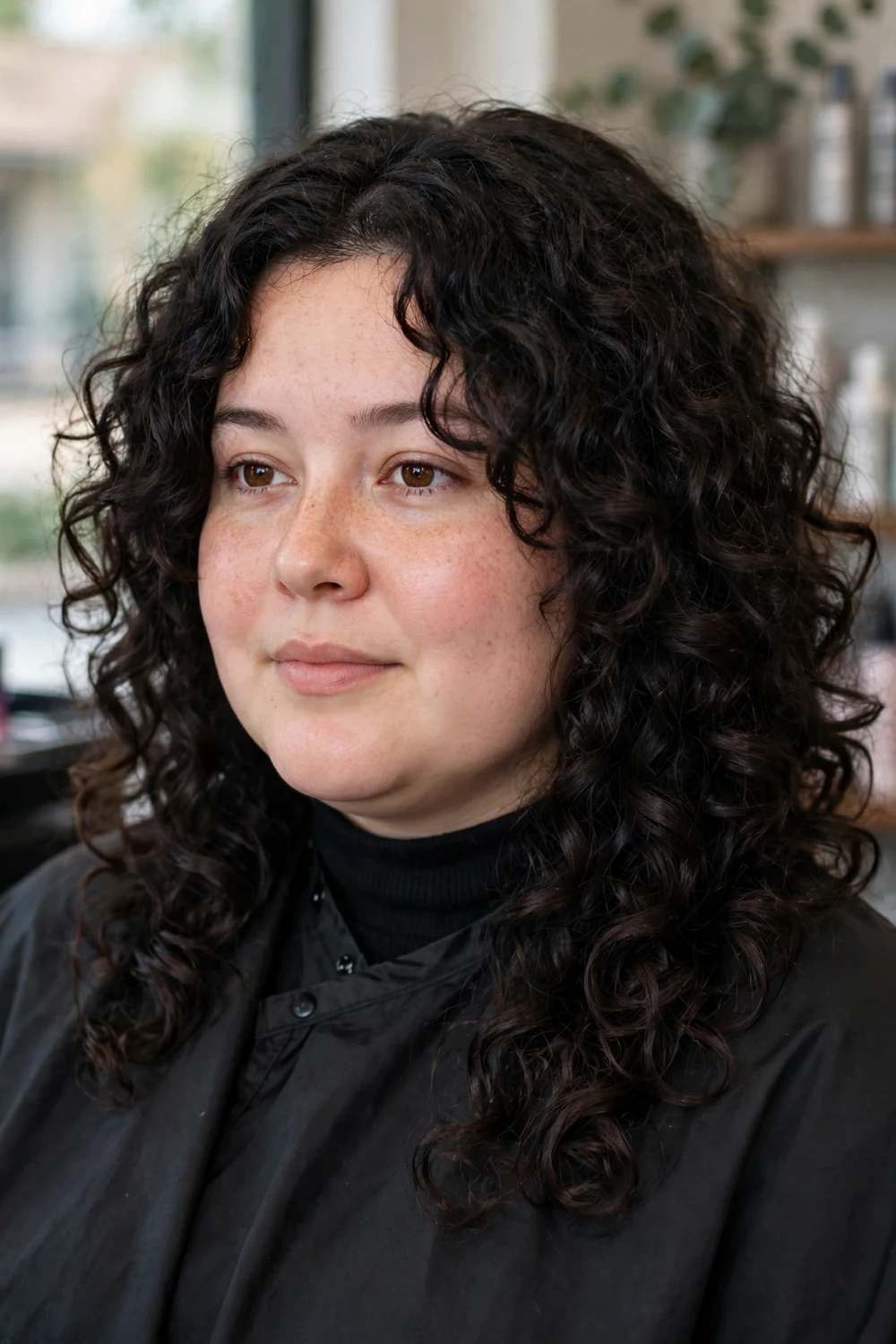
Cut long enough to allow for shrinkage, a curly lob falls past the chin when dry and lets curls stack in a longer shape. A few long layers stop the sides from springing out into a wide triangle.
Best for curly hair. Ask for the cut to be shaped dry or checked dry, and name your dry goal length, not the wet length.
Try this: Apply curl cream in sections, twist a few face-framing curls with your fingers, and diffuse on low. Keep the top layers longer so curls near the cheeks stay calm.
Difficulty: Medium · Cost: $$
12. Curtain Bangs Lob with Longer Front Pieces
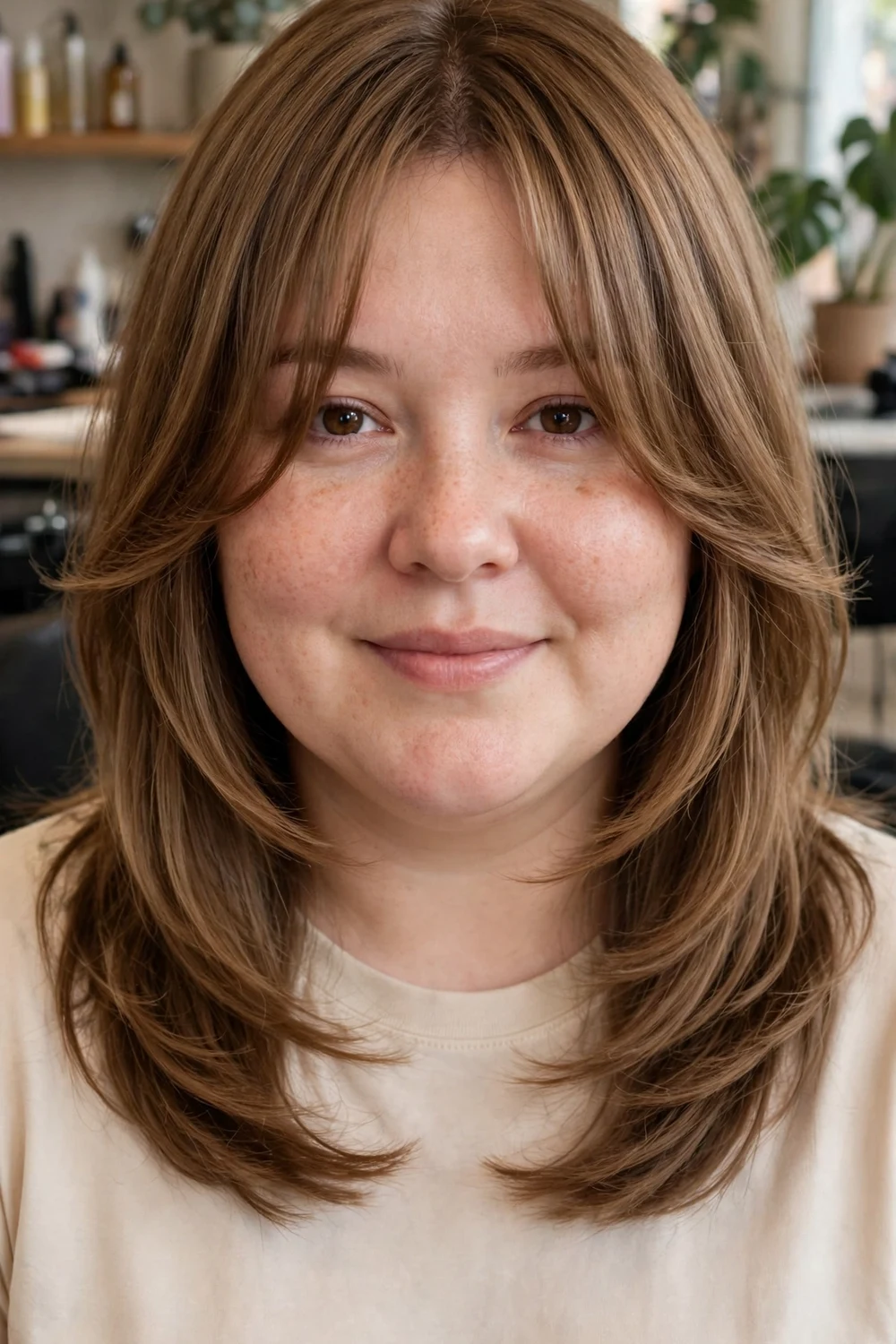
Curtain bangs part in the middle and sweep out to each side, opening at the cheekbones and blending into long front layers. On a round face they should open low, at or below the cheekbones, so they frame rather than widen.
Best for straight to wavy hair. Ask for the shortest point of the bangs to sit near the nose and the outer corners to blend in below the cheekbones.
Try this: Blow dry the bangs forward first, then sweep them to each side with a round brush. Readers who like this pairing can see more in our guide to a long bob with curtain bangs.
Difficulty: Medium · Cost: $$
13. Side-Swept Bangs Lob with a Slimming Diagonal

A long side-swept fringe cuts a diagonal line across the forehead and melts into the longer side of the lob. It is a good pick if you want bangs without a straight line across the face.
Best for most hair types. Keep the fringe long enough to tuck behind your ear on days you want it off your face.
Try this: Blow dry the fringe across your forehead in the direction it will fall, using a paddle brush. A tiny amount of smoothing cream stops it lifting at the root.
Difficulty: Low · Cost: $
14. Wispy Bangs Lob with Length Past the Chin

Wispy bangs are light and broken up, so they soften the forehead without drawing a heavy horizontal line. Paired with a lob past the chin, they keep the focus on length.
Best for fine to medium hair. Ask for the bangs to be point-cut and sparse in the middle, with longer pieces at the edges that blend into the sides.
Try this: Blow dry the bangs straight down with a flat brush, then push them slightly to one side. Trim little and often rather than taking a lot off at once.
Difficulty: Medium · Cost: $$
15. Tousled Lob with Soft Waves
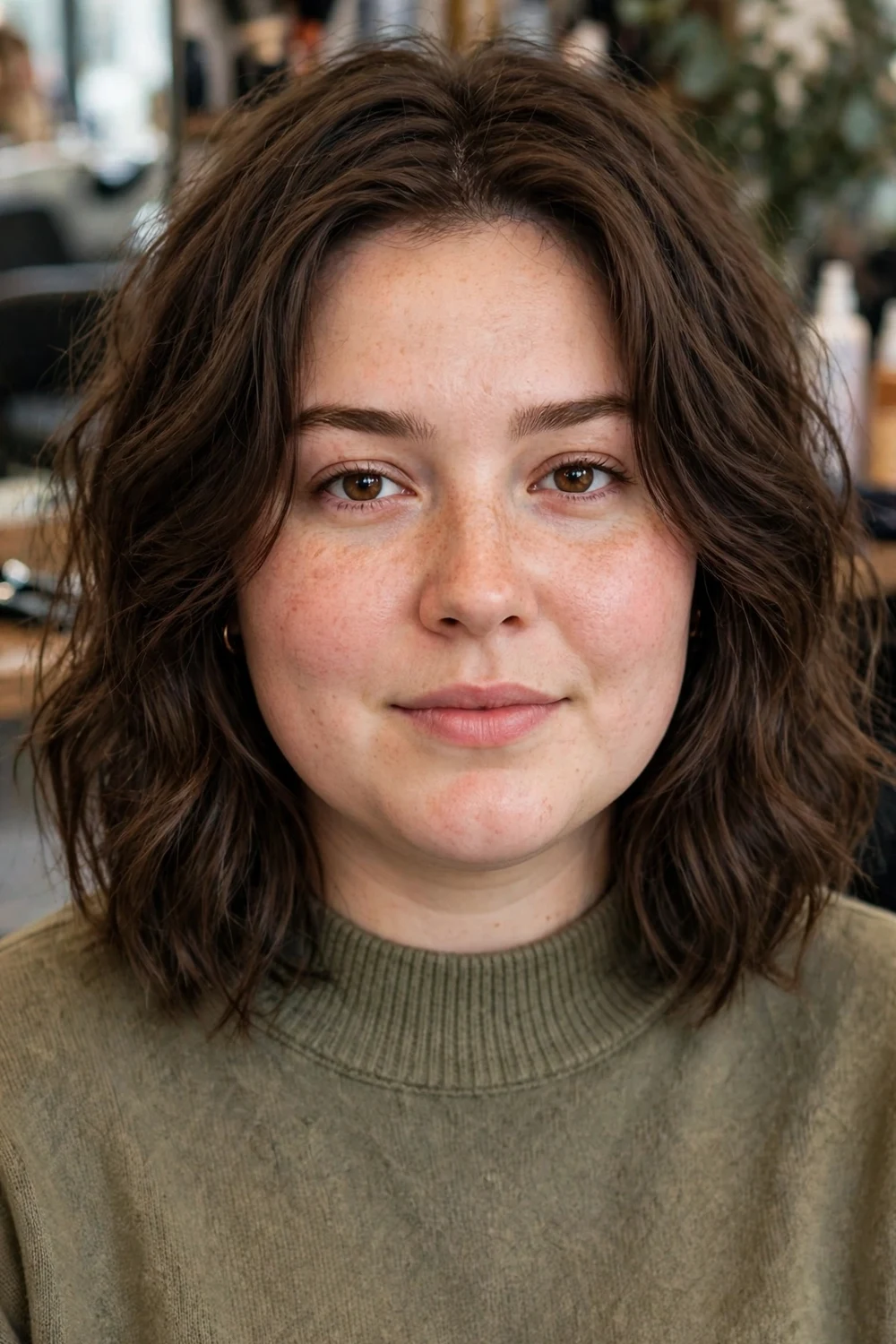
A tousled finish gives a plain lob movement while the length stays safely below the jaw. Keep the texture loose and low, with the smoothest part of the hair near the cheeks.
Best for wavy hair. Ask for minimal layering if your hair is fine, since too much layering can make a tousled finish look thin at the ends.
Try this: Mist damp hair with a wave spray, twist it into two loose sections, and air dry. Shake the waves out with your fingers instead of a brush.
Difficulty: Low · Cost: $
16. Balayage Lob with Face-Framing Layers

Lighter pieces painted through the front and ends draw two bright lines down the sides of the face. Placing the lightest sections at the front, and keeping depth at the roots, adds length on sight.
Best for medium to thick hair. Ask for the brightest pieces to start below the cheekbones, so the light does not widen the mid-face.
Try this: Style with loose waves to show the color placement, and use a color-safe shampoo to keep the painted sections clear and bright.
Difficulty: Medium · Cost: $$$
17. Lob with Money Piece Highlights

Two brighter front strands frame the face from root to tip and pull the eye straight down. The rest of the lob can stay your base color, which keeps upkeep lower than a full head of color.
Best for straight to wavy hair. Keep the bright strands slim rather than wide, so they read as a frame and not as two blocks at cheek level.
Try this: Wear the front pieces smooth and forward on color days. A gloss treatment between appointments keeps the light strands from looking dull.
Difficulty: Medium · Cost: $$
18. Lob with Vertical Highlights

Fine highlights placed in vertical panels, rather than in horizontal foils across the head, echo the long line of the cut. Concentrate them near the front and through the ends.
Best for straight or wavy hair. Ask your colorist to keep the panels narrow and to leave natural depth between them, which keeps the effect subtle.
Try this: A center or deep side part both work here, since the panels run down the length either way. Straight styling shows the placement most clearly.
Difficulty: Medium · Cost: $$
19. Lob with an Undercut for Thick Hair

A hidden undercut at the nape removes weight where thick hair tends to push a lob outward. The top length stays long and smooth, so the shape stays slim at the sides.
Best for thick hair. Ask for the undercut to stay low and hidden, and check how it will look with your hair tied up before you commit.
Try this: Blow dry the top layer down and forward to cover the undercut line. Book clean-ups for the nape between full cuts if your hair grows fast.
Difficulty: Medium · Cost: $$
20. Blunt Collarbone Lob for Fine Hair

Fine hair often looks fuller with a blunt hem, and at collarbone length that hem sits far below the widest part of a round face. Very light internal layering can add movement without thinning the edge.
Best for fine hair. Ask your stylist to keep the perimeter strong and to skip thinning shears on the last two inches.
Try this: Use a volumizing mousse at the roots only, then blow dry with the front sections pulled forward and down. Keep conditioners off the roots.
Difficulty: Low · Cost: $
21. Lob with Crown Lift and Tapered Ends

Height at the crown and ends that taper gently give this lob a longer outline from the front and the side. The lift is on top, so nothing is added at cheek level.
Best for fine to medium hair. Ask for the ends to be tapered softly, not thinned hard, so the hem still looks tidy in photos.
Try this: Blow dry the crown with a round brush, lifting straight up, then smooth the sides down. This is the same height-first idea used in our hairstyles to slim a round face guide.
Difficulty: Low · Cost: $
22. Sleek Lob Tucked Behind One Ear
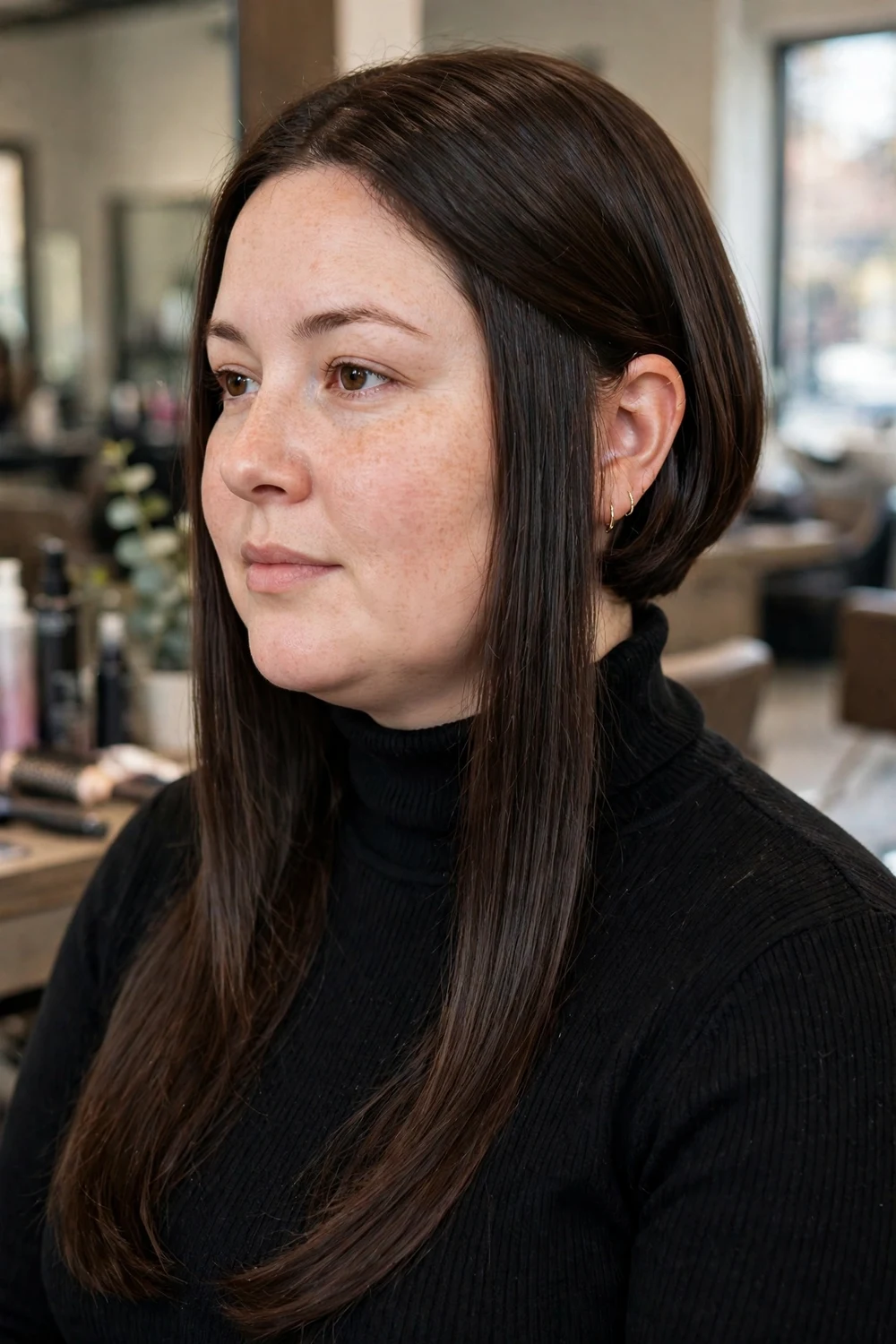
Tucking one side behind the ear opens the neck and jaw on that side and adds a clear uneven detail to a simple lob. The untucked side stays long and forward, so the face keeps its long frame.
Best for straight to wavy hair. Keep the cut itself even and simple, since the tuck does the styling work. It pairs well with the cuts in our long bob hairstyles roundup.
Try this: Smooth the tucked side with a small amount of cream and secure it with a flat pin if your hair is thick. Leave the other side loose and forward.
Difficulty: Low · Cost: $
23. Shoulder-Length Lob for Older Women

A shoulder-length lob with soft layers and a side part is easy to style and keeps length below the jaw at an age when many cuts go shorter. Soft gray blending or a gentle gloss can be added without changing the cut.
Best for fine to medium hair. Ask for layers that start low and a side part on your natural side, so daily styling stays simple.
Try this: Blow dry with a medium round brush for a soft bend at the ends. For more face-shape ideas, see our bob hairstyles for round faces guide.
Difficulty: Low · Cost: $
24. Low-Maintenance Air-Dry Lob

Cut with long layers and no bangs, this lob is shaped to fall into place as it dries, with the length doing the slimming work on its own. It suits readers who rarely heat style and want a cut that still looks planned.
Best for wavy hair. Tell your stylist you air dry most days, so the cut is checked in its natural fall rather than only after a blowout.
Try this: Scrunch a leave-in conditioner into damp hair, tuck the front pieces behind your ears while it dries, then release them for a soft bend. Compare the upkeep with the angled options in our angled bob haircuts for round faces guide.
Difficulty: Low · Cost: $
Frequently Asked Questions
What length of long bob works best for a round face?
A long bob that falls between the bottom of the chin and the collarbone usually works best for a round face. The front should sit clearly below the jaw, so the hem does not stop at the widest part of the face.
Should a round face get layers in a lob?
Yes, as long as the layers start below the cheekbones. Long layers that begin low add movement and draw the eye down, while short layers at cheek level can add width where a round face is already fullest.
Is a center part or a side part better for a round face with a lob?
Both can work. A deep side part adds a diagonal line and lift at the root, while a center part works when the lob is long and the two front panels fall straight past the chin to the collarbone.
Can curly hair wear a long bob for a round face?
Yes. Ask for the lob to be shaped or checked dry, and plan the dry length to fall past the chin after shrinkage. Long layers help curls stack downward instead of springing out at the sides.
What should I avoid with a long bob for a round face?
Avoid a hem that stops right at the cheeks or jaw, heavy straight-across bangs, and volume or waves that start at cheek level. Each of those details adds a horizontal line or width at the fullest part of the face.
How often does a lob for a round face need a trim?
Plan a trim every six to eight weeks for angled, blunt and asymmetrical lobs, since the line is the point of the cut. Grown-out layered and air-dry lobs can often go a little longer between appointments.
Final Thoughts
For me, the long bob earns its place for round faces because it does not ask you to go very short to get a clear shape. Pick the length first, keep it below your chin, then choose one main detail, an angle, a deep side part, low layers or a set of bangs, and let that detail do the work.
Take two or three photos from this list to your appointment and name the front length out loud before the cut starts. That one check, done while your hair is dry, is the simplest way to walk out with the lob you actually saved.

