


A good mom haircut is measured in minutes. It should look tidy after air drying, stay out of small hands, and still look decent in week six when the next salon visit has slipped. The cuts on this list were picked for women in their 30s and 40s who juggle work, school runs, and home life, and who want hair that asks for five to ten minutes on a normal morning, and less on a rushed one.
The list runs short to long: pixies and bobs first, then lobs and collarbone cuts, then the longer layered options that still fit into a ponytail. Every idea notes the cut details, the daily styling time, how the grow-out behaves, and who it suits. If you want easy cuts framed for every age and routine, the broader wash and wear haircuts guide covers that ground. This list is narrower on purpose: every cut here is judged by mom life first.
Key Takeaways
- The fastest morning cuts are pixies and blunt bobs: most need two to five minutes and a pea sized amount of product.
- Lobs are the middle ground. They air dry well, and most still pull back into a low ponytail or clip.
- Blunt edges and soft layers grow out the kindest, so salon visits can stretch to eight to twelve weeks on medium and long cuts.
- Short cuts trade daily styling time for more frequent trims. Plan on a salon visit every four to six weeks for pixies.
- Keep at least one ponytail-friendly length in mind if your hair spends half the day up. Ideas 21 and 22 are built for that.
| Cut family | Typical length | Minutes to style | Fits a ponytail | Trim interval |
|---|---|---|---|---|
| Pixies and crops | 1 to 4 inches on top | 2 to 5 minutes | No | 4 to 6 weeks |
| Bobs | Jaw to chin | 3 to 8 minutes | Low mini pony only | 6 to 8 weeks |
| Lobs | Collarbone to shoulder | 5 to 10 minutes | Yes, low ponytail | 8 to 10 weeks |
| Shags and layered mid lengths | Shoulder to below shoulder | 5 minutes, air dry led | Yes | 8 to 12 weeks |
| Long layers | Below shoulder | 5 to 10 minutes | Yes, full ponytail | 10 to 12 weeks |
1. Classic Textured Pixie

The textured pixie keeps the sides and back short and tapered, with two to three inches of piecey length left on top. The texture is cut in, so the shape holds without heat. Wash time drops to a few minutes, drying takes about five, and there is nothing long enough for a toddler to grab.
Daily styling is a pea sized amount of matte paste worked through dry hair, or nothing at all on second day hair. The trade off is trims: the tapered sides start to look soft at four weeks, and most wearers book every four to six weeks to keep the outline clean. It suits straight and wavy hair, and oval, heart, and square faces.
Try this: ask for the top long enough to sweep to one side. That extra half inch gives you a second look for evenings with no extra styling time.
Difficulty: Low · Cost: $$ (salon)
2. Soft Pixie with a Longer Top
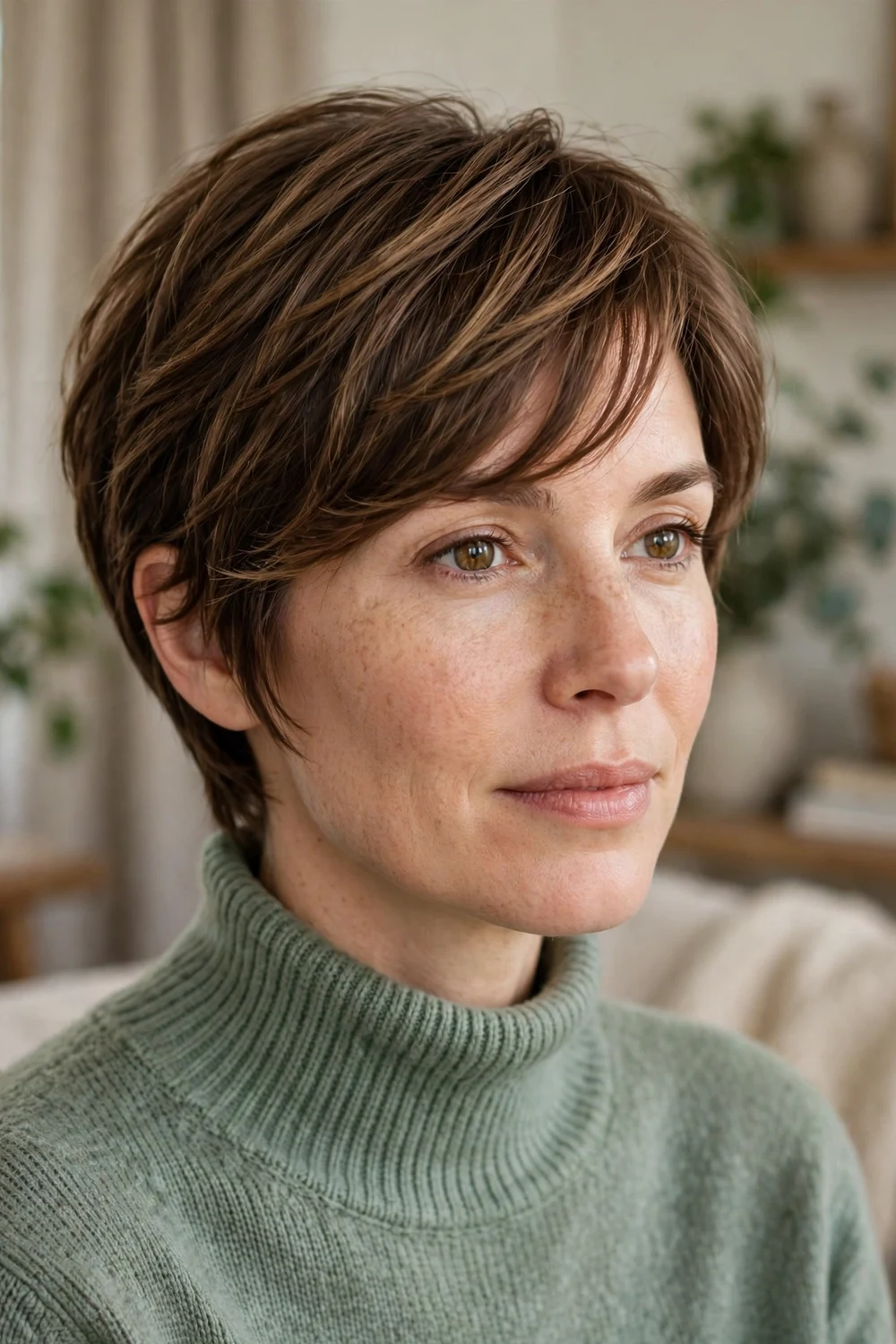
This softer pixie skips the tight taper. The sides sit close but keep some length around the ears, and the top runs three to four inches with a side swept fringe. The result reads gentle rather than cropped, which helps if you are cutting long hair short for the first time.
It air dries into place on straight and lightly wavy hair, and a two minute blast with a dryer and your fingers sets the fringe. Grow-out is forgiving because nothing is clipped tight, so the cut can stretch to six or seven weeks and still pass as a short layered style. Fine hair gains the most, since the shorter length stops it falling flat by midday.
Try this: sleep with the fringe clipped flat to one side. It trains the front to lie in place and saves the morning fix.
Difficulty: Low · Cost: $$ (salon)
3. Pixie Bob

The pixie bob sits between the two cuts it is named for: a short, lifted back like a pixie, with bob length sides that reach the jaw. Thick hair does well here because the short back removes bulk where it piles up, while the longer front keeps the look soft around the face. The dedicated pixie bob haircuts for thick hair roundup shows more versions of this shape.
Styling runs about five minutes. Rough dry, tuck one side behind an ear, and the cut is done. The back needs a tidy up every five to six weeks, but the front grows out into a plain bob shape, so a missed appointment never looks messy. It suits thick and coarse hair best, and round and oval faces.
Try this: ask for the back stacked lightly rather than clipped. Light stacking grows out softer and buys you an extra week or two.
Difficulty: Low to Medium · Cost: $$ (salon)
4. French Bob

The French bob ends at the chin or just above it, cut blunt with a soft, short fringe. It is worn with natural bend rather than a sleek finish, so air drying is the default styling method. The short length keeps hair off the neck and out of the way during feeds, carries, and floor play.
Morning effort is three to five minutes: scrunch a little leave-in conditioner into damp hair and let it dry. The fringe is the only high maintenance part and needs a quick trim at about four weeks, which many salons offer as a short between-cut service. It suits fine to medium hair and oval and heart faces.
Try this: if a fringe feels like a big step, start with a longer, cheek length version. It gives the same shape and grows into curtain bangs within weeks.
Difficulty: Low · Cost: $$ (salon)
5. Chin-Length Blunt Bob
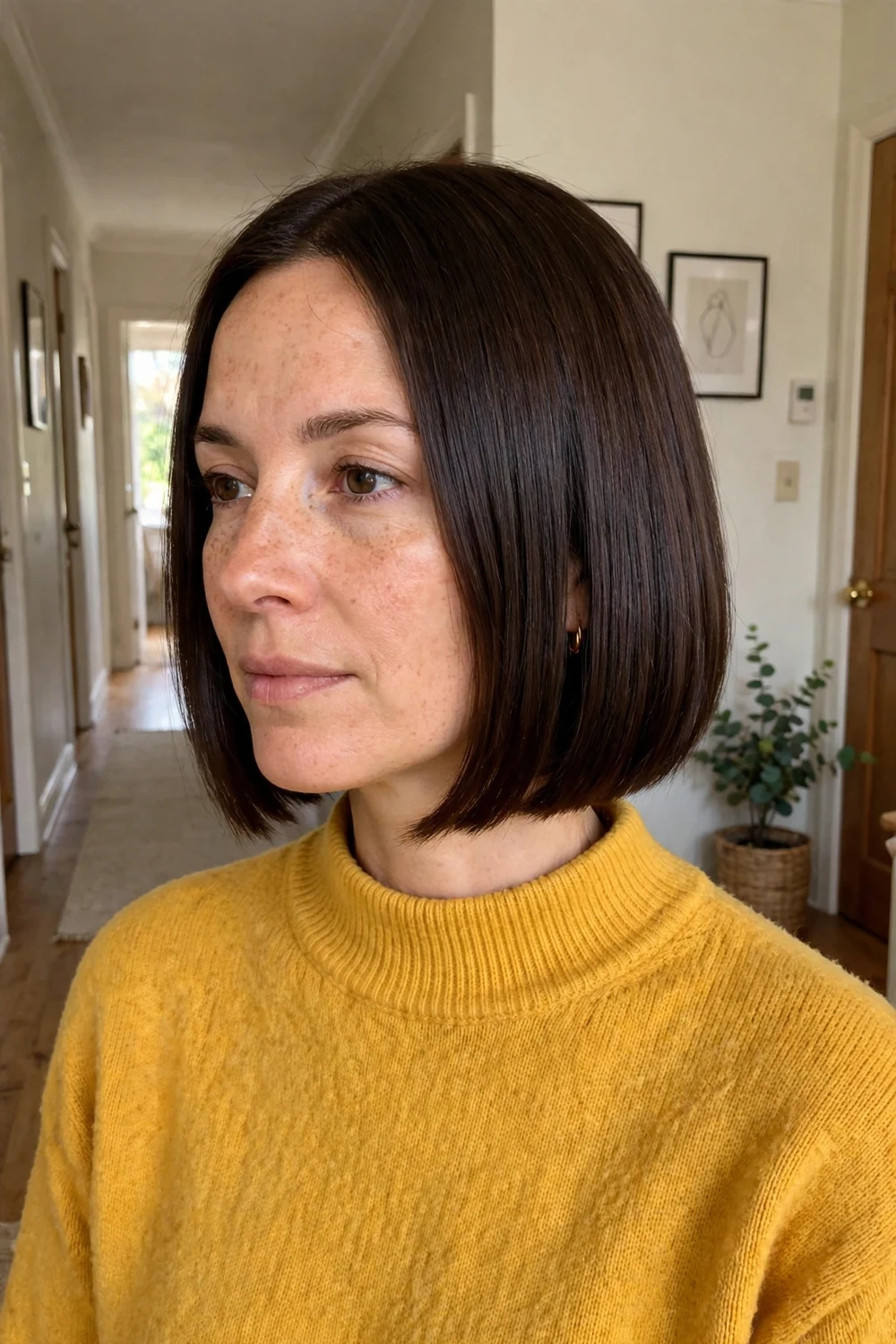
A blunt bob is cut one length at the chin, with no layers. The solid edge makes fine hair look thicker at the ends, and the shape falls back into place after a ponytail free day because there is no layering to bend out of line. It is one of the few cuts that looks deliberate even when it has only been washed and left alone.
Straight and slightly wavy hair can air dry this cut in about five minutes of hands-on time. Wavier hair may want a quick pass with a dryer on the top layer only. Trims land every six to eight weeks to keep the edge level, and the grow-out in between is even, since the whole outline moves down together.
Try this: ask for the edge cut very slightly longer at the front. It keeps the bob from riding up when you tuck it behind your ears.
Difficulty: Low · Cost: $ (salon)
6. Stacked Bob for Fine Hair

The stacked bob builds short graduated layers at the back, which lift the crown and give fine hair a fuller shape without backcombing or round brush work. The front stays longer, around chin to jaw length, so the cut still frames the face like a standard bob.
The stacking does the styling for you. Air dried or rough dried, the back falls into its rounded shape in under five minutes. The shape holds for six to eight weeks, then the stack softens and the volume drops, which is your signal to rebook. It suits fine and medium hair, and round faces gain length from the crown height.
Try this: flip your part to the opposite side on flat days. The stacked back lifts either way, and the switch takes ten seconds.
Difficulty: Low · Cost: $$ (salon)
7. Angled A-Line Bob

The A-line bob is shorter at the nape and angles down to longer front pieces at the jaw or just below. The short back keeps hair off the neck and collar, and the longer front gives you something to tuck, pin, or pull into a small low pony on busy days.
On straight hair this cut is close to wash and go, at about five minutes. On wavy hair, a quick smooth of the front pieces with a dryer brush is enough; the back can stay natural. The angle stays readable for seven to eight weeks of grow-out. It suits most face shapes, and the long front softens a square jaw.
Try this: keep the angle moderate, about an inch of difference front to back. Steep angles need trims more often to stay sharp.
Difficulty: Low to Medium · Cost: $$ (salon)
8. Curly Bob

The curly bob cuts natural curls to chin or shoulder length, in rounded layers that let each curl sit where it wants. Cutting at this length removes the weight that pulls curls flat at the root, so volume comes back without a diffuser routine. For shorter curly options, the pixie haircuts for curly natural hair list goes shorter still.
Styling is a scrunch with curl cream on wet hair, then hands off while it dries, about five minutes of effort. Day two and three curls refresh with a water spray bottle and a quick re-scrunch. Curly cuts hide grow-out well, and many wearers go ten to twelve weeks between trims.
Try this: book a stylist who cuts curls dry, curl by curl. A wet cut can jump up shorter than planned once the curls dry and spring back.
Difficulty: Low · Cost: $$ (salon)
9. Modern Lob

The modern lob ends at the collarbone, with soft layers through the last few inches and a mostly solid outline. It is the most requested mom length for a reason: long enough for a low ponytail, a claw clip, and a quick bun, short enough to wash, dry, and detangle fast.
Air dried with a little smoothing cream, the lob takes five to eight minutes. It also holds a bend from braiding damp hair overnight, which gives a styled look with no heat in the morning. Grow-out is gentle, and trims every eight to ten weeks keep the ends clean. It suits nearly every hair type and face shape.
Try this: ask for the front pieces cut to sit just below the chin. They frame the face when the rest is clipped up, which is how this cut gets worn most days.
Difficulty: Low · Cost: $ (salon)
10. Soft Layered Bob

The soft layered bob sits between chin and shoulder, with long, blended layers rather than choppy ones. The layers give the hair movement and lift at the roots, so it does not sit flat against the head by the afternoon. It is a kind first chop if you are leaving long hair behind and worry a blunt bob will feel too plain.
Because the layers are long, the cut air dries neatly and does not flip at odd angles the way short layers can. Five minutes with a dryer on the roots is the full routine on wash day, and nothing on the days between. Trims run every eight weeks or so, and the layers blur as they grow, so there is no awkward stage.
Try this: ask your stylist to keep the shortest layer at chin length or below. Short layers near the crown are the ones that demand daily styling.
Difficulty: Low · Cost: $$ (salon)
11. Textured Air-Dry Lob

This lob is cut specifically to be air dried: point cut ends, light layers through the mid lengths, and enough texture that natural wave shows up as the hair dries. It is built for hair with some bend in it. On naturally straight hair it reads as a plain lob, which is fine, but wavy hair gets the full effect.
The routine is wash, scrunch in a salt spray or light mousse, and leave it alone for the school run. Hands-on time is about three minutes. Because the ends are textured rather than blunt, the grow-out stays soft for ten weeks or more, and the length keeps working in a ponytail the whole time.
Try this: twist damp hair into two loose buns while it dries, then shake it out. The waves set more evenly than air drying loose.
Difficulty: Low · Cost: $$ (salon)
12. Side-Parted Lob
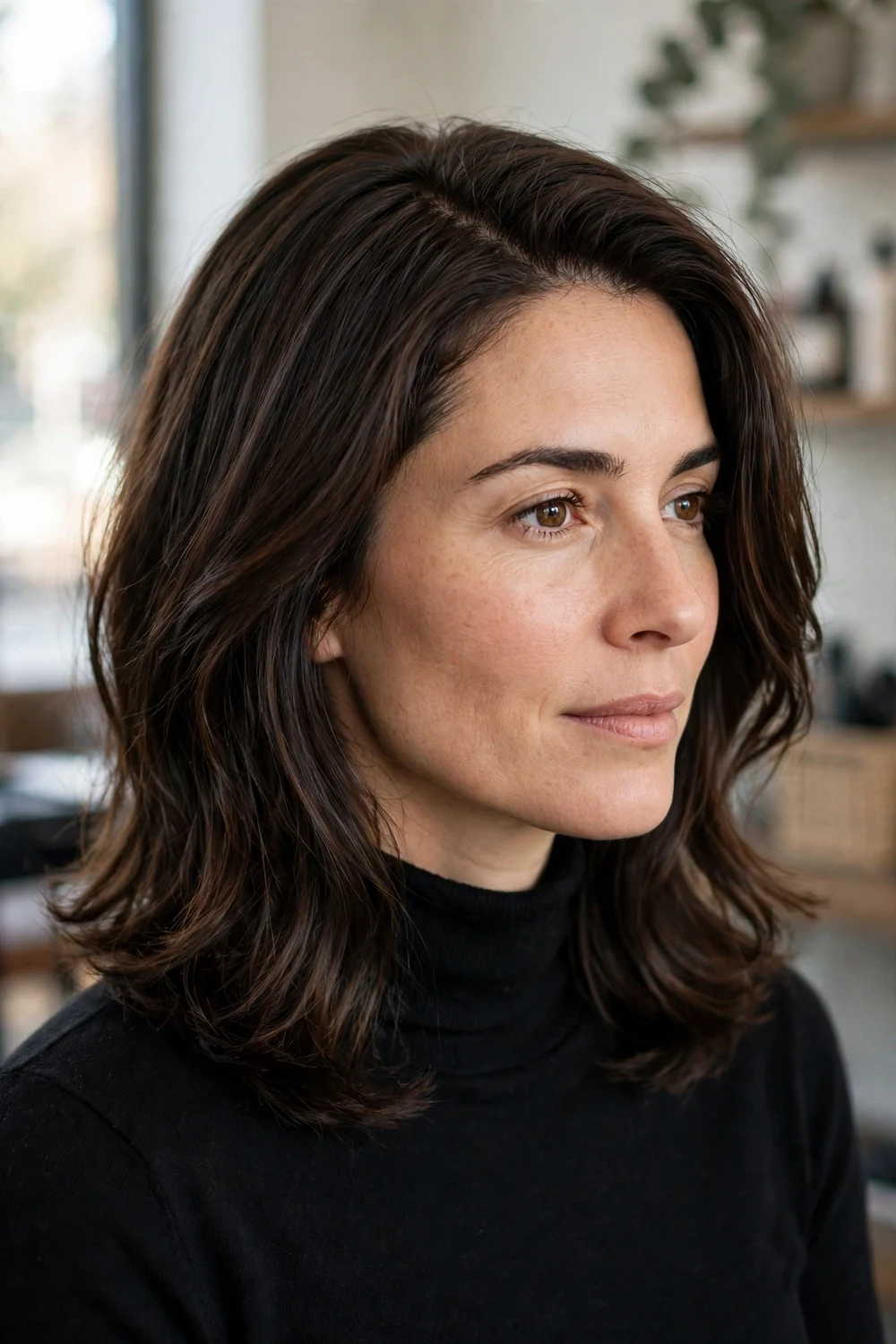
A deep side part changes a plain lob more than any layer can. The side parted lob keeps the cut itself simple, a collarbone length long bob with minimal layering, and puts the shape into the parting. Sweeping the hair to one side adds root lift on top and a soft drape across the forehead.
It takes under five minutes: rough dry, set the part while the hair is still damp, and smooth the ends only if needed. The simple outline grows out evenly, so salon visits can sit at eight to ten weeks. It suits straight and wavy hair, and it is a good route for anyone growing out bangs, since the side sweep blends them in.
Try this: dry the roots in the opposite direction to your part first, then flip the hair over. The roots hold the lift for the rest of the day.
Difficulty: Low · Cost: $ (salon)
13. Asymmetrical Lob
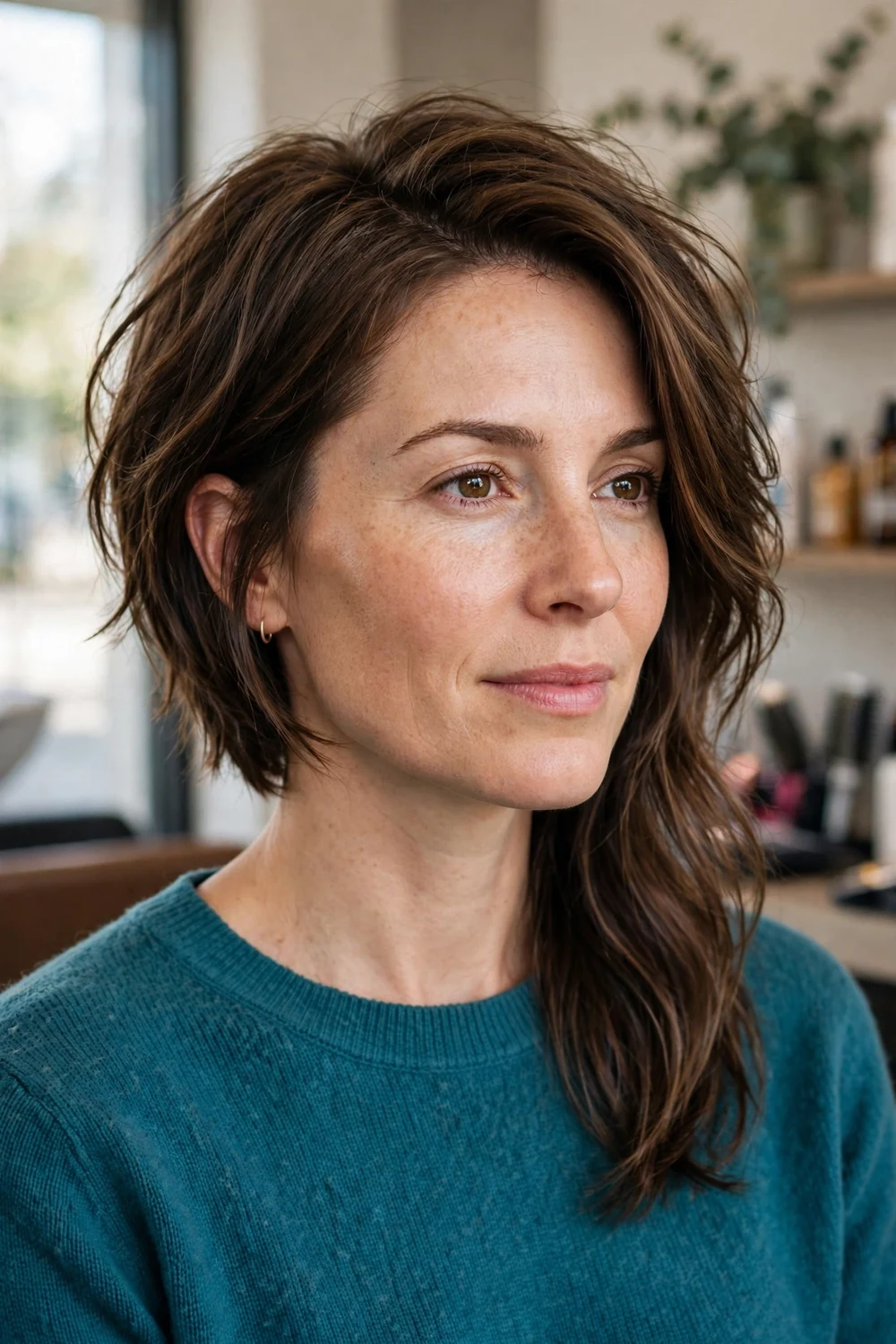
The asymmetrical lob is cut longer on one side than the other, usually by an inch or two at the front. It gives a standard mom length a clear point of view without adding any styling steps, and the longer side can still tuck behind an ear or join a low ponytail.
Styling stays at five minutes because the shape is in the cut. Air dry or rough dry, then let the long side fall forward. Be honest about trims, though: the difference between the sides fades as the hair grows, so this one wants a reshape every seven to eight weeks to keep its point. It suits straight and wavy hair and oval and long faces.
Try this: wear your part on the shorter side. It makes the length difference read clearly and lifts the roots at the same time.
Difficulty: Low to Medium · Cost: $$ (salon)
14. Collarbone Cut with Face-Framing Layers
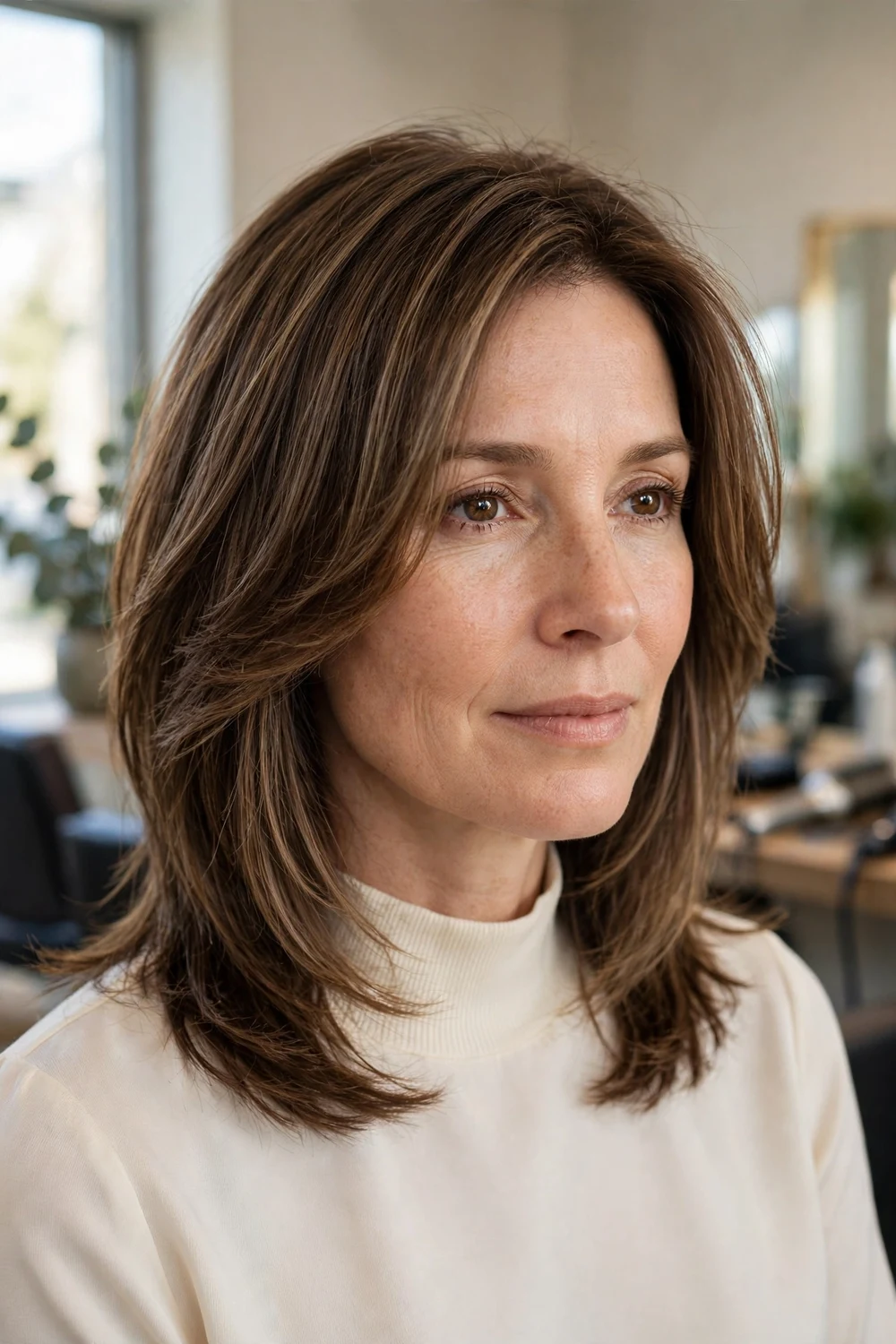
This cut keeps one solid collarbone length through the back and adds shorter face-framing layers at the front, starting around the cheekbones. The back stays thick and easy, while the front pieces give the cut shape when the rest is tied up. The full face framing layers haircut guide for fine thin hair explains how the front layer lengths are chosen.
Daily effort is five minutes at most, since only the front pieces ever want attention, and they can be smoothed with damp fingers and a dab of cream. The back grows out on a ten week trim cycle, and the front layers simply get longer and blend in. It suits fine hair that needs the front to look fuller, and long and round faces.
Try this: when the back is in a clip, pull the two front pieces loose. The cut still reads styled, even on a no wash day.
Difficulty: Low · Cost: $$ (salon)
15. Shoulder-Length Shag

The shoulder shag layers the hair throughout, with shorter pieces at the crown and longer ones at the ends, plus a soft fringe or curtain front. All that layering means the cut looks best slightly undone, which is exactly how mom hair usually ends up by noon. It turns air drying into the intended finish rather than a compromise.
Scrunch in mousse or wave spray and leave it, about five minutes of work. The fringe and crown layers grow down into the lengths, so the shape holds together for ten to twelve weeks, one of the longest stretches on this list. It suits wavy and thick hair best, since straight fine hair can lose too much weight to the layers.
Try this: ask for the layers concentrated at the crown and mid lengths, with the ends kept fuller. Ends that are too thin make the shag look stringy between washes.
Difficulty: Low · Cost: $$ (salon)
16. Shaggy Bob with Curtain Bangs

The shaggy bob pairs a chin to shoulder length bob with choppy layers and curtain bangs that part in the middle and sweep to each side. Curtain bangs are the low commitment fringe: they frame the face, blend into the layers as they grow, and can be pinned back on days you want them gone.
Air drying suits the choppy texture, and the bangs take one minute with a dryer brush or a flat palm press while damp. Total morning time is around five minutes. Trims sit at eight weeks, mostly to clean the ends, since the bangs grow into the cut instead of forming a hard line across the forehead.
Try this: ask for the bangs to start at cheekbone length. Shorter curtain bangs need weekly attention, while cheekbone length behaves for a month or more.
Difficulty: Low · Cost: $$ (salon)
17. Soft Wave Bob with a Side Fringe
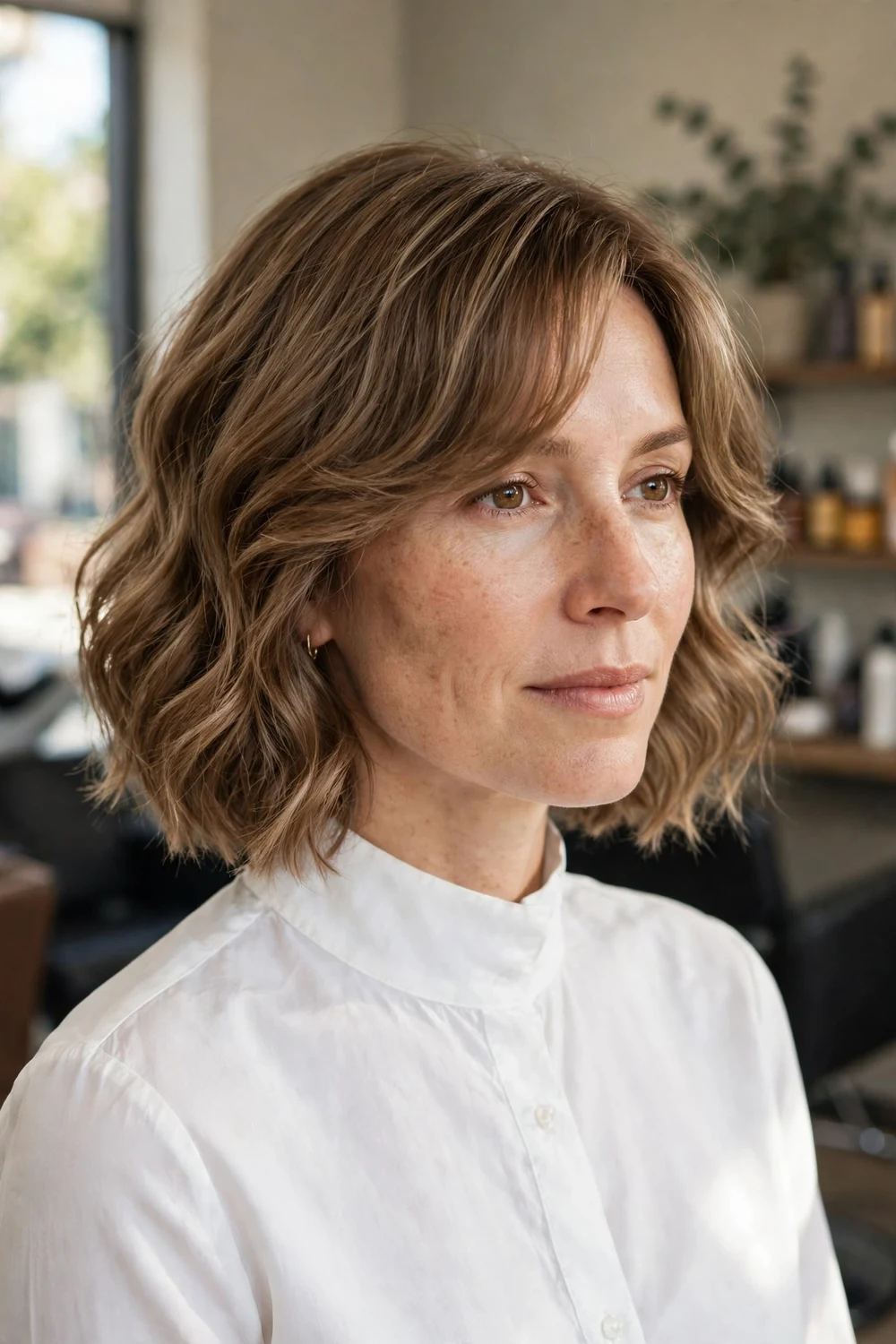
This bob keeps the length at the jaw to chin, worn in loose natural waves, with a long side swept bang that blends into the front. The bang softens the forehead and gives the cut movement, and because it is long, it can be tucked or pinned when you need it out of the way for cooking, workouts, or baby care.
Wavy hair can scrunch and go in five minutes. Straighter hair needs one bend through the mid lengths with a wide iron, about eight minutes, or an overnight braid for a heat free version. The bang grows into the bob within weeks, so trims stay on a relaxed seven to eight week cycle.
Try this: dry the bang first, sweeping it across while it is wet. If the bang dries in the wrong direction, the rest of the routine will not fix it.
Difficulty: Low to Medium · Cost: $$ (salon)
18. Blunt Shoulder Cut with Hidden Layers

From the outside this looks like a plain one length cut at the shoulders. Underneath, a few hidden layers remove weight so the hair moves and does not bell out at the ends. You get the tidy edge of a blunt cut with the swing of a layered one, and nobody can see the trick.
The solid outline air dries clean on straight and wavy hair, in about five to eight minutes of drying time with no tools. Shoulder length still reaches a ponytail and a bun, which keeps it practical on busy days. The blunt edge wants a trim at eight to ten weeks, and the hidden layers grow out without showing.
Try this: tell your stylist the layers must stay at least two inches below the surface layer. That gap is what keeps the outline reading blunt.
Difficulty: Low · Cost: $$ (salon)
19. Layered Crop
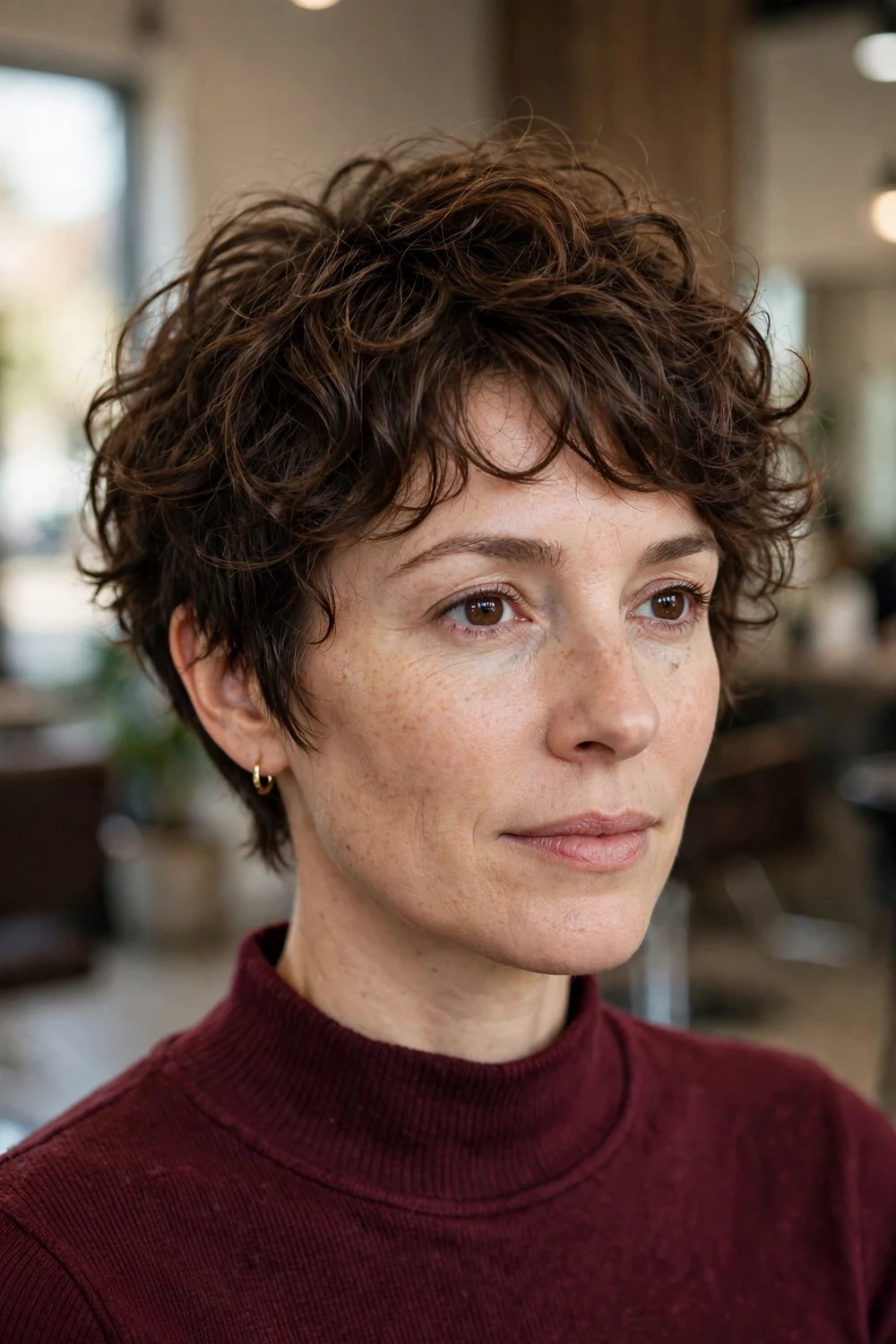
The layered crop sits between a pixie and a bob: short all over, but with enough length in every layer to show texture and soft curl or wave. It is a strong pick for moms who want short hair with some softness left in it, rather than a tight, clipped outline.
A finger rake with a small amount of styling cream is the whole routine, two to four minutes, and the layers hide a multitude of rushed mornings. The crop needs a trim every five to six weeks to stop it puffing out at the sides, though it grows toward a shaggy bob rather than falling apart. It suits wavy and curly hair, and petite faces.
Try this: ask for the sides kept soft and longer over the ears. It makes the grow-out far kinder if you later decide to go longer.
Difficulty: Low · Cost: $$ (salon)
20. The Mixie
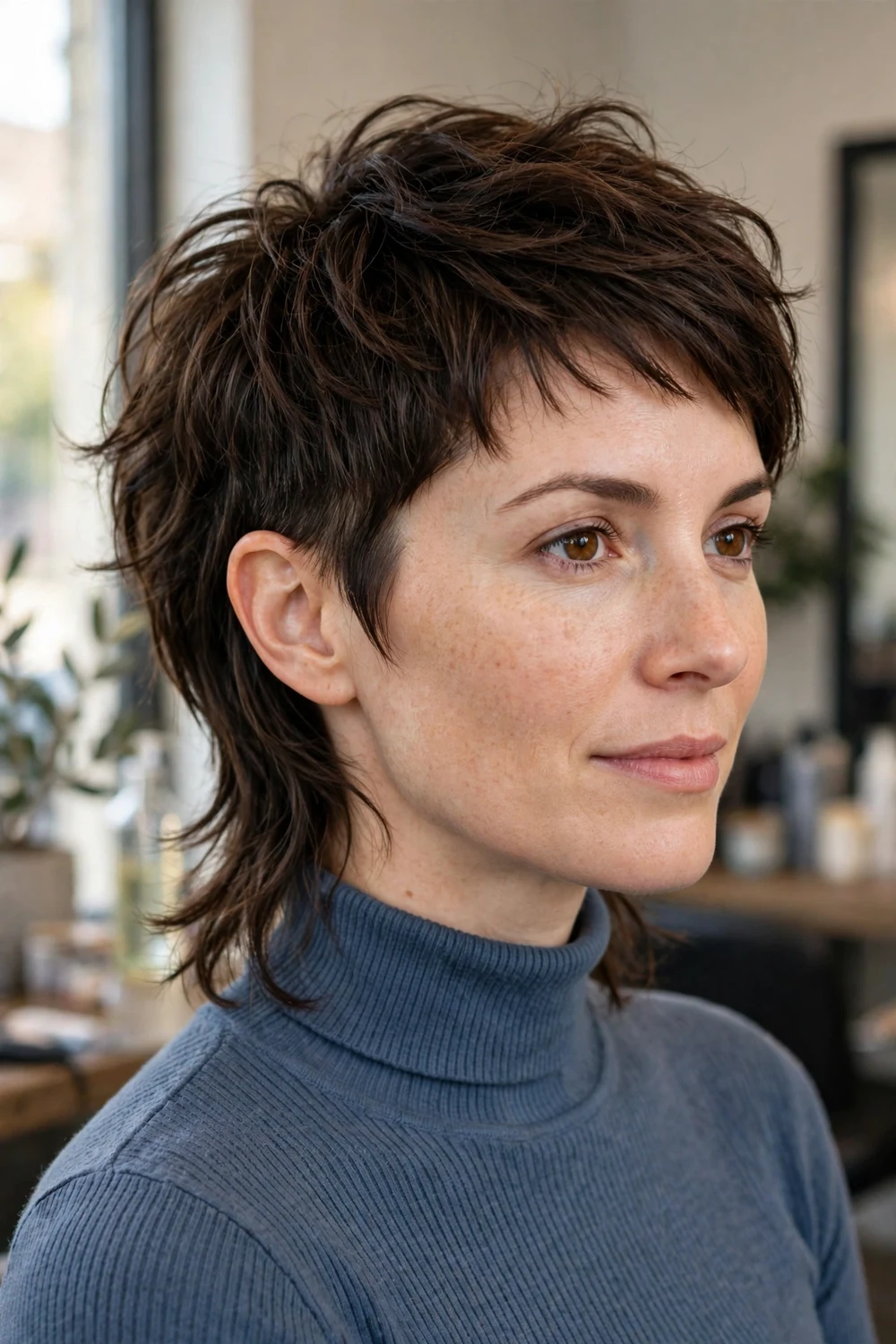
The mixie blends a pixie front with a little extra length at the nape, borrowed from a mullet shape. The top and sides stay cropped and quick, while the longer back softens the outline and keeps the cut from reading severe. It is the boldest cut on this list, and still one of the fastest in the morning.
Work a little paste through the top and push the nape flat, three minutes at most. The trade off is upkeep: the contrast between the cropped top and the longer back needs a reshape every five weeks or so. It suits straight and wavy hair, and anyone bored of safe cuts who still needs a two product routine.
Try this: start with a modest version, cropped sides with just a hint of extra length at the back. You can take the contrast further at the next visit if you like it.
Difficulty: Low to Medium · Cost: $$ (salon)
21. Long Layers That Still Fit a Ponytail
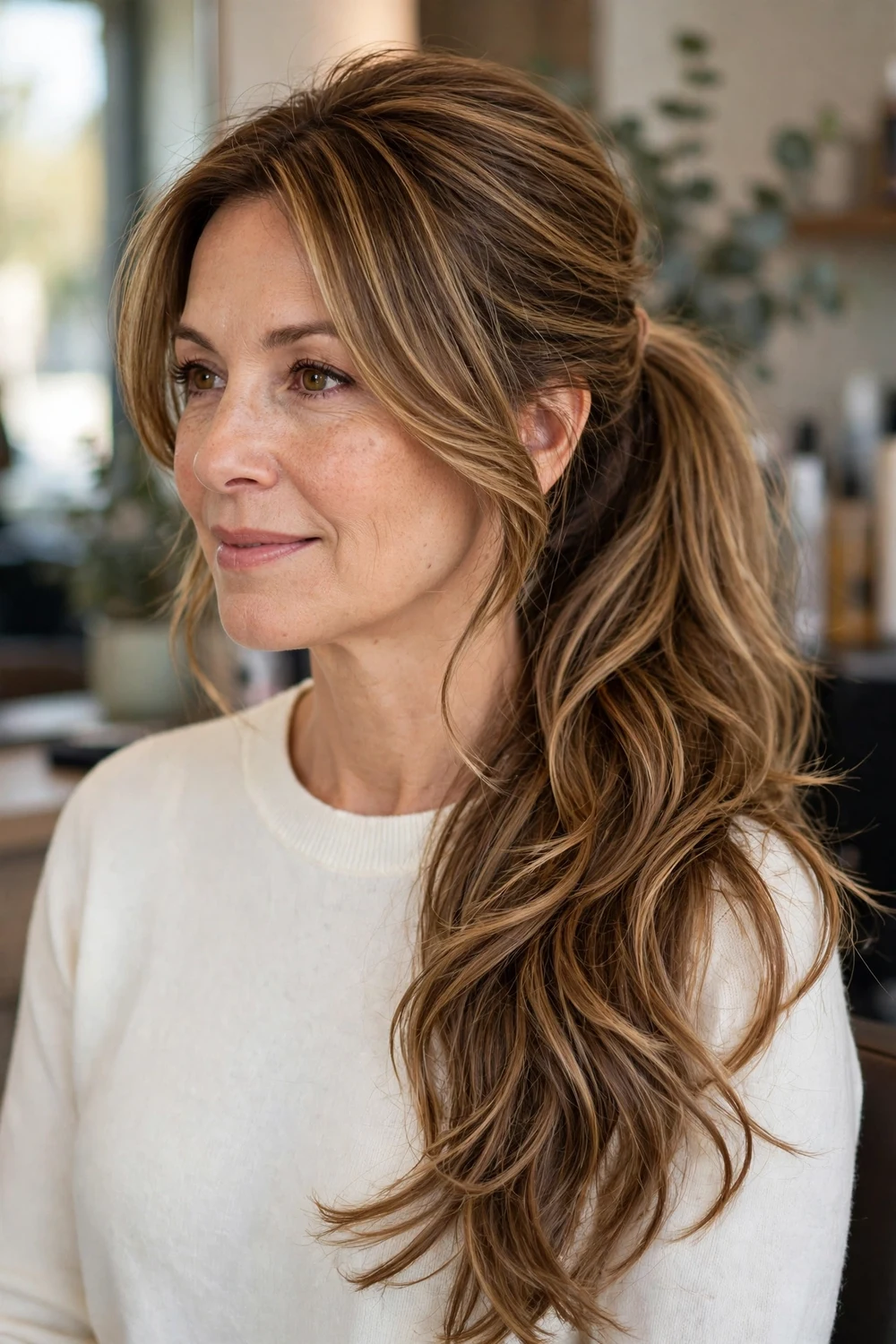
If you live in a ponytail, this is the long cut to ask for. The length stays below the shoulders, the layers start low, below the chin, and every layer is still long enough to reach a hair tie. Short face layers are kept out on purpose, since they are the pieces that escape a ponytail and fall into your face all day.
Worn down, the low layers add movement without thinning the ends, and air drying takes about ten minutes of hands-on time at most. Worn up, it is a full ponytail, bun, or braid with nothing slipping out. For more no heat routines for this length, the heatless hairstyles for long hair list pairs well with it. Trims can stretch to ten to twelve weeks.
Try this: tell your stylist your shortest layer must still reach your ponytail. A good stylist will gather the hair and check before cutting.
Difficulty: Low · Cost: $ (salon)
22. Mid-Length Up-or-Down Cut

This in-between length, between the shoulders and the chest, is cut mostly one length with a light layer at the very ends. It is long enough for a real ponytail, a bun, and a braid, and short enough that washing and detangling stay quick. Hair at this length also stays out of the way better than very long hair during carries and play.
The one length outline is the time saver: it air dries evenly, needs no part tricks or product layering, and takes five to eight minutes on wash day. Because there is little layering to lose shape, trims stretch to ten to twelve weeks, the longest salon gap on this list alongside the long layers. It suits all hair types, and thick hair especially, since the weight is manageable at this length.
Try this: ask for the ends cut blunt and the lightest possible layer only through the last inch. That keeps the ponytail smooth and the ends full.
Difficulty: Low · Cost: $ (salon)
23. Curly Shag
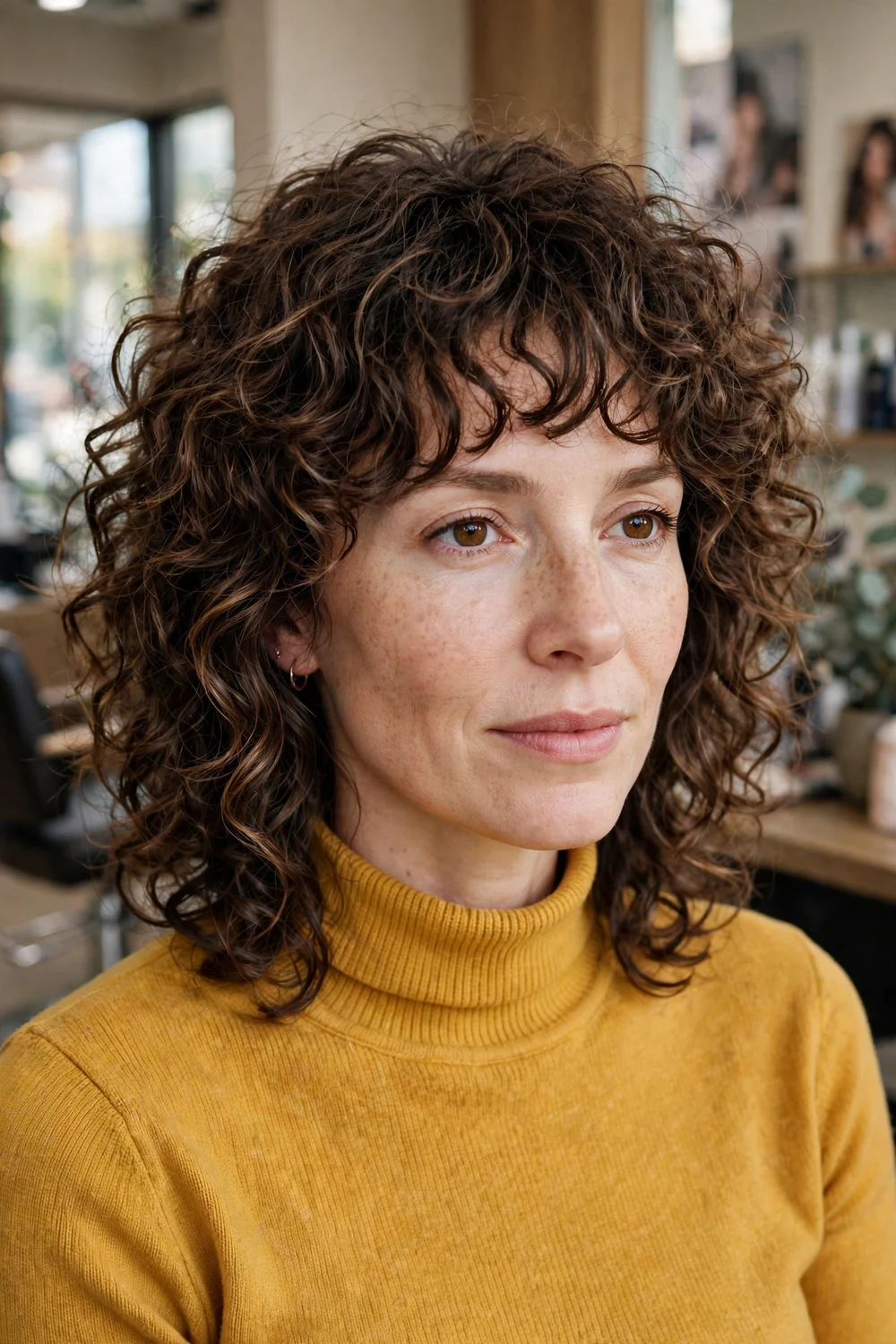
The curly shag layers curly hair at shoulder length, with more layering through the crown and a soft curly fringe. The layers stop the hair forming one heavy triangle shape, and the volume moves up toward the face where it flatters most. It works with the curl pattern instead of asking the curls to behave like straight hair.
Styling is curl cream scrunched into soaking wet hair, then air dry or a short diffuse, about five to seven minutes. Between washes, a mist of water and a scrunch revives the shape in two minutes. The layered shape hides grow-out well, and trims every ten to twelve weeks are enough for most curl patterns.
Try this: keep the fringe at brow length or longer when cut dry. Curly fringes spring up, and a longer cut leaves you room to adjust.
Difficulty: Low · Cost: $$ (salon)
24. Soft-Fringe Lob for Postpartum Grow-Out

Many new moms notice shorter, finer hairs showing along the hairline in the months after birth, and a blunt, pulled back style tends to show them off. This lob answers that with looks alone: a wispy, blended fringe and soft front layers that mix those shorter front hairs into the cut, so they read as part of the style while they grow back in. The length sits at the collarbone, long enough for a low ponytail on busy days.
The fringe needs one minute with a dryer or a smoothing pass with damp hands, and the rest of the lob air dries in the usual five to eight minutes. As the front hairs lengthen, the fringe simply grows into face-framing layers, so there is no awkward stage to cut your way out of. Trims every eight to ten weeks keep the ends tidy. It suits fine to medium hair and any face shape that likes a soft front.
Try this: ask for the fringe cut wispy and piecey rather than solid. A broken up edge blends new growth in far better than a straight line does.
Difficulty: Low · Cost: $$ (salon)
Frequently Asked Questions
What is a mom haircut?
A mom haircut is any cut chosen for low daily effort: short styling time, a shape that air dries well, and a grow-out that stays tidy between salon visits. In practice that usually means pixies, bobs, lobs, and layered mid lengths with blunt or softly layered edges. The label is about the routine the cut allows, rather than one specific style.
Which mom haircut takes the least time each morning?
Pixies and short crops take the least time, at two to five minutes with a small amount of paste or cream. A blunt bob is next, at about five minutes on straight or wavy hair. Lobs and long layers take five to ten minutes, but they trade that extra time for a ponytail option and longer gaps between trims.
Can a mom haircut still go into a ponytail?
Yes, if the cut is collarbone length or longer and the shortest layers still reach a hair tie. Lobs, the mid-length up-or-down cut, and long layers cut with low layers all pull back cleanly. Bobs can usually manage a small low ponytail at the nape. Pixies and crops cannot be tied up, so they rely on being short enough to stay out of the way instead.
How often do short mom cuts need trims?
Pixies and crops need a trim every four to six weeks, because the tapered sides and short outlines show growth quickly. Bobs hold their shape for six to eight weeks. Lobs, shags, and long layers are the low visit options, at eight to twelve weeks, since their edges and layers blur as they grow.
Which cuts work well during the postpartum period?
Cuts with soft front layers or a wispy fringe work well cosmetically in the postpartum months, because shorter new hairs along the hairline blend into the layers instead of standing out against a sleek style. A collarbone lob with a soft fringe is a common pick, since it also keeps a ponytail option. Any health questions about hair shedding belong with your doctor or midwife rather than a stylist.
Final Thoughts
Pick the cut by the morning you actually have. If you have three minutes and no patience, a pixie or a blunt bob will carry you. If your hair spends half its life in a ponytail, stay at collarbone length or longer and keep the layers low. If salon visits are the hard part, choose the blunt edges and soft layers that stretch to ten or twelve weeks. A mom haircut earns its place when the routine fits your real day, and every cut on this list was chosen with that test in mind.

