


Winter changes what you need from a haircut. Hats, scarves, dry indoor heat, and static all punish the wrong cut, while the right one looks good with almost no effort. I’ve spent years watching winter hair trends come and go, and short cuts keep winning the cold months.
This list rounds up 28 winter short hair ideas that pair chic shapes with cold-weather sense. Every cut here handles hats gracefully, stands up to dryness and static, and keeps styling simple. Pick the one that fits your hair type and your winter routine.
Quick Takeaways
- Cuts that end above the collar avoid tangles with scarves and coat zippers.
- Built-in shape, like an angled or stacked back, means less daily styling in the cold months.
- Winter dryness calls for a moisturizing shampoo and a weekly deep-conditioning mask.
- A natural-bristle brush and a light anti-static product keep static down.
- Bangs are easier in winter, since cold air means less sweat along the hairline.
1. Chin-Length Winter Bob

A bob that ends right at the jawline solves winter’s biggest annoyance: hair getting caught in scarf folds and coat zippers. Your stylist keeps the layers minimal, so the shape holds its line even after you pull off a beanie. The clean edge also makes the cut look neat for weeks between trims.
It suits straight to slightly wavy hair and most face shapes. Blow-dry with a round brush for a smooth finish, or let it air-dry for a relaxed bend that still looks intentional.
Try this: tuck one side behind your ear before wrapping a scarf to keep the line crisp.
Difficulty: Low · Cost: $ (salon)
2. French Bob

The French bob pairs a chin-grazing length with a full fringe, and it is one of the few fringe styles that behave under a beanie. Because the cut sits close to the head, it comes out of a hat looking nearly the same as when it went in. The blunt ends give it that classic Parisian edge with very little daily work.
It flatters oval and heart-shaped faces most. Ask your stylist to keep the ends blunt, and smooth a touch of cream through the fringe before you head out into the wind.
For more takes on this classic, these short french bobs show how the cut adapts to different hair textures.
Try this: smooth a pea-sized amount of cream over the fringe to keep it flat under hats.
Difficulty: Low · Cost: $$ (salon)
3. Blunt Chin Bob
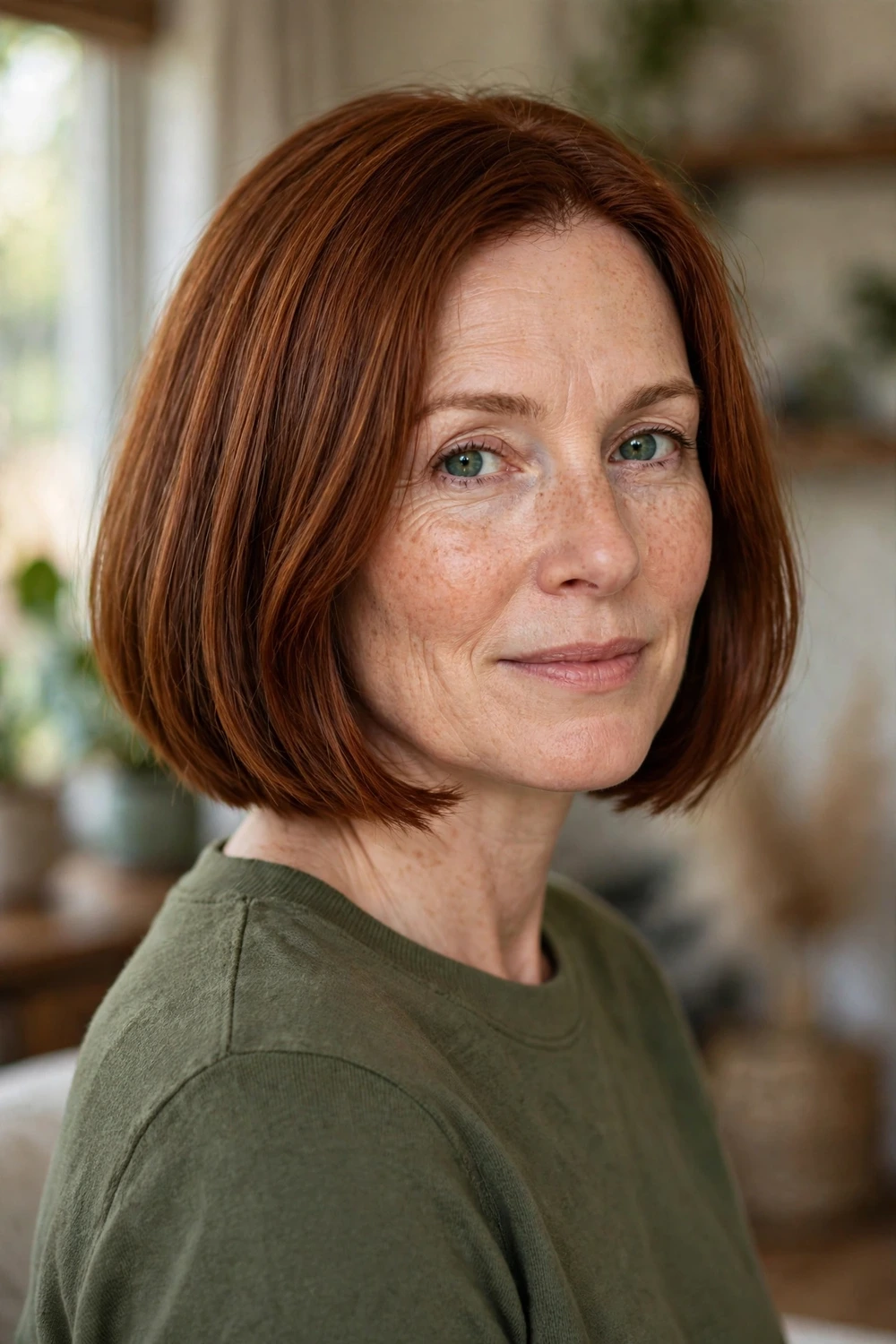
One length, no layers, and ends that look thick on purpose. The blunt chin bob is the lowest-effort cut on this list because the shape does the styling for you. Winter dryness shows less on blunt ends than on feathered ones, so the cut stays looking fresh even when the air is harsh.
It works best on straight or straightened hair. A weekly deep-conditioning mask keeps the ends from looking rough, and a quick pass with a flat iron sharpens the line on mornings when you want extra polish.
Try this: run a flat iron over just the ends once in the morning for a sharp line that lasts all day.
Difficulty: Low · Cost: $ (salon)
4. Angled Bob

Cut shorter at the nape and longer toward the front, the angled bob builds its shape into the haircut itself. You get a defined silhouette without reaching for hot tools every morning, which is a genuine time-saver on dark winter mornings. The graduated back also sits neatly above high collars.
The longer front pieces frame the face and suit fine to medium hair best. Ask for a subtle angle rather than a dramatic one so the grow-out stays soft between appointments.
Try this: ask your stylist for a subtle angle so the grow-out stays soft for weeks.
Difficulty: Low · Cost: $$ (salon)
5. Stacked Bob

Fine hair tends to go flat under winter hats, and the stacked bob fights that with graduated layers through the back. The built-in volume sits exactly where hats compress your hair, so the shape springs back when you take the hat off. It is one of the smartest picks for anyone whose hair loses body in cold weather.
Ask for clean stacking at the nape with length kept through the front. A round brush and a cool shot from the dryer lock in the lift, and the cut holds its shape for days.
Try this: flip your head upside down for the last minute of blow-drying to boost the stacked layers.
Difficulty: Medium · Cost: $$ (salon)
6. Flippy Bob

Flicked-out ends give this bob a playful retro feel that pairs well with winter’s heavier coats and boots. The curtain bangs part softly in the middle and blend into the layers, so they don’t need daily precision to look right. It is a fun change if your usual winter cut feels too serious.
A large round brush is all you need to flick the ends outward. It suits straight to wavy hair and looks good with a center or side part, depending on your mood.
Try this: flick the ends out while blow-drying with a round brush, then set them with a cool shot.
Difficulty: Medium · Cost: $$ (salon)
7. Shaggy Chin Bob

Choppy texture and curtain bangs make the shaggy chin bob one of the most forgiving cuts on this list. Because the shape is already uneven, it grows out gracefully, which means fewer salon visits during the coldest months. Hat hair barely registers on a cut that is meant to look lived-in.
It works on straight, wavy, and curly hair. Scrunch in a little styling cream and let it air-dry for the best texture, and skip the brush since rough texture is the whole point.
Try this: style with your fingers instead of a brush, since rough texture is the point of the cut.
Difficulty: Low · Cost: $$ (salon)
8. Rounded Bob
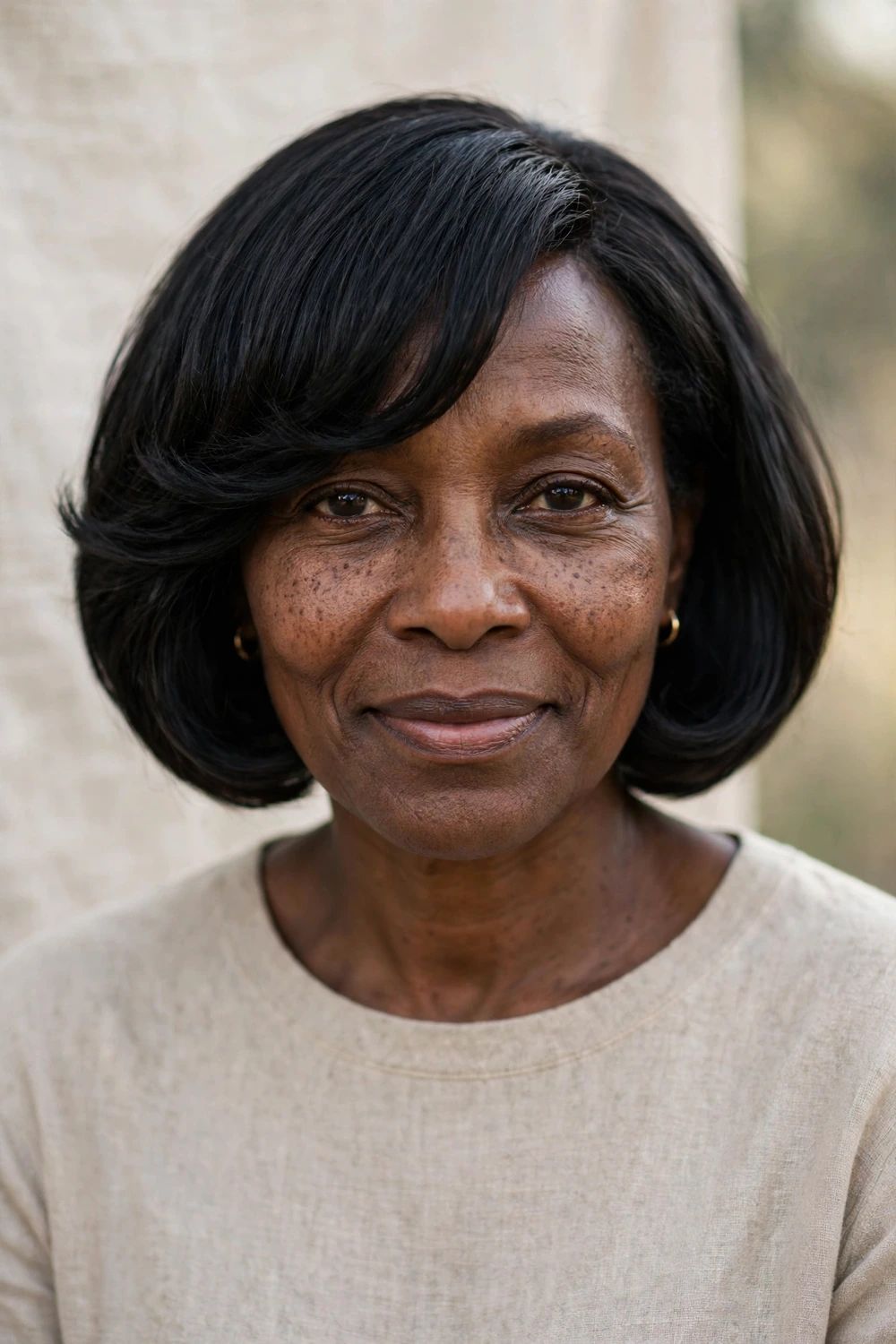
The rounded bob curves under at the ends for a soft, full shape that flatters wider faces. Side-swept bangs keep the fringe out of your eyes when the wind picks up, which is a practical plus on blustery days. The curved silhouette also sits neatly above turtlenecks without flipping outward.
It suits medium to thick hair best, since the curve needs some density to hold. A round brush creates the under-curve in minutes, and the style lasts until your next wash.
Try this: tuck the side-swept bangs behind one ear for an easy shift from day to evening.
Difficulty: Medium · Cost: $$ (salon)
9. Micro Fringe Bob

A fringe cut well above the brows makes a bold statement, and winter is a good season to try it. Cold air means less sweat along the hairline, so a micro fringe stays in place better now than it would in summer. Paired with a sleek bob, the short fringe becomes the focal point of the whole cut.
It suits oval and long faces best. Commit to trims every three to four weeks, since a micro fringe grows out of shape faster than a longer one.
Try this: keep the fringe smooth and straight, since the blunt line is the whole point of the cut.
Difficulty: Medium · Cost: $ (salon)
10. Silver Gray Bob

Growing out your gray gets easier in winter, when pale scarves and light coats make silver tones look intentional. A chin-length bob keeps the shape neat while the color transitions, and the shorter length means there is less old color to grow out. The winter-white palette flatters silver hair in a way summer brights don’t.
Use a purple shampoo once a week to keep gray bright instead of dull. A gloss treatment at the salon adds shine between color appointments and smooths the cuticle against dry air.
Try this: switch to a purple shampoo once a week to stop silver tones from turning yellow.
Difficulty: Low · Cost: $ (salon)
11. ’90s Supermodel Bob

The deep side part and bouncy volume of the ’90s supermodel bob bring drama that stands up to winter’s heavy layers. Big hair balances bulky coats, and the side part adds instant fullness at the crown. It is a glamorous pick for the holiday party season in particular.
Velcro rollers on the crown while you get dressed give you that bounce with no extra effort. It works on medium to thick hair that can hold volume through the day.
Try this: set the crown with two large Velcro rollers while you do your makeup, then remove them before you leave.
Difficulty: Medium · Cost: $$ (salon)
12. Curly Bob

Curls shrink, so this bob is cut dry to land exactly at the jaw once the curls spring up. A dry cut lets your stylist see the true length of each curl, which avoids the surprise of a cut that dries shorter than expected. The jaw length keeps curls clear of scarves that would otherwise pull them out of shape.
A leave-in conditioner under a curl cream keeps definition through dry indoor heating. Diffuse on low heat or air-dry, and refresh the curls with water and cream on non-wash days.
Try this: ask your stylist to cut your curls dry so the length lands exactly where you want it.
Difficulty: Medium · Cost: $$ (salon)
13. Curly Crop

Slightly longer than a pixie and shorter than a bob, the curly crop layers curls through the mid-neck for a full, rounded shape. Winter dryness hits curls hardest, so the layered shape helps product reach every strand and keeps the ends from tangling. The compact shape also fits easily under beanies.
Diffuse on low heat for definition without frizz. A satin pillowcase cuts down on friction overnight, which keeps the curl pattern intact between wash days.
Try this: diffuse upside down on low heat to build volume at the roots without creating frizz.
Difficulty: Medium · Cost: $$ (salon)
14. Short Shag

The short shag ends above the collar, so it never bunches under scarves or coat collars. Choppy layers give it movement with almost no styling, and the cut air-dries into shape, which makes it a true wash-and-go option for busy winter mornings. Texture hides the flatness that hats cause.
It suits wavy and straight hair with natural texture. A little texturizing spray is all it needs, and the grow-out stays soft for weeks.
If choppy layers are your thing, these short shag hairstyles for women show how the cut works on different hair textures.
Try this: spray texturizing spray on damp hair and scrunch, then leave it alone while it air-dries.
Difficulty: Low · Cost: $$ (salon)
15. Mini Wolf Cut

The mini wolf cut blends shag layers with a mullet-inspired shape for a wilder finish than a classic shag. Shorter layers through the crown and longer pieces at the nape give it attitude, and the lived-in texture means it still looks fine when a hat flattens it. It is the edgiest option in this lineup.
It works best on thick or wavy hair that can hold the layers. Ask your stylist to keep the nape pieces soft rather than severe so the cut stays wearable day to day.
Try this: work a small amount of pomade through the crown layers to define the shaggy texture.
Difficulty: Medium · Cost: $$ (salon)
16. Textured Pixie

Choppy length on top with tapered sides gives the textured pixie movement that survives hat hair. When you take off a beanie, a quick shake with your fingers restores the piecey shape, so you never need a full restyle at your desk or in the car. Few cuts recover from winter accessories this fast.
It suits straight to wavy hair and most face shapes. A matte styling paste defines the pieces without shine, and the cut dries in minutes after a wash.
Try this: keep a travel-size styling paste in your bag to refresh the texture after removing a hat.
Difficulty: Low · Cost: $ (salon)
17. Buzzed Pixie
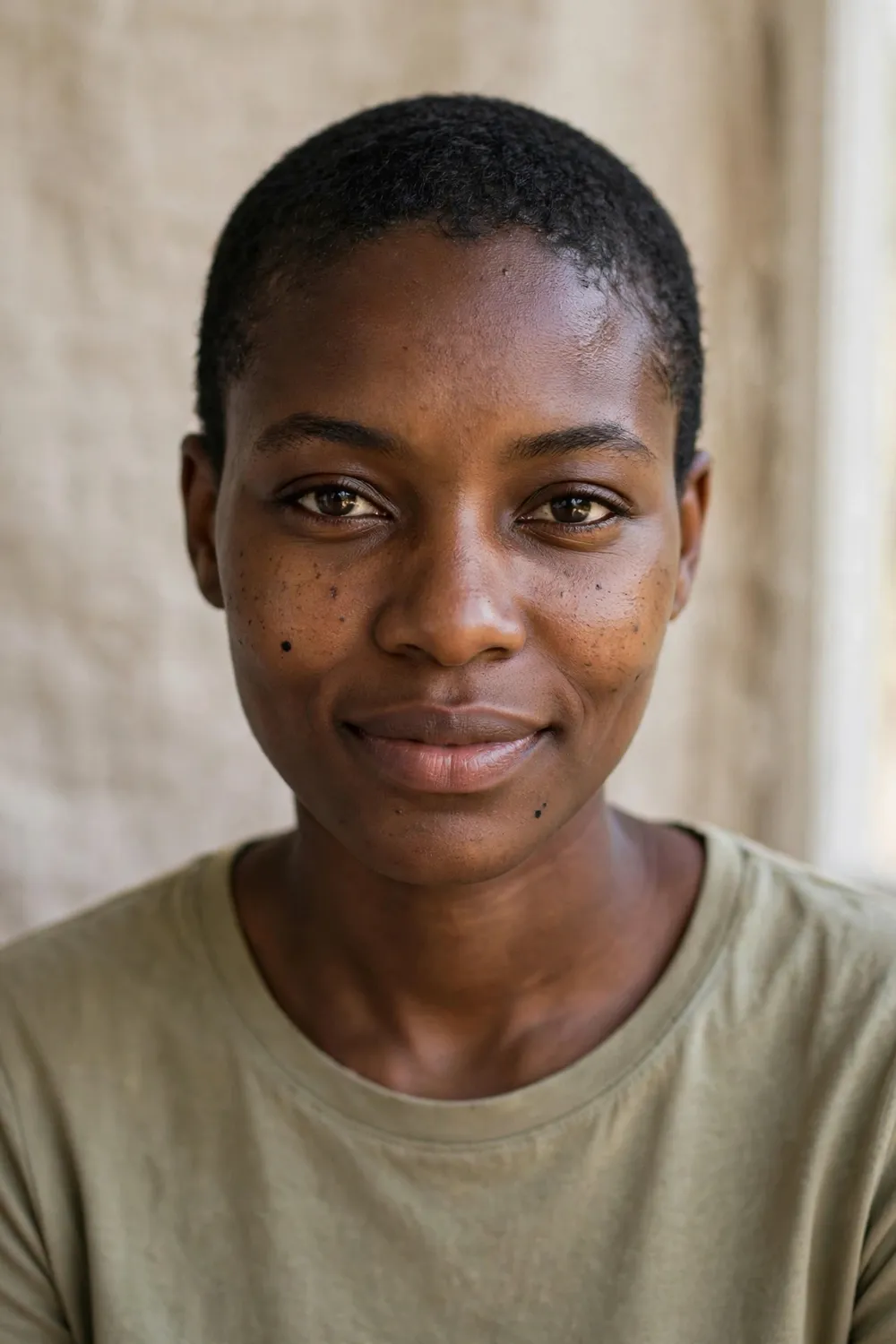
The buzzed pixie is the boldest reset on this list, and winter is the easiest season to wear it. There is no hat hair when there is barely any hair, and morning styling drops to zero, which is hard to beat on freezing mornings. It also shows off earrings and scarves like no longer cut can.
It suits strong bone structure and anyone ready for a true low-maintenance stretch. Keep the scalp moisturized, since winter air dries exposed skin fast, and wear a warm hat outdoors like you would anyway.
Try this: massage a light moisturizer into your scalp to prevent winter dryness on exposed skin.
Difficulty: Low · Cost: $ (salon)
18. Curly Pixie

Cropped ringlets with height on top give the curly pixie a sculpted shape that frames the face. Short curls dry faster than long ones, which matters when you are heading out into cold air with damp hair. The compact shape also stays neat under hats and headbands.
A curl-defining cream applied to damp hair keeps ringlets separated and defined. Trim every four to six weeks to hold the shape, since curly pixies lose their line quickly as they grow.
Try this: apply curl cream to damp hair and let it air-dry fully before putting on a hat.
Difficulty: Medium · Cost: $ (salon)
19. Platinum Pixie
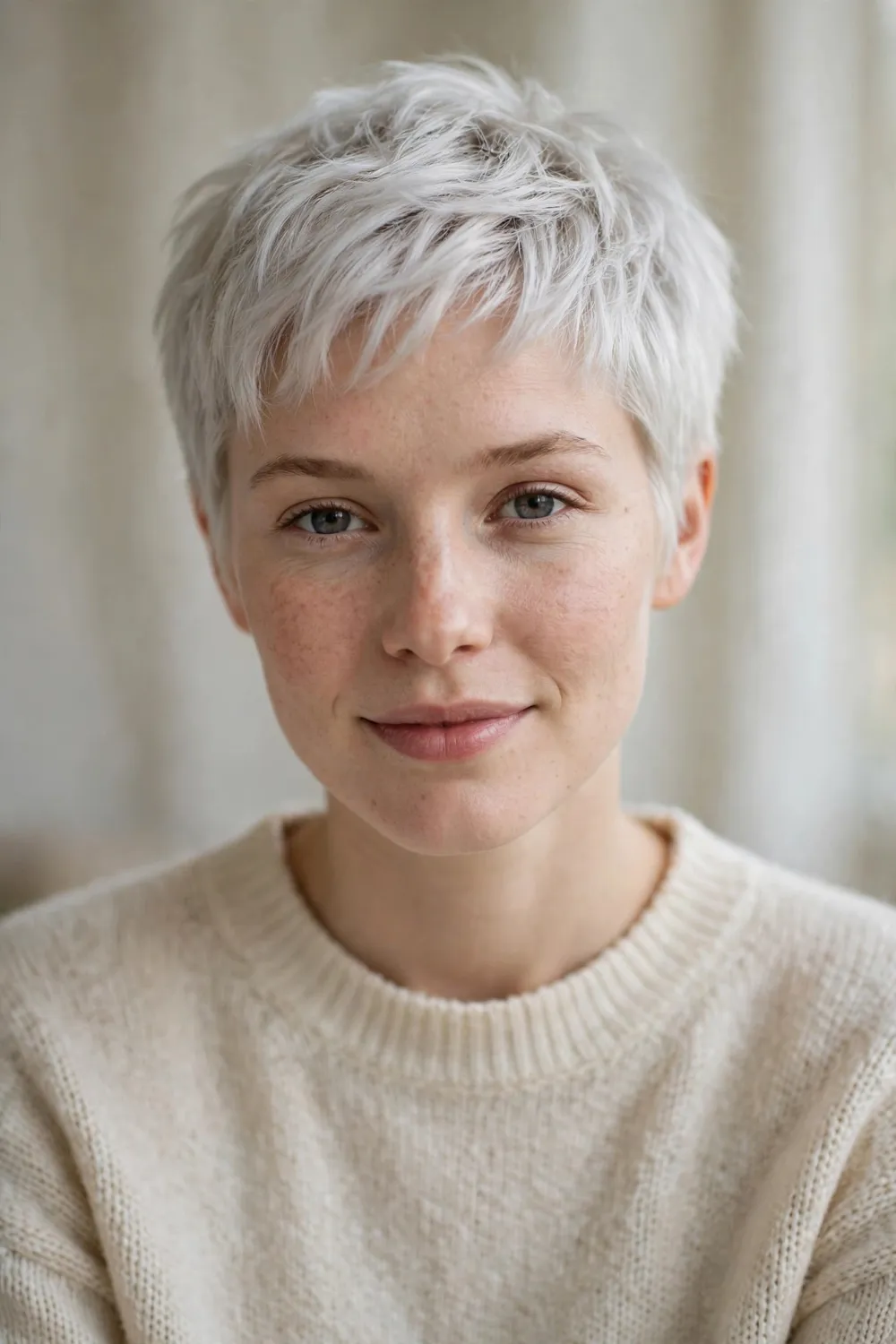
Frosty platinum looks striking against winter’s dark coats and gray skies. The short length means there is less bleached hair to maintain, and regrowth is easy to manage with regular toner appointments. It is a high-impact color choice that the pixie shape keeps wearable.
Bleached hair needs extra moisture in winter, so a weekly deep-conditioning mask is non-negotiable. Purple shampoo once a week keeps the tone icy instead of brassy.
Try this: use purple shampoo once a week to stop platinum from turning brassy in winter light.
Difficulty: High · Cost: $$ (salon)
20. Windswept Crop
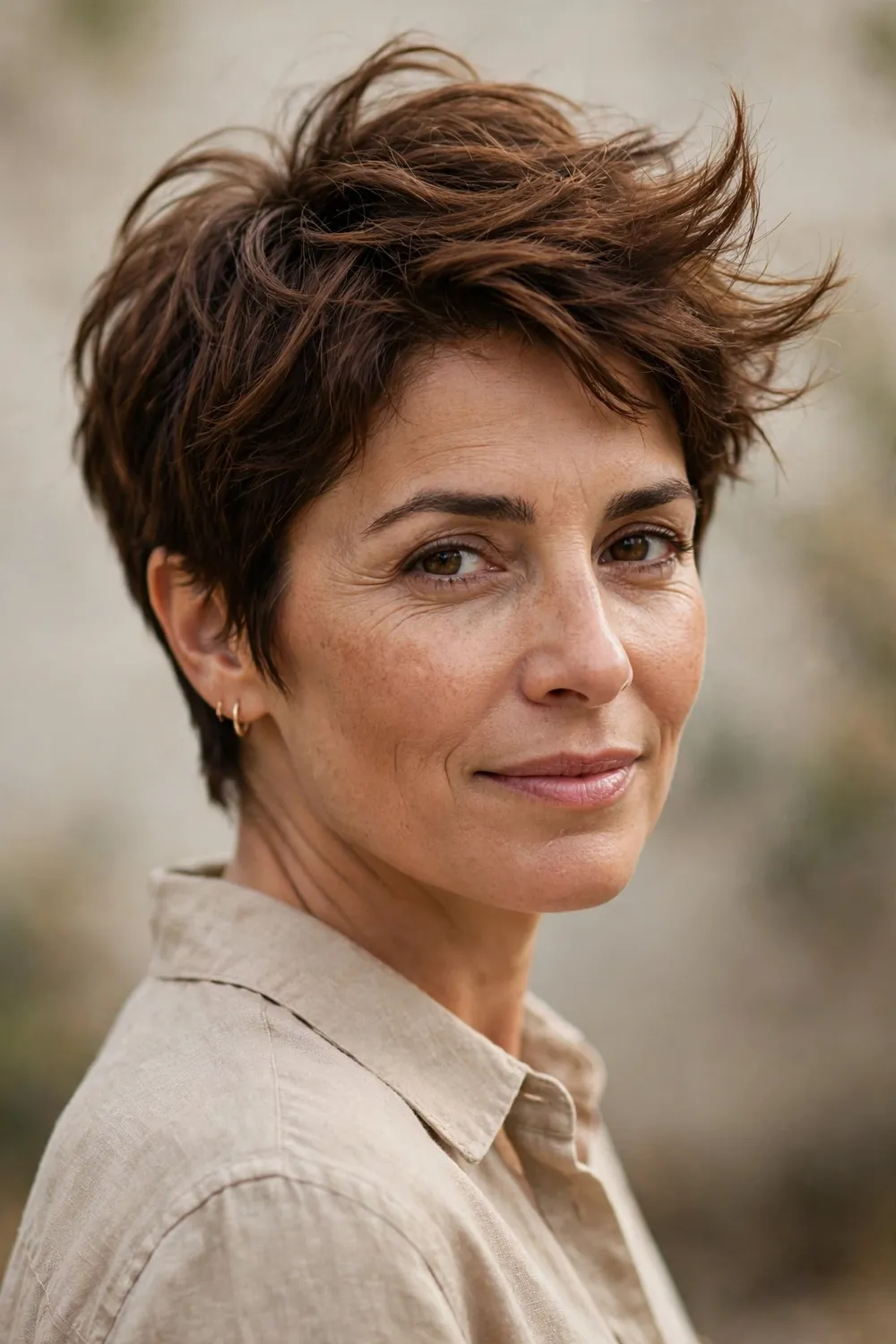
The windswept crop is styled with fingers, not brushes, and the lifted crown gives it shape in about two minutes. It is built for real winter life: the slightly undone finish means wind and hats can’t ruin what is already meant to look effortless. This is the cut for anyone who refuses to fuss over hair in the cold.
It suits fine to medium hair. A light mousse on damp roots gives the crown its lift, and the rest takes care of itself.
Try this: rough-dry your hair upside down with your fingers for lift, then smooth the crown with your palms.
Difficulty: Low · Cost: $ (salon)
21. Side-Swept Pixie

A soft fringe swept across the forehead gives this pixie a feminine feel without high maintenance. The longer fringe stays put under headbands and earmuffs, and it grows out into a longer pixie without an awkward stage. It is a gentle entry point if you are new to very short hair.
It flatters round and square faces by adding diagonal lines. Blow-dry the fringe to the side with a small round brush so it falls naturally into place.
Try this: direct the fringe across your forehead while blow-drying so it falls into place on its own.
Difficulty: Low · Cost: $ (salon)
22. Tapered Nape Pixie

The tapered nape keeps the back of this pixie close and clean, so it sits smoothly under hats and scarves with no bunching at the neckline. It is a tidy, grown-up cut that needs little more than finger-styling, and the neat back view makes it a favorite for anyone who wears their hair up under winter headwear.
It suits straight to slightly wavy hair. Regular trims every four to five weeks keep the taper sharp, since the clean nape is what makes the cut work.
For more short cuts with this kind of easy upkeep, these short pixie haircuts for older women gather the most flattering low-maintenance options.
Try this: smooth a dab of styling cream over the nape to keep the taper neat under scarves.
Difficulty: Low · Cost: $ (salon)
23. Heavy Full Bangs

Full, heavy bangs are easier to wear in winter than in summer because cold air means less sweat along the hairline. They stay in place through the day and pair well with the season’s turtlenecks and structured coats. Worn with a chin-length bob, they create a strong, graphic frame for the face.
They suit oval and long faces best. A mini flat iron keeps them smooth on damp days, and trims every three weeks hold the heavy line.
Try this: blot your forehead with a tissue before putting on a beanie so the bangs stay fresh underneath.
Difficulty: Medium · Cost: $ (salon)
24. Curtain Bangs + Bob

Curtain bangs part in the middle and frame the face without the commitment of a full fringe. They grow out seamlessly into face-framing layers, so you are never stuck with an awkward grow-out phase through winter. It is the safest way to try bangs for the first time.
They suit nearly every face shape. Blow-dry them forward with a round brush, then part them in the center for the signature sweep.
Try this: twist each side away from your face while blow-drying to get the curtain sweep right.
Difficulty: Low · Cost: $ (salon)
25. Glass Hair Lob

Glass hair is all about a smooth, reflective finish, and a collarbone lob shows it off at a practical winter length. The sleek surface catches light even on gray days, and the length stays clear of most coat collars. It is the most polished cut on this list.
It needs straight or straightened hair and a good flat iron. Always use a heat protectant before styling, and finish with a shine serum for the reflective look.
Try this: apply heat protectant before flat-ironing, since the sleek finish needs heat to get that glass look.
Difficulty: High · Cost: $$ (salon)
26. One-Length Low-Maintenance Lob

One length from front to back makes this lob the wash-and-go answer for anyone who wants shorter hair without styling. Your natural texture does the work, and the even ends look neat even when you skip heat tools for weeks. It is the easiest long-ish cut to maintain through winter.
It suits all hair types. Air-dry or diffuse depending on your texture, and book a trim every eight to ten weeks to keep the ends even.
Try this: let your hair air-dry in two loose twists for soft, even waves with zero heat.
Difficulty: Low · Cost: $ (salon)
27. Face-Framing Lob

Longer pieces around the face brighten the whole cut, and subtle highlights catch winter’s low light. The face-framing layers soften the jawline and grow out without harsh lines, which keeps salon visits spaced out through the season. It is a flattering, low-drama choice.
It suits medium to thick hair. Ask your colorist to keep the highlights close to your natural shade so the grow-out stays soft and maintenance stays low.
If you like soft layers at this length, these short layered hairstyles for women over 60 show flattering options with similar face-framing shapes.
Try this: ask your colorist for highlights two shades lighter than your base so the grow-out stays soft.
Difficulty: Medium · Cost: $$ (salon)
28. Ear-Tuck Crop

The ear-tuck crop is the shortest cut you can wear without going full pixie, and tucking it behind the ears keeps it neat all day. It slides under any hat or headband with zero fuss, which makes it the most hat-compatible cut here. Mornings take about a minute.
It suits petite features and straight to wavy hair. A little styling cream keeps the tucked sides in place through wind and scarves.
Try this: tuck both sides behind your ears and smooth with styling cream for a clean finish that lasts.
Difficulty: Low · Cost: $ (salon)
At a Glance: 28 Winter Short Cuts Compared
| Cut | Best for | Winter perk | Upkeep |
|---|---|---|---|
| Chin-Length Winter Bob | Straight to wavy hair | Scarf-proof length, no zipper tangles | Wash and blow-dry smooth |
| French Bob | Oval and heart faces | Stays sleek under beanies | Smooth with cream |
| Blunt Chin Bob | Straight hair | Hides winter dryness on ends | Flat-iron the ends |
| Angled Bob | Fine to medium hair | Shape without daily heat styling | Air-dry or quick blow-dry |
| Stacked Bob | Fine, flat hair | Volume where hats compress hair | Round-brush blow-dry |
| Flippy Bob | Straight to wavy hair | Playful shape suits heavy coats | Round-brush flick |
| Shaggy Chin Bob | All textures | Grows out gracefully, fewer salon trips | Finger-style with cream |
| Rounded Bob | Medium to thick hair | Soft full shape above turtlenecks | Round-brush curve |
| Micro Fringe Bob | Oval and long faces | Fringe stays put in cold air | Trims every 3 to 4 weeks |
| Silver Gray Bob | Growing out gray | Silver suits the winter palette | Purple shampoo weekly |
| ’90s Supermodel Bob | Medium to thick hair | Big volume balances bulky coats | Velcro rollers on crown |
| Curly Bob | Curly hair | Dry-cut for true length | Leave-in plus curl cream |
| Curly Crop | Curly hair | Compact shape fits under beanies | Diffuse on low heat |
| Short Shag | Wavy, textured hair | Collar-clearing, wash-and-go | Wash and air-dry |
| Mini Wolf Cut | Thick or wavy hair | Lived-in texture survives hats | Pomade on crown layers |
| Textured Pixie | Straight to wavy hair | Shake restores shape after hats | Matte styling paste |
| Buzzed Pixie | Confident minimalists | Zero hat hair | Moisturize the scalp |
| Curly Pixie | Curly hair | Dries fast in cold air | Curl cream, trim often |
| Platinum Pixie | Bleach-ready hair | Striking against gray skies | Toner plus purple shampoo |
| Windswept Crop | Fine to medium hair | Wind can’t ruin the finish | Finger-style, 2 minutes |
| Side-Swept Pixie | Round and square faces | Fringe fits under headbands | Blow-dry fringe aside |
| Tapered Nape Pixie | Straight to wavy hair | Clean under hats and scarves | Trims every 4 to 5 weeks |
| Heavy Full Bangs | Oval and long faces | Less sweat in cold air | Mini flat iron touch-ups |
| Curtain Bangs + Bob | Every face shape | Grows out with no awkward stage | Round-brush sweep |
| Glass Hair Lob | Straight hair | Shine on gray winter days | Flat iron plus serum |
| One-Length Low-Maintenance Lob | All hair types | Even ends, no heat needed | Air-dry, trim every 8 to 10 weeks |
| Face-Framing Lob | Medium to thick hair | Highlights catch low winter light | Blow-dry smooth |
| Ear-Tuck Crop | Petite features | Fits under any hat | Tuck plus styling cream |
How to Choose Your Winter Cut
Start with your face shape. Round faces do well with height on top and longer front pieces, like an angled bob or a side-swept pixie. Longer faces suit fullness at the sides, which a rounded bob or curtain bangs provide. If you are unsure, bring photos of cuts you like to your stylist and ask what will work with your bone structure.
Next, be honest about your hair type and your routine. Fine hair needs built-in volume from stacking or layering, while thick hair needs weight removed so it doesn’t puff up in dry air. Curly hair should be cut dry so the length lands right. If you wear hats daily, pick a cut with texture or a tapered nape that recovers fast. If you style with heat every morning, choose a shape that forgives skipped days, like a shag or a one-length lob.
Finally, think about maintenance. Pixies and micro fringes need trims every three to five weeks. Bobs and lobs can stretch to eight or ten. Pick the schedule you will actually keep, since a grown-out precise cut looks worse than a fresh easy one.
Winter Hair Care for Short Cuts
Dryness. Cold air and indoor heating pull moisture from short hair fast. Switch to a moisturizing shampoo, add a weekly deep-conditioning mask, and wash with lukewarm water instead of hot. Washing less often also helps, since your scalp’s natural oils protect the hair shaft.
Static. Dry air plus synthetic hats and scarves create static that makes short hair fly. A natural-bristle brush creates less static than plastic, and a light anti-static spray or a tiny amount of smoothing cream tames flyaways. Rubbing a dryer sheet over a hat before wearing it is an old trick that still works.
Breakage. Hair is more fragile when it is dry, so always use a heat protectant before flat irons or curling tools. Let your hair air-dry fully before going outside, since damp hair in freezing air is more likely to snap. Regular trims keep split ends from traveling up the hair shaft.
More Ideas to Explore
Frequently Asked Questions
What are the trendy short haircuts for winter 2026?
The cuts showing up most for winter 2026 are chin-length bobs in several finishes (French, blunt, stacked, and shaggy), textured and tapered pixies, curtain bangs paired with bobs, and collar-clearing crops like the ear-tuck cut. The common thread is practicality: these shapes handle hats and scarves well, need little daily styling, and look good with natural texture. If you want one safe pick that suits most people, a chin-length bob with minimal layers works across hair types and face shapes.
What is the 2026 short hair trend?
The 2026 short hair trend leans toward natural texture and low maintenance rather than fussy styling. Cuts with built-in shape, like angled bobs, stacked backs, and tapered napes, are popular because they hold their silhouette without daily heat. Bangs are back in several forms, from heavy full fringe to soft curtain bangs. The overall direction is hair that looks good with minimal effort, which fits how most people actually live.
Is short hair practical in winter?
Yes, short hair is one of the most practical choices for winter. It dries faster, which matters when you are heading into cold air, and it fits under hats and headbands without bunching. Short cuts also avoid the tangles that long hair gets from scarves and coat zippers. The trade-offs are minor: you may need a moisturizing routine for dryness and an anti-static product for flyaways, but those take seconds.
How do I stop static in short hair during winter?
Static comes from dry air and friction with hats and scarves. Switch to a natural-bristle brush, which creates less static than plastic bristles. Use a moisturizing conditioner and a weekly deep-conditioning mask, since hydrated hair holds less static charge. A light anti-static spray or a pea-sized amount of smoothing cream smooths flyaways on the go. Washing less often helps too, and a humidifier in your bedroom keeps the air from drying your hair overnight.
Which short haircut looks most youthful?
No single cut is youthful on everyone, since face shape and hair texture matter more than age. That said, cuts with movement and softness around the face tend to flatter: textured pixies, shaggy bobs, curtain bangs, and face-framing layers all keep the look fresh without trying too hard. Harsh, severe lines can look aging, so ask your stylist for softness at the edges. The most flattering cut is one you feel confident wearing, so pick the shape that fits your life and your features.
Final Thoughts
Winter is a great season to go short. Pick a cut that fits your hair type, your hat habits, and the maintenance schedule you will actually keep. With the right shape and a simple moisture routine, short hair gets easier in the cold months, not harder.

