



Frizzy hair happens when the outer layer of your hair, the cuticle, lifts and lets moisture move in and out unevenly. Dry hair pulls water from humid air, each strand swells on its own schedule, and the result is that halo of flyaways. The short answer to how to get rid of frizzy hair: give your hair steady moisture, seal that moisture in, and stop roughing up the cuticle. No single product fixes frizz on its own. It is the combination of a gentler wash routine, smarter drying, the right sealing products, and a few habit changes that keeps hair smooth.
Quick takeaways
- Frizz is caused by a raised, dry cuticle absorbing moisture from the air. Fix it with hydration plus a seal, not just one or the other.
- Switch to a sulfate-free shampoo, condition every wash, and add a weekly deep-conditioning mask.
- Dry with a microfiber towel or cotton t-shirt. Pat, don’t rub or wring.
- Use heat protectant before any hot tool, keep the dryer on medium heat, and finish with a cool shot to close the cuticle.
- Sleep on a silk or satin pillowcase, and detangle damp hair with a wide-tooth comb instead of brushing it dry.
Why your hair gets frizzy

Think of each strand’s cuticle as overlapping shingles. When those shingles lie flat, hair looks smooth and reflects light. When they lift, which happens with dryness, damage, or friction, the strand loses its smooth surface and soaks up moisture from the air. Humid weather makes it worse because there is more moisture available for dry hair to grab.
Heat styling, bleach, rough brushing, and harsh shampoos all raise the cuticle over time. Curly and wavy hair frizzes more easily because natural oils travel slowly down a curved strand, leaving the ends drier than the roots. If your frizz comes with waves, our hairstyles for thick wavy hair rounds up cuts that work with that texture instead of fighting it.
Start at the sink: shampoo and conditioner
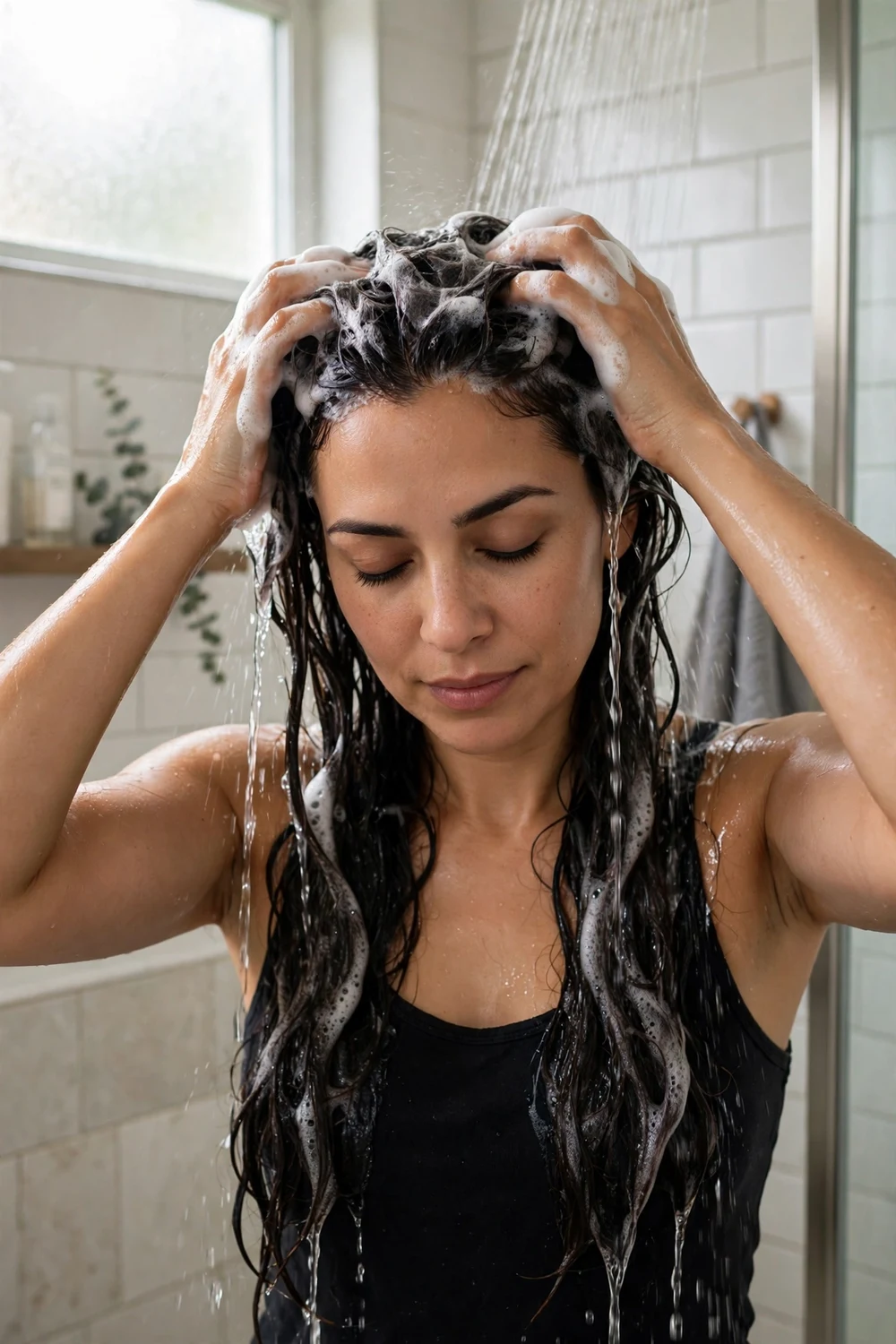
Sulfates are strong cleansers that strip natural oils along with dirt. On frizz-prone hair that trade is a bad one, because the oils you lose were keeping the cuticle calm. A mild, sulfate-free shampoo cleans the scalp without leaving the lengths squeaky and thirsty. Focus the shampoo on your scalp and roots, where oil actually builds up, and let the rinse carry it through the ends.
Washing too often can dry out frizz-prone hair, so it helps to know how often to wash hair for your hair type.
Conditioner is not optional for frizzy hair. Apply it from the mid-lengths to the ends after every wash, leave it for two to three minutes, and rinse with lukewarm or cool water. The cool rinse helps the cuticle settle back down after the warmth of the shower.
Deep condition once a week

A weekly mask restores moisture that daily washing and styling take away. Look for formulas with shea butter, argan oil, or keratin, and give the mask ten to fifteen minutes to work before rinsing. Damaged or color-treated hair benefits most from masks that include some protein, which patches the rough spots on the cuticle.
Don’t pile the mask on your scalp. Roots get enough conditioning from your regular conditioner, and heavy product at the roots just weighs hair down and makes it look flat by midday.
Lock in moisture with a leave-in

After rinsing, while hair is still damp, work a leave-in conditioner through the lengths. This adds a layer of hydration that stays in your hair instead of washing away, and it smooths the cuticle before you style. Fine hair should use a light, spray-style leave-in; thick or curly hair can handle a cream.
A pea-sized amount of hair oil or a silicone-based serum goes over the leave-in as a seal. Argan oil sinks into the strand and adds softness, while a serum sits on the surface and blocks humidity from getting in. Use both on very dry hair: oil first, then a small amount of serum on the ends.
Dry gently: ditch the cotton towel
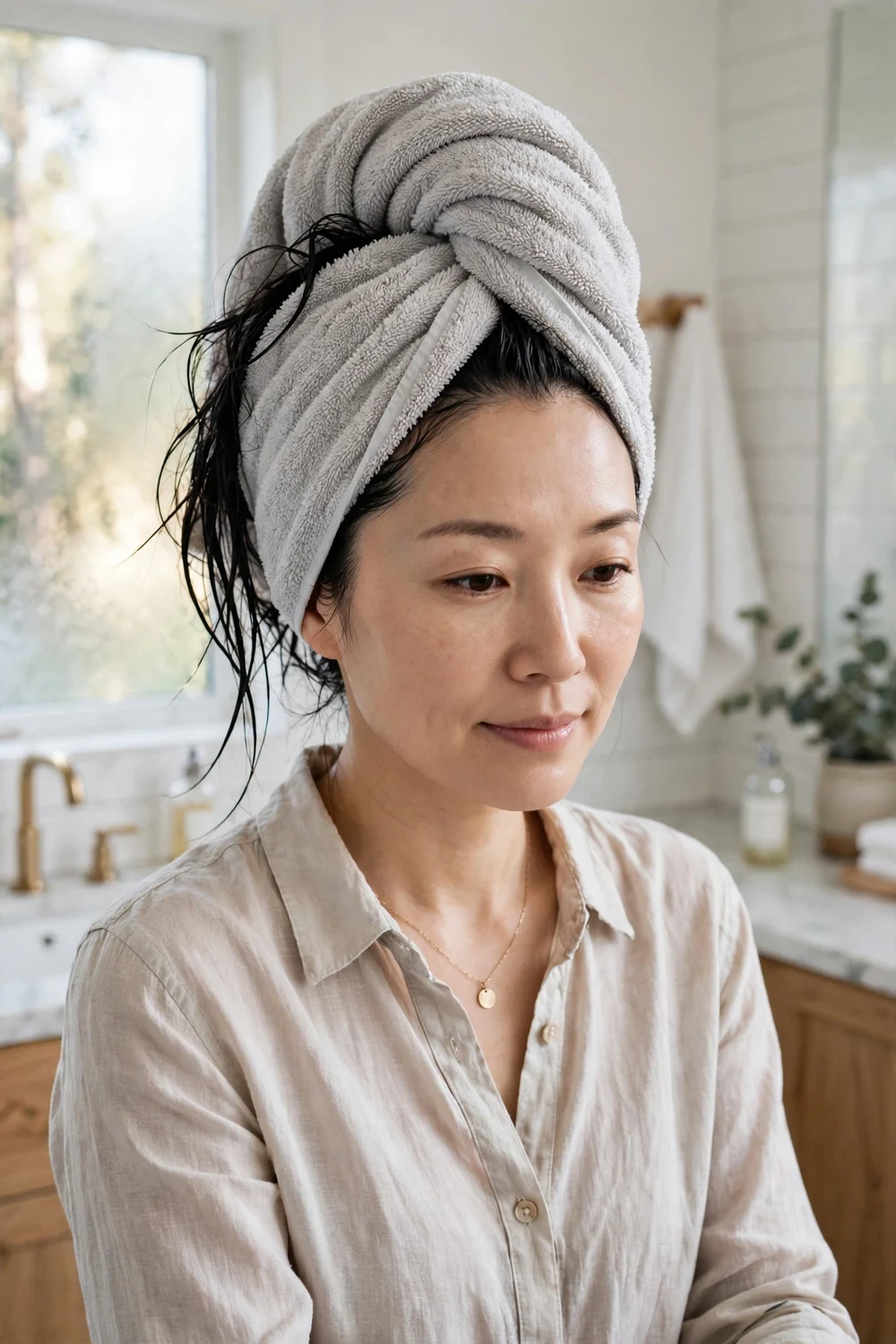
Regular cotton towels have loops and fibers that catch and rough up the cuticle while they absorb water. A microfiber towel or an old cotton t-shirt absorbs just as well with far less friction. Squeeze and pat the hair from roots to ends instead of rubbing it into a bundle, and never wring your hair out.
If you air dry, apply your leave-in and oil first, then leave the hair alone. Constant touching while it dries disturbs the cuticle and invites frizz back. For cuts that air-dry well with minimal heat, see our wash and wear haircuts for women over 60 for low-maintenance options.
Detangle damp, never dry
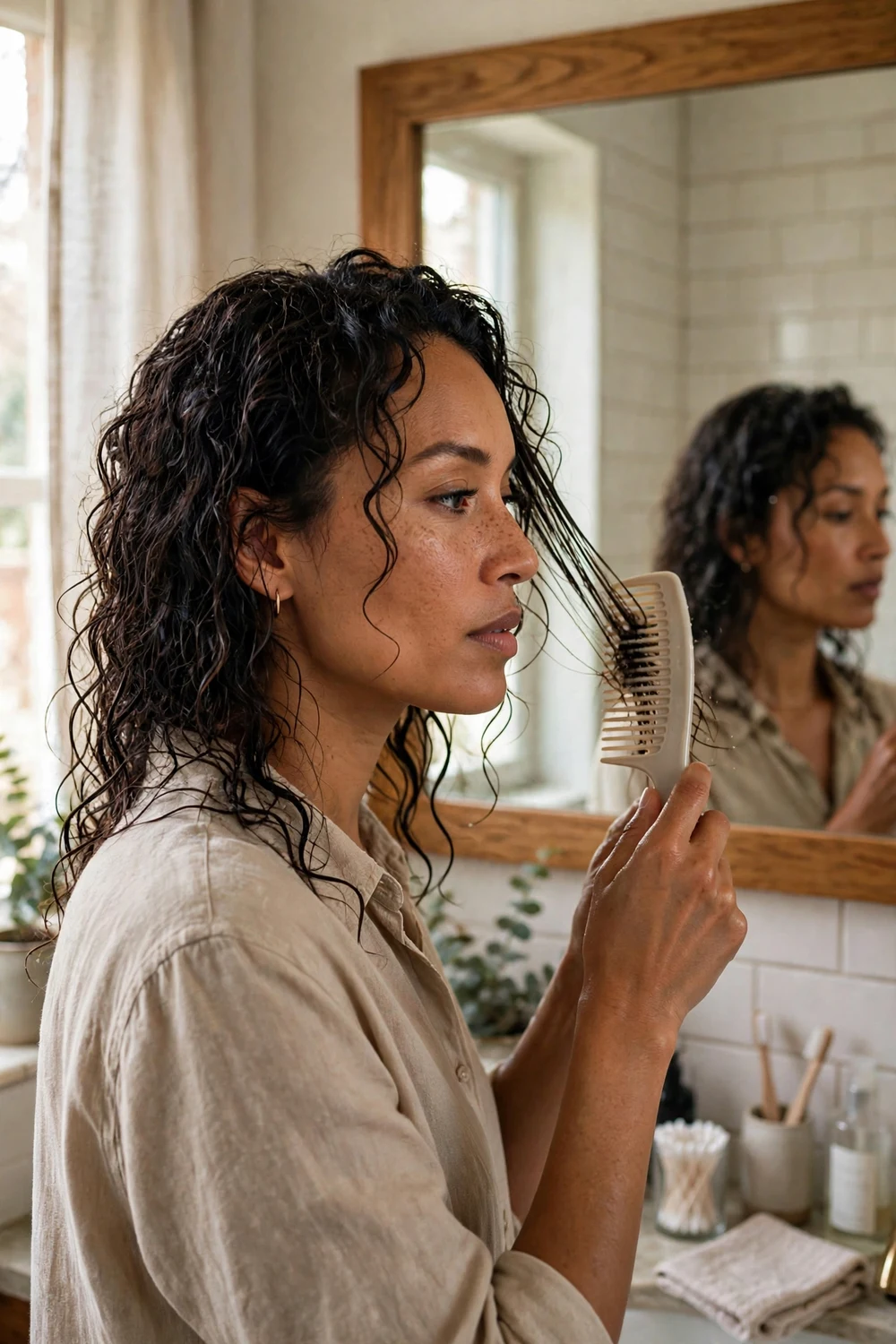
Brushing dry, frizzy hair is one of the fastest ways to make it worse. The bristles drag the lifted cuticle further open and snap fragile strands, which creates short broken pieces that stick out as flyaways. Detangle while your hair is damp and coated with conditioner, using a wide-tooth comb and working from the ends upward in small sections.
To refresh frizz midday without a full wash, wet your hands and finger-comb the frizzy sections. Water rehydrates the strand temporarily, and a tiny touch of conditioner smoothed over the surface settles it back down.
Heat style the safe way
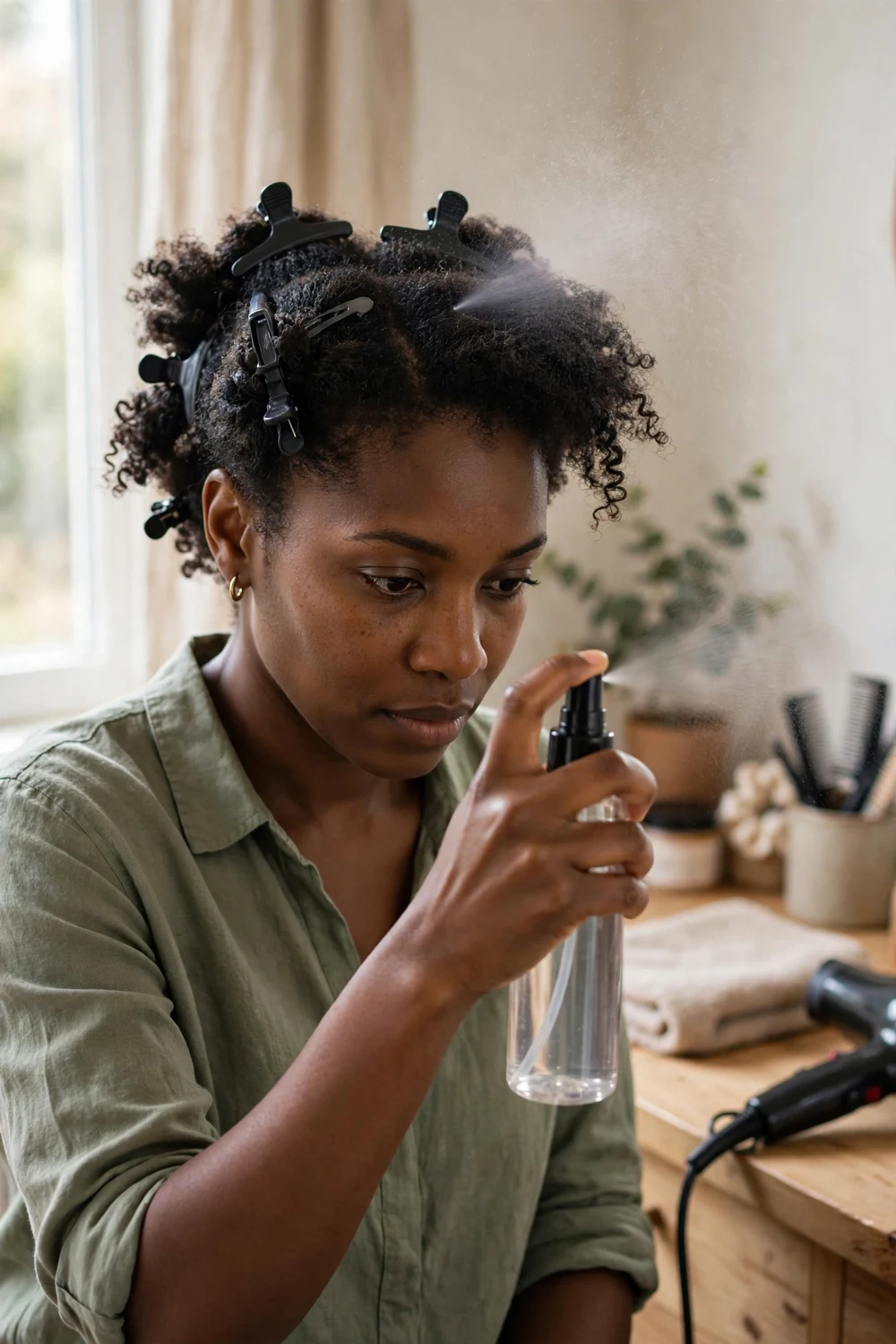
Heat protectant is mandatory before any blow-dryer, flat iron, or curling iron. Mist it through the hair, including the underneath layers people usually skip, so every strand has a heat barrier. Without it, repeated heat styling cooks the cuticle and creates the exact damage that causes frizz.
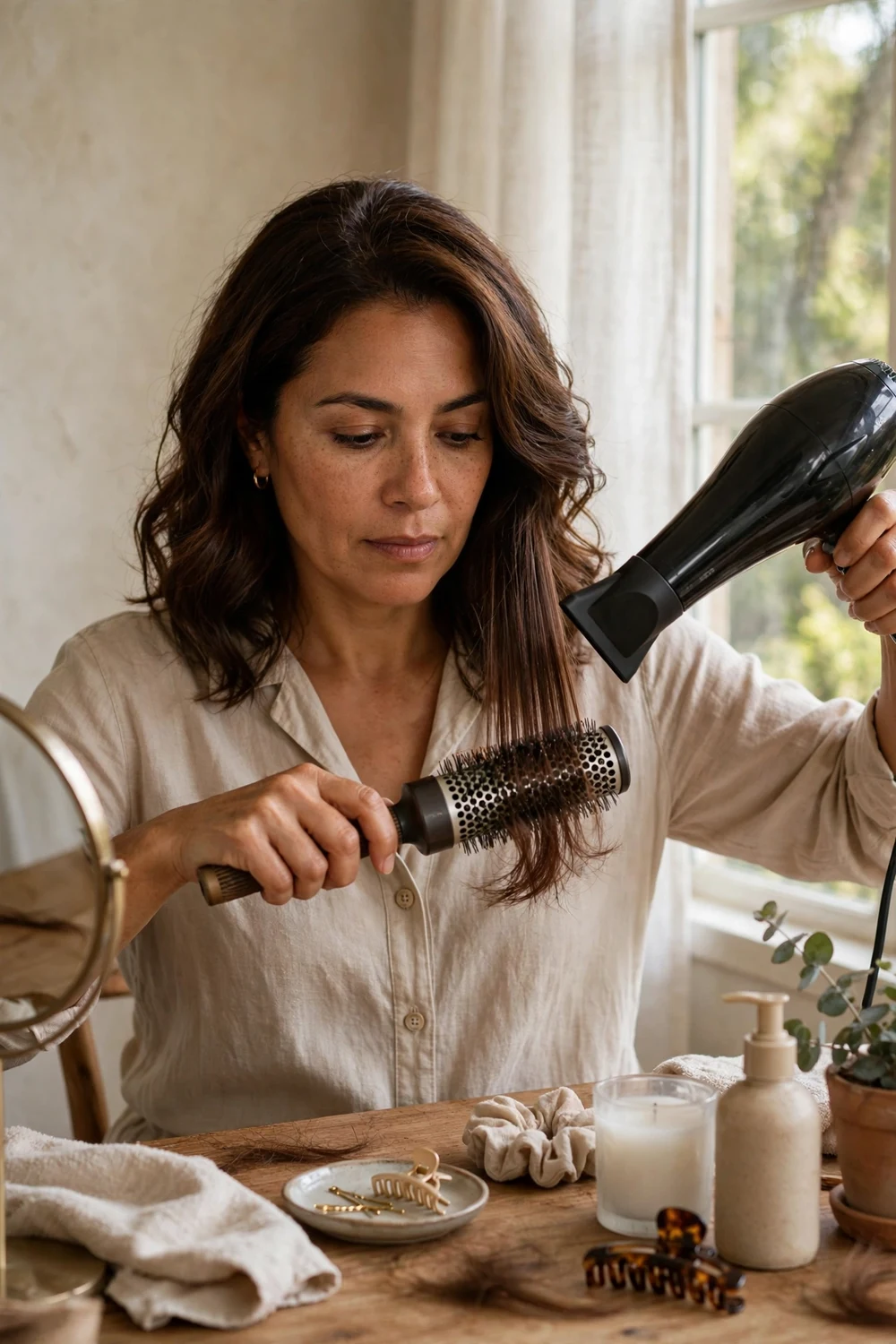
When blow-drying, use medium heat rather than the highest setting, and point the nozzle downward along the strand so air pushes the cuticle flat instead of fluffing it up. An ionic dryer helps because it breaks water into smaller particles that evaporate faster, which means less heat exposure overall.
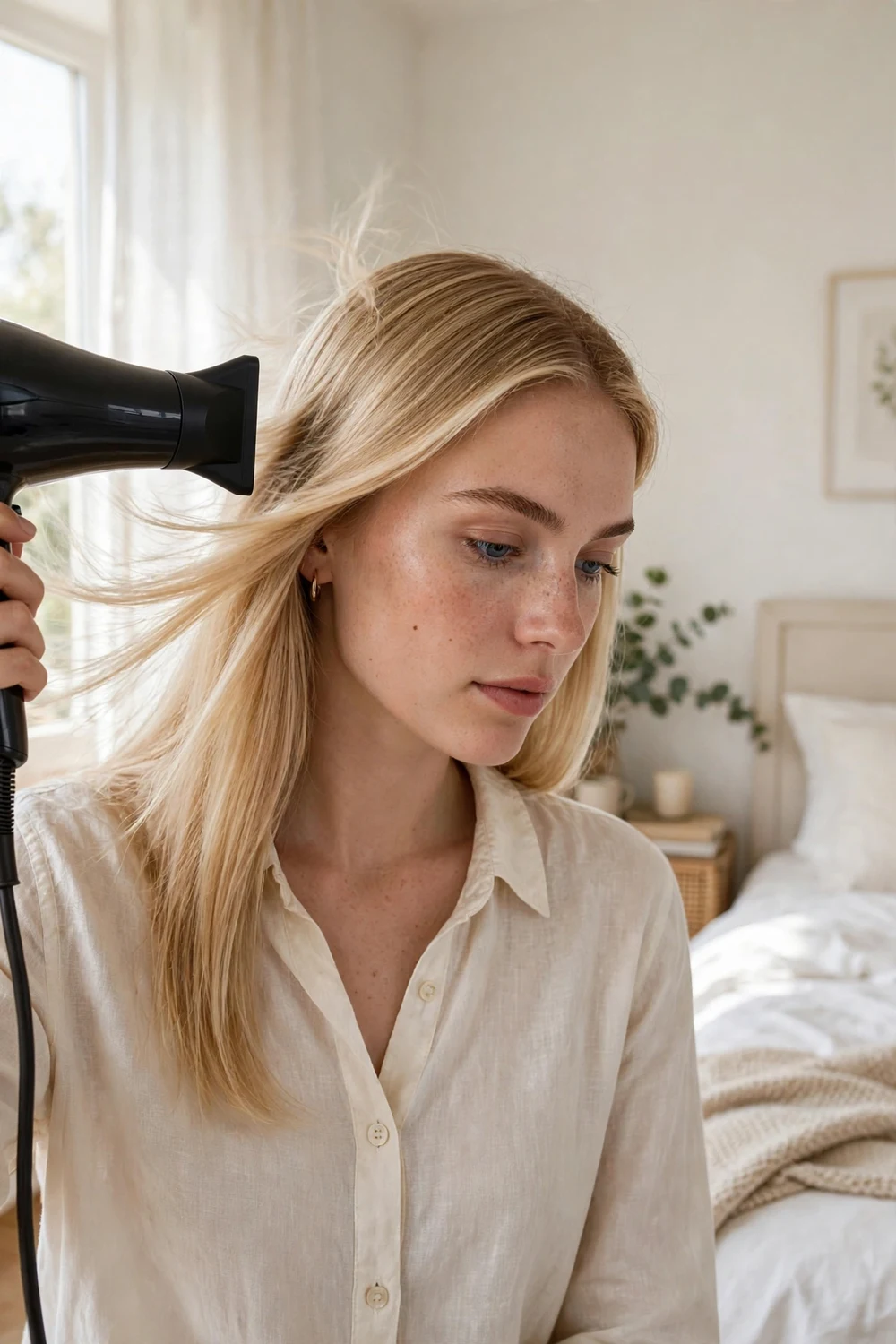
When the hair is nearly dry, switch to the cool setting for a final pass. The cool air seals the cuticle and locks in the smooth finish. This one step takes an extra minute and makes a visible difference in how long the smoothness lasts.
Protect your hair while you sleep

Eight hours of tossing on a cotton pillowcase is a full night of friction on your cuticle. A silk or satin pillowcase lets hair glide instead of dragging, so you wake up with your style mostly intact and noticeably less frizz. It also absorbs less of your hair’s moisture than cotton.
For longer hair, gather it loosely on top of your head with a silk scrunchie, a method called pineappling, or twist it into a loose braid before bed. Both keep the lengths from tangling underneath you. Curly readers can find more texture-friendly overnight ideas in our curly hairstyles for medium length hair guide.
Seal the deal against humidity

On humid days, even a good routine needs backup. A pea-sized amount of anti-frizz serum smoothed over finished hair creates a humidity barrier that slows moisture absorption. For updos, a light mist of anti-humidity hairspray over the surface keeps the outer layer sealed without stiffness.
What doesn’t help: loading on more and more product. Heavy buildup weighs hair down and attracts dust, which dulls the shine you were trying to create. Start with small amounts and add only if the frizz persists.
What to stop doing

Some habits quietly undo everything else you do right. Very hot shower water opens the cuticle wide, so keep the rinse lukewarm. Washing every single day strips oils that frizz-prone hair can’t spare; most hair types do fine with two to three washes a week. Skip styling products heavy in drying alcohols, which evaporate moisture straight out of the strand.
And give your hair occasional breaks from hot tools. Even with protectant, daily flat-ironing accumulates damage. Letting your hair air dry once or twice a week gives the cuticle time to recover. For defined curl ideas that don’t rely on heat, browse short curly hairstyles for black women for inspiration.
Quick reference: which tip fixes what
| Tip | When to use it | What it fixes |
|---|---|---|
| Sulfate-free shampoo | Every wash | Stripping that leaves the cuticle thirsty |
| Conditioner + cool rinse | Every wash | Raised cuticle from warm water |
| Deep-conditioning mask | Weekly | Chronic dryness and damage |
| Leave-in + oil or serum | After every wash | Moisture escaping the strand |
| Microfiber towel or t-shirt | Every wash | Friction from cotton towels |
| Wide-tooth comb on damp hair | Every detangle | Breakage from brushing dry hair |
| Heat protectant | Before hot tools | Heat damage to the cuticle |
| Cool shot to finish | Every blowout | Cuticle left open by warm air |
| Silk or satin pillowcase | Nightly | Overnight friction and moisture loss |
| Anti-humidity serum | Humid days | Moisture from the air swelling the strand |
Frequently asked questions
Can you get rid of frizzy hair permanently?
No. Frizz is a condition of the cuticle, not a permanent trait, so it returns whenever hair gets dry or damaged again. Salon keratin smoothing treatments reduce frizz for several months at a time, but they grow out and need repeating, and they don’t change your hair’s natural texture forever.
Does brushing make frizzy hair worse?
Brushing dry hair lifts the cuticle further and snaps fragile strands, which creates more flyaways. Detangle while hair is damp and coated with conditioner, using a wide-tooth comb from the ends upward.
Why is my hair frizzy right after I wash it?
Very hot water, a harsh sulfate shampoo, rubbing with a cotton towel, or skipping conditioner can all leave the cuticle raised straight out of the shower. Switch to lukewarm water, a sulfate-free shampoo, a microfiber towel, and a leave-in conditioner to fix it.
What ingredients should I look for in anti-frizz products?
Silicones like dimethicone seal the surface and block humidity, argan oil and shea butter add soft moisture, and protein or keratin helps patch damaged cuticles. Avoid products where drying alcohols sit high on the ingredient list.
Does humidity cause frizz?
Yes. Dry hair absorbs water vapor from humid air, each strand swells unevenly, and the cuticle lifts. Keeping hair well-moisturized and sealed with an oil or serum reduces how much moisture it pulls from the air.
Final thoughts
Getting rid of frizzy hair is a routine, not a product. Start with the wash: gentler shampoo, real conditioner, a weekly mask. Dry without friction, seal with a leave-in and oil, protect your styling with heat protectant and a cool finish, and give your hair a smooth surface to sleep on. Give the full routine two to three weeks before judging it; the cuticle needs consistent care before it stays flat.
For more on this topic, see caring for thin hair.

