

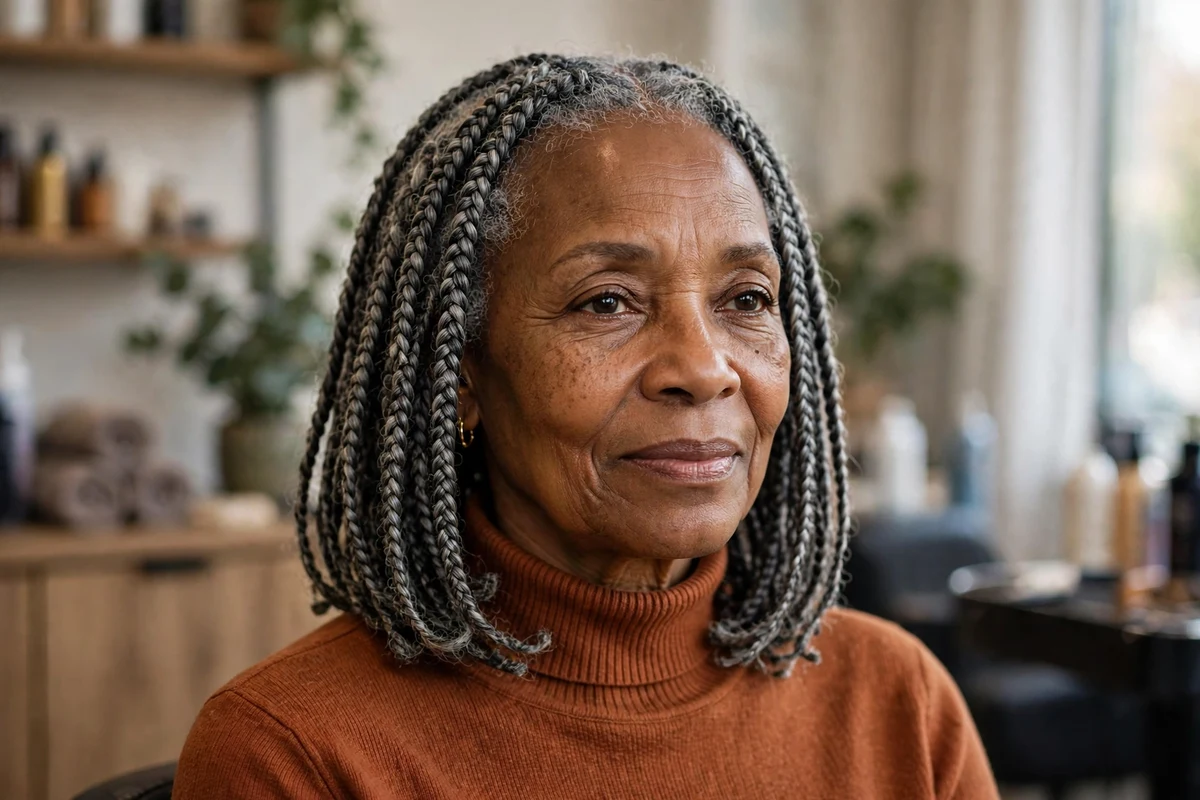
If your hair has grown finer at the edges, drier along the length, or slower to bounce back after a tight style, braids can still work well for you. The styles that suit older Black women best share a few habits: gentle tension at the hairline, medium or larger parts, and lengths that do not hang heavy on the neck. This list gathers braided hairstyles for older Black women that follow those habits, from quick own-hair cornrows to silver-blended box braids you can wear for weeks.
I have kept the focus narrow here on purpose. Every idea below is a braided or twisted style chosen for comfort on mature hair, with notes on weight, upkeep, and where a style can go wrong at the hairline. You will find short bobs for an easy first install, low buns that sit well against a headrest, and longer sets for women who still love length, each with a clear difficulty and cost band so you can plan the appointment before you book it.
Key Takeaways
- Choose gentle starts: knotless braids, feed-in rows, and flat twists put less tension on fine edges than tight knots.
- Medium and jumbo parts spread the pull across more hair and shorten both install and take-down time.
- Silver and salt-and-pepper blends make grey new growth far less visible at the part.
- Most styles here wear well for four to six weeks, with a real rest week between installs.
- Cost bands only: $ is a home or short style, $$ a standard salon install, $$$ a long or detailed set.
1. Classic Box Braids with Silver Blending
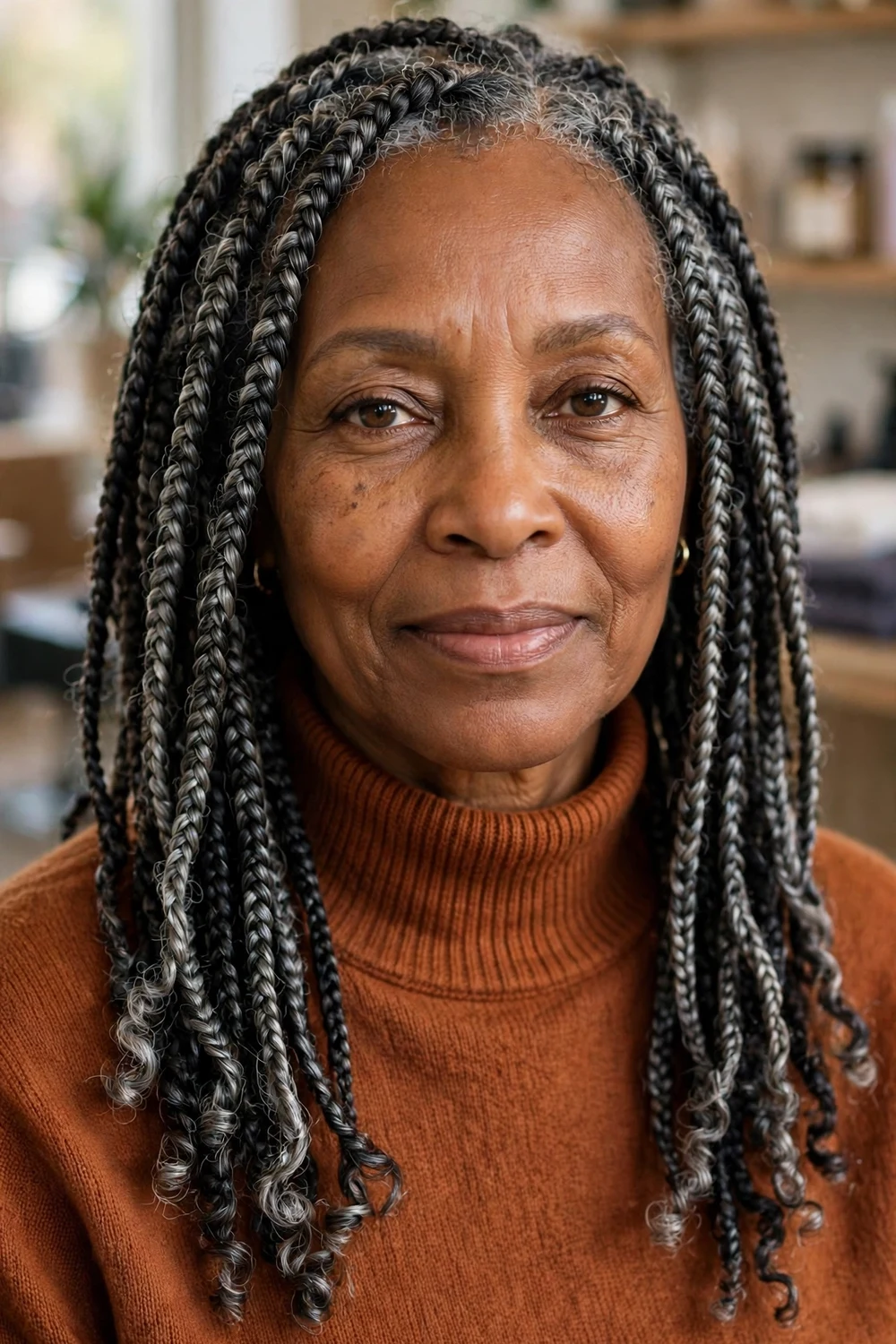
Box braids in medium parts give you weeks of low daily styling, and blending silver or grey extension hair through the black softens the whole look. The mix mirrors how grey grows in, so new growth at the part is far less obvious.
Keep the parts around the hairline medium rather than small. Finer sections at the temples pull on the weakest hair first, while medium parts spread the load and still look neat.
Try this: Ask your braider to mix the silver within each braid at the front, and keep it heavier through the crown where grey usually shows first.
Difficulty: Medium · Cost: $$
2. Shoulder-Length Knotless Braids
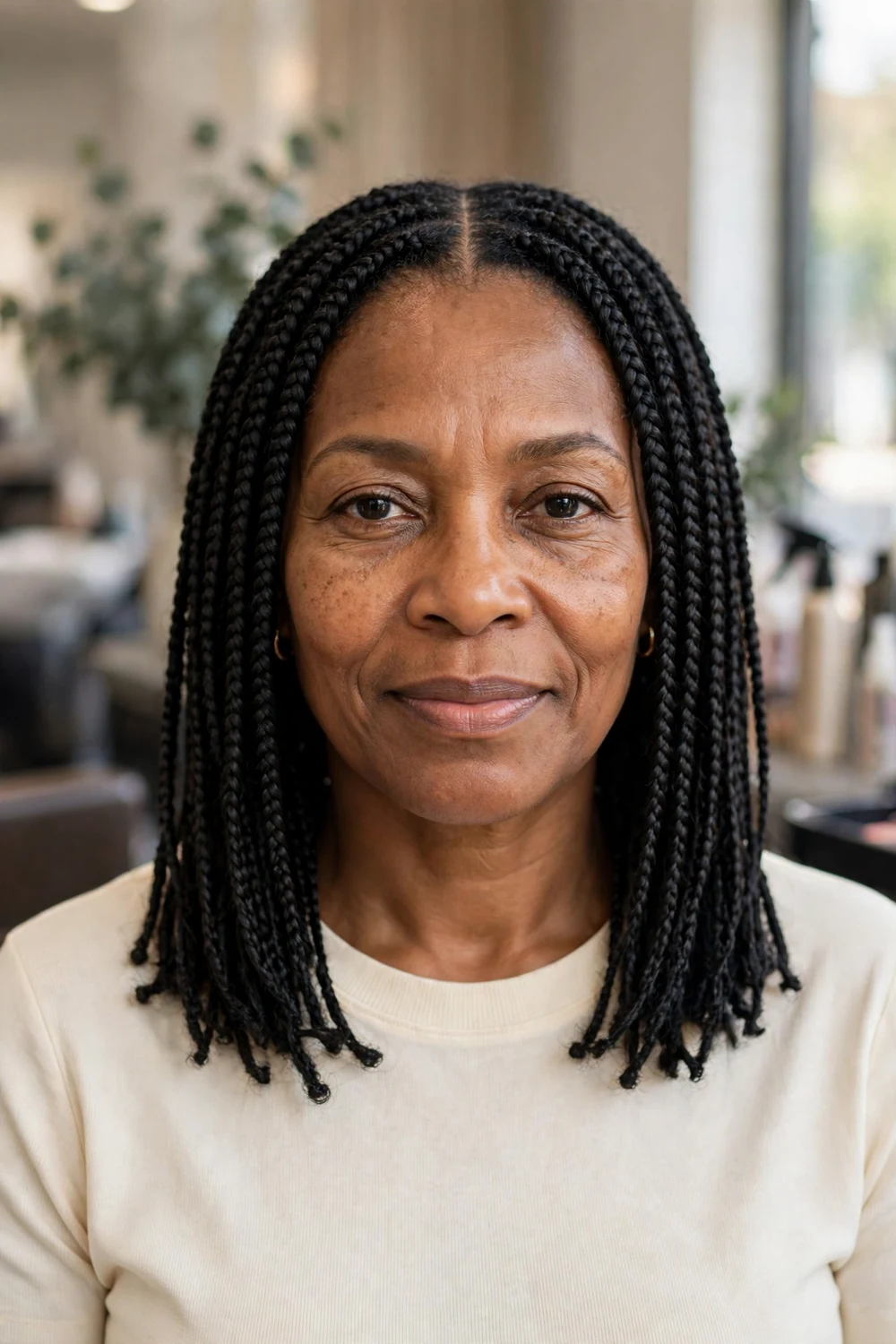
Knotless braids start with your own hair, and extension hair is fed in a little at a time. There is no tight knot at the root, so the style lies flatter and feels calmer on a tender scalp from day one.
Shoulder length is a kind weight for mature hair. The braids move, they can go up in a loose bun, and they stay clear of coat collars more often than longer sets. If your edges are fine, pair this with the advice in our guide to hairstyles for older women with fine hair and ask for lighter hair at the temples.
Try this: Book the front two rows a size larger than the rest. The hairline gets the lightest load and the style still looks even.
Difficulty: Medium · Cost: $$
3. Jumbo Knotless Braids with Wide Parts

Jumbo knotless braids use fewer, larger parts, so the appointment is shorter and there are fewer braids to sleep on. Wide parts also mean each braid holds more of your own hair, which spreads tension across more strands.
The look reads bold and clean. Because the braids are thick, a simple centre part or a loose low pony is often all the styling they need for the day.
Try this: Book a shorter wear window for jumbo sets and check the front rows weekly. Larger braids loosen faster as your hair grows.
Difficulty: Easy · Cost: $$
4. Knotless Braid Bob with Loose Curls

This bob mixes short knotless braids with loose curls left free between sections and at the ends. The curls give fullness around the cheeks and jaw, while the braided sections keep the style protected and tidy at the roots.
Chin to jaw length keeps weight very low. It is a good first braided style if you want the look of a curly bob with far less daily work.
Try this: Refresh the loose curls with a light mousse and finger coils in the morning. Keep heavy oils off the curls so they stay springy.
Difficulty: Medium · Cost: $$
5. Crochet Braid Bob
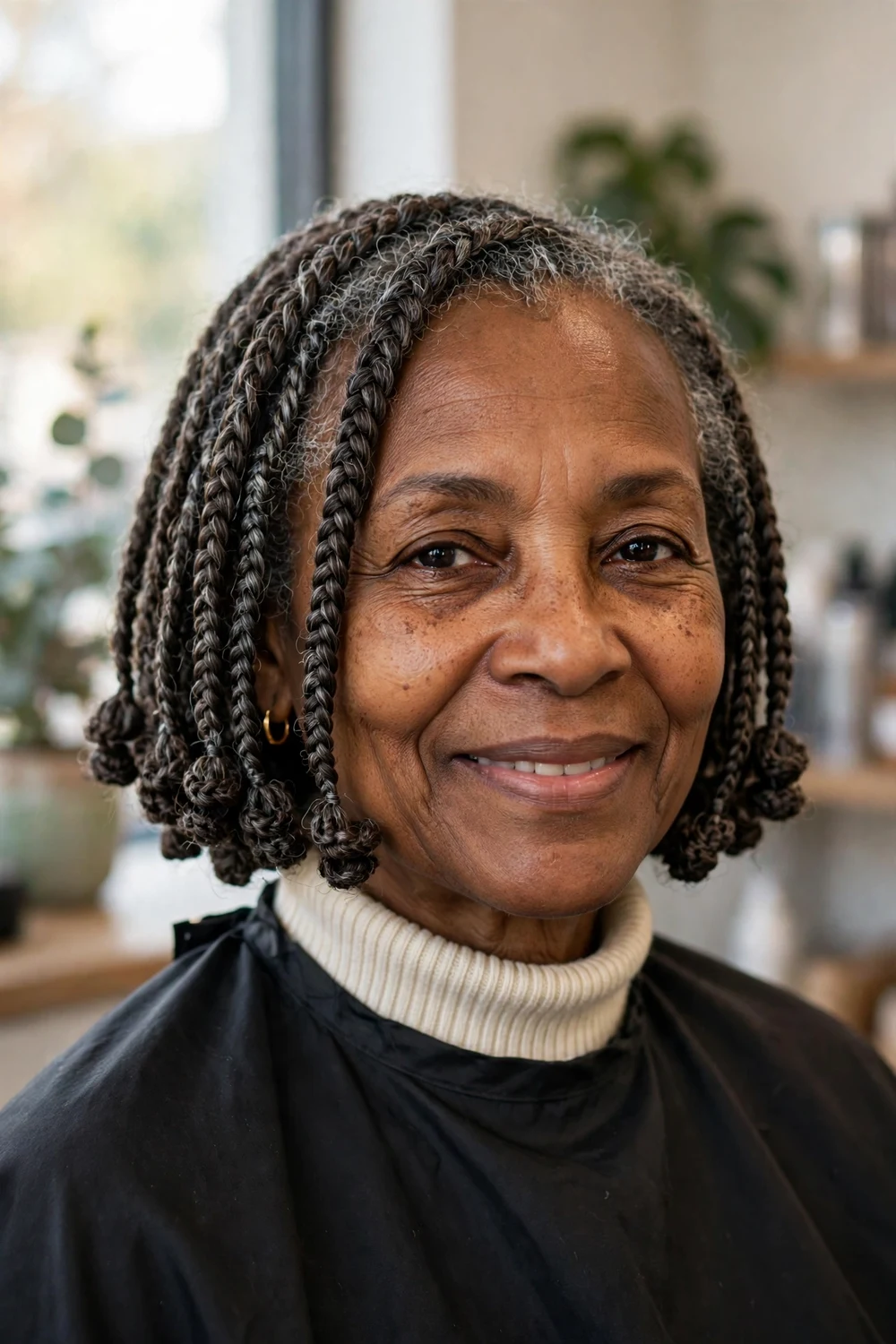
A crochet bob starts with cornrows underneath, and pre-braided or pre-twisted hair is looped through with a crochet tool. You get the look of individual braids with a much shorter time in the chair.
The base cornrows leave your scalp easy to reach, which helps with cleansing and moisturising during the wear. The bob length frames the face and lifts the line of the jaw.
Try this: Choose lightweight crochet hair and ask for the cornrow base to sit loose at the hairline. Tight base rows undo the comfort this style offers.
Difficulty: Easy · Cost: $
6. Feed-In Braids with a Deep Side Part
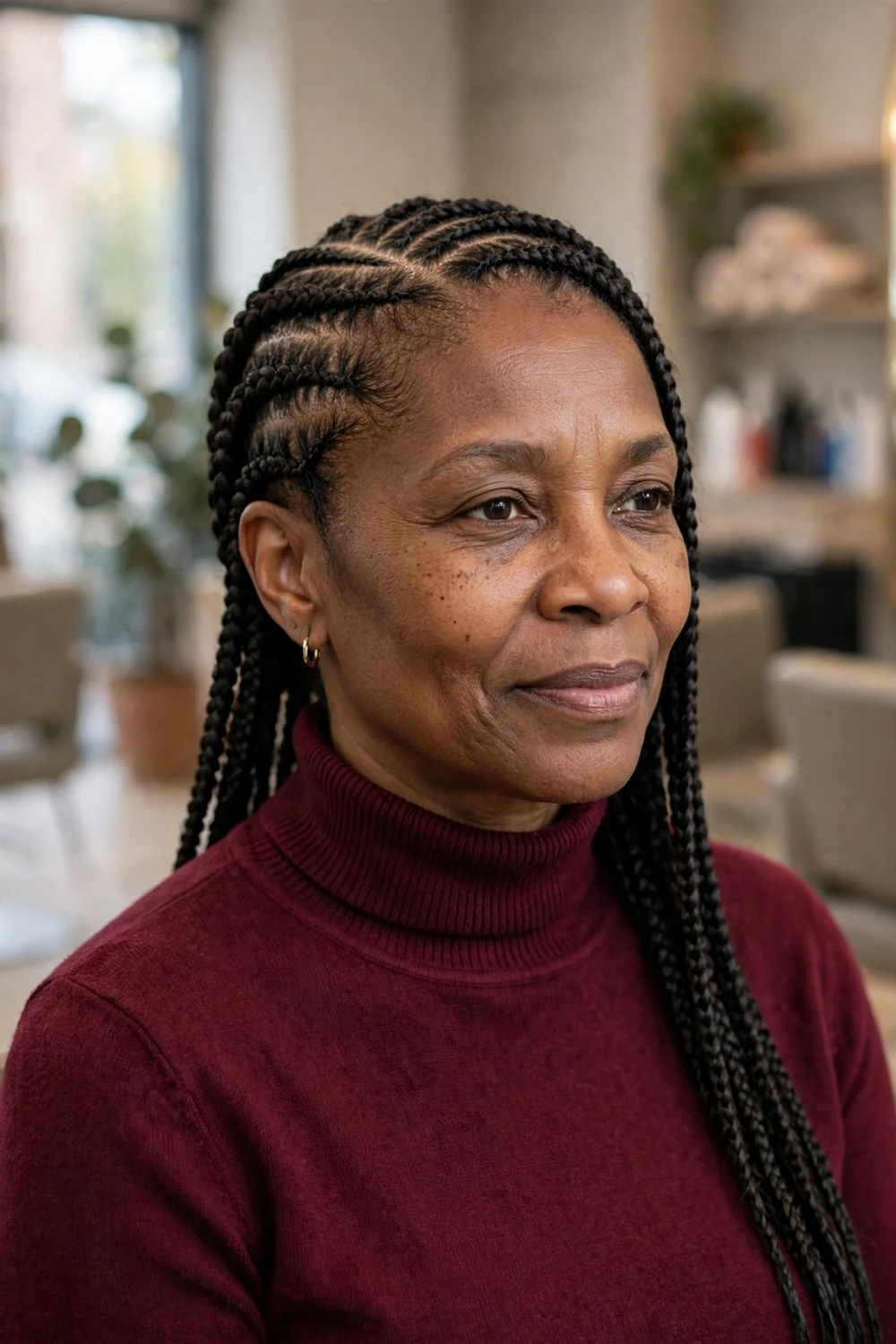
Feed-in braids begin thin at the hairline and build thickness gradually as more hair is added along the row. That gradual start is why they look like they grow from the scalp and sit so flat.
A deep side part adds softness and suits many face shapes. The flat base also sits well under hats and wraps on busy days.
Try this: Tell your braider you want the first part of each row kept especially light. That small section sets the comfort for the whole style.
Difficulty: Medium · Cost: $$
7. Gentle Stitch Cornrows
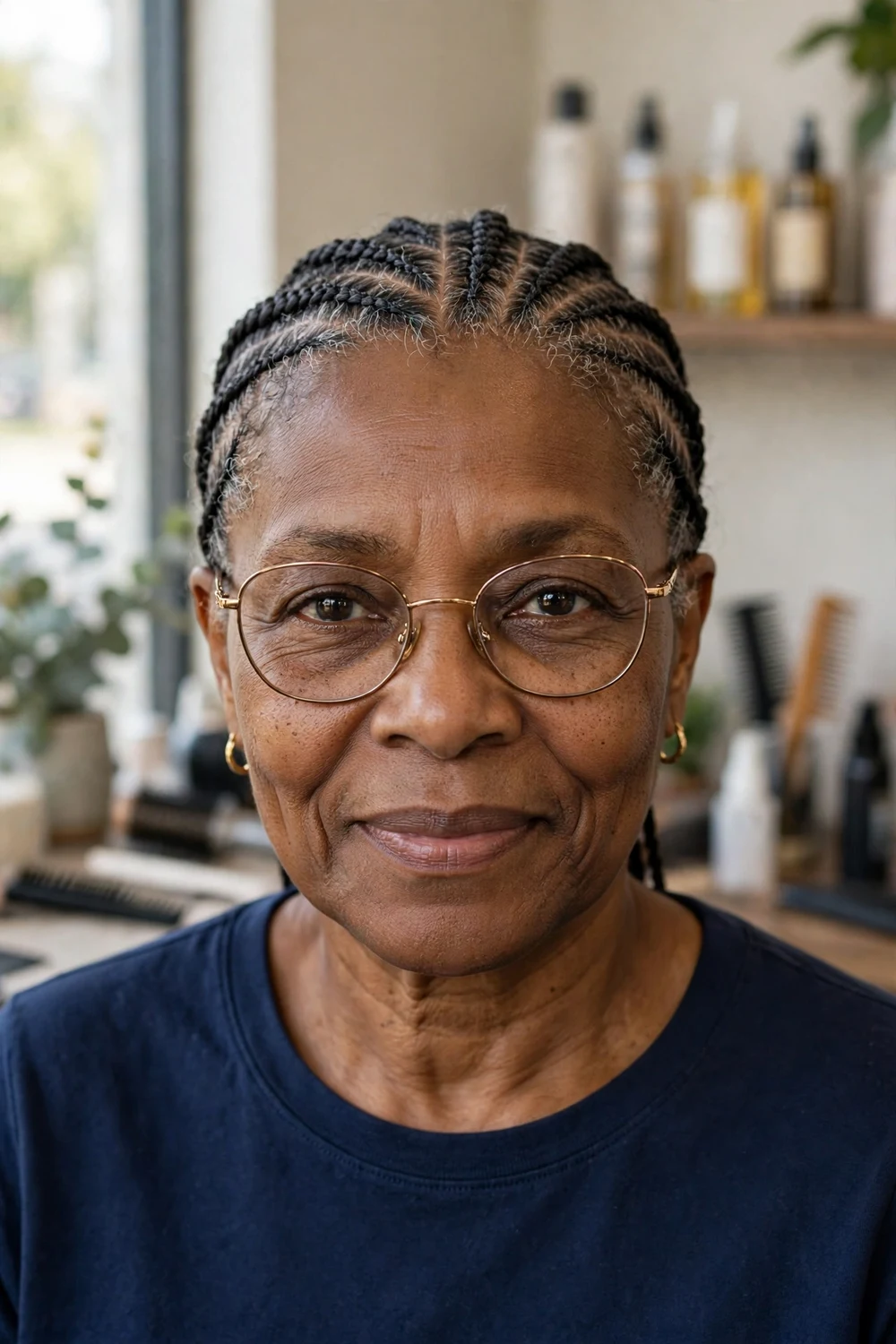
Stitch cornrows are built with small horizontal sections fed in step by step, giving clean, lined parts across the scalp. Worn with a relaxed hand, they lie flat and look crisp for work, church, and travel.
Flat rows are friendly with glasses and headwraps because there is little bulk at the sides. Keep the pattern simple, with straight or softly curved rows, for the calmest feel.
Try this: Ask for stitch rows in a medium width at the front. Very thin front rows grip few strands and can stress a fine hairline.
Difficulty: Medium · Cost: $$
8. Natural Hair Cornrows Without Extensions

Cornrows braided with only your own hair add no extra weight at all. Your scalp carries just the braids themselves, which makes this one of the kindest options for fine or thinning areas.
Medium rows, about a finger wide, tend to hold best. Expect a neat look for two to three weeks, then soften the style with a wrap as the parts grow out. If you like short natural options between installs, see our easy 4C short hairstyles for women.
Try this: Have your hair washed, conditioned, and fully detangled before braiding. Own-hair cornrows show dryness fast, so start with well moisturised hair.
Difficulty: Easy · Cost: $
9. Sleek Cornrows into a Low Braided Bun

Straight or gently curved cornrows gather into a low bun at the nape in this tidy updo. Everything is secured, nothing swings, and the finish suits formal days as well as daily wear.
The low bun sits comfortably against headrests and collars. It also keeps ends tucked away, which helps protect dry ends from rubbing on clothing.
Try this: Wrap the bun with a satin scarf for the first few nights. That keeps the surface smooth while the style settles.
Difficulty: Medium · Cost: $$
10. Cornrows into a Low Braided Ponytail
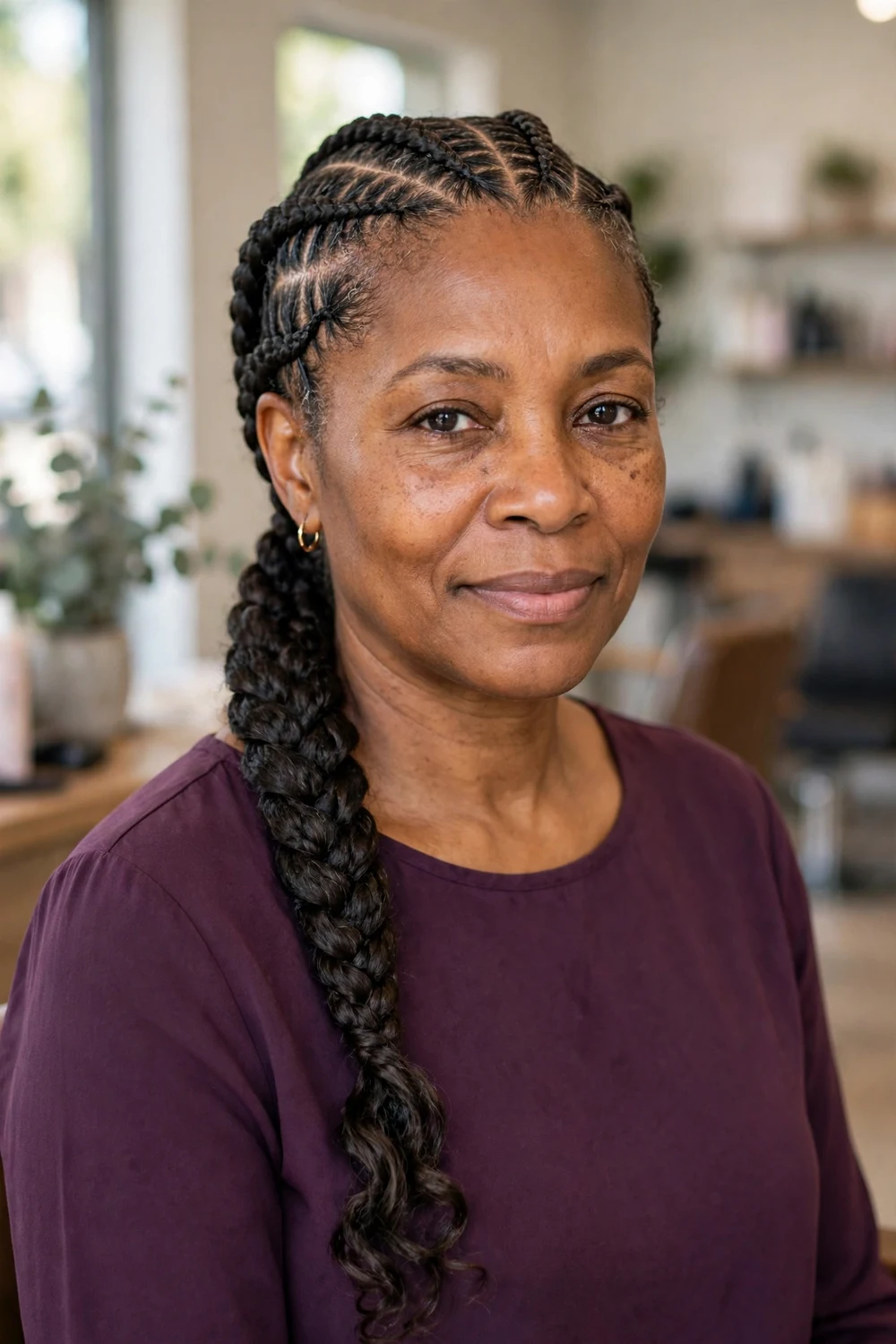
Cornrows run back from the hairline and flow into a low ponytail of braids. You get a neat scalp, length you can move, and a ponytail you can coil into a bun when you want a change.
A low base is kinder than a high one. It pulls less at the front and feels more comfortable through a full day of wear.
Try this: Use a soft, wide band for the ponytail base and move its position slightly each day. One fixed tight spot wears on the same hairs.
Difficulty: Medium · Cost: $$
11. Halo Crown Braids

Two large cornrows wrap around the head like a crown, starting low at the nape and meeting at the top or side. The weight spreads evenly around the head rather than hanging from one point.
This style keeps hair off the neck and away from the centre of the hairline, and it holds its shape well for events and photos. Tuck the ends under for a smooth finish.
Try this: Add a small cuff or pin where the ends tuck in. It hides the join and gives the crown a finished detail with no extra tension.
Difficulty: Medium · Cost: $$
12. Flat Twists into a Low Bun
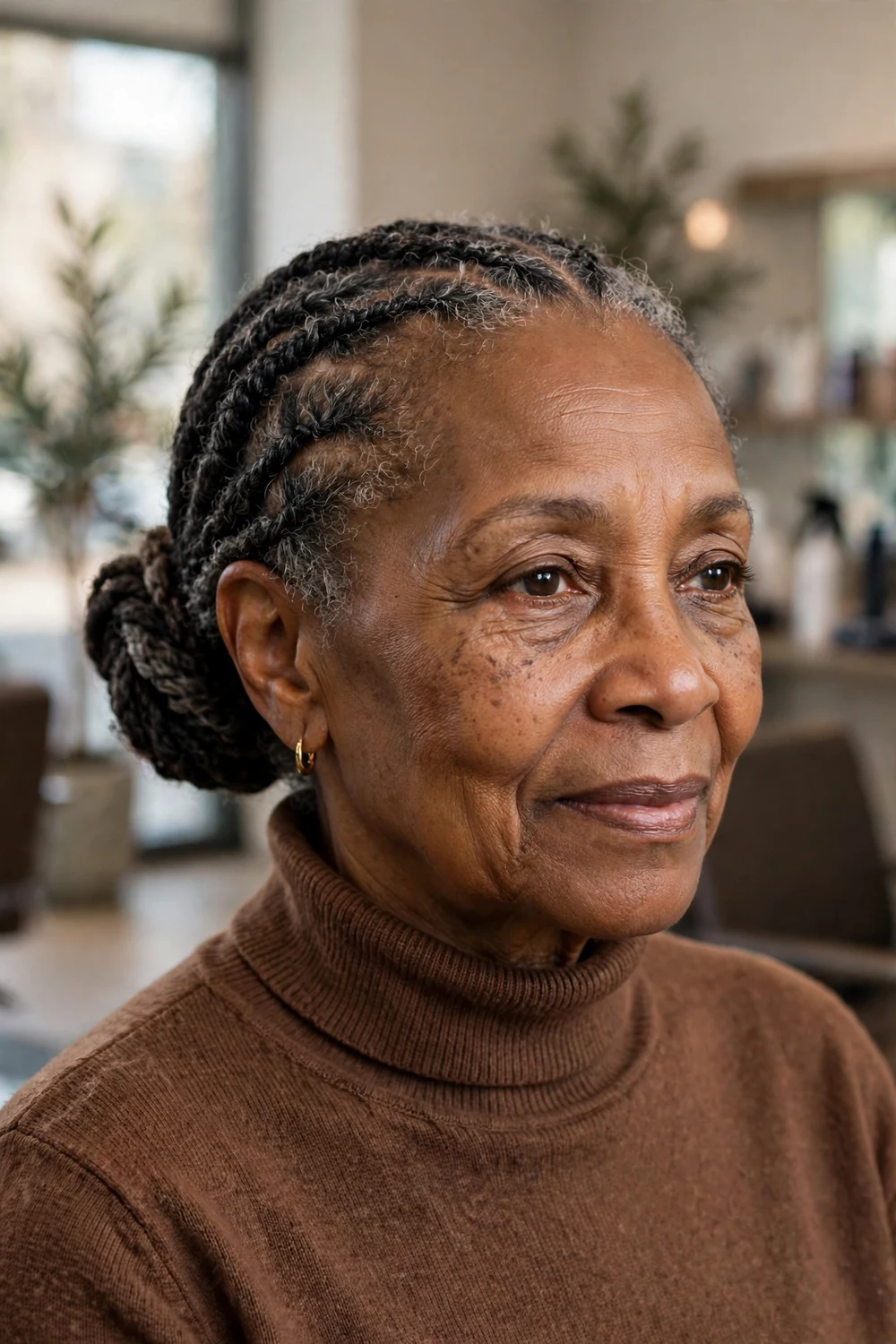
Flat twists roll two strands along the scalp, in a motion much like cornrows, and they tend to feel softer at the root. Four to six twists from front to back, gathered into a low side bun, make a calm and tidy style.
This is a strong choice in your own hair with no extensions, or with a little hair added for length in the bun. Wear usually runs shorter than cornrows, around two weeks of neatness.
Try this: Twist on damp, conditioned hair with a light cream. Dry twisting pulls more and leaves the surface fuzzy within days.
Difficulty: Easy · Cost: $
13. Shoulder-Length Two-Strand Twists

Two-strand twists are among the gentlest protective styles on this list. At shoulder length they stay light, they bounce when you move, and the soft rounded shape frames the face well.
Silver twists look especially soft and full. When you take them down after a week or two, the twist-out underneath gives you a second style from the same work.
Try this: Keep twists medium in size. Very small twists take a long time to remove and can tangle at the ends during take-down.
Difficulty: Easy · Cost: $
14. Medium Senegalese Twists
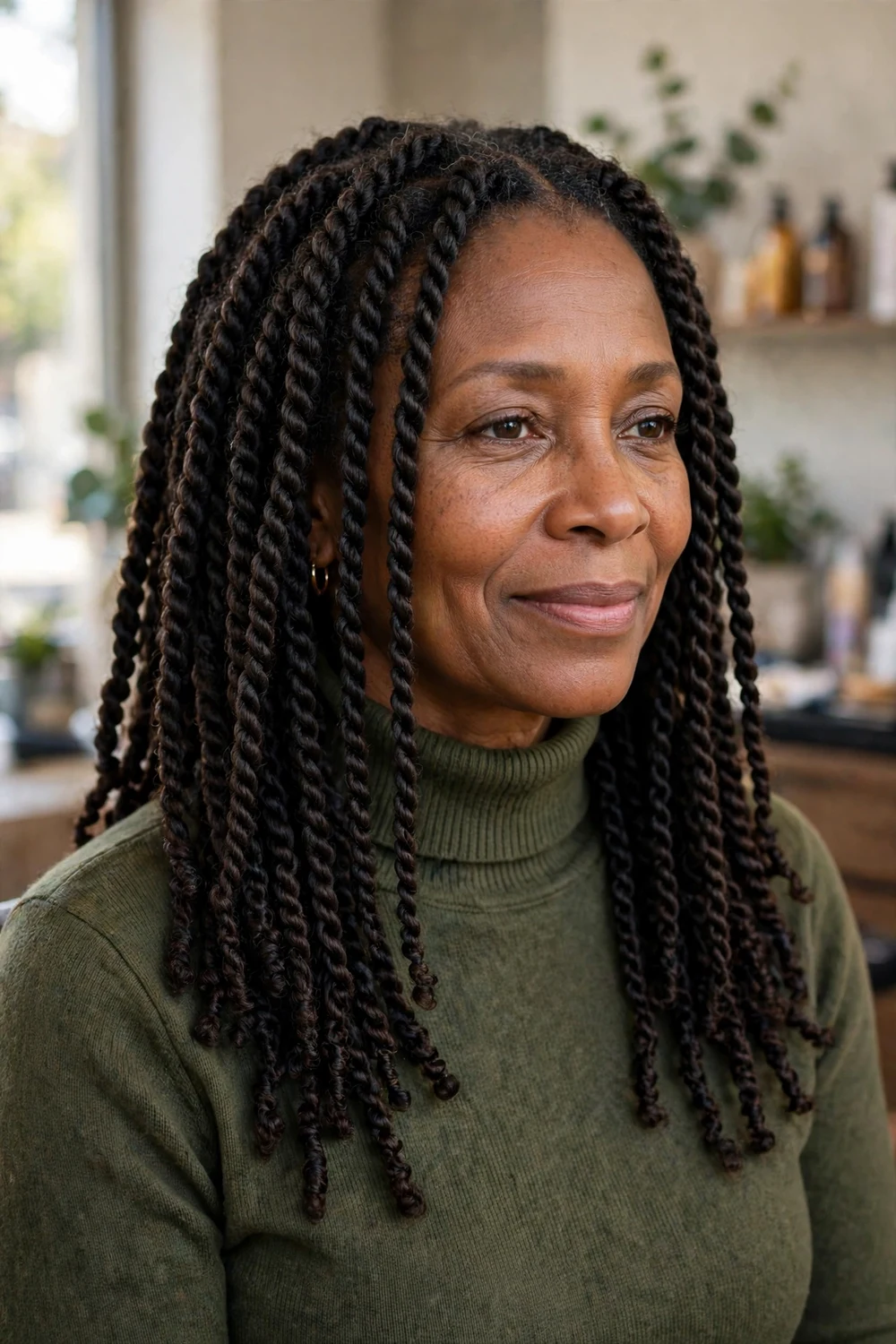
Senegalese twists use a smooth, rope-like twisting method that gives a polished finish. Medium twists at a mid length look neat for work and still have enough swing for evenings out.
The smooth surface sheds lint less than rougher textures and tends to stay tidy longer. Keep the roots moisturised so the neat finish lasts.
Try this: Ask for a gentle base at the hairline and keep the first row slightly smaller and lighter than the rows behind it.
Difficulty: Medium · Cost: $$
15. Shoulder-Length Passion Twists

Passion twists have a soft, textured, slightly wavy finish that looks relaxed from the first day. The hair used for them is light, so shoulder-length sets feel easy on the neck and scalp.
Warm brown and copper-brown shades suit this texture well and soften the look around the face. The twists can be worn loose, half up, or swept to one side.
Try this: Separate the ends gently with your fingers while they are slightly damp. Pulling them apart dry creates frizz through the whole twist.
Difficulty: Easy · Cost: $$
16. Chunky Twists with Tapered Ends

Chunky twists install faster than small ones and create a full, soft outline with far fewer sections. Tapered ends, thinner toward the tips, keep the finish looking natural and light.
This is a friendly first protective style. It is simple to moisturise, simple to sleep in, and simple to take down without a long appointment.
Try this: Count on a shorter, fresher wear and plan the take-down when you book. Chunky twists look best in their first few weeks.
Difficulty: Easy · Cost: $
17. Goddess Braids with Curly Ends
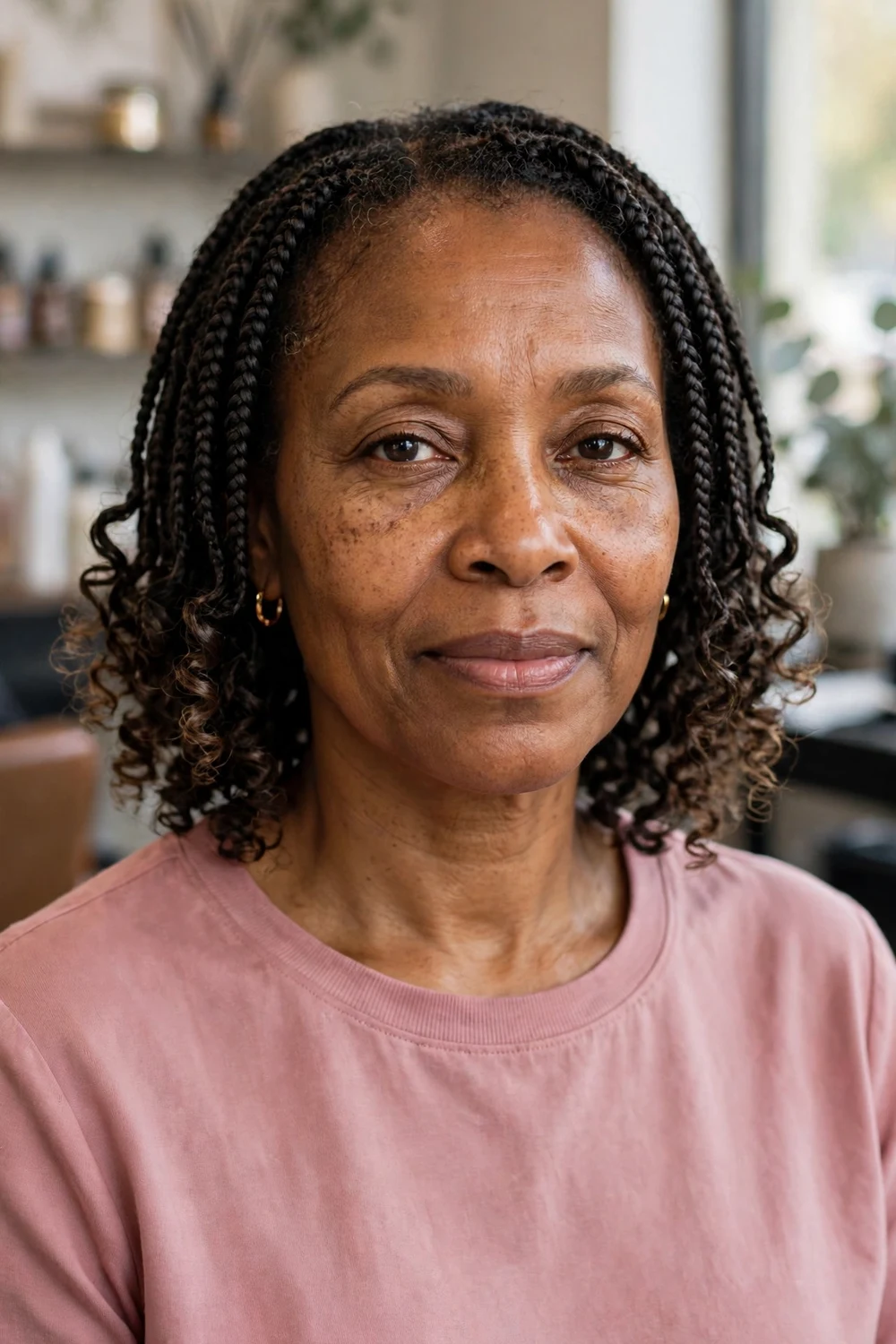
Goddess braids are individual braids with loose curly hair woven out along the length and left free at the ends. Short to medium length keeps the loose hair manageable and the total weight down.
The mix of neat braids and soft curls gives volume around the face with no daily heat styling. Curly ends also hide uneven braid lengths well as the style ages.
Try this: Detangle the loose curly sections gently every few days with your fingers and a little water. Loose hair left alone will mat against the braids.
Difficulty: Medium · Cost: $$
18. Fulani-Inspired Braids with Light Cuffs
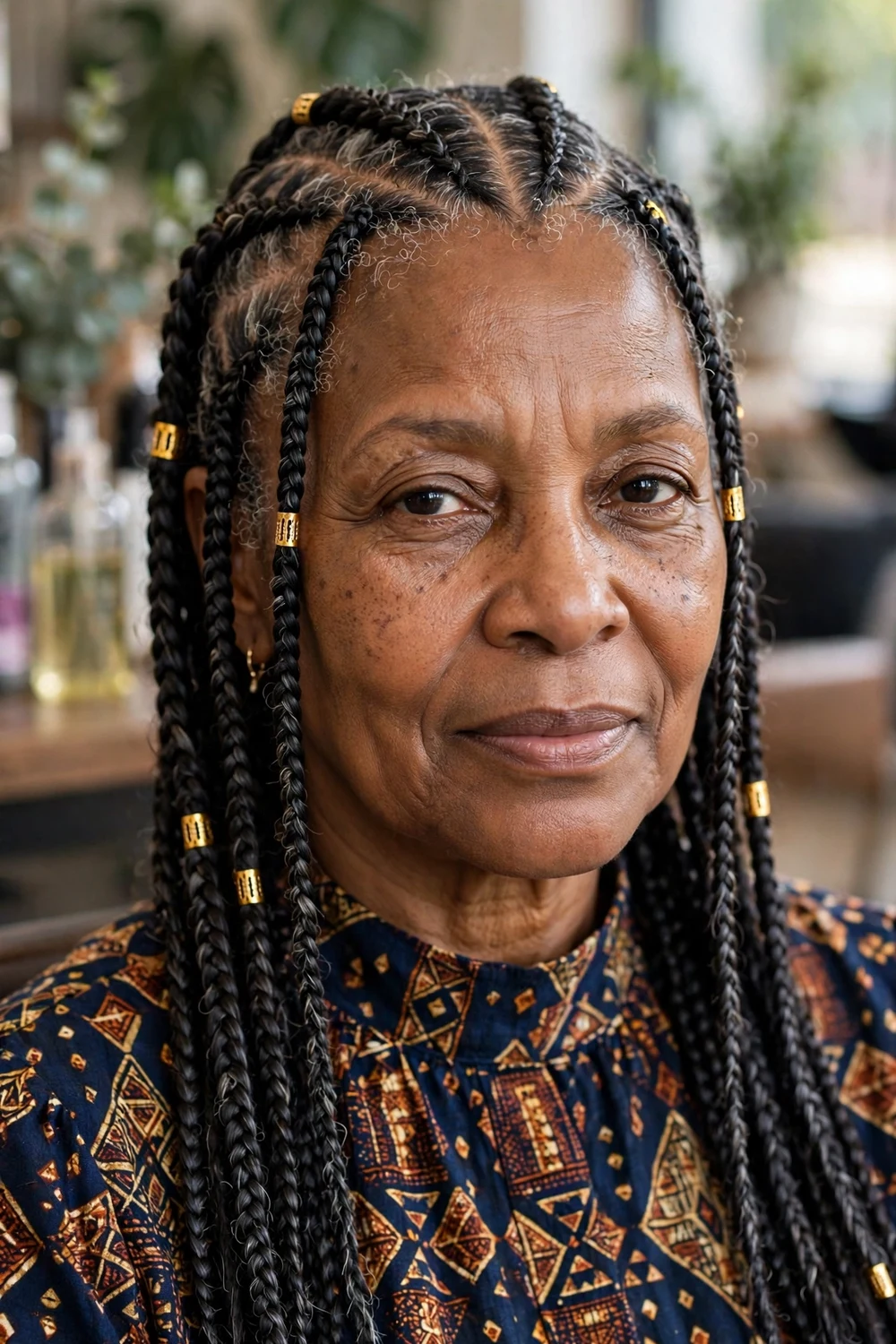
Fulani-inspired braids pair cornrows at the crown, often with a centre row, and individual braids falling at the sides. The pattern carries real cultural history and photographs well from every angle.
Keep the detail light for mature hair. A few small cuffs on the side braids give the look its character, while heavy beads add weight your neck will feel by evening. If you are weighing braids against a longer commitment, our thin locs hairstyles for women show the other route.
Try this: Place cuffs a few centimetres from the ends rather than at the tips. They stay put better and swing less against collars and jewellery.
Difficulty: Hard · Cost: $$$
19. Cornrows into a Braided High Bun
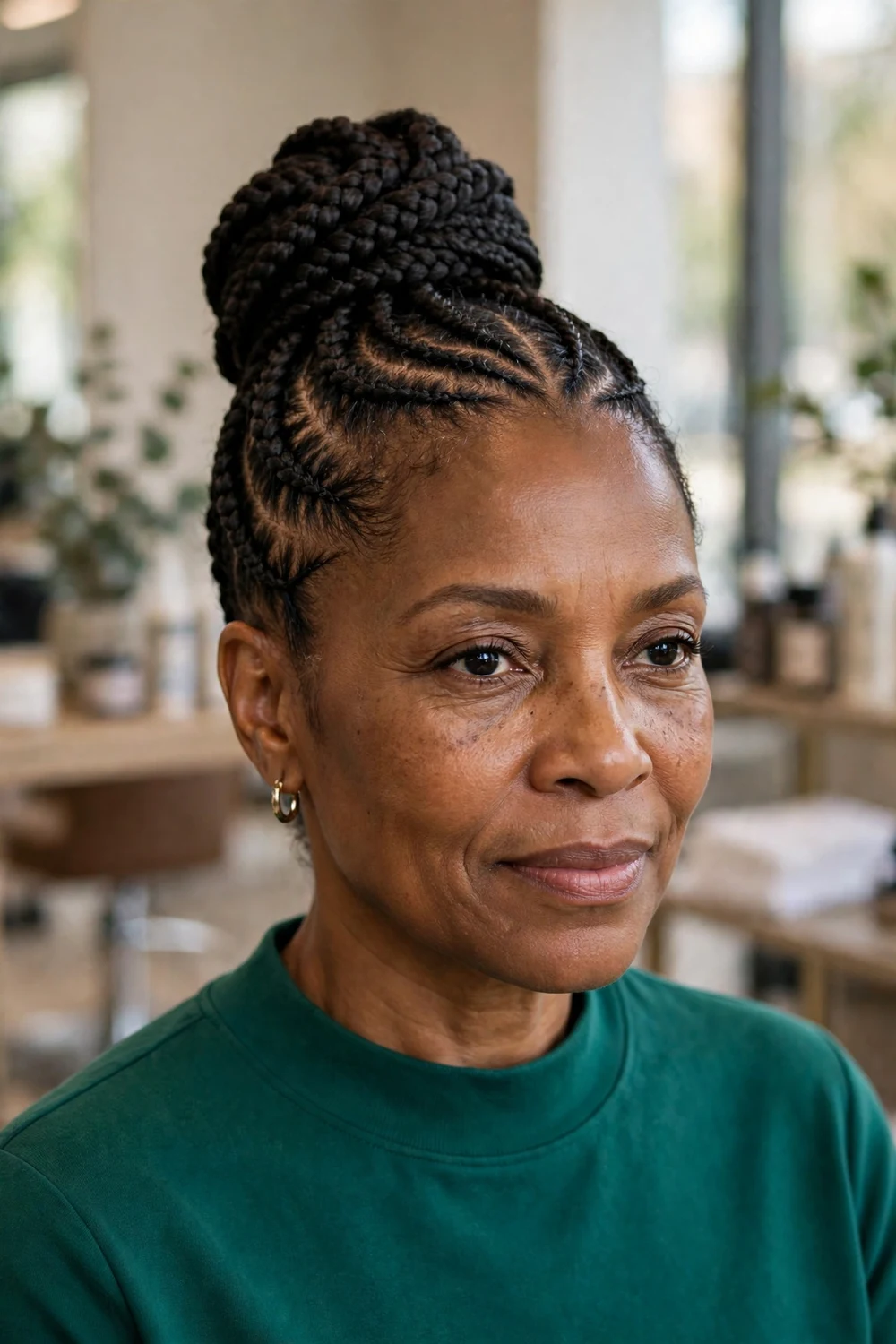
Cornrows sweep upward into a high bun in this lifted updo. The height draws the eye up, lengthens the look of the neck, and keeps every strand off your face and shoulders.
It is a strong event style and a practical one for warm weather. For more dressed-up inspiration, see our Thanksgiving hairstyles for Black women.
Try this: Keep the bun itself loose when you pin it at home. The cornrows already hold the style, so the bun only needs to feel secure.
Difficulty: Medium · Cost: $$
20. Side-Swept Cornrows

Side-swept cornrows curve from one side of the head and let the braids fall over the opposite shoulder. The diagonal lines soften the style and flatter rounder faces well.
Because the braids rest on one side, this style feels cooler on the neck and shows earrings and necklines on the open side to good effect.
Try this: Ask for the curve to start a little behind the hairline on the swept side. That keeps the most delicate edge hair out of the tightest part of the turn.
Difficulty: Medium · Cost: $$
21. Curved Cornrows with Flowing Length
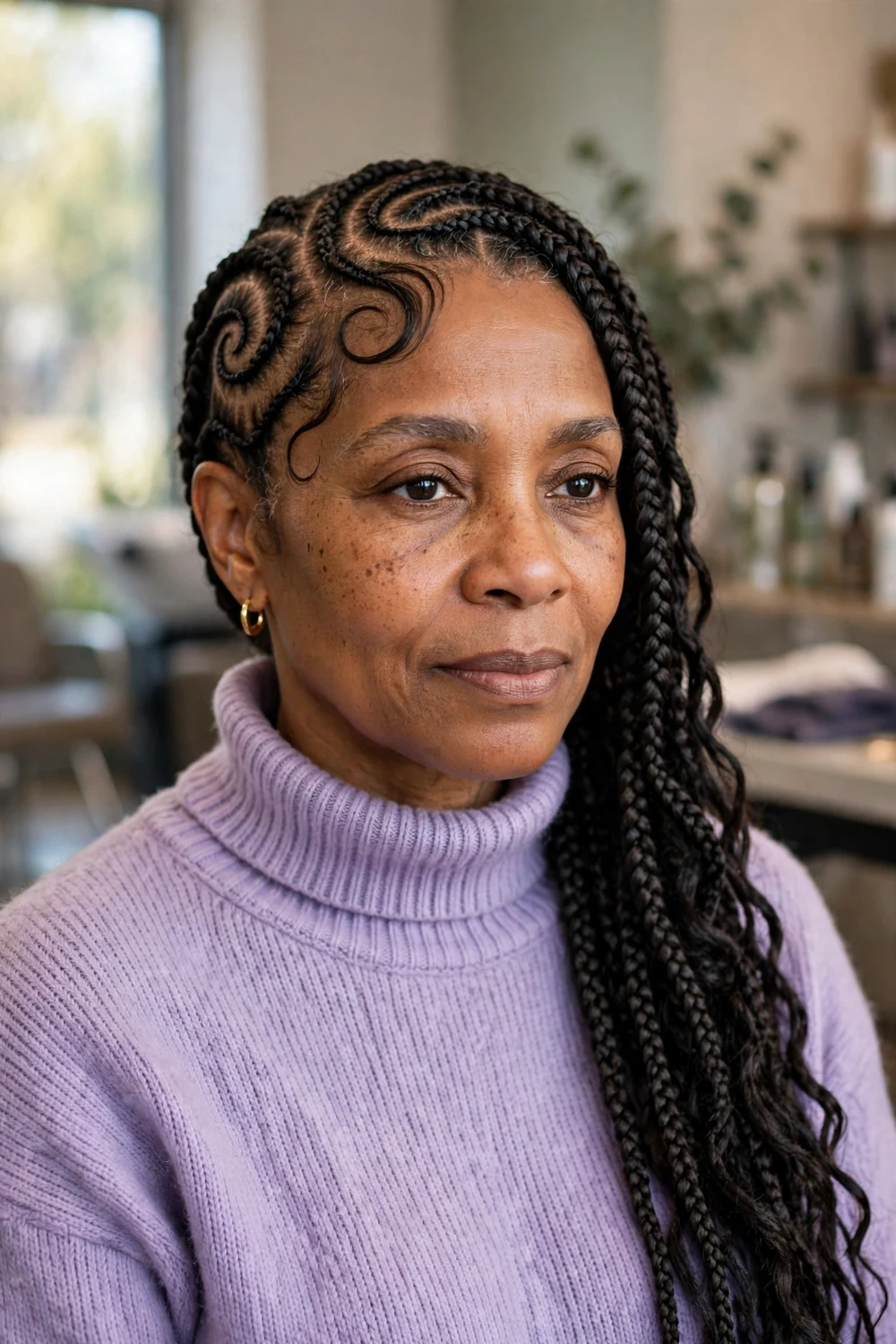
A curved or swirling cornrow pattern turns a classic set into something more personal, while the braids below keep their length and movement. The curves draw the eye along a diagonal, which many women find flattering.
Keep the pattern to a few clear curves. Busy patterns need thinner rows, and thinner rows mean more grip on small amounts of hair.
Try this: Bring a photo that shows the scalp pattern clearly, not just the finished length. The pattern is the part your braider needs to plan.
Difficulty: Medium · Cost: $$
22. Long Knotless Braids with Tapered Ends

Long knotless braids with tapered, wispy ends have a softer finish than blunt-cut length. The taper removes bulk at the tips, so a long set feels lighter than it looks.
A centre part gives clean symmetry and lets you wear the braids loose, in a low bun, or over one shoulder. Keep added hair modest at the front rows to protect your edges.
Try this: If long braids feel heavy by day three, wear them up in a loose, low style for a day. Changing the weight direction gives your scalp a rest.
Difficulty: Medium · Cost: $$$
23. Medium Braids with Soft Curly Ends
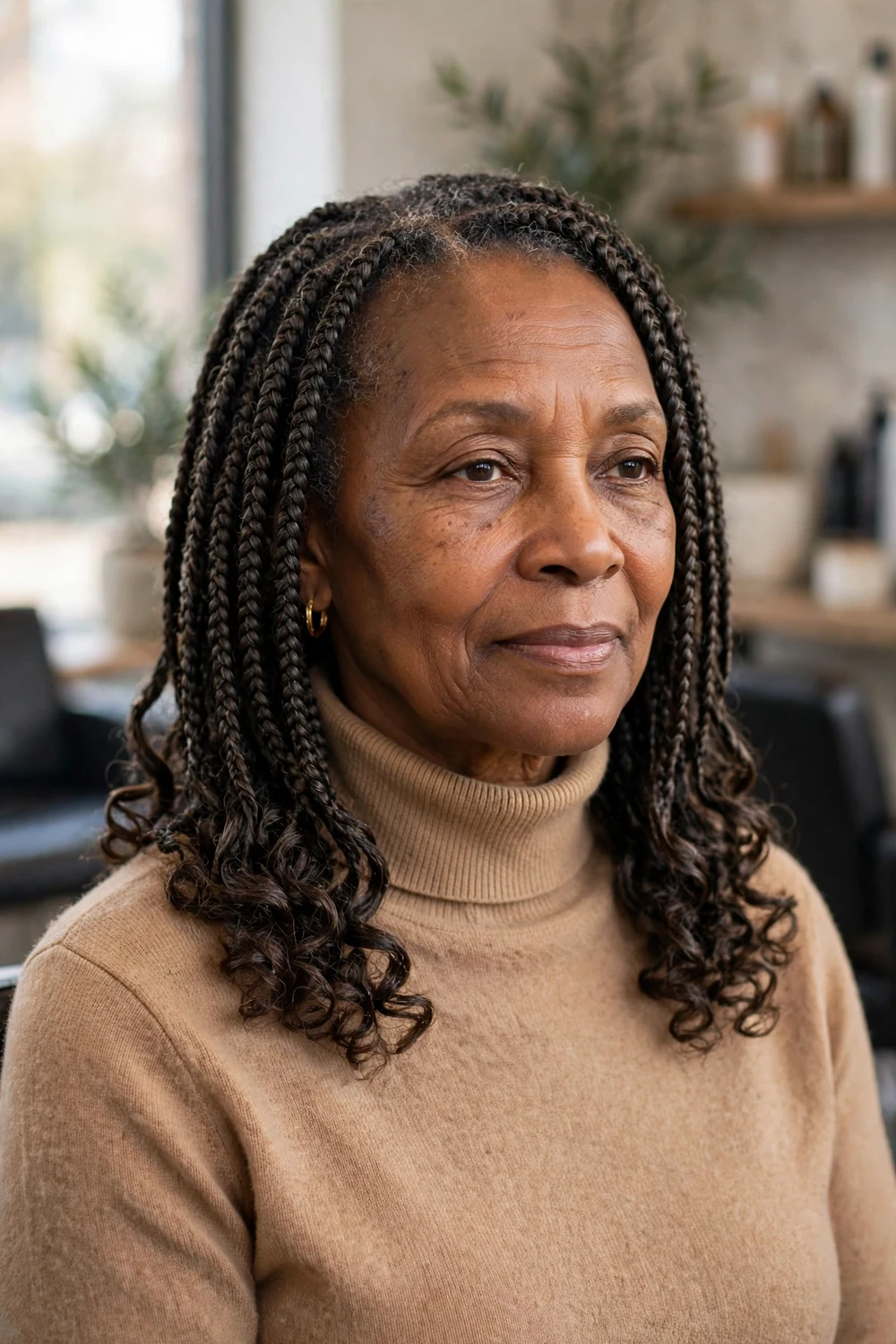
Here the braids stay plain and neat to the mid-lengths, then release into soft curls at the ends. The curls add movement and soften the outline around the shoulders.
This finish forgives a lot. Slight differences in braid length disappear into the curls, and the style still looks fresh in its later weeks.
Try this: Refresh the ends with mousse and finger coils, and trim any single braid that grows much longer than the rest rather than re-braiding it.
Difficulty: Medium · Cost: $$
24. Two Chunky Braids with Silver Dimension
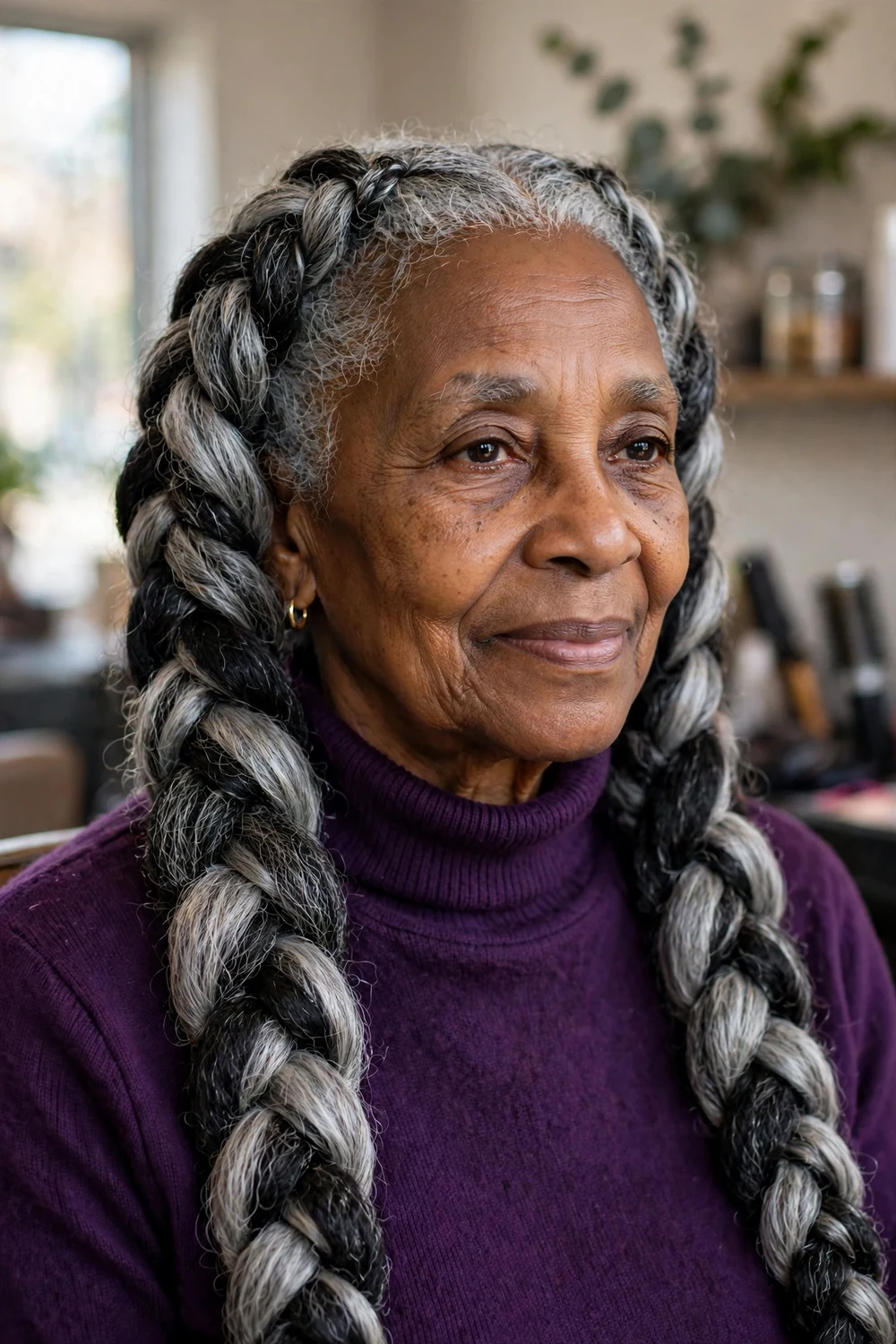
Two chunky braids, worn with a centre or side part, make a clear statement with a short appointment. Woven with silver-blended hair, they show grey dimension in a bold and simple way.
This style works in your own hair for a weekend look, or with a little added hair when you want more length and a longer wear.
Try this: Braid them a touch looser than you think you need. Chunky braids tighten as they settle, and comfort on day two is the real test.
Difficulty: Easy · Cost: $
25. Salt-and-Pepper Braids Pinned into a Low Updo

Medium braids in a salt-and-pepper blend can be pinned into a low, twisted updo at the nape. The mixed tones catch the light as the braids cross, so the updo has depth with no extra accessories.
Pinning braids up also changes how the weight sits, which makes an older set feel fresh again in its final weeks.
Try this: Use long, smooth pins and anchor them into the braid beneath, rather than into your own hair at the scalp. The style holds and removal stays painless.
Difficulty: Medium · Cost: $$
26. Tapered Sides with Cornrows on Top

This cut keeps the sides and nape short and tapered, with five to seven cornrows running along the crown. You get a braided look with no length to manage and nothing swinging against your neck.
It suits women who like short hair and want a braided detail without committing to a full install. Upkeep is mostly the taper, kept neat at your regular cut appointments. For the wider picture, our general guide to braided hairstyles for Black women covers more lengths and sizes.
Try this: Moisturise the short sides daily with a light spray. Short natural hair with no cover dries faster than braided lengths.
Difficulty: Easy · Cost: $
27. Two Loose French Braids in Natural Hair

Two simple French braids in your own hair need no extensions, no appointment, and no take-down day. They rest the hair, keep it off the face, and can be done at home in minutes once your hands know the motion.
This is the in-between style many lists skip. Wear it for a few days between installs, on travel days, or any week when your scalp needs a full rest from added hair.
Try this: Braid on stretched, detangled hair and sleep in a satin scarf. The braids stay smooth longer and the ends stay protected.
Difficulty: Easy · Cost: $
At a Glance: Pick by Comfort and Upkeep
| Style | Best for | Typical wear | Cost |
|---|---|---|---|
| Knotless braids | Tender edges and a flat, natural start | 4 to 6 weeks | $$ |
| Cornrows into a low bun | Work, travel, and headrest comfort | 2 to 4 weeks | $$ |
| Two-strand twists | The gentlest install and an easy take-down | 2 to 4 weeks | $ |
| Crochet braid bob | A short appointment and easy scalp access | 4 to 6 weeks | $ |
| Fulani-inspired braids | Events and photos, with light cuffs only | 4 to 6 weeks | $$$ |
| Own-hair cornrows | A full rest from added weight | 2 to 3 weeks | $ |
Frequently Asked Questions
Are braids safe for thinning edges?
Braids can be safe for thinning edges when they are installed with gentle tension and lightweight hair. Knotless starts, feed-in rows, and medium or larger parts at the hairline put the least stress on fine temple hair. If a style hurts after the first day, ask your braider to loosen the front rows.
How long should braided hairstyles stay in?
Most braided styles in this list wear well for four to six weeks. Twists and own-hair cornrows usually look their best for two to three weeks. Past six weeks, buildup at the roots and the weight of new growth start to work against your hairline.
Can braids work with grey or silver hair?
Yes. Braids show the dimension in grey and silver hair well, and blending grey extension hair into a set makes new growth far less visible at the part. Salt-and-pepper blends, silver twists, and all-silver knotless braids are all popular choices in this list.
Which braid size is kindest for older hair?
Medium and jumbo sizes are usually kindest. They use larger parts, so each braid holds more of your own hair and the pull spreads across more strands. Very small braids grip few hairs each and take a long time to remove, which adds stress at take-down.
How do I care for my scalp while wearing braids?
Cleanse the scalp every one to two weeks with diluted shampoo or a gentle scalp rinse, then moisturise with a light braid spray. Avoid heavy oils at the roots, which trap buildup. Sleep in a satin bonnet or scarf to cut friction on your edges and keep the style smooth.
Final Thoughts
The right braided style at this stage of life should make your mornings shorter and your scalp calmer. Start with the gentlest option that gives you the look you want, whether that is a crochet bob you can book on a weekday, a set of silver-blended box braids for a full month of easy hair, or two loose French braids in your own hair while your scalp rests between installs.
Save the two or three ideas that fit your hairline, your hands, and your calendar, and show your braider the detail notes under each one. Agree on the size, the tension at the front, and the take-down date before the first braid goes in, and the style is far more likely to serve your hair well from install day to removal.

