

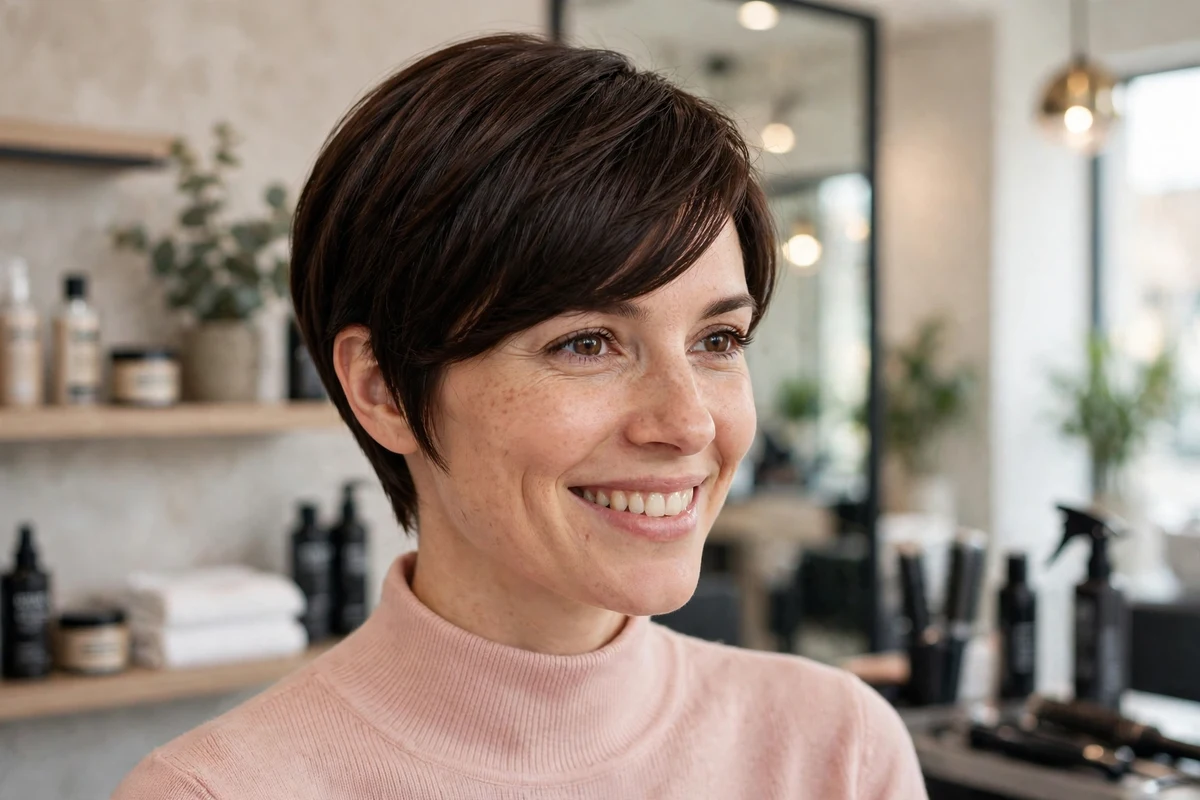
Straight hair and a short pixie can be a tricky pairing at first glance. Straight strands lie close to the head, so a poorly planned pixie can look flat by lunchtime. The cuts that work share one trait: the shape is built into the haircut itself, through point-cut layers, a graduated crown, or a clean taper, so the hair holds its line with very little styling from you.
I put this list together for straight hair first, and for short lengths second. Every idea below names the cutting detail that keeps it from falling flat, the face shapes and hair density it suits, and the upkeep it honestly asks for. If you want a broader starting point before you narrow down, the general short pixie cuts roundup is a useful comparison, and this list then filters those shapes down to the ones straight hair wears best.
Quick Takeaways
- Shape has to come from the cut on straight hair: point-cut layers, stacked crowns, and clean tapers hold when styling alone will not.
- Fine straight hair does best with layered crown and stacked back pixies, which build lift at the roots.
- Thick straight hair needs weight removed inside the cut, through an undercut, interior layers, or a shaved nape.
- Bangs are low risk on straight hair: wispy, curtain, and side-swept fringes all fall clean and grow out softly.
- Plan a trim every 4 to 6 weeks. Shorter and sharper shapes sit at the 4 week end of that range.
1. Textured Pixie with Soft Layers

Soft layers are the safest first move for straight hair. Your stylist cuts light layers through the top and crown, then point-cuts the ends so the hair sits in small pieces instead of one flat sheet. Straight strands show every layer clearly, so the texture reads even without curl or wave.
This cut suits fine to medium straight hair and oval, heart, and long faces. Keep the layers long enough to tuck at the front if you want a softer grow-out. Style by drying with your fingers and lifting at the roots, then pinching the ends with a pea-size amount of matte paste.
Try this: Dry the crown first and the sides last. The crown sets the height for the whole cut, and straight hair holds that lift better when it dries first.
Difficulty: Low · Cost: $ (salon)
2. Choppy Pixie with Wispy Bangs

Choppy cutting gives straight hair the movement it lacks on its own. The crown is cut in uneven, razored pieces and the bangs are left wispy, so light catches the ends at different lengths. The result looks light and airy rather than blunt and heavy.
It works best on fine to medium straight hair and softens oval and long faces. Ask for choppy texture through the top only, with cleaner sides, so the shape stays tidy at the ears. This one grows out well, although the bangs need a quick tidy between full trims.
Try this: Use texturizing spray on dry hair and scrunch the crown with your fingers. Spray on dry hair keeps the pieces separated without weighing fine strands down.
Difficulty: Low to Medium · Cost: $ (salon)
3. Long Pixie with Side-Swept Bangs

A long pixie keeps enough length on top to sweep across the forehead in a clean diagonal. The back and nape stay short and tapered, so you get the ease of a pixie with a longer, softer front. On straight hair that sweep stays smooth and glossy through the day.
This is a strong pick if you are cutting long hair short for the first time. It flatters round, square, and heart faces because the diagonal line breaks up width. You can also tuck the long side behind your ear for a second look. See the long pixie haircuts for fine hair guide if your hair is on the finer side.
Try this: Blow-dry the bangs across your forehead in the direction you want them to fall, then let them cool before you touch them. Cooling sets the sweep in place.
Difficulty: Low · Cost: $ (salon)
4. Sleek Tapered Pixie with Clean Nape
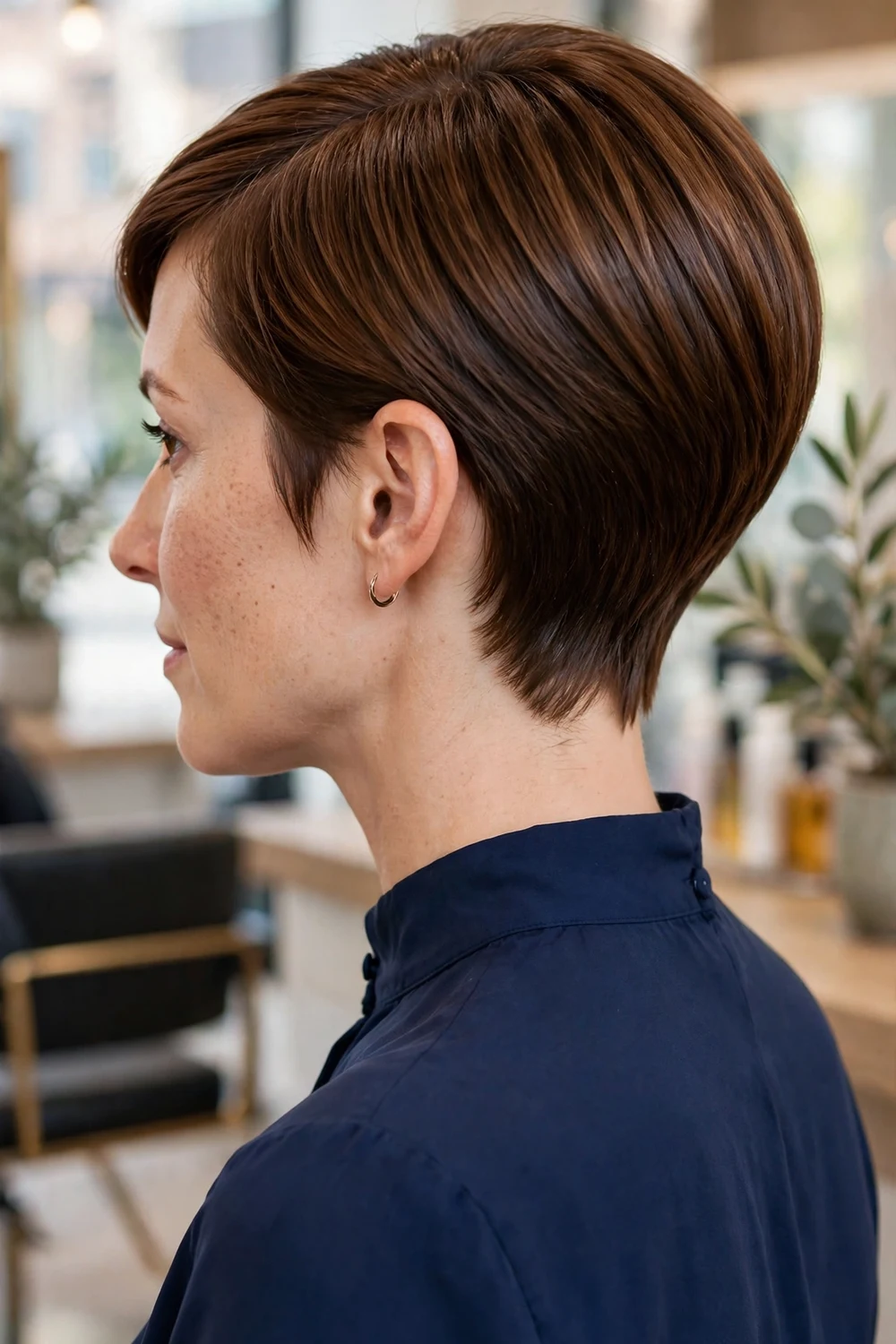
Tapering keeps the sides and nape close while the top stays smooth and slightly longer. Straight hair shows the taper line cleanly, so the profile looks sharp from every angle. A clean nape also means no stray wisps poking out at the back.
Choose this cut for medium to thick straight hair, or for a polished office-friendly shape. The upkeep is simple: a short tidy at the nape every few weeks keeps the line crisp. At home, a flat brush and a dryer on a low setting smooth the top in minutes.
Try this: Dry the top forward, then brush it back into place. That small change in direction gives straight hair a smoother finish with less puff at the sides.
Difficulty: Low · Cost: $ (salon)
5. Pixie Bob for Straight Hair

The pixie bob sits between a pixie and a bob: short and tapered at the nape, longer around the ears and jaw at the front. Straight hair suits this hybrid well because the longer front pieces fall clean and show the shape clearly. A soft undercut at the nape stops the back from bulking out.
It suits round and heart faces and anyone who wants short hair with more coverage around the face. You can tuck the front behind your ears, wear it forward, or part it in the middle. For more hybrid shapes, browse the pixie bob haircut ideas roundup.
Try this: Add a light smoothing cream before drying, then finish the front pieces with a quick pass of a flat iron on a low heat setting for a clean line.
Difficulty: Low · Cost: $$ (salon)
6. Asymmetrical Pixie with Long Front

One side is cropped short above the ear and the other side keeps a long front section that falls past the cheek. Straight hair makes the contrast clear and graphic, and the long side frames one side of the face. The back stays tapered so the shape stays light.
Pick this cut if you want a short style with a clear focal point. It flatters oval and heart faces, and the long front softens a strong jaw. Styling takes a little direction work: dry the long side across, then smooth it down with your palm.
Try this: Keep the short side truly short at your appointments. The contrast only reads when the two sides stay clearly different in length.
Difficulty: Medium · Cost: $$ (salon)
7. Undercut Pixie with Long Top

The sides and back are clipped close in an undercut, and the top is left long enough to sweep over or push back. Straight hair on top falls smooth over the clipped section, so the shape looks clean rather than messy. The undercut also removes bulk, which helps thick straight hair sit closer to the head.
This cut suits medium to thick hair and oval, round, and square faces. It needs regular tidy work on the clipped section, so plan on shorter gaps between appointments. At home, dry the top in the direction you plan to wear it and use a small amount of paste at the roots only.
Try this: Ask your stylist to blend the edge of the undercut softly. A soft blend grows out far more neatly than a hard line on straight hair.
Difficulty: Medium · Cost: $$ (salon)
8. Side-Parted Pixie with Glossy Finish

A deep side part changes a simple pixie into a polished, deliberate shape. The longer side sweeps across the top and tucks behind the ear, while the shorter side sits close. Straight hair holds a part cleanly and gives this cut its glossy, smooth finish.
It is a good match for fine to medium straight hair and for anyone who wants a short cut that still feels dressy. The part also adds height on one side, which helps balance a round face. Keep a shine spray light and spray it from a distance so fine hair stays lifted.
Try this: Set your part while your hair is still damp, then dry it in place. A part set on wet hair holds through the day on straight strands.
Difficulty: Low · Cost: $ (salon)
9. Blunt Micro Pixie with Baby Bangs
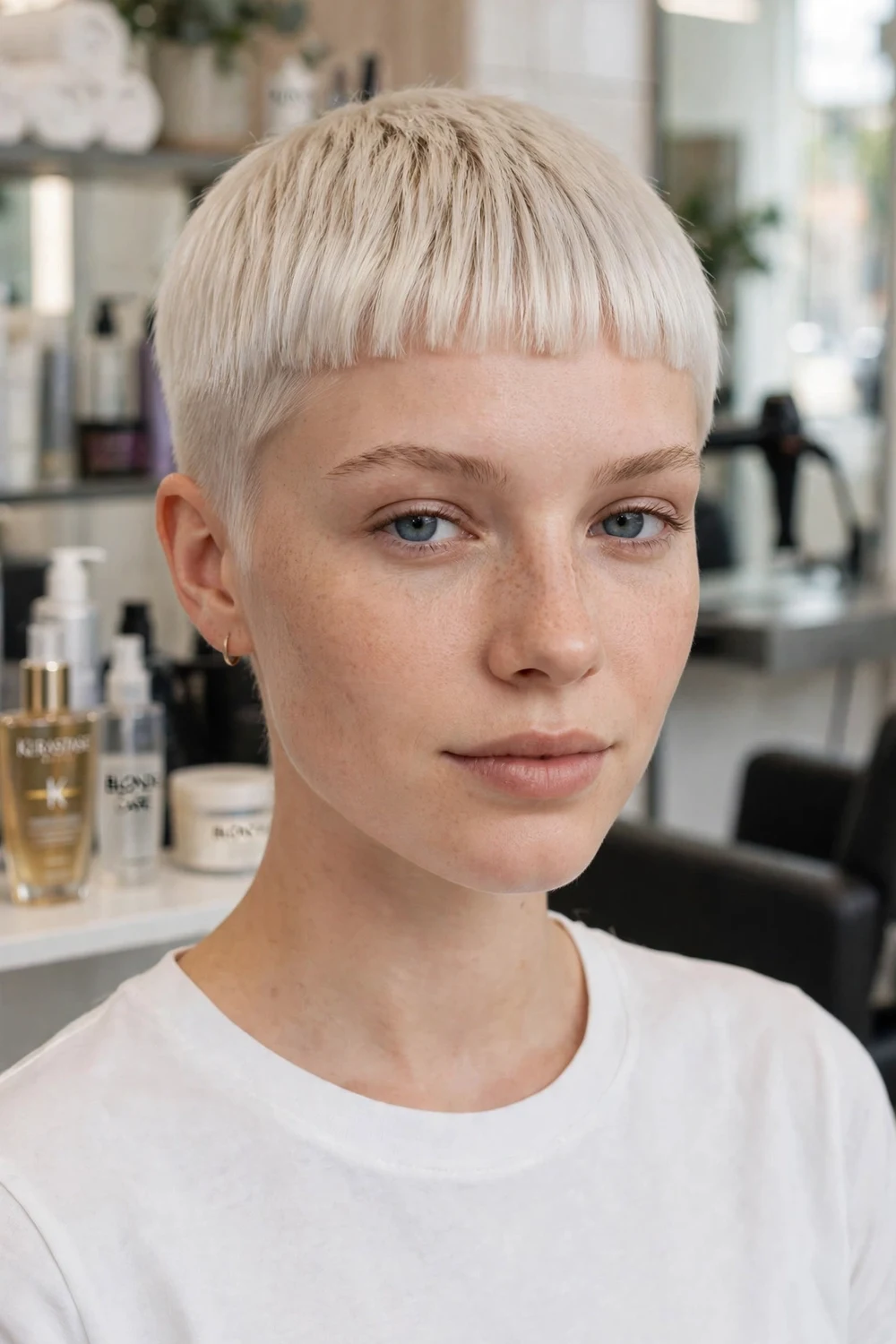
The micro pixie is the shortest cut on this list. The sides are cropped close, the top is kept to a few centimetres, and the baby bangs are cut well above the eyebrows in a blunt line. Straight hair keeps that short fringe straight and tidy, so the shape stays graphic.
Choose it for oval and heart faces and for medium density straight hair. It is a bold cut, and it also grows out fast, so expect frequent small trims to hold the fringe line. Styling at home is minimal: smooth a drop of cream over the top with your palms.
Try this: Bring a photo of the exact fringe length you want. On a micro pixie, a few millimetres change the whole look, so a photo removes any guesswork.
Difficulty: Medium · Cost: $$ (salon)
10. Crown-Lift Layered Pixie for Fine Straight Hair

Fine straight hair falls flat when one length weighs it down. This cut stacks short, graduated layers at the crown so each layer supports the one above it, and the top sits higher on its own. The sides stay tapered and light, which keeps the focus on that lifted crown.
It is one of the strongest options on this list for fine hair. The pixie haircuts for fine hair guide goes deeper on volume techniques if flat roots are your main concern. Style with root-lift mousse on damp hair and dry the crown upward with your fingers.
Try this: Skip heavy oils and thick creams on this cut. Fine straight hair loses crown lift fast under rich products, so keep styling light and close to the roots.
Difficulty: Low · Cost: $ (salon)
11. Forward-Swept Pixie with Full Bangs

Everything in this cut moves forward. The hair is brushed from the crown toward the face, and the full bangs sit straight across the forehead with no part in sight. Straight hair is ideal here because it falls forward smoothly and keeps the fringe even.
Full bangs soften a long face and cover a tall forehead well. The sides are cut to sit flat, so the shape works for fine to medium hair. Bangs on straight hair need a quick morning reset: a splash of water and a short blast from the dryer puts them back in line.
Try this: Dry the bangs first, straight down, before you style anything else. Once bangs dry in the wrong direction on straight hair, they are hard to correct.
Difficulty: Low · Cost: $ (salon)
12. Faux Hawk Pixie with Textured Top

The sides are tapered short and the center strip on top is left longer and textured, so you can lift it into a soft ridge. Straight hair holds that raised center well with a matte product, and you can also wear the top flat and swept to one side on quieter days. One cut gives you two clear looks.
It suits oval, heart, and square faces and medium density hair. The textured center needs point cutting to separate the pieces, so ask for texture through the strip rather than blunt ends. Keep the sides tidy, since the contrast is what sells the shape.
Try this: Lift the center strip with paste applied to dry hair only. Paste on damp straight hair tends to clump the pieces together.
Difficulty: Medium · Cost: $$ (salon)
13. Spiky Pixie with Point-Cut Ends

Short point-cut pieces on top are lifted into soft spikes, while the sides and nape stay neat and close. Straight hair spikes cleanly because each strand is already straight, so the points look defined with very little product. The shape adds height, which helps balance a round face.
This cut works on fine to medium straight hair. On fine hair, keep the spikes short and soft, since longer spikes can separate and look thin. A pinch of matte paste warmed between your fingers is enough to set the top in the morning.
Try this: Apply paste to the ends only and twist each small section as you lift it. Twisting gives straight hair defined points instead of a single stiff clump.
Difficulty: Low to Medium · Cost: $ (salon)
14. Smooth Rounded Pixie for Thick Straight Hair

Thick straight hair needs weight removed in the right places, and this rounded shape does that work quietly. The silhouette hugs the head in a smooth curve, with soft graduation at the back and a sweeping fringe at the front. Interior layers remove bulk without breaking the smooth surface.
It is a smart choice if thick hair usually puffs out at the sides in short cuts. For more options built for density, see the pixie haircuts for thick hair collection. At home, dry the sides downward and slightly back to keep the rounded line close.
Try this: Ask for interior layering rather than thinning all over. Targeted removal keeps the surface smooth while the inside stays light and manageable.
Difficulty: Low · Cost: $$ (salon)
15. Pixie with Curtain Bangs

Curtain bangs part in the middle and fall to both sides of the face, blending into the front of a short pixie. The back and sides stay tapered and short, so the soft front does all the framing. Straight hair keeps the curtain shape tidy, with each side falling in a clean line.
This style suits oval, heart, and square faces, and it is gentle on a wide forehead. Curtain bangs also grow out kindly: they blend into the sides as they lengthen, so you can stretch the time between bang trims. Dry each side away from the face with a small round brush.
Try this: Dry the curtain bangs forward first, then sweep each side back. That order gives the front its soft curve instead of a flat split.
Difficulty: Low · Cost: $ (salon)
16. Shaved Nape Pixie with Long Bangs
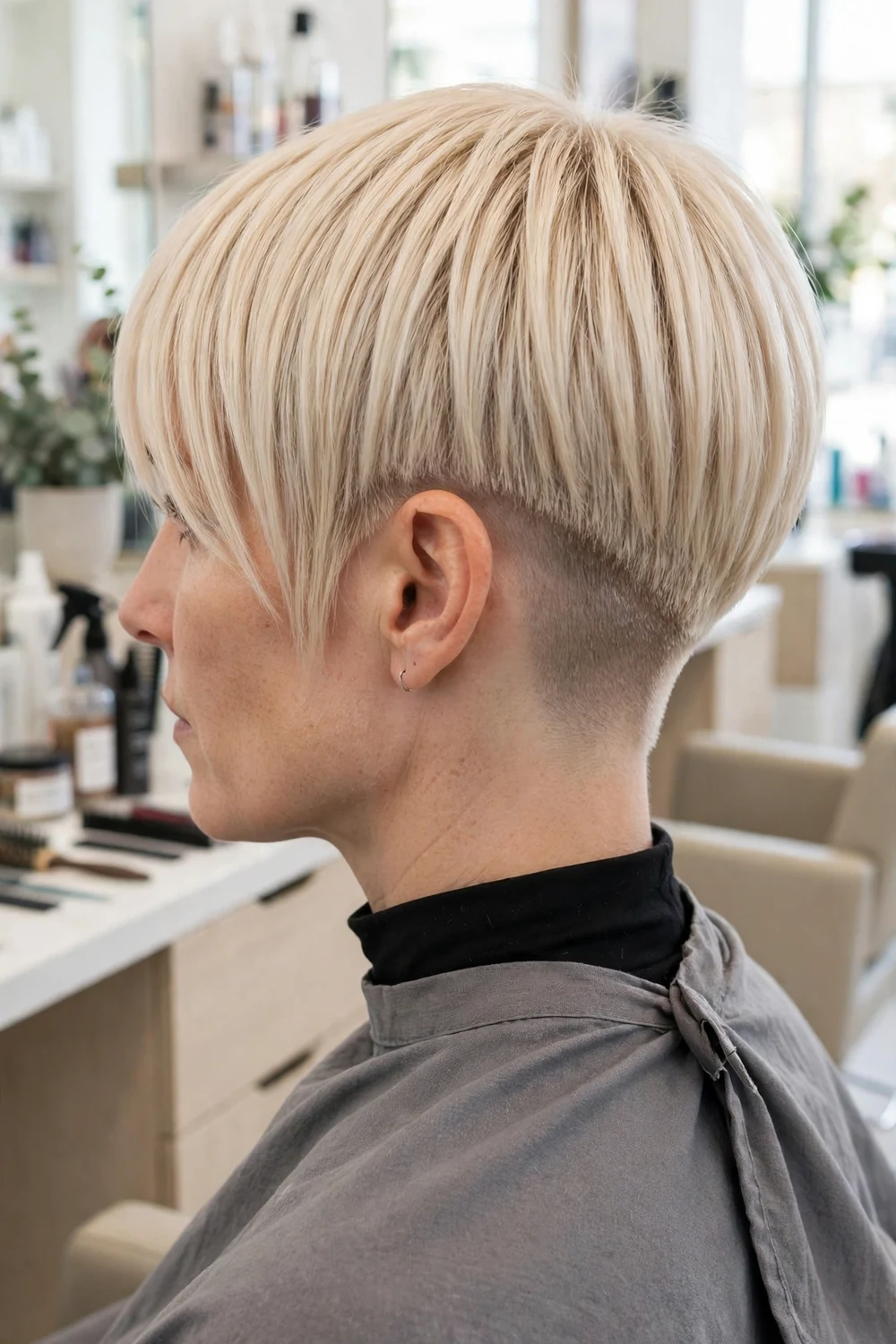
The nape is clipped clean and close, which removes the wispy back section that often spoils a short cut on straight hair. In contrast, the bangs are left long and fall forward over the forehead. The mix of a bare nape and a long front gives the cut a clear front-to-back story.
It suits medium to thick straight hair and oval and long faces. The nape needs regular clean-ups to stay sharp, although the long bangs are forgiving as they grow. This is also a cool, light option if your hair feels heavy at the back in summer.
Try this: Book short nape clean-ups between full cuts. A ten minute tidy keeps this style looking fresh without paying for a full appointment each time.
Difficulty: Medium · Cost: $$ (salon)
17. Piecey Pixie with Matte Finish

Piecey styling separates the top into defined sections with a matte paste, so straight hair gains texture you can see. The cut itself is a simple tapered pixie with a longer, point-cut top. The matte finish matters here: shine products can make straight pieces look greasy, while matte paste keeps them dry and separated.
Choose this one for fine to medium hair that tends to sit in one smooth block. It flatters most face shapes because you control where the pieces fall each morning. Restyling is easy too, since a little water and your fingers can reset the pieces on day two.
Try this: Use paste on completely dry hair and pinch one small section at a time. Working section by section stops the top from turning into a single heavy layer.
Difficulty: Low · Cost: $ (salon)
18. French Pixie with Soft Fringe
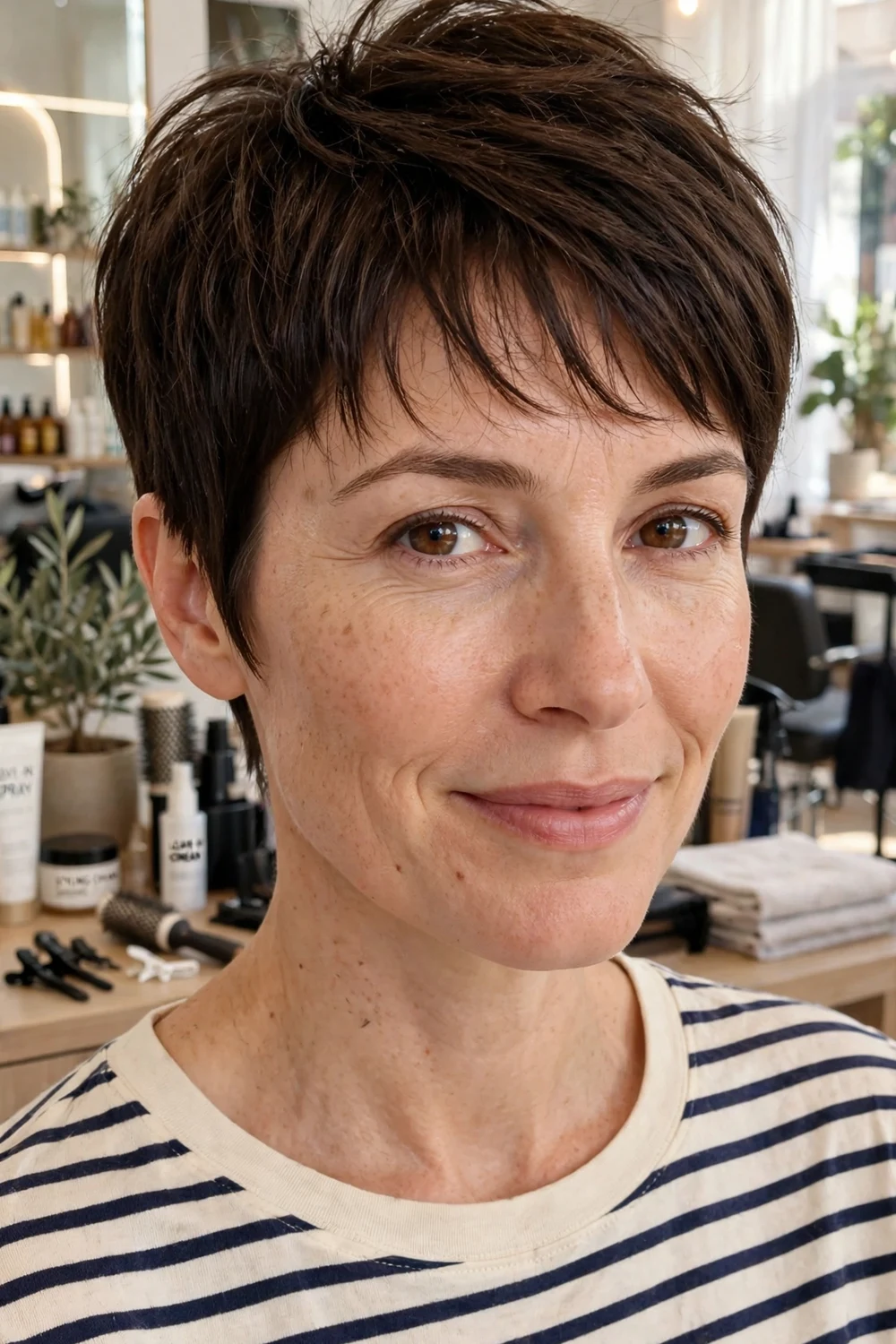
The French pixie keeps the top a little longer, the sides neat above the ears, and the fringe soft and wispy across the forehead. It is a relaxed take on a classic pixie, and straight hair gives it a clean, tidy edge. The shape sits close without looking severe.
It suits fine to medium straight hair and oval, heart, and long faces. The soft fringe is forgiving as it grows, and the whole cut air-dries well on straight strands. A short finger-dry and a light cream through the ends is a complete morning routine for this style.
Try this: Keep the fringe wispy at your appointments and resist a blunt line. The soft edge is the whole character of this cut.
Difficulty: Low · Cost: $ (salon)
19. Stacked Back Pixie with Crown Lift

Stacked layers at the back are cut in short graduated steps, so the back builds a rounded shelf of lift under the crown. The front stays longer and smoother, which keeps the face-framing part soft. Straight hair shows the stacked graduation clearly at the back.
This is a reliable pick for fine to medium hair that goes flat at the back of the head. It also suits round faces, since the lifted back and crown add height. Dry the back upward with a small brush to support the stack, then smooth the front down.
Try this: Show your stylist the back view in your reference photo as well as the front view. The stack is built at the back, and that view is the one that matters most.
Difficulty: Low to Medium · Cost: $ (salon)
20. Razored Pixie with Feathered Ends

A razor softens the ends of a pixie into fine, feathered points. On straight hair, razored ends remove the blunt edge that can make a short cut look heavy, and the layers around the face sit light and wispy. The sides stay short, so the softness stays controlled.
Razoring suits fine to medium straight hair best. On very thick or coarse hair, razored ends can look thin, so ask your stylist to razor only the surface layers in that case. This cut air-dries well, and a light texturizing spray is usually the only product it needs.
Try this: Ask for a fresh razor finish on the ends only. Keeping the razor away from the roots protects fullness where you need it.
Difficulty: Low · Cost: $ (salon)
21. Sleek Silver Pixie with Tapered Sides
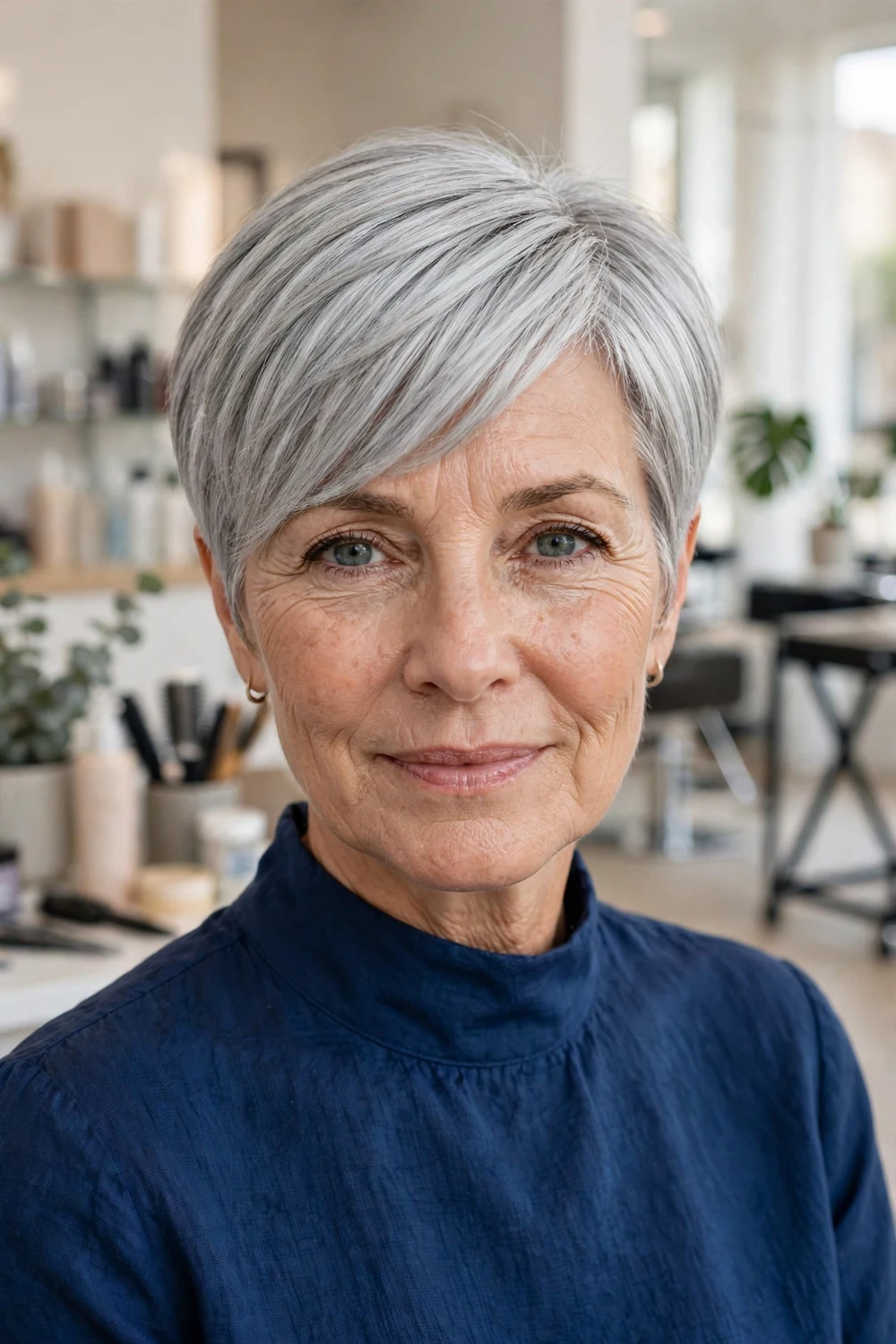
Silver hair and a sleek pixie are a clean pairing. The sides are tapered close, the top is layered smoothly and swept gently forward, and the silver tone shows every line of the cut. Straight strands keep the surface glossy, so the color looks even from root to tip.
This cut suits naturally gray or colored silver hair at any density, with the taper adjusted to your thickness. Purple shampoo used once a week helps keep silver tones clear and bright. The shape itself is low effort: finger-dry, smooth the top, and you are done.
Try this: Use a heat protectant before any hot tool work. Silver and lightened hair is more fragile, and straight pixies show dry, rough ends quickly.
Difficulty: Low · Cost: $ (salon)
22. Ear-Length Pixie with Tucked Sides
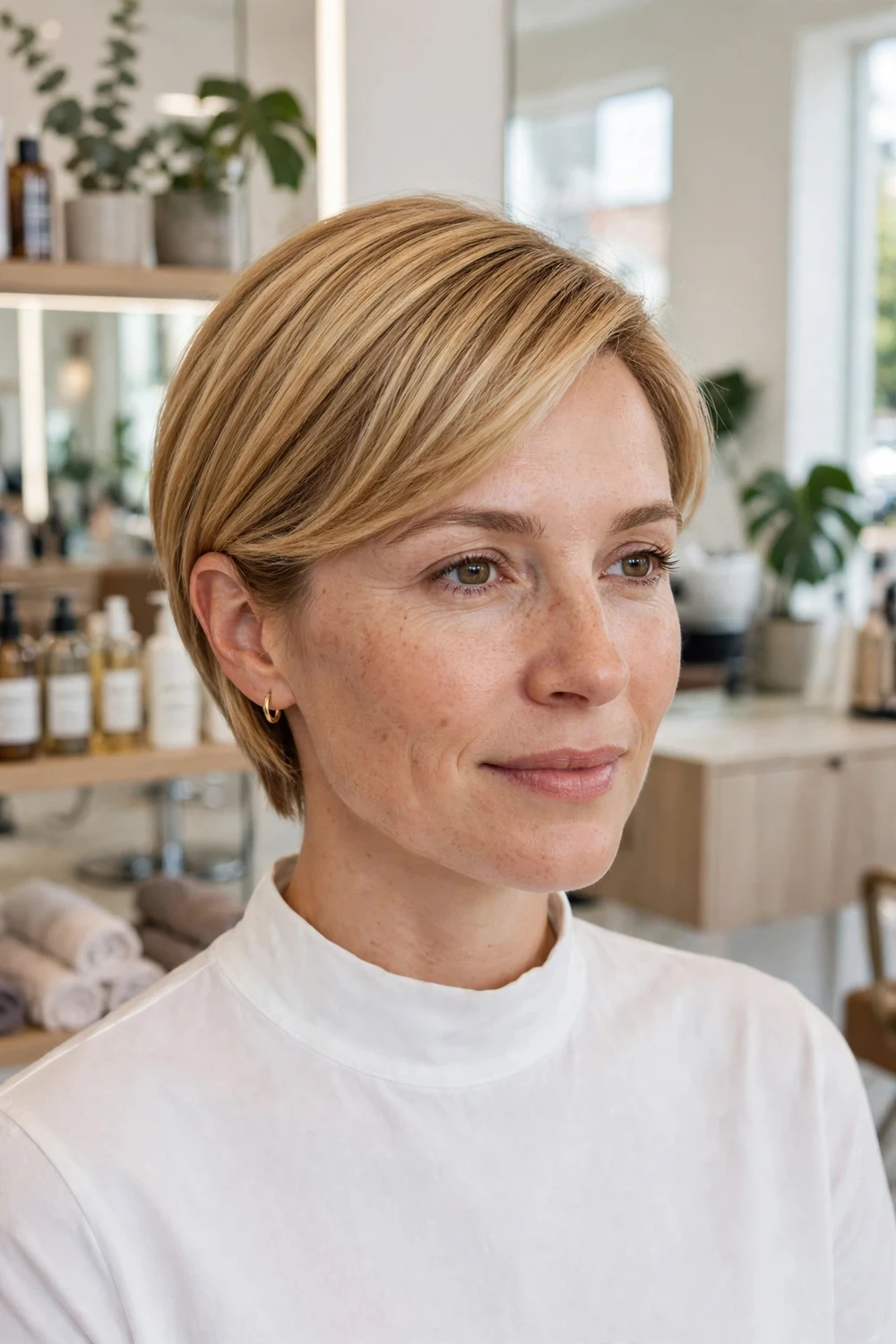
This pixie keeps length around the ears, and the sides are worn tucked neatly behind them. The top is smooth with a gentle side sweep, and the nape is softly tapered. Straight hair tucks cleanly and stays put better than wavy hair does, so this style holds through the day.
It is a gentle option if you want short hair that still feels covered around the face. It suits oval, round, and heart faces and fine to medium hair. Check the length against the choppy and micro shapes in this list before you commit, since ear length is one of the softer options here.
Try this: Tuck the sides while your hair is damp, then dry them in place behind your ears. Setting the tuck on damp hair keeps it flat all day.
Difficulty: Low · Cost: $ (salon)
23. Brunette Pixie with Face-Framing Layers

Longer front pieces are layered to frame the cheeks and jaw, while the back is cut into a short tapered pixie. Rich brunette color adds depth to the layers, and straight hair keeps those front pieces falling in clean lines beside the face. The contrast between the soft front and short back keeps the cut balanced.
Face-framing layers suit round and square faces well, since the front pieces draw the eye downward. This cut works on medium to thick straight hair, and the front can be worn forward or tucked back. Smooth the front pieces with a round brush for a polished finish.
Try this: Keep the front pieces at cheek length or slightly below. Shorter front pieces lose the framing effect that makes this cut work.
Difficulty: Low · Cost: $$ (salon)
At a Glance: Pick Your Pixie by Goal
| Your goal | Ideas to look at | Why it works on straight hair | Upkeep |
|---|---|---|---|
| Sleek and polished | 4, 8, 14, 21 | Tapers and smooth layers let straight strands fall in clean lines | Low, with nape tidies |
| Texture and movement | 1, 2, 17, 20 | Point-cut and razored ends break up a flat surface | Low |
| Soft fringe framing | 9, 11, 15, 18 | Bangs fall straight and even, with soft grow-out | Low to medium, bang trims |
| Longer, gentler short cut | 3, 5, 22, 23 | Longer fronts keep coverage while the back stays short | Low |
| Bold and cropped | 6, 7, 12, 13, 16 | Contrast shapes read clearly on smooth, straight strands | Medium, frequent tidies |
| Crown lift for fine hair | 10, 19 | Graduated layers support each other and lift the roots | Low |
Frequently Asked Questions
Does a pixie cut work on straight hair that lies flat?
Yes, as long as the cut builds shape into the hair itself. Point-cut layers, a stacked or graduated crown, and a tapered nape give flat straight hair height and direction that styling alone cannot hold. Cuts 1, 10, and 19 on this list were chosen for exactly that job.
How often does a short pixie on straight hair need a trim?
Most short pixies on straight hair need a trim every 4 to 6 weeks to hold their shape. Very short styles such as the micro pixie and the shaved nape pixie sit at the shorter end of that range, while longer pixies and pixie bobs can stretch closer to 6 weeks.
Which pixie suits fine straight hair best?
Layered and stacked cuts suit fine straight hair best, because short graduated layers support each other and lift the crown. The layered crown pixie, the textured pixie with soft layers, and the stacked back pixie are the strongest options here. Avoid heavy thinning on top, since fine hair needs that density at the roots.
How do I stop a straight pixie from looking flat by midday?
Start with product at the roots on damp hair, such as a light mousse or root-lift spray, and dry the crown upward first. Keep heavy oils and thick creams away from the roots, since they pull fine straight strands down. A small pinch of matte paste or texturizing spray on dry hair can reset the top later in the day.
Can I grow out a short pixie without an awkward stage?
Yes, if you plan the grow-out around longer styles. Let the top keep growing while your stylist tidies the nape and sides, and the shape moves toward a long pixie and then a pixie bob. Regular small trims every 6 to 8 weeks keep the grow-out looking like a style rather than an in-between stage.
Final Thoughts
Straight hair does not need curl to make a pixie interesting. It needs a cut with a plan: layers where you want lift, tapering where you want calm, and a fringe that suits your face. Pick the idea above that matches your density first and your styling patience second, take the photo to your stylist, and name the cutting detail out loud, whether that is point-cut ends, a stacked back, or a soft blend at the undercut edge. That one clear request is what turns a generic short cut into the exact pixie you pictured.

