


Fine hair falls flat when a cut is too heavy, and it looks stringy when a cut is too long. The shaggy lob sits right in the sweet spot: collarbone length keeps enough weight to hold shape, while choppy layers remove the bulk that drags thin strands down. It is the cut stylists reach for when someone asks for fuller-looking hair without extensions.
This list rounds up 29 shaggy lob hairstyles for fine hair, each a distinct cut you could ask for at the salon. You will find feathered and razor-cut finishes, curtain bangs and bottleneck bangs, curly and straight versions, and color pairings that add depth to thin strands. Pick the variation that matches your hair texture and your routine.
Quick Takeaways
- Collarbone length keeps enough weight for shape while layers remove the bulk that flattens fine hair.
- Feathered, razor-cut, or point-cut ends read thicker on fine hair than blunt edges.
- Lightweight products (mousse, texturizing spray) build volume; heavy creams and oils flatten it.
- Curtain bangs and face-framing pieces add fullness around the face without removing length.
- Shag lobs grow out gracefully, so most versions need a trim only every eight to ten weeks.
1. Classic Feathered Shag Lob

The classic feathered shag lob is the cut every other version on this list grows out of. It sits at the collarbone with heavily feathered layers through the whole cut, and the feathering lifts fine strands away from the head so they read thicker than they are. Ask your stylist for razor-cut or point-cut ends, which keep the edges soft instead of blunt. The shape flatters nearly every face shape, and it holds for eight to ten weeks without looking unkempt.
It works best on straight to wavy fine hair with medium density. Blow-dry with a round brush to lift the roots, then finish with a light texturizing spray for piece separation. Skip heavy creams, which drag feathered ends down and erase the lift you just built. A root-lifting mousse on damp hair gives the crown extra height on wash day. If the ends start looking dry, a tiny amount of lightweight dry oil on just the tips restores polish without flattening the layers.
Try this: ask for razor-cut ends rather than scissor-cut ones for the softest feathered finish.
Difficulty: Low · Cost: $$ (salon)
2. Textured Brunette Shag Lob with Curtain Bangs

Warm brunette color with a touch of highlight through the mid-lengths gives this shag lob visible depth, which fine hair needs to look thicker. The curtain bangs are longer in the center and point-cut for texture, then cascade to each side and blend into the layers. Graduation layering connects everything so the cut stays neat despite its piecey finish, and the collarbone length keeps weight where fine hair needs it most.
It suits oval and heart-shaped faces especially well. Blow-dry the curtain bangs with a round brush pointed away from the face, then scrunch a light styling cream through the ends for definition. This is a forgiving cut for fine hair that is starting to thin, since the mid-length layers add fullness exactly where it is needed. Let the highlights grow out naturally rather than touching them up early, since soft regrowth blends with the brunette base. A gloss treatment between color appointments keeps the warm tone rich and shiny.
Try this: blow-dry the bangs forward first, then part them in the middle for a clean curtain sweep.
Difficulty: Low · Cost: $$ (salon)
3. Bronde Shaggy Lob with Curtain Bangs

Bronde, the blend of brown and blonde, brings out shaggy layers like few colors can. The semi-warm tones shift in different light, so every choppy layer shows its edge and the whole cut looks denser. Longer face-framing layers fall to the collarbone and frame the face without blocking it. The fine hair keeps enough length to hold shape, and the overall style reads clean and polished with a lived-in edge.
It flatters warm and neutral skin tones most. Style with loose waves to show off the dimensional color, and refresh second-day texture with a dry texturizing spray. Keep your color appointments focused on the mid-lengths, since the darker root keeps the grow-out soft and stretches the time between visits. A center part shows the bronde shift best, since light falls evenly on both sides. Avoid heavy serums, which make dimensional color look flat and greasy.
Try this: ask your colorist to keep the roots your natural shade so the bronde grows out without a harsh line.
Difficulty: Medium · Cost: $$$ (cut and color)
4. Soft Copper Shag Lob with Curtain Layers
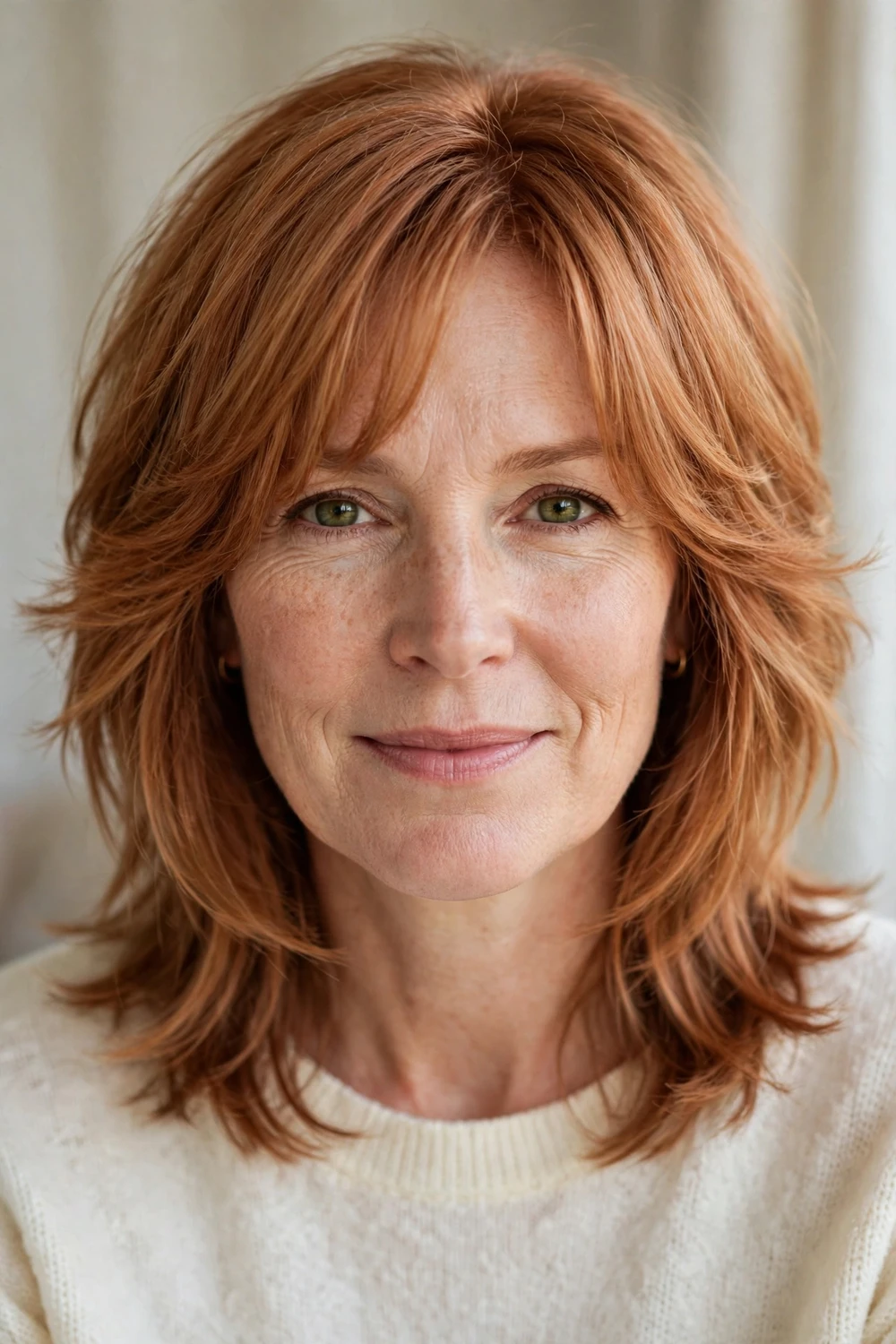
Soft copper is a warm shade that reacts to light along every layered edge, which makes fine hair look more textured than it really is. The layers here create depth without a bold statement, and the curtain framing around the face keeps the bulk concentrated where it counts instead of thinning out toward the ends. It is a medium-commitment cut that works through every season with little daily upkeep. The warm shade flatters the complexion while the curtain layers keep the shape soft around the jawline.
It suits fair to medium skin tones with warm undertones. Use a color-safe shampoo and wash with lukewarm water to slow copper fade, and add a soft wave with a large barrel iron to show the layers. The color does a lot of the visual work, so the styling itself can stay simple. Refresh the waves on day two with a dry texturizing spray rather than re-ironing, which dries fine hair out.
Try this: finish with a lightweight shine spray, since copper looks best with a bit of light reflection.
Difficulty: Medium · Cost: $$$ (cut and color)
5. Razor-Cut Shag Lob
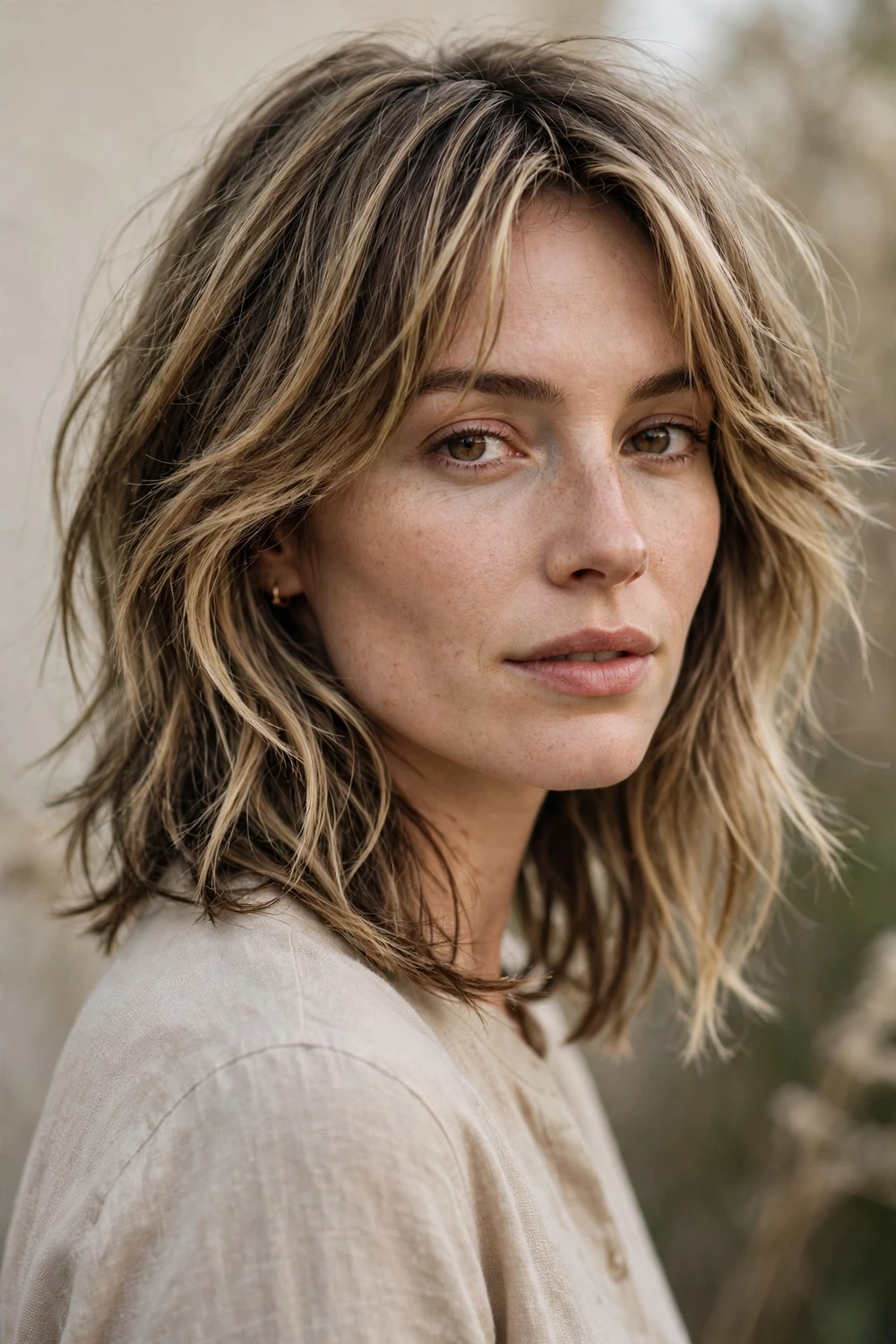
Cut entirely with a razor instead of shears, this version has softer, wispier edges than a standard shag, since razoring thins the ends as it cuts. The result reads less structured and more undone, which suits anyone who wants texture without a visible layering pattern. For fine hair, the wispy ends keep the silhouette light and prevent the cut from sitting flat against the head. Ask for this technique specifically, since it is a different cutting method, not just a look.
If shaggy texture at shorter lengths appeals to you, these short shag hairstyles for women show the same razor-cut idea on cropped cuts.
Try this: work a small amount of dry wax through just the ends to define the wispy pieces.
Difficulty: Low · Cost: $$ (salon)
6. Undercut-Layer Shag Lob

A hidden undercut layer at the nape removes bulk from underneath while the top layers stay long enough to cover it, giving the cut movement without giving up surface length. It is a structural option for hair that feels thick underneath but fine on top, which happens often as hair changes with age. The undercut layer also makes blow-drying faster, since there is less density to dry through on busy mornings.
It works for straight to wavy fine hair with uneven density. The cut looks like a regular shag lob from the outside, so the styling is the same: round-brush the top layers for lift and let the texture do the rest. Tell your stylist you want the undercut kept subtle so the nape layers do not peek out when the wind blows. Style the visible top layers as usual, since the undercut works silently underneath.
Try this: ask your stylist to show you how the undercut sits before they finish, so the coverage looks right from behind.
Difficulty: Low · Cost: $$ (salon)
7. Micro-Layered Shag Lob for Fine Hair

Micro-layering concentrated at the crown and ends creates the look of thicker hair without the bulk of heavy layers. This version is cut slightly shorter in the back to keep the silhouette from going stringy, which is the main risk when layering very fine hair. A volumizing mousse on wet roots is the key styling step, since it gives the short crown layers something to grip while they dry. The blended finish means the cut still looks intentional as it grows, not choppy or overgrown.
It is built for fine, low-density hair that goes flat by midday. Blow-dry upside down for the first minute to set lift at the crown, then finish upright with a round brush. Because the layers are small and blended, the grow-out stays tidy and you can stretch trims to ten weeks. A light dry shampoo at the roots on day two revives the crown lift without a full wash. That keeps the micro-layers airy instead of weighed down.
Try this: apply mousse only at the roots, since product on the ends weighs micro-layers down.
Difficulty: Low · Cost: $$ (salon)
8. Stacked A-Line Shag Lob

The back is cut noticeably shorter than the front in a stacked A-line, then shattered with shag layers so the angle looks textured rather than severe. This structural shape adds visible lift at the crown, which helps fine hair that has lost density at the roots. It reads more architectural than other shags while keeping the same low-maintenance grow-out, since the layers soften the angle as it grows. The shattered texture keeps the stacked shape from looking like a traditional severe A-line.
It suits straight to slightly wavy fine hair and flatters round faces, since the longer front pieces draw the eye downward. Style with a round brush at the crown and a flat iron through the front lengths to show the A-line shape. Trims every eight weeks keep the stacked back from losing its lift. A light-hold hairspray at the crown helps the lift last through humid days. Keep the front lengths sleek so the stacked shape reads clearly.
Try this: keep the angle subtle rather than dramatic so the grow-out stays soft for weeks.
Difficulty: Medium · Cost: $$ (salon)
9. Asymmetrical Shag Lob
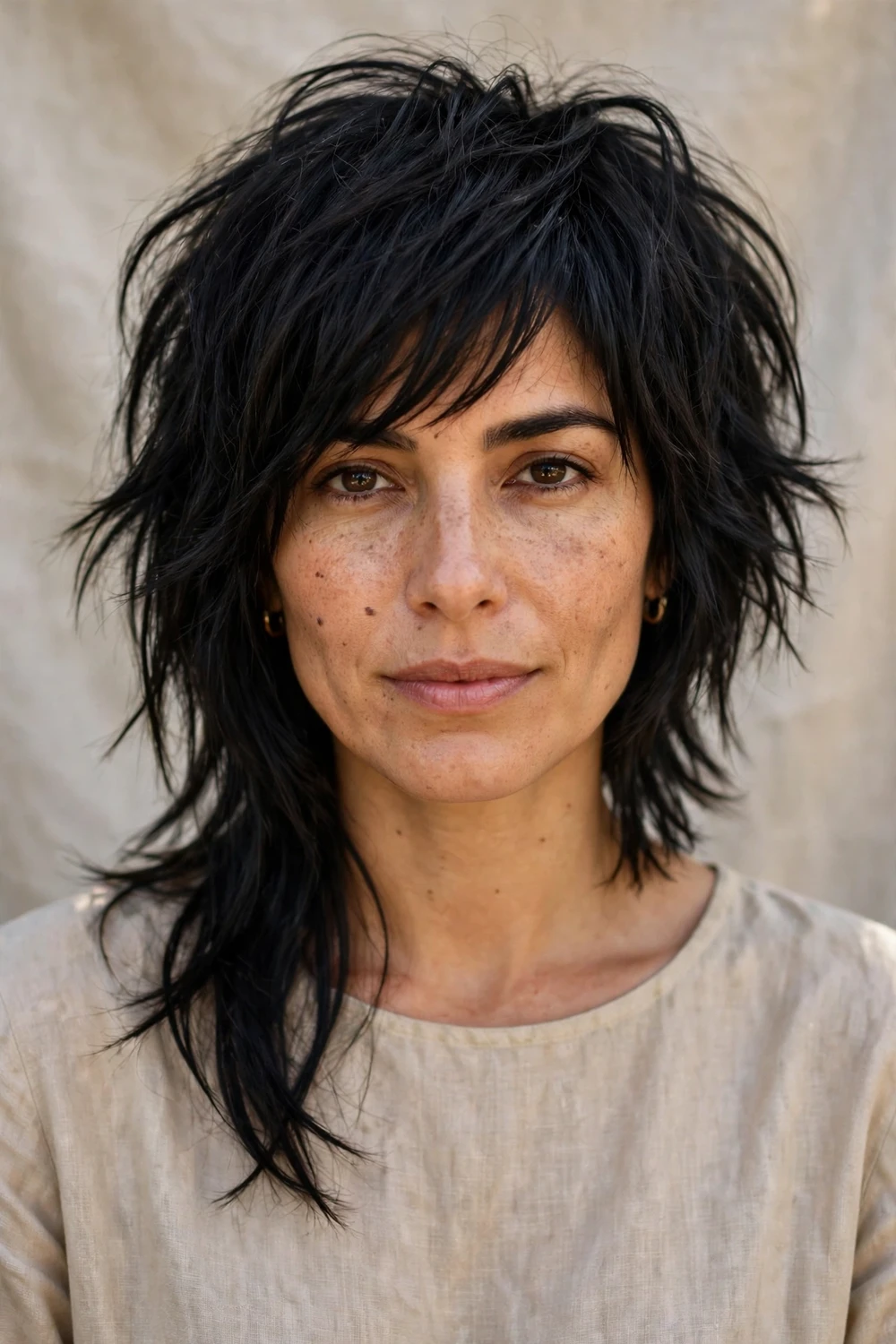
One side is cut an inch or two longer than the other, then both sides are shattered with shag layers so the asymmetry reads as intentional texture rather than an uneven cut. The diagonal line draws the eye across the face, which adds shape and movement that fine hair rarely achieves on its own. It is a bolder shape change than a color-only variation, so it is best attempted with a stylist experienced in asymmetrical cutting.
It works on straight to wavy fine hair and flatters fuller jawlines by breaking up horizontal lines. Style the longer side sleek and the shorter side textured for contrast, or wear both sides wavy for a softer take. Check the two sides in the mirror each morning, since asymmetry shows bedhead more than even cuts do. A quick pass with a flat iron on the longer side each morning keeps the two lengths looking deliberate.
Try this: part on the shorter side to push the longer pieces across the face for extra sweep.
Difficulty: Medium · Cost: $$ (salon)
10. 70s-Inspired Layered Shag with Flipped Ends
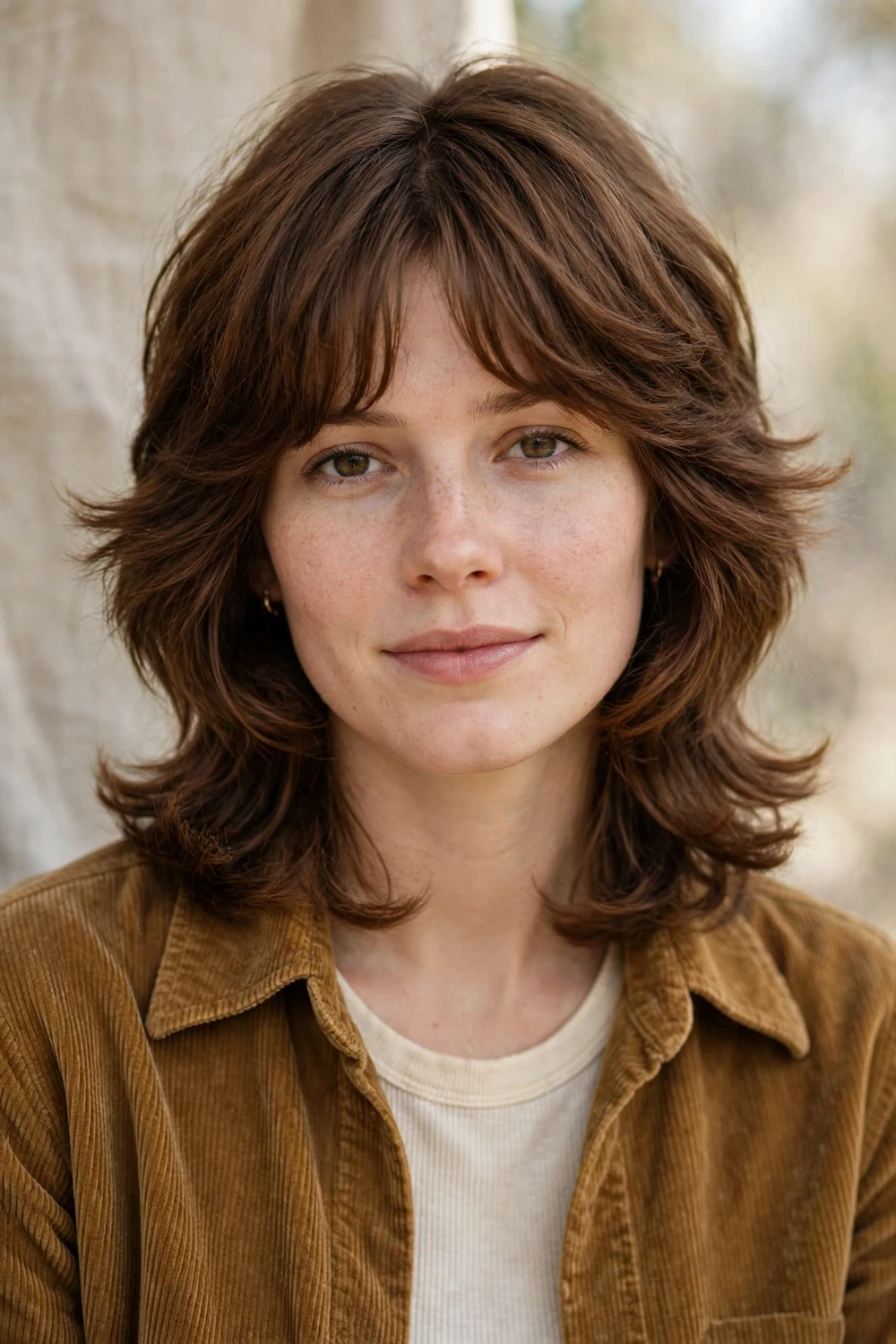
Heavier, more dramatic layering throughout and a full curtain fringe channel the original 1970s shag, updated to lob length instead of the longer vintage version. The ends flip out around the collarbone, and the layers are graduation-cut so the hair does not fall inward. Keep the color close to your natural shade, since a calm single-process color lets the haircut itself be the star of the style. The flipped ends need enough length to turn outward, so this version sits right at the collarbone, never above it.
It suits wavy to straight fine hair with enough density to hold the flip. A large round brush flipped outward at the ends recreates the retro shape in minutes, and a light volumizing powder at the roots adds the era’s signature lift. This is the boldest, most textured take on the list. Volumizing powder at the roots recreates the era’s signature lift without backcombing. A large barrel iron gives the flips their rounded retro curve.
Try this: flip the ends out while blow-drying, then set the shape with a cool shot from the dryer.
Difficulty: Medium · Cost: $$ (salon)
11. French Girl Shag Lob
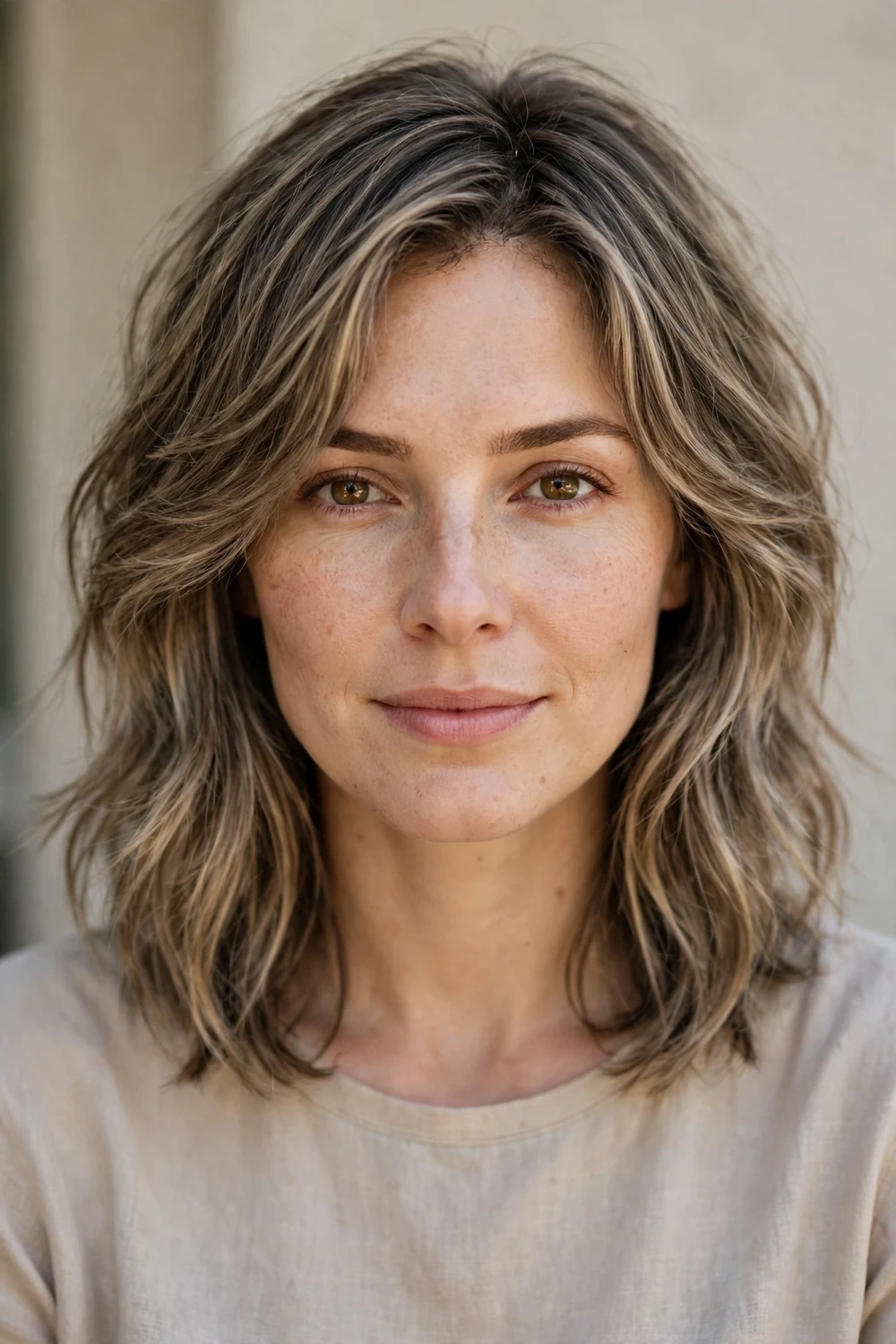
Understated and slightly undone, this version leans on subtle layering and a barely-there wave rather than heavy texturizing, echoing the effortless Parisian look. It is the most low-key shag on the list, styled to look almost unstyled, which makes it a safe entry point if you are new to choppy cuts. For fine hair, the restraint pays off: fewer layers means the ends stay visibly thicker. The result is a cut that looks considered but never fussy, which is the heart of the Parisian approach.
It works best on straight to slightly wavy fine hair. A light sea salt spray is the only product this cut needs, scrunched into damp hair and left to air-dry. Let the front pieces fall where they want, since the charm of this cut is in its lack of precision. Trims every eight to ten weeks are enough, since the soft shape grows out without harsh lines. A touch of cream on the ends keeps the finish soft.
Try this: skip the brush entirely and finger-style, since roughness is the point of the cut.
Difficulty: Low · Cost: $$ (salon)
12. Wash-and-Go Wavy Shag Lob
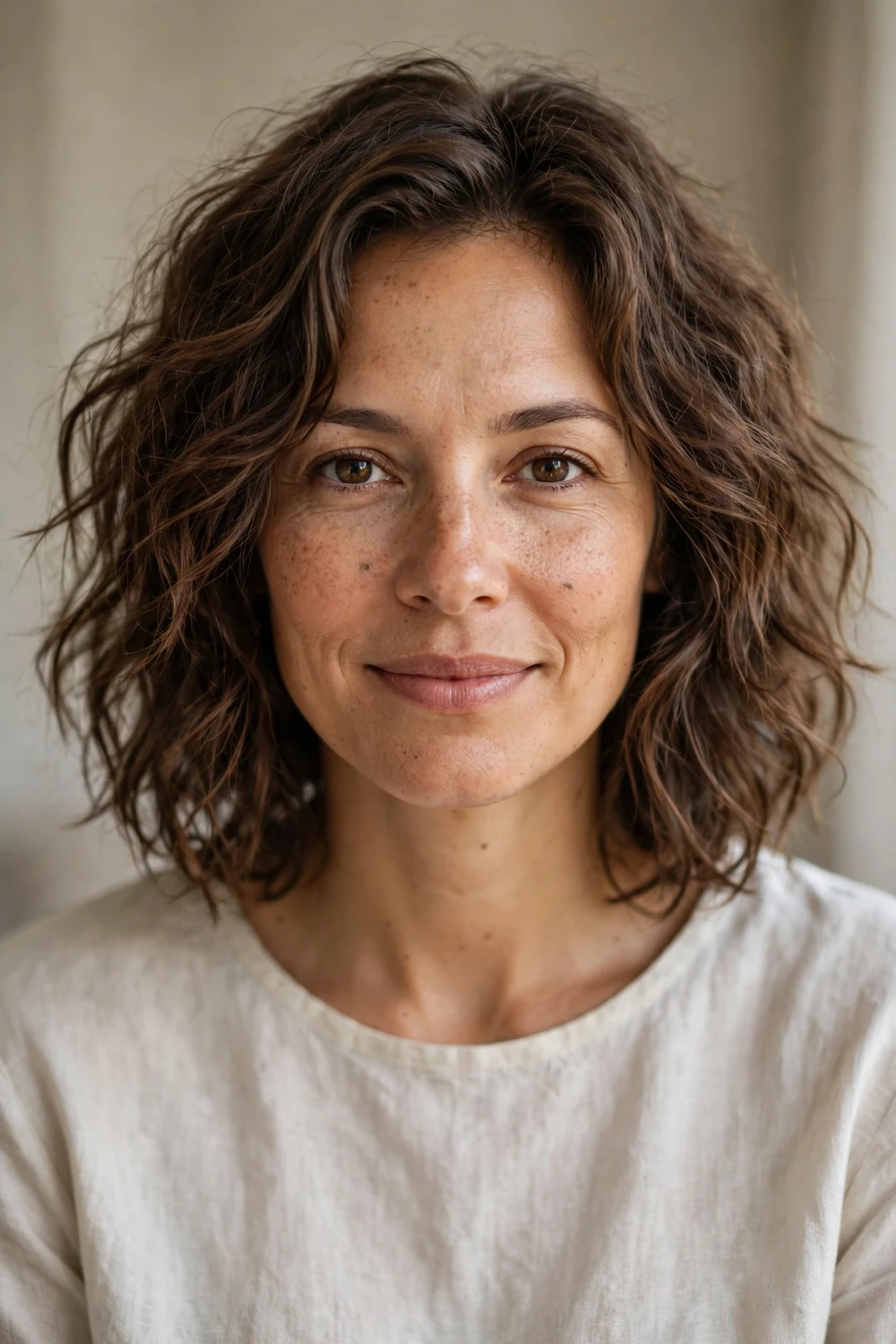
Cut specifically to work with natural waves rather than against them, this shag needs almost no styling tools, just a curl cream scrunched in after washing. The layers are placed to enhance the wave pattern instead of weighing it down, which is what makes fine wavy hair look fuller instead of frizzier. It is the lowest-effort option on this list for busy mornings, and the texture hides second-day roots well.
It suits naturally wavy fine hair best. Diffuse for a few minutes if you want more definition, or air-dry for the softest result. Resist the urge to brush it out, since brushing breaks the wave clumps and pulls the shag flat. If the waves fall flat overnight, mist with water and scrunch again in the morning to wake the pattern up. A pea-sized amount of cream tames frizz on dry days.
Try this: scrunch curl cream into soaking-wet hair, then do not touch it until it is fully dry.
Difficulty: Low · Cost: $ (salon)
13. Curly Shag Lob with Wispy Bangs
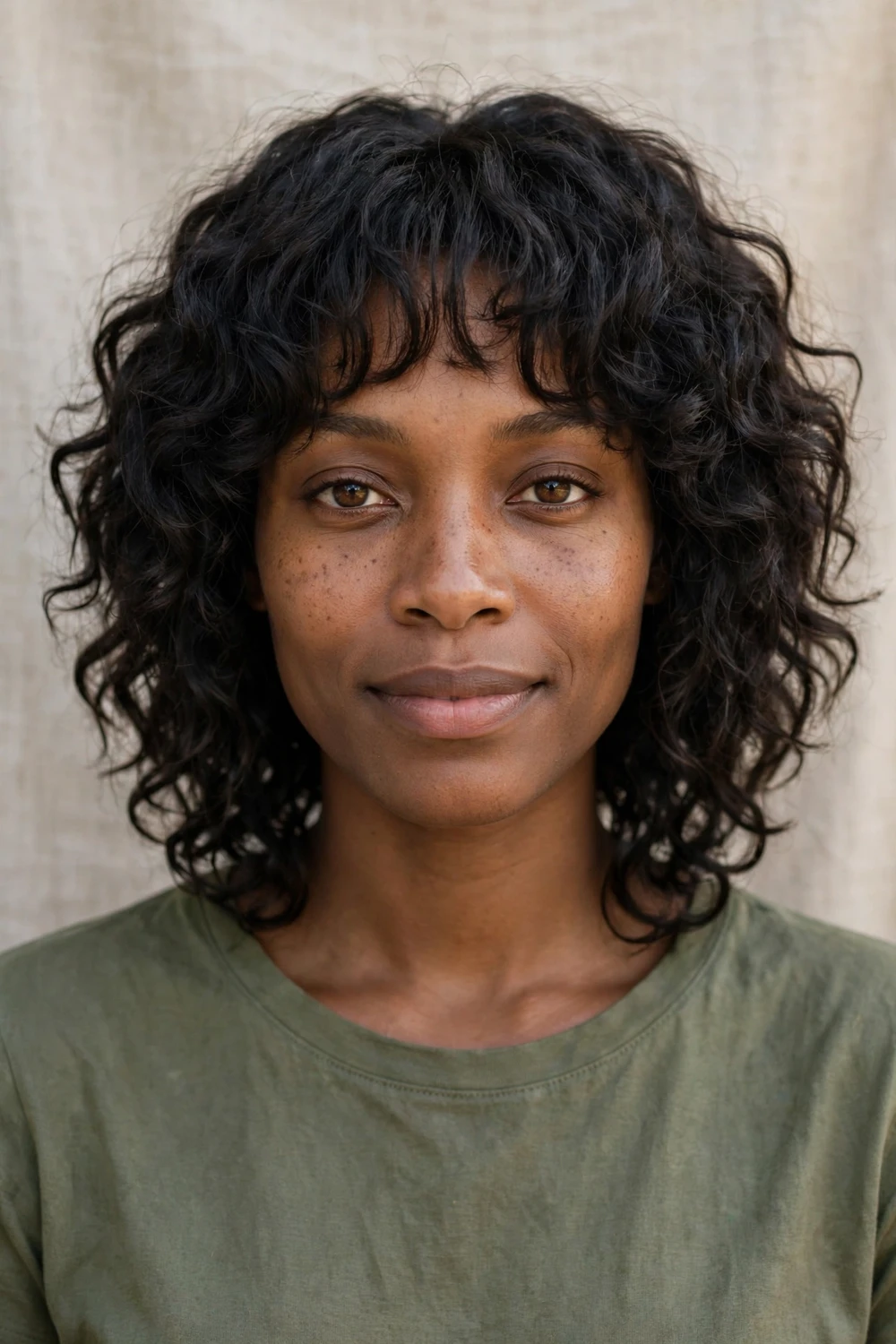
This shaggy lob is built for natural curls or waves, using layers to define structure and lift each curl so the hair avoids clumping into a triangle. Short, light bangs create fullness at the front without the heaviness that a thick fringe would add to fine curls. A lightweight curl cream is enough to style it; let the hair do its thing after scrunching and the cut looks deliberately effortless.
It suits fine curly and coily hair that shrinks, so ask your stylist to cut it dry to land the length right. Avoid heavy butters and oils, which stretch fine curls flat, and refresh the curls on non-wash days with water and a light cream. The layers keep the shape from going bottom-heavy between trims. Ask your stylist to cut the bangs dry as well, since curly bangs shrink more than expected.
Try this: apply curl cream to soaking-wet hair in sections so every curl gets coated evenly.
Difficulty: Medium · Cost: $$ (salon)
14. Jet Black Shag Lob with Feathered Bangs

Dark hair shows off shag layers with more definition than lighter shades, and jet black takes that contrast furthest. The cut has volume at the crown that tapers through the lengths, and a soft wave keeps the hair from falling flat against the head. Feathered bangs cover a sparse hairline, which helps if fine hair is thinnest at the front. The overall effect is sharp and graphic without looking harsh.
It works on straight to wavy fine hair. A shine serum keeps black hair from looking dull, and a gloss treatment between color appointments maintains the depth. Style with a round brush and a slight bend at the ends so the layers stay visible instead of blending into one dark mass. A lightweight leave-in conditioner keeps the feathered pieces separated and glossy. Trims every eight weeks keep the feathered ends crisp.
Try this: book a clear gloss every six weeks to keep jet black reflective instead of flat.
Difficulty: Medium · Cost: $$ (cut and color)
15. Warm Blonde Tousled Shag with Center Part

A warm, beachy blonde adds dimension at the roots that helps fine hair look more voluminous from the first glance. The center part pairs with face-framing layers that complement oval and heart face shapes, and the chopped layers add textured volume through the body of the hair. A light mist of sea salt spray with air-drying gives the tousled finish, which makes this one of the lowest-maintenance blonde options on the list.
It suits warm skin tones and straight to wavy fine hair. Toner appointments keep the warmth from tipping brassy, and a purple-tinted conditioner used occasionally keeps the tone balanced. The grow-out stays forgiving because the root color is kept close to natural. Schedule toner appointments every eight weeks to keep the warmth golden rather than brassy. A lightweight mousse on damp roots adds lift before air-drying, which keeps the center part from falling flat.
Try this: twist two front sections away from your face while air-drying for a natural bend.
Difficulty: Medium · Cost: $$$ (cut and color)
16. Honey Blonde Layered Lob with Soft Bangs

Honey blonde tones with sunny highlights around the face amplify this relaxed take on the shaggy lob. The cut itself is simple and effective, with soft layering that keeps the details clean and the grow-out easy. The fringe skims across the forehead in a soft line, which frames the eyes without taking weight from the rest of the cut. It is an especially good pick if you wear glasses, since the fringe sits above the frames.
It suits warm skin tones and straight to wavy fine hair. Style with a round brush for a smooth finish or air-dry with cream for a softer texture. Keep the highlights close to your base shade so the color grows out softly and maintenance stays low. A heat protectant is worth using before hot tools, since blonde fine hair is more fragile. Loose waves show the honey tones better than a straight finish.
Try this: ask your colorist for face-framing highlights two shades lighter than your base.
Difficulty: Medium · Cost: $$$ (cut and color)
17. Sun-Kissed Blonde Shaggy Lob with Dark Roots
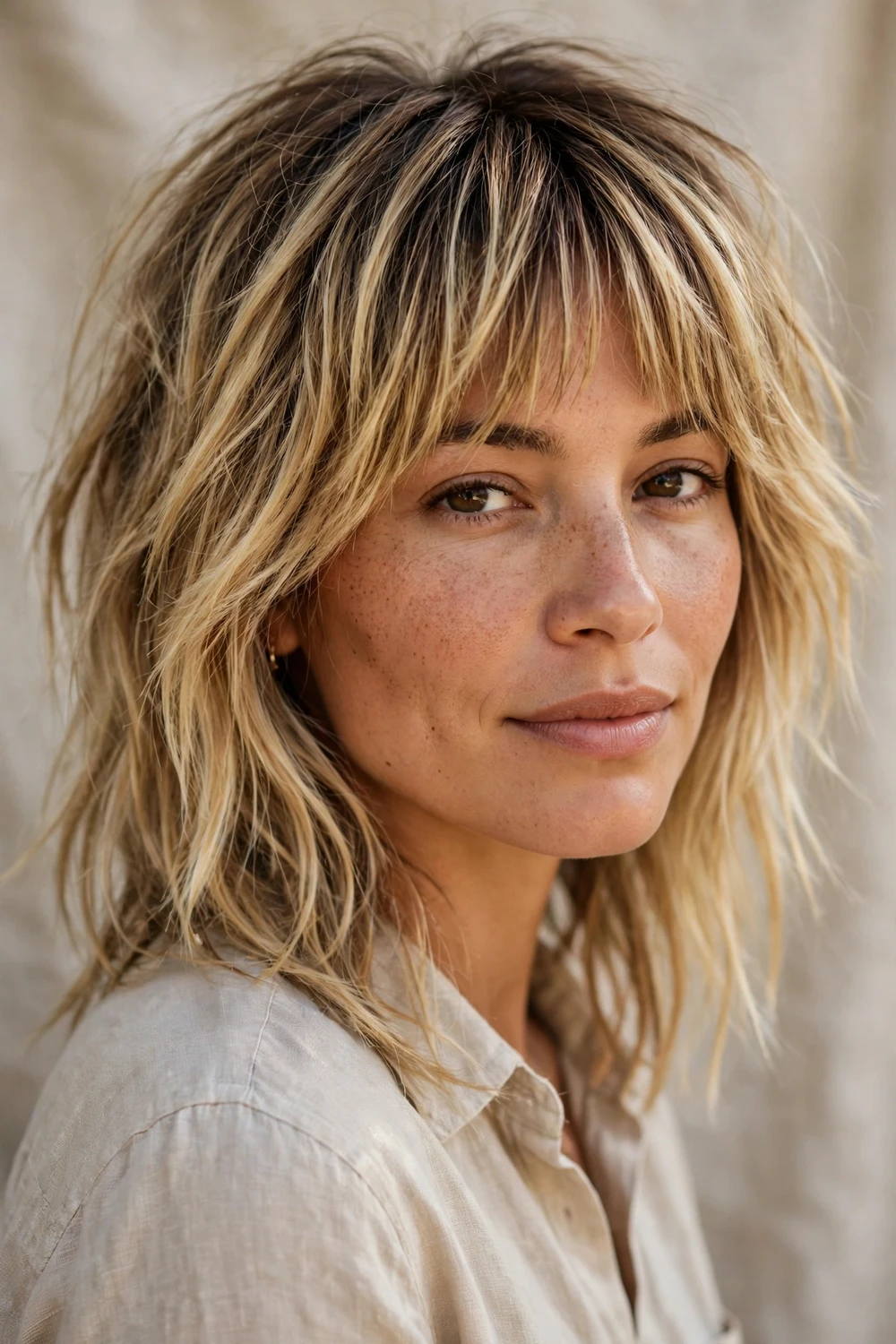
The deep root color melting into sandy and light blonde pieces adds a lot of depth to fine hair, which would look thinner in one flat blonde. The shaggy layers are heavily textured, with ends that look razor-cut or point-cut for a lived-in, undone finish. Without the dark root, this hair would read much thinner, so the root is doing real visual work here. The overall style is casual and sunlit without looking over-processed.
It suits medium to warm skin tones and straight to wavy fine hair. A purple shampoo once a week keeps the blonde pieces bright, and the dark root means you can stretch color appointments to ten or twelve weeks. Style with loose waves to show the shift between root and ends. The dark root means new growth blends in, so you can skip touch-ups for months. A leave-in conditioner protects the lighter lengths from dryness.
Try this: use purple shampoo only on the blonde lengths, not the darker roots.
Difficulty: Medium · Cost: $$$ (cut and color)
18. Silver Shaggy Lob with Feathered Bangs
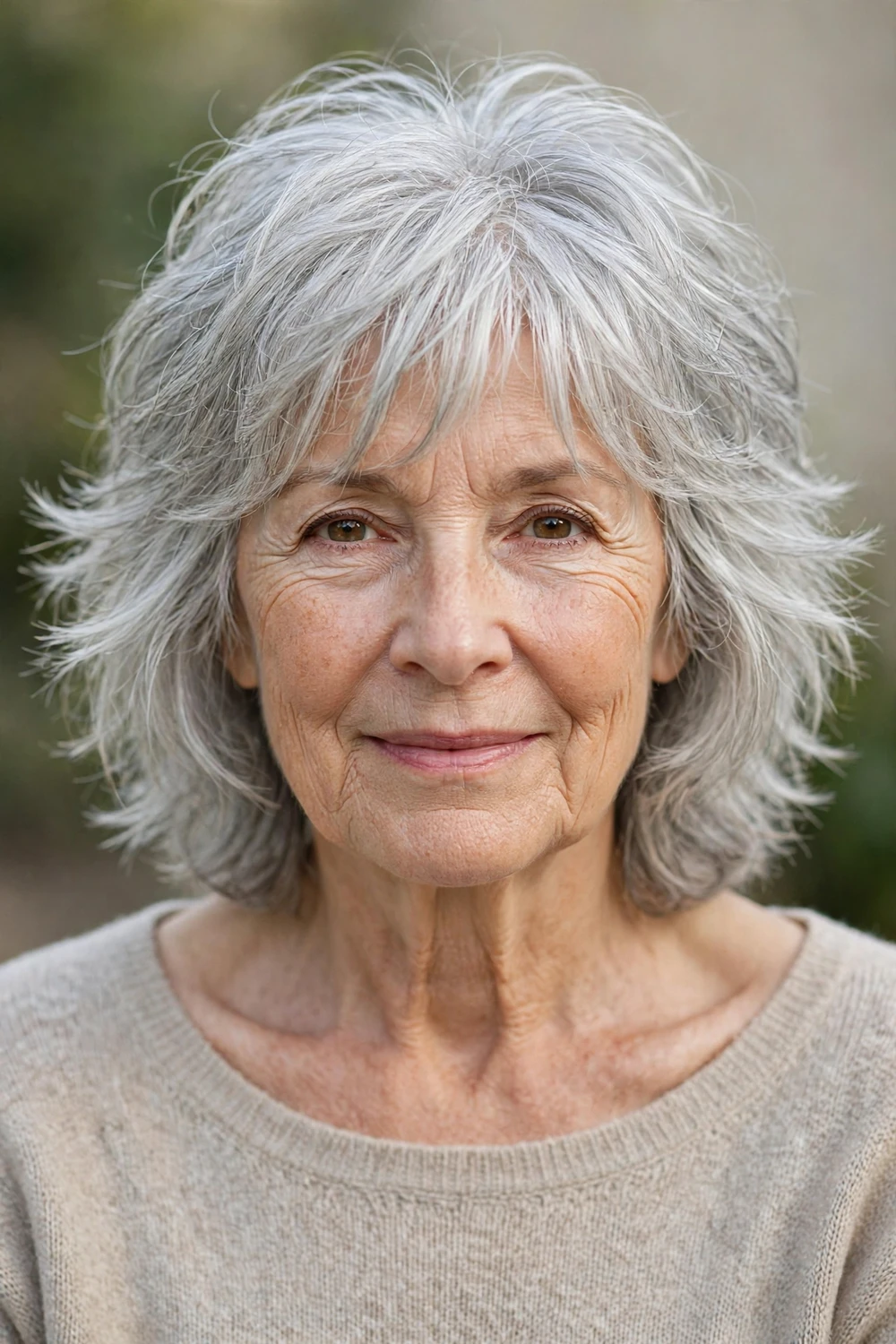
Layered cuts look especially good on silver and gray hair, since the layers break up the natural shine that can make one-length gray look flat. Wispy feathered bangs add lift around the crown and soften the face, and the airy ends give the style a youthful edge without trying too hard. If you are growing out your gray, a root smudge that melts natural gray into lighter pieces makes regrowth nearly invisible between appointments.
Silver pairs with layered shapes at any length, and these short layered hairstyles for women over 60 show flattering layering at a shorter length too.
It suits anyone embracing natural gray, on straight to wavy fine hair. A purple shampoo once a week keeps silver bright instead of yellow, and a smoothing serum adds polish without weight. The cut needs minimal upkeep beyond regular toning. A root smudge at your appointment melts natural gray into the silver pieces for a seamless grow-out. Keep hot tools moderate so the silver stays bright, and reserve the purple shampoo for weekly use only.
Try this: switch to a purple shampoo once a week to keep silver tones from turning yellow.
Difficulty: Low · Cost: $$ (cut and tone)
19. Red Shaggy Lob for Fine Hair

A bold red makes the shag’s texture impossible to miss, since the warm tone catches light along every layered edge. The choppy, tousled layers enhance movement while a soft fringe draws attention to the eyes. It works well for fair skin tones and oval face shapes, creating a playful yet edgy effect. Red is the boldest color pick on this list and suits anyone who wants their haircut to make a statement.
Red fades faster than any other shade, so a color-safe shampoo is non-negotiable and washing with cool water helps. Style with a light texturizing spray to define the choppy layers, and plan gloss refresh appointments between full color sessions. The cut itself stays low-effort; the color is where the maintenance lives. Gloss refresh appointments between full color sessions keep the red from dulling to copper-brown. Wash less often, since red fades a little with every shampoo.
Try this: wash with cool water and color-safe shampoo to slow red fade between appointments.
Difficulty: High · Cost: $$$ (cut and color)
20. Warm Auburn Wavy Shag with Baby Bangs

Natural auburn tones break up the flatness of fine hair, reading more copper in the mid-lengths and warmer brown toward the roots. The short baby bangs give an artistic, editorial edge that sets this cut apart from every longer-fringe option on the list. Waves through the lengths add the movement fine hair lacks on its own, and the lob length keeps the whole style wearable day to day. The short bangs draw attention upward to the eyes, which balances the wavy fullness below.
It suits fair to medium skin tones with warm undertones. Skip constant heat styling and use a curl-defining mousse instead, since auburn holds its richness better with less hot-tool damage. Baby bangs need trims every three to four weeks to stay above the brows, so commit to the schedule before you cut them. A pea-sized amount of styling cream smooths the bangs without making them look greasy. Let the bangs air-dry forward for the softest finish.
Try this: scrunch mousse into damp waves and diffuse on low heat for definition without frizz.
Difficulty: Medium · Cost: $$$ (cut and color)
21. Strawberry Blonde Shag with Bottleneck Bangs

Bottleneck bangs sit shorter in the center and hang longer and breezy over the cheekbones, which conceals fine hair better than a straight-across bang. The strawberry blonde color looks natural while pulling off the tough-and-soft balance of the shag, and a few pieces flipped toward the shoulder add a retro touch. This style of fringe grows out more gracefully than a blunt bang, since the longer sides just blend into the face-framing layers.
Bangs come in many forms at this length, but if you ever go shorter, these short french bobs show the full-fringe look at chin length.
Try this: blow-dry bottleneck bangs with a small round brush, rolling the center under and the sides back.
Difficulty: Medium · Cost: $$$ (cut and color)
22. Caramel Balayage Brunette Shag Lob
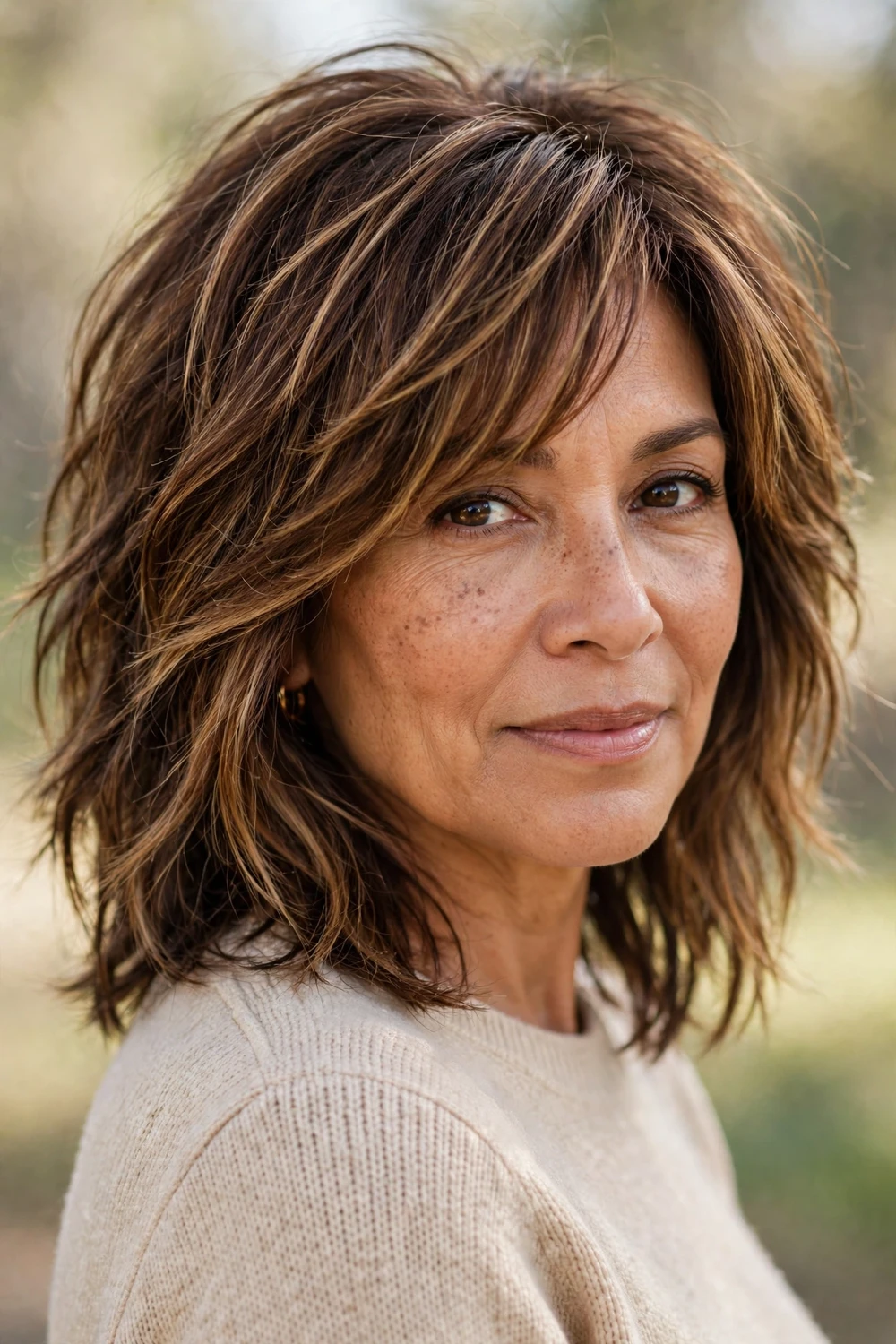
Hand-painted caramel balayage highlights the movement of the shag layers, with the lightest pieces placed around the face where they read as natural sun-kissed dimension. The medium brown base with caramel and honey ribbons creates depth without harsh lines, and the grow-out stays soft since balayage has no foil line. Side-swept grown-out bangs are flattering and practical, bringing volume to the mid-section where fine hair needs it most. The hand-painted placement means no harsh regrowth line, so the color looks good for months.
It suits medium brown to dark blonde bases and straight to wavy fine hair. Balayage is lower-maintenance than foils, so color appointments can stretch to twelve weeks. Style with loose waves to show the ribbon placement, and use a color-safe shampoo to keep the caramel from fading brassy. Skip the flat iron when you want the color to stand out, since straight styling hides the ribbons. A weekly hair mask keeps the lightened ends from drying out.
Try this: ask for the lightest pieces around your face, since they brighten the complexion most.
Difficulty: Medium · Cost: $$$ (cut and color)
23. Money Piece Shag Lob

Two face-framing money piece highlights, placed just at the front pieces, brighten the complexion without committing to an all-over color change. The contrast reads best against the movement of the shag layers, since the lighter pieces catch light differently as they fall. It is a low-commitment way to test lighter hair before a full balayage, and it works on any base color from brunette to blonde. The bright front pieces also draw the eye upward, which flatters the face.
It suits every face shape, since the brightness sits right at the front. The money pieces need a toner refresh every six to eight weeks to stay bright, but the rest of the cut can follow the usual shag schedule. Style with a slight wave so the bright pieces separate from the darker lengths behind them. Keep the rest of the color low-maintenance so the money pieces stay the focal point.
Try this: keep the money pieces no more than two shades lighter than your base for a natural result.
Difficulty: Medium · Cost: $$ (cut and partial color)
24. Straight Shaggy Lob for Fine Hair
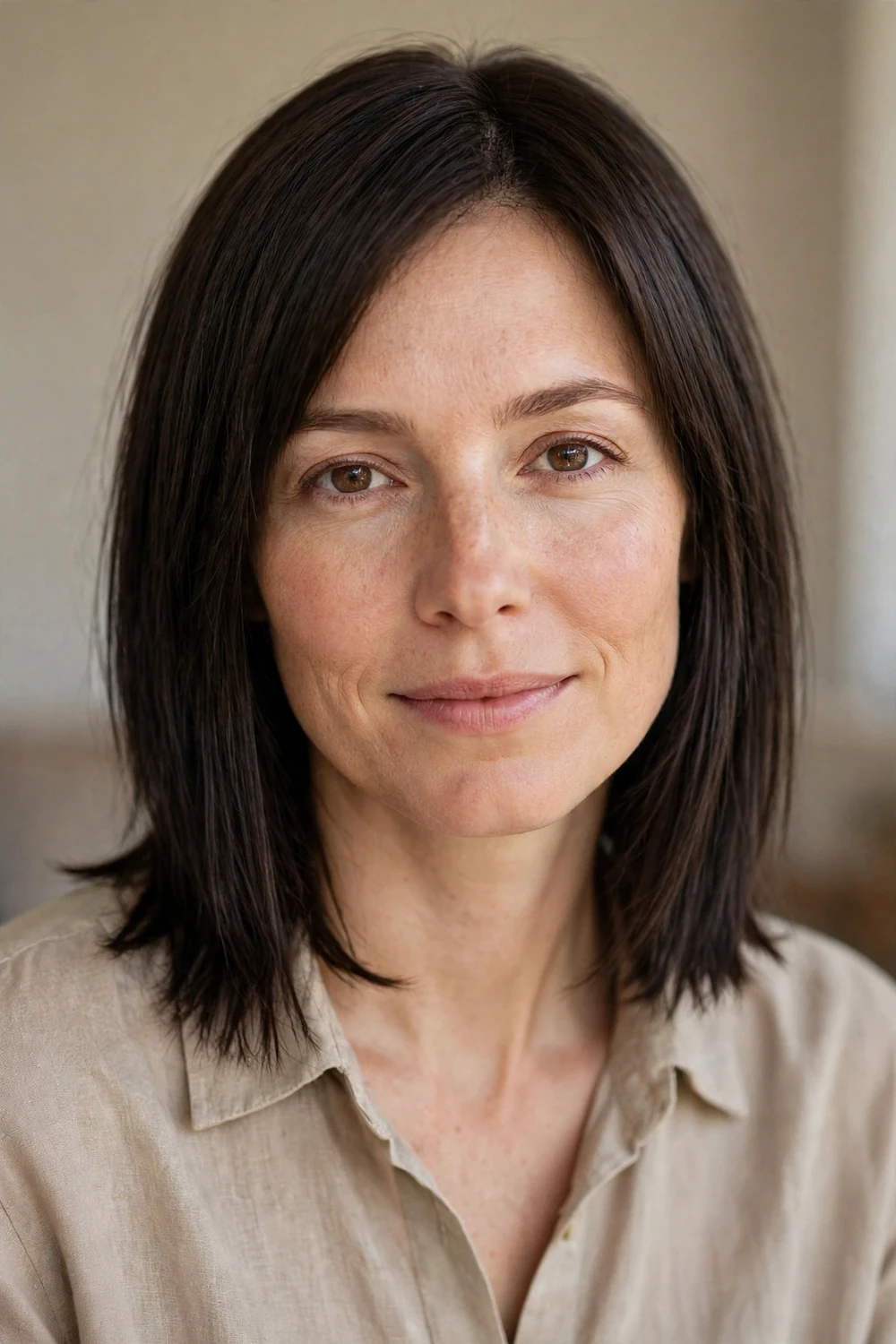
This straight shaggy lob gives fine hair a sleek yet textured look, with razor-cut ends that create movement while the overall finish stays smooth. It softens square or angular face shapes by breaking up hard lines with piecey texture. The cut works best with a flat iron to emphasize the crisp edges and layers, finished with a slight bend so the ends do not look stick-straight. The razor-cut texture is what separates this from a plain straight lob.
It suits naturally straight fine hair with enough shine to show the texture. Always use a heat protectant before flat-ironing, since fine hair damages faster than coarse hair. A lightweight dry oil on the ends adds polish, and the cut holds its shape well between trims thanks to the razor-cut edges. Sleep on a satin pillowcase to keep the smooth finish from frizzing overnight. A shine spray on the lengths adds polish for evenings.
Try this: bend the flat iron slightly at the ends instead of pulling straight down for a softer finish.
Difficulty: Low · Cost: $$ (salon)
25. Shaggy Lob with Deep Side Part
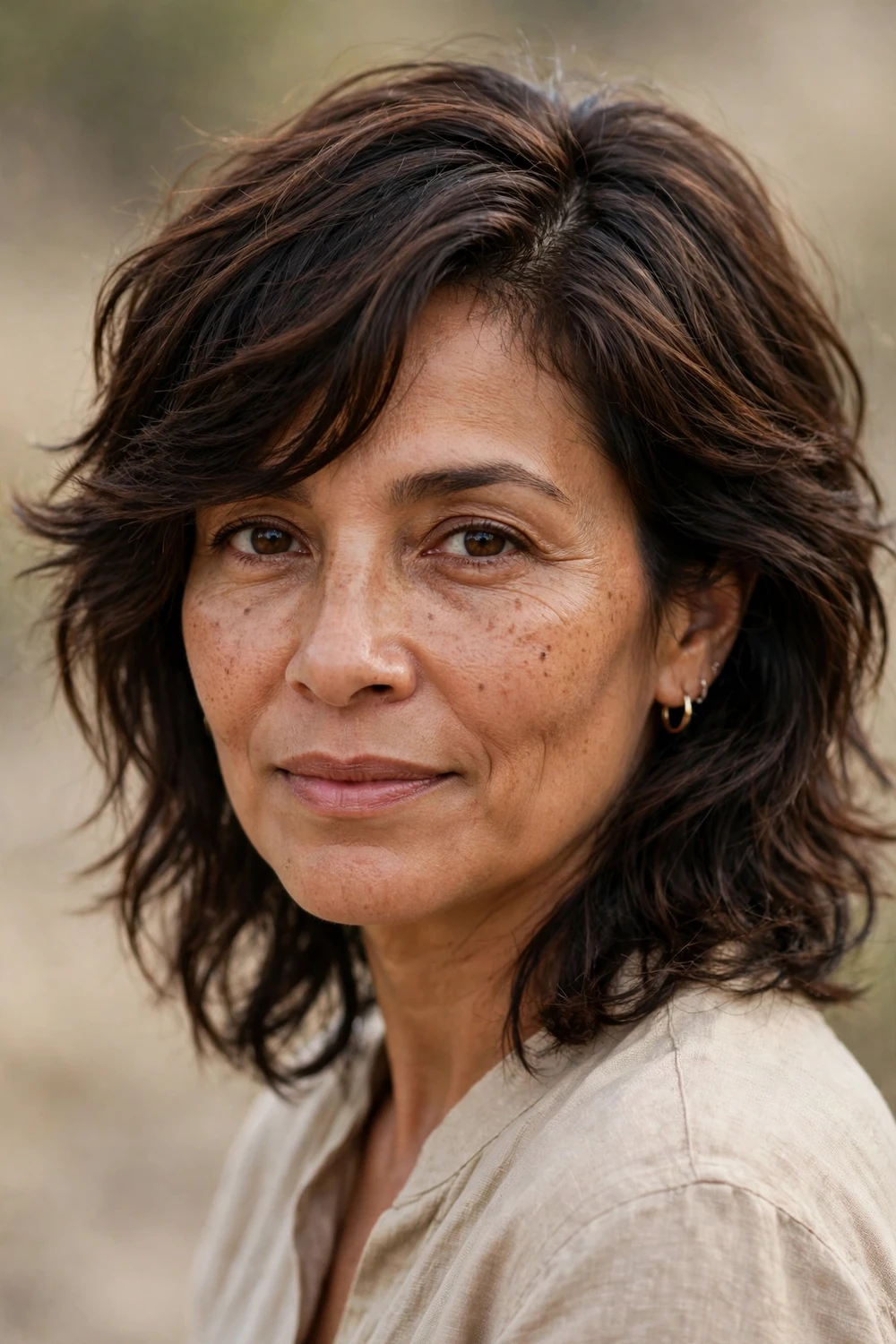
A deep side part changes the shaggy lob by shifting volume to one side, which gives extra lift at the crown where fine hair goes flat first. The uneven layers create a naturally tousled effect that pairs well with the diagonal part line, and the sweep across the forehead doubles as a grown-out fringe. It is the simplest variation on this list, since the cut itself is a standard shag lob and the part does the styling work.
It suits oval and round faces and works on straight to wavy fine hair. Train the part while the hair is damp by combing it into place and letting it dry there. A light texturizing spray helps the part and shape hold through the day without stiffening the layers. A root-lifting spray on the heavier side adds extra volume where the part shifts the weight. Flip the part occasionally to keep volume at the roots.
Try this: flip your part to the opposite side once a month to keep the roots from lying flat in one direction.
Difficulty: Low · Cost: $$ (salon)
26. Choppy Lob with Feathered Ends

The choppy lob takes the classic lob and adds strategic texture through feathered ends cut at varying lengths and angles. The feathered effect adds dimension and prevents the blunt weight that drags fine hair down, while choppy layers through the cut give each strand room to move on its own. The result reads as much thicker hair than you actually have, with a finish that stays piecey instead of polished.
It suits straight to wavy fine hair that needs movement without a full shag commitment. Style with a light texturizing spray and finger-comb for a natural finish, and keep the ends piecey at trims so the feathering stays visible. This is a good middle ground if heavy shag layers feel like too much. Finger-combing instead of brushing keeps the piecey finish intact through the day. Refresh with texturizing spray instead of re-styling with heat.
Try this: ask your stylist to refresh the feathered ends at every trim instead of taking length off.
Difficulty: Low · Cost: $$ (salon)
27. Shag Lob for Round Faces

This shaggy lob is tailored for round face shapes, with slightly longer layers that slim the face and add height at the crown. The longer front pieces draw the eye downward, which elongates the face instead of adding width at the cheeks. The key styling rule is avoiding volume directly at the cheekbones, since width there shortens the face. Soft texture through the lengths keeps fine hair from lying flat against the head.
It works on curly, wavy, and straight fine hair as long as the length stays past the jawline. Blow-dry the crown with a round brush for lift, and keep the sides sleek rather than puffed. A center or slightly off-center part helps the elongating effect, while bangs stay long and blended rather than short and wide. Avoid round-brushing the sides outward, since width at the cheeks shortens the face. A deep side part can add even more length for evenings.
Try this: ask for the shortest layers to start below the cheekbones, never above them.
Difficulty: Low · Cost: $$ (salon)
28. Shag Lob for Square Faces

Soft, rounded layers around the jaw break up a strong, angular jawline, while wispy pieces at the cheekbones soften the overall silhouette. This variation avoids blunt, straight-across ends that would emphasize squareness, and a slight side part helps offset a strong brow line. The texture does the softening work, so fine hair gets the benefit without needing heavy styling. The wispy cheek pieces are the key detail, so keep them light and separated.
It suits straight to wavy fine hair on square and rectangular face shapes. Round-brush the jaw-length layers under slightly to create the soft curve, and keep the fringe wispy rather than heavy. The collarbone length keeps the eye moving downward past the jaw, which further softens the angles. A lightweight texture spray keeps the rounded layers from falling flat by evening. Tuck one side behind the ear for a softer side profile view.
Try this: tuck one side behind your ear to show how the layers soften the jawline from the side.
Difficulty: Low · Cost: $$ (salon)
29. Shaggy Lob for Women Over 50

This shaggy lob is designed to flatter women over 50, with soft layers and naturally blended grays that create a polished yet modern look. The gentle movement of the layers adds volume to fine hair, while a length just past the chin stays universally flattering for oval and round face shapes. Pair the cut with a smoothing serum for a healthy finish, and let the texture keep the style from reading dated.
If you ever want to go shorter than a lob, these short pixie haircuts for older women keep the same easy upkeep at a cropped length.
Try this: ask for softness around the face rather than sharp edges, which flatters mature features.
Difficulty: Low · Cost: $$ (salon)
At a Glance: 29 Shaggy Lobs Compared
| Cut | Best for | Fine-hair perk | Upkeep |
|---|---|---|---|
| Classic Feathered Shag Lob | Straight to wavy hair | Feathered ends lift strands off the scalp | Round brush plus texturizing spray |
| Textured Brunette Shag Lob with Curtain Bangs | Oval and heart faces | Highlights add visible depth | Cream through the ends |
| Bronde Shaggy Lob with Curtain Bangs | Warm and neutral skin tones | Shifting tones show every layer | Loose waves, dry spray refresh |
| Soft Copper Shag Lob with Curtain Layers | Fair to medium warm skin | Light-reactive color adds texture | Color-safe shampoo, soft waves |
| Razor-Cut Shag Lob | Straight to wavy hair | Wispy edges stop flatness | Dry wax on the ends |
| Undercut-Layer Shag Lob | Uneven-density hair | Hidden layer removes weight underneath | Round-brush the top layers |
| Micro-Layered Shag Lob for Fine Hair | Low-density fine hair | Small layers build crown volume | Mousse at the roots |
| Stacked A-Line Shag Lob | Straight to wavy hair | Stacked back lifts the crown | Round brush at the crown |
| Asymmetrical Shag Lob | Fuller jawlines | Diagonal line adds movement | Style the two sides differently |
| 70s-Inspired Layered Shag with Flipped Ends | Wavy to straight hair | Dramatic layers maximize texture | Flip ends out, cool shot |
| French Girl Shag Lob | Straight to wavy hair | Fewer layers keep ends thick | Sea salt spray, air-dry |
| Wash-and-Go Wavy Shag Lob | Naturally wavy hair | Layers enhance the wave pattern | Curl cream, scrunch and go |
| Curly Shag Lob with Wispy Bangs | Fine curly hair | Layers stop triangle shape | Light curl cream on wet hair |
| Jet Black Shag Lob with Feathered Bangs | Straight to wavy hair | Dark color defines every layer | Shine serum, regular gloss |
| Warm Blonde Tousled Shag with Center Part | Warm skin tones | Root dimension adds fullness | Sea salt spray, air-dry |
| Honey Blonde Layered Lob with Soft Bangs | Warm skin tones | Face highlights brighten and widen | Round brush or air-dry |
| Sun-Kissed Blonde Shaggy Lob with Dark Roots | Medium to warm skin | Dark root creates depth illusion | Purple shampoo weekly |
| Silver Shaggy Lob with Feathered Bangs | Gray and silver hair | Layers break up flat shine | Purple shampoo, smoothing serum |
| Red Shaggy Lob for Fine Hair | Fair skin, oval faces | Warm tone highlights each layer | Color-safe shampoo, cool rinse |
| Warm Auburn Wavy Shag with Baby Bangs | Fair to medium warm skin | Tonal shifts hide thinness | Mousse, diffuse on low heat |
| Strawberry Blonde Shag with Bottleneck Bangs | Fair skin tones | Bangs conceal a sparse hairline | Small round brush on bangs |
| Caramel Balayage Brunette Shag Lob | Medium brown bases | Ribbons mimic density | Loose waves, color-safe wash |
| Money Piece Shag Lob | Every face shape | Front brightness widens the face | Toner refresh every 6 to 8 weeks |
| Straight Shaggy Lob for Fine Hair | Naturally straight hair | Razor ends keep it from lying flat | Heat protectant, flat iron bends |
| Shaggy Lob with Deep Side Part | Oval and round faces | Part shift lifts the crown | Train the part damp, light spray |
| Choppy Lob with Feathered Ends | Straight to wavy hair | Feathering removes dragging weight | Texturizing spray, finger-comb |
| Shag Lob for Round Faces | Round face shapes | Crown height slims the face | Lift the crown, keep sides sleek |
| Shag Lob for Square Faces | Square face shapes | Rounded layers soften angles | Round-brush jaw layers under |
| Shaggy Lob for Women Over 50 | Mature fine hair | Soft layers add youthful movement | Smoothing serum, simple styling |
How to Choose the Right Shaggy Lob
Start with your hair texture. Straight fine hair shows every layer, so razor-cut ends and face-framing pieces give you shape without obvious choppiness. Wavy fine hair is the easiest match for a shag lob, since the layers enhance a wave pattern you already have. Curly fine hair needs a dry cut so the length lands right, and wispy bangs rather than heavy ones so the fringe does not puff up.
Next, match the cut to your face shape. Round faces need crown height and longer front pieces that draw the eye downward. Square faces need rounded layers around the jaw and a side part to soften angles. Long faces need horizontal volume at the cheeks, which curtain bangs and fuller layers provide. If you are unsure, bring photos of the exact texture level you want, since “shaggy” means different things to different stylists.
Finally, be honest about color maintenance. Brunette and natural-shade shags need the least upkeep. Blondes, reds, and coppers need color-safe shampoo and regular toning or gloss appointments. If you want the lowest-maintenance option overall, pick a cut in your natural color with a lived-in finish.
Fine Hair Care for Your Shaggy Lob
Product weight. Fine hair shows product buildup fast, and heavy creams, butters, and oils pull shag layers flat. Stick to lightweight formulas: a volumizing mousse at the roots, a light texturizing spray for definition, and a dry shampoo between washes for grip. If a product feels rich between your fingers, it will feel heavy on fine hair.
Washing. Fine hair gets oily faster than coarse hair, so most people need to wash every other day or use dry shampoo on day two. Wash with lukewarm water, since hot water roughs up the cuticle and makes fine hair frizz. A lightweight conditioner on the mid-lengths and ends only keeps the roots from going flat.
Heat and breakage. Fine strands damage faster, so use a heat protectant before any flat iron or curling wand, and keep the temperature moderate. Let hair air-dry or rough-dry when you can, since less heat means less breakage over time. Trim every eight to ten weeks to keep the shaggy ends from splitting and thinning out.
Frequently Asked Questions
Is a shaggy lob good for fine hair?
Yes, a shaggy lob is one of the best cuts for fine hair. The collarbone length keeps enough weight to hold shape, while choppy layers remove the bulk that drags thin strands flat. Feathered or razor-cut ends add movement, and the texture creates the look of density. The key is keeping the layers blended rather than over-thinned, so ask your stylist to remove weight without removing too much hair.
Will layers make my fine hair look thinner?
Badly placed layers can, but the right layering does the opposite. Layers that are too short or too many remove the density fine hair needs at the ends. A good shag lob keeps the perimeter fairly full and concentrates texture through the mid-lengths and around the face. Ask for point-cutting or razor-cutting rather than heavy thinning shears, and keep the shortest layers at or below the cheekbones.
How often does a shaggy lob need a trim?
Most shaggy lobs need a trim every eight to ten weeks. The layered shape grows out gracefully rather than losing its line, so you can stretch appointments longer than with a blunt bob. Bangs are the exception: curtain, bottleneck, and baby bangs need reshaping every three to six weeks to keep their shape. Between trims, dry shampoo and texturizing spray keep the layers looking fresh.
What products work best for a shaggy lob on fine hair?
Lightweight products work best. A volumizing mousse on damp roots gives lift, a light texturizing or sea salt spray defines the layers, and a dry shampoo on non-wash days adds grip at the crown. Skip heavy creams, butters, and oils, which pull fine hair flat. A heat protectant is worth using before any hot tools, since fine strands damage faster than coarse ones.
Can I get a shaggy lob with bangs if my hair is fine?
Yes, but choose a bang style that does not need much hair. Wispy bangs, curtain bangs, and bottleneck bangs all work well because they use less density than a heavy full fringe. Point-cut or feathered bangs blend into the shag layers and grow out softly. Avoid thick blunt bangs, which can leave the rest of fine hair looking sparse by comparison.
Final Thoughts
A shaggy lob gives fine hair what it usually lacks: movement, texture, and the look of density. Pick the variation that fits your hair texture, your face shape, and the maintenance you will actually keep, then bring a photo to your stylist and ask for the layers to be blended, not thinned. With the right cut and lightweight products, fine hair at collarbone length looks fuller than it has any right to.

