

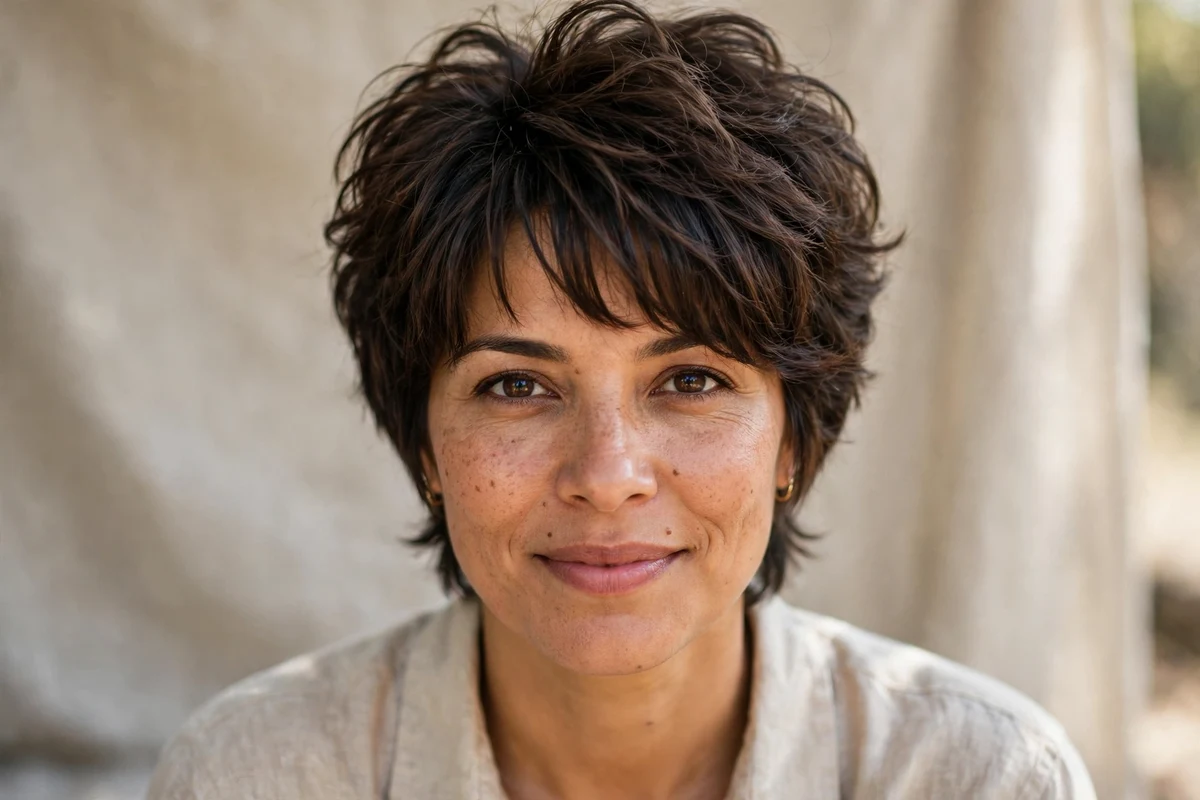
The wolf cut keeps showing up because it does two things at once: the shag’s choppy texture and the mullet’s bold shape, cut short enough to wear every day. Heavy layers on top build crown volume, the back tapers shorter, and the whole thing thrives on texture instead of polish. It is equal parts edgy and easy, which is a rare combination in a haircut.
This list rounds up 23 short wolf cut ideas, every one of them cropped to pixie, bob, or neck length. You will find classic versions, curly takes, pixie mullets, faded and undercut edges, and softer wispy finishes. Pick the one that fits your hair texture and how much styling you actually want to do.
Quick Takeaways
- Short wolf cuts stack layers on the crown for volume and taper the back shorter, which is what separates them from a regular shag.
- The cut thrives on texture, so air-drying with a little product often looks better than a polished blowout.
- Bangs come in many forms here, from micro to curtain to wispy, and each one changes the whole attitude of the cut.
- Faded sides, undercuts, and cropped sides need touch-ups every two to four weeks to stay sharp.
- Curly versions should be cut dry so the length lands right once the curls spring up.
1. Classic Short Wolf Cut

The classic is the blueprint every other version riffs on: short, stacked layers through the crown for height, longer tapered pieces at the nape, and curtain bangs that melt into the sides. It gives you that shag-meets-mullet energy without committing to either extreme. The silhouette stays close to the head at the sides, so it reads as a haircut with intention, not just grown-out layers. Because the shape is built into the cut, it air-dries into something that looks styled, which is why it became the default wolf cut in the first place.
It suits straight to wavy hair and most face shapes, since the curtain bangs can be adjusted wider or narrower. Ask your stylist to keep the top layers short enough to create lift but leave enough length at the back for the tapered finish. A little texturizing spray on dry hair is all the styling it needs. Trim every six to eight weeks to keep the crown from collapsing as it grows.
Try this: pinch the crown layers with a dab of matte paste to boost height on flat-hair days.
Difficulty: Medium · Cost: $$ (salon)
2. Messy Bedhead Wolf Cut

This is the classic wolf cut worn the lazy way: the same short crown layers and tapered nape, but styled to look undone instead of polished. The texture is the whole point, so you scrunch it, shake it, and stop there. It works best on hair with some natural wave or bend, since the waves give the mess structure. On pin-straight hair you will need a wave iron or braids overnight to get the same effect.
This is the lowest-fuss version of the wolf cut, since frizz and flyaways blend into the look instead of ruining it. Ask for point-cut ends so the layers look piecey instead of blunt, and tell your stylist you want to air-dry it most days. Salt spray or a light mousse gives grip without stiffness, and second-day hair actually styles better than freshly washed hair. Keep a travel texturizing spray in your bag for midday touch-ups.
Fans of the lived-in shag side of this cut can find more of it in these short shag hairstyles for women, which lean into the same undone texture.
Try this: flip your head upside down and scrunch with salt spray for instant bedhead volume.
Difficulty: Low · Cost: $$ (salon)
3. Short Wolf Bob

The wolf bob keeps the choppy crown layers of a wolf cut but ends at bob length, with a cleaner perimeter and graduated bangs. It is the most wearable version for anyone who likes the wolf cut’s texture but wants a tidier silhouette. The bob length keeps the cut from reading too wild, which makes it office-friendly while still having edge. It flatters round and square faces, since the volume on top lengthens the face.
Ask your stylist for a length between the chin and the jawline, with the wolf layers concentrated on top and graduated bangs that blend into the sides. Blow-dry with a round brush for a polished finish, or rough-dry with your fingers for a shaggier feel. This version suits straight to wavy hair best, and it grows out into a longer shag, so the in-between stage still looks intentional. Trim every eight weeks to hold the line.
If the bob half of this hybrid is what draws you in, these short french bobs explore the shorter bob shape on its own.
Try this: tuck one side behind your ear to show off the graduated layers.
Difficulty: Low · Cost: $ (salon)
4. Curly Short Wolf Cut

Curls and wolf cuts are a natural match: the short crown layers give curls lift at the roots, and the tapered back keeps the shape from going triangular. Your stylist should cut it dry, curl by curl, so the length lands right once the curls spring up. The result is a rounded, bouncy shape with the wolf cut’s signature texture built in. It works on curl patterns from loose waves to tight coils, though tighter curls need more length left in the layers to avoid shrinkage surprises.
Style on soaking-wet hair with a curl cream, then diffuse on low heat or air-dry fully. Scrunch out the crunch once dry for soft, separated curls. Because the cut is short, wash day takes less time and the curls dry faster than at longer lengths. Refresh with a water mist and a little cream on non-wash days, and sleep on a satin pillowcase to protect the crown volume overnight. Trim every ten to twelve weeks, since curls hide grow-out well.
Try this: diffuse with your head tilted to one side to build root lift where curls fall flat.
Difficulty: Medium · Cost: $$ (salon)
5. Curly Short Shullet

The shullet pushes the wolf cut toward the mullet side: tighter, shorter curls on top with a slightly longer tapered back. It keeps the curly wolf cut’s volume but adds a sharper, more directional silhouette. This version reads bolder than the classic curly wolf, so it suits anyone who wants their curls to make a statement. Keep the back tapered and short, ending above the shoulders, so it stays a short cut and never drifts into long-mullet territory.
Ask for the top cut short enough to spring up, with the back tapered rather than blunt. Diffuse upside down for maximum crown height, and use a pick at the roots once dry. Because the shape is so defined, it needs trims every eight to ten weeks to keep the mullet line from blurring. A light gel cast scrunched out once dry gives hold without stiffness, and a silk scarf at night keeps the curls springy between wash days.
Try this: pick out the roots after diffusing to separate the crown curls for extra height.
Difficulty: Medium · Cost: $$ (salon)
6. Pixie Wolf Cut with Voluminous Crown

This version takes the wolf cut down to pixie length but keeps the signature tall crown. The top layers are left long enough to build height, while the sides and back are cut close. It is the best pick if you want the wolf cut’s attitude with the wash-and-go ease of a pixie. It flatters round and square faces especially well, since the height on top draws the eye upward and lengthens the face.
Style with a pea-sized amount of matte paste, pushing the crown layers up and forward. It dries in minutes and needs almost no tools. Trims every four to six weeks keep the close sides from growing out shaggy. Ask your stylist to keep the crown long enough for texture but the sides tight, since that contrast is what makes the cut read as a wolf cut and not just a pixie. A light hairspray mist holds the height through the day.
For more cropped cuts with this kind of easy upkeep, these short pixie haircuts for older women gather the most flattering low-maintenance options.
Try this: blow-dry the crown forward with your fingers for lift, then push it back into place.
Difficulty: Low · Cost: $ (salon)
7. Feathered Pixie Mullet

The feathered pixie mullet leans harder into the mullet half of the wolf cut: soft feathered bangs, piecey layers through the sides, and a slightly extended nape. The feathering keeps it light and wearable instead of severe. It is a good middle ground if the full wolf cut feels like too much texture but you still want edge. Keep the nape short enough to stay clearly a short cut, ending at the neck rather than trailing down the back.
Ask your stylist to razor or point-cut the ends for that feathered finish. A little styling cream defines the pieces without weighing them down. It air-dries well on straight to wavy hair, and the bangs can be swept to the side or worn straight. Trim the bangs every three to four weeks so they stay feathered instead of growing heavy, and book a full trim every six to eight weeks to hold the shape.
Try this: twist small sections with styling cream to emphasize the feathered pieces.
Difficulty: Medium · Cost: $$ (salon)
8. Short Wolf Cut with Micro Bangs

Micro bangs cut well above the brows give the wolf cut an avant-garde twist. The short, straight-across fringe contrasts with the messy layers below, which makes the whole cut look more deliberate. It is a bold choice, but the small amount of hair involved means it grows out faster than a full fringe if you change your mind. They suit oval and long faces best, and they draw attention to the eyes in a way longer bangs do not.
The bangs need trims every two to three weeks to stay above the brows, so factor that into your routine. Style them smooth with a mini flat iron or a small round brush, and keep the rest of the cut textured for contrast. A little dry shampoo at the roots keeps the fringe from separating during the day. Ask your stylist to cut them dry so the length lands exactly where you want it.
Try this: keep the micro bangs pin-straight while the layers stay tousled for maximum contrast.
Difficulty: Medium · Cost: $ (salon)
9. Short Wolf Cut with Wispy Full Fringe

A wispy full fringe softens the wolf cut’s edge. The feathered bangs sweep lightly across the forehead instead of sitting heavy, which keeps the look light and wearable. It suits thicker hair well, since the wispy cutting removes bulk from the fringe. Ask your stylist to point-cut the fringe generously so it stays airy even as it grows, and keep the crown layers short for lift that balances the softness up front.
Blow-dry the fringe forward with a paddle brush, then tousle the layers with your fingers. The fringe grows out gracefully into curtain bangs, so you are never stuck with an awkward stage. This is one of the most forgiving fringe options on this list. It suits oval and heart-shaped faces best, and a light texturizing spray through the mid-lengths keeps the wolf layers piecey without stiffening the soft fringe. Trim every six weeks.
Try this: part the wispy fringe slightly off-center as it grows to ease into curtain bangs.
Difficulty: Low · Cost: $$ (salon)
10. Short Wolf Cut with Razor-Cut Layers
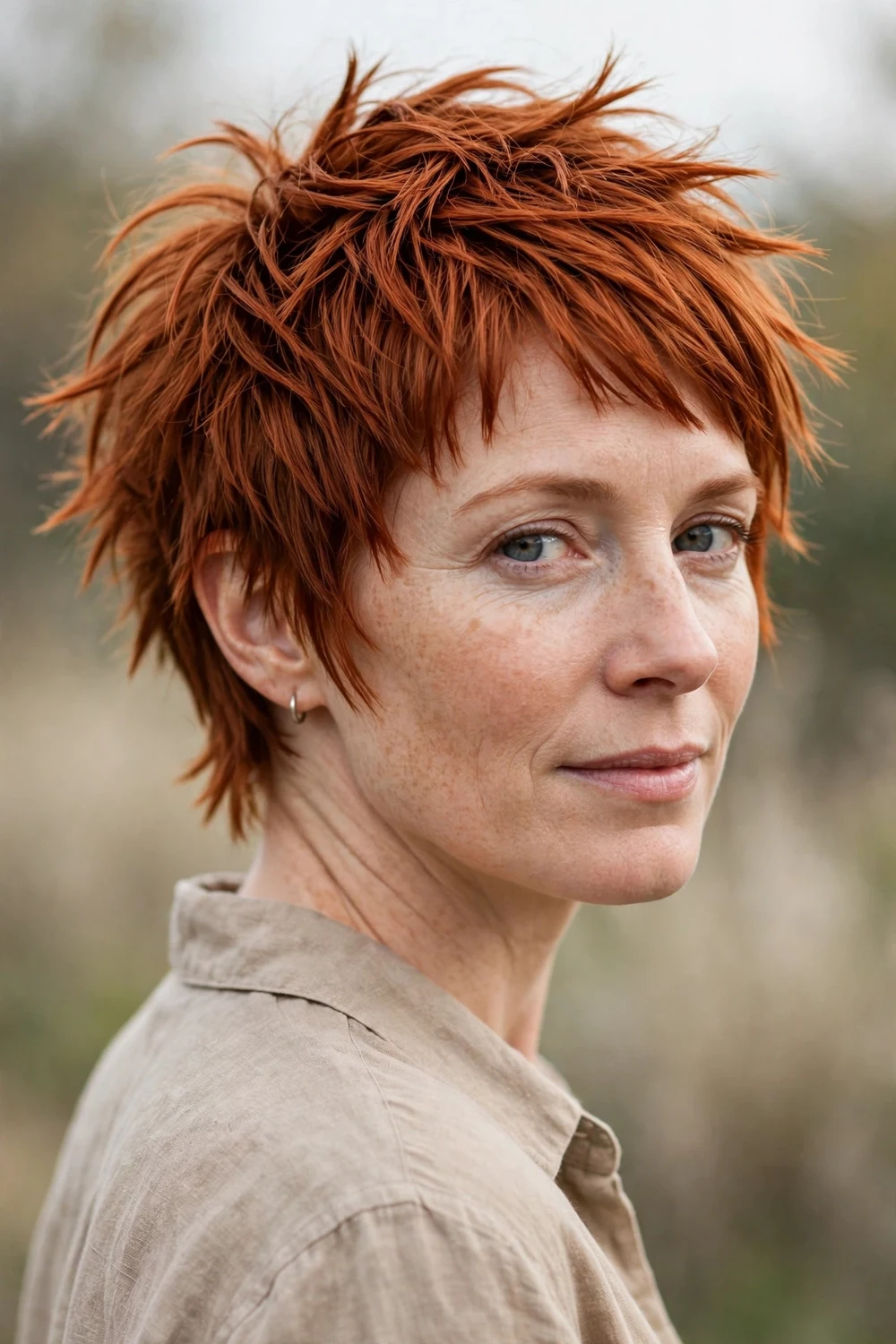
Razor-cutting the layers gives the wolf cut its sharpest, most jagged finish. The razor creates thin, separated ends that flick outward, which amps up the punk side of the cut. It works best on straight to wavy hair, where the sliced ends show clearly. Ask your stylist to use a razor on the mid-lengths and ends only, keeping the crown scissor-cut for structure and lift. Razor cuts grow out softly, so trims can stretch to ten weeks.
Style with a light wax or pomade, pinching the ends to define the jagged pieces. Skip heavy conditioners on the ends if they start looking limp, since razor-cut ends need lightness to flick. This is the edgiest finish on the list, so wear it with confidence. It suits medium to thick hair best, since very fine hair can look sparse with too much razor work. A texturizing spray adds grip without weight.
Try this: pinch the ends with wax while the hair is dry to make the razor texture pop.
Difficulty: Medium · Cost: $$ (salon)
11. Spiked Short Wolf Cut

Spiking the crown layers takes the wolf cut in a punk direction. The top is styled upward into defined spikes while the tapered back keeps the wolf cut’s shape. It is a high-impact look that needs daily styling, so it suits anyone who enjoys spending a few minutes on their hair. Ask your stylist to keep the crown long enough to spike, usually two to three inches, with the sides and back cut close for contrast.
Work a strong-hold wax or clay through dry hair, twisting small sections upward. It holds best on second-day hair with some natural grip. Wash it out fully at night, since strong products build up fast on short hair. This version suits straight to slightly wavy hair best, and it flatters oval and heart-shaped faces by adding height on top. A little root powder before the wax adds extra grip for fine hair.
Try this: spike the crown while the wax is still warm from your palms for easier shaping.
Difficulty: Low · Cost: $ (salon)
12. Short Wolf Cut with V-Shaped Angled Layers
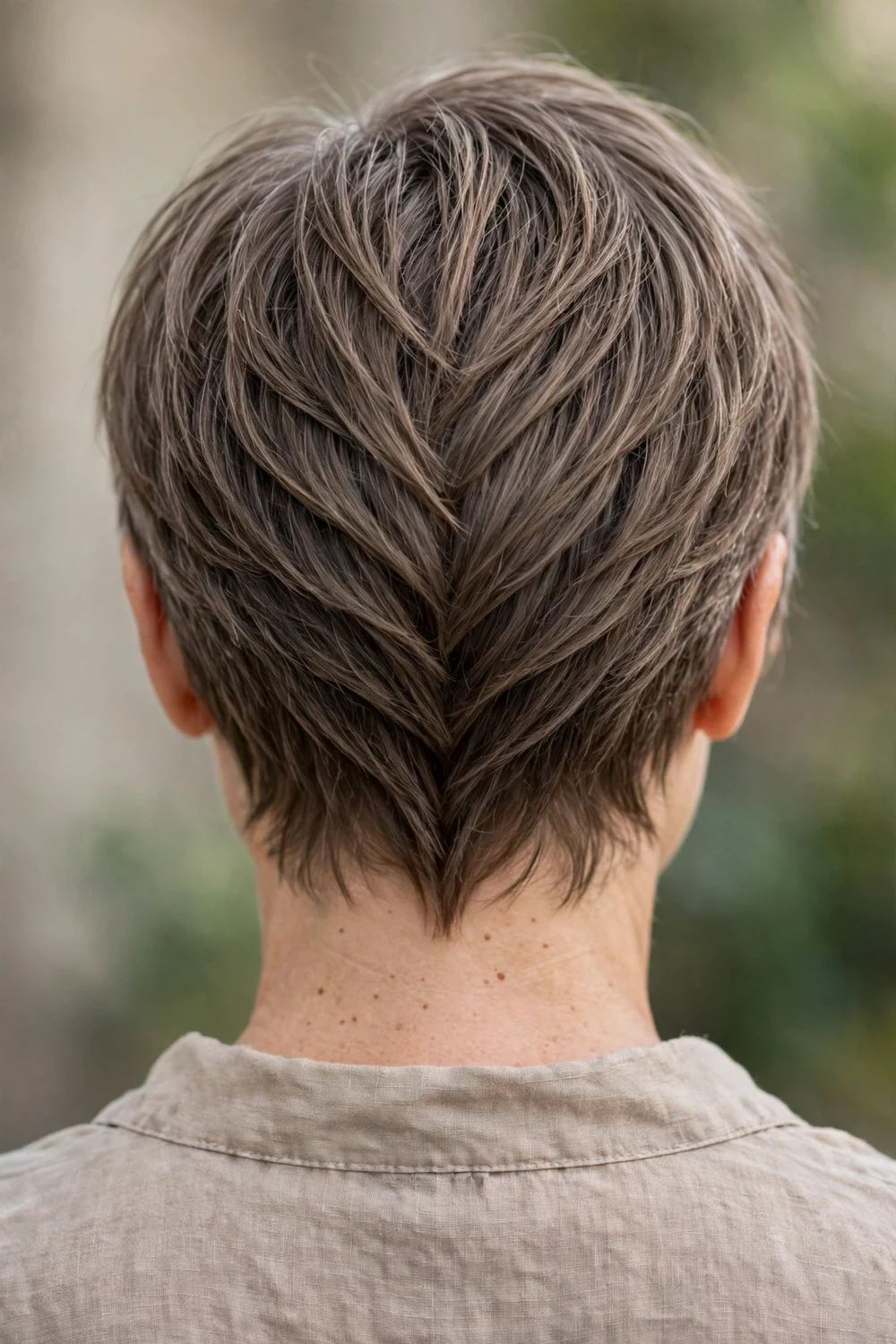
The layers here are cut at sharp angles so they form a V shape at the back. It gives the wolf cut a geometric, structured feel that stands out from the usual tousled versions. The V also draws the eye downward, which can make the neck look longer. Ask your stylist to keep the angles clean and the nape tapered, since the V reads best on a neat outline. It suits straight hair best, where the geometry shows clearly.
Smooth the layers with a flat iron to show off the V, or tousle lightly for a softer take. The shape needs trims every six to eight weeks, since grown-out angles lose their edge fast. A shine serum on the ends emphasizes the clean lines. This version flatters square and round faces by drawing the eye down the back, and it works on fine to medium hair that holds a smooth finish.
Try this: flat-iron the back layers straight down to make the V shape crisp.
Difficulty: Medium · Cost: $$ (salon)
13. Short Wolf Cut with Fade
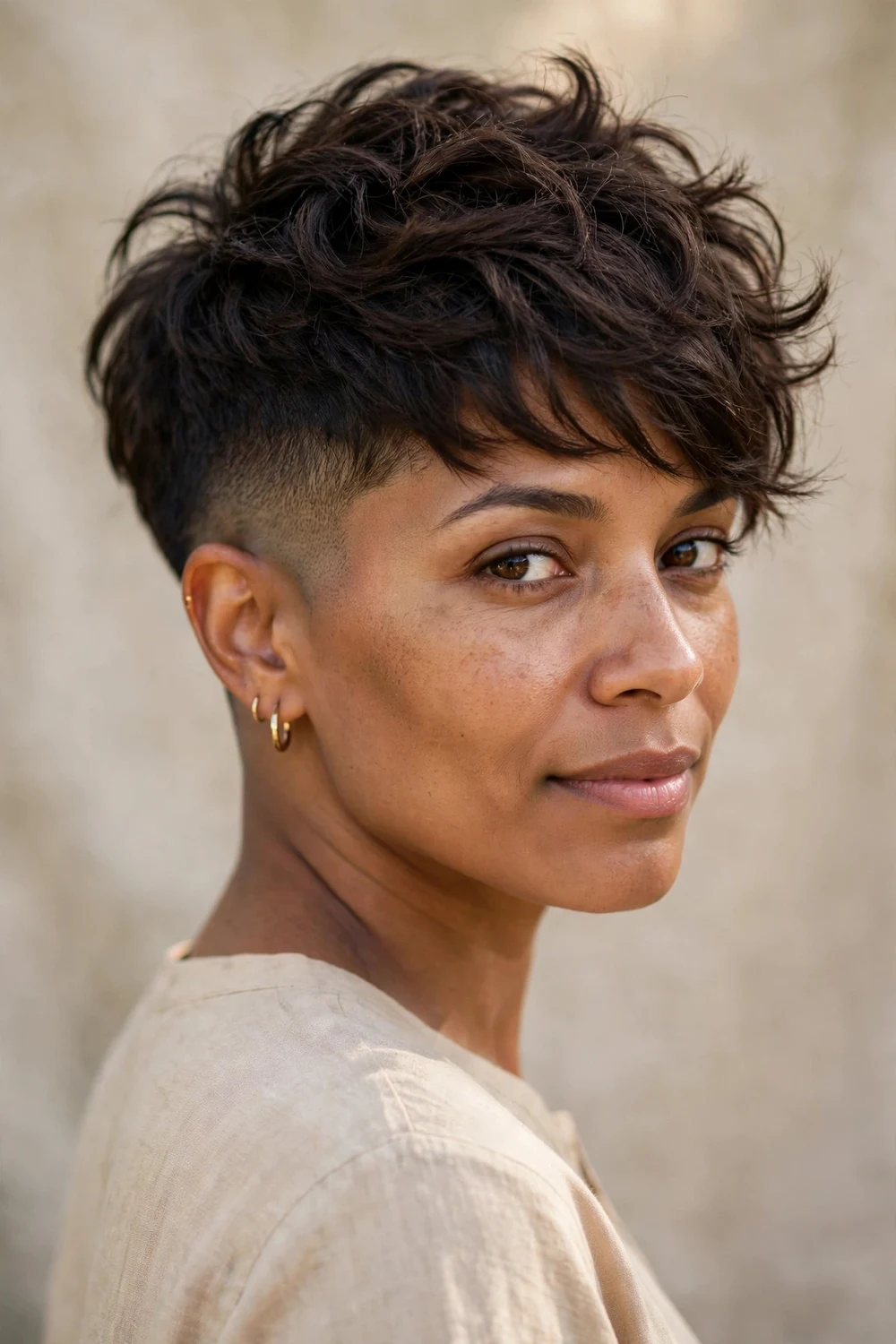
A fade takes the wolf cut’s sides down to a clean gradient, from longer at the top to close at the hairline. The contrast between the faded sides and the voluminous crown makes the top look even fuller. It is a sharp, modern take that borrows from barbering. Ask your barber or stylist for a low to mid fade so the blend stays soft rather than severe, and keep the top long enough for wolf-cut texture.
The fade needs touch-ups every two to three weeks to stay crisp, which is the highest-maintenance part of this cut. Style the top with matte paste or clay for texture. It suits all face shapes and works on straight, wavy, and curly hair. Keep a travel-size paste in your bag for midday touch-ups, and ask for the fade to start low if you want a subtler grow-out between appointments, since fade slots fill fast.
Try this: ask for a low fade first; you can always go higher at the next appointment.
Difficulty: Medium · Cost: $ (salon)
14. Short Wolf Cut with Undercut

An undercut shaves the hair underneath while the wolf-cut layers fall over it. The shaved section is mostly hidden, so you get edge without a drastic visible change. It also removes bulk, which makes thick hair much easier to manage. Ask your stylist for a nape or side undercut depending on where your hair feels heaviest, and keep the top layers long enough to cover it when you want a softer look.
The undercut needs shaving every three to four weeks to stay clean. Grow it out by letting the top layers cover the regrowth, which hides the awkward stage well. Style the top as you would any wolf cut, with texture spray or paste. This version suits thick to very thick hair best, since removing that bulk is the whole point. It also keeps the nape cooler in warm weather, which is a quiet bonus.
Try this: sweep the top layers to one side to flash the undercut when you want to show it off.
Difficulty: Medium · Cost: $$ (salon)
15. Short Wolf Cut with Cropped Sides

Cropped sides keep the sides uniformly short while the wolf-cut top stays long and tousled. It is cleaner than a fade and bolder than the classic, with a sharp contrast between the close sides and the textured crown. The look is minimal up front and wild on top. Ask your stylist for a scissor crop on the sides rather than clippers if you want a softer grow-out, and keep the crown long enough to tousle.
Style the crown with matte paste, pushing it forward or to the side. The cropped sides need trims every three to four weeks to stay neat. It suits straight to wavy hair and frames strong cheekbones well. This version works on fine to medium hair too, since the short sides make the top look fuller by contrast. Keep the crown textured rather than sleek to hold the wolf-cut character. A light hairspray mist sets it.
Try this: push the crown forward with paste for a fringe effect that changes the whole look.
Difficulty: Low · Cost: $ (salon)
16. Short Wolf Cut with Long Sideburns

Long sideburns give the wolf cut a retro twist. The sideburns drop past the ears to the jawline while the rest of the cut stays short and choppy. They frame the face and add a vintage rock-and-roll feel without changing the wolf cut’s core shape. Keep the sideburns at jawline length or above so the cut stays clearly short, and ask your stylist to taper them so they blend into the layers.
The sideburns need trims every three to four weeks to hold their line. Style the rest of the cut tousled, and smooth the sideburns with a little cream so they sit flat. It suits oval and heart-shaped faces best, since the sideburns add width at the jaw. This version works on straight to wavy hair, where the sideburn line shows cleanly. It pairs well with a center part, which keeps the retro feel balanced.
Try this: smooth the sideburns with styling cream while the rest stays tousled for contrast.
Difficulty: Low · Cost: $ (salon)
17. Wavy Textured Wolf Cut

This version leans on natural wave to do the styling. The wolf-cut layers are cut to enhance the wave pattern, so the cut air-dries into soft, separated texture. It is the most low-effort version for anyone with wavy hair, since the cut and the texture work together. Ask your stylist for shorter crown layers for lift with longer pieces through the mid-lengths, and skip the brush since finger-styling keeps the waves intact.
Scrunch in a curl cream or light mousse on damp hair and let it air-dry. Diffuse on low heat if you want more volume. Straight hair can fake the waves with a large-barrel iron, but the cut truly shines on natural texture. It suits wavy to curly hair best, and it flatters most face shapes since the soft texture keeps the look balanced. Trim every eight to ten weeks to keep the layers fresh.
Try this: twist damp sections around your finger before air-drying to define the waves.
Difficulty: Low · Cost: $$ (salon)
18. Neck-Length Layered Wolf Cut

The longest version on this list still ends at the neck, with soft layers that flip outward at the ends. The wolf-cut DNA shows in the short crown layers and the textured finish. It is a good pick if you want the wolf cut’s shape with a little more length to work with. Ask your stylist for flipped edges and face-framing layers that soften the jawline, keeping everything above the shoulders so it stays a short cut.
Blow-dry with a round brush, flipping the ends outward for that signature flick. It suits fine to medium hair, since the layers create fullness without weight. The grow-out is graceful, stretching trims to ten or twelve weeks. This version flatters longer faces by adding width at the sides, and a root lift spray keeps the crown from falling flat as the day goes on. It also layers well under hats and scarves.
If layered length is your thing, these short layered hairstyles for women over 60 show how layers flatter at a similar length.
Try this: flip the ends outward with a round brush while blow-drying for the signature flick.
Difficulty: Low · Cost: $$ (salon)
19. Baby Feathered Wolf Cut

The baby wolf cut keeps everything cropped close: a feathered top, blunt bangs, and a slightly disconnected nape. The feathering makes the short length feel soft instead of severe. It is the most pixie-like wolf cut on this list, with the mullet influence kept subtle. It suits petite features and oval faces well, since the compact shape keeps the focus on the eyes and cheekbones. Ask your stylist to keep the nape soft rather than sharp for everyday wear.
Style with a little pomade, piecing out the feathered top with your fingers. The blunt bangs need trims every three to four weeks. It dries fast and needs almost no heat styling, which makes it a true wash-and-go cut. This version works on straight to slightly wavy hair best, and it flatters anyone who wants short hair with softness around the face. A dab of shine serum on the bangs keeps them smooth without weighing down the feathered top.
Try this: piece out the feathered top with pomade while it is still slightly damp.
Difficulty: Low · Cost: $ (salon)
20. Heavy-Layered Wolf Cut with Thick Temple Layers

This version packs the layers in thick through the temples and crown, with a full layered fringe to match. The density of the layering frames the cheekbones and gives the cut a lush, full feel. It suits thicker hair best, since the cut needs density to support all those layers. Ask your stylist to keep the temple layers ruffled and piecey so they frame rather than hide the face, and to thin the ends slightly if your hair is very dense.
Blow-dry the temple layers forward with a round brush to build the face-framing shape. A volumizing mousse at the roots keeps the crown from falling flat under the weight of the layers. Trims every eight weeks keep the density even. This version flatters square and diamond faces by softening strong angles with curved layering. It needs a bit more styling time than the air-dry versions, but the fullness is worth the effort.
Try this: blow-dry the temple layers toward your face to build the cheekbone-framing shape.
Difficulty: Medium · Cost: $$ (salon)
21. Sleek Korean-Inspired Wolf Cut

The Korean-inspired wolf cut trades tousled texture for sleek, smooth layers. The shape is the same shag-mullet hybrid, but it is worn straight with soft curtain bangs and minimal frizz. It is the most polished version on this list and a good entry point if messy texture is not your style. Ask your stylist for clean layering with soft, blended ends rather than choppy ones, and curtain bangs that open in the center.
Flat-iron in sections and finish with a shine serum for the glassy look. It needs straight or straightened hair to read correctly, so factor in heat styling time. A heat protectant is non-negotiable with this much flat-ironing. This version suits oval and heart-shaped faces best, and it works on fine to medium hair that holds a smooth finish. Touch up the curtain bangs with the flat iron each morning for a crisp part.
Try this: flat-iron the curtain bangs away from your face to set the center part.
Difficulty: Medium · Cost: $$ (salon)
22. Flipped-End Wolf Cut

Flipping the ends outward gives the wolf cut a breezy, retro feel. The layers are cut so the ends kick out naturally, which adds movement and a playful finish. It works best on straight to wavy hair, where the flip shows clearly. Ask your stylist to bevel the ends outward and keep the layers light so the flip holds without heavy product. It flatters round faces by adding width at the sides.
Blow-dry with a round brush, rolling the ends outward, and set with a cool shot. A light-hold hairspray keeps the flip through the day. On second-day hair, touch up just the ends with a flat iron flipped outward. This version suits fine to medium hair best, since heavy hair can pull the flip flat by midday. Trim every eight weeks to keep the beveled ends fresh and the flip defined. It also layers nicely under hats.
Try this: set the flipped ends with a cool shot from the dryer so the flip lasts all day.
Difficulty: Low · Cost: $$ (salon)
23. Wispy Pixie-Like Wolf Cut

Feather-light ends give this wolf cut an airy, almost pixie-like finish. The layers are thinned at the tips so they float instead of sitting heavy. It is the softest version on this list and a good pick for fine hair, since the wispy cutting creates the illusion of more hair. Ask your stylist for slide-cutting or point-cutting through the ends to get that feathery finish, keeping the crown full for contrast and lift.
Style with a light cream, pinching the ends to separate the wispy pieces. It air-dries well and needs minimal heat. Because the ends are so fine, trims every six to eight weeks keep them from looking straggly. This version suits fine to medium hair best, and it flatters most face shapes since the soft edges keep the look gentle. Avoid heavy oils on the ends, which would weigh down the wispy finish.
Try this: pinch the wispy ends with light cream while the hair is dry to define the feathered texture.
Difficulty: Low · Cost: $ (salon)
At a Glance: 23 Short Wolf Cuts Compared
| Cut | Best for | Signature detail | Upkeep |
|---|---|---|---|
| Classic Short Wolf Cut | Straight to wavy hair | Curtain bangs, tapered nape | Texture spray, trim every 6 to 8 weeks |
| Messy Bedhead Wolf Cut | Natural wave or bend | Undone lived-in texture | Salt spray, air-dry |
| Short Wolf Bob | Round and square faces | Bob length, graduated bangs | Round-brush blow-dry |
| Curly Short Wolf Cut | Curly hair | Dry-cut curl-by-curl layers | Curl cream, diffuse |
| Curly Short Shullet | Bold curl wearers | Mullet-leaning curly shape | Diffuse upside down, pick roots |
| Pixie Wolf Cut with Voluminous Crown | Round and square faces | Tall textured crown | Matte paste, trim every 4 to 6 weeks |
| Feathered Pixie Mullet | Straight to wavy hair | Feathered bangs, extended nape | Styling cream, piece out |
| Short Wolf Cut with Micro Bangs | Oval and long faces | Above-the-brow fringe | Mini flat iron, trims every 2 to 3 weeks |
| Short Wolf Cut with Wispy Full Fringe | Thicker hair | Feathered airy fringe | Paddle-brush blow-dry |
| Short Wolf Cut with Razor-Cut Layers | Straight to wavy hair | Jagged razor texture | Wax on ends, pinch dry |
| Spiked Short Wolf Cut | Oval and heart faces | Spiked-up crown | Strong-hold wax daily |
| Short Wolf Cut with V-Shaped Angled Layers | Straight hair | Geometric V at the back | Flat iron smooth |
| Short Wolf Cut with Fade | All face shapes | Barber-style faded sides | Fade touch-ups every 2 to 3 weeks |
| Short Wolf Cut with Undercut | Thick hair | Hidden shaved section | Shave every 3 to 4 weeks |
| Short Wolf Cut with Cropped Sides | Straight to wavy hair | Uniform short sides | Matte paste, trim sides often |
| Short Wolf Cut with Long Sideburns | Oval and heart faces | Jawline retro sideburns | Cream to smooth, trim often |
| Wavy Textured Wolf Cut | Wavy to curly hair | Air-dried wave texture | Curl cream, scrunch |
| Neck-Length Layered Wolf Cut | Longer faces | Flipped ends at the neck | Round-brush flip |
| Baby Feathered Wolf Cut | Petite features | Cropped feathered top | Pomade, finger-piece |
| Heavy-Layered Wolf Cut with Thick Temple Layers | Thicker hair | Dense face-framing layers | Round-brush forward |
| Sleek Korean-Inspired Wolf Cut | Oval and heart faces | Smooth polished layers | Flat iron, heat protectant |
| Flipped-End Wolf Cut | Round faces | Outward-flipped ends | Round-brush outward, cool shot |
| Wispy Pixie-Like Wolf Cut | Fine hair | Feather-light thinned ends | Light cream, pinch ends |
How to Choose Your Short Wolf Cut
Start with your face shape. Round faces do well with height on top, like a pixie wolf cut or a spiked crown, while longer faces suit fullness at the sides, which a wolf bob or flipped ends provide. Square faces soften with curved, face-framing layers around the temples. If you are unsure, bring photos of cuts you like to your stylist and ask what will work with your bone structure.
Next, be honest about your hair type and your routine. Fine hair needs the wispy or stacked versions that create fullness without weight, while thick hair can handle heavy layering and undercuts that remove bulk. Curly hair should be cut dry so the length lands right. If you want wash-and-go, pick a textured version that air-dries; if you like heat styling, the sleek or V-shaped versions reward the effort.
Finally, think about maintenance. Fades, undercuts, and micro bangs need touch-ups every two to four weeks. Classic, messy, and wavy versions can stretch to eight or ten. Pick the schedule you will actually keep, since a grown-out sharp cut looks worse than a fresh easy one.
Short Wolf Cut Care and Styling
Texture. The wolf cut is built on texture, so products matter more than tools. A texturizing spray, salt spray, or light mousse gives the layers grip and separation. Work product through damp or dry hair with your fingers, not a brush, since brushing smooths out the piecey finish the cut is known for.
Washing. Second-day hair styles better than freshly washed hair for most wolf cut versions, since a little natural oil adds grip. A dry shampoo at the roots on day two or three keeps the crown from falling flat. Wash with lukewarm water and a lightweight conditioner so the layers stay bouncy instead of weighed down.
Trims. The crown layers are the engine of the cut, so ask your stylist to refresh them even at a partial trim. Bangs grow out fastest and change the look most, so fringe versions need the most frequent attention. A full trim every six to ten weeks keeps the shape intentional, depending on the version you chose.
Frequently Asked Questions
What is a short wolf cut?
A short wolf cut is a shag-mullet hybrid kept at a cropped length. It has heavy short layers on top for crown volume, sides kept close to the head, and a tapered back that ends at the neck or above. Bangs are almost always part of the deal, in styles from curtain to micro to wispy. The whole cut is designed to look textured and lived-in rather than polished.
Will a short wolf cut suit my face shape?
Yes, because the cut is so adjustable. Round faces benefit from height on top, which pixie and spiked versions provide. Long faces suit width at the sides, like a wolf bob or flipped ends. Square and diamond faces soften with curved temple layers. The bangs alone change the effect a lot, so talk through fringe options with your stylist before committing.
How do I style a short wolf cut at home?
Most versions need very little. Work a texturizing spray, mousse, or matte paste through damp or dry hair with your fingers, then let it air-dry or rough-dry. That is the entire routine for the messy, wavy, and classic versions. Sleeker versions need a flat iron, and spiked or faded versions need daily product. The cut does most of the work, which is the point.
How often does a short wolf cut need trimming?
It depends on the version. Fades, undercuts, cropped sides, and micro bangs need touch-ups every two to four weeks to stay sharp. Classic, messy, wavy, and curly versions can go eight to twelve weeks, since texture hides grow-out well. Bangs always need the most frequent attention, so fringe-heavy versions sit on the shorter end of that range.
What is the difference between a wolf cut and a shag?
The wolf cut borrows the shag’s choppy layers but adds the mullet’s shape: a shorter, tighter front and crown with a longer, tapered back. A traditional shag is more evenly layered all around and usually softer. The wolf cut reads bolder and more directional, while the shag reads more relaxed and uniform. At short lengths the difference is subtle, but the tapered back is the tell.
Final Thoughts
A short wolf cut is one of the most forgiving edgy cuts you can get: the texture hides grow-out, the shape does the styling, and there is a version for every hair type and face shape. Pick the one that matches your texture and your real routine, and let the layers do the rest.

