


Partial hair highlights put light only where it earns its place: the top layer, the crown, the part, and the front. The underneath keeps your base color, so the effect is brighter hair that still looks like your hair, in a shorter appointment than a full head of foils. The range inside this one service is wider than most menus suggest, from a handful of foils along the part to a half head that covers the whole top half.
This list collects 26 partial placements and runs them by coverage, starting with the standard foil services, then the small targeted zones, the painted and blended options, and finally the specialist placements for curls, bobs, gray blending, and updos. Every idea notes where the color goes, who it suits, how it grows out, and its cost band. If you are still choosing a shade rather than a placement, the general fall hair colors guide covers the color families side by side.
Quick Takeaways
- Partial means placement, not a shade. Foils or paint go on the top, crown, part, and front only, while the underneath stays your base color.
- Coverage comes in sizes: quarter head, T-section, classic partial, and half head, from smallest to largest.
- Partial services sit in the lower cost bands and usually refresh at eight to twelve weeks.
- Most partials show little color in an updo. Hairline perimeter placement is the exception built for ponytails and buns.
- Face framing is one partial option here, kept to a single idea, since the rest of the list is about coverage across the head.
How to Pick Your Partial Placement
Start with how you wear your hair. If you wear it down with a settled part, top, crown, and part-line placements give you the most visible change for the fewest foils. If you change your part or wear layers that move a lot, pick a wider coverage such as a classic partial or a half head, so the color shows from more angles. If you wear your hair up for work, skip the standard placements and look at the hairline perimeter idea near the end of this list.
Then match the placement to your base and your calendar. Darker bases show partial pieces with more contrast, which is why brunette partials often use caramel or honey tones like those in the fall brunette hair colors list. Painted and root-smudged placements grow out the softest and suit longer gaps between visits, while foil placements along the part and fringe need the most frequent refreshes.
| Feature | Partial Highlights | Full Highlights |
|---|---|---|
| Coverage | Selected sections: top layer, crown, part, and front | Every section, including underneath and nape |
| Overall effect | Brightness where hair is seen most, with natural depth underneath | Even brightness through the whole head |
| Salon time | Shorter, with fewer foils or painted pieces | Longer, with foils through all sections |
| Cost band | Lower bands, $ to $$ for most placements | Higher bands, $$ to $$$ in most salons |
| Refresh cycle | Often eight to twelve weeks, with mini touch-ups between | Often six to eight weeks |
| Hair worn up | Underneath stays natural, so updos show less color | Color shows through ponytails and updos |
1. Classic Partial Foils

Classic partial foils are the standard partial service. Foils are woven through the top layer, the crown, and the front sides, while the underneath and the nape keep your natural base. The result is brightness where hair is seen first, with real depth still sitting underneath.
This placement suits most bases, from dark blonde to medium brunette, and most hair lengths past the chin. Grow-out shows mainly along the part and crown, so a refresh usually lands at eight to twelve weeks. If you wear your hair down most days, the untouched underneath rarely shows.
Try this: tell your colorist which side you part on before the first foil goes in, so the brightest pieces land along your actual part.
Difficulty: Medium · Cost: $$ (salon)
2. Half-Head Highlights

A half-head service covers the entire top half of the head, front to back, and stops before the lower layers and nape. It gives more coverage than a standard partial and reads brighter overall, while the darker underneath still adds contrast when the hair moves.
Half-head placement works well for thick hair, where full foils take a long time, and for anyone stepping up from a smaller partial. Because more of the crown is covered, regrowth is more visible than with a mini service, and most wearers refresh at eight to ten weeks.
Try this: ask for the lower edge of the half head to sit just above the ears, so a low ponytail still shows some of the lighter color.
Difficulty: Medium · Cost: $$ (salon)
3. Mohawk Section Partial Highlights
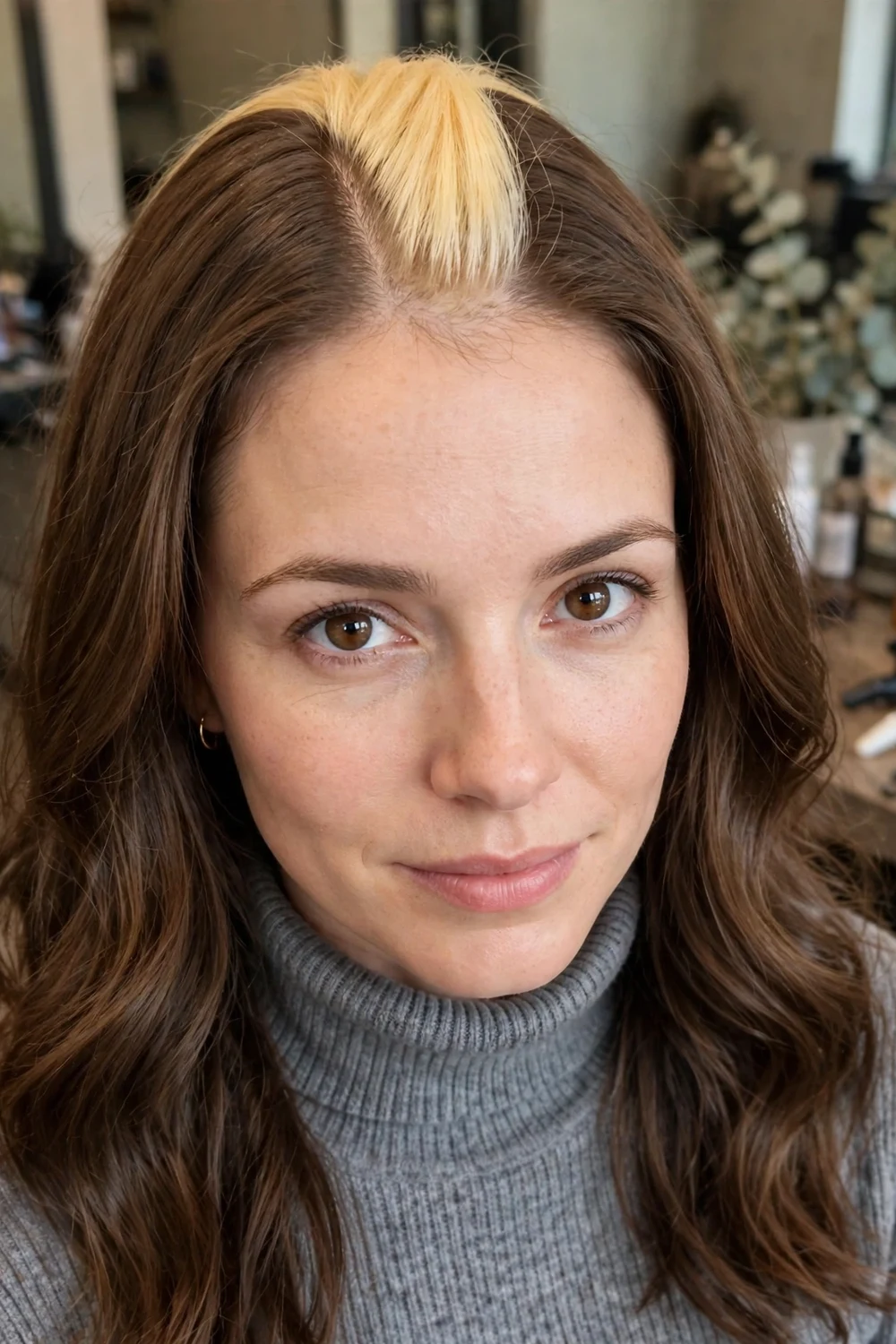
The mohawk section is the center strip of hair that runs from the front hairline to the back of the crown, roughly the width a mohawk cut would leave. Foils packed into this strip alone put all the brightness along the part and the very top, where light hits first.
This is a smart pick if you keep one fixed part and wear your hair down. The sides and underneath stay natural, so the service is quick and the grow-out is concentrated in one easy zone to redo. Changing your part often will expose the uncolored sides, so this placement rewards a settled style.
Try this: keep your part in the same place for the first week, so the new brightness settles along the line you actually wear.
Difficulty: Low to Medium · Cost: $ (salon)
4. T-Section Highlights

A T-section follows two lines: along your part and across your front hairline. Together those lines form a T when viewed from above. Foils sit only on those two lines, so the service targets the regrowth and dullness you see in the mirror and little else.
Salons often book the T-section as a between-appointments refresh for clients who already have highlights through the rest of the head. On its own, it suits anyone whose color still looks fine underneath but flat on top. The appointment is short, and grow-out stays confined to the part and hairline.
Try this: book a T-section at the halfway point between bigger services, and add a gloss so the older highlights underneath match the fresh pieces.
Difficulty: Low · Cost: $ (salon)
5. Crown-Only Highlights
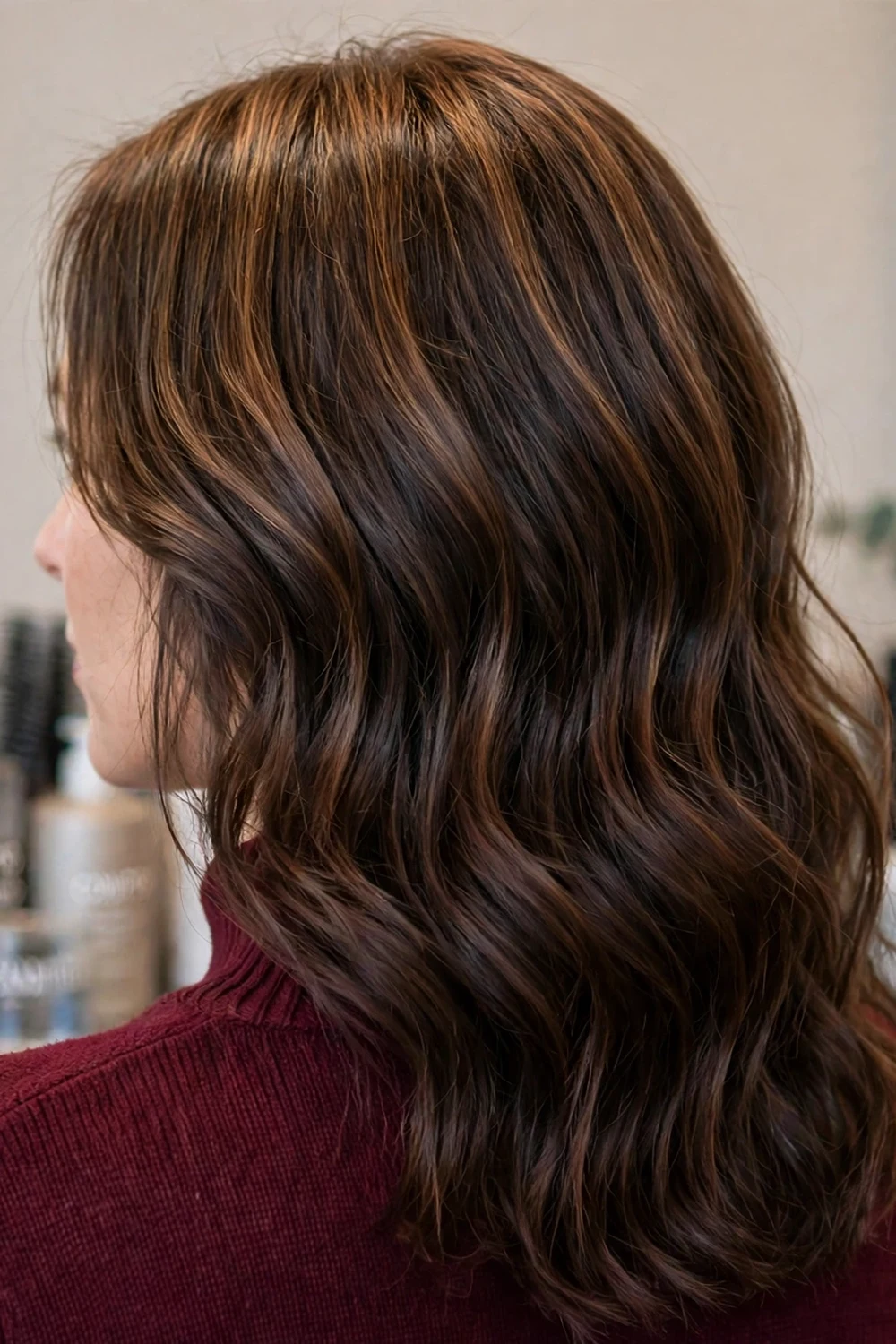
Crown-only placement puts every foil into the crown area at the top back of the head and leaves the front, sides, and lengths alone. It breaks up a solid, dark crown so long hair reads dimensional from above and behind, a view most other partial placements skip.
This placement suits long, thick hair that looks flat at the back, and wearers photographed or seen from behind often, such as teachers and presenters. The front keeps your existing color, so if your face frame has faded, pair this with a gloss rather than expecting the crown work to brighten your face.
Try this: take a photo of the back of your head in daylight before the appointment, so you and your colorist can see where the crown looks darkest.
Difficulty: Low to Medium · Cost: $ (salon)
6. Top-Layer Highlights on Long Waves
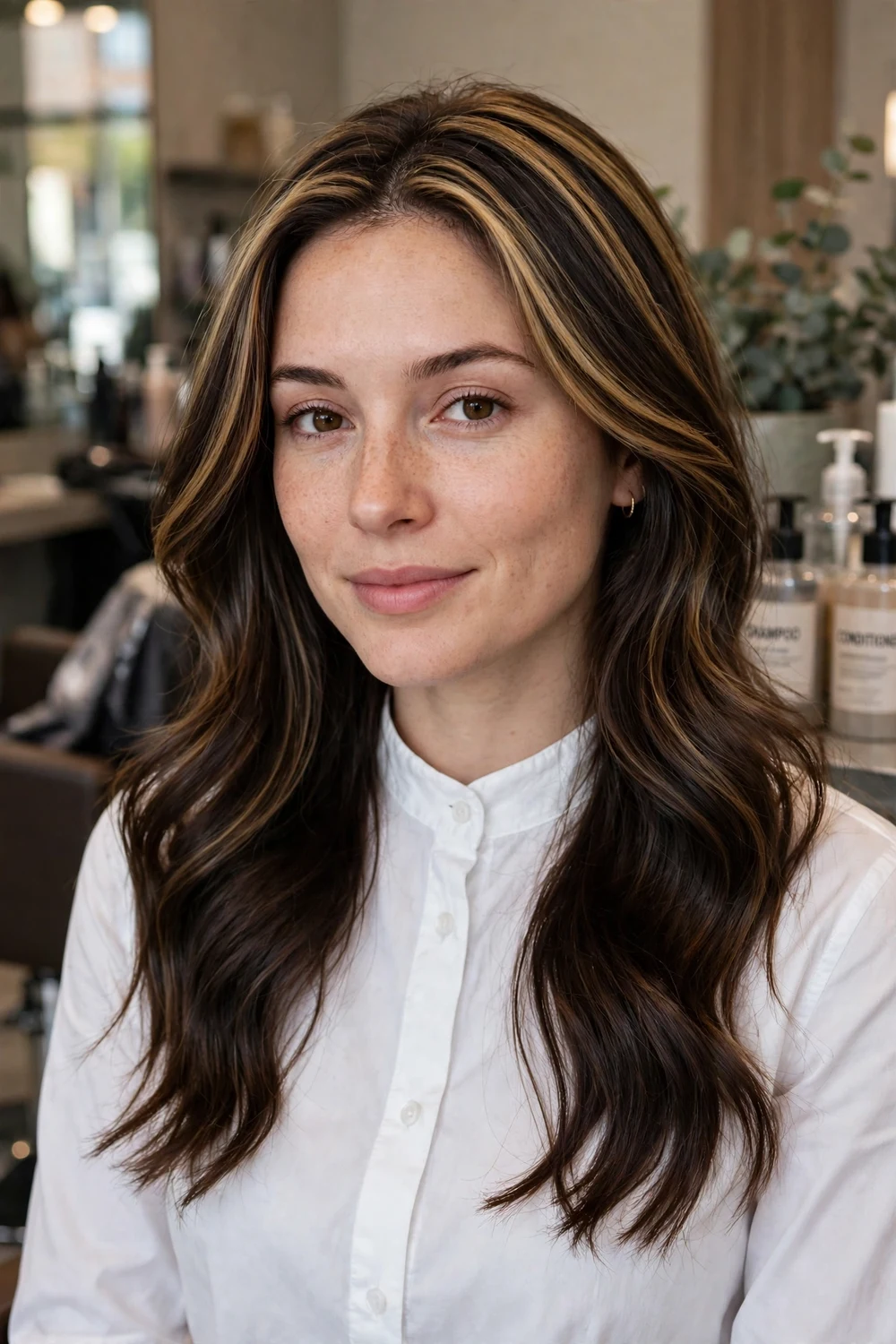
Top-layer highlights are woven only through the surface of the hair, the layer that shows when hair falls naturally. On long waves, those lighter surface pieces separate each wave and add movement, while the darker interior keeps the lengths looking full.
This is the placement behind many sun-lightened looks on brunettes. It suits long hair worn down and loose, and it grows out softly because the surface pieces blend into the waves. It is a poor match for frequent updos, since lifting the top layer away exposes the uncolored hair below.
Try this: style with loose waves rather than straight and flat for the first weeks, since bend in the hair is what shows the surface placement best.
Difficulty: Medium · Cost: $$ (salon)
7. Part-Line Highlights

Part-line highlights use a small number of foils placed directly along either side of your part. Nothing else is colored. The goal is narrow: to lift the dull strip at the very top and to blur early regrowth or the first gray hairs showing along the part.
This is one of the fastest partial services and suits anyone who likes their current color everywhere except the top strip. It also works as a first highlight for color-shy clients, because the change is visible in the mirror yet tiny in total coverage. Refresh timing follows your part alone, often every six to eight weeks.
Try this: wear your hair parted exactly as usual to the appointment, since a shifted part changes which strands need the foils.
Difficulty: Low · Cost: $ (salon)
8. Face-Frame Partial Highlights

Booked as a partial service, the face-frame partial pairs the two front hairline panels with a small set of foils through the top layer, so the brightness connects instead of sitting as two isolated stripes. The back and underneath keep your base color throughout.
This placement suits anyone whose main goal is a brighter look around the face for photos, video calls, and everyday wear, without paying for coverage at the back. The front pieces are the lightest hair on the head, so they fade first and may need a mini gloss before the rest of the service needs redoing.
Try this: ask for the front panels one to two shades lighter than the top pieces, so the frame reads bright yet still blends at the edges.
Difficulty: Low to Medium · Cost: $ (salon)
9. Partial Balayage
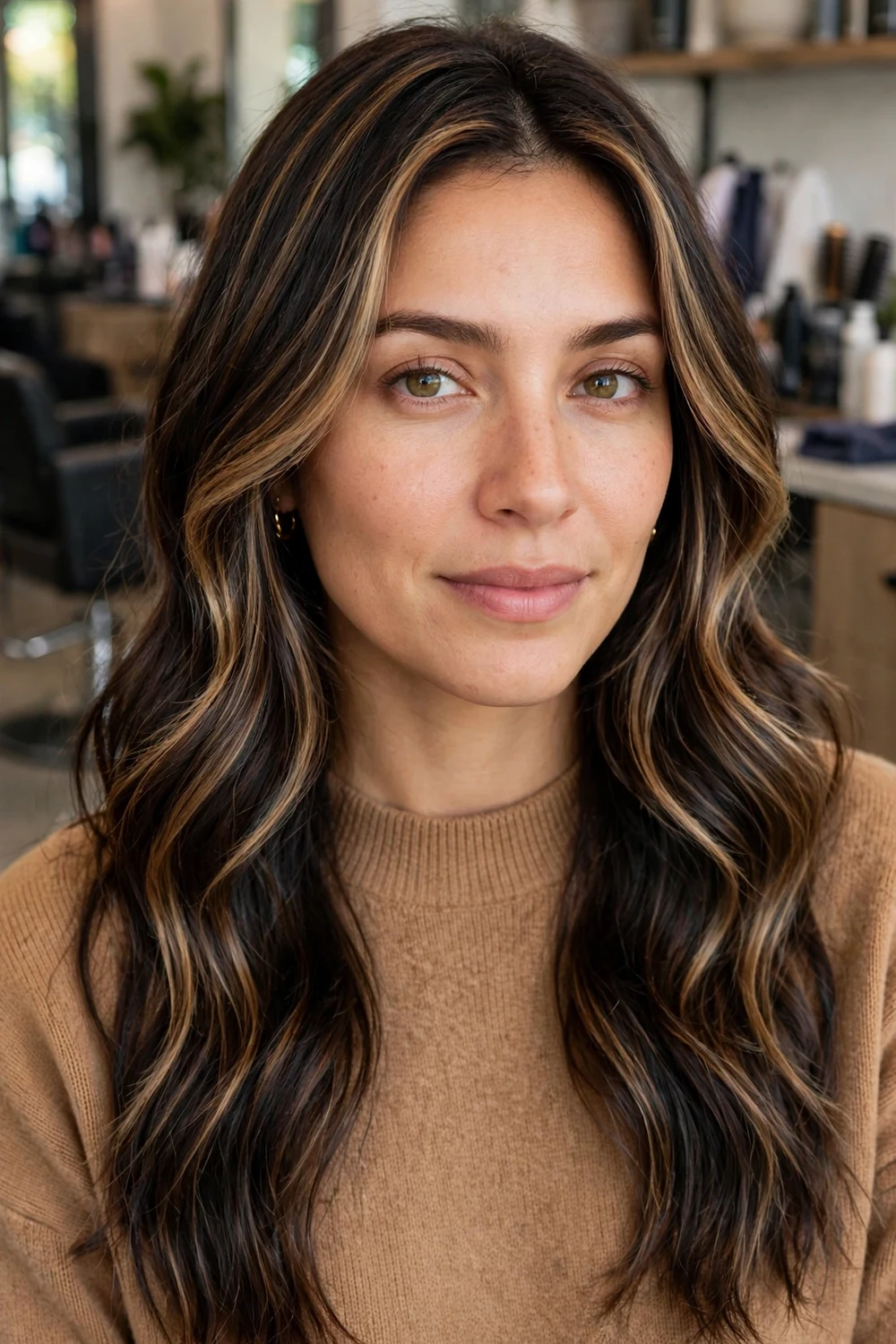
Partial balayage hand-paints lighter pieces through the top and front sections only, sweeping color from the mid-lengths toward the ends and leaving the roots and the back sections natural. The painted edges are soft, so there is no foil line at the root. The broader fall balayage hair colors roundup shows this painting style used across a full head, if you want to compare coverage.
Painted placement grows out without a hard line, and many wearers go ten to twelve weeks or longer between visits, with a toner in between if the tone warms up. It suits mid-length to long hair and wavy textures, which show the painted sweeps clearly. Very dark bases need a stronger lift in the painted pieces to reach the same brightness.
Try this: bring a photo that shows how high you want the painted pieces to start, since that starting height decides how soft the grow-out will be.
Difficulty: Medium · Cost: $$ (salon)
10. Partial Foilayage
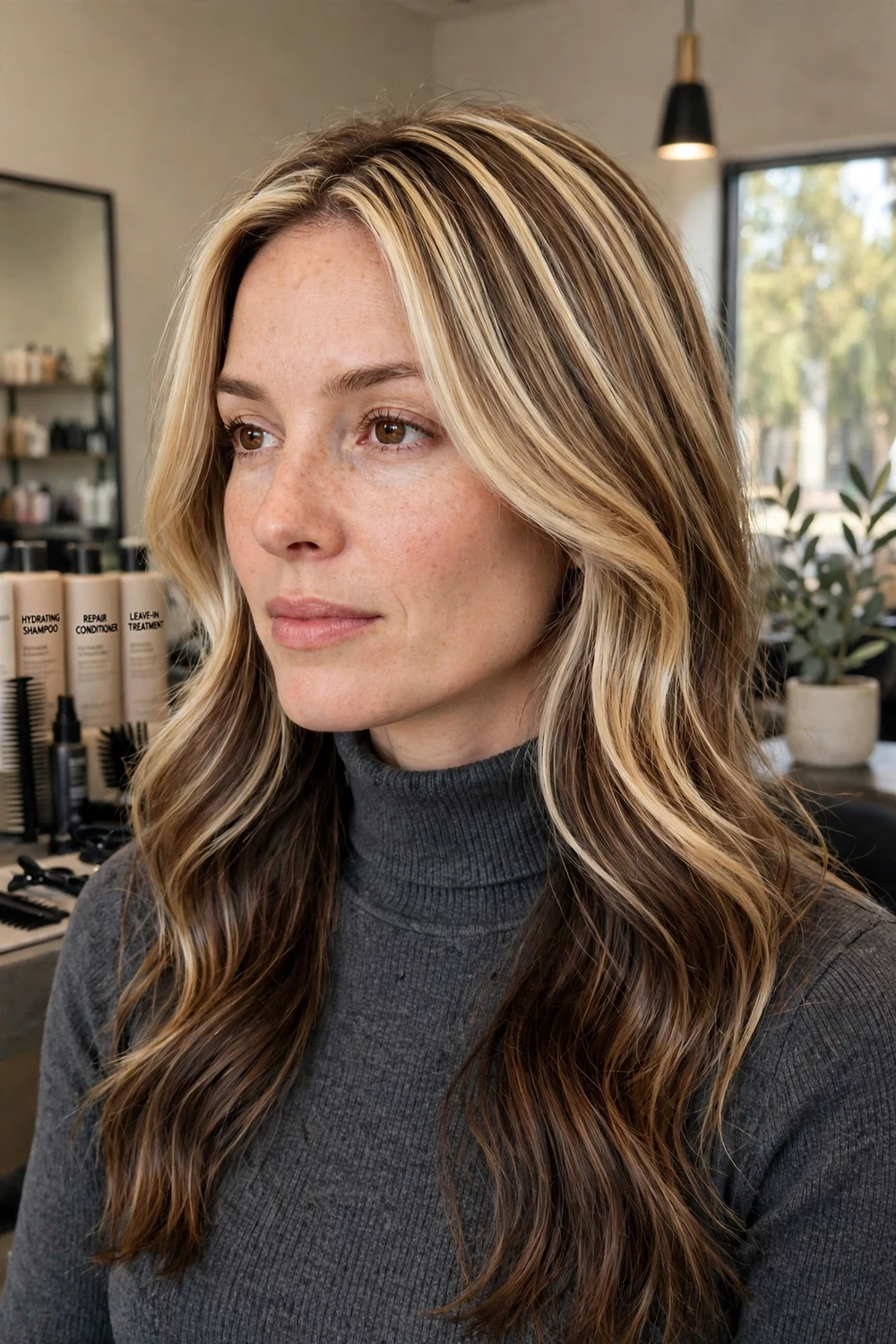
Foilayage paints color onto the top sections like balayage, then wraps each piece in foil so the lightener lifts further. In a partial service, those foils stay on the top and front, giving brighter, cleaner blonde pieces than open-air painting usually reaches, with a blended root kept from the painting step.
Choose this placement when partial balayage on your hair has come out too warm or too subtle in the past. It suits light brown and dark blonde bases aiming for clear blonde pieces. The brighter lift asks for toner care at home, and a refresh usually sits at eight to ten weeks.
Try this: ask for a root smudge over the foilayage pieces if you want the brighter lift without a visible line as the top grows out.
Difficulty: Medium · Cost: $$ (salon)
11. Mini Partial for Regrowth Touch-Ups

A mini partial is the smallest foil service on most salon menus: a handful of foils along the part, the hairline, and the very top of the crown. It exists to fix visible regrowth between larger highlight services, refreshing only the zone that gives the grow-out away.
This placement suits regular highlight wearers who want to stretch a classic partial or a full service by several more weeks. It does not add new brightness at the back or ends, so it works only when the rest of your color still looks right. Many clients alternate a mini with a classic partial through the year.
Try this: schedule the mini for when regrowth first bothers you in the mirror, usually the part line, rather than waiting for a full regrowth band.
Difficulty: Low · Cost: $ (salon)
12. Halo Highlights Around the Crown

Halo placement follows a ring around the upper head: across the crown, around the upper sides, and behind the ears at the top level, while the very top center and the lower layers stay closer to your base. The ring of lightness outlines the head shape and shows from every side view.
This placement suits bobs and mid-length cuts, where the outline of the cut is the whole look, and anyone who turns their head a lot on camera. On very long hair the ring can get lost in the lengths, so pair it with a few top pieces if your hair passes your shoulders.
Try this: ask your colorist to check the ring from a full side profile before toning, since halo pieces read differently from the side than from the front.
Difficulty: Medium · Cost: $$ (salon)
13. Side Panel Partial Highlights
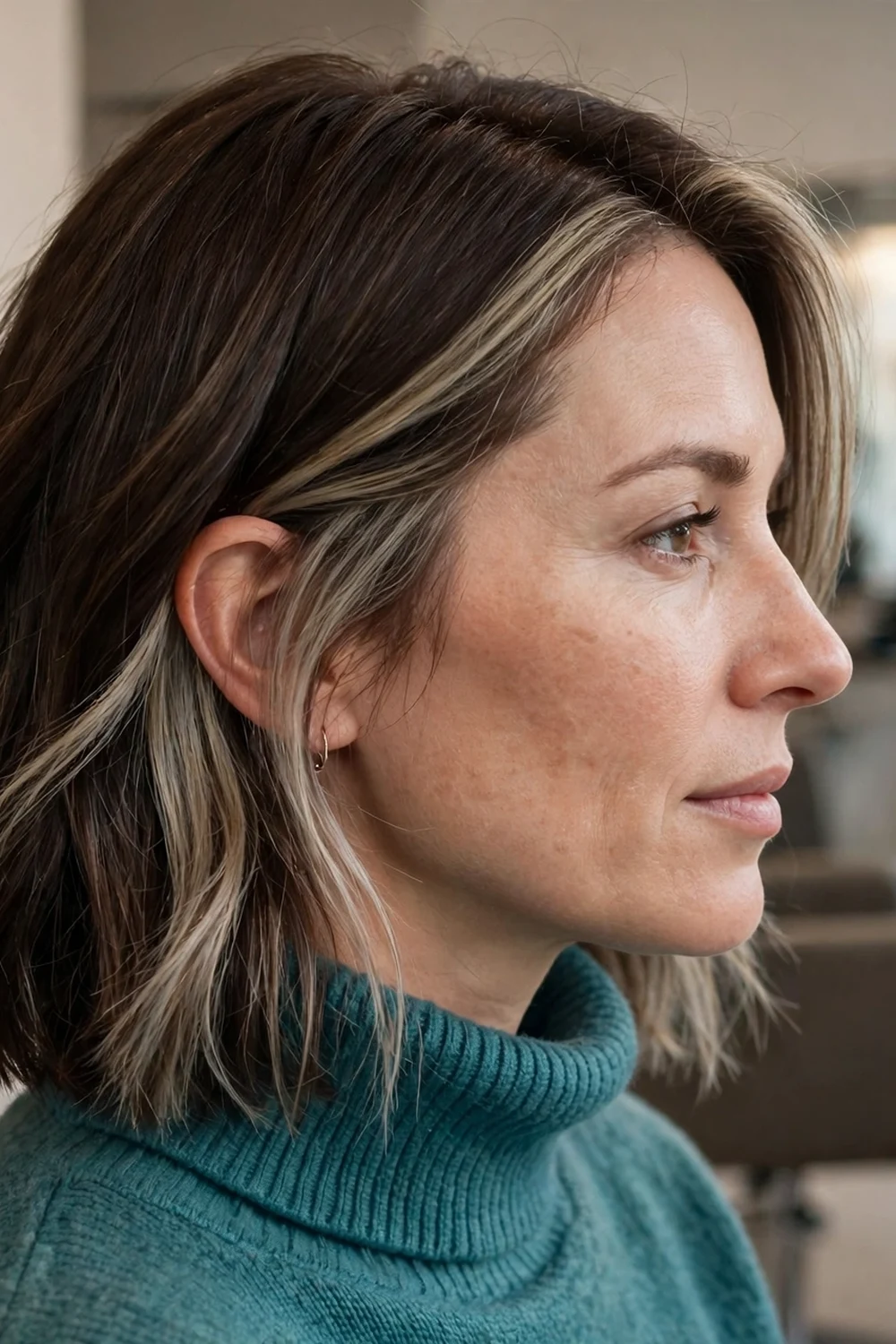
Side panel placement colors the sections above and in front of the ears on both sides, and leaves the top, crown, and back natural. Those side sections are what shows in profile, in a side part, and when hair is tucked behind the ears, so the change reads clearly without touching the top at all.
This placement is a good fix when your top color still looks fresh but the sides have gone dull or dark, a common pattern after a top-only service. It also suits side-part wearers, who can color the heavier side more strongly. Grow-out is easy to track because the colored zone is small and visible.
Try this: if you tuck your hair behind your ears daily, ask for the side pieces to start slightly higher, so the lighter color stays visible when tucked.
Difficulty: Low to Medium · Cost: $ (salon)
14. Curtain Fringe Partial Highlights
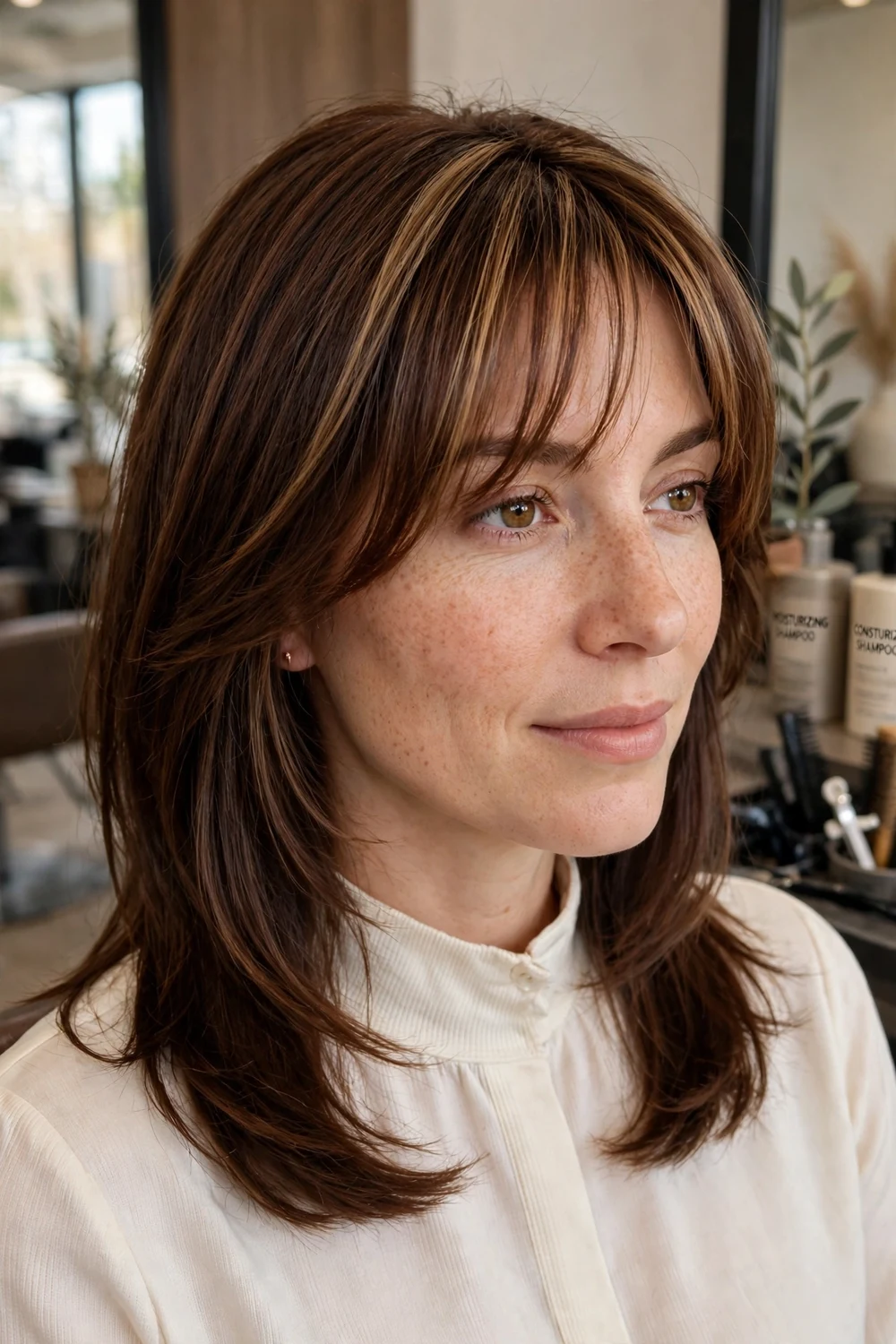
This service weaves highlights through a curtain fringe and the top front sections that connect to it, so the fringe itself carries the brightness and sweeps it into the sides. The back, crown back, and underneath stay your base color.
It suits curtain bangs and face-opening layers, where the fringe is the focal point of the cut. Because fringe grows fast and is trimmed often, this placement needs shorter refresh cycles than most partials, often tied to your fringe trim visits. Heat styling the fringe daily can fade the pieces faster, so a heat protectant matters here.
Try this: book the highlight refresh for the same visit as a fringe trim, so the brightest pieces are always cut to the right length.
Difficulty: Low to Medium · Cost: $ (salon)
15. Partial Babylights

Babylights are very fine, closely spaced weaves that mimic the fine lightness of child hair. In a partial service, those fine weaves are limited to the top, crown, and front, so the lift looks like an overall softening rather than clear stripes, while the underneath keeps your base.
Partial babylights suit fine hair, which can look stripy with standard weaves, and anyone who wants brightness that coworkers notice without being able to name. The fine sections take longer to weave than standard foils, so the appointment runs longer than a classic partial of the same coverage. Grow-out is among the softest of any foil placement.
Try this: ask for babylights only through the top if your hair is fine, since fine weaves underneath add cost without showing on fine hair.
Difficulty: Medium to High · Cost: $$ (salon)
16. Partial Highlights with Lowlights

This paired service weaves highlights and darker lowlights through the same top sections. The highlights add brightness, and the lowlights restore depth right next to them, which stops a top layer that has been highlighted many times from turning into one flat, solid blonde sheet.
It suits repeat highlight clients whose top has gone too light overall, and blondes adding depth back for the cooler months, such as the shades in the autumn hair colors guide. The lowlight shade fades faster than the highlights, so a gloss at the halfway point helps hold the contrast. Coverage stays partial, with the underneath untouched.
Try this: choose a lowlight only one to two shades deeper than your base, so the contrast stays soft and the grow-out line stays blurred.
Difficulty: Medium · Cost: $$ (salon)
17. Peekaboo Partial Highlights Underneath

Peekaboo placement reverses the usual partial: the foils go into the underneath layer, and the top layer stays your natural color. The hidden pieces flash when hair moves, when a breeze lifts it, or when you run your hands through it, and they hide again when the hair lies flat.
This is the partial to pick for trying a stronger shade, such as copper or red, with an easy exit, since the top still reads as your normal color at work. It suits straight to wavy hair long enough for the underneath to show in motion. Curly hair mixes the layers together, so the hidden effect is weaker and the pieces read as general dimension instead.
Try this: start with two or three underneath panels on one side, live with the flash of color for a month, then add more if you want it stronger.
Difficulty: Medium · Cost: $$ (salon)
18. Mid-Lengths and Ends Partial Ribbons
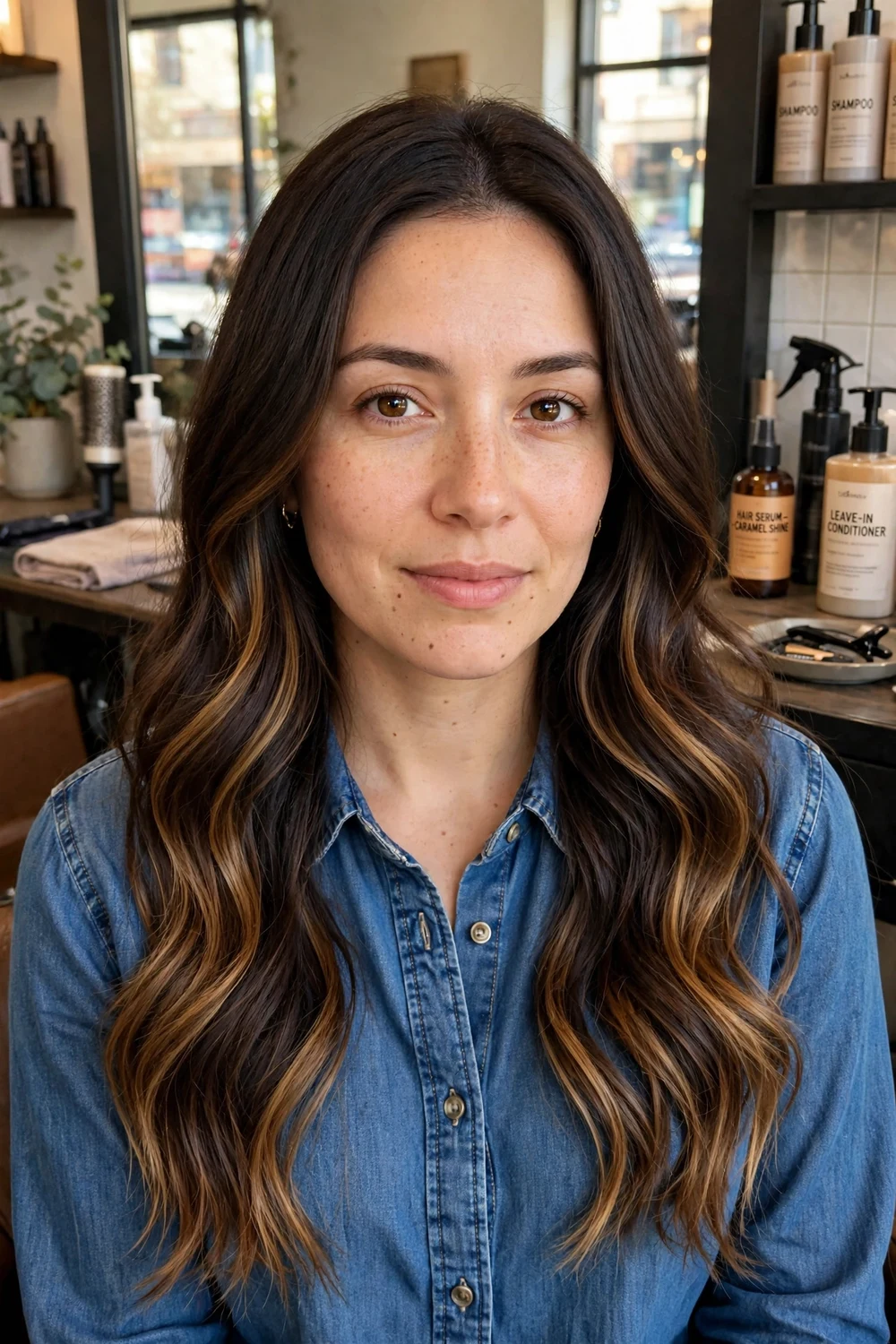
This placement skips the roots completely and weaves ribbon-like pieces from the mid-lengths to the ends, through the front and top lengths only. The root area and the underneath stay natural, so there is no regrowth line at all as the color ages.
It suits long hair that feels heavy and dark at the ends, and anyone growing out older color who wants the ends brightened without starting again at the root. Ends are the oldest and driest hair, so they grab toner quickly and need moisture care after lightening. A trim at the same visit keeps the lightened ends tidy.
Try this: ask for the ribbons to start at slightly different heights, so the ends look sun-lightened rather than dipped in color.
Difficulty: Low to Medium · Cost: $$ (salon)
19. Curl-by-Curl Partial Highlights
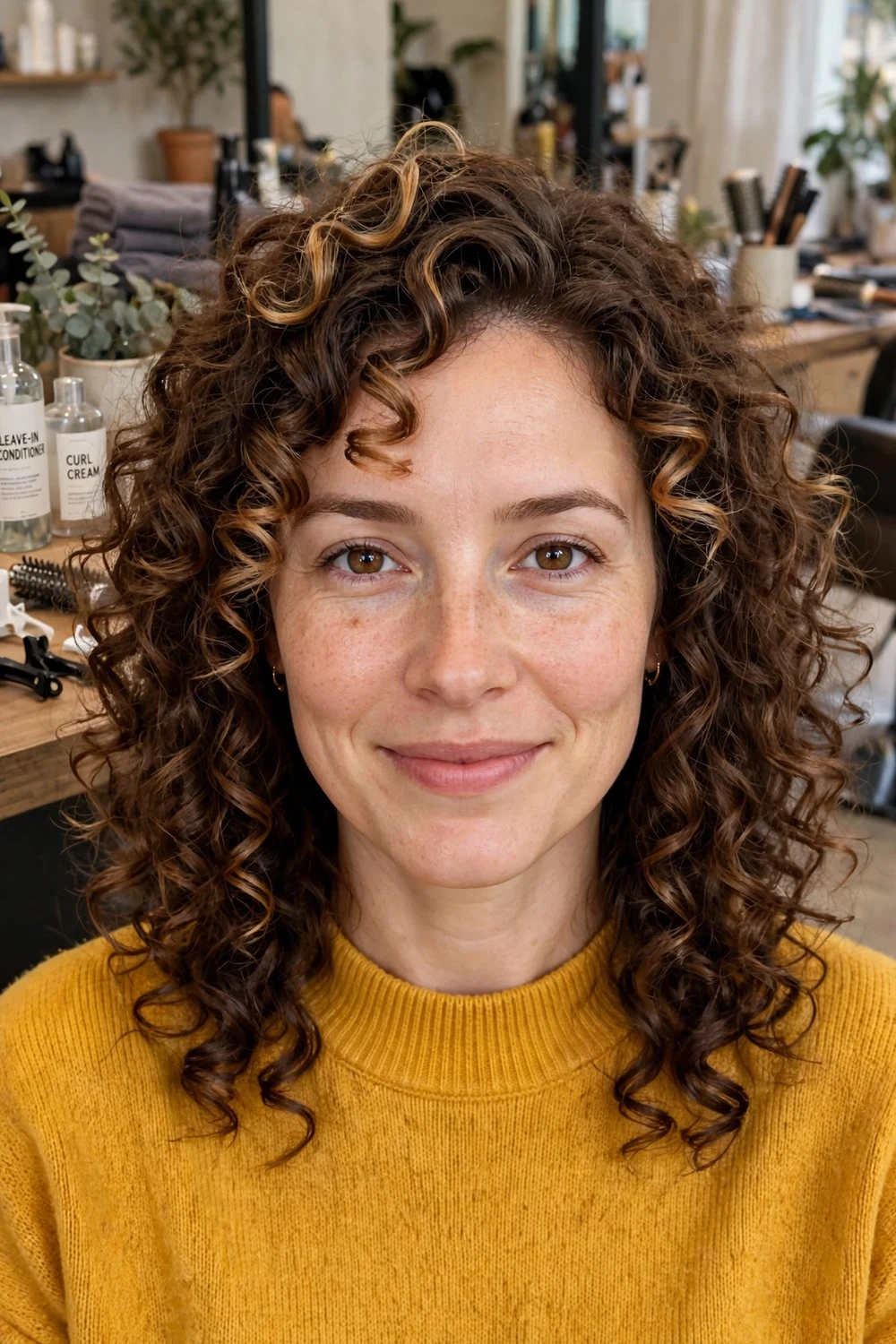
Curl-by-curl placement, often booked under pintura-style painting, colors selected individual curls on the top and front of the head, working with the curl pattern as it falls dry. Each chosen curl gets light where it naturally catches light, and the curls underneath keep the base color and depth.
This is the partial built for curly and coily hair, where standard foils can stretch curls flat and place color where the curl never actually sits. It suits curls worn in their natural pattern most days. Because curls hide regrowth, refreshes can stretch further than on straight hair, and a toner refresh often does the job between painting visits.
Try this: arrive with your hair styled in its usual curl pattern and product routine, so your colorist paints the curls as you actually wear them.
Difficulty: Medium · Cost: $$ (salon)
20. Partial Highlights on a Bob
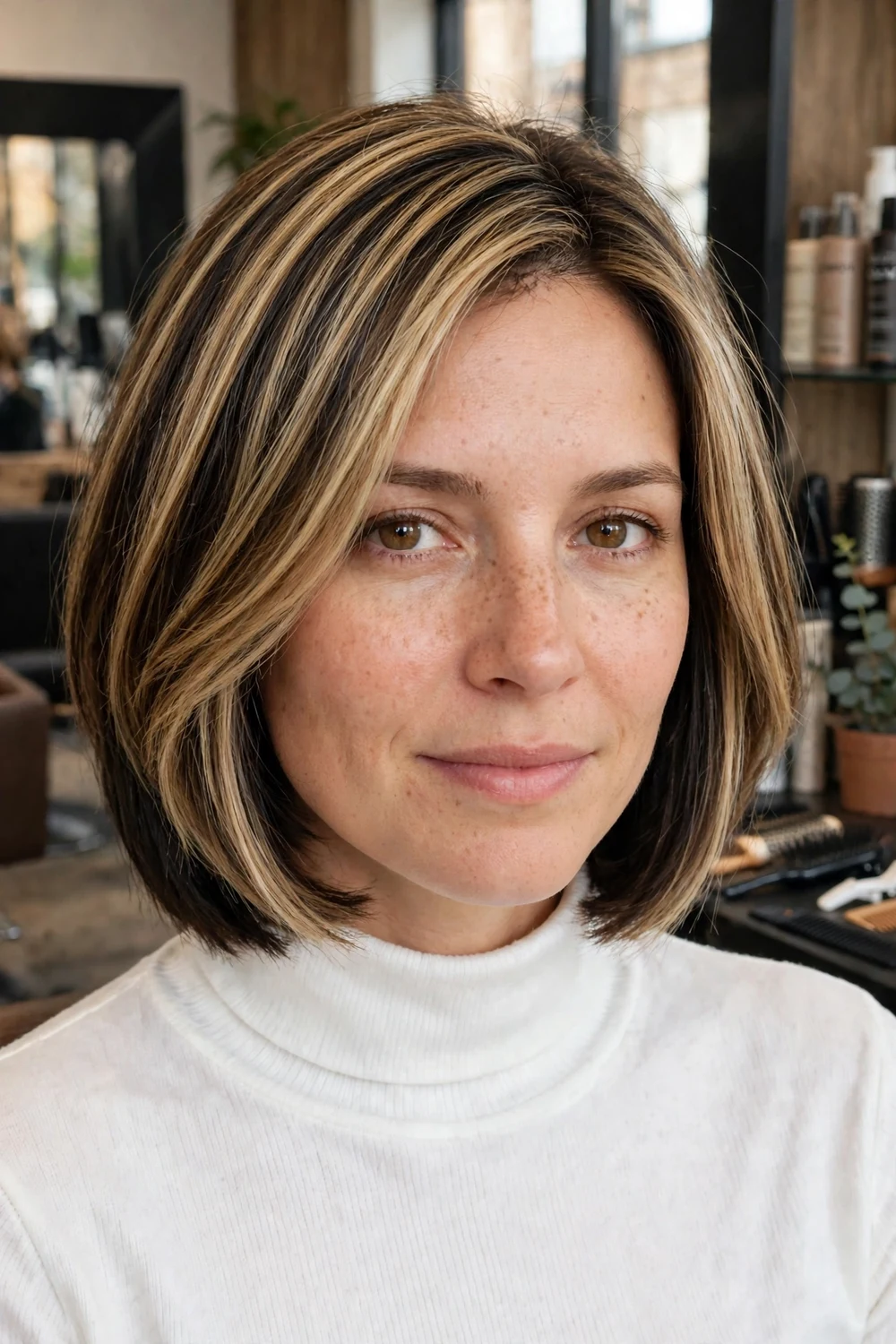
On a bob, a partial usually means foils through the crown, the top, and the front edges of the cut, with the short nape left natural. The lighter top shows the shape and swing of the bob, and the darker nape gives the outline a clean shadow to sit against.
Short hair shows placement more clearly than long hair, so weave size matters: fine weaves read polished, wider ribbons read bolder. Regrowth also shows sooner on a bob because the hair is short, and many bob wearers refresh the partial at six to eight weeks alongside their cut. The service itself is fast, since there is simply less hair to foil.
Try this: time the partial for the same appointment as your bob trim, so the front pieces are foiled to match the final edge of the cut.
Difficulty: Low to Medium · Cost: $ (salon)
21. Gray-Blending Partial Highlights

Gray-blending partials place fine highlights along the part, the hairline, and the crown, the exact zones where gray usually shows first and most. The added pieces sit next to the gray strands and break up the hard line between colored hair and new gray growth.
This placement suits anyone moving away from solid root color who wants a softer grow-out without going fully gray. The blend works best when gray is still scattered rather than complete at the front. Refreshes follow the part and hairline alone, and many wearers stretch visits to eight weeks or more because the new growth blends into the pattern.
Try this: ask for blending rather than full coverage at the consultation, since the foil pattern and formula differ from a standard root retouch.
Difficulty: Low to Medium · Cost: $$ (salon)
22. Bold Panel Partial Highlights

Bold panel placement uses a small number of wide, high-contrast ribbons across the top and front instead of many fine weaves. Coverage stays partial, but the visual effect is strong, because each panel is wide enough to read as a deliberate stripe of light against the base.
This placement suits confident color wearers, thick hair that swallows fine weaves, and anyone who found standard highlights too subtle to notice. Panels grow out as clear blocks, so the refresh rebuilds the pattern rather than blending it away, and most wearers return at six to eight weeks. Toner choice matters, since wide panels show warmth quickly.
Try this: start with panels on the top only and keep the front panels narrower, so the bold effect stays wearable around your face.
Difficulty: Medium · Cost: $$ (salon)
23. Root-Smudge Partial Highlights
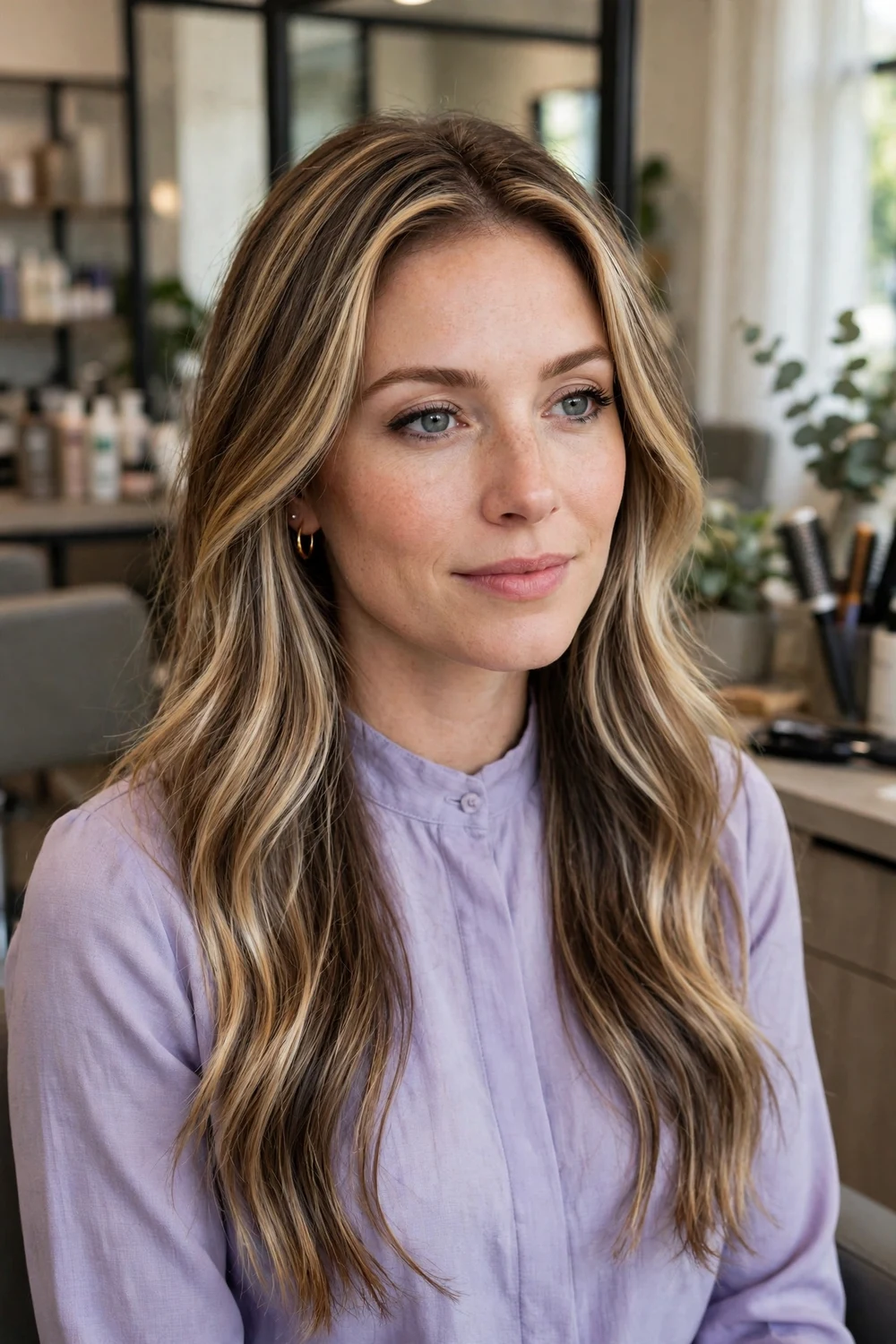
A root-smudge partial pairs standard top and crown foils with a smudge of color close to your natural shade, applied at the roots after the foils come out. The smudge blurs the foil lines at the root, so the fresh highlights look grown-in from day one rather than freshly striped.
This is the partial for anyone who hates the first two weeks after a highlight appointment, when foil lines sit closest to the root. It suits busy schedules, since the blurred root stretches the time before regrowth bothers you. The smudge shade sits only at the root, so it fades gradually and does not darken the bright lengths.
Try this: if your roots grow fast, ask for the smudge one shade deeper than your natural color, which buys extra weeks before the line shows.
Difficulty: Medium · Cost: $$ (salon)
24. Side-Part Partial Highlights
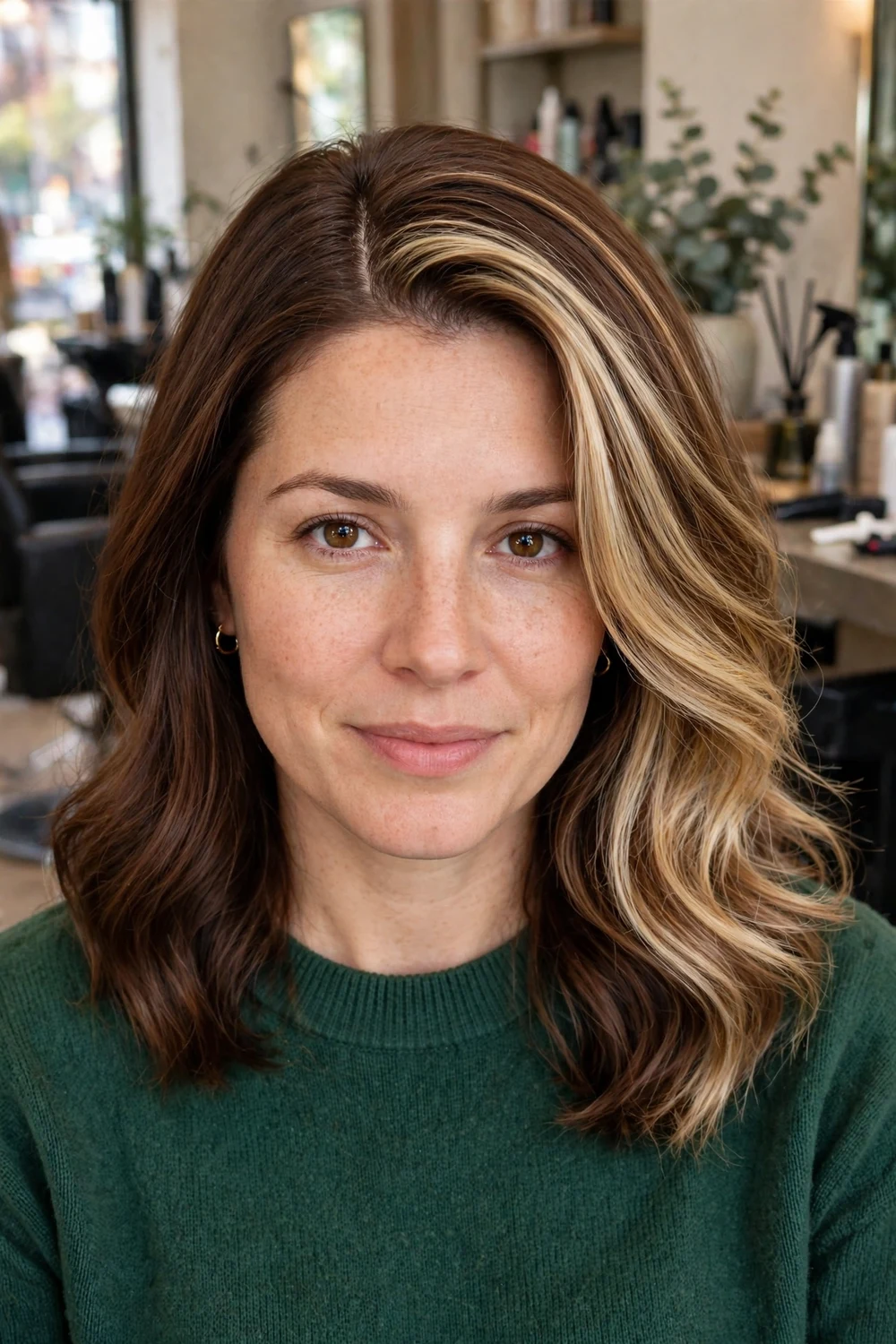
Side-part placement is mapped to one fixed side part. Foils concentrate along that part line and through the heavier side of the hair, where most of the visible top surface sits, while the lighter side and the underneath get few or no foils.
This placement saves time and cost for committed side-part wearers, because no product is spent on hair that stays hidden under the heavy side. The trade-off is commitment: flip your part to the other side and the uncolored hair underneath becomes the top layer. If you change parts with your mood, choose a center-based placement such as the mohawk section instead.
Try this: tell your colorist if your side part ever moves for formal styles, so a few guard foils can be added on the other side.
Difficulty: Low · Cost: $ (salon)
25. Quarter-Head Highlights

A quarter-head is the smallest standard coverage tier: foils through roughly the front quarter of the head, covering the hairline, the front top, and a short way back along the part. Salons list it below a half head, and it is a true service size rather than a touch-up of older color.
Choose a quarter-head when you are new to highlights and want a real but limited first step, or when only your front has dulled while a previous color still holds at the back. It suits hair worn down and forward. If you later want more, the same foils extend cleanly into a classic partial at the next visit.
Try this: use the quarter-head as your trial size. If you like the front brightness after a month, extend to a classic partial rather than jumping to a full head.
Difficulty: Low · Cost: $ (salon)
26. Hairline Perimeter Partial for Updos
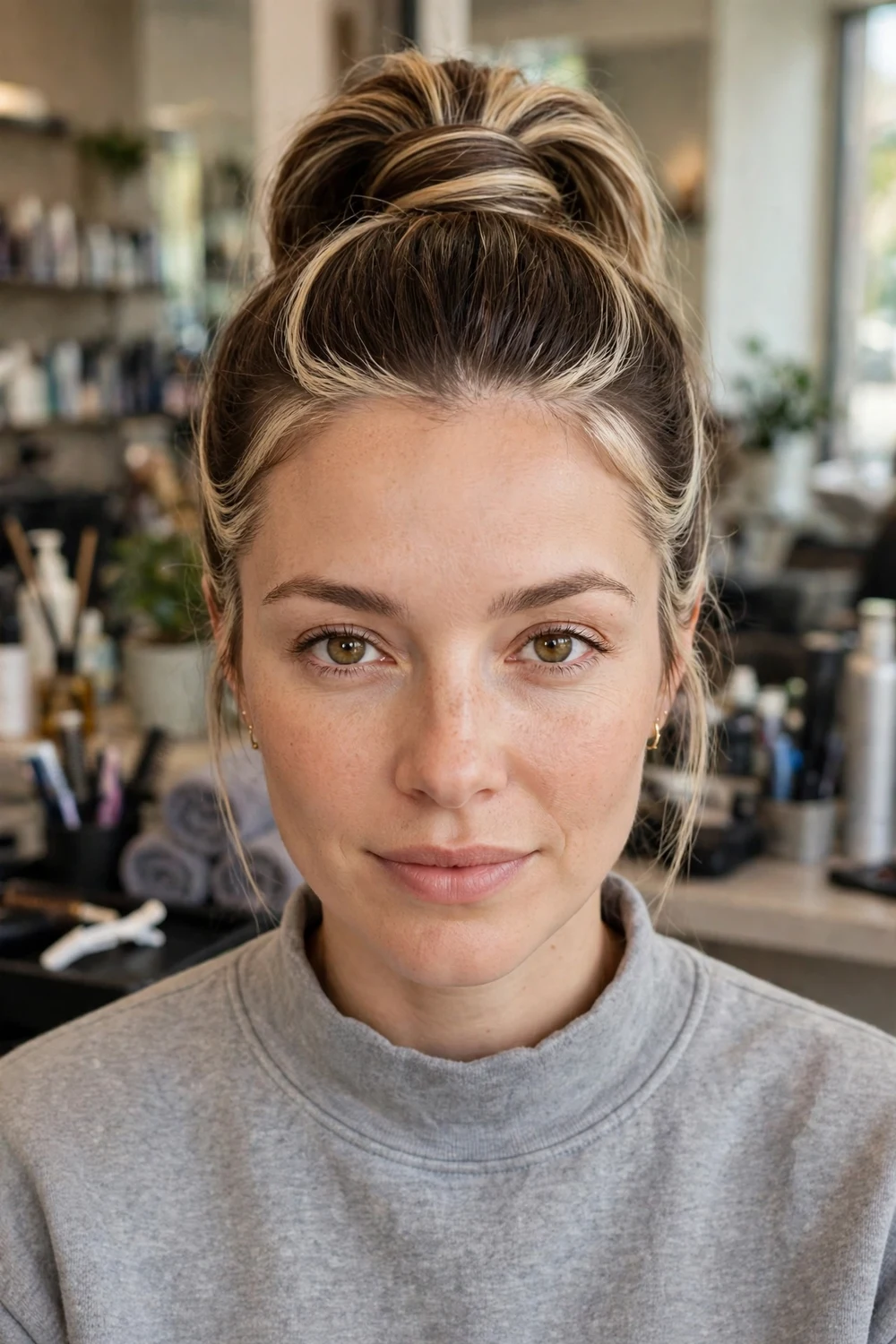
Most partials disappear in an updo, because the colored top layer gets pulled back and the natural underneath shows. Perimeter placement fixes that by foiling the full hairline edge: front, temples, sides, and nape edge. In a ponytail or bun, that lightened outline is exactly what frames the style.
This placement suits dancers, athletes, medical staff, and anyone who wears hair up for work most days. Worn down, the effect is subtle, since the interior and top may carry little or no color. Pair it with a small top partial if you split your time evenly between up and down styles.
Try this: wear your usual updo to the consultation, so your colorist can mark which edges of the hairline your style actually exposes.
Difficulty: Low to Medium · Cost: $ (salon)
Frequently Asked Questions
What are partial hair highlights?
Partial hair highlights are foils or painted pieces placed in selected sections of the hair only, most often the top layer, crown, part, and front. The underneath and nape keep your natural or existing base color. The result is brightness and dimension where hair is seen most, with a shorter appointment and lower cost band than a full head of highlights.
How is a partial different from a half head of highlights?
A half head is one size of partial service. It covers the whole top half of the head, front to back. A classic partial is smaller and concentrates on the top, crown, and front sides, while a quarter head and a T-section are smaller still. When you book, name the coverage you want, since salons draw these boundaries slightly differently.
How often do partial highlights need a refresh?
Most partial placements are refreshed at eight to twelve weeks, because the untouched underneath softens the look of regrowth. Smaller services follow the zone they cover: part-line and fringe partials often need attention at six to eight weeks, while painted and root-smudged partials can often stretch longer. A gloss or toner between visits keeps the tone clean without new foils.
Will partial highlights show when I wear my hair up?
Usually only a little. Most partials leave the underneath and nape natural, and those are the sections an updo exposes. If you wear your hair up most days, ask for hairline perimeter placement, which foils the front, sides, and nape edge, or step up to a full service so the color runs through every layer.
Can partial highlights blend gray hair?
Yes, when the gray is still scattered. Fine highlights placed along the part, hairline, and crown break up the line between colored hair and new gray growth, so regrowth reads as part of the pattern. This blending approach does not give the solid coverage of a root retouch, and it works best on the zones where your gray shows first.
Final Thoughts
Pick a partial by coverage first and shade second: decide how much of your head should carry the color, from a T-section along the part to a half head across the top, and the rest of the appointment gets simpler. A partial also leaves you a clean next step, since any of these placements can expand toward fuller coverage later or hold at the same size for years of easy refreshes. When the season turns and you want the placement in deeper tones, the winter hair color ideas roundup shows which shades carry the same top-layer brightness through the colder months.

