

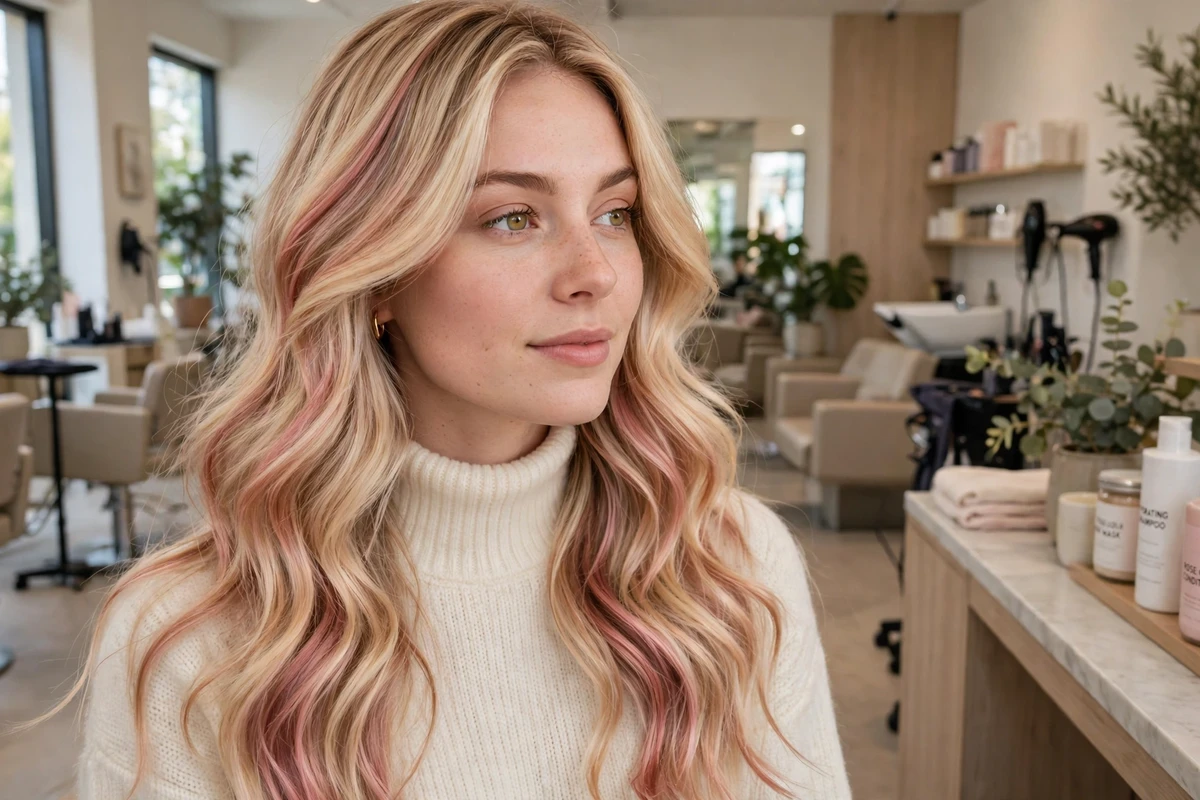
Pink works best as an accent. A full head of pink asks for a light base, fast fade management, and a salon schedule to match. Pink placed as highlights, ribbons, or face-framing pieces gives you the same color family with far less commitment: your blonde or brunette base stays in charge, and the pink shows up only where you and your colorist place it.
This list collects 27 pink hair highlight ideas and runs them in order: the soft pinks first, then the mid-tone and deep pinks, then the bold placements, and finally the short cuts, curly hair, and low-commitment routes. Every idea notes the undertone, who it suits, the technique behind it, and how fast the pink will fade. If you are still weighing pink against the wider seasonal palette, the general fall hair colors guide shows how pink sits next to the reds, coppers, and blondes.
Quick Takeaways
- Pink as a highlight keeps your base color in charge. Blonde and brunette both carry pink pieces well, and you choose how much pink shows.
- Pastel pink needs a pre-lightened base and fades the fastest, often within two to four weeks. Deeper pinks, magenta and raspberry, hold longer.
- Hidden and low placements, peekaboo panels, pink tips, and melted ends, can be covered, grown out, or trimmed away.
- A pink gloss over existing blonde highlights is the shortest route in: one appointment, no new lightening, and the color fades out on its own.
- Cool water, fewer washes, and a pink color-depositing conditioner stretch every shade on this list.
How to Pick Your Pink Highlight Shade and Placement
Start with your base and your undertone. Blonde hair takes the full pink range in one session, from pastel babylights to bubblegum pieces, because the lightening step is already done. Brunette hair splits two ways: deep pinks such as magenta, raspberry, and mauve can sit over a brown base with modest lift, while pastel and blush shades need the highlighted pieces lifted pale first. Warm skin carries rose gold, coral, and strawberry pinks with ease. Cool skin suits mauve, raspberry, and blue-leaning magentas. The autumn hair colors roundup shows how these pinks compare with the season’s warmer families if you are torn between the two.
Then pick placement by how visible you want the pink to be at work and at rest. A money piece and face-framing contour pieces show all the time. Peekaboo panels hide under the top layer until the hair moves or goes up. Pink tips and melted ends sit at the bottom of the hair, where a trim can remove them. Fade is the last factor: every pink fades, pastel fastest of all, so choose a shade whose faded version you will still enjoy, since you will live with that softer tone for most of the wear.
| Pink family | Undertone | Best starting base | Upkeep |
|---|---|---|---|
| Soft pinks (pastel, blush, rose gold) | Warm to neutral pink | Blonde, or pre-lightened pieces on brunette | High |
| Mid pinks (dusty rose, strawberry, mauve) | Muted rose | Light brown to dark blonde | Medium |
| Deep pinks (magenta, raspberry, fuchsia) | Cool berry pink | Medium brown to dark brown, with lift on the pieces | Medium |
| Bold placements (chunky, streaks, color block) | Saturated hot pink | Any base, pieces lightened first | Medium to high |
| Low-commitment pink (gloss, tips, peekaboo) | Varies by shade | Any base | Low |
1. Rose Gold Highlights on Ash Brown Hair
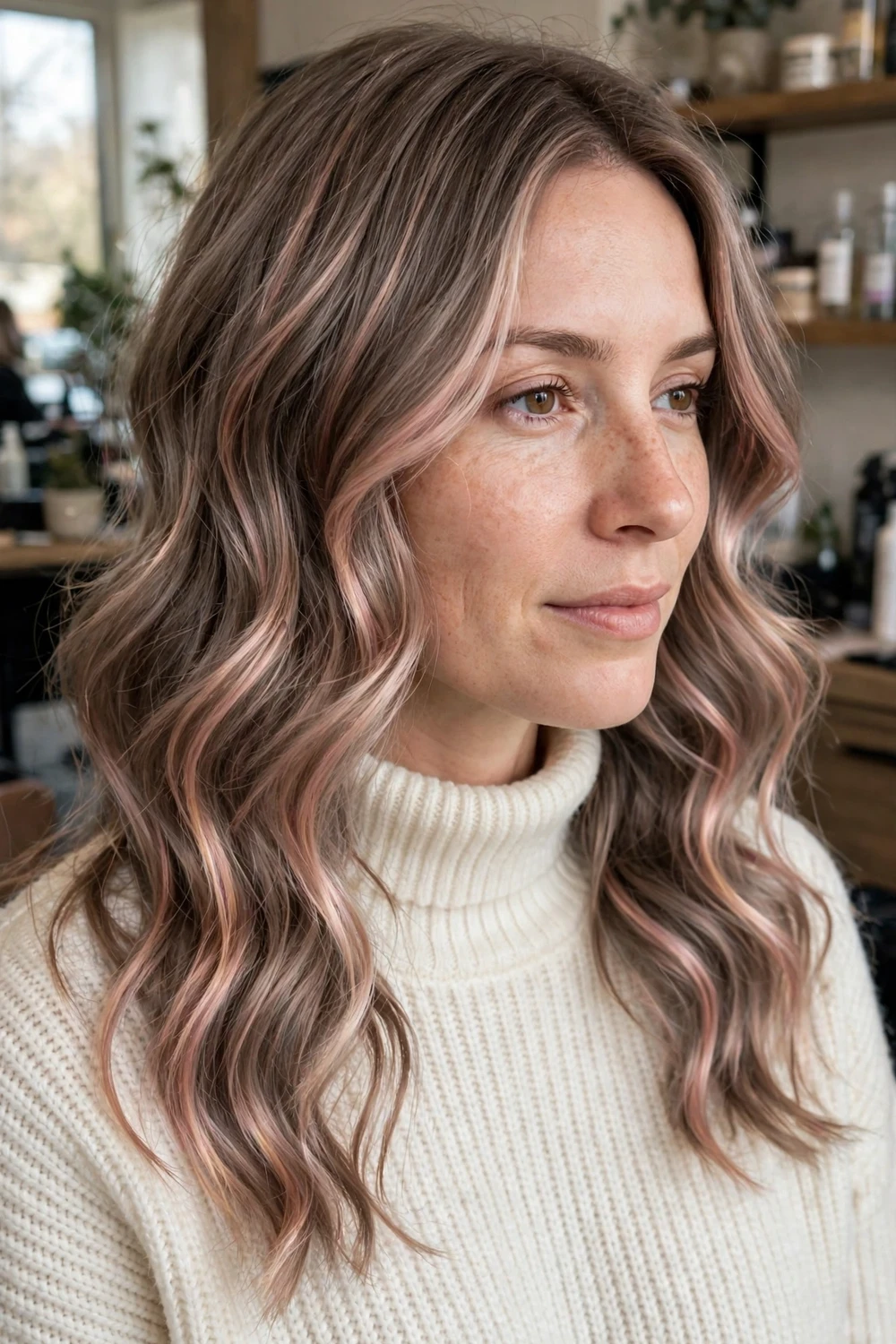
Rose gold highlights thread a warm pink-gold tone through an ash brown base. The pink is diluted with gold, so the result reads as a soft shimmer on the brown rather than a flat pink stripe. The cool ash base keeps the rose gold from going orange, and the pairing suits neutral and warm skin.
The highlighted pieces are lifted one to two levels, then toned with the rose gold shade. Because the contrast stays low, grow-out is forgiving and the toner refresh lands at six to eight weeks. Rose gold fades toward a warm blonde, which blends back into the ash brown without a harsh stage.
Try this: ask for the rose gold kept fine and woven, with a few slightly wider pieces around the face where light catches first.
Difficulty: Medium · Cost: $$ (salon)
2. Rose Gold Balayage on Brunette Hair
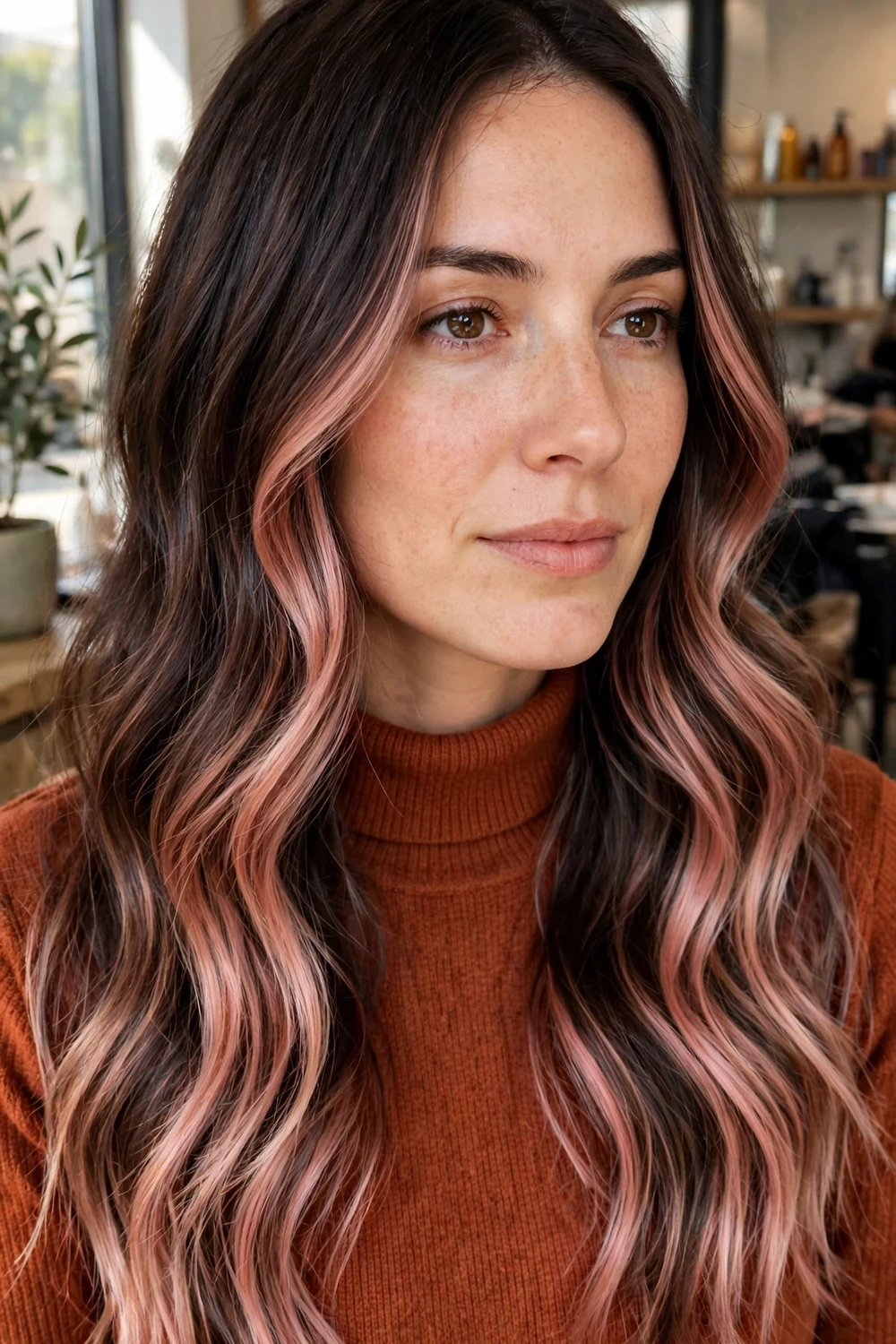
Rose gold balayage hand-paints the pink-gold tone through the mid-lengths and ends of a brunette base, leaving the roots natural. The painted placement keeps the pink low on the head, so the face stays framed by your own brown while the lengths carry the color. Medium and warm skin get the most from the golden reflect.
Balayage pieces on dark hair need lifting before the rose gold will show, and the ends carry the lightest result. The soft blend grows out with no hard line, so most wearers refresh the toner at eight to ten weeks. Between visits, a rose-toned gloss at home holds the pink against fade.
Try this: ask for the balayage to start at cheek level or lower if your roots grow fast, so the blend buys you extra weeks.
Difficulty: Medium · Cost: $$$ (salon)
3. Pastel Pink Balayage on Blonde Hair
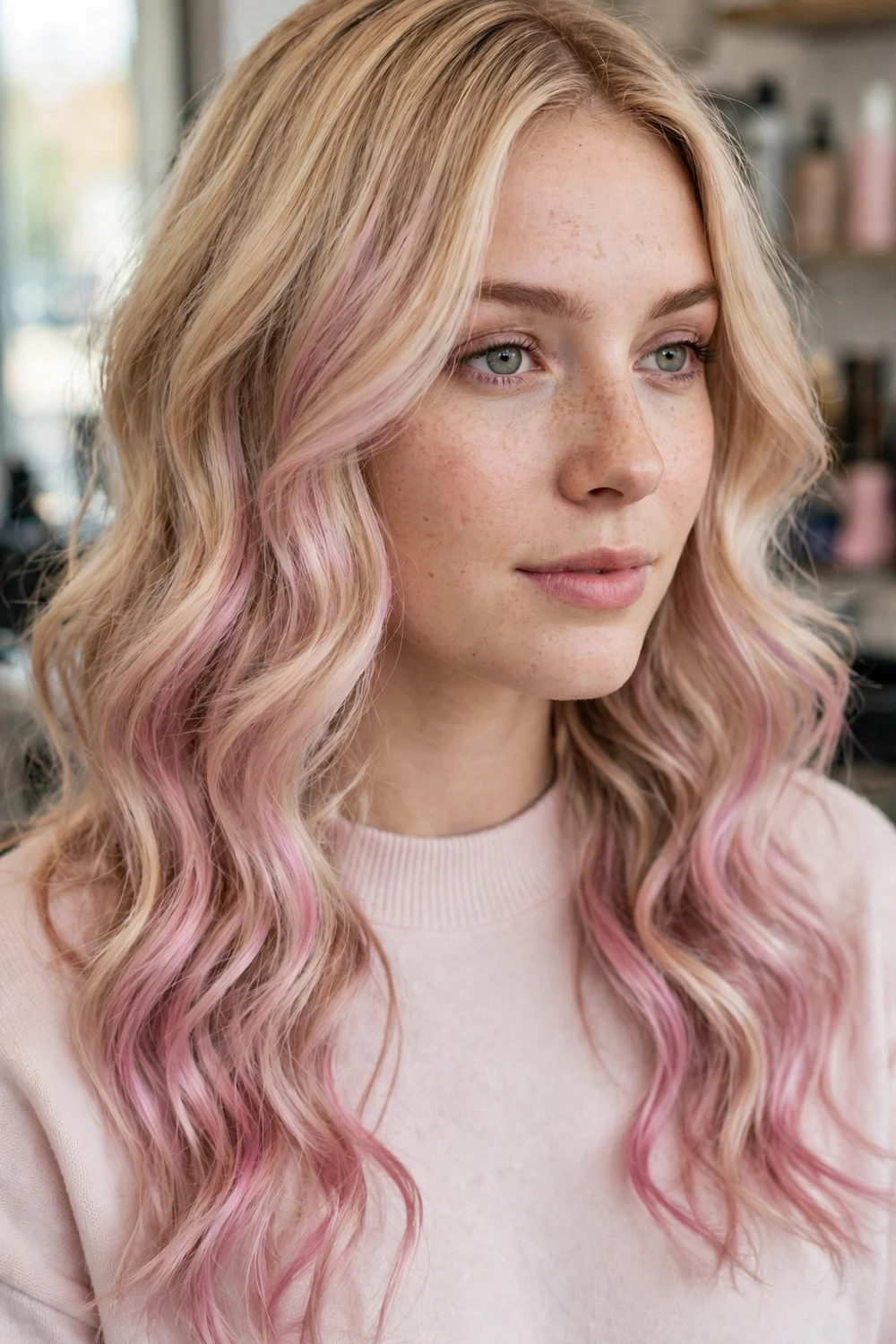
Pastel pink balayage melts a pale, powdery pink through a blonde base, with the color concentrated from the mid-lengths down. The undertone is a cool, soft pink with no orange in it. Fair and cool skin carry this shade best, since pastel washes out warmer complexions at close range.
Pastel is the most demanding pink on this list. It only shows true on a pre-lightened, near-white base, so dark blonde hair goes through a full lift on the painted pieces first. It also fades the fastest of any pink here, often within two to four weeks, settling back toward blonde. Plan on a pink color-depositing conditioner from the first wash.
Try this: book this shade right before a stretch of events or photos, while the pastel is at its palest and cleanest.
Difficulty: High · Cost: $$$ (salon)
4. Blush Pink Ribbons Through Blonde Hair

Blush ribbons are slim, vertical pieces of soft pink woven through a blonde base so the color appears and disappears as the hair moves. The shade sits between pastel and rose: pink enough to read at a glance, soft enough to wear in most settings. It suits fair to medium skin with warm or neutral undertones.
On an already blonde base the ribbons need no fresh lightening in most cases; the colorist isolates the pieces and deposits the blush tone directly. Blush fades faster than deeper pinks, so expect the ribbons to soften noticeably by week three and need a gloss refresh at four to five weeks.
Try this: keep the ribbons slim and numerous rather than wide. Fine ribbons read as dimension, while wide ones read as stripes.
Difficulty: Medium · Cost: $$ (salon)
5. Pastel Pink Babylights on a Brown Base
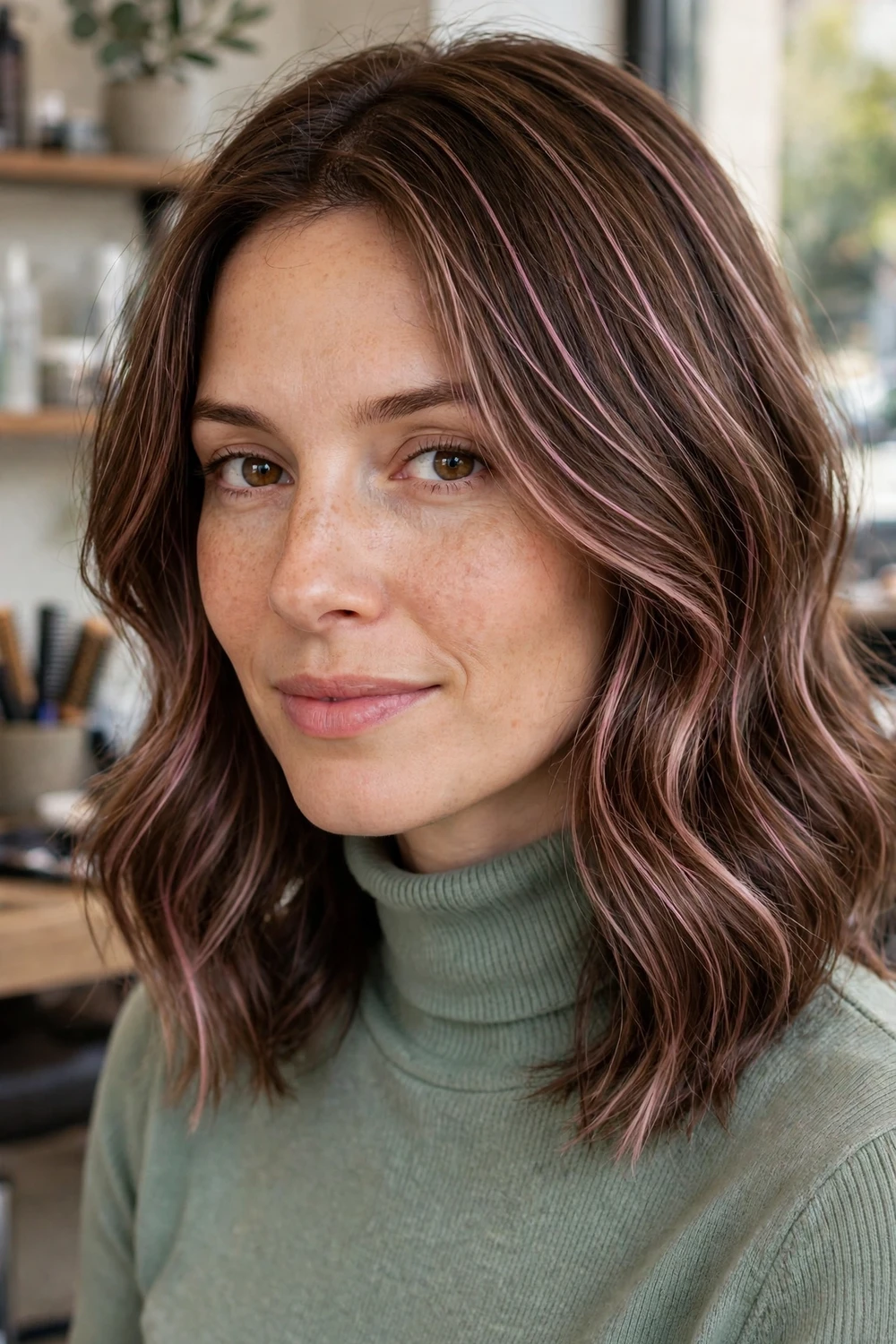
Babylights are the finest weave a colorist foils, and tinting them pastel pink gives brown hair a faint blush cast rather than visible stripes. This is the softest way to wear pink on a brunette base, and the usual first step for anyone unsure about fashion color. It suits fair to medium skin.
The fine pieces still need a pre-lightened base before pastel pink will show, and lifting many small sections is slow, detailed work. Pastel fades quickly, often within a few weeks, and the faded stage reads as a warm tint on brown, which most wearers find easy to live with until the next gloss.
Try this: ask for babylights through the top and front only. A partial set gives the same blush effect for less chair time.
Difficulty: High · Cost: $$$ (salon)
6. Soft Pink Money Piece on Blonde Hair

A money piece colors only the two front sections at the hairline. In soft pink on a blonde base, those two panels frame the face and change the whole read of the haircut while the rest of the head stays blonde. Baby pink and blush shades suit fair skin, and the placement works on long hair, bobs, and layered cuts alike.
Because the panels sit on an already light base, most blondes need no new lightening, just the pink deposit. The front pieces are washed and styled the most, so they fade ahead of the rest of the head and take a mini gloss at three to four weeks to stay pink.
Try this: start with a blush or baby pink panel. If you want more impact later, the same two sections can go deeper at the next visit.
Difficulty: Medium · Cost: $$ (salon)
7. Magenta Money Piece on Brunette Hair

The brunette version of the money piece swaps soft pink for magenta, a deep blue-leaning pink that holds its own against a dark base. Two saturated panels at the front give maximum impact while coloring the smallest share of the head. Cool and neutral skin suit magenta best, and deep skin carries the contrast well.
Dark front sections need lift before magenta will read as pink rather than muddy red, so expect lightening on those two panels only. Magenta holds longer than pastel shades, and when it fades it moves through a berry tone that still sits well on brunette.
Try this: keep the panels about an inch wide on each side. Wider panels on dark hair can overpower the face frame effect.
Difficulty: Medium to High · Cost: $$ (salon)
8. Dusty Rose Highlights Through Brunette Waves

Dusty rose is a muted pink with a gray-brown cast, and woven through brunette waves it reads as a soft sheen instead of a fashion color. The muted tone is the point: this is pink for anyone who wants the color family without brightness. It flatters neutral and cool skin, and waves show the dusty pieces at their best as each curve catches light.
The highlighted sections are lifted, then toned down with the dusty formula, which often includes a touch of ash to keep the pink muted. Dusty rose fades toward a rosy brown, a gentle stage that blends with the base and stretches the time between salon visits to seven or eight weeks.
Try this: ask your colorist to keep the dust level high if your workplace is conservative. The gray cast is what keeps this pink understated.
Difficulty: Medium · Cost: $$ (salon)
9. Strawberry Pink Highlights on Light Brown Hair
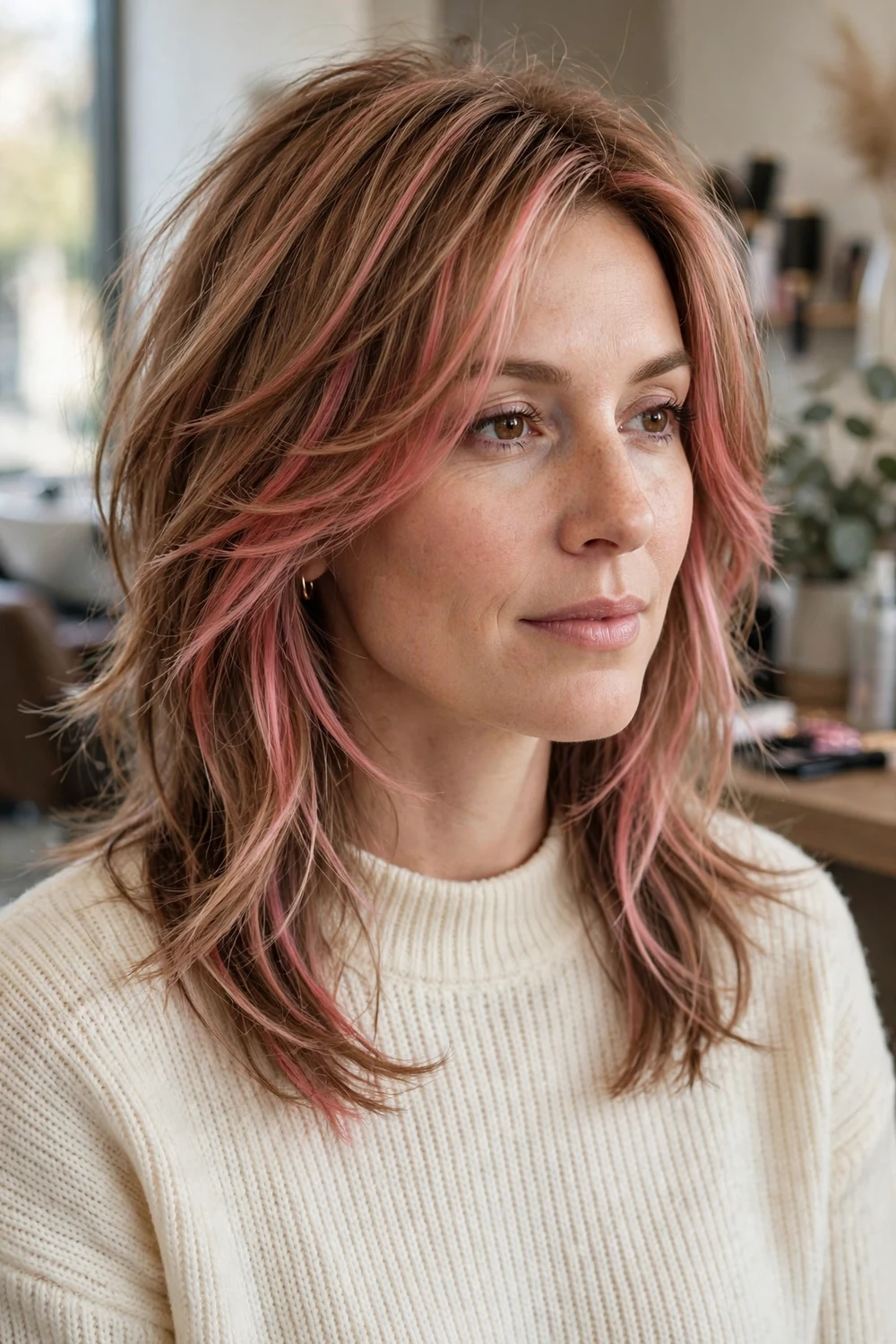
Strawberry pink blends pink with a touch of red and gold, and on a light brown base it lands close to strawberry blonde territory while keeping the brown in charge. The warm undertone suits fair to medium warm skin, and layered cuts show the strawberry pieces clearly as the layers separate.
Light brown bases usually reach this shade with a modest lift on the highlighted pieces, or with a gloss over existing lighter pieces. The red content fades ahead of the gold, so the color drifts warmer and softer over the weeks. A strawberry-toned gloss at five weeks restores the pink balance.
Try this: place the brightest strawberry pieces on the top layers and around the face, with softer pieces underneath for depth.
Difficulty: Medium · Cost: $$ (salon)
10. Mauve Pink Highlights on Brown Hair

Mauve pink mixes pink with violet and brown, which makes it the lowest-contrast pink a brunette can wear. The highlights sit close to the base in value, so the effect is a cool rosy shift in the light rather than visible pink sections. Cool and neutral skin suit mauve best, since the violet content leans blue.
Because the target shade is deep and muted, the pieces need only a gentle lift before the mauve tone goes on. Fade is kind here: mauve drifts toward a cool brown that stays close to the base, so this is one of the easier pinks to grow out or to let fade between appointments.
Try this: choose mauve if you want pink that reads as a tone, not a color. It is the standard pick for a first pink in a formal workplace.
Difficulty: Medium · Cost: $$ (salon)
11. Hot Pink Ribbons Through Long Brown Hair
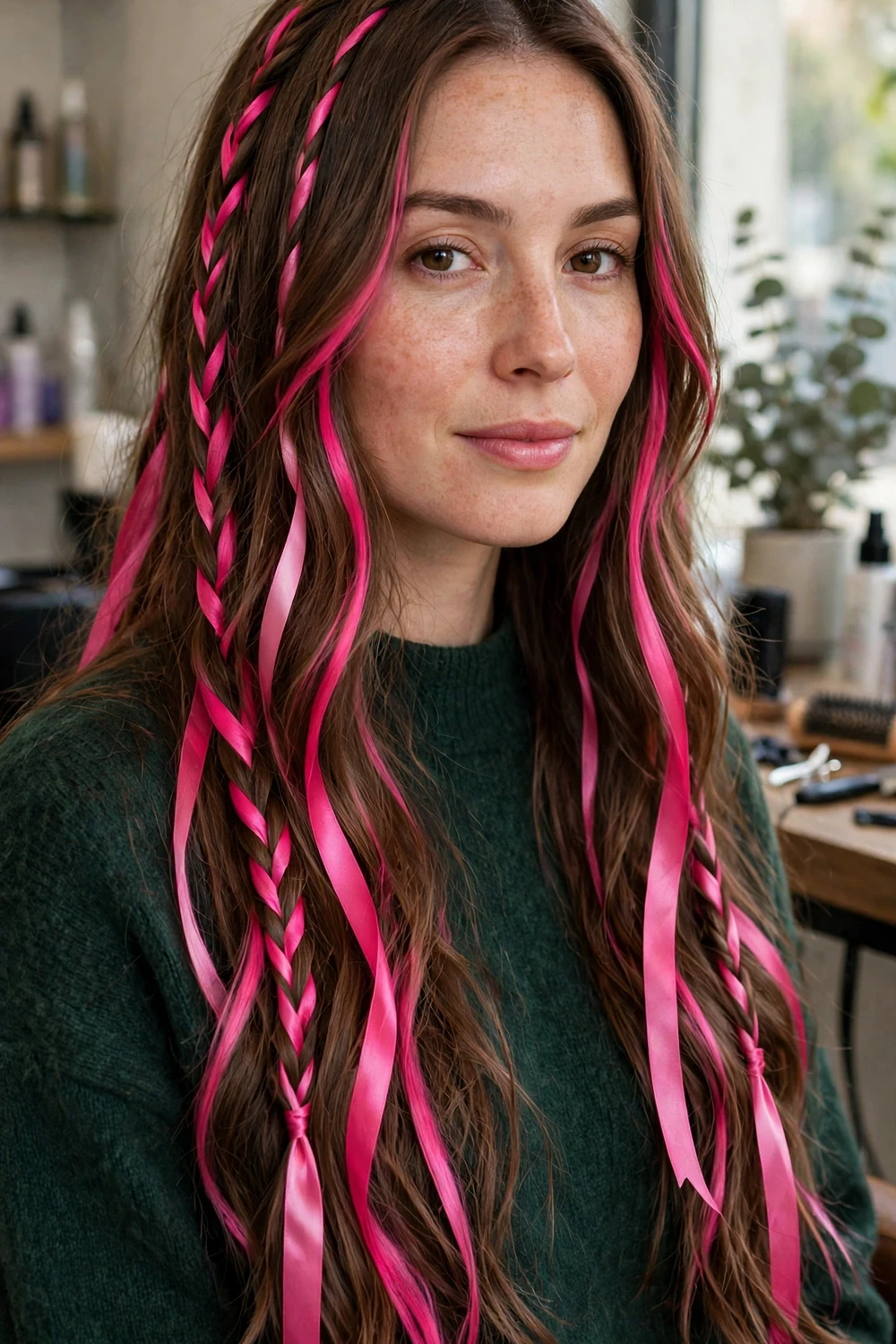
Hot pink ribbons run saturated pink sections through long brown hair, spaced so the brown stays visible between them. The contrast is the appeal: the dark base makes the hot pink read brighter than the same shade would on blonde. Warm, neutral, and deep skin all carry the intensity.
The ribbon sections need lightening first, since hot pink deposited straight over brown reads dull. Once lifted, the pink goes on as a direct dye and holds better than pastel, though it still softens with every wash. A pink color-depositing conditioner once a week keeps the ribbons saturated between visits.
Try this: ask for the ribbons placed slightly unevenly, a lived-in spacing that looks deliberate as the color grows out.
Difficulty: Medium to High · Cost: $$$ (salon)
12. Magenta Streaks on Dark Hair
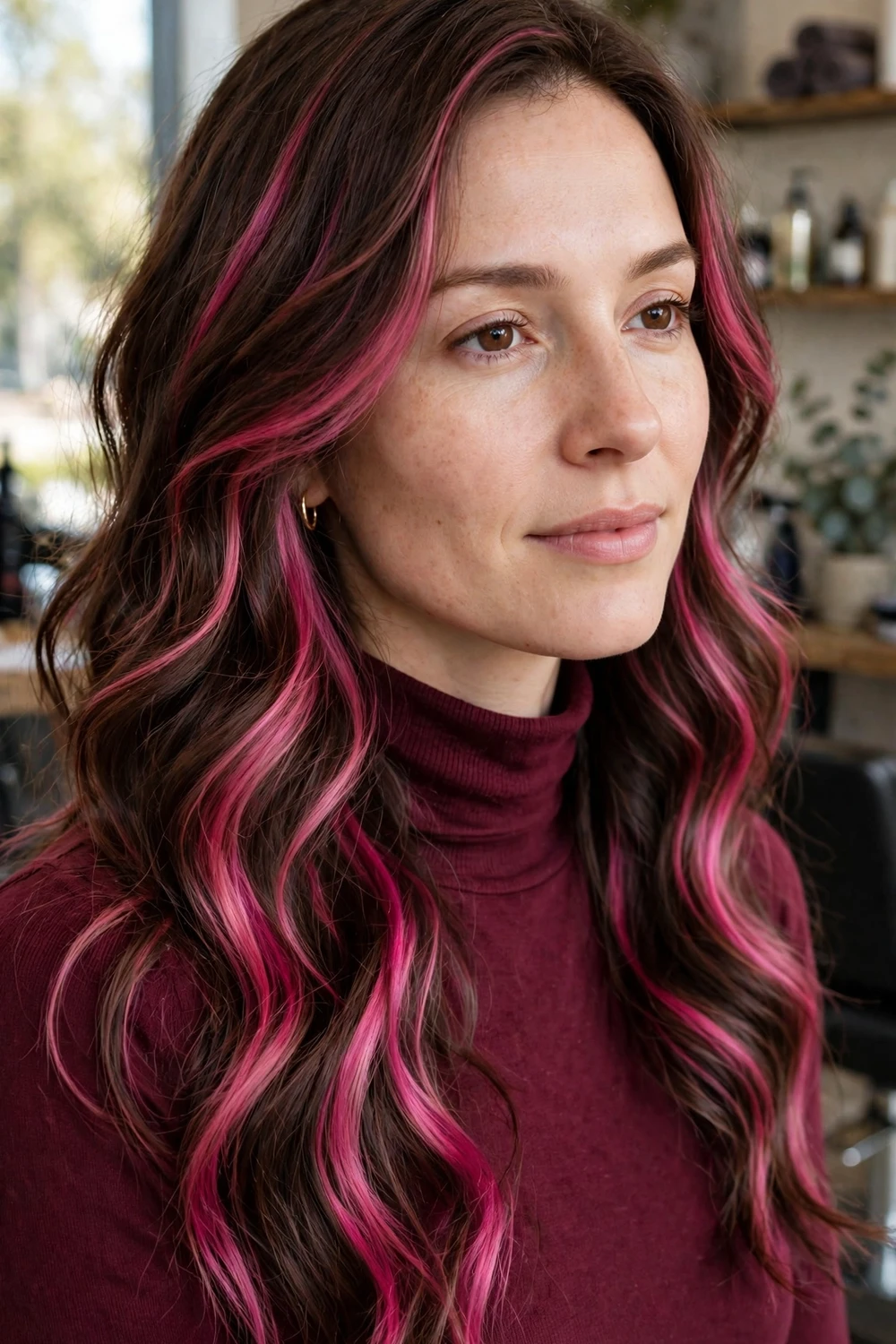
Magenta streaks place deep pink sections through dark brown or near-black hair. Magenta carries enough blue and enough depth to stay visible on a dark base where pastel would vanish, and the streaks show most when the hair moves or is worn wavy. Cool skin and deep skin suit this shade family best.
Deep magenta on brunette may need lift on the streaked sections so the pink reads clean rather than muddy, which puts this in the medium to high effort range. In return, magenta is one of the longer-wearing pinks: it fades through berry and plum tones that remain flattering on dark hair for weeks.
Try this: start with four to six streaks on the top and sides. You can add more at the refresh visit once you know how the shade sits on your base.
Difficulty: Medium to High · Cost: $$$ (salon)
13. Chunky Hot Pink Highlights on a Dark Base

Chunky highlights use wide, deliberate sections, and in hot pink on a dark base the pattern is graphic from across the room. This is the boldest placement on the list for brunettes, with the pink placed to be seen rather than blended. It suits anyone who styles their hair straight or in smooth waves, where wide sections stay intact.
The wide sections are lifted, then saturated with hot pink. Grow-out is the trade-off: chunky placement grows out in blocks rather than a soft blend, so the refresh appointment rebuilds the pattern instead of just retouching roots. Plan on a four to six week cycle to keep the edges clean.
Try this: bring photos that show the section width you want. Chunky can mean anything from half an inch to two inches, and the result changes completely with width.
Difficulty: Medium to High · Cost: $$$ (salon)
14. Chunky Pink Highlights on Blonde Hair
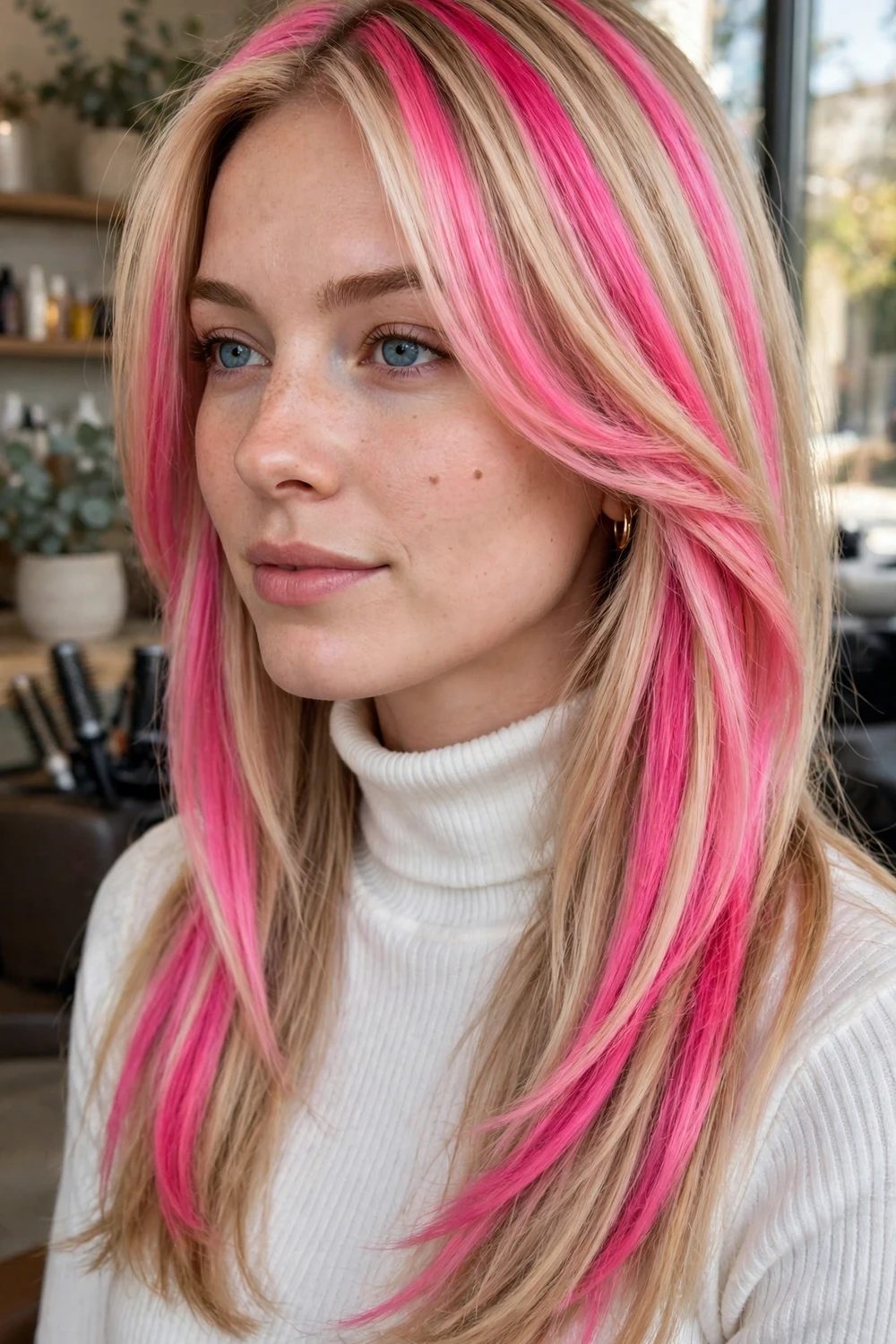
On blonde hair, chunky pink highlights give a candy-striped pattern of pink and blonde in wide alternating sections. The blonde base does half the work, so the look reads bright even as the pink softens. Fair and medium skin carry the high contrast, and straight styling shows the section pattern most clearly.
Most blondes need no fresh lightening for the pink sections, which keeps the appointment shorter than the dark-base version. The pink still fades with washing, and faded chunky sections read as pale pink stripes, a softer version of the same pattern that many wearers keep for weeks before refreshing.
Try this: use a heat protectant every time you style. Heat pulls pink pigment out faster than washing does, and chunky sections show fade first.
Difficulty: Medium · Cost: $$$ (salon)
15. Pink Peekaboo Panels Underneath Brunette Hair
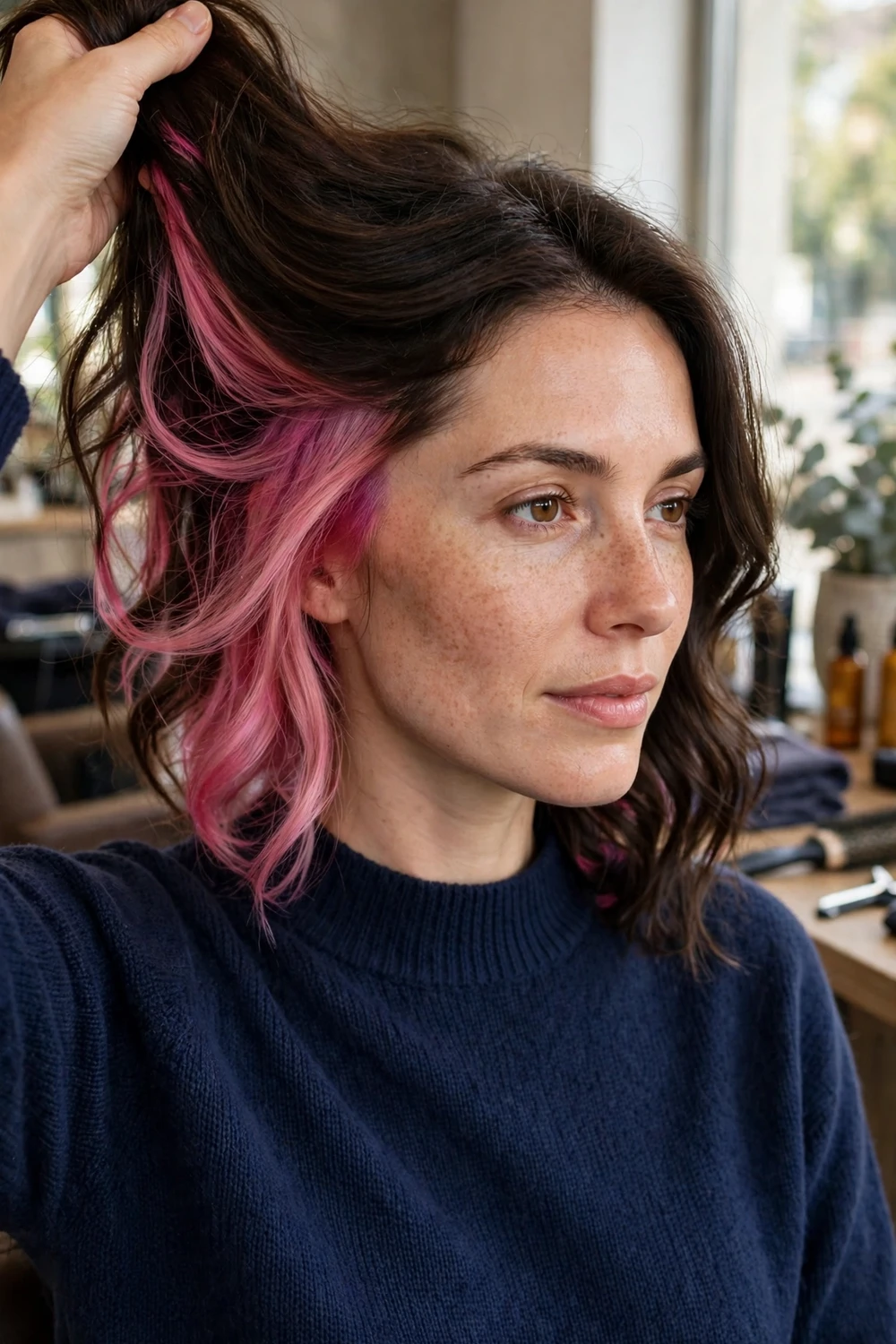
Peekaboo panels place pink in the underlayer of brunette hair, hidden by the top sections when the hair is down. The pink appears when the hair moves, goes into a ponytail or claw clip, or is tucked behind the ears. It is the standard choice for anyone who needs their hair to read plain brunette on demand.
The underlayer sections are lifted and colored while the top layer stays natural, so root grow-out is hidden by design. Any pink shade works in this placement, from blush to hot pink, since visibility is controlled by styling rather than by shade softness. Refresh timing is flexible because faded panels stay hidden too.
Try this: pick a brighter pink than you first planned. Hidden panels can carry a bolder shade than visible highlights can.
Difficulty: Medium · Cost: $$ (salon)
16. Pink and Violet Highlights on Blonde Hair
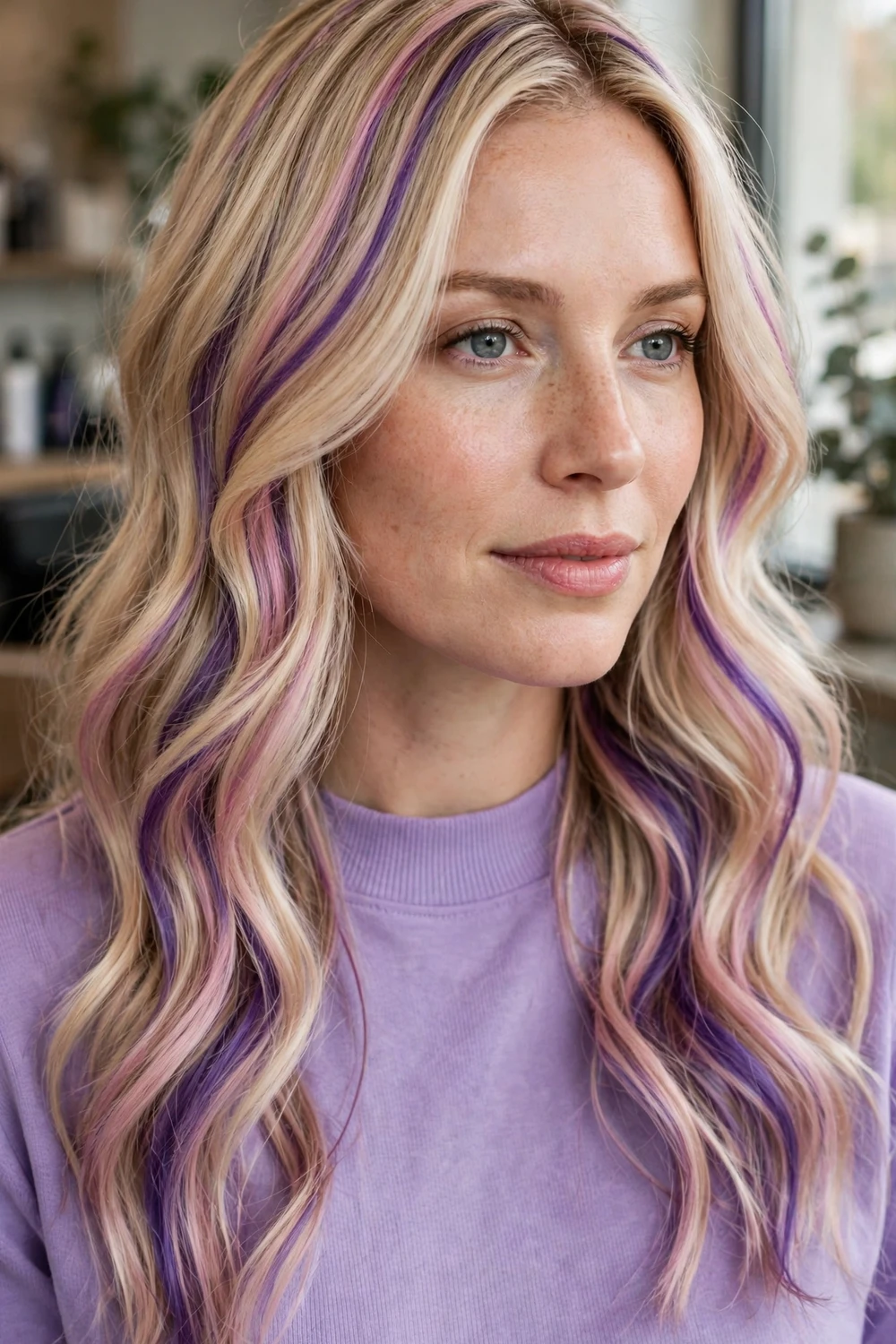
This pairing weaves light pink and violet highlights through the same blonde base, alternating the two tones so the hair shifts between them in different light. The violet cools the pink down, which makes the combination a good route for cool skin that finds warm pinks hard to wear.
Both tones deposit over the existing blonde with no new lightening in most cases, and the two shades are applied in separate foils to keep them clean. They fade at similar speeds, though the violet usually outlasts the pink, so a pink-only gloss at four weeks can rebalance the pair.
Try this: keep the ratio weighted toward pink, roughly two pink foils to one violet, so pink stays the headline color.
Difficulty: Medium · Cost: $$$ (salon)
17. Coral Pink Melt Through the Ends
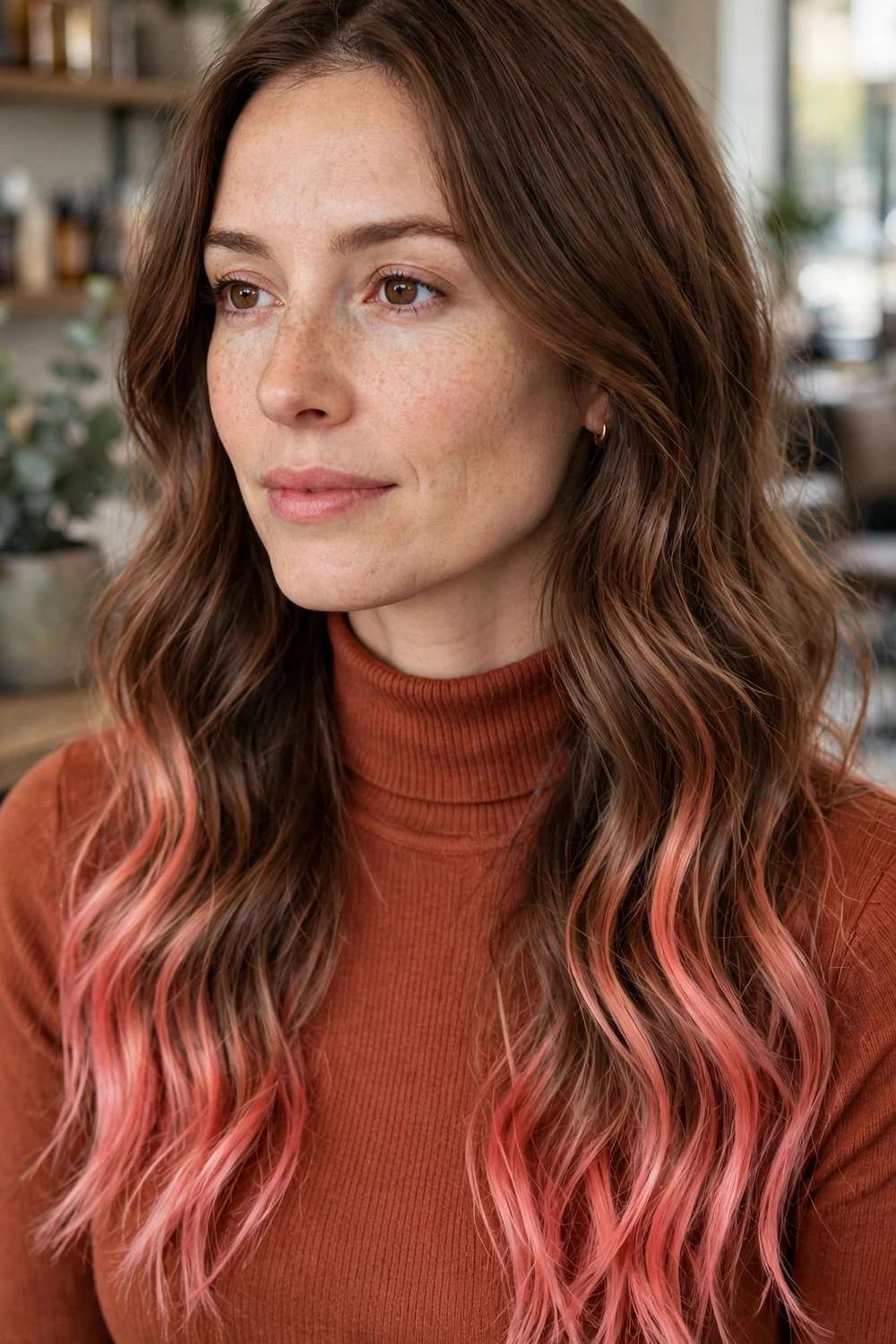
A coral pink melt blends a warm, orange-leaning pink into the ends of brown or dark blonde hair, with no color at the roots at all. Coral leans warm, which makes it a natural fit for golden and olive skin. Melted through the ends, it needs no root work and can be trimmed away when you are done with it.
The ends are lightened where the coral will sit, then the color is melted upward into the base so there is no line. Ends are the oldest and most porous hair on the head, so they grab the coral fast and also release it fast. Expect a gloss refresh at four to five weeks, or a trim that shortens the melt gradually.
Try this: keep the melt on the bottom third of the hair. A lower melt is easier to trim away and keeps the color clear of the face.
Difficulty: Medium · Cost: $$ (salon)
18. Pink Tips on Brunette Hair

Pink tips color only the last few inches of a brunette base. It is the smallest pink commitment on this list: no root work, no foils through the lengths, and the color leaves the head gradually as the hair is trimmed. The look works in any pink shade, and a brighter tip reads clearly even on dark brown.
The ends need a light lift so the pink shows true, but the service is short and the upkeep is close to zero. If you dislike the result, a trim removes it. If you like it, the same placement can extend higher into a melt at the next appointment.
Try this: pair the tips with a clear gloss over the whole head so the brunette lengths shine as much as the pink ends do.
Difficulty: Low to Medium · Cost: $ (salon)
19. Bubblegum Pink Highlights on Blonde Hair

Bubblegum pink is a clear, candy-toned pink, and as highlights on blonde hair it reads playful and bright while the blonde keeps it grounded. The shade has a cool-neutral undertone that suits a wide range of skin tones, from fair to medium. Worn in woven highlights rather than all over, it stays wearable day to day.
The highlighted pieces need a pale base for bubblegum to read true, so medium and dark blondes should expect lightening on those sections first. Bubblegum fades toward a soft pastel, which is a pleasant second stage, and a pink depositing conditioner can hold the candy tone for an extra week or two.
Try this: ask for bubblegum through the top and sides with the underneath left blonde, so the color layers instead of covering.
Difficulty: Medium to High · Cost: $$$ (salon)
20. Fuchsia Highlights on Dark Blonde Hair
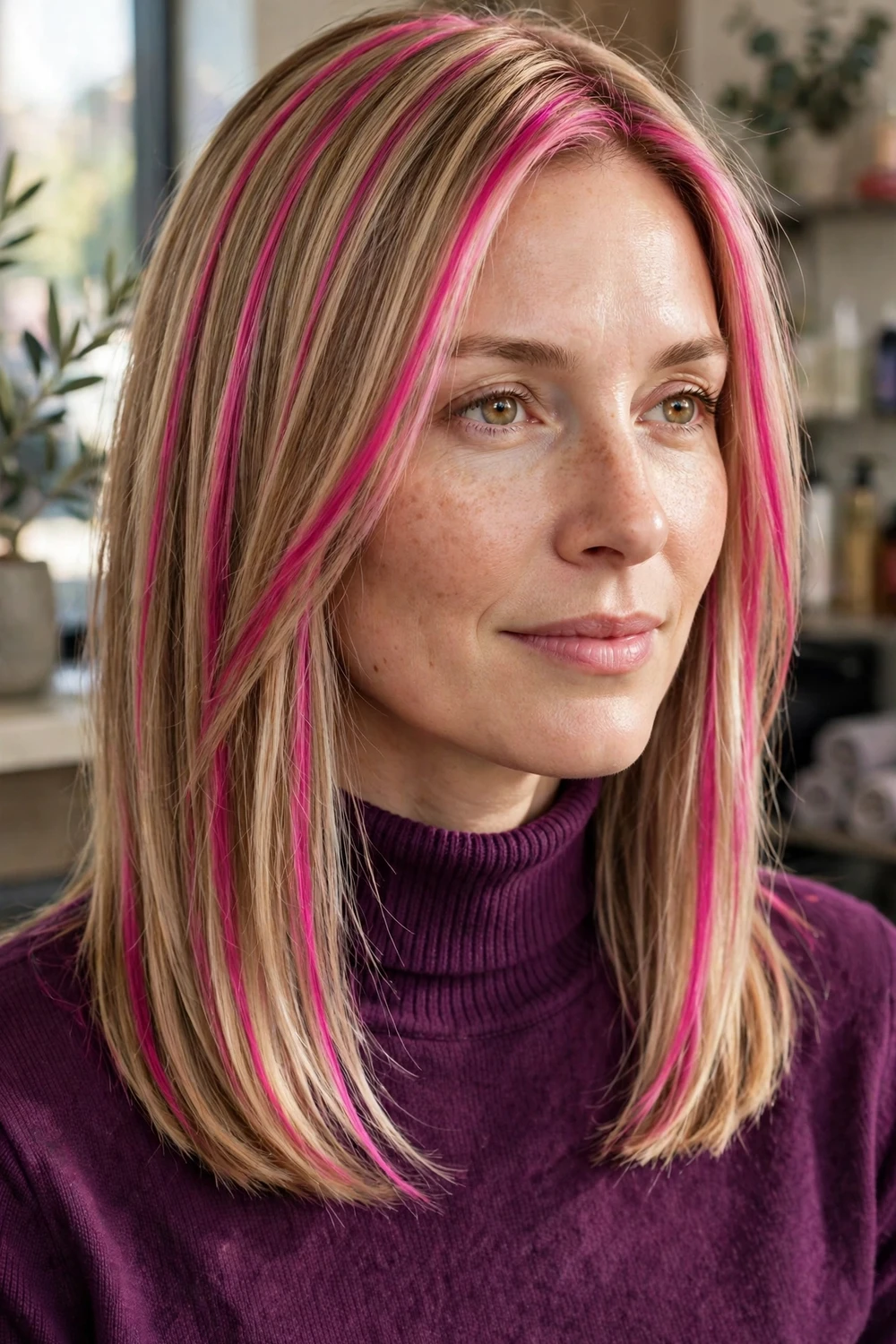
Fuchsia is a saturated pink with a strong purple lean, and on a dark blonde base it gives high color payoff without going neon. The cool undertone suits neutral and cool skin, and the depth of the shade means it keeps reading as pink long after softer shades have washed out.
Dark blonde pieces still benefit from a lift before fuchsia goes on, since the purple content can turn muddy over a brassy base. Once in, fuchsia is a durable pink: it fades through magenta toward a berry pink, and a gloss at six weeks usually restores the full saturation.
Try this: place fuchsia in the mid-lengths and ends with a few pieces at the front, so the strongest color sits where the hair is healthiest.
Difficulty: Medium to High · Cost: $$$ (salon)
21. Raspberry Pink Highlights on Brunette Hair
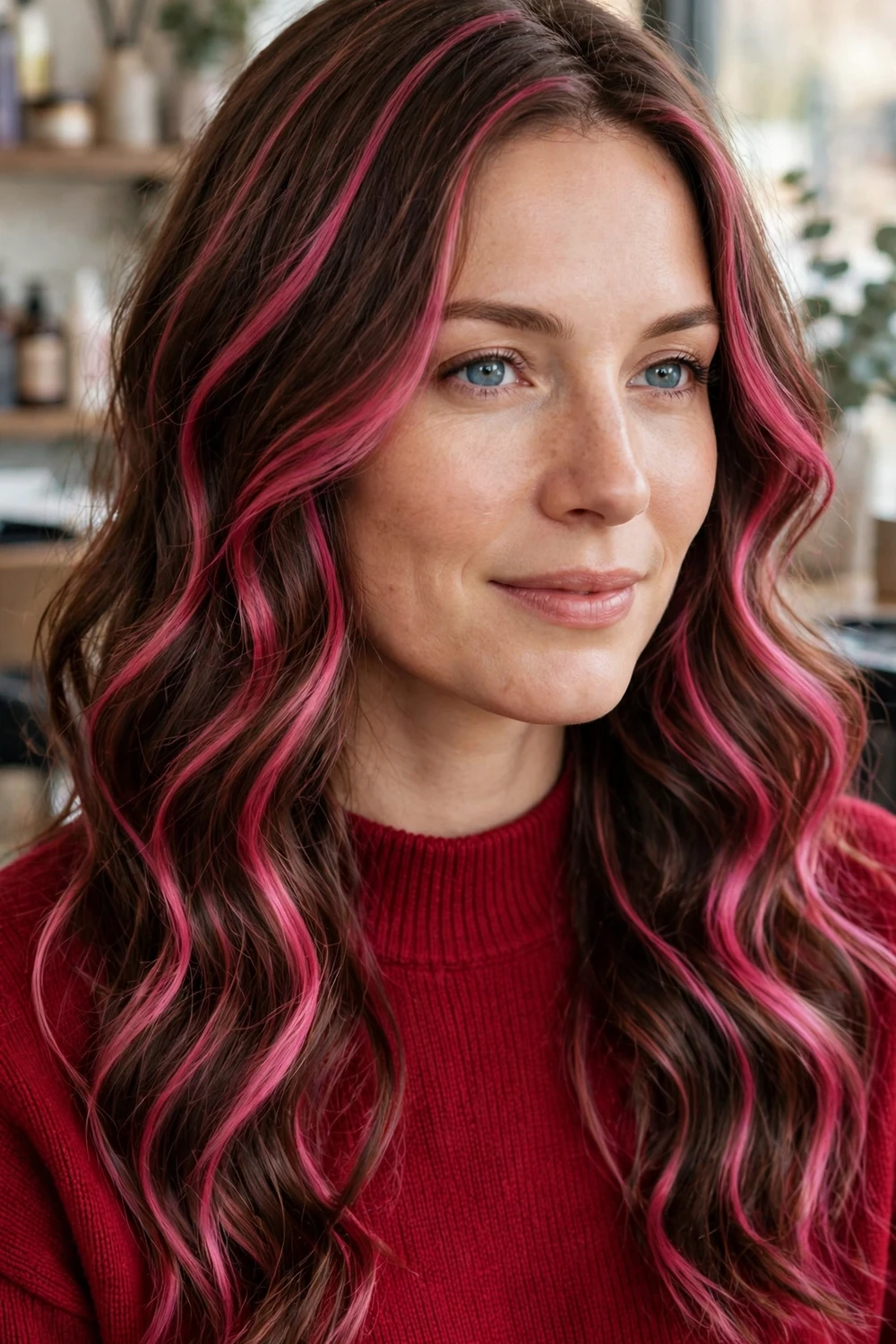
Raspberry pink is a deep berry pink that was made for brunette bases. It keeps enough red and depth to read clearly over brown, where pastel and blush shades would disappear, and it gives dark hair a berry sheen in sunlight. Cool and deep skin suit raspberry best. Readers moving between pink and red families can compare the deeper end in the winter red hair colors roundup.
The highlighted pieces may need lift so the berry tone stays clean, though less than a pastel would demand. Raspberry fades slowly for a pink, moving toward a soft berry brown that blends with the base, so refresh visits can stretch to seven or eight weeks.
Try this: ask for raspberry woven finely through the top layers first. Fine weaving on dark hair reads as a berry glow rather than stripes.
Difficulty: Medium to High · Cost: $$$ (salon)
22. Pink Highlights on Curly Hair

On curly hair, pink highlights are painted curl by curl, with the brightest pieces on the top layers and around the face where curls catch light first. Rose, blush, and magenta all work in this placement, and the curl pattern softens the edges of each piece so the color looks woven rather than striped. It suits blonde and brunette curls alike.
Curly hair runs drier than straight hair, and lightening adds to that dryness, so the care plan matters as much as the shade: weekly deep conditioning, gentle diffusing, and minimal heat. The dimensional placement grows out softly because the curl pattern hides regrowth lines.
Try this: book with a colorist who works on curly hair dry, so the pink lands on the curls as you actually wear them.
Difficulty: Medium · Cost: $$$ (salon)
23. Pink Highlights on a Shag Cut

A shag cut gives pink highlights built-in movement: the choppy layers separate the color into pieces that shift as the head turns. A common build pairs a deeper pink through the body of the cut with a lighter pink in the fringe, so the front reads softer than the back. The pairing suits medium skin and anyone who wears their hair textured.
Layered cuts show regrowth in pieces rather than a line, which makes this placement forgiving between visits. The fringe pieces fade fastest because they are washed and styled daily, and a quick fringe-only gloss at three weeks can refresh the front without a full appointment.
Try this: keep the two pink tones within the same family, a deep rose with a blush fringe, so the contrast looks planned rather than patched.
Difficulty: Medium · Cost: $$ (salon)
24. Pink Highlights on a Pixie Cut

On a pixie cut, a few pink highlights through the longer top section change the whole character of the cut while the sides and back stay natural. Hot pink and magenta are the usual picks, since small pieces need a saturated shade to register. The placement works on dark and blonde pixies, and on undercut styles worn combed back.
Short hair is the cheapest place to wear pink: very little hair is lightened or colored, and the pink grows out or is cut away within a few trims. The trade-off is visibility of fade, since the top section is the whole show. A pink depositing conditioner keeps the small pieces saturated between cuts.
Try this: time the pink for right after a fresh cut, so the highlights and the shape peak together.
Difficulty: Low to Medium · Cost: $$ (salon)
25. Pastel Pink Highlights on Gray Hair

Silver and gray hair is a ready-made pale base, and pastel pink highlights woven through it give a soft blush cast that reads playful at any age. The pink shows most on the lightest silver pieces, so the effect varies naturally across the head and needs no root maintenance at all.
Pastel pink still follows the pastel rules: it is mixed for a pre-lightened base, it goes on as a delicate deposit, and it fades the fastest of the pinks here, often within a few weeks. The easy part is the exit, since faded pastel on silver simply returns to silver with no line and no correction.
Try this: start with pastel pieces around the face and crown. On gray hair a small amount of pink goes a long way.
Difficulty: High · Cost: $$ (salon)
26. Pink Gloss Over Existing Blonde Highlights
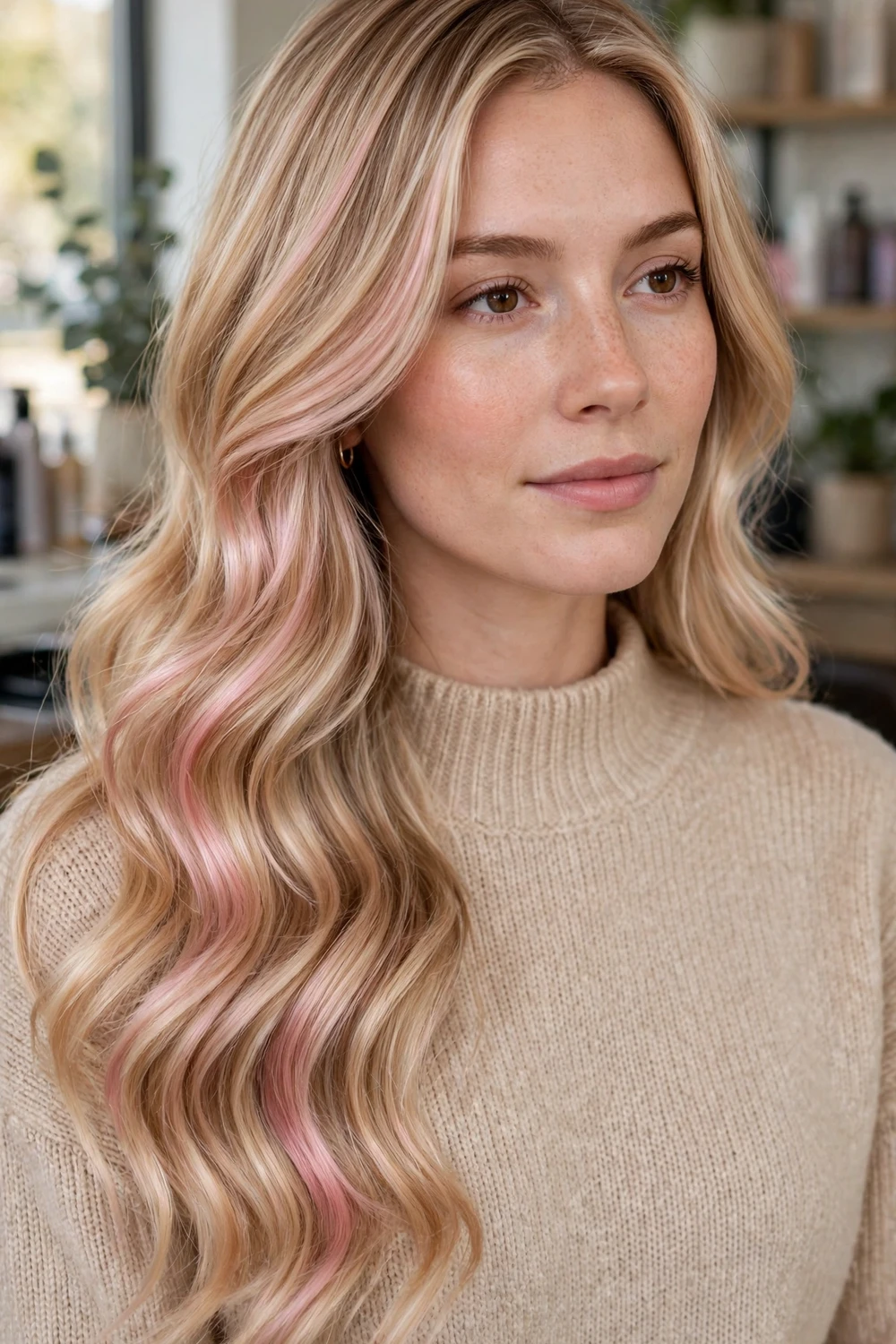
A pink gloss is a demi-permanent pink tint laid over highlights you already have. The gloss grabs the lightened pieces and leaves the darker base mostly untouched, so your existing highlight pattern turns pink in one short appointment. Blush, rose, and pastel tones all work as glosses, and the copper-pink end of the family overlaps with shades in the fall copper hair colors list.
No new lightening is involved, which keeps this gentle on the hair, but a gloss is still a salon color service with a toner formula matched to your highlights. The tint fades out evenly over three to five weeks and leaves no regrowth line, making this the lowest-risk idea on the list and the standard trial run before foiled pink.
Try this: time the gloss two weeks before an event or photos, when the tint and shine are at their peak.
Difficulty: Medium · Cost: $ (salon)
27. Face-Framing Pink Contour Highlights on Brown Hair

Contour highlights concentrate pink around the face and along the parting, following the same logic as makeup contouring: color where light and attention land first. On a brown base, rose or blush contour pieces brighten the face while the back and underneath stay brunette, so the change reads bigger than the amount of hair colored.
The front pieces are lifted and toned, and the placement can be as narrow as two sections per side or extend into the top layers for a fuller frame. Because the colored area is small, refresh visits are short, and faded contour pieces blend back into face-framing brightness rather than showing a line.
Try this: pair contour pieces with pink ends for a matched frame, top and bottom, while the mid-lengths stay your natural brown.
Difficulty: Medium · Cost: $$ (salon)
Frequently Asked Questions
Do pink highlights need bleach on brown hair?
It depends on the shade. Deep pinks such as magenta, raspberry, and mauve can sit over a brown base with a gentle lift on the highlighted pieces, and some read well with no lift at all. Pastel, blush, and bubblegum pinks need the pieces lightened to a pale blonde first, or the pink turns dull and muddy. Your colorist can tell you the lift your chosen shade needs in a consultation.
How long do pink highlights last before they fade?
Pink is a fast-fading color family, and placement does not change that. Pastel and blush highlights soften visibly within two to four weeks. Mid-tone pinks such as dusty rose and strawberry hold four to six weeks. Deep pinks, magenta, raspberry, and fuchsia, last the longest and fade through berry tones over six to eight weeks. Cool water, fewer washes, and a pink color-depositing conditioner stretch every shade.
Which pink highlight shade suits cool skin tones?
Cool skin suits the blue-leaning end of the family: mauve, raspberry, fuchsia, and magenta, plus pink and violet pairings. Rose gold can also work when the gold is kept soft. The shades to approach with care are the warm, orange-leaning pinks, coral especially, which can clash with pink undertones in the skin.
Can I try pink highlights without committing to them?
Yes, and this list is built with low-commitment routes for that reason. A pink gloss over existing blonde highlights fades out fully in three to five weeks with no regrowth line. Pink tips and melted ends can be trimmed away. Peekaboo panels stay hidden under the top layer until you style the hair up. Any of the three gives you a real read on pink against your skin before you book foiled highlights.
How do I keep pink highlights from fading so fast?
Wash less often, use lukewarm or cool water, and switch to a sulfate-free, color-safe shampoo. Add a pink color-depositing conditioner once a week to replace the pigment that washing removes. Use a heat protectant before styling, since heat pulls pink pigment out quickly, and cover your hair in strong sun, because UV light fades pink faster than almost anything else.
Final Thoughts
Pink highlights work because the placement does the deciding: a gloss or a set of pink tips if you want a trial run, rose gold or dusty rose pieces if you want pink that stays quiet, or magenta streaks and chunky hot pink if you want the color to lead. Pick by your base first, then by how fast a fade you will honestly enjoy, and keep a pink depositing conditioner in the shower from day one. The shade will soften over the weeks, and with the right placement it softens into a version of itself you can keep wearing.

