


If you like the idea of a pixie but want more texture, more length on top, and softer edges, the trixie is the cut to look at. I keep coming back to it because it solves the main complaint I hear about classic pixies: they can look sharp and flat very quickly. A trixie keeps the short back and sides, then adds choppy, point-cut layers and longer pieces that make the whole cut look lived-in from the start.
This list collects 23 trixie haircut ideas, from micro bangs and spiky 90s versions to silver, curly, and glasses-friendly options. Each idea explains how the cut is shaped, who it suits, and how to style it at home. If you are also weighing up nearby short styles, the edgy pixie mullet ideas and the easy short hairstyles for busy mornings lists are worth a look alongside this one.
Key Takeaways
- A trixie is a textured pixie variant: short tapered sides and nape, a longer choppy top, and soft longer pieces around the ears and fringe.
- Point cutting is the core technique. Diagonal snips into the ends create the separated, feathered texture that sets a trixie apart from a classic pixie.
- Fringe choice changes the cut most: micro bangs, wispy bangs, a long side sweep, and a pinned-back fringe all sit on the same base shape.
- Fine hair needs light texturizing kept mainly on top, while thick hair needs deeper interior weight removal.
- Most trixie cuts need a tidy-up trim every four to six weeks to keep the nape and fringe in shape.
What Makes a Trixie Different From a Pixie
The name is widely described as a blend of textured and pixie, and that blend is the definition. A classic pixie is short all over with cleaner, more uniform edges. A trixie keeps the pixie length at the back and sides, then deliberately breaks the rules on top: longer choppy layers, point-cut or razored ends, and softer pieces left around the ears, the nape, and the fringe.
Stylists who helped popularize the cut describe it as the softer, more lived-in relative of the pixie, cut with point cutting so the ends separate instead of sitting in a solid line. In practice that means three things to ask for: a tapered, open nape, short sides that can still hold a soft piece in front of the ear, and clear extra length on top that can be worn tousled, swept, spiked, or slicked.
| Feature | Classic Pixie | Trixie | Crop |
|---|---|---|---|
| Top length | Short and fairly uniform | Noticeably longer, choppy layers | Short, often blunt or textured |
| Edges | Clean and defined | Soft, feathered, longer around ears | Tight, often faded |
| Texture technique | Scissor cut, smooth finish | Point cutting or razor work | Clipper and scissor blend |
| Fringe options | Short or side fringe | Micro, wispy, long sweep, pinned back | Usually very short |
| Grow-out | Loses shape quickly | Forgiving, looks lived-in | Needs frequent tidy trims |
Use that table at the salon. If the top length, the soft edges, and the point-cut texture are all in the plan, you are getting a trixie. If the edges are clipped tight all over with a uniform top, you are getting a crop, whatever it is called.
1. Classic Textured Trixie

Choppy point-cut layers through the top, short sides and a clean tapered nape. This is the base shape most other trixie versions build on.
Ask for point cutting through the top rather than blunt ends. The diagonal snips break up the edge, so the crown sits up with movement instead of lying flat in one block.
Try this: Finger-comb a pea-size amount of matte paste through dry ends and pinch the top pieces apart.
Difficulty: Low · Cost: $$
2. Trixie with Micro Baby Bangs
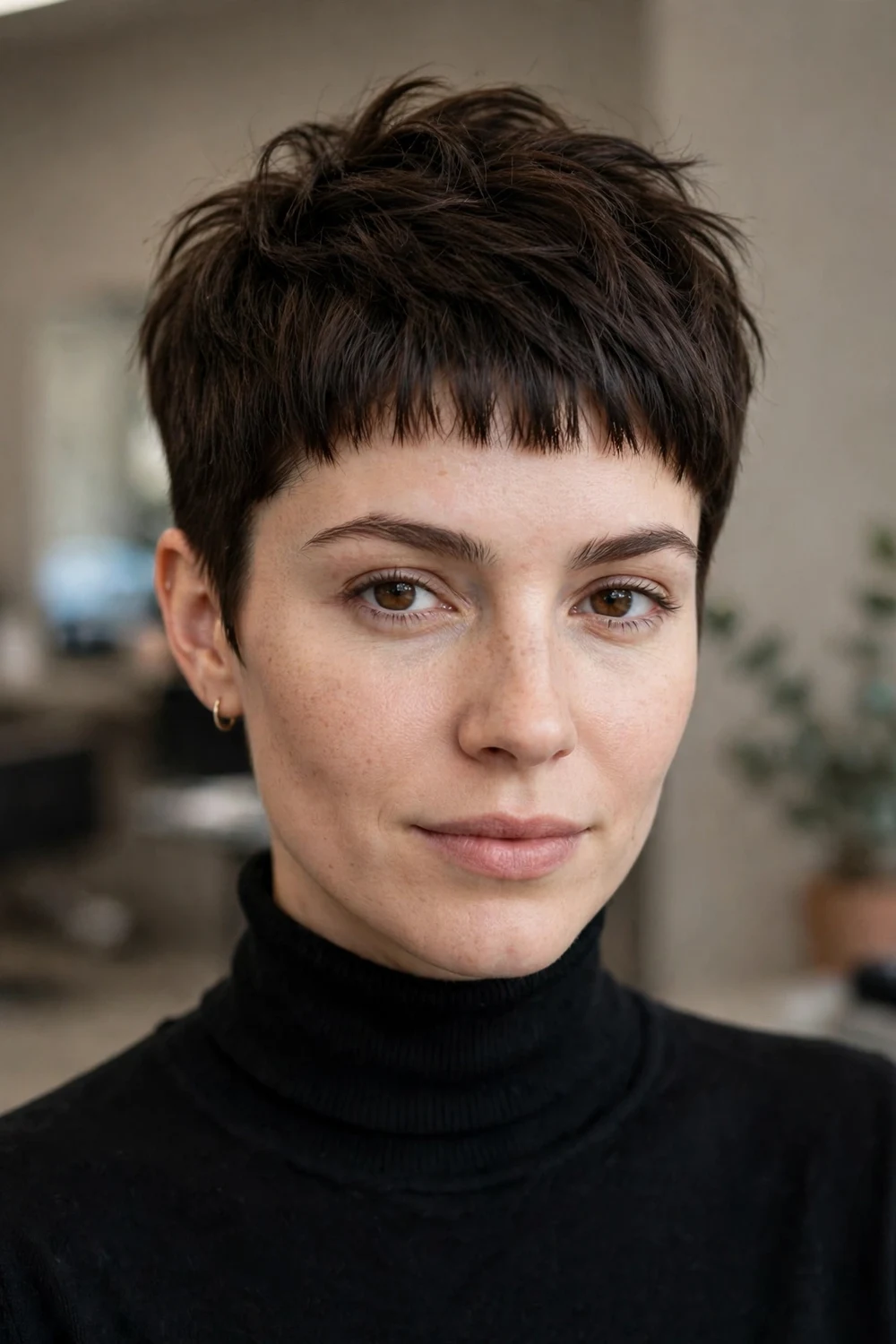
A classic trixie paired with a very short fringe that sits well above the brows. The contrast between the tiny fringe and the longer textured top gives the cut its sharp, editorial edge.
Keep the sides tight and the nape clean so the fringe stays the focus. This version suits oval and heart faces best, since the short fringe opens the forehead fully.
Try this: Smooth the fringe down with a mini brush while drying, then leave the top tousled for contrast.
Difficulty: Low · Cost: $$
3. Trixie with Soft Wispy Bangs

The same short back and sides, finished with a light, feathery fringe that skims the brows. The bangs are point-cut and sparse, so they soften the face without adding a heavy block of hair.
This is a good first trixie if a micro fringe feels too bold. The wispy edge blends into the side pieces, and it grows out gently between trims.
Try this: Blow the fringe forward with your fingers and a low heat setting, then sweep the ends slightly to one side.
Difficulty: Low · Cost: $
4. Trixie with a Long Side-Swept Fringe

Extra length left at the front so one long section sweeps across the forehead and tucks toward the cheekbone. The back and sides stay short, which keeps the long front from reading as a bob.
The sweep adds softness for square and longer faces, and it gives you styling range: wear it down, pinned, or pushed back. Ask your stylist to keep the sweep thin at the ends so it moves.
Try this: Dry the fringe across your forehead in the direction you want it to fall, then finish with a light hold spray.
Difficulty: Medium · Cost: $$
5. Sculpted Wavy Top Trixie
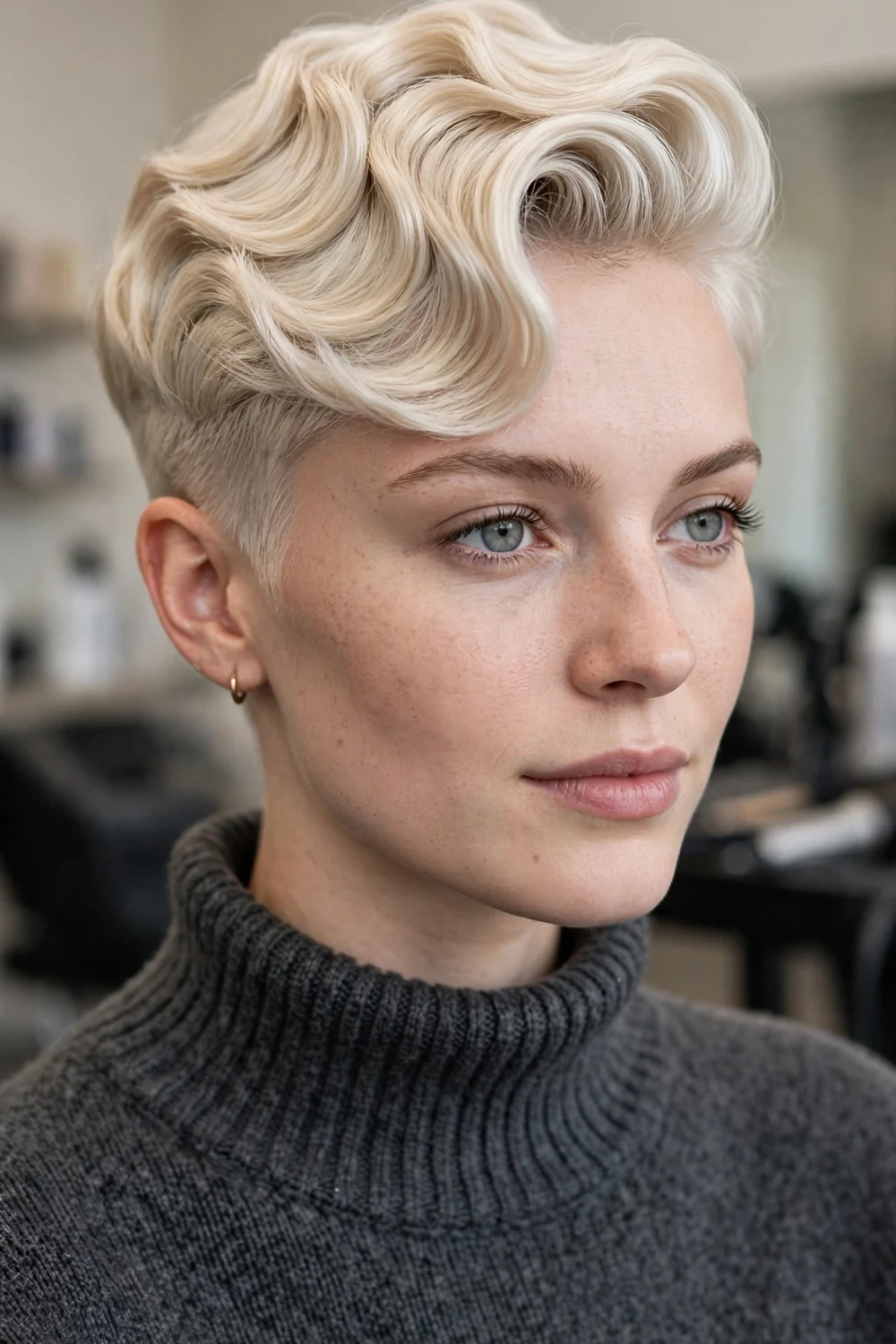
Short, tight sides with a much longer top shaped into soft waves. The length difference is deliberate, and the waves show off the point-cut texture through the crown.
This version needs wavy or straight hair that holds a bend. The top is long enough to part in different places, so the shape can shift from polished to relaxed.
Try this: Twist small sections of the top with a flat iron, alternate the direction, then rake through with fingers.
Difficulty: Medium · Cost: $$
6. Silver Trixie with Layered Crown Volume
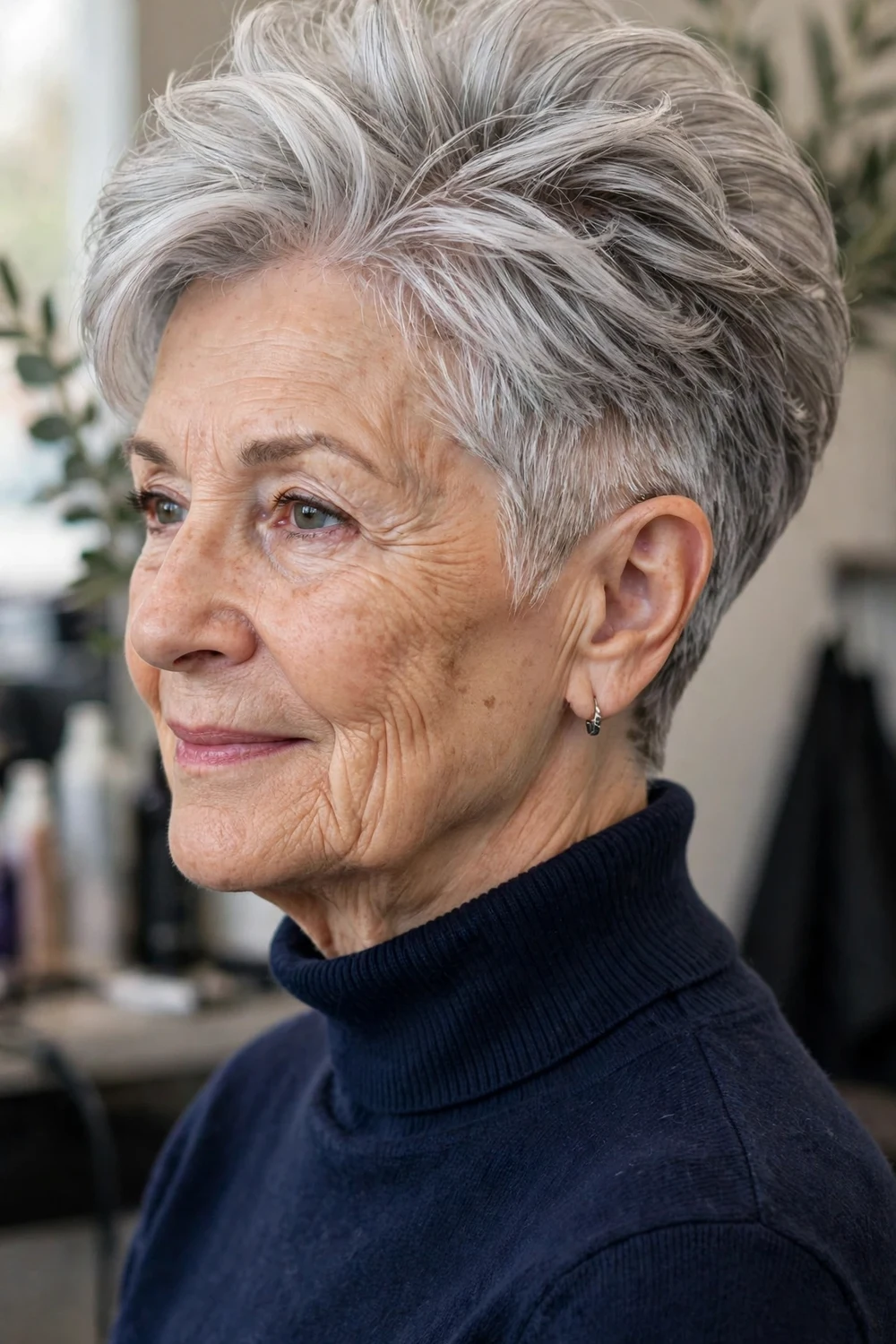
Natural silver hair cut short at the sides with stacked, layered volume through the crown. The layers lift grey hair, which can lie flat, and the texture stops one flat tone from looking solid.
Keep the nape tapered and the sides close. Lowlights or a gloss are optional extras that add depth between the silver layers, and your stylist can advise on tone at the appointment.
Try this: Lift the crown with a vent brush while drying and finish with a shine spray made for grey hair.
Difficulty: Low · Cost: $
7. Razored Lived-In Trixie

A trixie finished with a razor instead of only scissors, giving feathered, separated ends and a grown-in feel from day one. The top stays choppy and the edges stay soft.
Razoring works best on straight to wavy hair of medium density. On very fine or very curly hair, ask for scissor point cutting instead, since a razor can make delicate ends look thin.
Try this: Work a texturizing cream through the ends and let the cut air-dry for the most lived-in finish.
Difficulty: Low · Cost: $$
8. 90s Spiky Trixie

Short sides and a top left long enough to spike up in separated points. The look borrows from 90s crops, with texture doing the work instead of smooth styling.
Keep the spikes varied in length so the top reads textured before any product goes in. The nape stays tapered to balance the height on top.
Try this: Rub matte wax between your palms, push the top up and forward, then pinch each point into place.
Difficulty: Medium · Cost: $$
9. Asymmetric Trixie with Disconnected Sides
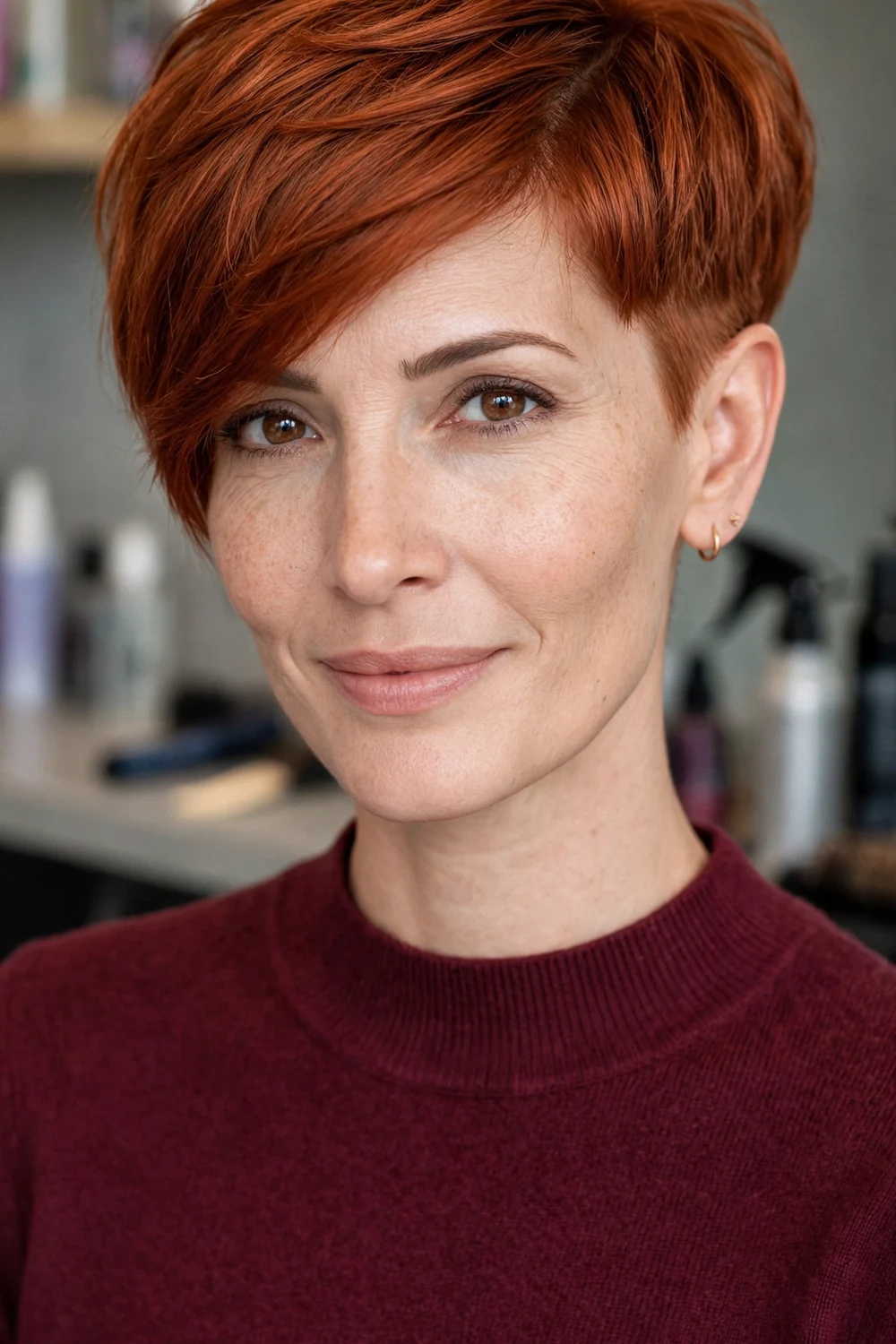
One side clipped shorter than the other, with a clear step between the close side and the longer top. The disconnection is the point of this version, so the two lengths do not blend.
This cut suits confident wearers and oval or heart faces. It needs a stylist who maps the short side to your part and your glasses or earrings, since the exposed side changes the whole balance.
Try this: Style the long side with a deep part and keep the short side smooth so the contrast stays clear.
Difficulty: Medium · Cost: $$$
10. Tapered Nape Trixie with an Open Neckline

The back is tapered close so the neckline sits open and clean, while the top keeps its choppy length. The open nape is one of the clearest trixie markers in the over-50 guides.
An open nape lengthens the look of the neck and keeps the cut cool in warm weather. Ask for a soft taper rather than a hard clipper line if you want a gentler grow-out.
Try this: Run a small brush down the nape while drying to keep the taper lying flat and neat.
Difficulty: Low · Cost: $
11. Curly Trixie for Natural Curls

A trixie shaped around natural curl: short tapered sides, a longer curly top, and layers cut dry so each curl sits where it falls. The shape keeps curl volume on top instead of at the sides.
Ask for a curl-aware stylist and dry cutting. The fringe can stay curly and short, or longer and side-swept, depending on your curl pattern at the front.
Try this: Scrunch a curl cream into damp hair and air-dry, then pick out the crown gently for height.
Difficulty: Low · Cost: $$
12. Wavy Tousled Trixie

Wavy hair cut into a trixie and worn tousled, with choppy layers that follow the wave. The sides stay short, so the wave shows mainly through the top and fringe.
This is one of the lowest heat options in the list. A wax spray on damp hair, as stylists recommend for wavy trixies, defines the wave while it dries on its own.
Try this: Mist a wax spray through damp hair, scrunch lightly, and leave it alone until fully dry.
Difficulty: Low · Cost: $
13. Fine Hair Trixie with Feathered Ends
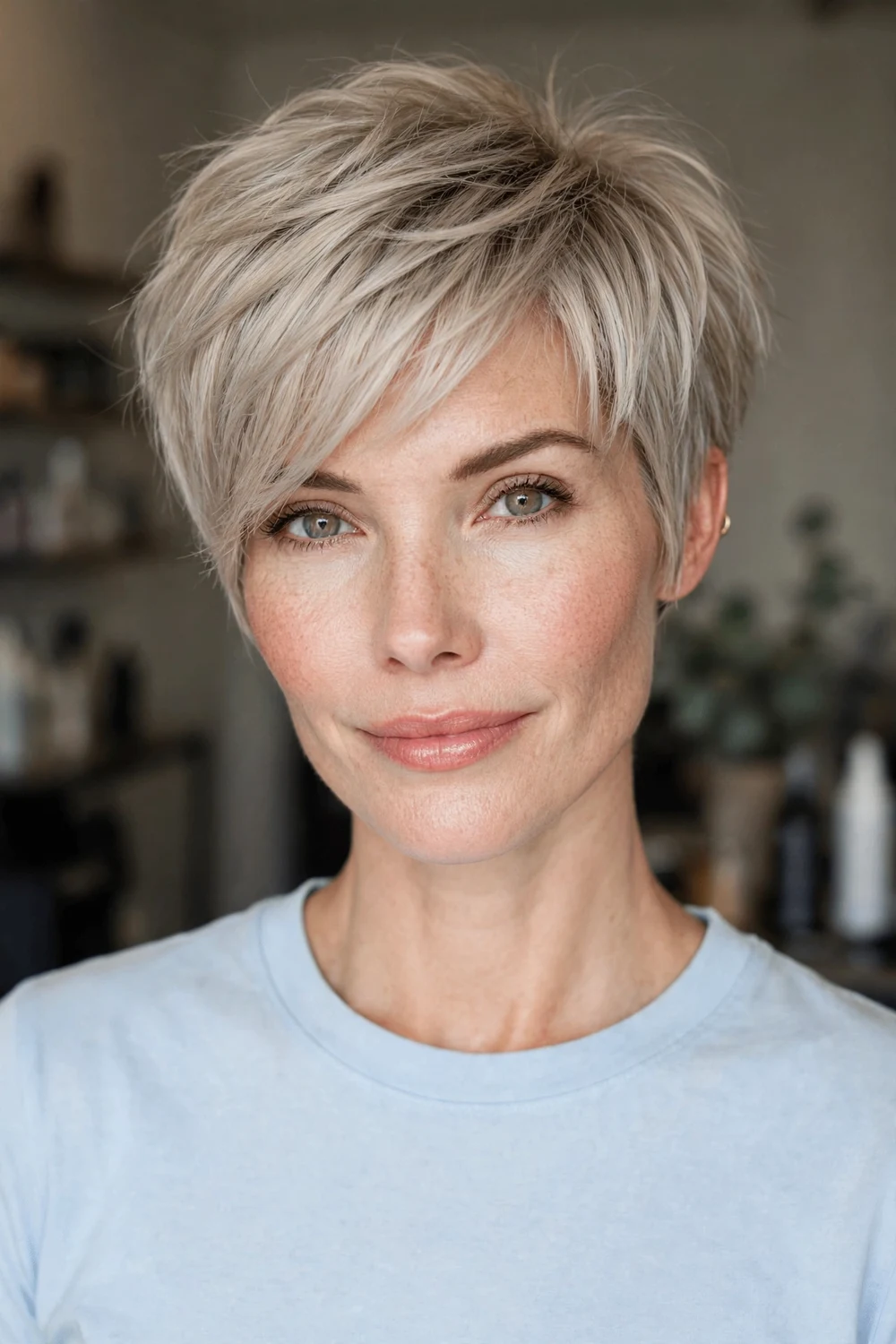
A trixie kept light for fine hair: subtle feathered layers, a short crown, and ends that are point-cut sparingly so they keep their fullness. Heavy layering is avoided on purpose here.
Fine hair can look thinner if the sides are thinned too much, so ask for texture mainly through the top. The short length removes weight and helps the crown lift. The pixie haircuts for fine hair guide covers more fine-hair short options.
Try this: Use a volumizing mousse at the roots only, and skip heavy oils that weigh the ends down.
Difficulty: Low · Cost: $$
14. Thick Hair Trixie with Airy Texturizing

Thick hair needs the opposite approach: deeper texturizing through the crown and back to remove bulk, with short sides that keep the shape close. The result is a trixie that feels light instead of blocky.
Ask your stylist to carve out weight in the interior, not just at the ends. That keeps the surface smooth while the inside layers create movement and air.
Try this: Smooth a small amount of lightweight pomade over the top to settle any puffiness at the crown.
Difficulty: Medium · Cost: $$
15. Auburn Trixie with Soft Bangs
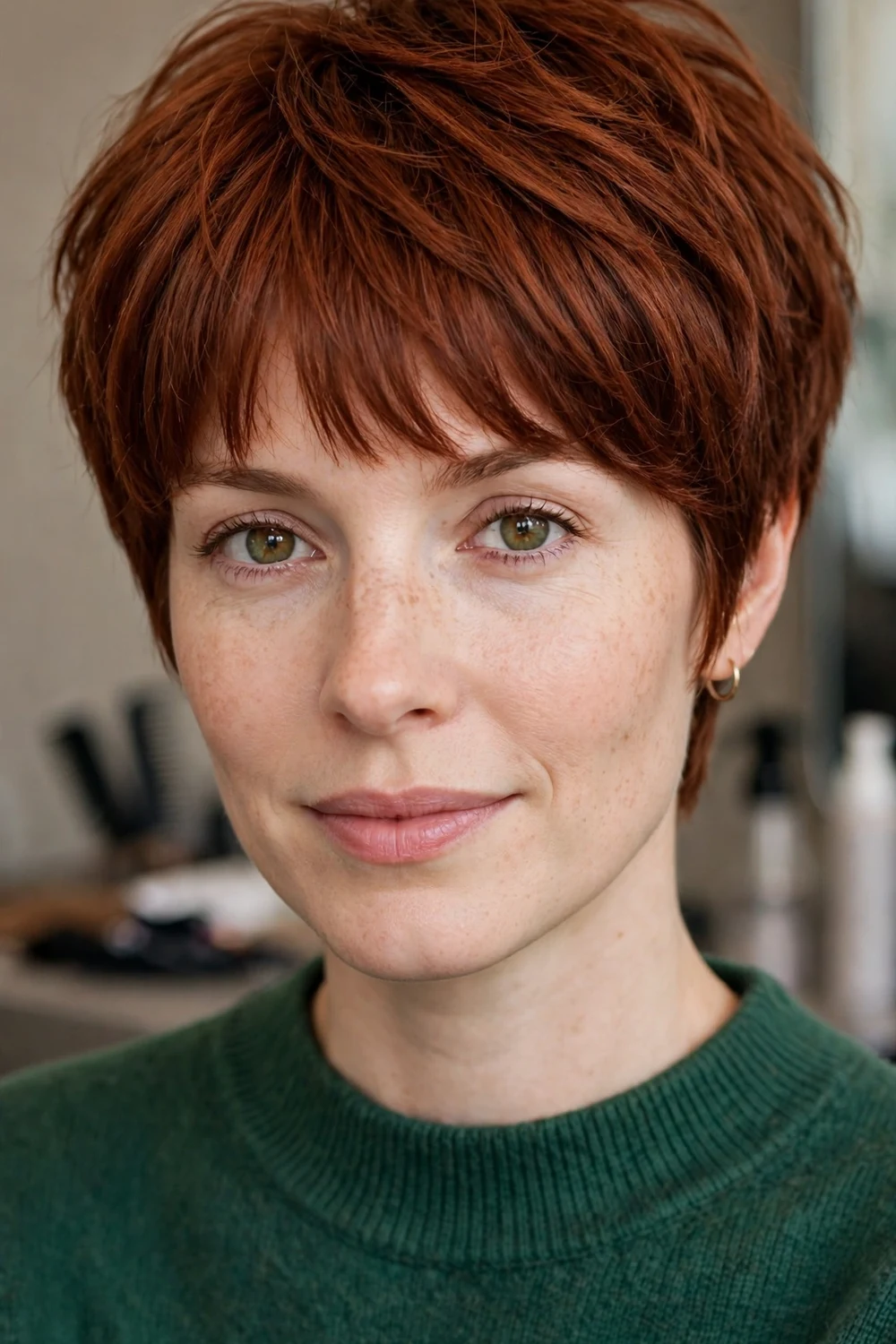
Warm auburn color paired with a trixie and a soft, full fringe. The color shows up strongly in the longer top layers, while the short sides keep the shade from overwhelming the face.
Soft bangs in this version sit longer than a micro fringe and blend into the sides. Auburn fades faster than brown, so ask about gloss top-ups between full color appointments.
Try this: Use a color-safe shampoo and rinse with lukewarm water to slow auburn fade.
Difficulty: Low · Cost: $$
16. Crown-Lifted Trixie for Round Faces

Extra height built into the crown with tighter sides, made to add length to the look of a round face. The top layers are stacked and lifted, and the fringe is kept short or swept up.
Height on top and closeness at the sides change the proportions without any long hair around the cheeks. Keep some length in front of the ears if you want a softer edge.
Try this: Blow-dry the crown upward with a vent brush and set it with a flexible spray before it cools.
Difficulty: Low · Cost: $$
17. Trixie with Longer Pieces Around the Ears
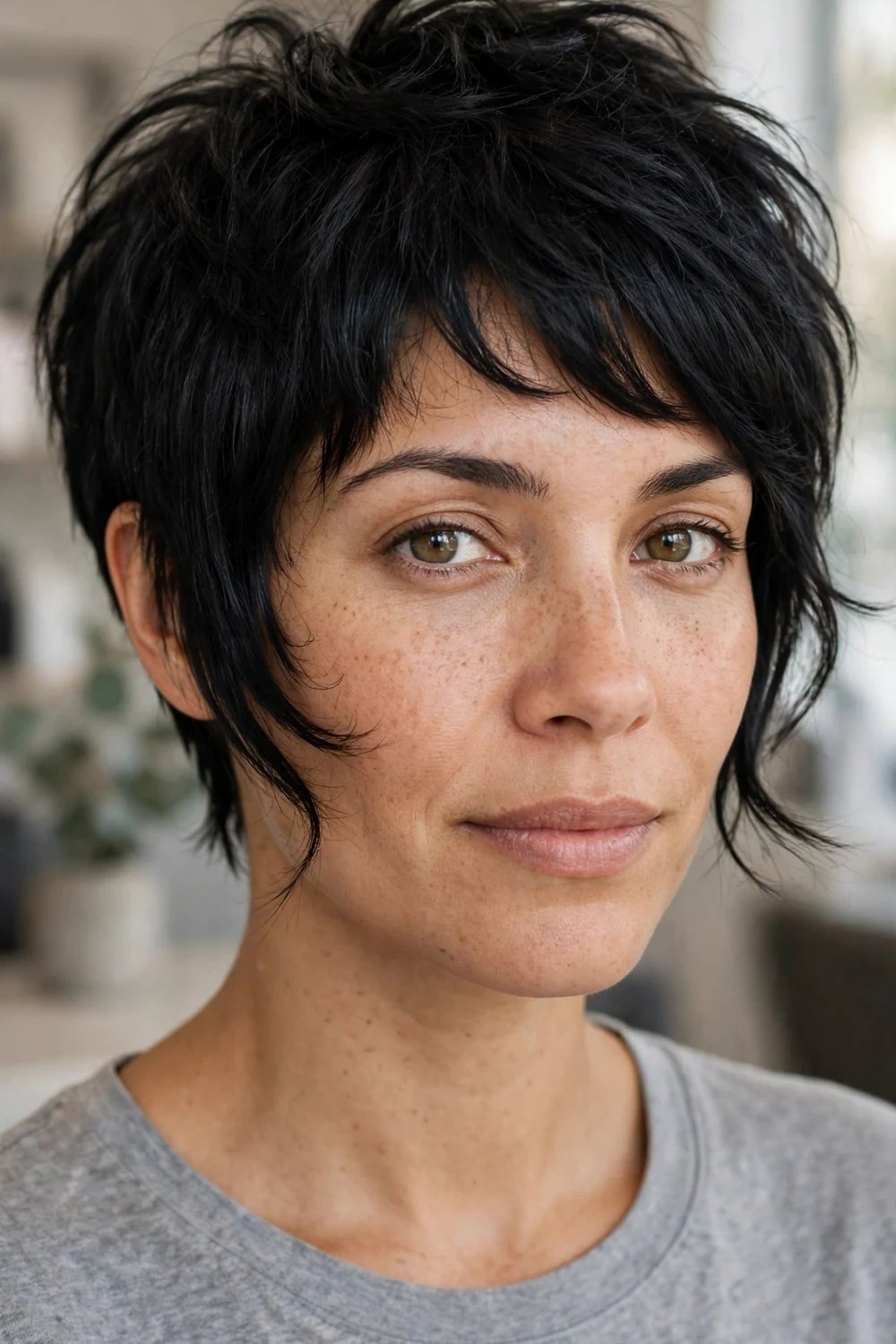
A trixie that keeps soft, longer pieces in front of and around the ears instead of clipping that area clean. Those pieces frame the cheekbones and soften the short sides.
This detail comes straight from the softer trixie descriptions: longer edges, a less severe outline, and pieces that can be worn forward or tucked. It is a good middle step if a fully exposed ear feels too short.
Try this: Tuck one side behind your ear and leave the other forward for a relaxed, uneven finish.
Difficulty: Low · Cost: $
18. Flipped-Out Trixie with 90s Ends

The longer top and side pieces are styled outward so the ends flick away from the face. The cut underneath is a standard trixie; the flip is created with heat at the ends.
Ask for enough length at the sides to turn outward, usually just past the cheekbone. A small round brush or a flat iron flick creates the bend in seconds.
Try this: Flick each side section away from your face with a flat iron, alternating with the fringe pushed forward.
Difficulty: Medium · Cost: $$
19. Sleek Slicked-Down Trixie
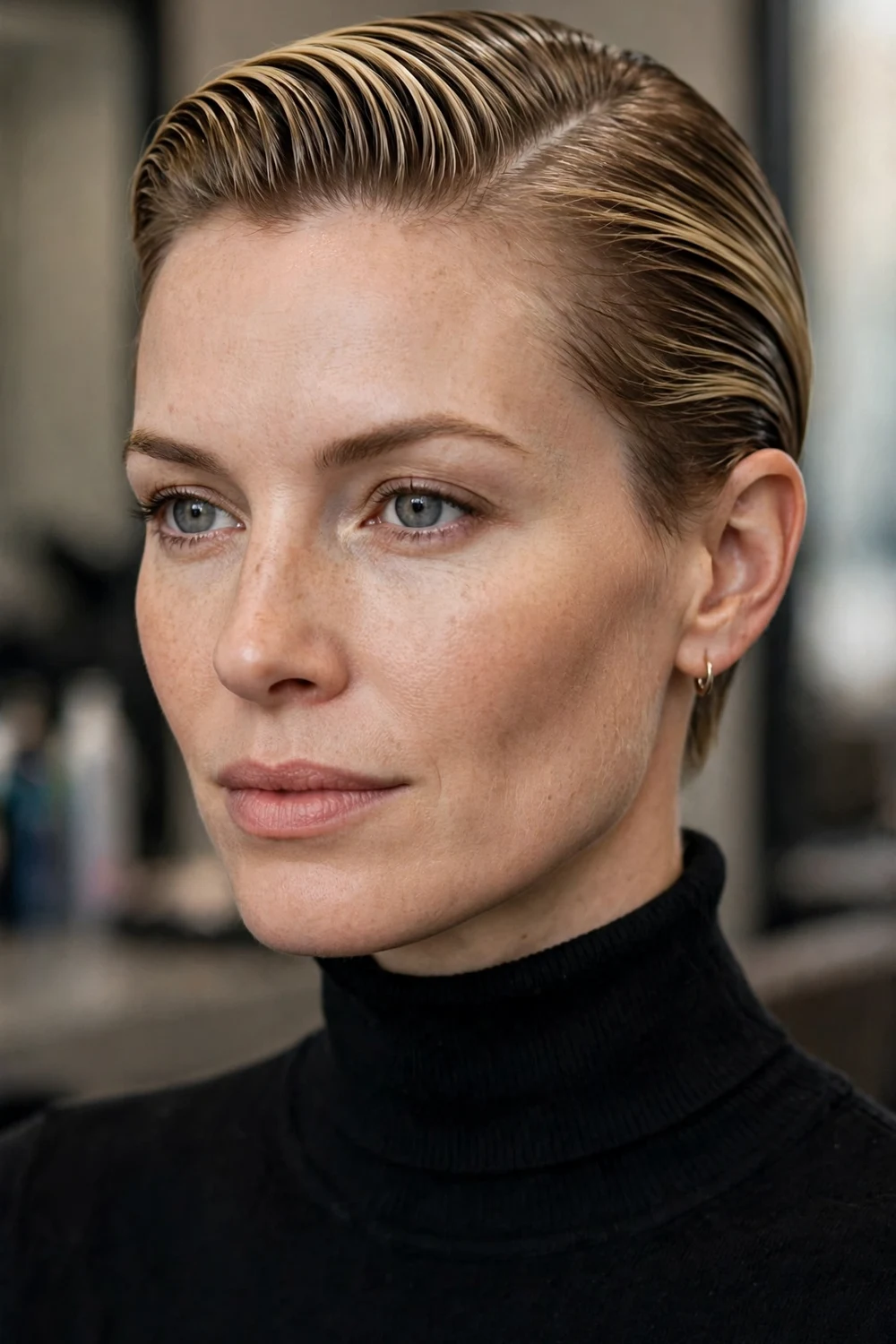
The same trixie shape worn smooth and close, with the top slicked down or back and a clean side part. It shows how much range the cut has when the texture is pressed flat instead of tousled.
This finish suits formal settings and shows the cut lines clearly, so the taper and fringe need to be precise. It works best on straight hair or hair that smooths easily.
Try this: Comb a lightweight pomade through damp hair, set the part, and let it dry in place.
Difficulty: Medium · Cost: $$
20. Pinned-Back Fringe Trixie

A trixie with a short fringe long enough to sweep back and hold with a single pin or clip. It is a styling-led version, useful on days when you want your forehead clear.
Choose a simple metal pin or a small clip that grips short hair. The fringe needs to reach past the hairline when pushed back, so mention this styling plan when the fringe is cut.
Try this: Sweep the fringe back, cross two pins for grip on fine hair, and mist lightly to hold.
Difficulty: Low · Cost: $
21. Salt-and-Pepper Trixie

Mixed dark and grey hair in a short trixie, with choppy layers that blend the two tones through the top. The texture stops the color boundary from showing as a hard line.
Keep the sides close and the top layered so grey and dark pieces mix as they move. A gloss treatment can add shine, since mixed tones can look dry under bright light.
Try this: Use a purple shampoo once a week to keep the grey pieces clear and bright.
Difficulty: Low · Cost: $
22. Trixie with Face-Framing Layers for Glasses

A trixie planned around glasses: side pieces cut to sit cleanly above the frames, a fringe that clears the top rim, and temple length adjusted so hair does not catch on the arms of the frames.
Bring your glasses to the appointment and wear them during the cut. That lets the stylist set the fringe and side length against the frames you actually wear every day. For more salon wording help, see what to tell your stylist for a pixie cut.
Try this: Check the side pieces with your glasses on before leaving the salon, not after you get home.
Difficulty: Low · Cost: $$
23. Grown-Out Trixie for Leaving a Pixie Behind

A transitional trixie for anyone growing out a classic pixie: the top and edges are left longer, the nape is only tidied, and the choppy layers disguise uneven lengths as they grow.
This version turns the awkward in-between stage into the style itself, since a trixie is meant to look a little lived-in. Plan light trims that clean the nape without removing the length you are gaining. The long pixie haircuts for fine hair list shows the next stage if you keep growing.
Try this: Ask for a nape tidy only at your next appointment, and leave the top completely untouched.
Difficulty: Low · Cost: $
Frequently Asked Questions
What is a trixie haircut?
A trixie haircut is a textured pixie variant with short tapered sides and nape, a longer choppy top, and soft longer pieces around the ears and fringe. It is cut with point cutting or razor work so the ends separate and look lived-in instead of blunt.
How is a trixie different from a pixie cut?
A classic pixie is short all over with cleaner, more uniform edges. A trixie keeps the pixie length at the back and sides but leaves the top noticeably longer and choppier, with feathered ends and softer pieces around the face, so it has more texture and a more forgiving grow-out.
Does a trixie haircut suit fine hair?
Yes, if the texturizing stays light and mainly on top. Fine hair can look thinner when the sides are thinned too much, so ask for a short crown, sparing point cutting at the ends, and volume at the roots rather than heavy layering.
How often does a trixie haircut need a trim?
Most trixie cuts need a tidy-up trim every four to six weeks. The nape and fringe lose their shape first, while the choppy top stays wearable for longer, which is why the cut is known for a forgiving grow-out.
Can you get a trixie haircut with curly or wavy hair?
Yes. Wavy trixies can air-dry with a wax spray or texturizing cream, and curly trixies work best when the layers are cut dry by a stylist who works with curls, so each curl sits where it naturally falls.
Final Thoughts
A trixie earns its place next to the pixie because it gives you the same short, practical length with far more texture and far more ways to wear it. My honest advice is to start with the classic textured version or the soft wispy bangs option if this is your first very short cut, then move toward the spikier, asymmetric, or micro-bang versions once you know how your hair sits at this length. Bring photos, name the fringe you want, and say the words point-cut top, tapered nape, and soft pieces around the ears. That brief gets you a trixie, not a generic pixie with a new name.

