

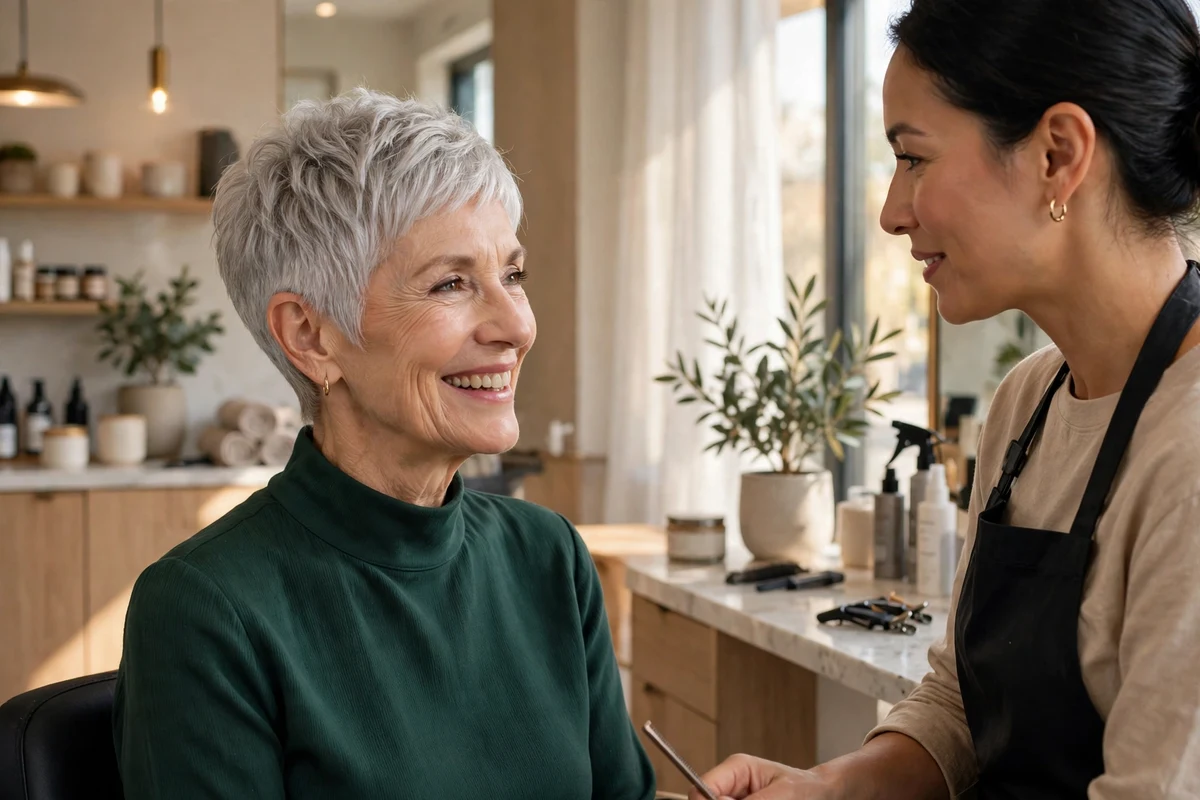
Many older women leave the salon with a pixie that is far shorter than the picture in their head. The top sits flat, the sides feel bare, or the fringe is gone before they had a chance to speak. In most cases the stylist cut exactly what the words in the chair described. The words were just too vague to protect the result.
I have sat with that sinking feeling myself, smiling in the mirror while already counting the weeks until a cut grows out. This guide fixes the talk part. It gives you plain, word-for-word lines for each part of the cut, from length and crown to fringe, neckline, gray hair, and thinning hair, so you can read them aloud in the chair and be understood the first time.
Quick Takeaways
- Decide two or three non-negotiables before you book, and say them first in the chair.
- Talk through length in plain landmarks: ears, eyebrows, cheekbones, and the nape.
- Ask for point-cut, feathered ends on fine or thinning hair, and keep the ends full.
- Agree on the grow-out and the trim schedule before the first cut is made.
- You can pause the cut at any point. A short check in the mirror halfway through saves weeks of grow-out.
1. Decide Your Non-Negotiables Before You Book

Pick two or three points you care about most, and keep the list short. A long list blurs together in a busy salon. A short list lands. Common picks are coverage at the temples, lift at the crown, soft edges around the ears, and a morning routine with no heat tools.
Write the list on your phone before the appointment. Read it at the start of the visit, while your hair is still dry and your stylist can see how it sits on a normal day. Mention your hair facts in the same breath: glasses, a strong cowlick, a flat crown, or temples that have thinned.
Say this: "My three points are these. I want lift at the crown, soft coverage at my temples, and sides that stay soft around my ears."
If you wear glasses, bring them into the talk now. The arms of the frames sit right where the sides are cut, and a few extra millimeters of length there decide whether the frames sit comfortably all day.
Difficulty: Medium · Cost: $$ (salon)
2. Bring Photos That Match Your Hair
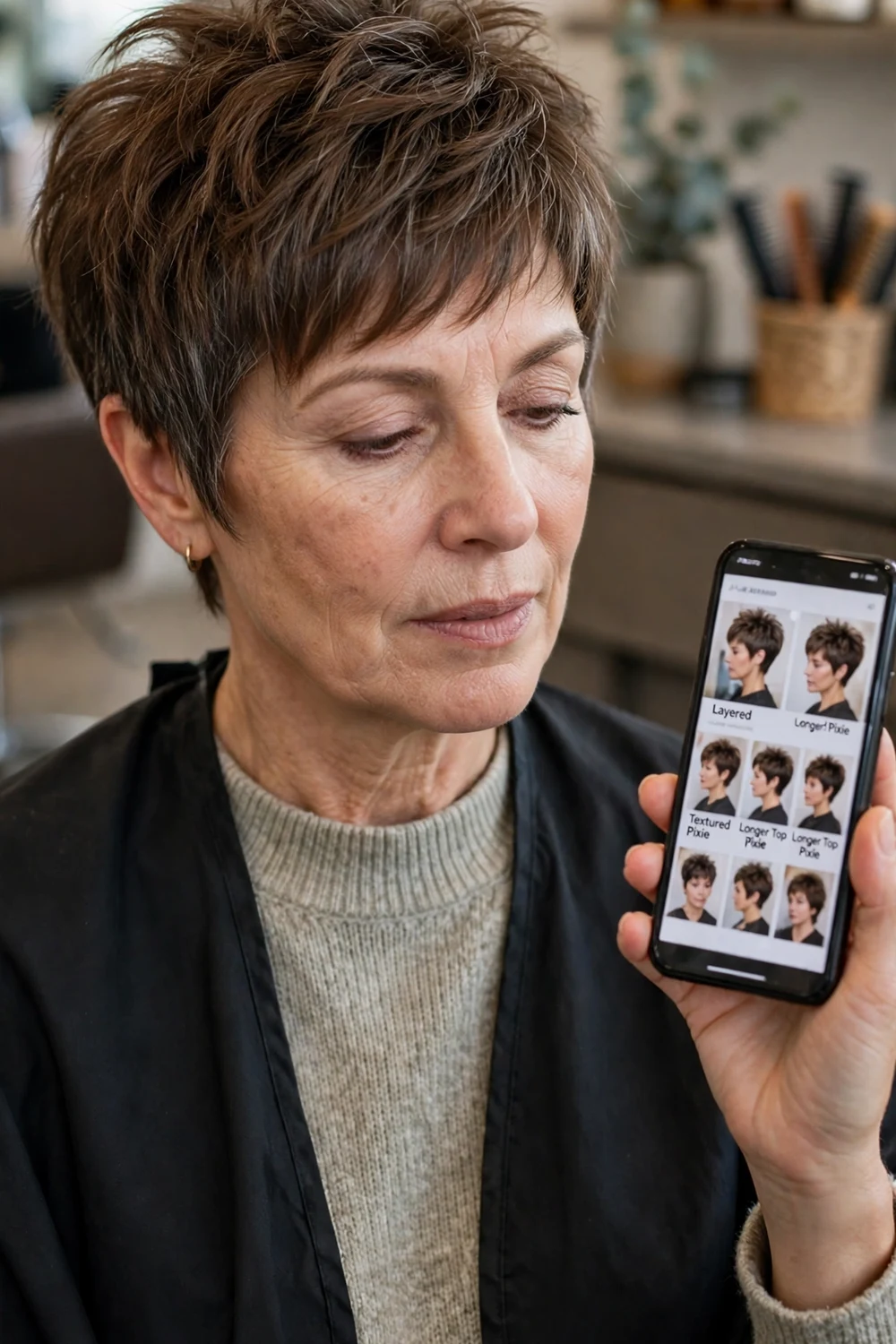
Bring two or three photos, and pick women close to your age with hair close to yours in thickness and texture. A photo of very thick hair will mislead the talk if your own hair is fine. Look for a front view, a side view, and a back view if you can find them.
Point at the part of the photo you mean. A photo holds a dozen details at once, and your stylist may focus on the color while you mean the shape. Name the shape, the fringe, or the length at the sides out loud.
Say this: "I like the shape and the balance in this photo. Please adjust it for my hairline and for how thick my hair is."
Photos of cuts on straighter or curlier hair than yours still help, as long as you say which part you are borrowing. If you are weighing a longer front, the pixie bob haircut ideas roundup shows how that extra length changes the feel of the cut.
Difficulty: Medium · Cost: $$ (salon)
3. Start With the Full Opening Script

Once you sit down, give the whole picture in one short speech before any detail talk. This opening sets the shape, the feel, and the daily routine in under a minute. Then you and your stylist can work through each area with the sections below.
Say this: "I want a soft pixie with lift at the crown. Please keep my hairline in its natural place. Keep the sides neat with soft edges, and leave the top long enough to style with a small amount of product. I need the cut to look good on air-dry days, with no daily heat."
Say the routine part even if it feels minor. A cut shaped around a round brush and a dryer looks very different at home if your real routine is fingers and air. Your stylist can only plan for the mornings you describe.
Difficulty: Medium · Cost: $$ (salon)
| Topic | Say this | Avoid saying this |
|---|---|---|
| Overall length | Leave the top long enough to sweep to the side and tuck behind my ears. | Just take it all short. |
| Sides | Keep the sides soft, blended, and covering the tops of my ears. | Clip the sides right down. |
| Fringe | Cut the fringe to eyebrow length and point-cut the ends. | Give me short bangs. |
| Thinning hair | Use point-cutting for texture and keep the ends full. | Thin it out a lot so it lies flat. |
| Neckline | Taper the nape softly and follow my natural hairline. | Give me a hard line at the back. |
| Daily styling | Shape it so it air-dries well with a little paste. | I will style it properly every day. |
4. The Length Script

Talk about length with landmarks on your own head. Words like short and shorter mean different lengths to different people. Ears, eyebrows, cheekbones, and jaw are clear to both of you, and you can touch each one as you speak.
Say this: "Please leave the top around two inches long, long enough to tuck behind my ears at the front. Keep the back and sides shorter than the top, with a gradual blend between them."
If this is your first pixie, ask for the longer end of the range you discussed. Hair can come off in a second pass at the same visit. It cannot go back on. Ask your stylist to cut the first side, then show you the length in the mirror before the rest follows.
Difficulty: Medium · Cost: $$ (salon)
5. The Top and Crown Script

The crown decides whether a pixie lifts the face or sits flat against it. Flatness at the back of the crown is the complaint stylists hear most from older clients, and it comes from layers cut too long or too even at that spot.
Say this: "I want lift at the crown, so please build shorter layers there and keep the weight off the back of my head. Show me how to dry the crown so the lift stays in at home."
Ask where the layers will sit and how the top will be dried. A good answer names the crown area, the direction of drying, and a light product. If the plan relies on heavy product every morning, say so now and ask for a shape that holds with less help.
Difficulty: Medium · Cost: $$ (salon)
6. The Sides Script
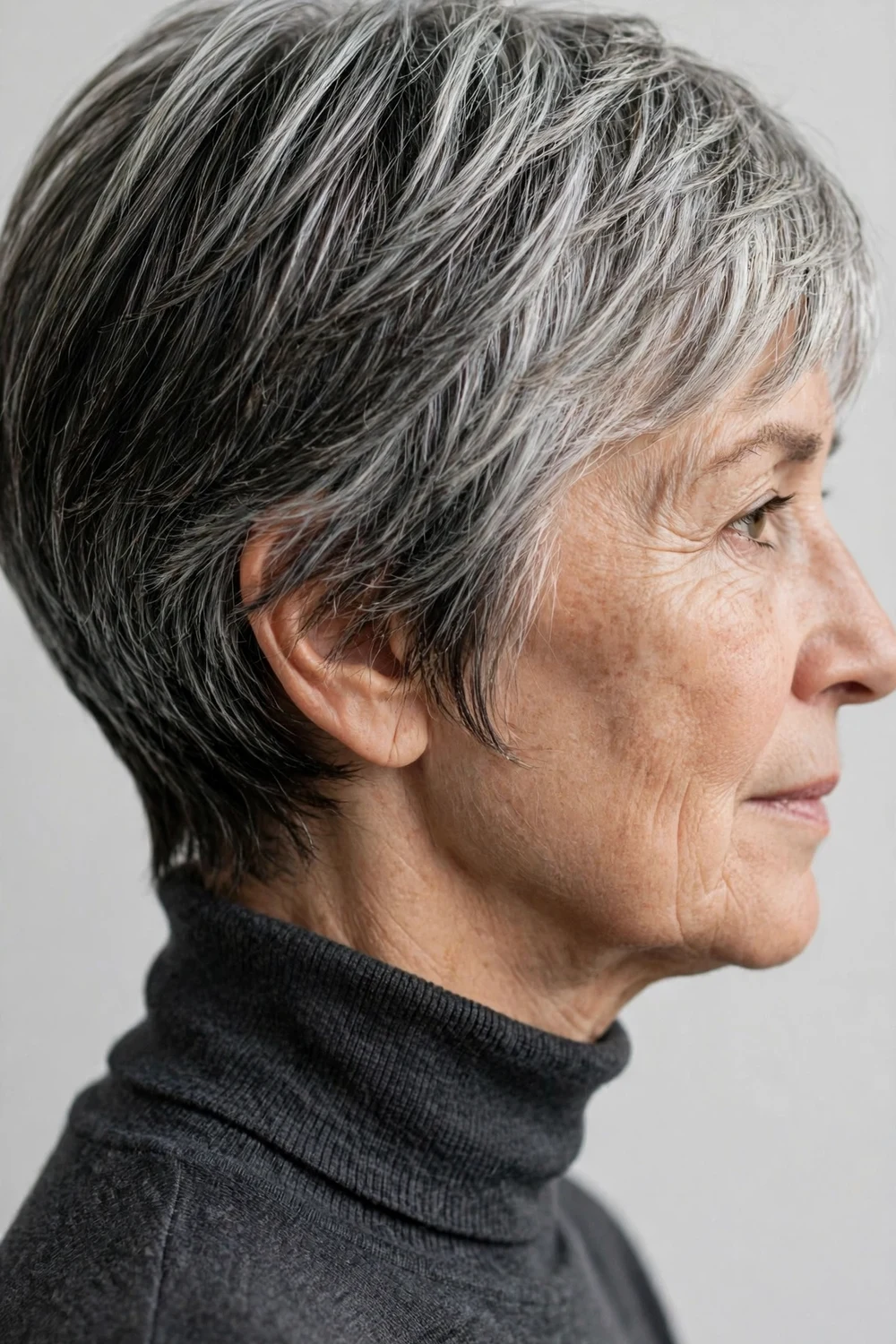
Sides cut too tight are the fastest route to a pixie that feels harsh. Blended sides with a little length keep the outline soft, cover the tops of the ears, and give glasses a comfortable place to sit.
Say this: "Please keep the sides blended and soft, covering the tops of my ears. I want them neat and close, with length I can feel between my fingers."
Mention your temples directly if they have thinned. Soft pieces left a touch longer at the temples give coverage where the hairline has pulled back, and they frame the face at the same time.
Difficulty: Medium · Cost: $$ (salon)
7. The Fringe Script
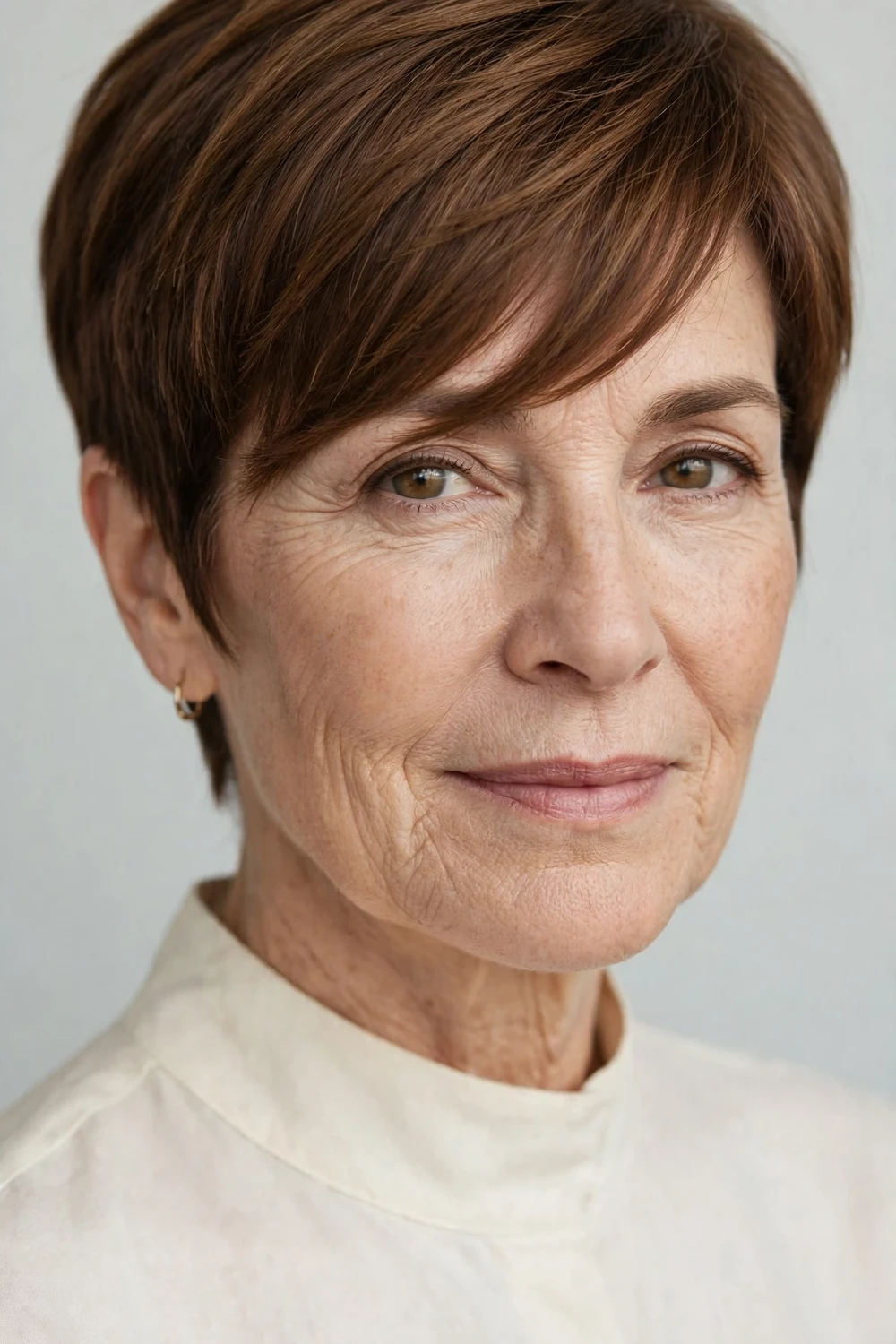
The fringe frames your eyes and softens the forehead. Length is the whole decision here. A fringe cut to the eyebrows or swept to one side can be pushed back, pinned, or grown out with ease. A very short fringe takes weeks to forgive.
Say this: "Please cut my fringe to eyebrow length, swept to the side, with point-cut ends so it falls in soft pieces. Leave it a little long today and we can shorten it at the end if I want more off."
Glasses wearers should ask for the fringe to sit just above the frames, then try the glasses on before the final trim. That one check prevents a fringe that bumps the frames all day.
Difficulty: Low to Medium · Cost: $$ (salon)
8. The Neckline and Nape Script
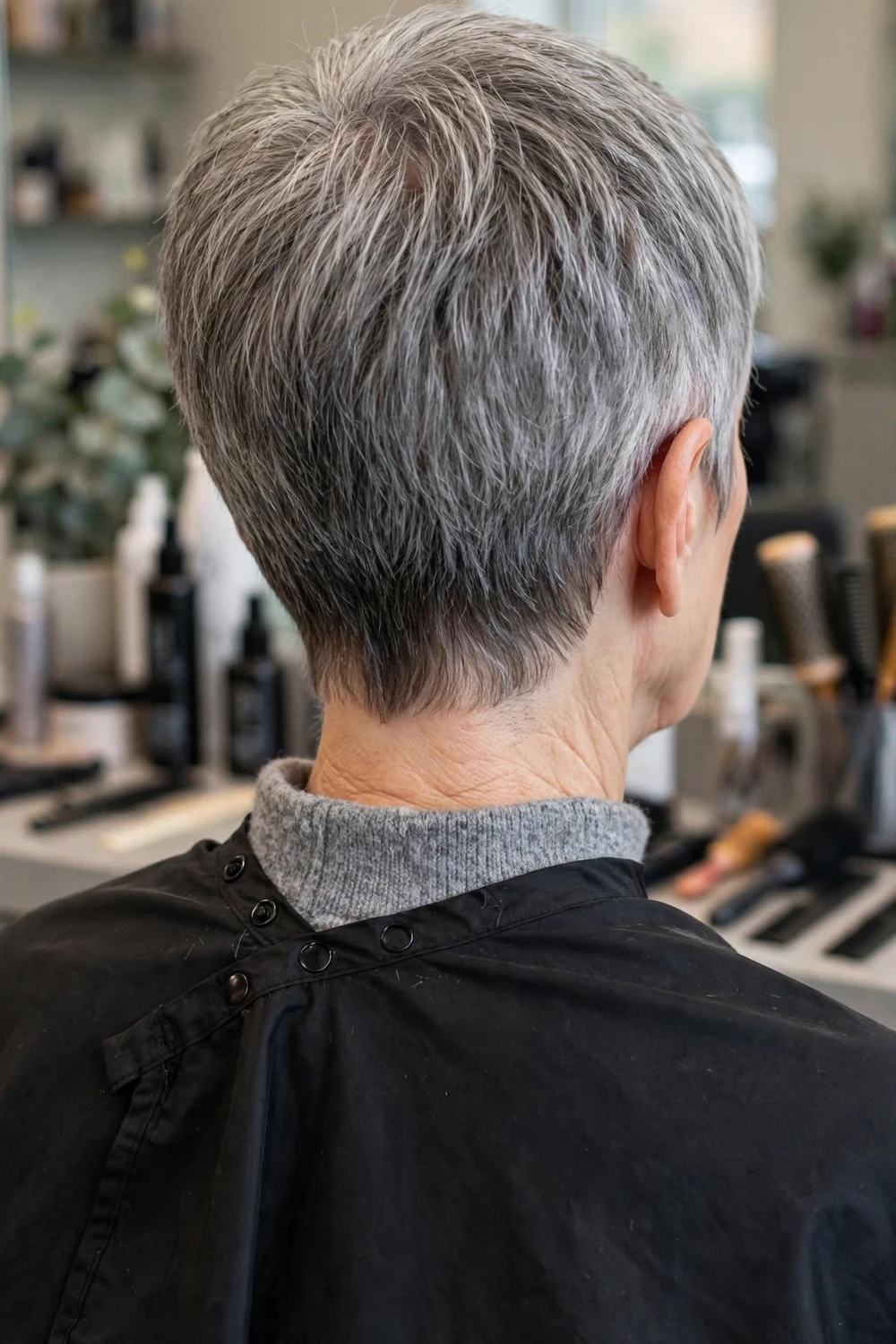
You rarely see your own neckline, so it gets skipped in most consultations. It still decides how clean the cut looks from behind and how the back grows out. A tapered nape follows your natural hairline and softens as it grows. A squared or hard-edged nape looks sharp for a week and then needs tidy-ups.
Say this: "Please taper the nape softly and follow my natural hairline at the back. Keep the edges soft around my ears and at the sideburn area too."
Ask how the neckline will look at week four. If you plan to stretch trims, the tapered version is the forgiving choice, and a quick neck tidy between full cuts keeps it clean.
Difficulty: Low to Medium · Cost: $ (salon)
9. Texture Wording for Fine and Thinning Hair
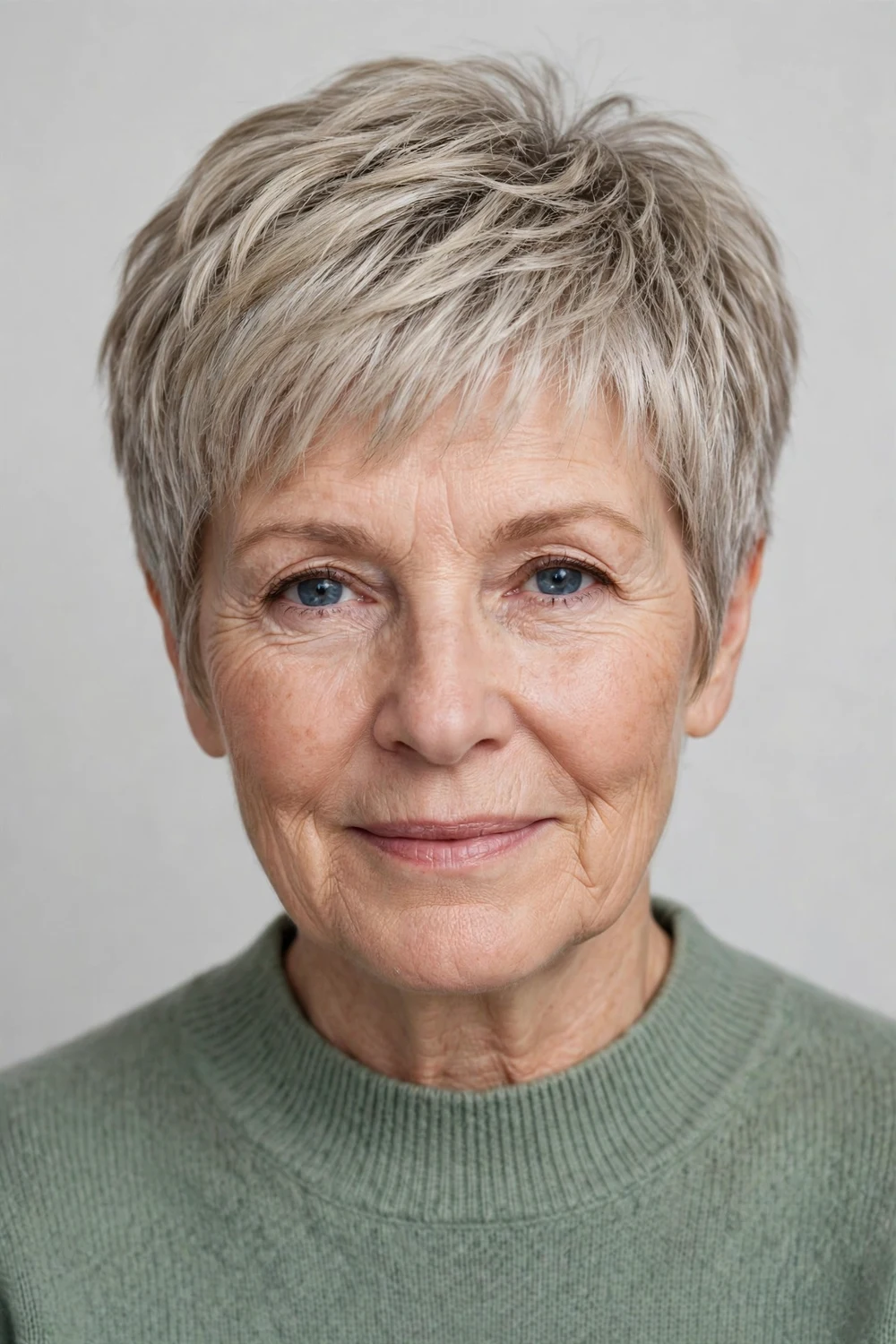
Fine hair and thinning hair need different words, so name yours plainly. Fine hair means each strand is thin. Thinning hair means fewer strands, often at the crown, the part, or the temples. Both do well with texture that keeps the ends full.
Say this: "My hair is fine and thinner at the crown. Please use point-cutting for texture and skip heavy thinning on top, so the ends stay full and my scalp stays covered."
Ask for layers that stack over sparse areas so the hair lifts across them. Readers comparing cuts built for this hair type can browse the pixie haircuts for fine hair collection for shapes that hold their body. If thinning is sudden or patchy, mention it to a doctor as well, since a haircut can cover only so much.
Difficulty: Medium · Cost: $$ (salon)
10. Gray Hair Wording

Gray and silver hair often feels coarser and drier than pigmented hair, and it can spring up where it used to lie flat. Tell your stylist how your gray behaves: wiry at the front, soft at the sides, or prone to a yellow cast in the sun.
Say this: "My gray hair is coarse at the front and softer at the sides. Please cut it with that texture in mind, keep the shape smooth, and tell me how to keep the silver bright between visits."
Decide the color plan in the same talk. You may want to keep your natural silver, blend away an old color line as the pixie grows, or add lowlights for depth. The gray hair with lowlights over 50 guide shows the blended route in detail. A clear gloss is a simple first step if your silver looks dull.
Difficulty: Low to Medium · Cost: $$ (salon)
11. Questions to Ask Before the Scissors Start

Ask these four questions while your hair is still dry and uncut, and listen to the shape of the answers. Clear answers show a clear plan.
Ask this: "How will you build lift at my crown?" Listen for layer placement, crown shaping, and a drying direction.
Ask this: "Will you use thinning shears on my hair, and where?" On fine or thinning hair, heavy thinning removes the fullness you came in to keep.
Ask this: "How will this look at four to six weeks, and which part will bother me first?" The answer tells you the real trim schedule. Follow with: "What will this cut need from me on a normal morning?" If the answer involves daily heat and your routine has none, adjust the plan now.
Difficulty: Medium · Cost: $$ (salon)
12. What to Say Mid-Cut

You are allowed to speak while the cut is happening. In fact, the halfway point is the best moment for it, when one side shows the target length and the rest still holds options.
Say this: "Can we pause for a second? I want to check the length on this side in the mirror before you match the other side."
Use short, concrete lines if something drifts. Try: "That side feels shorter than we agreed. Please leave the other side a little longer." Or: "The fringe is heading shorter than eyebrow length. Please stop it there." A good stylist would rather adjust at halfway than rebuild your trust at the next visit.
Difficulty: Medium · Cost: $$ (salon)
13. Red Flags That Mean Pause

Pause the appointment if the consultation is rushed past in under a minute, if your photos get a glance and no questions follow, or if your hair facts get brushed aside. A pixie is a precision cut with nowhere to hide an uneven line, so the planning talk deserves real minutes.
Say this: "Before we start, I need us to agree on the length on top and at the sides. I am happy to wait a few minutes while we talk it through."
Pause again if clippers come out after you asked for soft, scissor-cut sides, or if the first pass takes off far more than the landmark you agreed on. You can also stop a cut partway and keep the longer side as your new plan. Leaving with a longer pixie beats leaving with a shorter one you never chose.
Difficulty: Low to Medium · Cost: $ (salon)
14. The Grow-Out and Upkeep Talk

Have the grow-out talk before you leave, while the cut is fresh and your stylist remembers every choice. Most pixies hold their shape for four to six weeks. Longer pixie shapes can stretch to six or eight weeks, since the extra length hides regrowth.
Say this: "Please show me which part of this cut will lose its shape first, and tell me honestly how many weeks I can go between trims. Can you also show me the two-minute way to style it at home?"
Book the next trim before you leave if your calendar fills fast. If you prefer fewer salon visits overall, the low maintenance haircuts for women over 50 roundup gathers shapes built around longer gaps between appointments.
Difficulty: Low to Medium · Cost: $ (salon)
15. The Soft Pixie, Asked for by Name
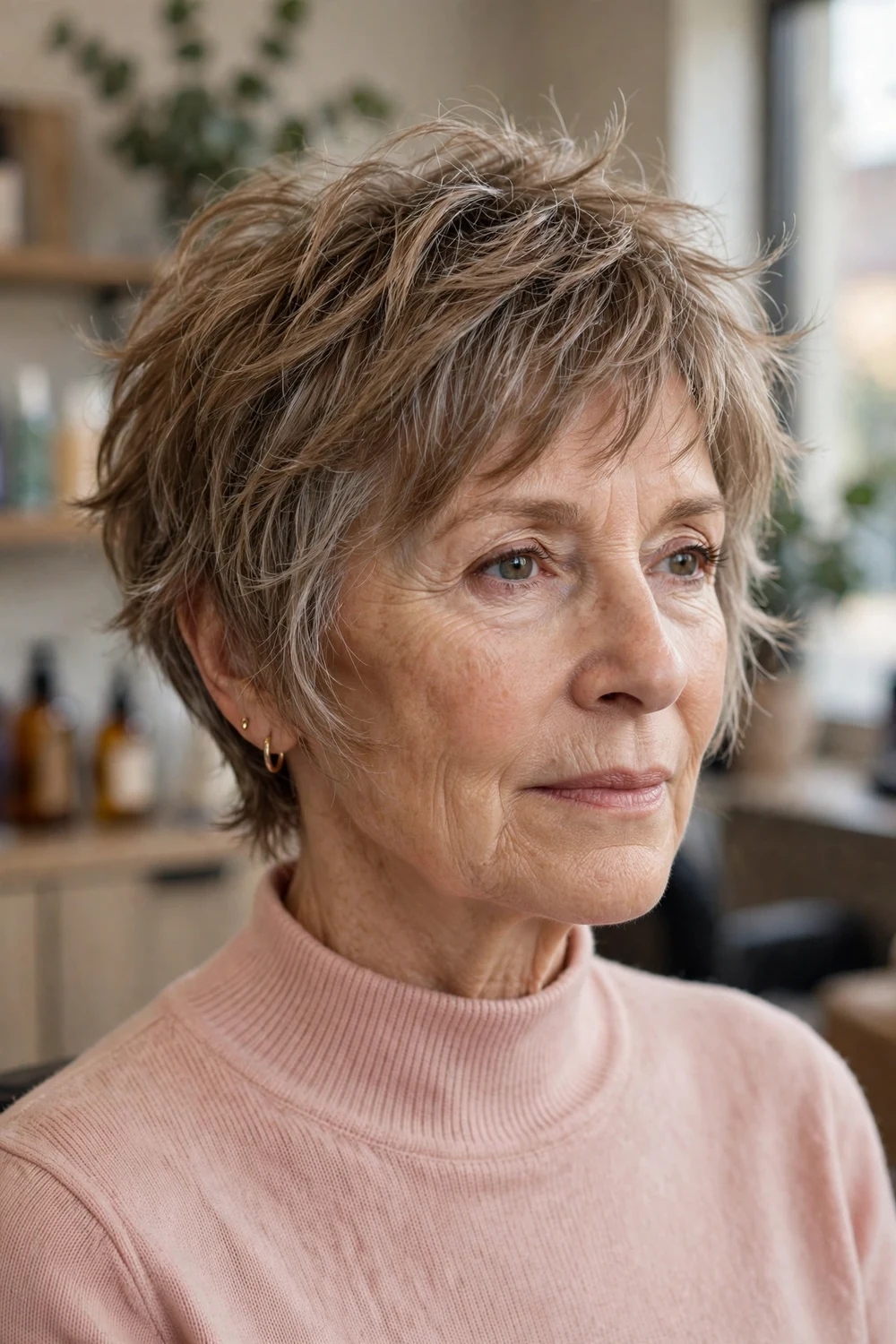
The soft pixie is the name to use when you want short hair with gentle edges all around: feathered ends, a wispy fringe, and pieces that sit softly around the cheeks and temples. It suits most face shapes and most hair types, and it grows out kindly.
Say this: "I would like a soft pixie, please. Feathered, point-cut ends, a wispy side-swept fringe, and soft pieces around my face. Keep the outline gentle all the way around."
This is a forgiving first pixie. The soft edges hide small uneven spots as it grows, and the shape still reads well in week five and six. Layered versions of it appear throughout the short layered hairstyles for women over 60 collection if you want more photo options to bring along.
Difficulty: Low to Medium · Cost: $$ (salon)
16. The Pixie With a Longer Top, Asked for by Name

A pixie with a longer top keeps three to four inches up top with shorter, blended sides and back. The long top gives you choices each morning: swept to the side, pushed forward into a fringe, or lifted at the roots for height.
Say this: "I would like a pixie with a longer top, please. Leave three to four inches on top so I can sweep it to the side, and blend the sides and back shorter with soft edges."
This version eases the move from longer hair, since the top keeps a familiar feel. It also helps thinning hair, because the longer top layers stack over the crown and cover it well.
Difficulty: Medium · Cost: $$ (salon)
17. The Tapered Pixie, Asked for by Name

A tapered pixie sits close and neat at the nape and sides, with the length kept on top. The gradual blend from short to longer gives a clean outline that holds its shape well, and the top still carries enough length for texture and lift.
Say this: "I would like a tapered pixie, please. Taper the nape and sides gradually with a soft blend, and leave the top longer with point-cut texture."
Ask how often the nape will need a tidy. Tapered necklines show regrowth early, and many salons offer a quick neck cleanup between full cuts that stretches the shape by a couple of weeks.
Difficulty: Medium · Cost: $$ (salon)
Frequently Asked Questions
How short should I ask for on my first pixie cut?
Ask for the longer end of the pixie range: around two inches on top, with the front long enough to tuck behind your ears. You can go shorter at the same visit once you see the first side cut, or at your next appointment. Starting longer keeps every option open.
What do I tell my stylist if my hair is thinning?
Say where the thinning sits, such as the crown, the part, or the temples, and ask for point-cut texture with full ends. Ask your stylist to skip heavy thinning shears on top, since they remove the fullness that covers sparse areas. Shorter layers stacked over the crown help the hair lift across thinner spots.
How do I ask for a pixie that grows out well?
Ask for a tapered nape, blended sides, and soft edges all around, and say plainly that you want the shape to hold for five to six weeks. Squared necklines and very tight sides show regrowth first. Your stylist can also tell you which part of your cut will lose its shape earliest, so you know what to watch.
What should I say if the cut starts going too short?
Speak up right away, while the other side still has length. A clear line works well: please pause, that side is shorter than we agreed, so leave the rest a little longer. Checking the first side in the mirror before the cut continues prevents most length surprises.
How often does a pixie cut need a trim?
Most pixies need a shaping trim every four to six weeks. Longer pixie shapes and pixie bobs can often stretch to six or eight weeks. A quick neckline tidy between full cuts keeps a tapered shape looking clean for longer.
Final Thoughts
A pixie cut rewards clear words more than any other cut I know. When you walk in with two or three non-negotiables, photos that match your hair, and a short script for each part of the cut, the appointment changes. You stop hoping the stylist reads your mind, and the two of you build the same picture before a single strand comes off.
Save the lines that fit your hair, read them in your own voice, and speak up at the halfway check. The cut you pictured is usually one honest conversation away.

