


Going blonde as a brunette does not have to mean leaving your base behind. Blonde balayage keeps your brunette depth at the root and paints blonde through the lengths, so you get lightness, dimension, and a grow-out that stays soft between salon visits.
This guide is only about blonde shades on brunette bases, from gentle honey and toffee to high-contrast platinum and pearl. Each idea notes the base it suits, the upkeep to expect, and a practical tip to take to your colorist, so you can pick a shade that fits your hair and your schedule.
Key Takeaways
- Warm blondes such as honey, caramel, toffee, and golden are the easiest lifts for medium and dark brunette bases.
- Cool blondes such as ash, mushroom, icy, and pearl need more lightening and more toning upkeep.
- Keeping the root in your brunette shade is what makes balayage grow out softly for months.
- Face-frame and low-contrast options give a blonde change with the least lightening and the lowest upkeep.
For a softer seasonal take, see our guide to fall balayage hair colors. If you want warmth without full blonde, honey brown hair ideas sit one step below the honey blonde in this list.
1. Classic Honey Blonde Balayage
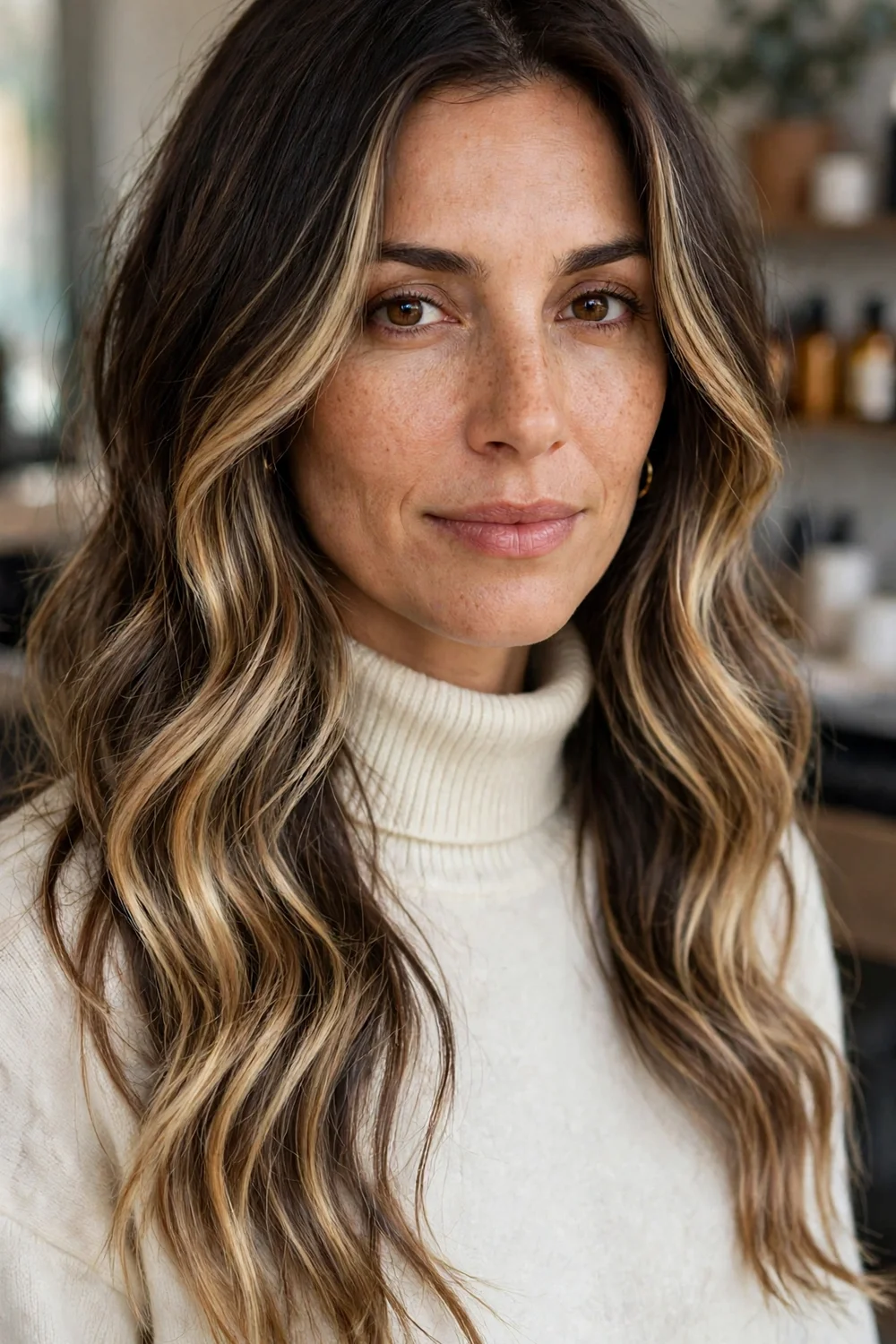
A deep or medium brunette base stays in place at the root while honey blonde is painted through the mid-lengths and ends in soft, wide ribbons. The honey tone sits close enough to brown that the grow-out stays soft for months, and loose waves show the blend best.
Ask your colorist to keep the brightest pieces around the face and through the ends, with finer pieces at the crown. On very dark bases, honey is often reachable in one session because it does not need to lift as pale as ash or platinum.
Try this: Bring two photos, one in daylight and one indoors, so your colorist can match the honey level to how you actually wear your hair.
Difficulty: Medium · Cost: $$
2. Ash Blonde Balayage for a Smoky Finish
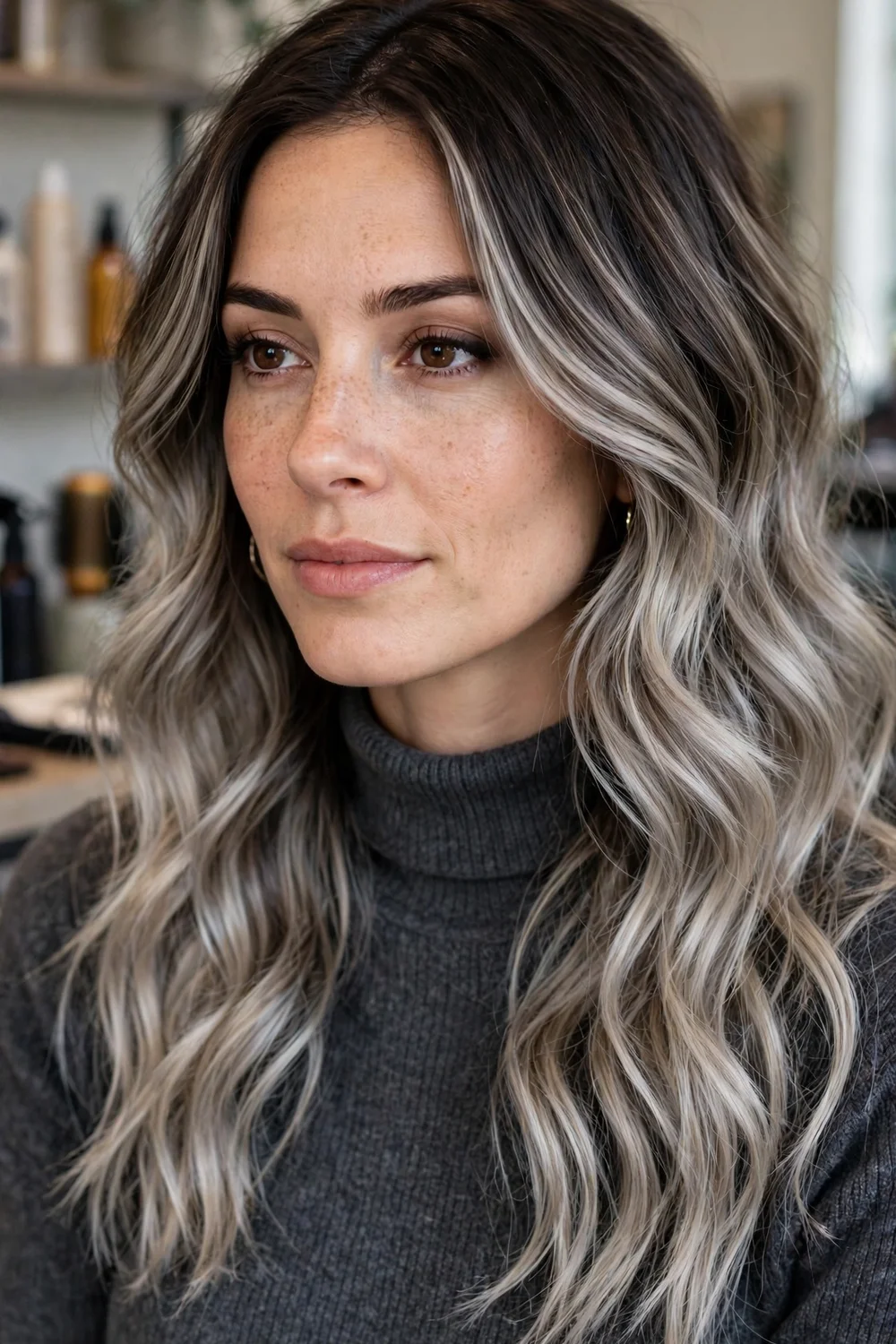
Ash blonde adds cool, smoky lightness over a brunette base and cuts the warmth that dark hair naturally pulls. The blend works well on neutral and cool skin tones, and it reads polished on straight styles as well as waves.
Cool tones fade faster than warm tones, so plan on a toning gloss between full appointments. Your colorist may need more than one session on a dark base to reach a clean ash without brass showing through.
Try this: Use a purple toning mask once a week at home, and leave it on for the time on the label only, to keep the ash tone clean.
Difficulty: Hard · Cost: $$$
3. Caramel Blonde Balayage on Dark Brown Hair

Caramel blonde sits between brown and blonde, which makes it a gentle first step for dark brunettes. Golden caramel ribbons are painted where light would fall, so the base still reads brunette while the overall look gets warmer and brighter.
This shade suits medium and deep brunette bases well because the lift needed is moderate. It also pairs well with curls and waves, where each ribbon catches light on the outer curve of the hair.
Try this: Ask for ribbons in two widths, wider at the front and finer at the back, for dimension that looks natural from every angle.
Difficulty: Medium · Cost: $$
4. Neutral Beige Blonde Balayage
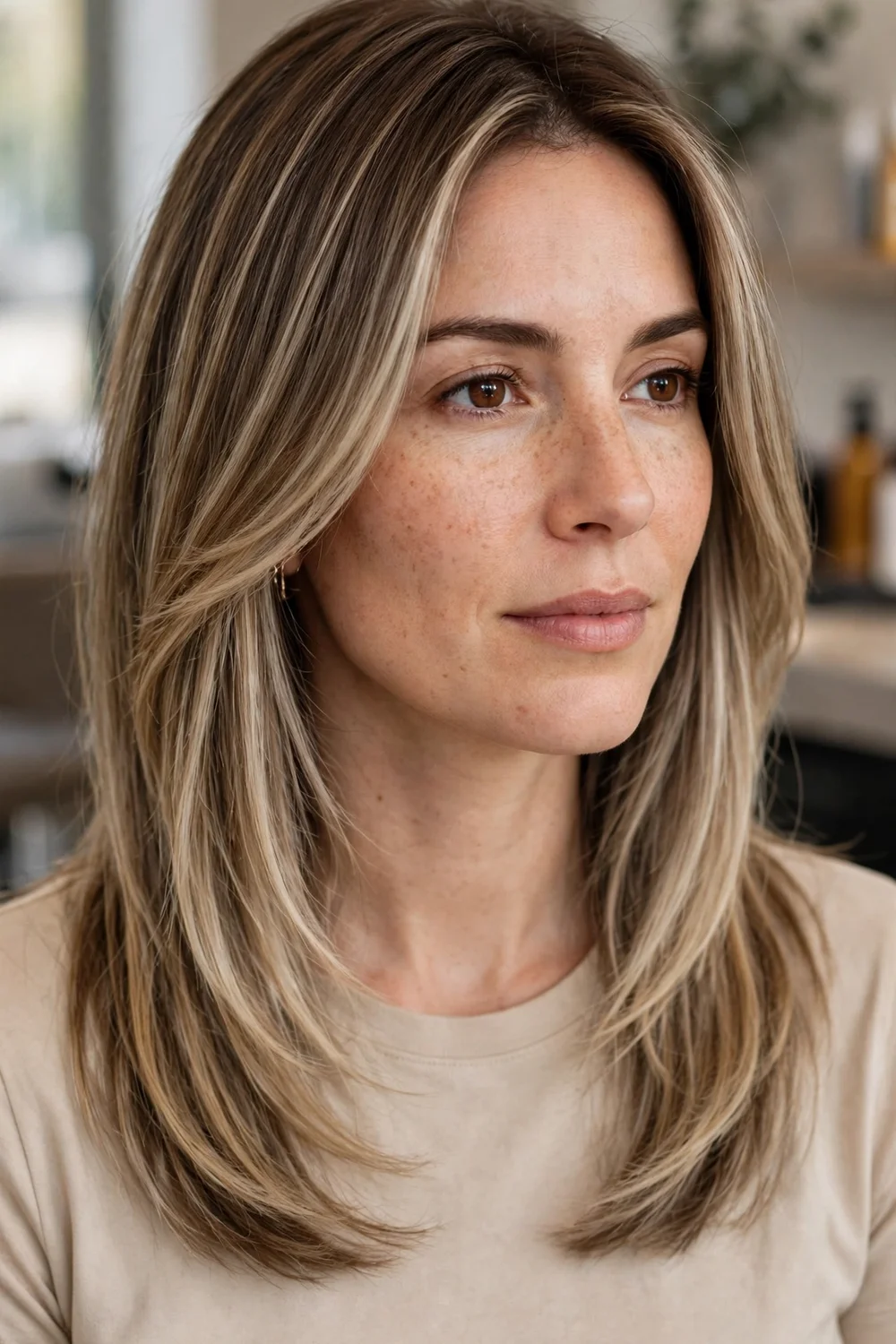
Beige blonde balances warm and cool tones in one shade, so it flatters brunettes who find honey too gold and ash too grey. Painted over a medium brown base, it gives a soft, even brightness without a strong contrast line.
Beige is a good choice for a first balayage because it blends with many base shades and fades in a forgiving way. Keep the root area deeper so the beige lengths grow out without a hard edge.
Try this: Show your colorist your makeup and brow tone at the appointment, since beige reads best when it sits in step with both.
Difficulty: Medium · Cost: $$
5. Soft Champagne Blonde Balayage

Champagne blonde is pale and creamy with a faint warm cast, painted in fine pieces over a brunette base for a light, airy finish. The contrast is higher than honey or beige, so the placement needs care to keep it soft.
Fine hair often suits champagne well because the pale tone adds the look of fullness through the ends. On darker bases, expect the lightening to take longer and need a gloss to finish the tone.
Try this: Ask for finer, more blended pieces at the part line and bolder pieces underneath, so the top stays soft as it grows.
Difficulty: Hard · Cost: $$$
6. Golden Blonde Balayage for Warmth and Shine
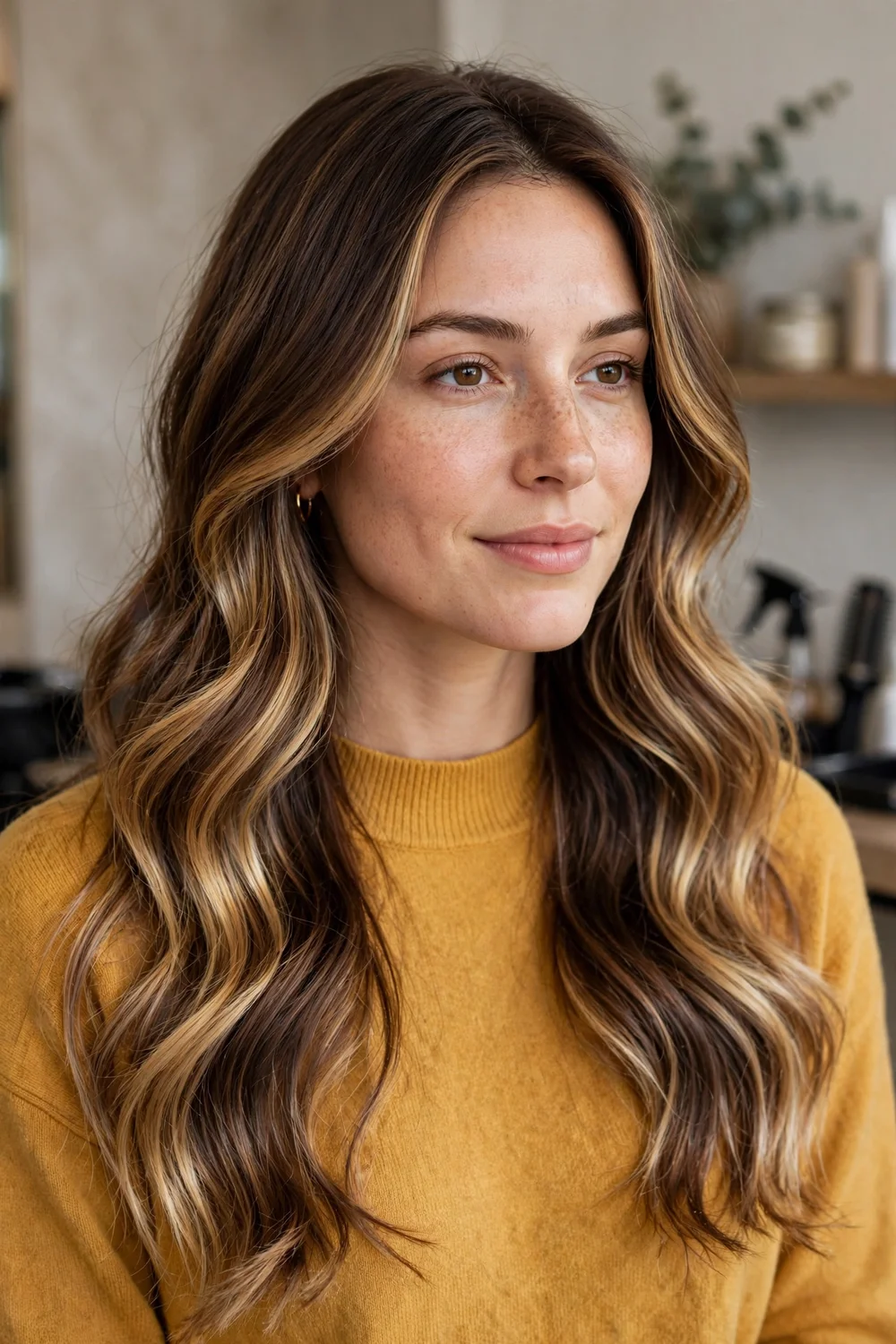
Golden blonde brings clear warmth to a brunette base and works well in long layers and loose waves. The gold tone reflects light through the lengths, so hair can look shinier even before any gloss treatment.
Warm skin tones and warm brown bases carry golden blonde with ease. If your base is very cool or ashy brown, ask your colorist to keep some neutral pieces mixed in so the gold does not pull too yellow.
Try this: Finish waves with a light shine spray on the mid-lengths only, keeping the root area clean so the balayage depth stays visible.
Difficulty: Medium · Cost: $$
7. Platinum Blonde Balayage with High Contrast
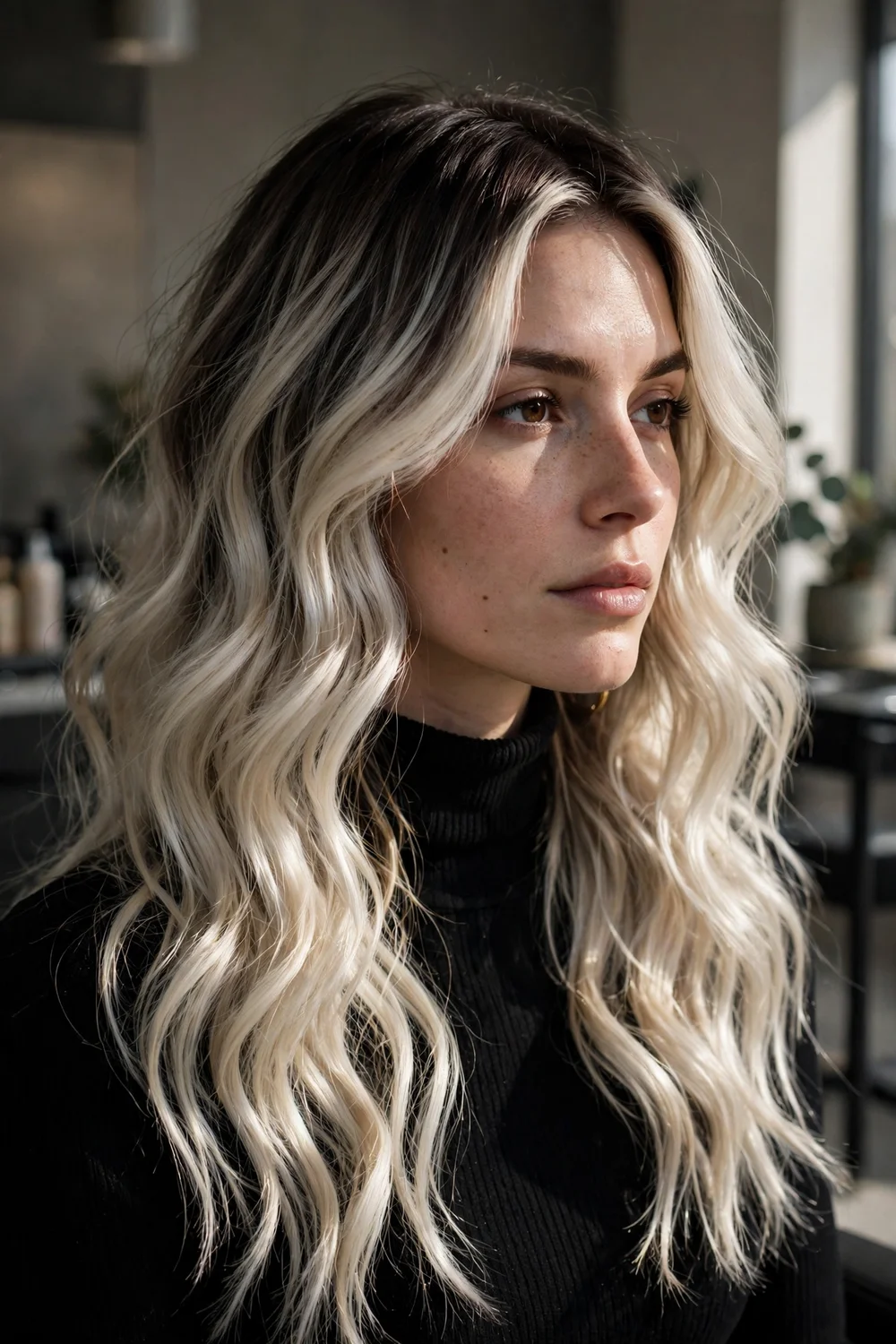
Platinum balayage places very pale blonde through the lengths of a deep brunette base for the strongest contrast in this list. The root stays dark, which keeps the look grounded and helps the grow-out, while the ends carry the drama.
This level of lift takes time and can take more than one session on dark hair. Hair health decides how pale you can go, so a strand test and a conditioning plan are part of a good appointment for this look.
Try this: Book a consultation first and ask how many sessions your base needs, so you plan the cost and the timeline before you start.
Difficulty: Hard · Cost: $$$
8. Icy Blonde Ends with a Soft Shadow Root
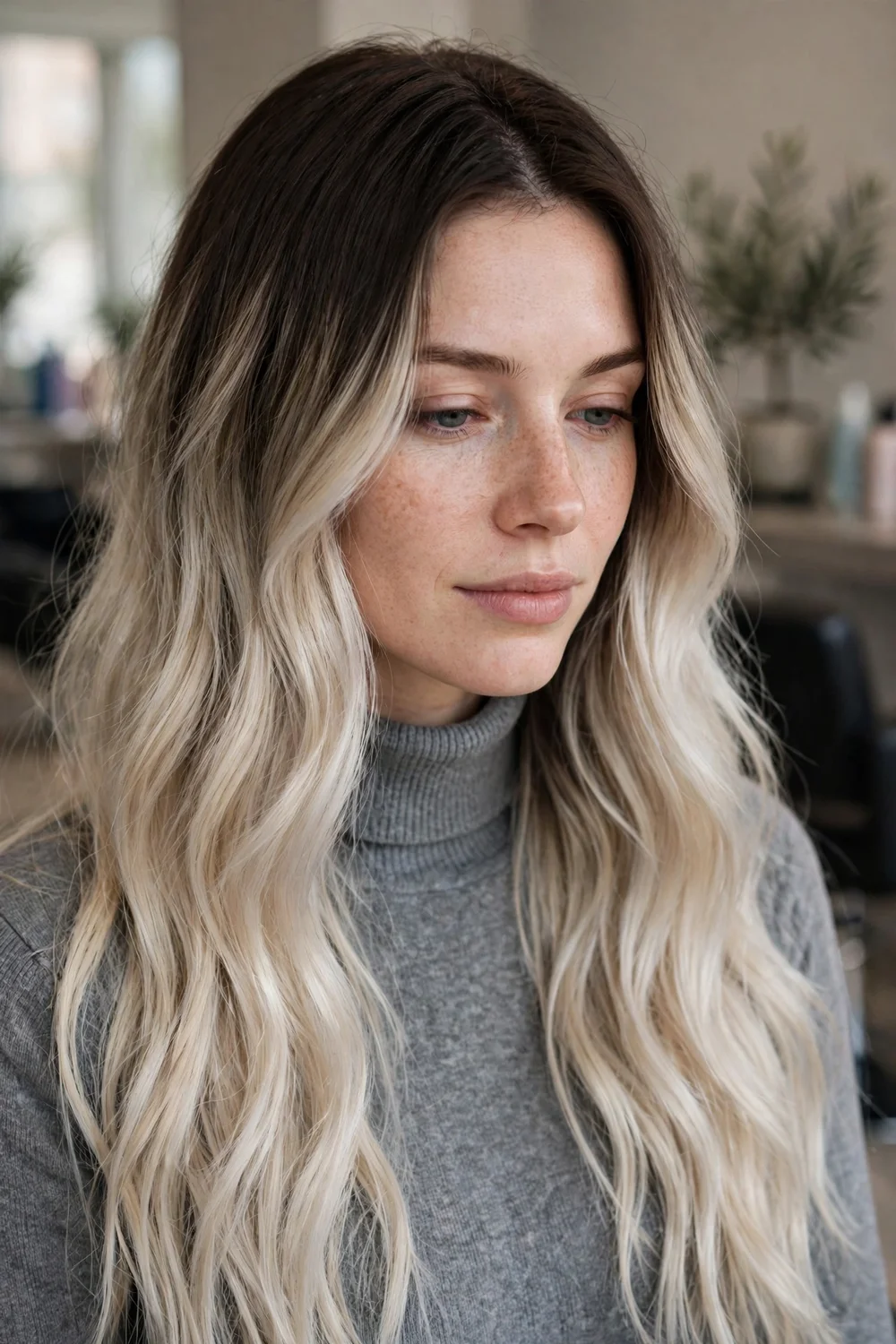
Icy blonde ends sit over a deeper shadow root, so the palest color lives at the bottom half of the hair. The shadow root keeps the top soft and makes regrowth far less obvious than a full-head pale color.
This look suits long and medium lengths where there is room for the gradient to show. Keep the transition blended rather than straight across, with a few icy pieces pulled higher around the face.
Try this: Ask for the shadow root in your natural shade or one level deeper, which gives you the longest, softest grow-out.
Difficulty: Hard · Cost: $$$
9. Bronde Balayage, Half Brunette and Half Blonde

Bronde blends brown and blonde so closely that neither one wins, which suits brunettes who want lightness without leaving their color family. The blonde starts at the mid-lengths and stays within a few levels of the base.
Because the lift is modest, bronde is gentle on hair condition and simple to maintain. It works across light, medium, and dark brown bases, with the blonde tone adjusted warmer or cooler to match your skin.
Try this: If you are new to lightening, start with bronde and go lighter at the next appointment once you see how your hair holds tone.
Difficulty: Easy · Cost: $$
10. Sandy Blonde Balayage for a Beachy Grow-Out

Sandy blonde is a muted, neutral blonde that looks at home on medium brown bases and casual, textured styles. The pieces are painted unevenly, brighter at the ends and around the face, for a finish that mimics time outdoors.
Sandy tones fade softly and need less toning than ash or icy shades. Beach waves, braids, and messy buns all show the varied placement well, so this is a practical pick for low-effort styling.
Try this: Ask your colorist to leave a few deeper pieces through the ends, since that depth is what makes sandy blonde look natural.
Difficulty: Easy · Cost: $$
11. Vanilla Cream Blonde Through the Mid-Lengths

Vanilla cream blonde is soft and pale with a warm, creamy cast, worked through the mid-lengths of a brunette base rather than from the root. It brightens the hair without the cool edge of ash or the strong contrast of platinum.
This shade suits light and medium brunettes best, where the lift needed is moderate. On deeper bases, your colorist can build vanilla in stages, starting with caramel and beige before going creamier.
Try this: Pair vanilla lengths with a slightly deeper face frame at first, then brighten the front at your next visit if you want more light.
Difficulty: Medium · Cost: $$
12. Buttery Blonde Face Frame with a Deeper Base

A buttery blonde face frame puts the lightest color right where it frames your features, while the rest of the brunette base stays deep with only a few soft pieces through the ends. It is the fastest way to feel blonder without lightening the whole head.
Because only a small section is lifted high, this option is kinder to hair condition and to your budget. It suits almost every brunette base and grows out softly, since the bright area is narrow and blended at the root.
Try this: Ask for the frame to start slightly below the root and widen toward the ends, so regrowth stays soft between visits.
Difficulty: Easy · Cost: $
13. Mushroom Blonde Balayage for Cool Brunettes
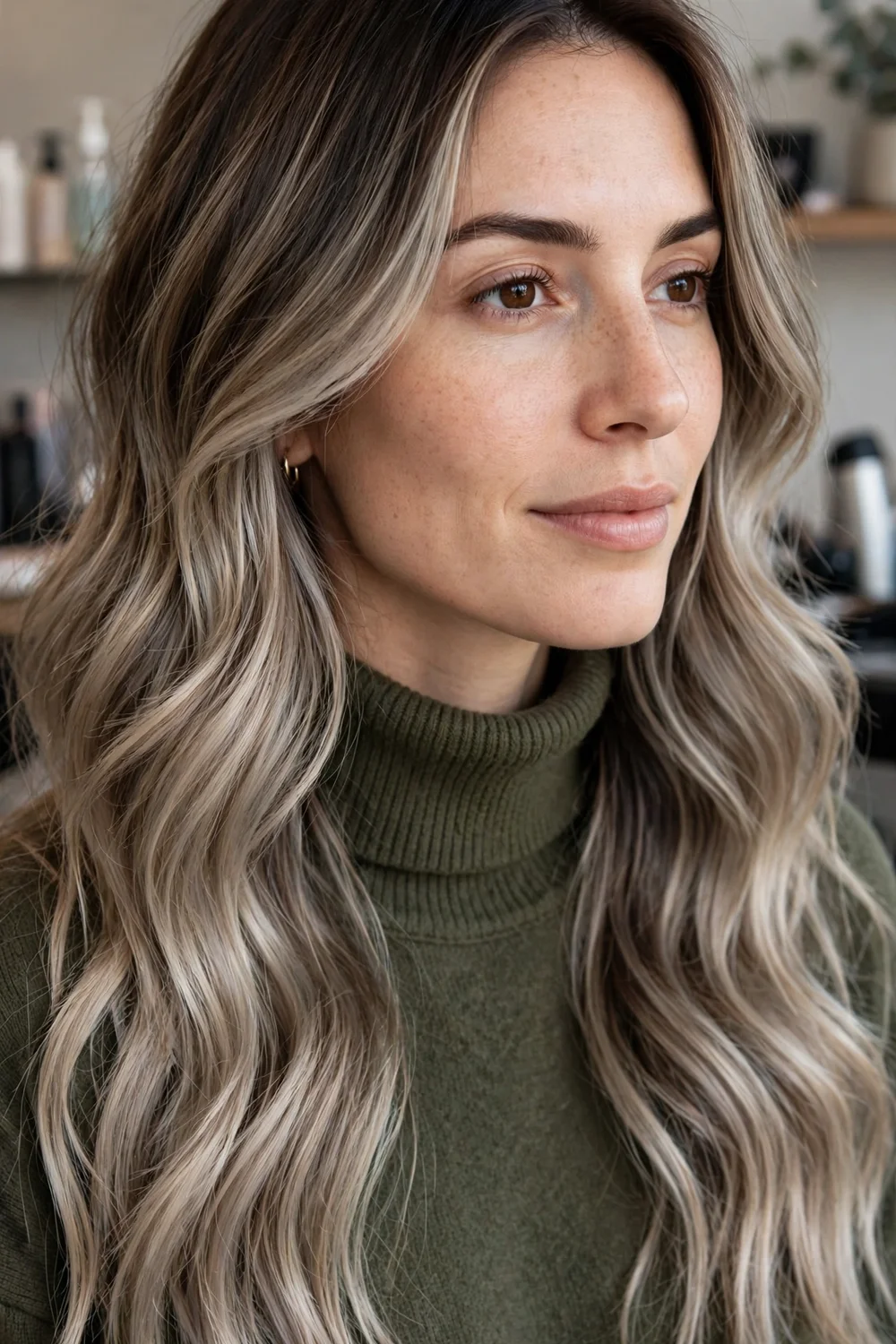
Mushroom blonde mixes taupe, beige, and soft ash tones over a brunette base for a muted, cool finish with no strong gold. It suits olive and neutral skin well and gives brunettes a blonde option that stays understated.
The muted tone needs careful toning, since mushroom shades can fade warm if the base lifts unevenly. A gloss at regular intervals keeps the taupe cast in place between full appointments.
Try this: Take a photo of your base in natural light to your appointment, since mushroom blonde is matched closely to your starting tone.
Difficulty: Hard · Cost: $$$
14. Toffee Blonde Balayage for Very Dark Bases
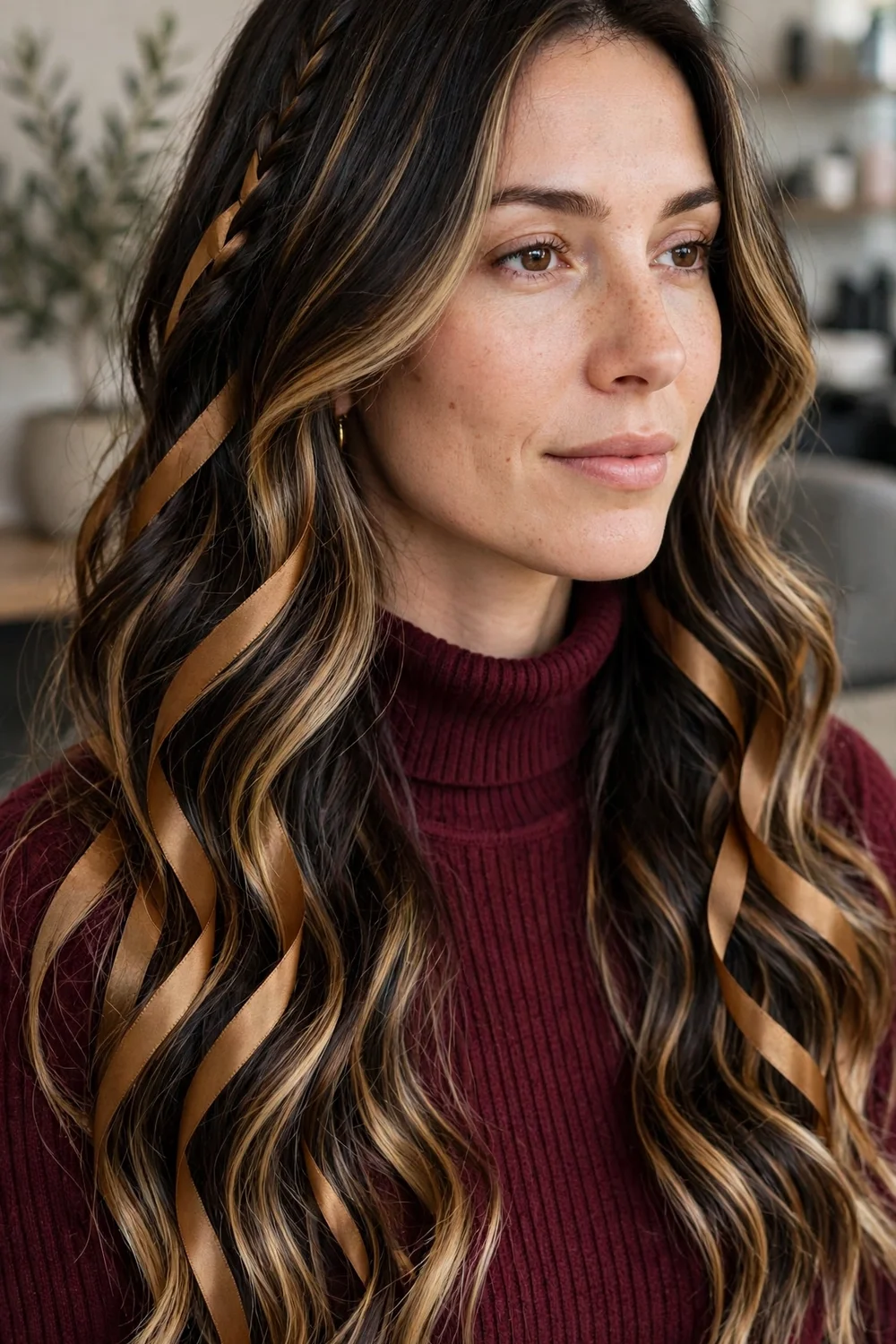
Toffee blonde is deeper and richer than honey, with a warm brown-gold mix that dark brunettes can often reach in one session. It adds clear lightness while staying close to the base, so the result reads intentional rather than half finished.
This is a strong pick for near-black and espresso bases that pull a lot of red when lightened. The toffee tone works with that warmth instead of fighting it, which keeps brass under better control.
Try this: If your long-term goal is paler blonde, use toffee as stage one and lighten further at a later appointment once your hair has rested.
Difficulty: Medium · Cost: $$
15. Pearl Blonde Balayage on an Espresso Base

Pearl blonde has a soft, luminous finish with hints of beige and violet, painted over an espresso brunette base for a refined contrast. The pieces are kept fine and well blended so the pale tone looks smooth rather than stripey.
Pearl tones need a clean lift first, so darker bases may need staged appointments. The payoff is a pale blonde that still feels soft, especially on straight and lightly waved styles where the sheen shows.
Try this: Use a bond care treatment in the weeks before your appointment if your hair is already lightened, and tell your colorist your full color history.
Difficulty: Hard · Cost: $$$
16. Blonde Balayage on a Brunette Bob

Short brunette hair takes balayage well when the placement follows the cut. On a bob, blonde is painted through the surface layers and ends, with brighter pieces at the front corners where the hair frames the jaw.
Because a bob has less length, the blend needs to start a little higher than on long hair, while still staying off the root. Textured and wavy bobs show the dimension best, and a blunt bob shows it as a clean gradient.
Try this: Bring a photo of your exact bob length, since placement for a chin-length cut differs a lot from a long bob.
Difficulty: Medium · Cost: $$
17. Rooted Blonde Balayage Lob with a Soft Melt
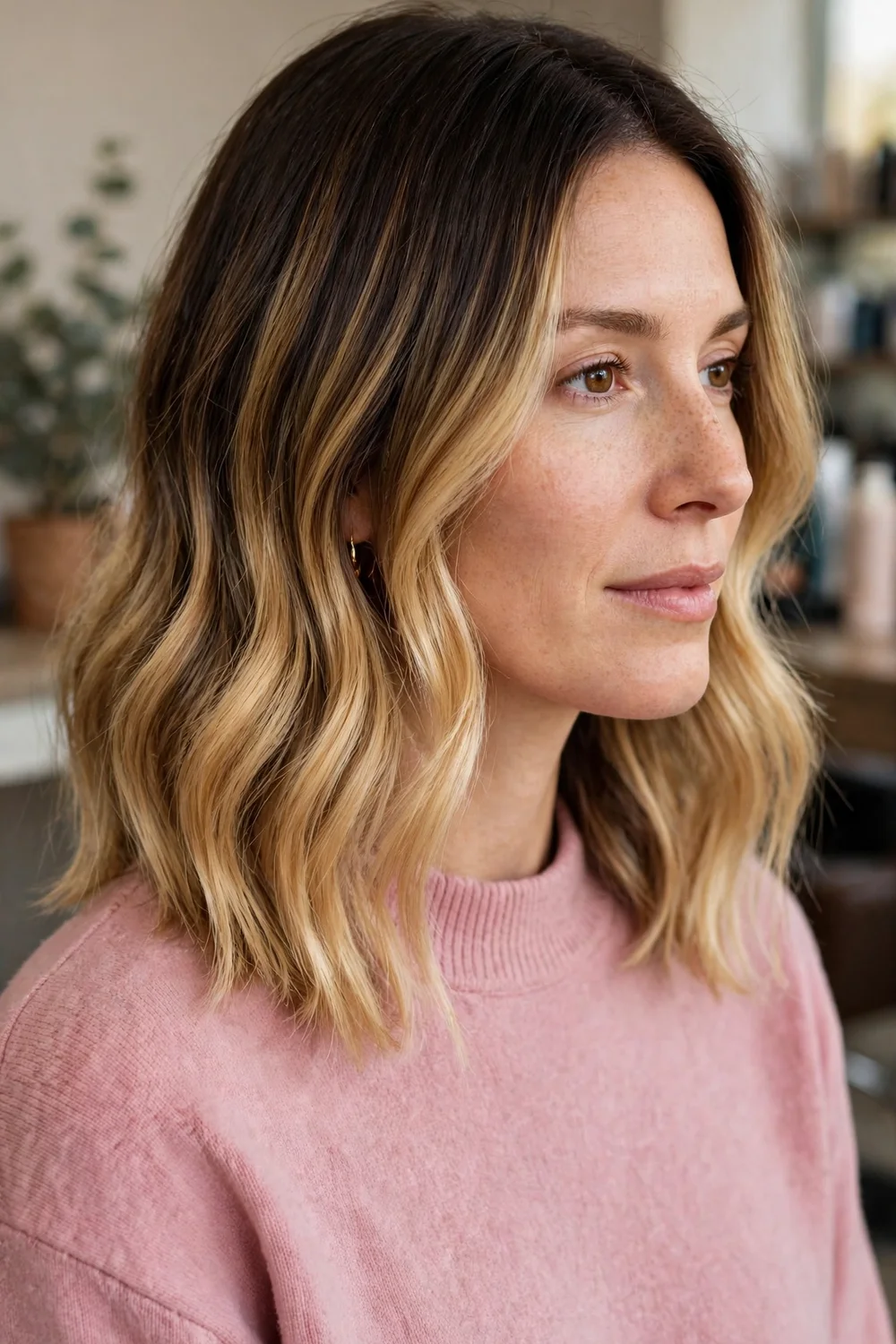
A long bob with a rooted melt keeps the top third in your brunette shade, then melts into blonde through the lower lengths. The melt has no hard line, so the lob looks polished straight and shows even more movement in waves.
The rooted top makes this a low-upkeep choice for busy schedules, since regrowth blends into the deeper section. Blonde tone is flexible here, with honey, beige, and sandy shades all working on brunette lob bases.
Try this: Ask for the melt to sit a touch higher at the front than at the back, which brightens your face while keeping upkeep low.
Difficulty: Medium · Cost: $$
18. Dimensional Blonde Balayage for Curly Brunettes

Curly brunette hair needs balayage placed on the curl itself, with blonde painted on the outer curve of each curl where light lands. Painting curl by curl keeps the pattern even when the hair dries in its natural shape.
Keep some curls deeper on purpose, since contrast between curls is what gives curly balayage its shape. Warm honey, caramel blonde, and golden tones tend to read best on curly brunette bases and fade gently.
Try this: Arrive with your hair dry and styled as you normally wear it, so your colorist can see your real curl pattern before painting.
Difficulty: Medium · Cost: $$
19. Blonde Balayage with Brunette Lowlights
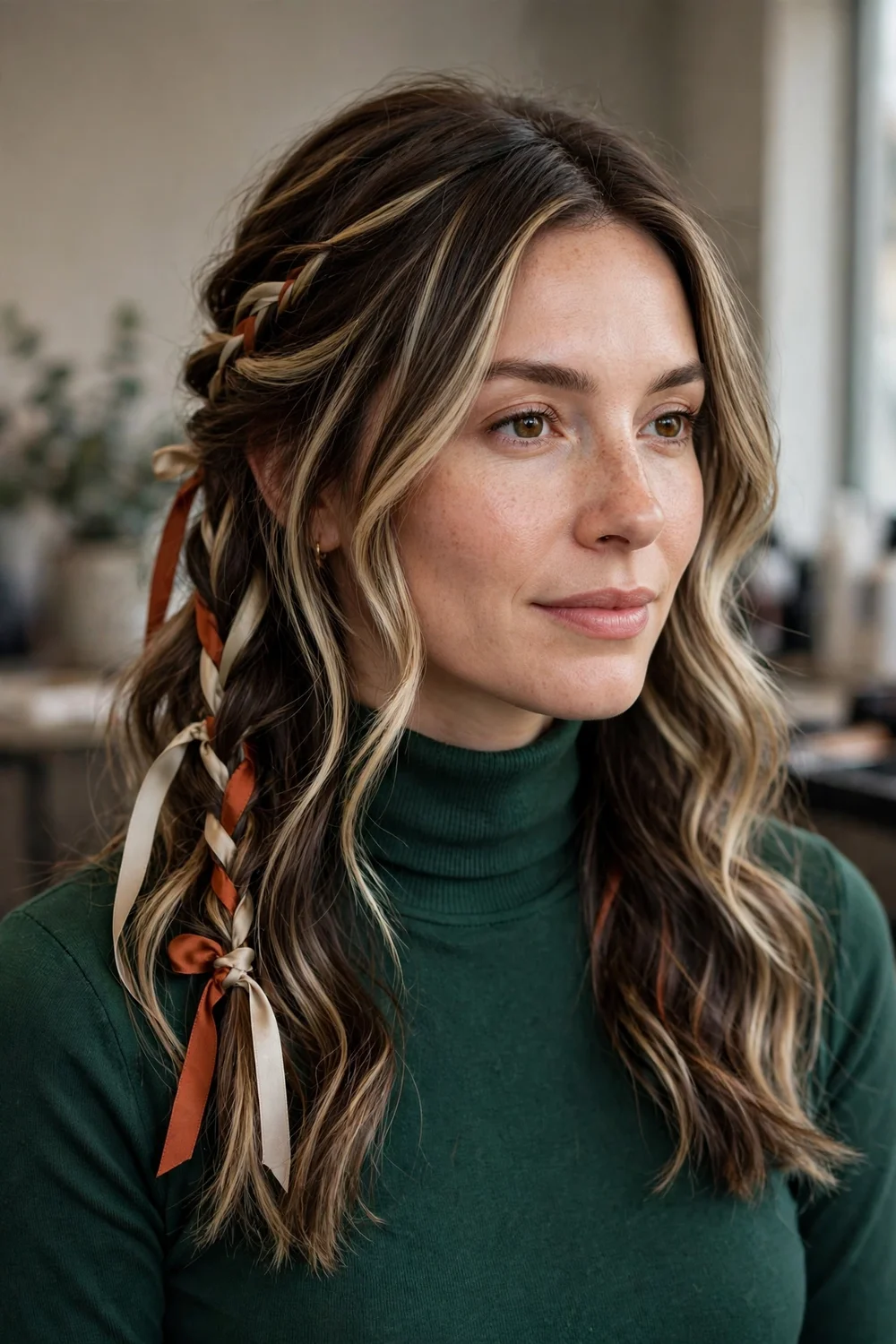
Adding brunette lowlights alongside blonde balayage gives fine or flat hair more depth to sit against. The blonde pieces look brighter because the deeper pieces beside them add contrast, even when the blonde itself stays moderate.
Lowlights are placed through the lower layers and between the blonde ribbons, usually in your natural shade or one level deeper. This mix also helps a grown-out balayage look fresh again without lightening more hair.
Try this: If your hair feels one-note after lightening, ask for lowlights first before going blonder, since depth often fixes the problem.
Difficulty: Medium · Cost: $$
20. Espresso Melt with Creamy Blonde Ends

An espresso melt keeps a rich, dark brunette top section and blends down into creamy blonde ends with no visible line where the two meet. The darkest and lightest parts of your hair sit far apart, yet the middle blends them smoothly.
Long hair shows this melt best, since there is room for a gradual change. The creamy ends can be toned warm or neutral, and a clear gloss over the whole head ties the two tones together with shared shine.
Try this: Ask your colorist to keep a few creamy pieces pulled up around the face, so the dark top section does not feel heavy.
Difficulty: Medium · Cost: $$
21. Low-Contrast Blonde Balayage on Light Brown Hair

Light brown bases need only a small lift for a clear change, so this low-contrast version uses blonde just two or three levels lighter than the base. The result is soft, even brightness that suits first-time color clients well.
Grow-out is the gentlest in this list because the gap between base and blonde is small. It also tends to be a single-session service with modest lightening, which is kinder to hair condition.
Try this: Choose a blonde tone close to your skin undertone, warm for warm skin and beige for neutral skin, to keep the low contrast flattering.
Difficulty: Easy · Cost: $
22. High-Contrast Blonde Balayage on Near-Black Hair
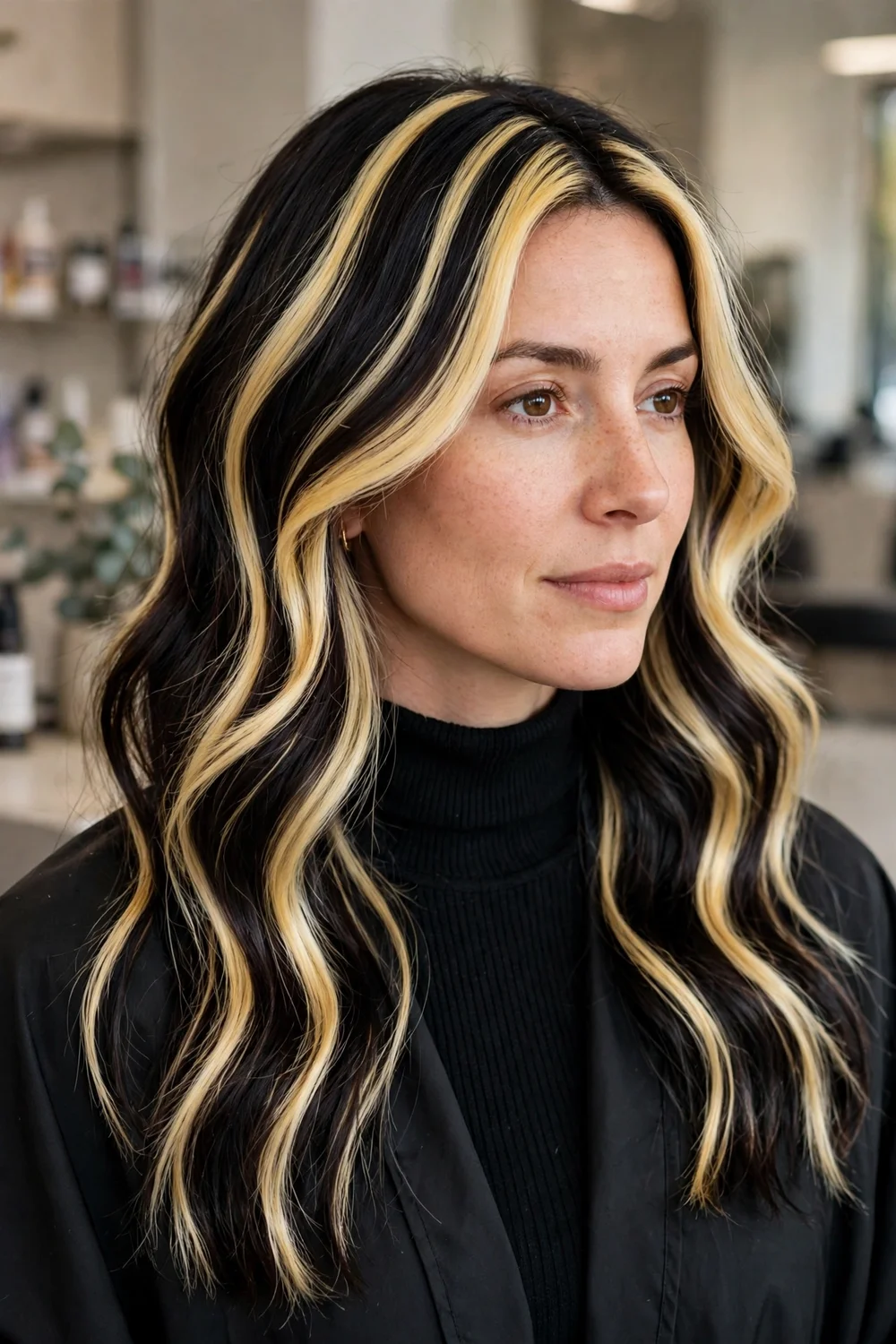
Near-black brunette hair paired with bright blonde balayage gives the boldest brunette-to-blonde look here. The blonde is placed in clean, deliberate ribbons so the contrast looks planned, with a blended root so regrowth stays manageable.
Reaching bright blonde from a near-black base takes strong lightening and often staged sessions. Warm and neutral blondes, such as honey, gold, and beige, are usually kinder targets than icy tones at this depth gap.
Try this: Plan the sessions in advance with your colorist and space them out, so your hair condition stays strong between lifts.
Difficulty: Hard · Cost: $$$
23. Strawberry Blonde Balayage on Warm Brunette Hair

Strawberry blonde adds a soft red-gold cast to blonde balayage, which suits warm brunette bases that already carry copper or red tones. Painted through the lengths, it warms the whole look without turning the hair fully red.
This tone flatters warm and peachy skin and green or hazel eyes. It fades faster than gold or honey tones, so a color-safe routine and a gloss between appointments help hold the strawberry cast.
Try this: Ask for strawberry mainly through the ends at first, so you can test how the red-gold tone sits with your skin before adding more.
Difficulty: Medium · Cost: $$
Blonde Balayage Shades at a Glance
| Shade | Tone | Best Brunette Base | Upkeep | Cost |
|---|---|---|---|---|
| Honey Blonde | Warm | Medium to dark brunette | Low | $$ |
| Ash Blonde | Cool | Medium to dark brunette | High | $$$ |
| Caramel Blonde | Warm | Dark brunette | Low | $$ |
| Beige Blonde | Neutral | Light to medium brunette | Medium | $$ |
| Platinum Blonde | Cool | Deep brunette | High | $$$ |
| Bronde | Neutral | Any brunette base | Low | $$ |
| Mushroom Blonde | Cool | Medium brunette | High | $$$ |
| Toffee Blonde | Warm | Very dark brunette | Low | $$ |
If you are still deciding how much of your head to lighten, compare these full looks with partial hair highlights and with fall highlights for brown hair for a smaller first step. Brunettes keeping more depth can also browse fall brunette hair colors.
Frequently Asked Questions
Can dark brunettes get blonde balayage in one session?
Often yes for warm and mid-level blondes such as honey, caramel, toffee, and bronde. Pale, icy, and platinum blondes on a dark base usually need more than one session, spaced out so the hair stays in good condition.
Which blonde balayage shade needs the least upkeep?
Bronde, honey, caramel, and sandy blonde need the least upkeep because they sit close to a brunette base and fade softly. Keeping your natural root color also stretches the time between appointments.
How do I stop blonde balayage from turning brassy?
Use a color-safe shampoo, wash with lukewarm water, and add a toning gloss or purple mask as your colorist advises. Warm blondes fade more forgivingly, while ash and icy tones need toning more often.
Does blonde balayage damage brunette hair?
Lightening always changes the hair to some degree, and paler shades need more lightening than deeper blondes. A staged plan, a strand test, and conditioning care between sessions help keep hair in better condition.
What should I ask my colorist for at the appointment?
Name the blonde tone, where you want the lightest pieces, and how deep you want the root to stay. Bring photos in daylight, share your full color history, and agree on how many sessions the shade is likely to take.
Can blonde balayage work on short brunette hair?
Yes. On bobs and lobs, the blonde is placed through the surface layers, ends, and front corners of the cut, with the blend starting a little higher than on long hair while staying off the root.
Final Thoughts
The best blonde balayage for a brunette is the one that still looks good weeks later, with a root that grows out softly and a tone that suits your skin. Start with honey, caramel, toffee, or bronde if you want an easy first step, and save ash, icy, and platinum for when you are ready for staged sessions and regular toning. Save your favorite ideas from this list, take them to a consultation, and let your colorist match the shade to your base, your hair history, and the upkeep you honestly want.

