


A protective style does one main job: it keeps your natural hair tucked away from daily handling, friction, and weather while you get on with your week. This roundup covers the full range for natural hair, from own-hair twists and cornrows you can do at home in under an hour to braids, crochet styles, faux locs, wigs, and a sew-in that carry the styling for weeks at a time.
Each idea notes what your own hair is doing underneath, how long the install takes, and where the style needs care during the wear. If braids are your main interest, our knotless braids hairstyles guide goes deeper on that one family, and the care notes below apply across every style in this list.
Key Takeaways
- Protective means ends tucked away and daily handling kept low, in braids, twists, updos, wigs, or weaves.
- Own-hair styles are the fastest and cheapest route; extension styles trade install time for weeks of wear.
- Gentle tension matters more than style choice. A style that hurts at the root is not protecting anything.
- Hair still needs moisture and a satin cover at night while it is tucked away.
- Cost bands only: $ is an own-hair or home style, $$ a standard salon install, $$$ a long, detailed, or wig and weave set.
1. Medium Knotless Braids
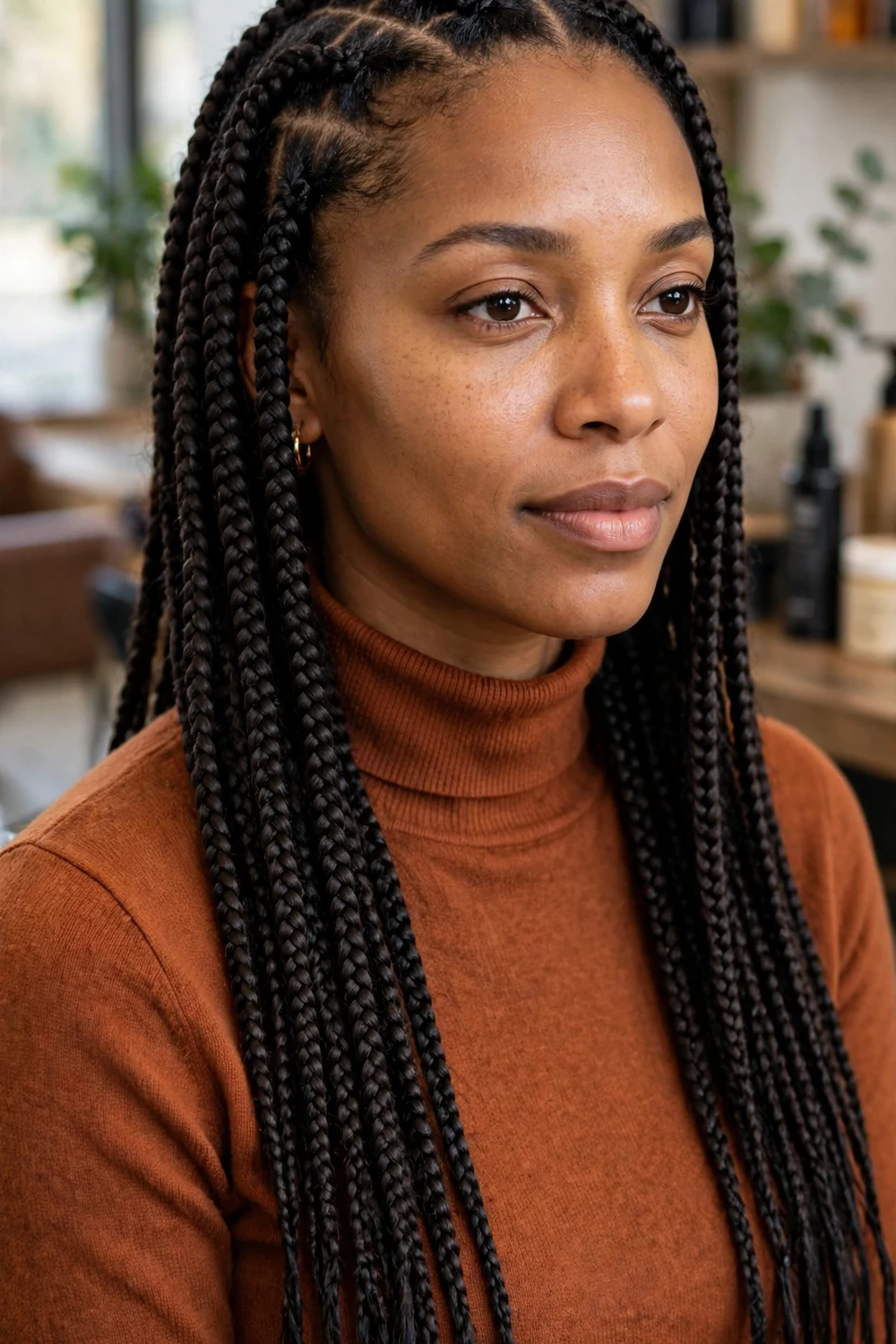
Knotless braids start with your own hair at the root and extension hair is fed in gradually, so each braid sits flat with no knot pulling at the base. Medium parts at mid-back length are the most balanced version: full coverage, moderate weight, and an install that fits in one long appointment.
Your own hair stays covered inside the braids for the whole wear, and the scalp stays easy to reach between parts for cleansing. See how this start differs from other braid bases in our different types of braids guide.
Try this: Ask for the edges and the nape to be braided a touch looser than the crown. Those areas carry the most daily friction from collars and pillow edges.
Difficulty: Medium | Cost: $$ | Time: 4 to 6 hours
2. Classic Box Braids in Medium Parts

Box braids are parted in squares across the head and braided down in single plaits, with your hair tucked inside each one. Medium parts give a full look that still styles into buns, ponytails, and half-up looks without much bulk at the base.
This is the long-wear standard most other braided styles are compared with. Our box braids hairstyles for Black women guide shows the size and length range in more detail.
Try this: Choose the length around your routine first and the look second. Waist-length sets are heavier to wash and dry than mid-back sets.
Difficulty: Medium | Cost: $$ | Time: 5 to 7 hours
3. Straight-Back Cornrows in Your Own Hair
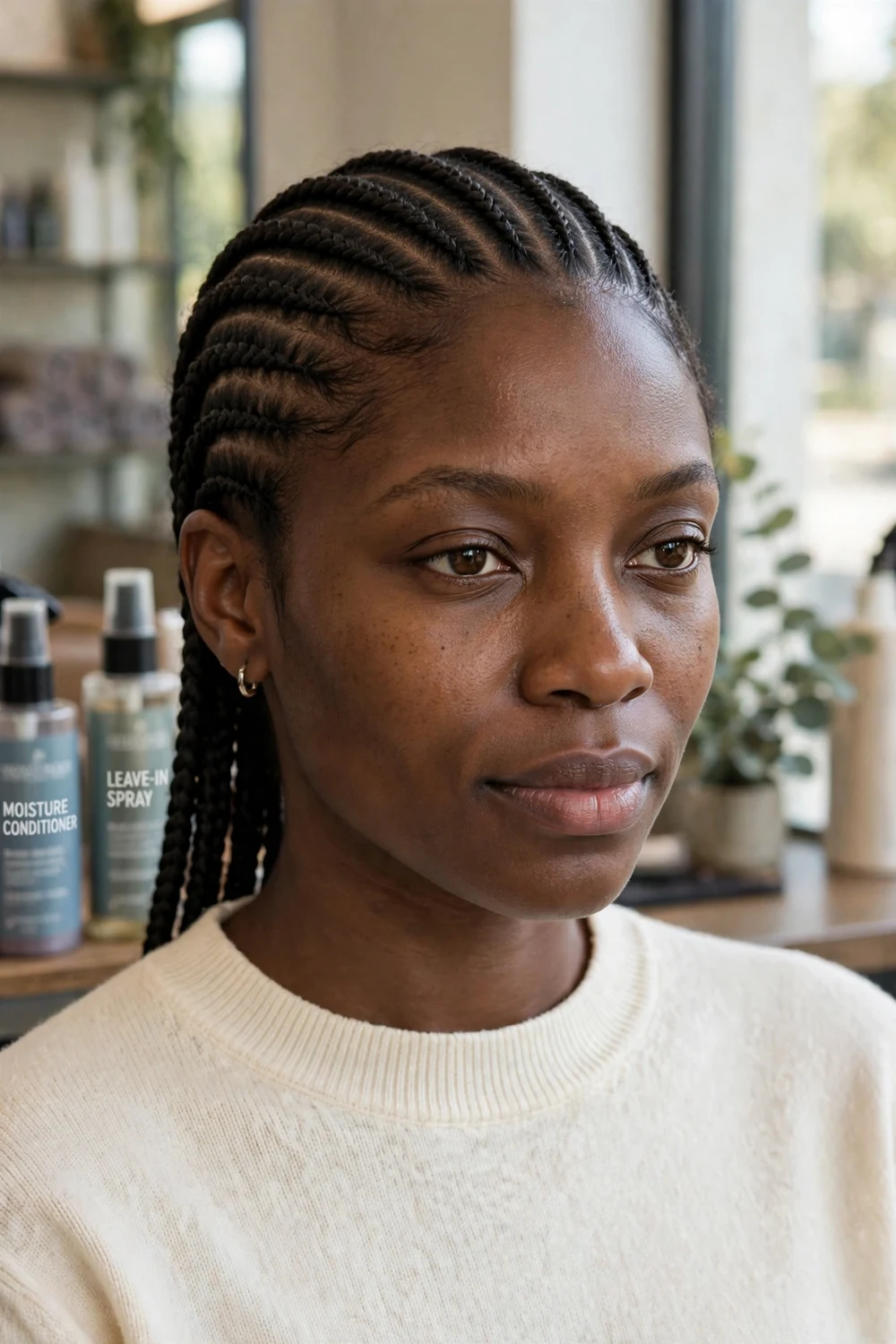
Cornrows braided straight back with no extension hair added are one of the simplest protective styles there is. Your hair lies flat against the scalp, the ends are tucked into the rows, and nothing extra weighs on the hairline.
Own-hair cornrows suit short breaks between bigger installs and weeks when you want your scalp fully reachable. Expect a neat window of about two weeks before the rows soften.
Try this: Braid on washed, conditioned, and stretched hair. Cornrows done on dry, tangled hair frizz within days and pull at the front.
Difficulty: Easy | Cost: $ | Time: 45 to 90 minutes
4. Flat Twists Pinned into a Side Bun
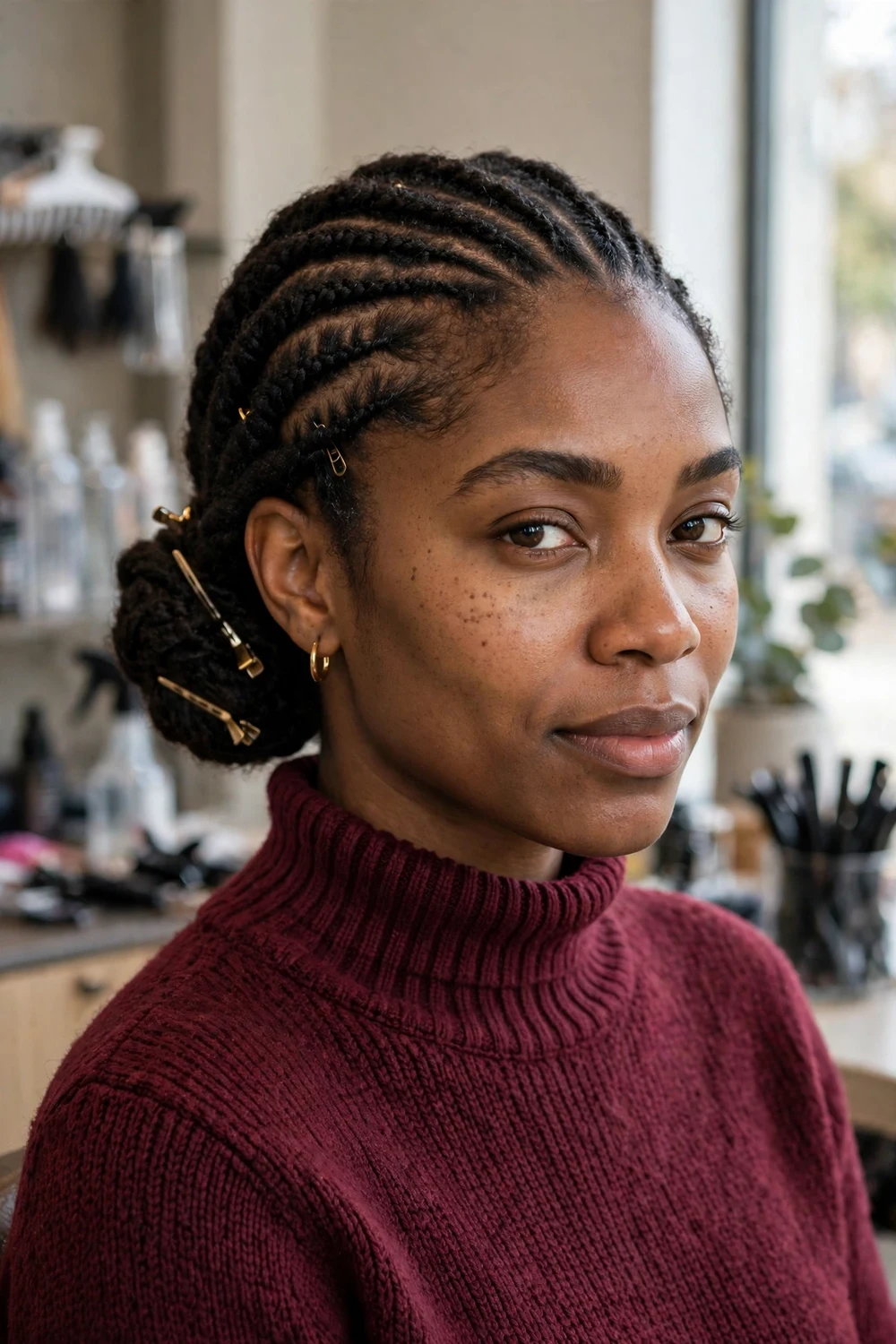
Flat twists roll two strands along the scalp from the front hairline toward one side, where the ends gather into a low side bun. The twist sits softer at the root than a cornrow, which many women find more comfortable for a full week of wear.
This style works in your own hair at medium length and up, and the bun keeps every end tucked away. It suits workdays and events alike because the finish is smooth and close to the head.
Try this: Twist on damp hair with a light cream so the rows lie smooth. Dry flat twists puff up and loosen faster.
Difficulty: Easy | Cost: $ | Time: 30 to 60 minutes
5. Two-Strand Twists in Your Own Hair

Two-strand twists are made by dividing your hair into sections and winding two strands around each other from root to tip. Worn at shoulder length, they move like loose hair while keeping each section detangled and protected.
Twists are easy to install and remove at home, and they double as a setting style: take them down after a week or two and the twist-out underneath is a second look from the same work.
Try this: Keep the sections even in size. Mixed sizes twist at different rates and the set looks uneven within days.
Difficulty: Easy | Cost: $ | Time: 1 to 3 hours
6. Mini Twists for Weeks of Low Styling
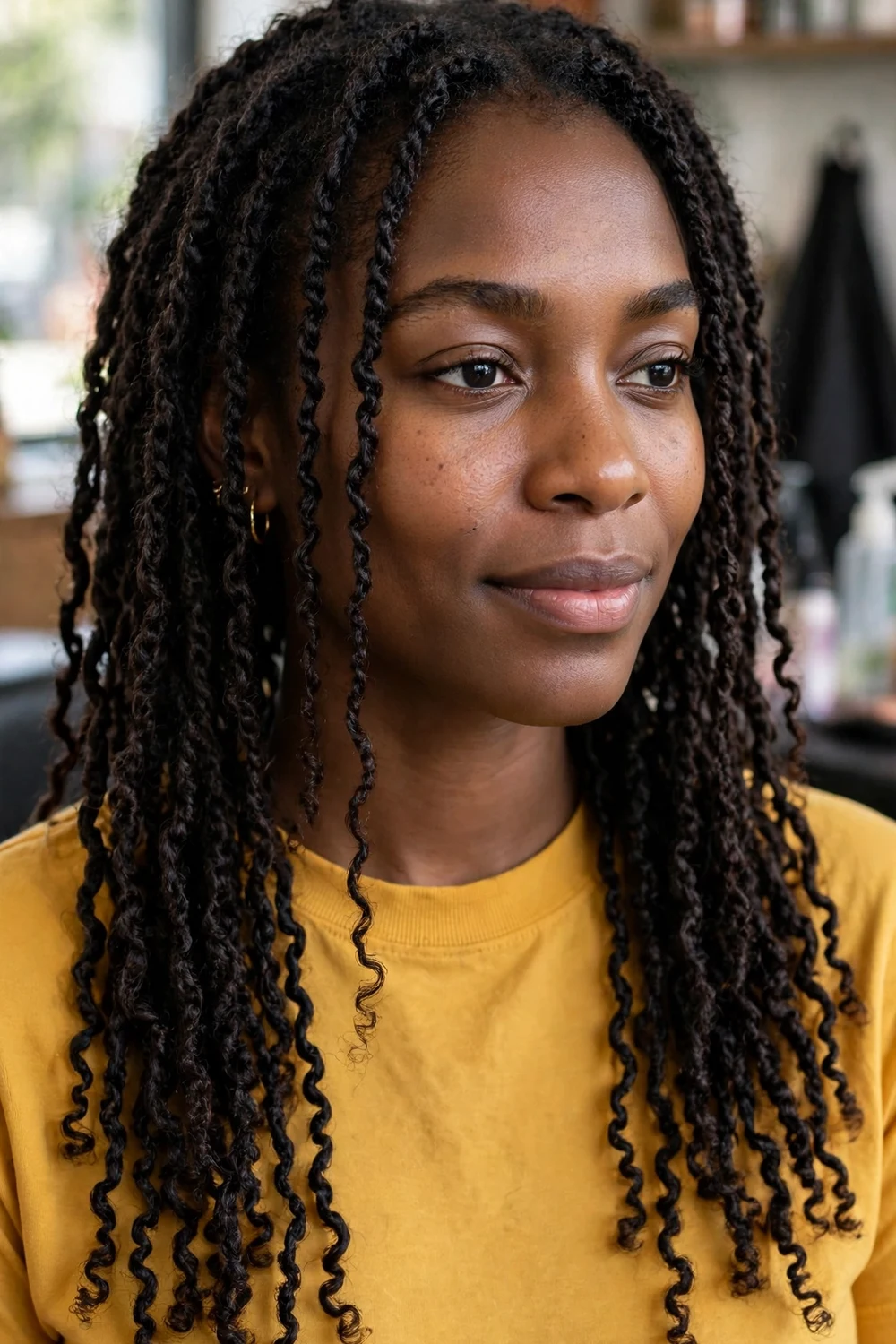
Mini twists use small sections across the whole head, and that small size is what lets them wear for weeks with little daily work. They can be worn loose, clipped back, or gathered into a bun as they settle.
Small twists hold moisture well because each section is fully coated when you apply product. The trade is time: minis take the longest of the twist styles to put in and to take down.
Try this: Take minis down in sections with plenty of conditioner and patience. Rushing the take-down is where small twists cause tangles.
Difficulty: Medium | Cost: $ | Time: 3 to 5 hours
7. Crochet Curls over a Cornrow Base
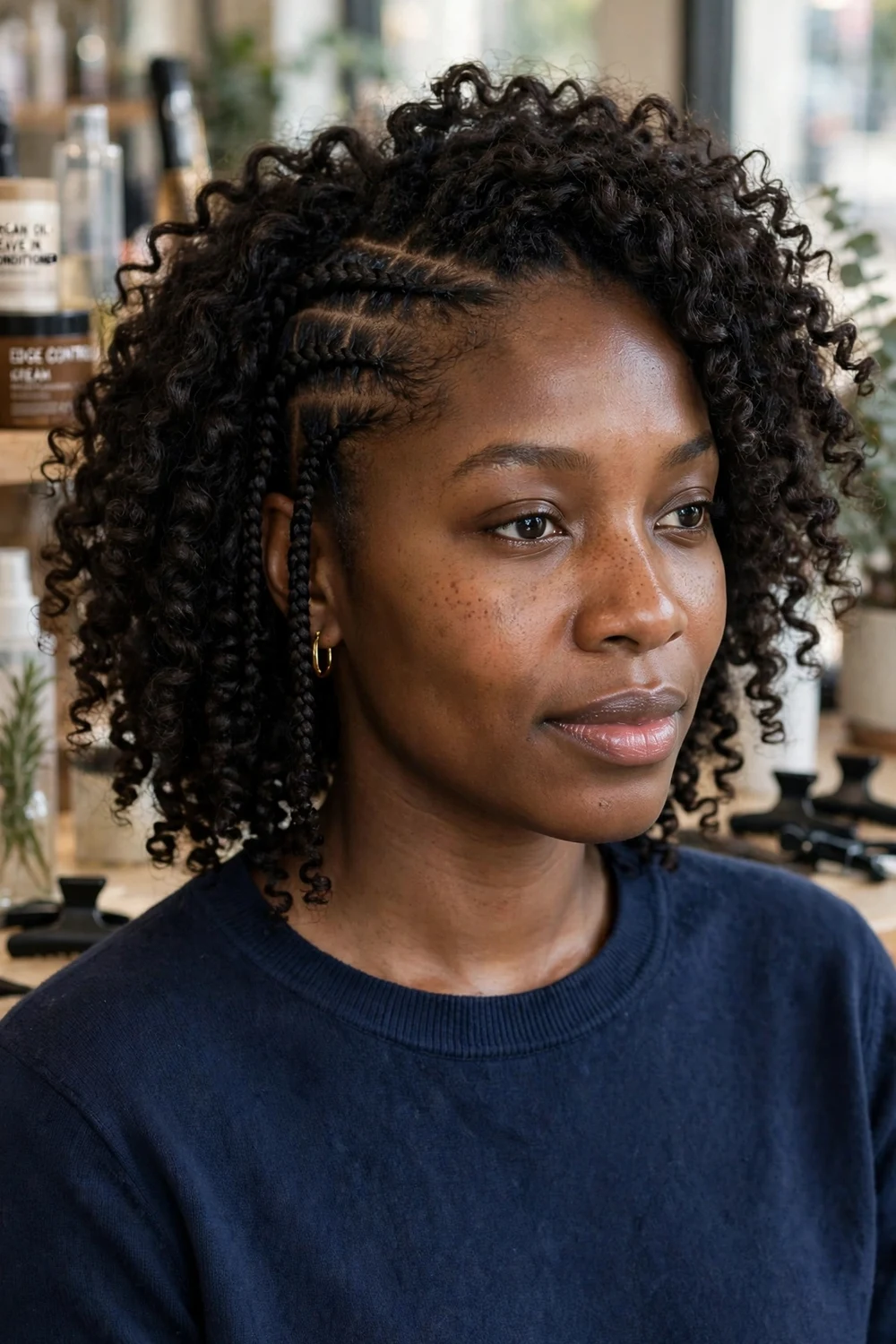
Your hair is cornrowed flat underneath, and pre-curled hair is looped through the rows with a crochet tool. You get a full head of curls while your own hair stays braided and untouched underneath.
Crochet installs are much faster than single braids because the hair comes pre-styled. Your scalp stays reachable through the cornrow base, which makes wash days straightforward.
Try this: Choose lightweight curl packs and check the total weight before the install starts. Curl volume adds up across a full head.
Difficulty: Easy | Cost: $$ | Time: 1 to 2 hours
8. Soft Faux Locs at Shoulder Length
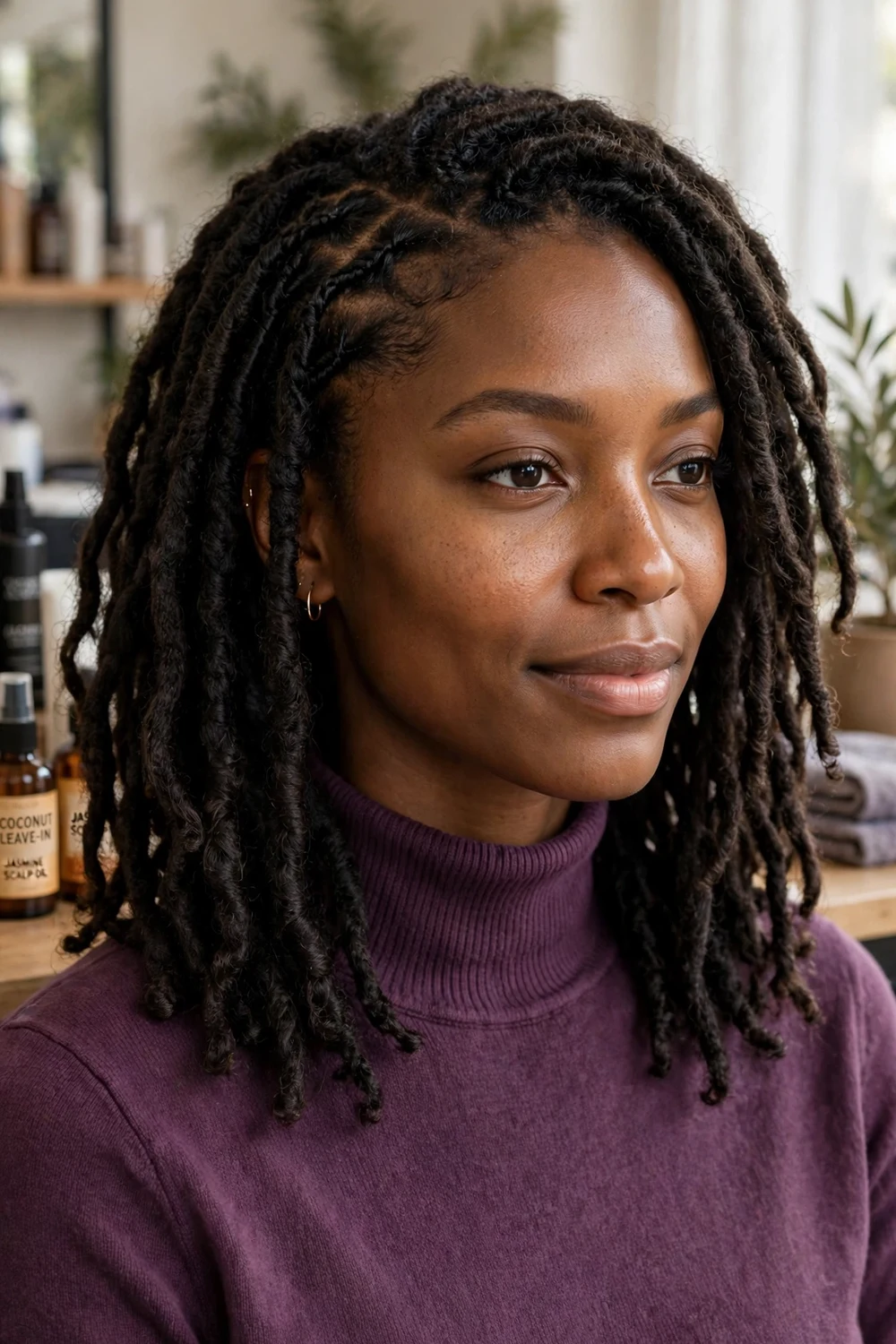
Faux locs are wrapped or crocheted over braided hair to give the look of locs while your own hair rests inside. Soft locs have a flexible, slightly textured finish, and shoulder length keeps them light and easy to move.
Locs at this length suit women who want the loc look for a season without the long-term commitment of starting real locs. Keep the parts medium so the weight spreads well.
Try this: Ask how the locs you choose are removed before they go in. Wrapped and crochet methods come out very differently.
Difficulty: Medium | Cost: $$ | Time: 3 to 5 hours
9. A Curly Lace-Front Wig over Flat Braids
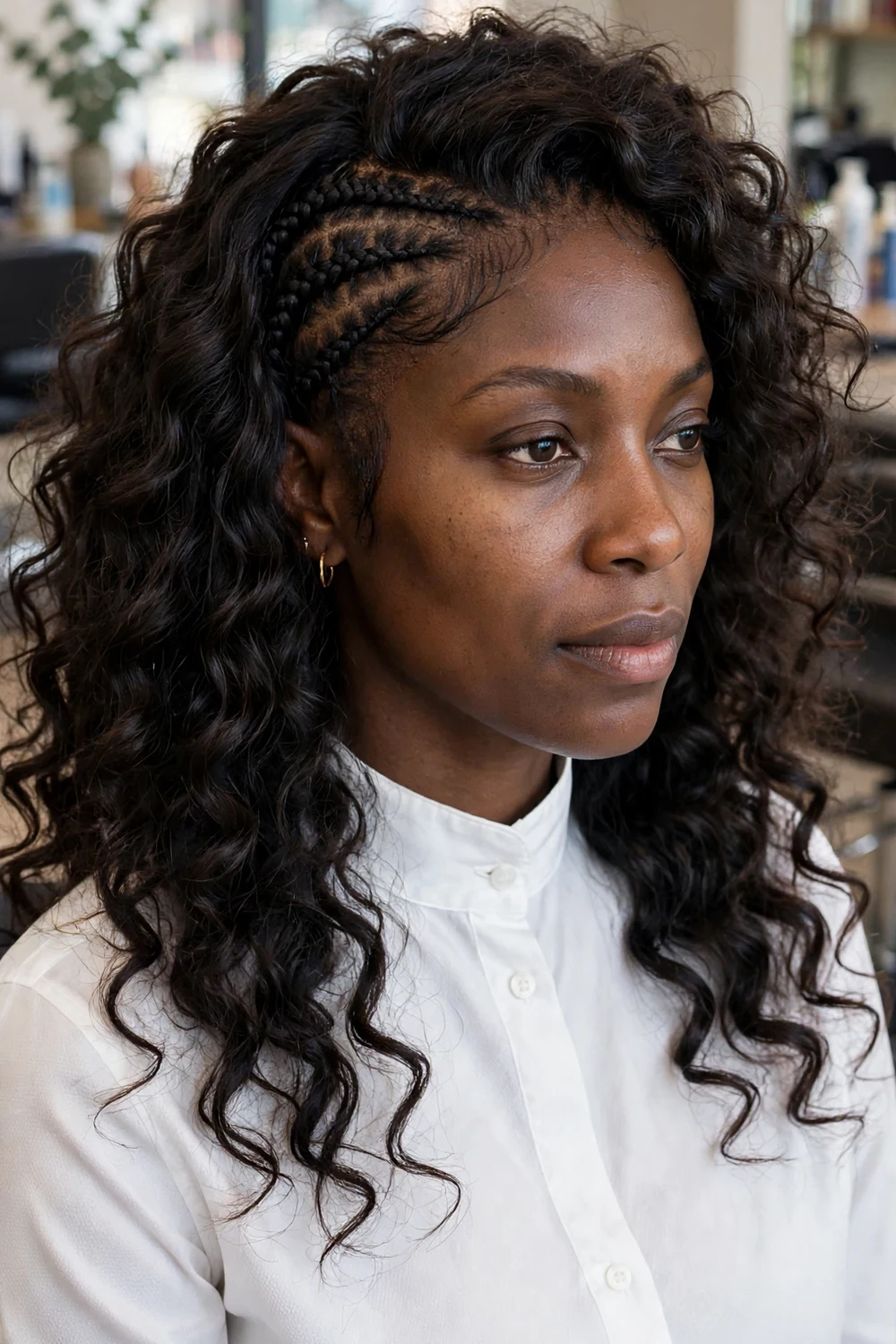
Under a wig, your natural hair is braided flat in cornrows or flat twists, moisturised, and covered with a cap. The wig itself carries the style: in this case loose curls that need no heat and no work on your own hair at all.
Wigs are the most complete break in this list because your hair is not styled, handled, or exposed day to day. Take the wig off regularly so the hair underneath can be washed and moisturised on schedule.
Try this: Keep two wig caps in rotation and wash the braids underneath on the same day each week. A set routine stops the under-wig hair being forgotten.
Difficulty: Easy | Cost: $$ | Time: 20 to 30 minutes to fit
10. A Sew-In Weave with a Small Leave-Out

Most of your hair is braided into a flat base and wefted hair is sewn onto the braids, leaving a small section of your own hair out at the part to blend over the top. The braided base does the protecting while the weave carries the length and finish.
A sew-in suits women who want a straighter or longer look for several weeks without daily heat on most of their hair. The leave-out section is the only part that needs regular styling, so keep it small.
Try this: Have the base braids checked at the salon midway through the wear if the install feels loose anywhere. Early fixes are quick.
Difficulty: Hard | Cost: $$$ | Time: 3 to 4 hours
11. Bantu Knots in Your Own Hair
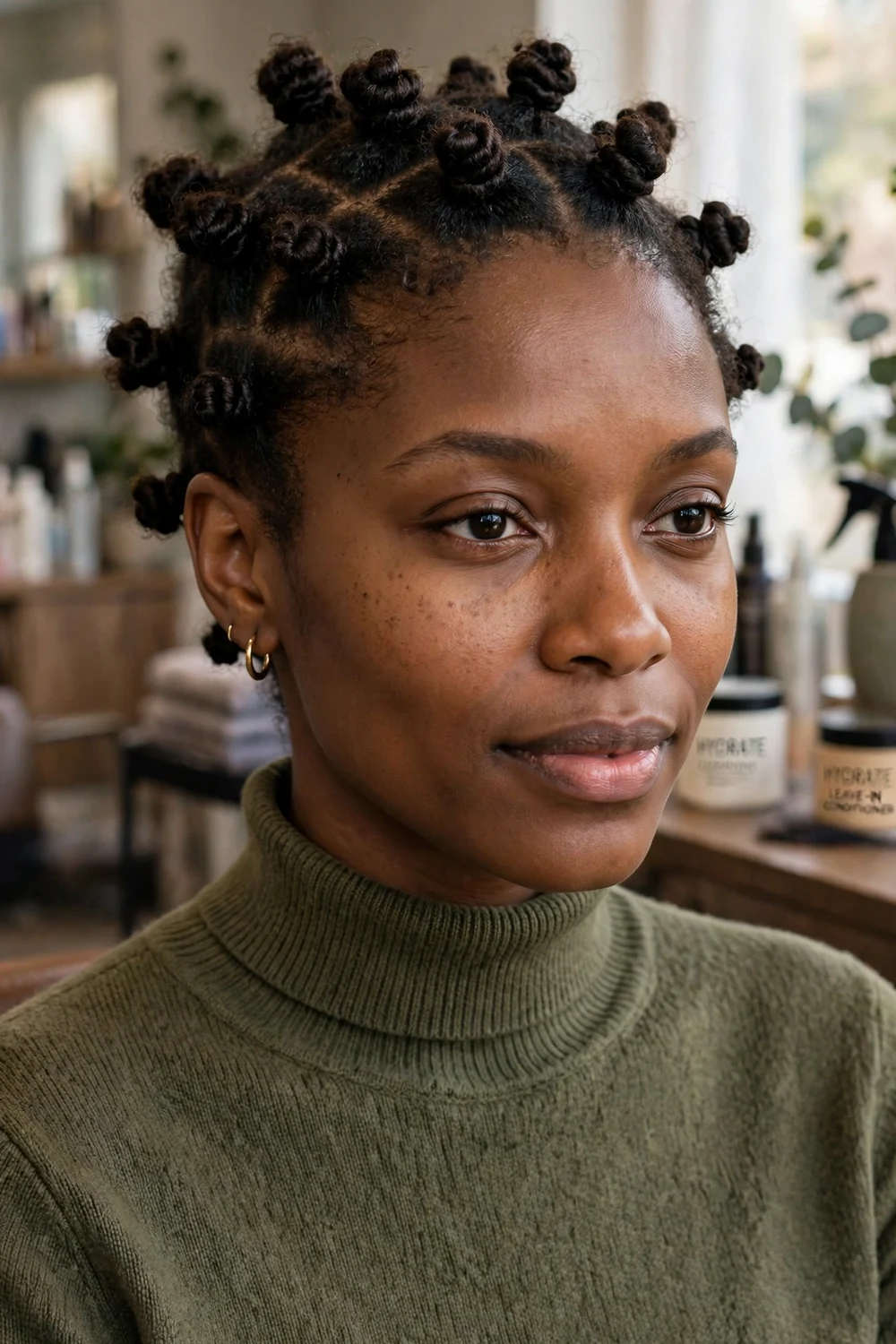
Bantu knots coil small sections of your hair into neat stacked knots across the head. Every end is tucked into its own knot, so the whole head is protected in a style that needs no added hair.
Knots work on shorter natural hair where longer styles are not yet an option, and they set curls as they protect: uncoil them after a few days for a defined curly finish.
Try this: Make the sections even and coil each knot in the same direction. Even knots dry at the same rate and sit in a cleaner pattern.
Difficulty: Easy | Cost: $ | Time: 45 to 90 minutes
12. A Halo Braid Crown in Your Own Hair
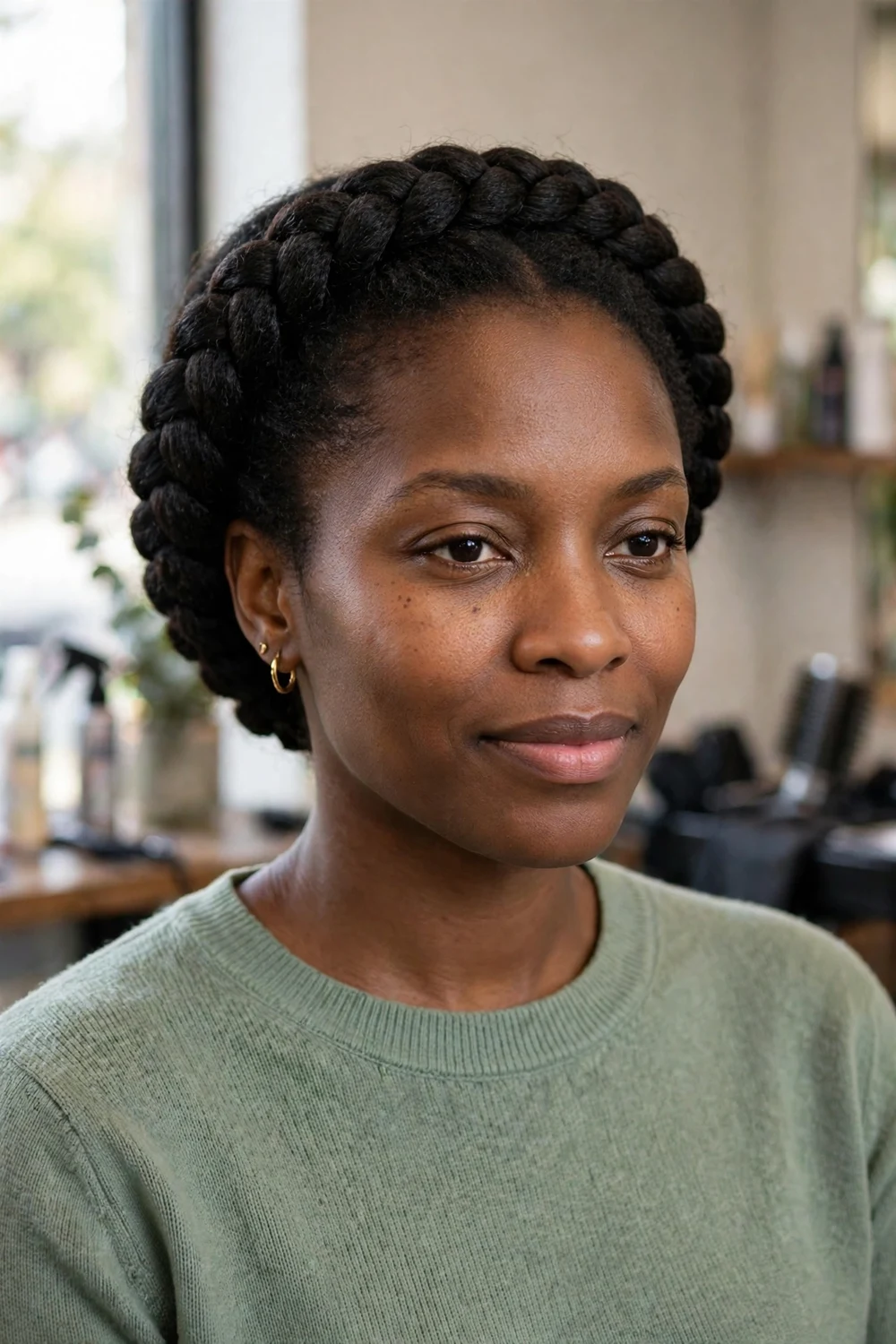
One or two large braids wrap around the head like a crown, starting low at the nape and meeting at the top. Your ends finish tucked under the braid itself, off the neck and away from clothing friction.
A halo suits medium and longer natural hair, and it holds its shape for days with only a scarf at night. The weight spreads around the head rather than hanging from one point.
Try this: Braid the crown on stretched hair so the wrap lies smooth in one pass. Re-braiding a fuzzy section doubles the handling on that hair.
Difficulty: Medium | Cost: $ | Time: 30 to 45 minutes
13. Senegalese Twists at Mid-Back Length
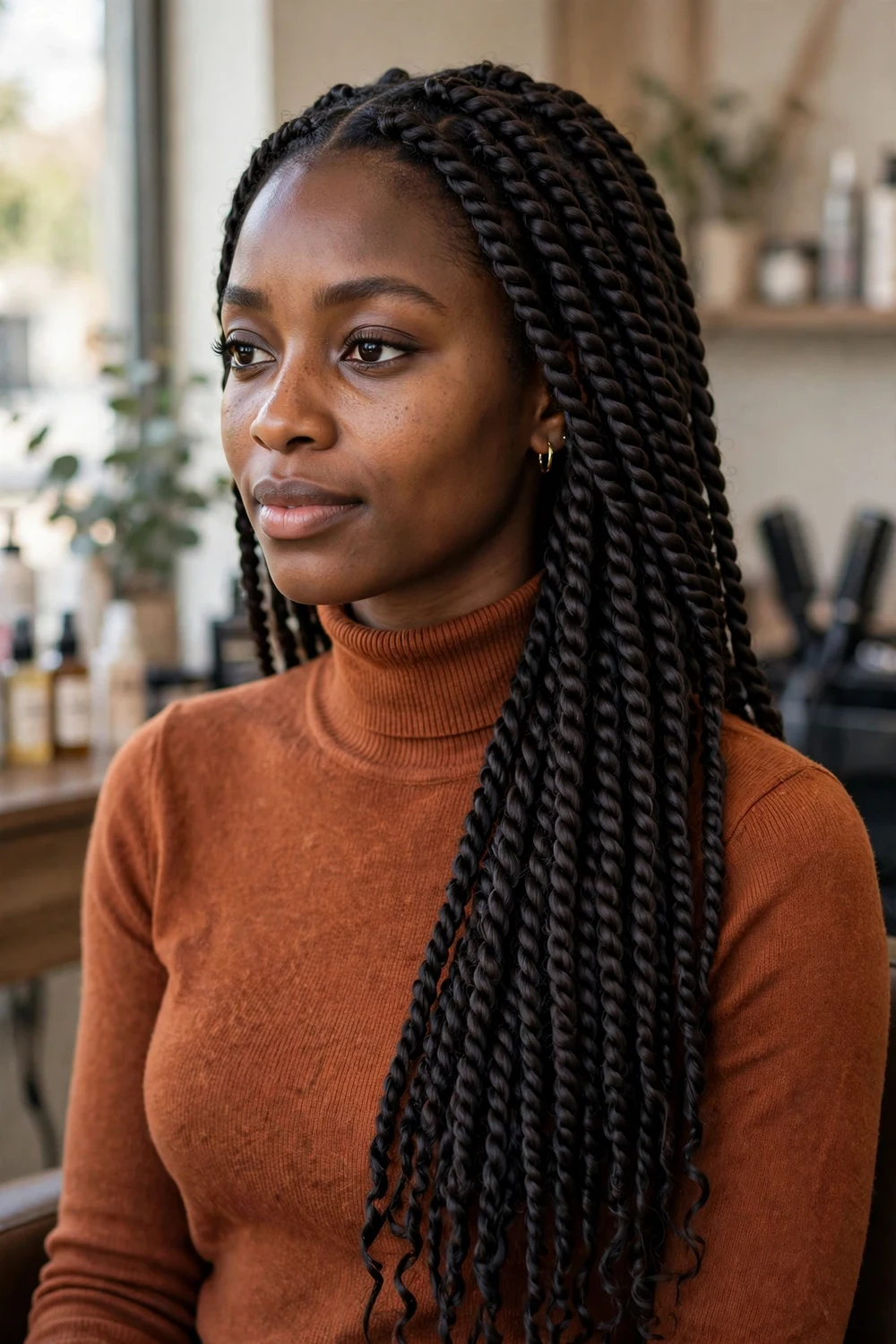
Senegalese twists use smooth extension hair twisted in a rope-like finish, giving a sleek, even surface from root to tip. At mid-back length they swing well and style into buns and ponytails without loose flyaways along the twist.
The smooth surface sheds lint less than rougher textures and stays tidy through a longer wear. Keep the roots lightly moisturised so the neat finish lasts.
Try this: Ask for a gentle hand at the hairline. Sleek twists show tight roots clearly, and comfort at the front sets the tone for the whole wear.
Difficulty: Medium | Cost: $$ | Time: 4 to 6 hours
14. Passion Twists with a Soft Curl
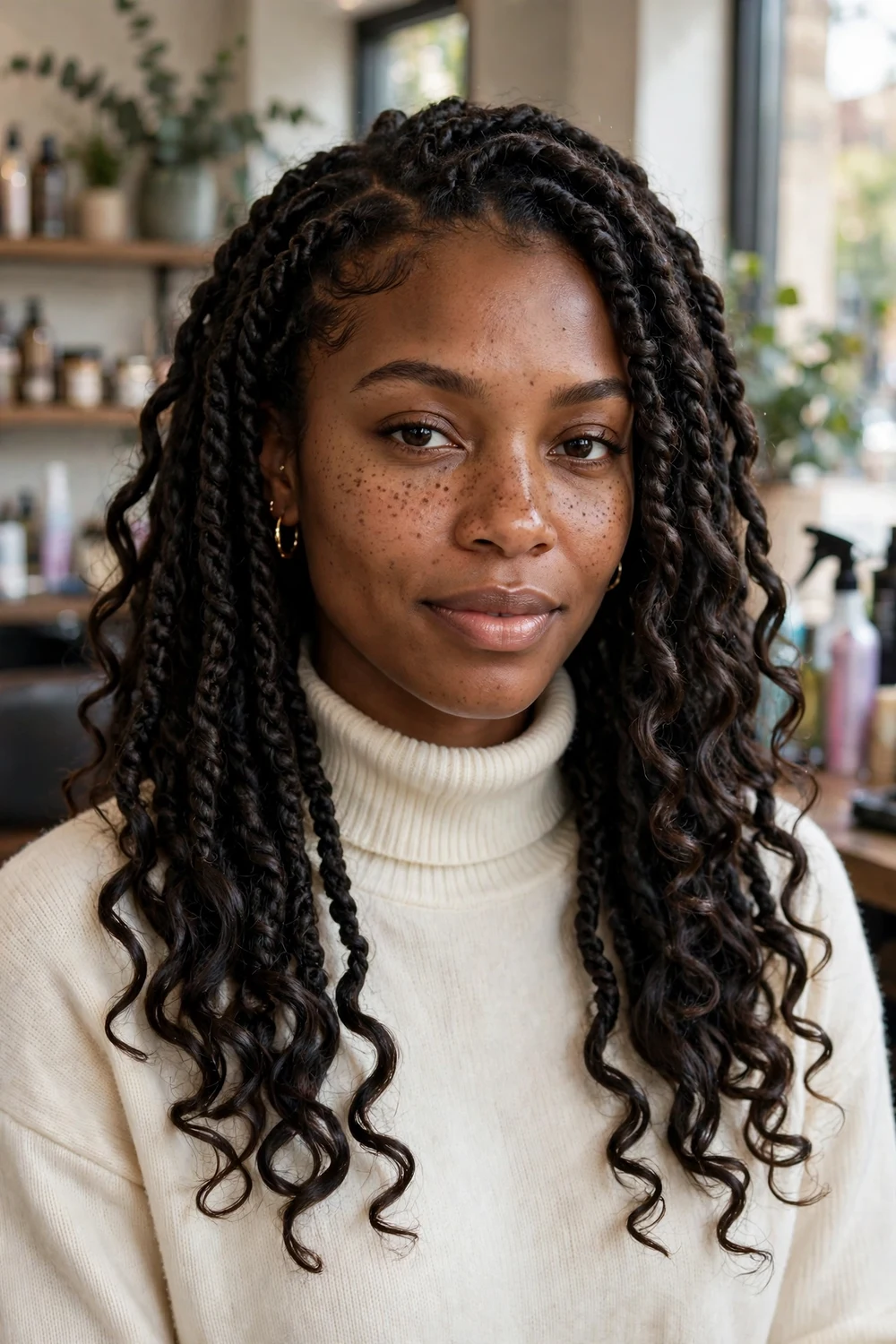
Passion twists are built with wavy, lightweight hair that gives each twist a soft curl and a relaxed finish from the first day. They sit less formally than sleek twists and move more, which suits women who find very smooth styles too sharp.
The hair used for passion twists is light, so even longer sets feel manageable. Separate the twists gently with damp fingers in the morning to keep the curl pattern open.
Try this: Do not brush passion twists. Brushing breaks the curl pattern and turns the surface fuzzy across the whole set.
Difficulty: Easy | Cost: $$ | Time: 3 to 5 hours
15. Chunky Marley Twists
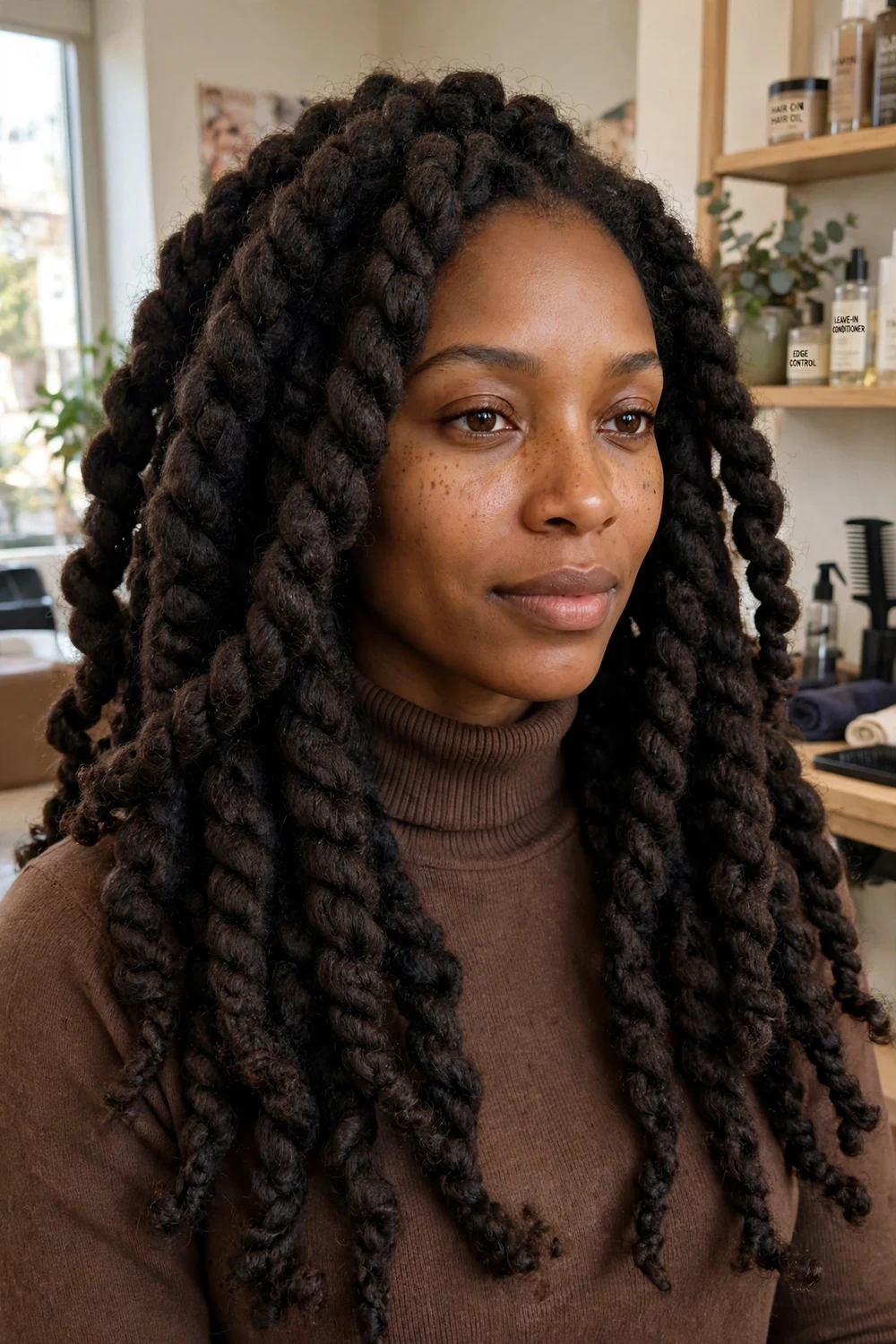
Marley twists use textured extension hair in large sections, giving a full, natural-looking finish that blends closely with coily hair textures. Chunky sections mean fewer twists, a faster install, and a faster take-down.
The textured surface hides new growth at the root well as the weeks pass. Large twists are also easy to restyle into a top knot or a low bun without stressing the base.
Try this: Keep chunky twists at or above mid-back. Large sections plus long length is the heaviest mix in the twist family.
Difficulty: Easy | Cost: $$ | Time: 2 to 4 hours
16. Goddess Braids with Loose Curly Pieces

Goddess braids are larger braids with curly pieces left loose along their length and at the ends. Your hair stays inside the braids while the loose curls soften the outline of the whole style.
Fewer, larger braids mean a shorter appointment than standard box braids. The loose curl pieces are the part that needs care: keep them separated and lightly moussed so they do not mat against the braids.
Try this: Wear a satin bonnet that fits the full volume of the style. Crushing the curls flat every night shortens their good weeks.
Difficulty: Medium | Cost: $$ | Time: 4 to 6 hours
17. Fulani-Style Cornrows with Long Braids Behind

Cornrows at the front follow the Fulani pattern, a center row with side rows braided toward the ears, and long single braids hang behind the crown. The front carries the design and the back carries the length.
This is one idea within a wider roundup, and it overlaps with braid-only lists on purpose: for the dedicated box braid version, see the Fulani ideas linked from our Fulani braids hairstyles guide.
Try this: Keep the two braids in front of the ears thin and light if you add them. Forward braids sit on the finest hair at the temples.
Difficulty: Medium | Cost: $$ | Time: 5 to 7 hours
18. Lemonade Braids Swept to One Side

Lemonade braids are cornrows braided across the head so all the length falls to one side. Your hair stays inside the rows and braids, and the side-swept finish keeps hair off one shoulder entirely.
Side direction makes this a strong choice under hats and headwraps, since the bulk sits to one side. Medium rows balance neatness with a reasonable install time.
Try this: Decide your side before the appointment and wear your part there for a few days first. A new direction can feel odd for the first week.
Difficulty: Medium | Cost: $$ | Time: 4 to 6 hours
19. Jumbo Twists Styled Half Up

Jumbo twists use the largest sections in the twist family, and wearing the top half gathered up shows off their scale while keeping the front off the face. The twists underneath stay protected whether they are up or down.
Half-up styling on jumbo twists takes seconds and needs no heat or extra product. Change the gathered section every few days so the same twists are not carrying the hold all week.
Try this: Use a wide, soft band for the half-up hold. Narrow bands dent large twists and leave a visible line when you let them down.
Difficulty: Easy | Cost: $$ | Time: 2 to 3 hours
20. Crochet Twists over a Cornrow Base

Pre-twisted hair is crocheted through a flat cornrow base, giving you a head of twists in a fraction of the time single twists take. Your own hair stays braided underneath the whole time.
Crochet twists are a good route for women who like the twist look but cannot sit for a full single-twist install. The base rows also make the scalp easy to cleanse during the wear.
Try this: Match the twist texture to your own hair at the front rows. A close texture match keeps the base line looking natural.
Difficulty: Easy | Cost: $$ | Time: 1 to 2 hours
21. A Braided Wig for Zero Daily Styling
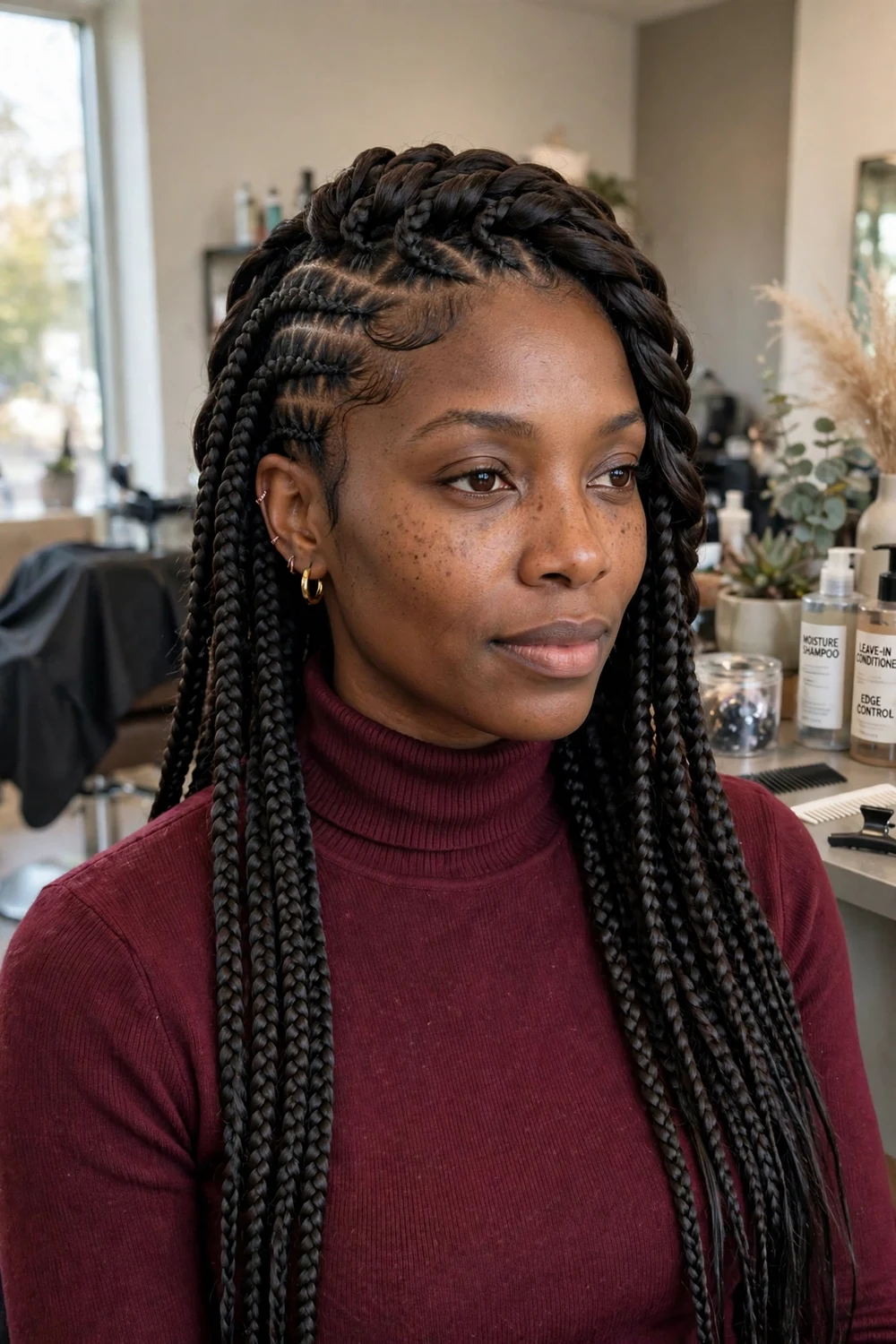
A braided wig carries a full set of braids on a cap, while your own hair rests in flat braids underneath. You can wear braids every day and still take the whole set off at night.
This is the lowest-handling braid option in the list, since your hair is never part of the style itself. It also lets you keep a braid look during weeks when your own hair needs a full rest from installs. More braid shapes to copy in wig form sit in our braided hairstyles for Black women roundup.
Try this: Store the wig on a head stand so the braids keep their fall. Storing it folded flattens one side of the set.
Difficulty: Easy | Cost: $$$ | Time: 15 to 20 minutes to fit
22. Flat Twist Crown into a Low Puff

Flat twists run from the hairline toward the crown on both sides, and the remaining hair is gathered into a low puff at the back. The twisted front is fully protected, and the puff keeps the back in one soft, gathered shape.
This own-hair style suits medium-length natural hair and takes under an hour, which makes it a reliable option between longer installs. The puff can be loosened at night and reset in minutes.
Try this: Gather the puff with a wide band and set it once, rather than re-tying it through the day. Repeated tying rubs the same section of hair.
Difficulty: Easy | Cost: $ | Time: 30 to 45 minutes
23. A Low Twisted Bun Updo

Two-strand twists across the head are gathered and coiled into a low bun at the nape. Every end finishes inside the bun, so nothing rubs on collars or straps during the day.
A low bun sits well against headrests and seat backs, which makes this updo a steady workday choice. It works in your own twists or in medium extension twists for more volume.
Try this: Pin the bun in two places rather than one. Two pins share the hold and stop the bun pulling at a single point by evening.
Difficulty: Easy | Cost: $ | Time: 30 to 60 minutes
24. A Braided Ponytail with a Wrapped Base

Hair is braided or smoothed into a high or mid ponytail, and the base is wrapped with a braid or a strand of hair for a clean finish. Adding braiding hair to the ponytail length keeps your own ends inside the style.
A wrapped ponytail gives an event-ready finish while your hair stays gathered and covered through the length. Keep wear to a few days at a time, since ponytail bases hold tension in one place.
Try this: Move the ponytail height slightly each time you wear it. One fixed spot, worn tight every day, stresses the same hairs at the base.
Difficulty: Medium | Cost: $$ | Time: 1 to 2 hours
25. A Headwrap over Twists on Rest Days
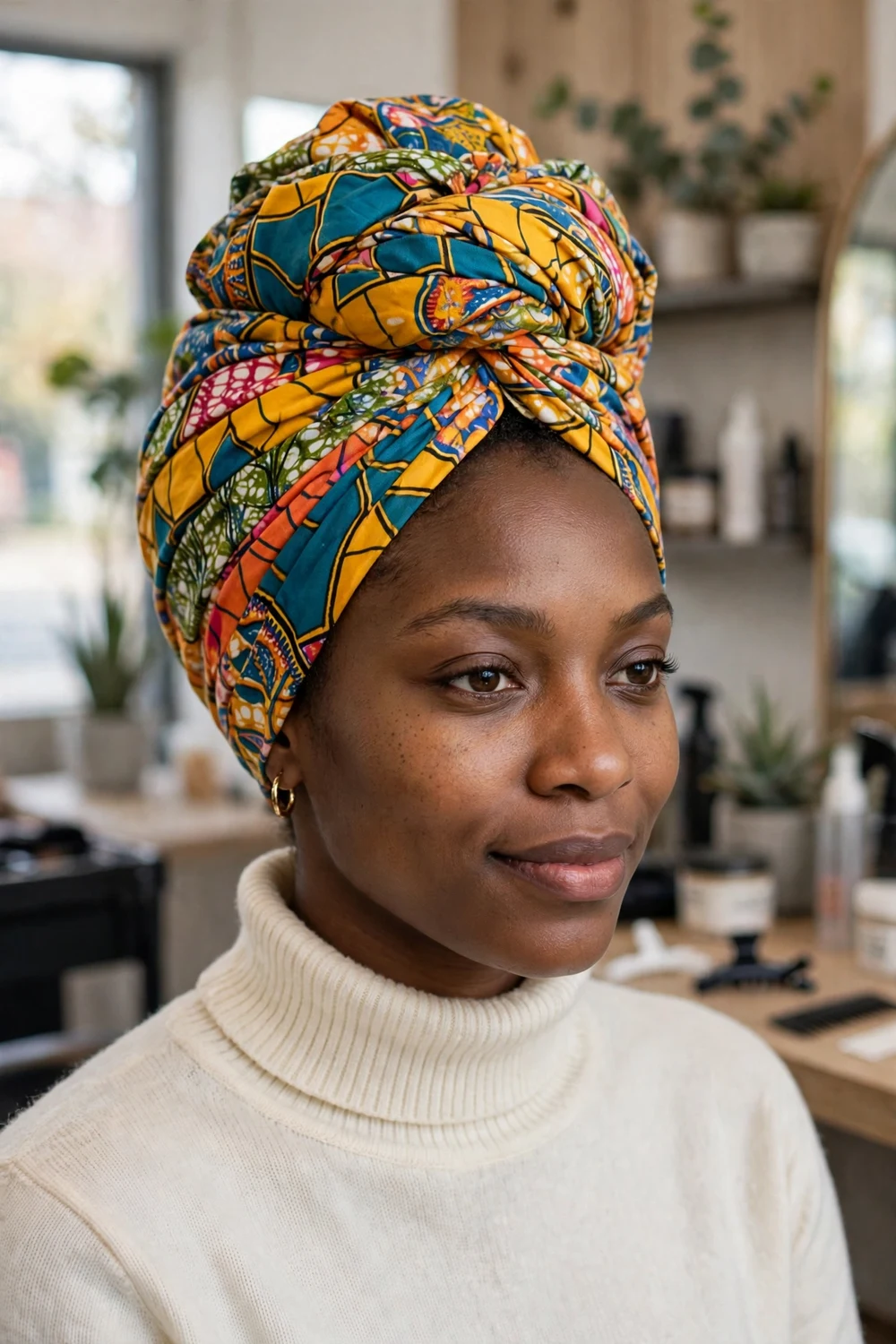
On rest days between styles, twists or braids can be covered fully with a headwrap or turban-style scarf. Your hair stays protected from friction, weather, and your own hands while it rests.
A wrap is also the simplest cover for a style in its last week, when roots have grown out but the take-down is booked for the weekend. Choose smooth fabrics that slide rather than grip.
Try this: Keep one wrap washed and ready in your bag. A wrap you have to hunt for on a busy morning rarely gets worn.
Difficulty: Easy | Cost: $ | Time: 5 minutes to wrap
26. A Pineapple Updo for Nights and Short Wear
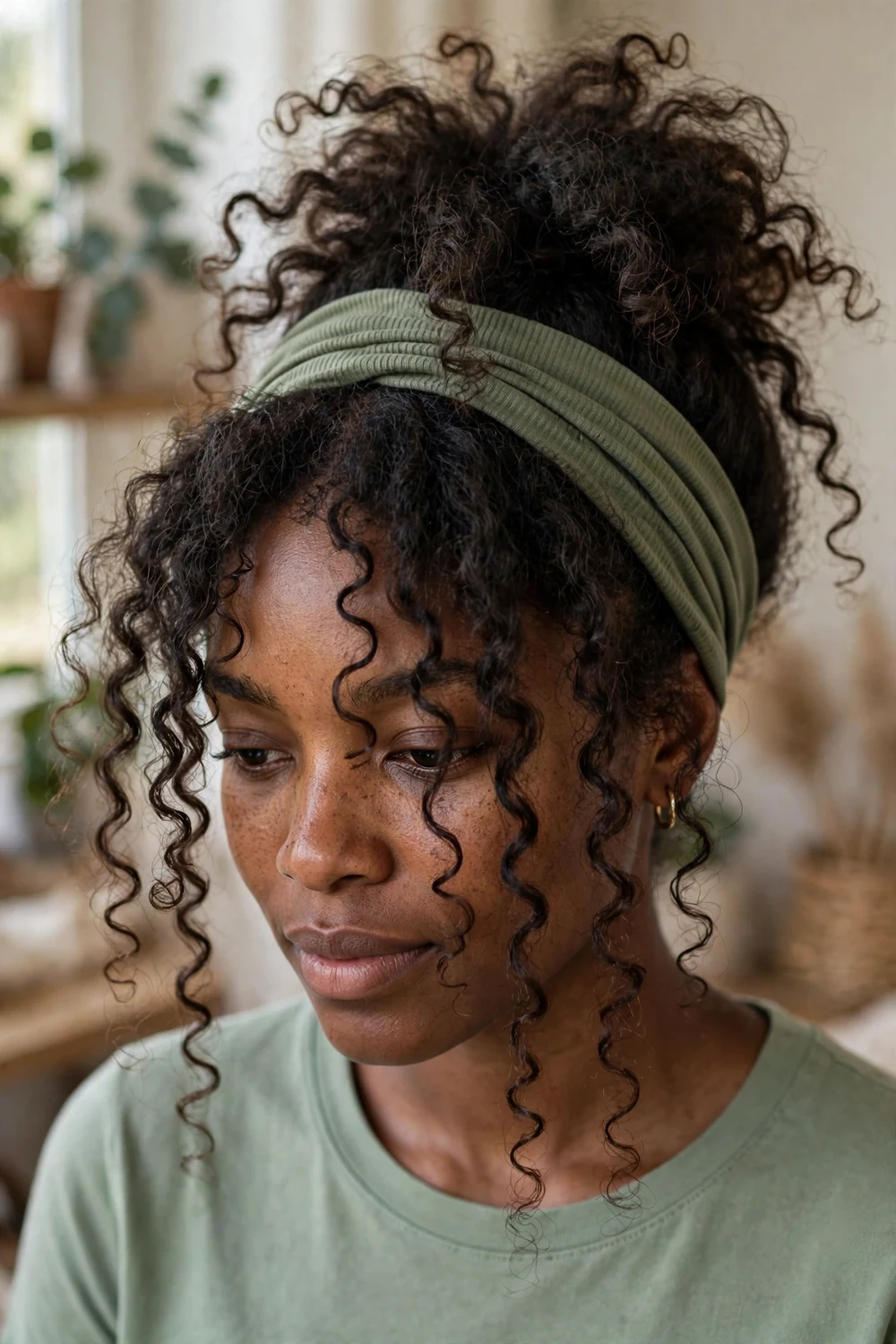
The pineapple gathers your curls loosely at the very top of the head with a wide band, so the curls fall forward and keep their shape. It is mainly a night and between-wash-day style, worn for hours rather than weeks.
Loose gathering is the point here: the band should hold the hair up without pulling the edges. Paired with a satin pillowcase, it keeps a twist-out or wash-day curl set going for extra days.
Try this: Set the pineapple as the last thing before bed and take it down first thing. Wearing it all day as a tight style defeats its gentle purpose.
Difficulty: Easy | Cost: $ | Time: 5 to 10 minutes
27. A Twisted Protective Updo with Pins
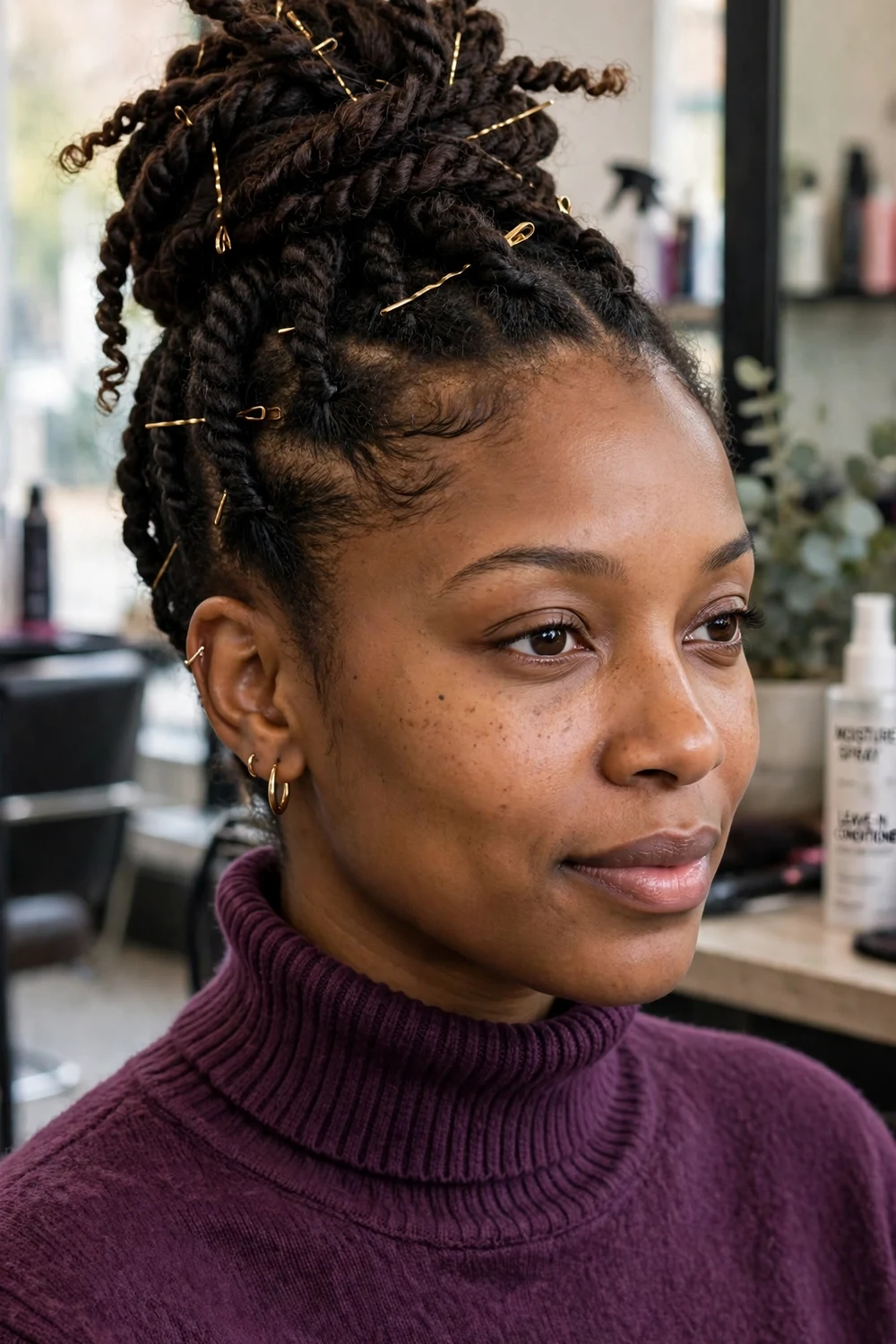
Medium twists are swept up and pinned in overlapping sections to build an updo with height at the crown and a smooth line at the back. Every twist end is pinned inside the shape, so the whole style is tucked away.
Pinned twist updos suit events where a bun feels too plain, and they work on your own twists once they reach medium length. Build the shape on twists that are a few days old; very fresh twists can be too springy to pin flat.
Try this: Cross two pins at each anchor point. Crossed pins hold far longer than single pins in twisted hair.
Difficulty: Medium | Cost: $ | Time: 45 to 75 minutes
At a Glance: Compare Protective Styles by Time and Wear
| Style | Hair needed | Install time | Typical wear |
|---|---|---|---|
| Two-Strand Twists in Your Own Hair | No added hair | 1 to 3 hours | 1 to 2 weeks |
| Medium Knotless Braids | Extension hair, fed in | 4 to 6 hours | 6 to 8 weeks |
| Crochet Curls over a Cornrow Base | Pre-curled packs | 1 to 2 hours | 4 to 6 weeks |
| Soft Faux Locs at Shoulder Length | Loc hair over braids | 3 to 5 hours | 5 to 7 weeks |
| A Curly Lace-Front Wig over Flat Braids | Wig plus cap | 20 to 30 minutes to fit | Daily wear, removed at night |
| A Sew-In Weave with a Small Leave-Out | Wefted hair | 3 to 4 hours | 6 to 8 weeks |
| Bantu Knots in Your Own Hair | No added hair | 45 to 90 minutes | 3 to 7 days |
Frequently Asked Questions
What makes a hairstyle a protective style?
A protective style keeps your ends tucked away, cuts down daily handling, and lets your hair rest from heat and repeated combing. Braids, twists, wigs, weaves, and pinned updos all qualify when they are installed gently and cared for during the wear.
How long should you keep a protective style in?
It depends on the style. Braids, twists, and sew-ins are often worn for several weeks, while own-hair styles such as flat twists, Bantu knots, and updos usually wear well for days to a couple of weeks. Take any style down if it starts to pull, feel sore, or loosen heavily at the roots.
Do you still need to moisturise hair in a protective style?
Yes. Hair inside braids, twists, or under a wig still dries out. A light leave-in spray or a small amount of cream worked in a few times a week, plus a satin scarf or bonnet at night, covers most routines.
Which protective styles are easiest to do at home?
Two-strand twists, flat twists, Bantu knots, own-hair cornrows, and pinned twist updos need no extension hair and no salon visit. They are the best starting point if you are new to protective styling.
How should you prepare natural hair before a protective style?
Wash and condition your hair, detangle it fully, and stretch it gently so it braids and twists smoothly. Starting on clean, moisturised hair helps every style in this list wear better and come down with fewer tangles.
Can a wig really protect natural hair?
Yes, when the hair underneath is cared for. Braid your hair flat, cover it with a cap, take the wig off regularly, and keep to a wash and moisture routine for the hair underneath while you wear it.
Final Thoughts
Pick the style that matches the break your hair actually needs. If you want zero daily handling for weeks, braids, crochet styles, or a wig will carry that best. If you want a gentle week at home, twists, knots, and pinned updos do the job with no added hair at all. Whichever you choose, keep the tension gentle, keep moisture going in, and give your hair a real rest between installs.

