


A long or oblong face is longer than it is wide, with the forehead, cheekbones, and jaw close to the same width. The hairstyles that balance it work in one direction: they add width at the sides and reduce the vertical lines that pull the eye up and down. Bangs cover part of the forehead and shorten the face on sight. Waves, curls, and layers that sit at cheekbone level widen the middle of the face. Lengths that end at the chin or shoulders draw a horizontal line where the face needs one.
This list collects 24 flattering hairstyles for long faces and groups them by the job they do: fringe first, then bobs, then waves and layers, then short cuts and side styles. Every idea explains where the width sits, how to style it at home, and who it suits. If your main concern is layer placement on finer hair, the guide to face-framing layers covers that ground in depth.
Key Takeaways
- Add width at the sides. Waves, curls, and layers at cheekbone level make a long face read wider and more balanced.
- Bangs shorten the face on sight. A blunt, curtain, or side-swept fringe covers part of the forehead and cuts the vertical line.
- Chin and shoulder lengths draw a horizontal line at the jaw or collarbone, which is where a long face needs the eye to stop.
- Keep volume low at the crown. Height on top adds length, while width at the sides takes it away.
- A deep side part moves the eye across the face. A flat center part on long straight hair moves the eye down.
Quick Comparison: Where the Width Sits
Every style on this list earns its place by putting width or a horizontal line somewhere specific. The table below sums up the main groups before the full list, so you can jump to the approach that fits your hair and your routine.
| Style group | Where the width sits | Best for | Daily styling |
|---|---|---|---|
| Bangs and fringe (ideas 1 to 3) | Across the forehead, as a horizontal line | High foreheads, straight and wavy hair | Low to medium |
| Bobs at chin to shoulder length (ideas 4 to 8, 15 to 17, 20) | At the jaw and cheeks, from the cut line and side volume | Most hair types, low-maintenance routines | Low to medium |
| Waves, curls, and layers (ideas 9 to 14, 22, 23) | At cheekbone level, from texture at the sides | Wavy and curly hair, long hair kept long | Medium |
| Short cuts (ideas 18 and 19) | At the temples and cheeks, kept wide and low | Fine to medium hair, wash-and-go routines | Low |
| Side styles (ideas 21 and 24) | On one side, from asymmetry and a diagonal line | Long hair on busy days, second-day hair | Low |
1. Blunt Bangs with Shoulder-Length Hair
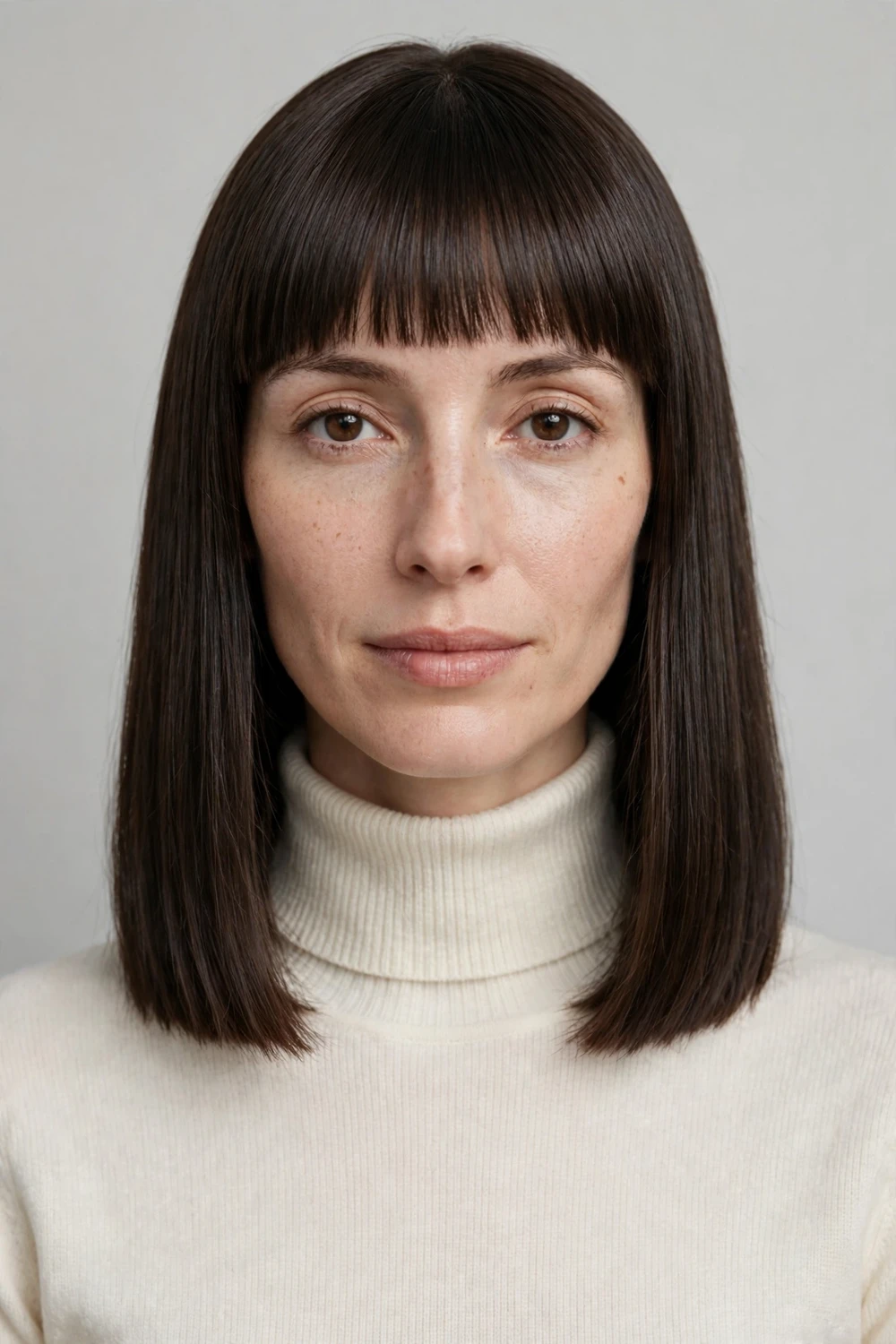
A straight-across blunt fringe is the strongest horizontal line you can add to a long face. It covers the top section of the forehead, so the visible face starts lower and reads shorter. Cut the fringe to skim the eyebrows and keep it full rather than wispy, since a solid line does more work than a thin one.
Pair it with straight or lightly waved hair that ends at the shoulders. The shoulder line gives the eye a second horizontal stop, and the sides of the hair sit wide enough to balance the chin. This pairing suits straight and slightly wavy hair best, because the fringe needs to lie flat to hold its line.
Try this: blow-dry the fringe with a small round brush, pulling it down and slightly under, then leave it alone. Touching it through the day separates the line and weakens the effect.
Difficulty: Medium · Cost: $$ (salon)
2. Long Curtain Bangs with Waves

Curtain bangs part in the middle and sweep out to both sides, with the longest pieces landing at the cheekbones or chin. For a long face, that landing point is the whole point. The fringe frames the face at its widest zone and draws two diagonal lines across the forehead instead of one vertical line down the center.
Ask for the shortest point of the curtain to sit at the cheekbones rather than the nose. Shorter curtain bangs open the forehead back up. Worn with soft waves at shoulder length, the fringe blends into the sides and the width carries down the full face. It suits wavy hair and anyone who wants fringe without a hard line.
Try this: dry the curtain section forward over the forehead first, then sweep each side back. Drying it in place from the start makes it fall flat against the head.
Difficulty: Medium · Cost: $$ (salon)
3. Long Bob with Side-Parted Fringe
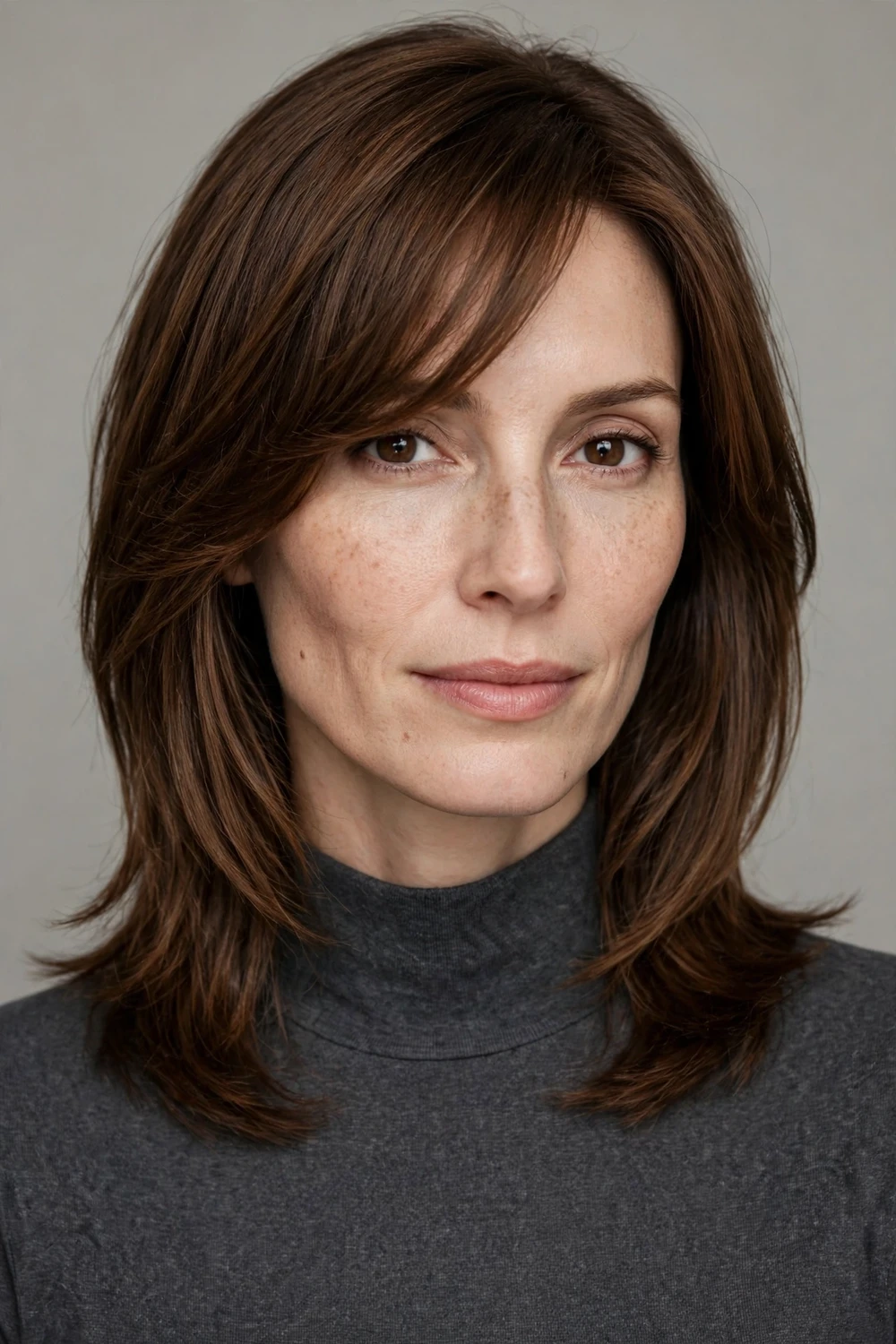
A long side-swept fringe cuts a diagonal across the forehead, and a diagonal line reads as width. The eye follows the sweep across the face instead of down its length. Cut the fringe long enough to tuck behind one ear, so you can wear it swept, pinned, or blended into the layers on low-effort days.
The lob underneath ends at the collarbone, and light layers through the ends stop the sides from hanging flat. Together the diagonal fringe and the collarbone line break the face into shorter sections. This one suits straight, wavy, and fine hair, and it grows out with no awkward stage because the fringe simply becomes a face-framing layer.
Try this: part your hair on the opposite side from your natural part for a week. The switch lifts the roots and makes the sweep sit fuller.
Difficulty: Low to Medium · Cost: $$ (salon)
4. Chin-Skimming Blunt Bob
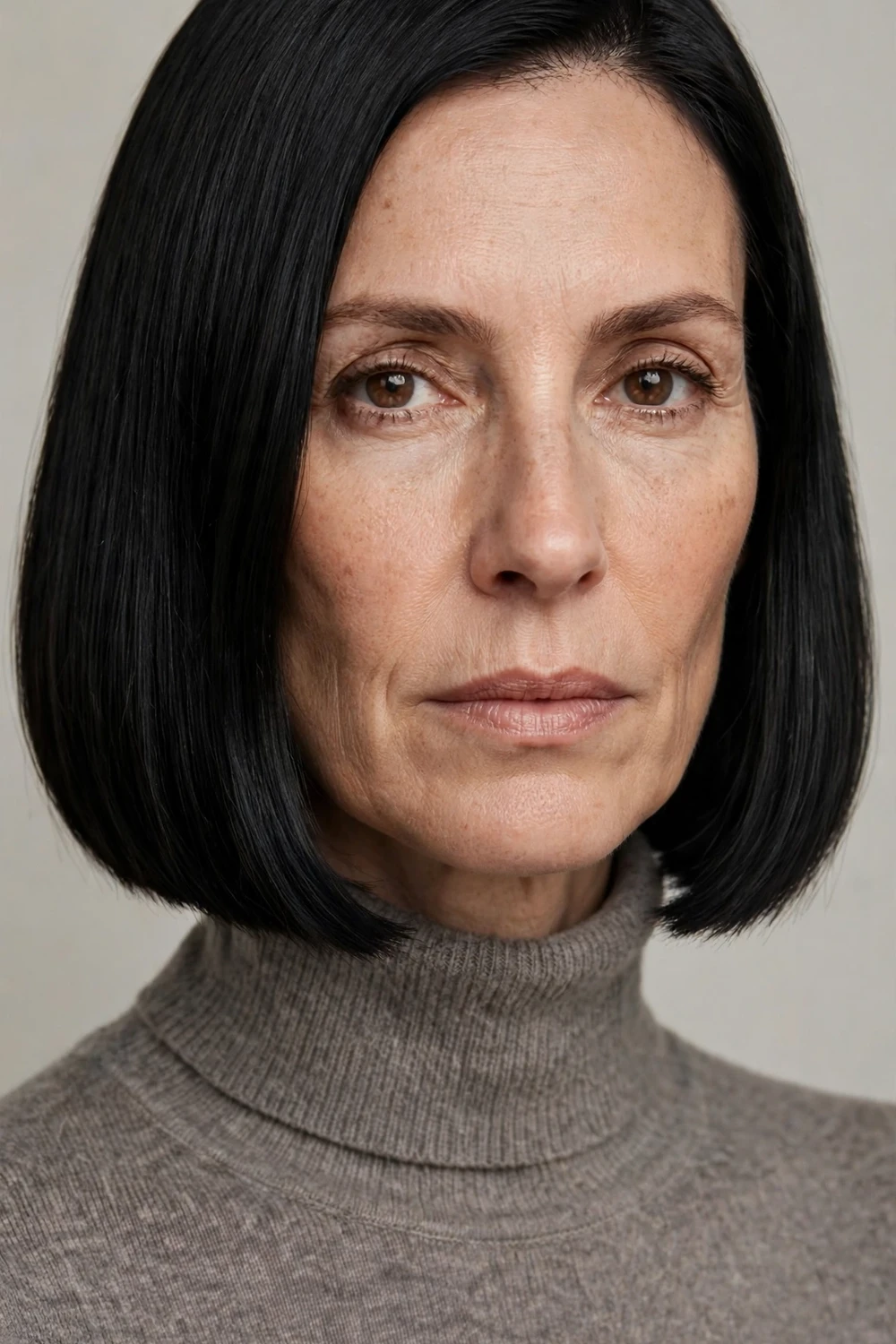
A blunt bob that ends at the chin draws the strongest length line in this list. The ends sit level with the jaw, the widest low point of a long face, and the one-length cut keeps full weight at that line instead of tapering away. The face reads as ending where the hair ends.
Keep the cut one length with no layers at the back, and wear it with a side part or a full fringe to close off the forehead. It suits straight and lightly wavy hair, and thick hair holds the blunt edge best. Fine hair can wear it too if the ends are cut solid and styled with a light mousse at the sides rather than at the roots on top.
Try this: tuck one side behind your ear and leave the other side down. The small asymmetry adds a diagonal and stops the bob from reading as a frame that echoes the face shape.
Difficulty: Low to Medium · Cost: $$ (salon)
5. Curly Chin Bob
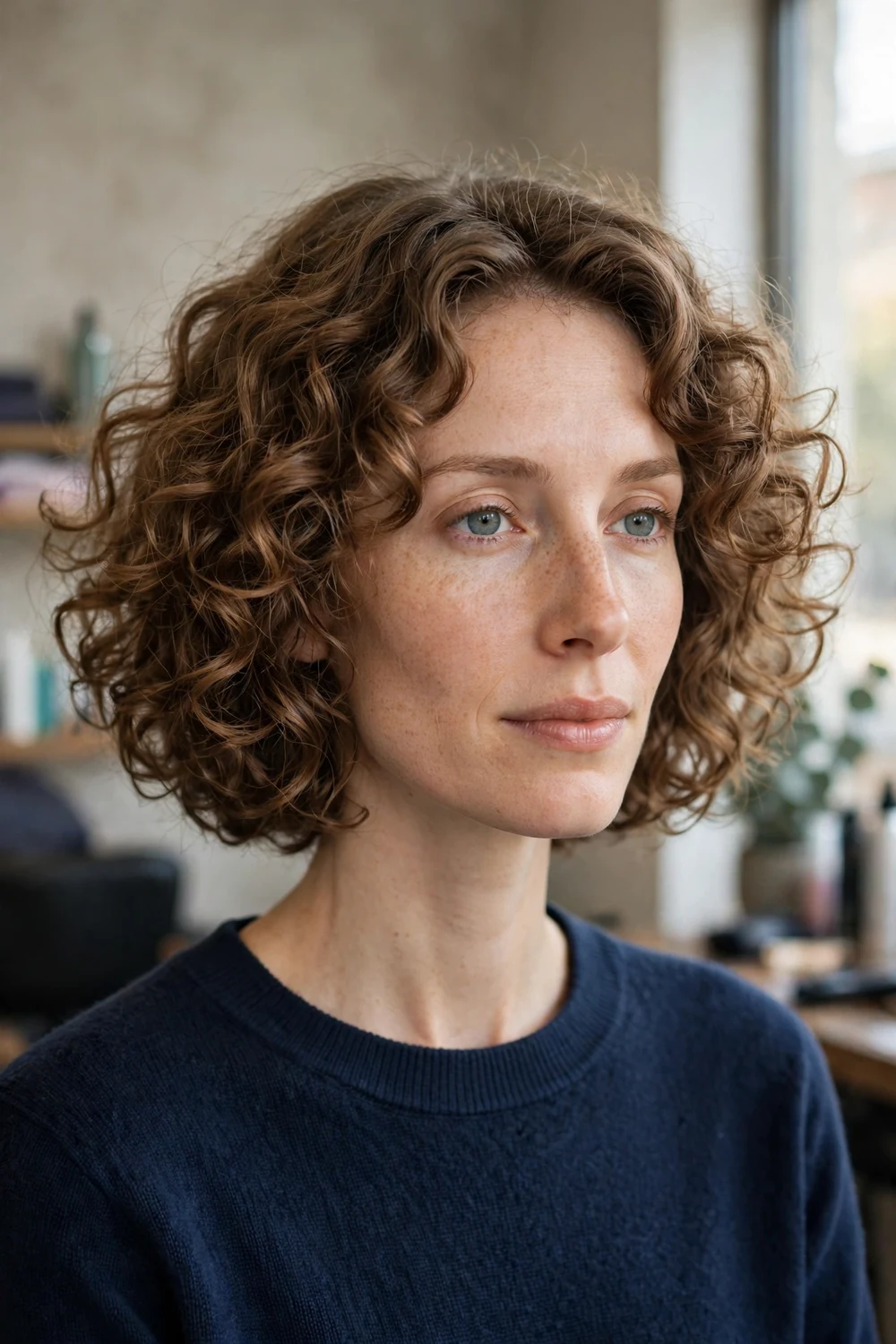
Curls do the width work on their own. A curly bob cut to chin length springs out at the sides, and that outward volume at jaw level is exactly where a long face is narrowest in proportion to its length. The curl pattern also breaks up the outline, so no single vertical line survives.
Ask for the bob cut dry or with your curl pattern in mind, with layers shaped to spread the volume sideways rather than upward. Keep the top relatively flat and let the width build from the cheekbones down. It suits natural curls and permed hair, and it needs moisture more than heat: a leave-in conditioner and air drying or gentle diffusing.
Try this: diffuse the sides pointing outward and let the top dry last and flatter. Directing the airflow sideways builds the shape this cut depends on.
Difficulty: Low · Cost: $$ (salon)
6. Wavy Lob with a Deep Side Part
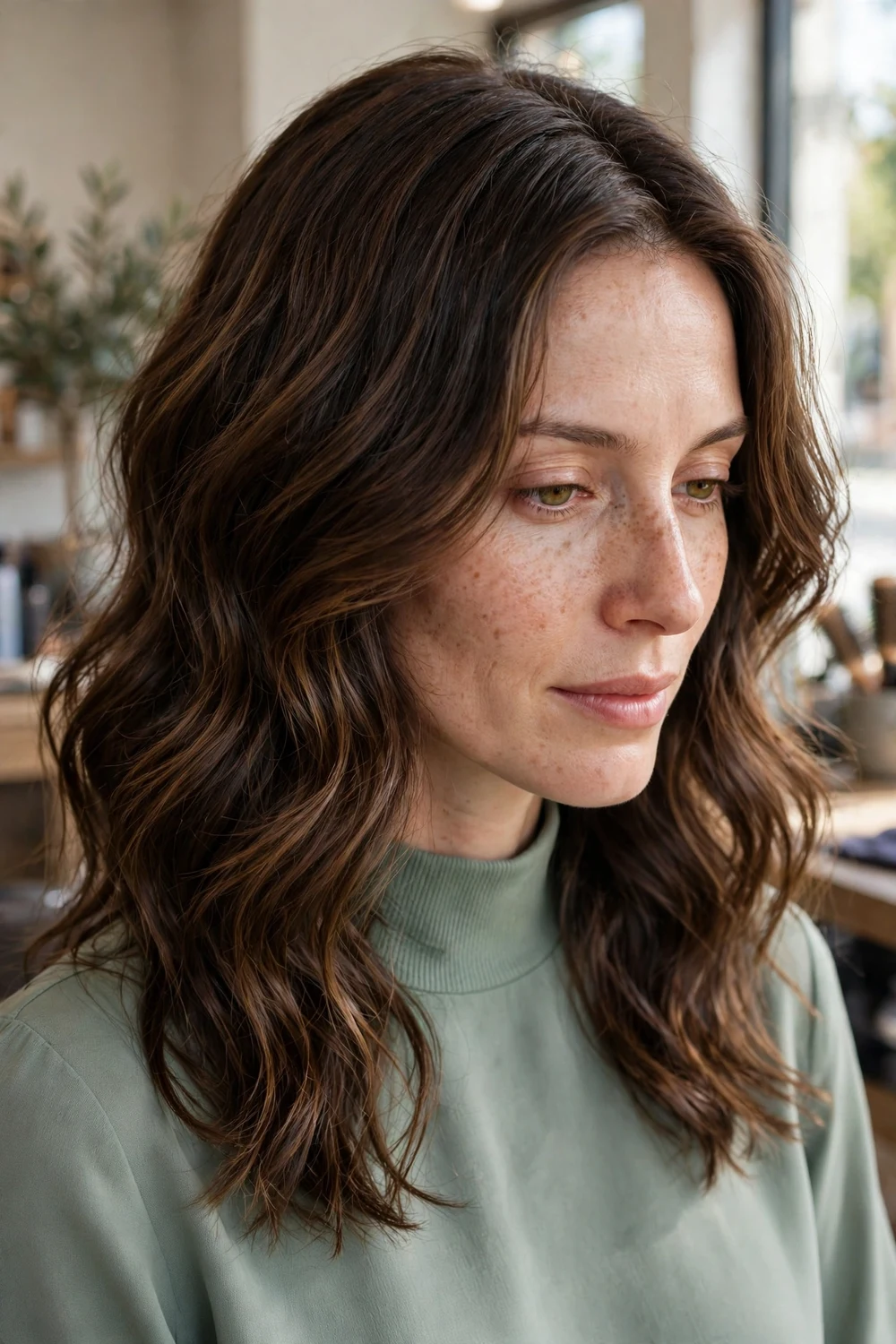
The deep side part is the tool here. Moving the part far to one side sends a diagonal across the top of the head, piles more hair on one side, and gives the face an uneven frame that reads wider. Loose waves through the lob add a second layer of side width at cheekbone level.
Set the part above the outer corner of one eyebrow. Style the waves with the bends starting at eye level, not at the crown, so the widest point of the hair lines up with the cheekbones. It suits wavy and straight hair alike, and it is a sound first change if you are not ready to cut fringe, since the part alone shifts the proportions.
Try this: flip your part to the other side every few days. The roots resist lying flat, and the extra lift sits at the side of the head where you want it.
Difficulty: Medium · Cost: $ (salon)
7. Shaggy Shoulder Cut

A shag spreads layers through the whole cut, with the shortest pieces flicking out around the cheekbones and jaw. Those outward flicks put small horizontal accents all down the sides of the face, and the feathered fringe that usually comes with a shag covers part of the forehead at the same time.
Keep the length at the shoulders and ask your stylist to keep the crown layers long. Short crown layers puff up on top and add the height a long face does not need. The shag suits wavy hair best, since the natural bend makes the layers separate without daily heat styling, and the cut grows out softly for months.
Try this: scrunch a small amount of texture cream into the ends while the hair is damp, then leave it. Over-styling a shag with a brush pulls the flicks flat.
Difficulty: Low · Cost: $$ (salon)
8. Layered Shoulder Cut with Face-Framing Pieces

This cut keeps a simple shoulder length base and puts the work into two or three short pieces at the front that start at the cheekbones. Those pieces sit across the widest part of the face, catch light, and give the eye a reason to travel sideways. The rest of the hair stays long enough to pull back.
Start the framing pieces at cheekbone height and angle them down toward the jaw. Pieces that start at the chin or below frame the lower face only and leave the long middle section unbroken. It suits straight and wavy hair, and it is the lowest-commitment entry on this list because the change is limited to the front sections.
Try this: curl only the two front pieces away from your face on days when the rest of your hair is straight. The contrast puts the width exactly at the cheeks.
Difficulty: Low to Medium · Cost: $$ (salon)
9. Medium-Length Soft Waves
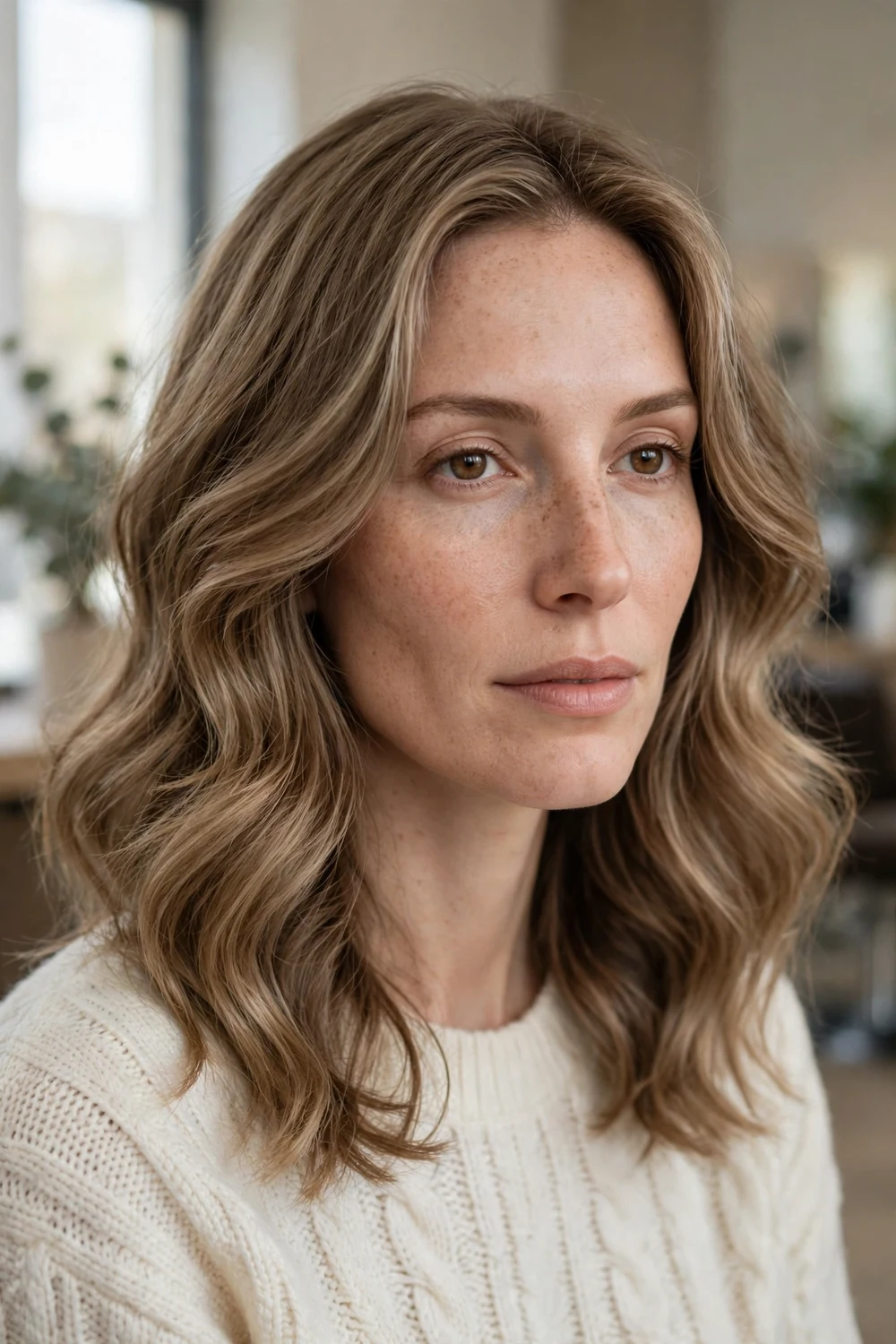
Soft waves at a medium length, between the shoulders and the chest, are the most repeated advice for long faces across stylists, and the reason is placement. A wave bends outward, and a head of loose waves is widest around the cheekbones and jaw, which widens the whole middle band of the face.
Build the waves with a large-barrel iron or with braids overnight, and keep the top third of the hair smooth. Waves that start at the crown add height and cancel out their own width. It suits most hair types. Straight hair holds the style with a light texture spray, and naturally wavy hair needs only reshaping at the front.
Try this: wave the hair in alternating directions and brush the result out once. Uniform waves read as one wide shape, which is the goal here.
Difficulty: Medium · Cost: $ (salon)
10. Glossy Hollywood Waves
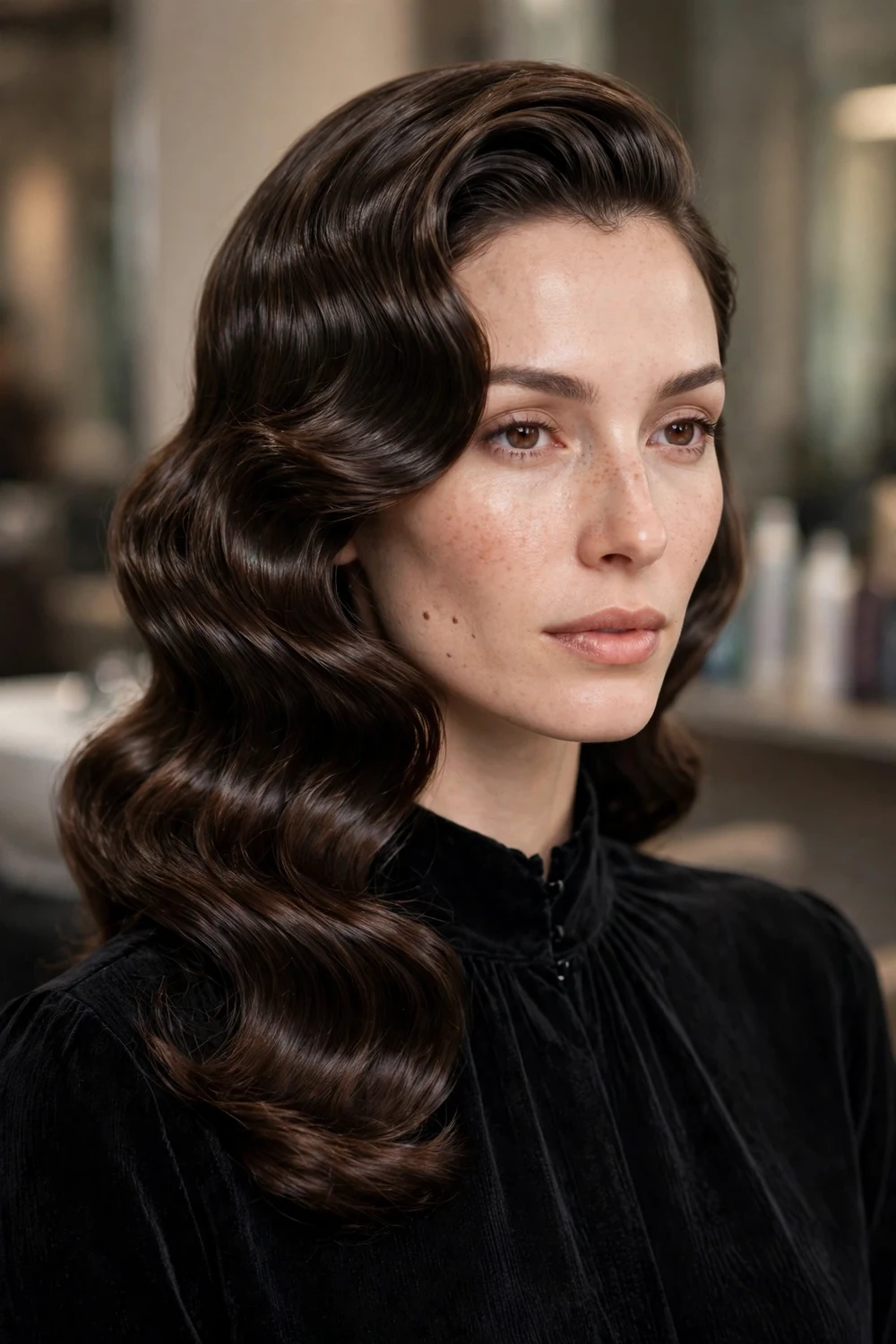
Hollywood waves are brushed, uniform waves with a deep side part, worn over one shoulder or split behind both. The sculpted S-bends sit flat at the top and swell out at the cheeks, so the width lands low and wide rather than high. The side part adds the diagonal this face shape relies on.
Set the waves with clips while they cool, then brush them into place with a soft brush. This is an event style more than a daily one: it takes time and holds best on medium to long hair that is all one length or lightly layered. It suits straight and wavy hair that can hold a set.
Try this: sweep all the hair over one shoulder for photos. The mass on one side widens the silhouette at jaw level.
Difficulty: High · Cost: $$ (salon)
11. Long Layers Starting at the Cheekbones

Long hair can work on a long face when the layers start high. Layers that begin at the cheekbones step outward early, so the hair gains width through the middle of the face and keeps it down the lengths. Layers that begin at the chest do the opposite: the top stays flat and narrow for most of the face length.
Ask for the first layer at cheekbone height, the next at the jaw, and feathered ends that flick slightly outward. Keep some weight in the ends so the hair swings rather than strings. It suits medium and thick hair best. Fine long hair loses too much density with high layers and is better served by the shoulder lengths earlier in this list.
Try this: blow-dry the front layers with a round brush rolling outward, away from the face, so the shortest pieces land wide instead of flat.
Difficulty: Medium · Cost: $$ (salon)
12. Layered Long Curls

Long curly hair carries natural width, and layers decide where that width sits. Cut in a rounded, layered shape, long curls expand at the sides from the cheekbones down, and the face gains a wide frame for its full length. Cut one length, the same curls pull downward and stretch the face with them.
Ask for layers that keep the silhouette wider than it is tall, with the widest point around the cheeks. A wispy fringe or short front pieces can close off the forehead if your hairline sits high. It suits natural curls from loose to tight, and the routine is moisture and gentle handling rather than daily restyling.
Try this: refresh second-day curls by misting the sides and scrunching them outward. Reviving the side volume matters more than fixing the top.
Difficulty: Low to Medium · Cost: $$ (salon)
13. Curly Shag with a Wispy Fringe
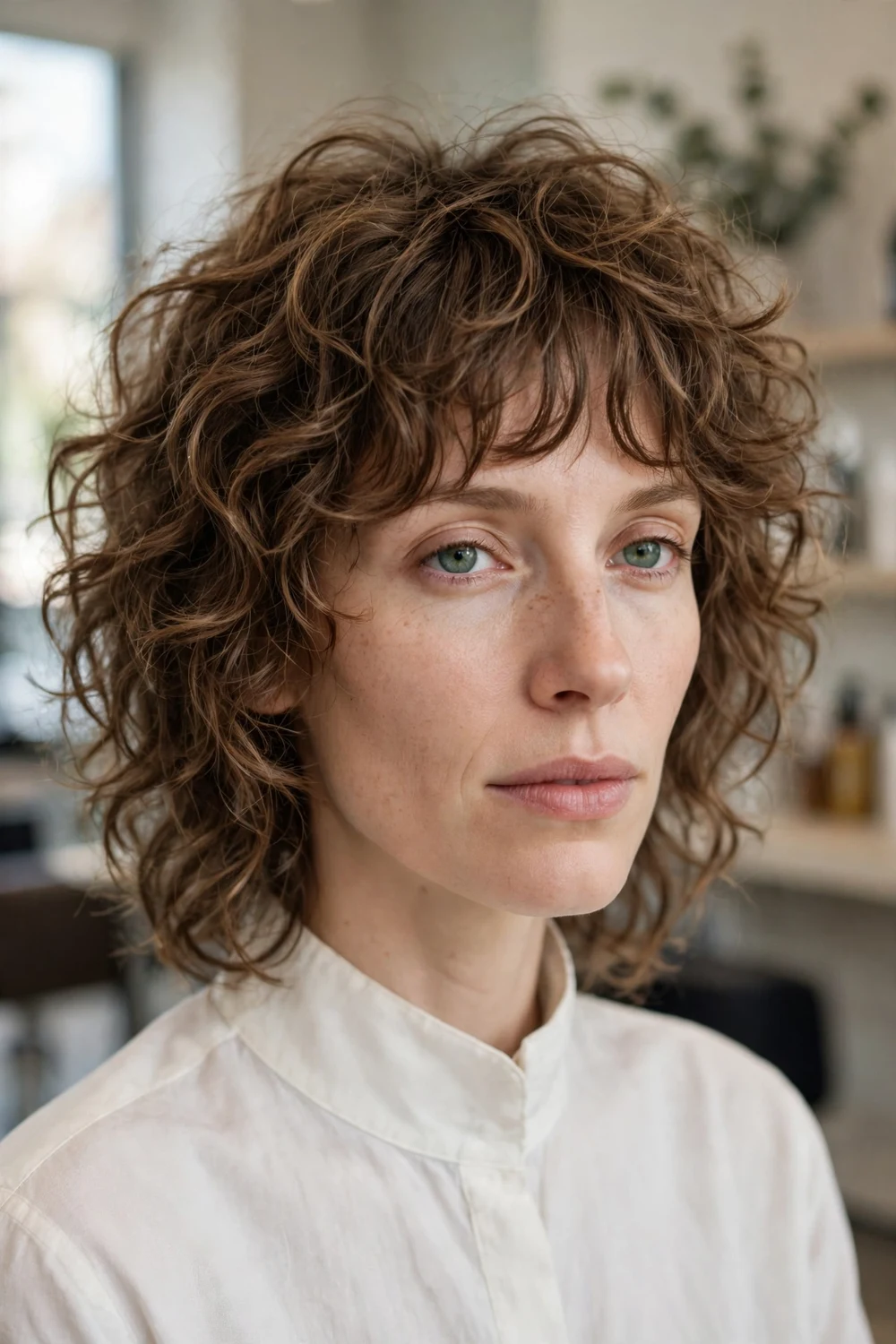
The curly shag layers curls through the crown sides and ends, then finishes with a wispy fringe that sits lightly across the forehead. The fringe shortens the face, and the layered curls push out at the temples and cheeks, so the cut works on the length from both ends at once.
Keep the fringe wispy rather than blunt. A heavy fringe on curly hair shrinks up and can sit too high. Readers with fine curly hair can compare shapes in the roundup of shag haircuts for fine hair, where the layering is cut lighter to protect density. On medium and thick curls, the standard shag holds its shape for two to three months between cuts.
Try this: stretch the fringe gently with your fingers while it dries so it lands at brow length, since curly fringe dries shorter than it looks wet.
Difficulty: Low · Cost: $$ (salon)
14. Feathered Layers with Flicked-Out Ends

Feathered layers are cut to turn outward, and every flicked end is a small horizontal accent. Placed through the cheek and jaw zone, the feathers widen the lower two thirds of the face and soften the straight sides that define an oblong shape.
The cut works at shoulder length or a little below. Style it by blow-drying sections outward with a round brush, rolling the brush away from the face at the ends. It suits straight and wavy hair with medium density. Very fine hair can look thin with heavy feathering, so ask for light feathering through the front only.
Try this: flick only the layers that sit between the cheekbones and the jaw. Feathering the top layers adds height, which works against the rest of the cut.
Difficulty: Medium · Cost: $$ (salon)
15. French Bob with a Full Fringe
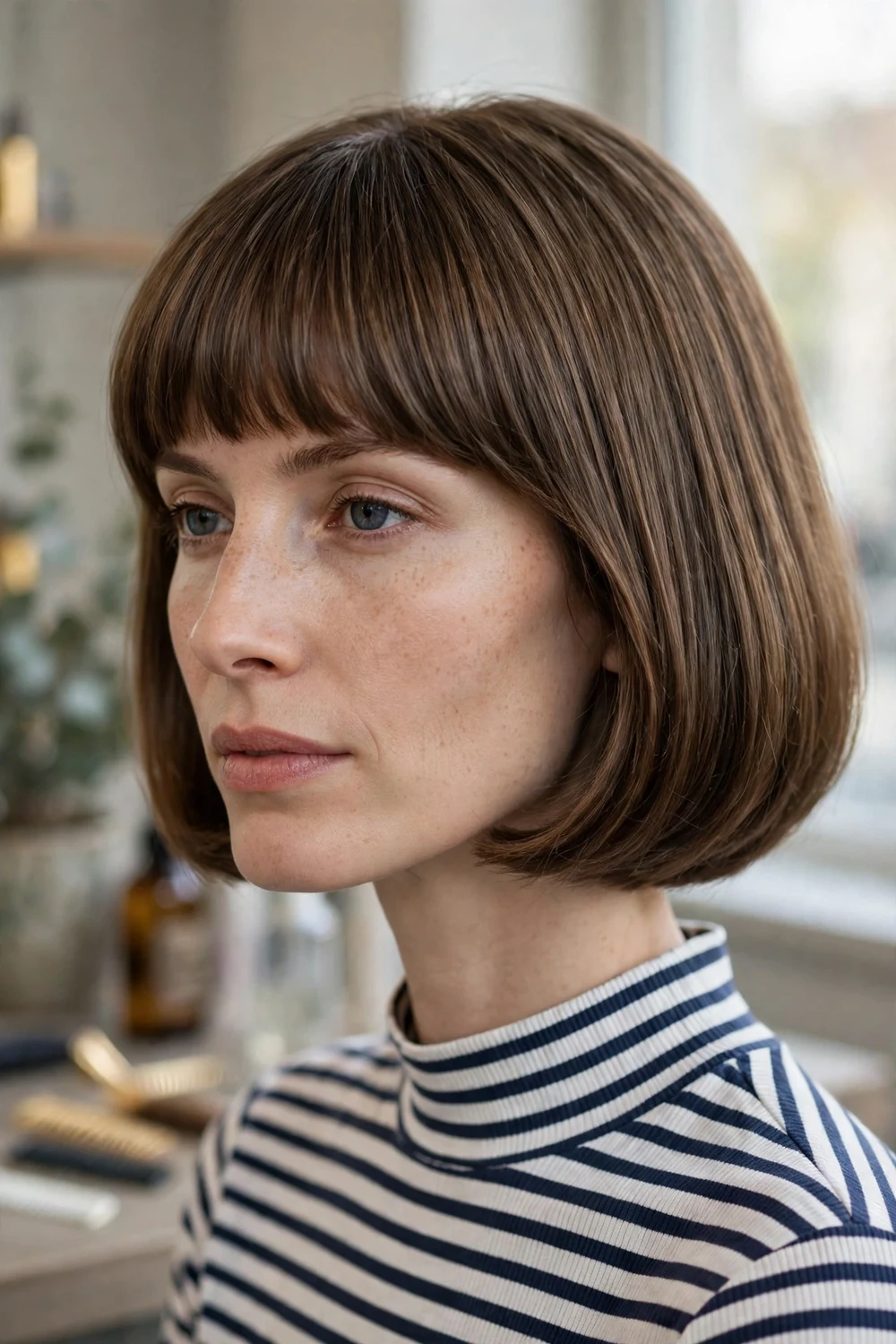
The French bob ends higher than most bobs, around the jaw or just above it, and pairs that short line with a full fringe. On a long face the pairing is efficient: the fringe removes forehead length at the top while the jaw-level ends widen the bottom, and very little vertical hair remains in between.
Wear it slightly tucked and textured rather than sleek and flat, so the sides keep some air in them. It suits straight and wavy hair and oval-leaning long faces that can carry a shorter cut. The separate collection of French bob hairstyles shows dressier versions of the same shape if you want styling ideas for events.
Try this: let the fringe grow to brow length before each trim rather than keeping it short. A longer fringe covers more forehead and holds the proportion better.
Difficulty: Medium · Cost: $$ (salon)
16. Italian Bob with Rounded Sides

The Italian bob is a fuller, rounder bob cut at the jaw with weight kept through the sides and ends. Where a sleek bob can lie close to the head, this version is blow-dried into a rounded shape that stands away from the cheeks, and that rounded outline is pure width.
Ask for minimal layering and strong, blunt ends, then style with a round brush to bend the ends under. The bend-under finish points the width at the jaw rather than letting the ends flare past it. It suits medium and thick hair, and it reads polished enough for formal workplaces while still doing the proportion work.
Try this: blow-dry the sides with the brush held vertically and rolled outward once at the end. That single outward roll keeps the roundness from collapsing inward.
Difficulty: Medium · Cost: $$ (salon)
17. Asymmetrical Bob with a Side Part
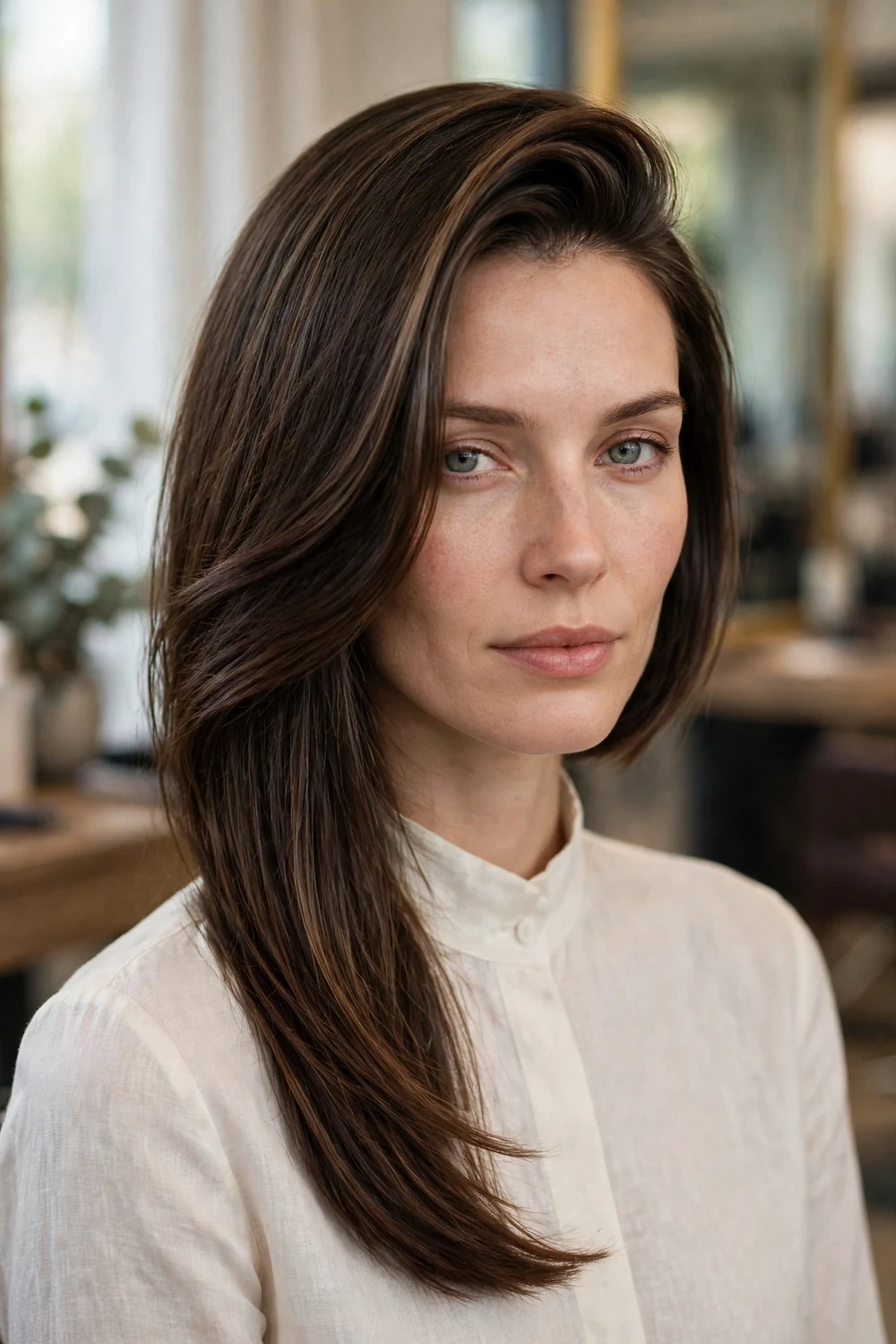
An asymmetrical bob is cut longer on one side than the other, usually by an inch or two. The uneven hem removes the straight vertical frame that mirrors a long face, and the longer side pulls the eye across the jaw on a diagonal. A deep side part completes the sideways direction.
Keep the difference modest. A dramatic angle that drops far down one side starts to add length again on that side. Chin length on the short side and jaw-to-shoulder length on the long side is the balanced range. It suits straight and lightly wavy hair, and it is a good route for anyone bored with a standard bob who still needs the width a bob gives.
Try this: wear the longer side in front of your shoulder and the shorter side tucked back. The split placement strengthens the diagonal.
Difficulty: Low to Medium · Cost: $$ (salon)
18. Long Pixie with a Side Sweep
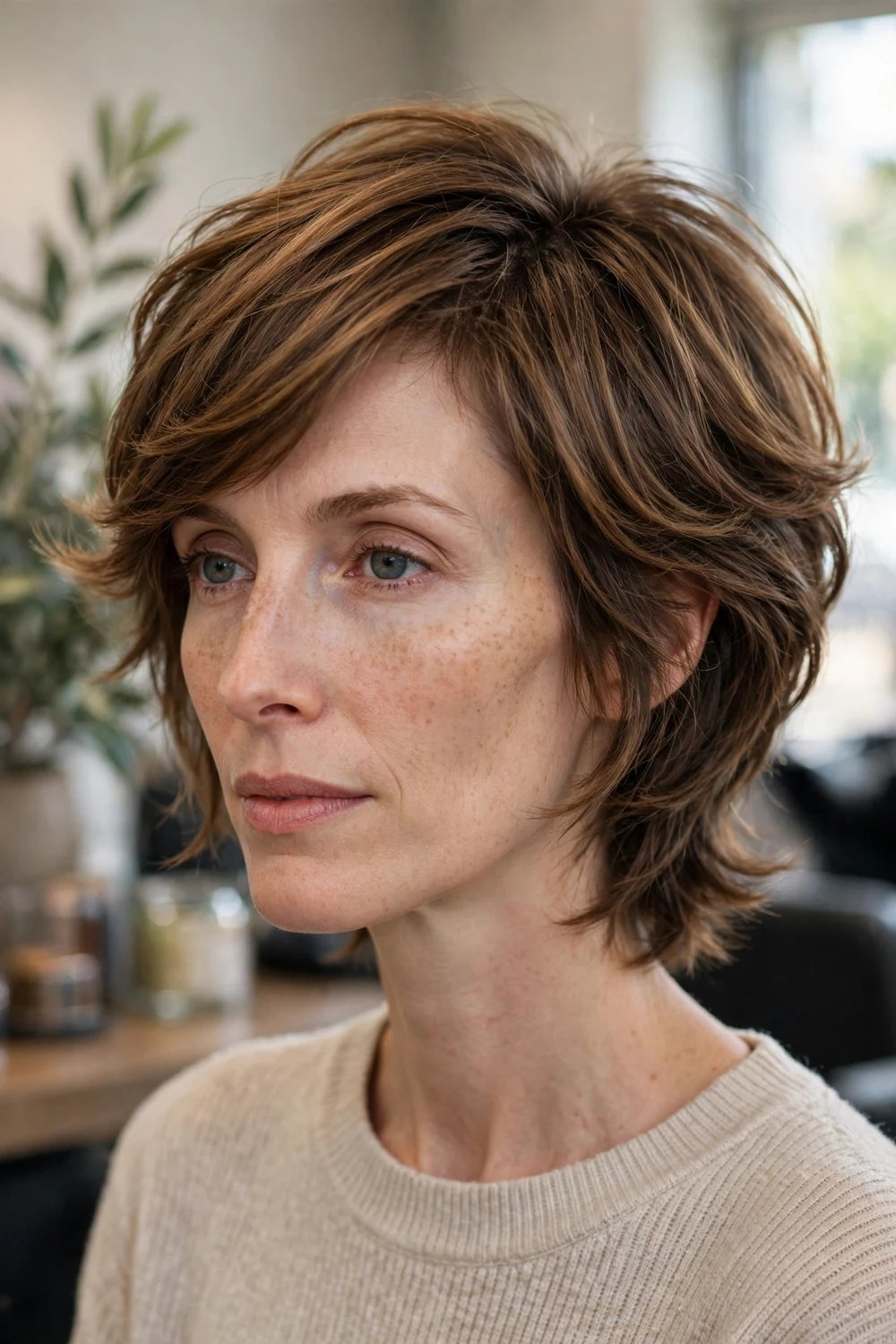
A pixie can suit a long face when it is cut long and wide. The version that works keeps length on top that sweeps to one side, keeps the sides full enough to cover the tops of the ears, and avoids any lift at the crown. The side sweep draws the same diagonal line across the forehead that a side-swept fringe does on longer hair.
Ask your stylist to avoid tight tapering at the sides and any quiff-like height at the front. Both choices stretch the face. It suits straight and wavy hair and fine to medium density, and the daily routine is short: a small amount of matte paste worked sideways through the top.
Try this: dry the top forward first, then sweep it to the side. Forward drying keeps the roots lying in the sideways direction instead of standing up.
Difficulty: Low · Cost: $ (salon)
19. Curly Pixie with Wide Sides

The curly pixie solves the short-hair problem with curl volume. Curls left full at the sides widen the head at temple and cheek level, which balances the length of the face below them. The top stays relatively low and forward, with a few curls dropping onto the forehead.
Ask for the sides scissor-cut and left full rather than clipped short, since clipped sides remove the width the cut depends on. The guide to pixie haircuts for curly natural hair shows the shape range for different curl patterns. Maintenance is a trim every five to seven weeks to hold the silhouette, plus daily moisture to keep the side curls defined.
Try this: scrunch the sides outward while they dry and pin the top flat for ten minutes. Setting the direction early keeps the width where you placed it.
Difficulty: Low · Cost: $ (salon)
20. Choppy Lob with Tousled Ends
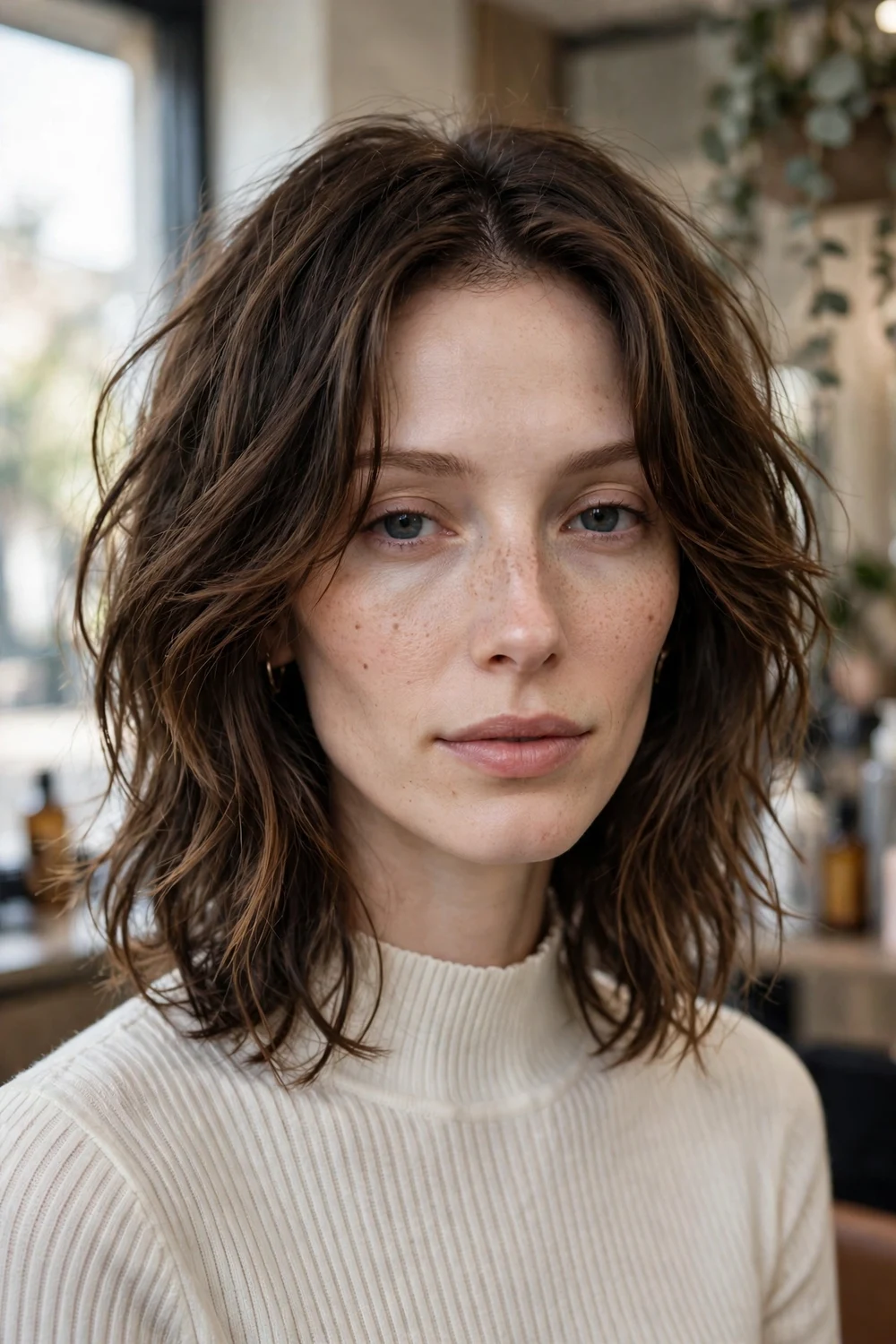
A choppy lob is cut with uneven, textured ends at collarbone length and styled tousled, so the outline of the hair is broken and wide rather than smooth and narrow. The chopped ends kick out in different directions at jaw and shoulder level, which spreads width across the lower face.
Ask for point-cut ends and light internal layering, then style with a salt spray or texture cream scrunched through the lower half. Keep the top smooth and the part to the side. It suits thick hair especially well, since thick ends hold the chopped texture without extra product, and it forgives skipped styling days because the intended finish is undone.
Try this: bend random sections with a flat iron in alternating directions and leave the rest straight. A few bends are enough to break the outline.
Difficulty: Low · Cost: $$ (salon)
21. Textured Side Braid

A side braid is a styling change rather than a cut, and it works by moving the mass of long hair to one side. The braid sits over one shoulder at chest level, the loose top sections stay wide around the face, and the diagonal path of the hair across the back breaks the vertical hang that makes long hair risky on a long face.
Braid loosely and pull the loops wider once the braid is secured, a technique often called pancaking. Pull out two soft pieces at the front to frame the cheeks. It suits hair at shoulder length or longer, of any texture, and it is a practical second-day style when the lengths need to be contained.
Try this: start the braid low, behind the ear, rather than at the crown. A low start keeps the top of the head flat and the width at the sides.
Difficulty: Low · Cost: $ (salon)
22. Beach Waves with Face-Framing Highlights

Beach waves give long hair loose, matte bends, and lighter face-framing highlights placed on the front sections pull attention to the sides of the face. Color does part of the proportion work here: the eye goes to the bright pieces at the cheeks and reads the face at its widest point.
Keep the highlights concentrated on the front and the top layers at cheekbone height, with the underneath left deeper for contrast. The waves themselves should start at eye level. Several of the wave styles in this list can be set without heat, and the collection of heatless hairstyles for long hair covers braid-outs and overnight methods that suit this finish.
Try this: ask for the front pieces one to two shades lighter than the rest, no more, so the frame reads as width rather than stripes.
Difficulty: Medium · Cost: $$$ (salon)
23. Butterfly Cut with Cheekbone Layers
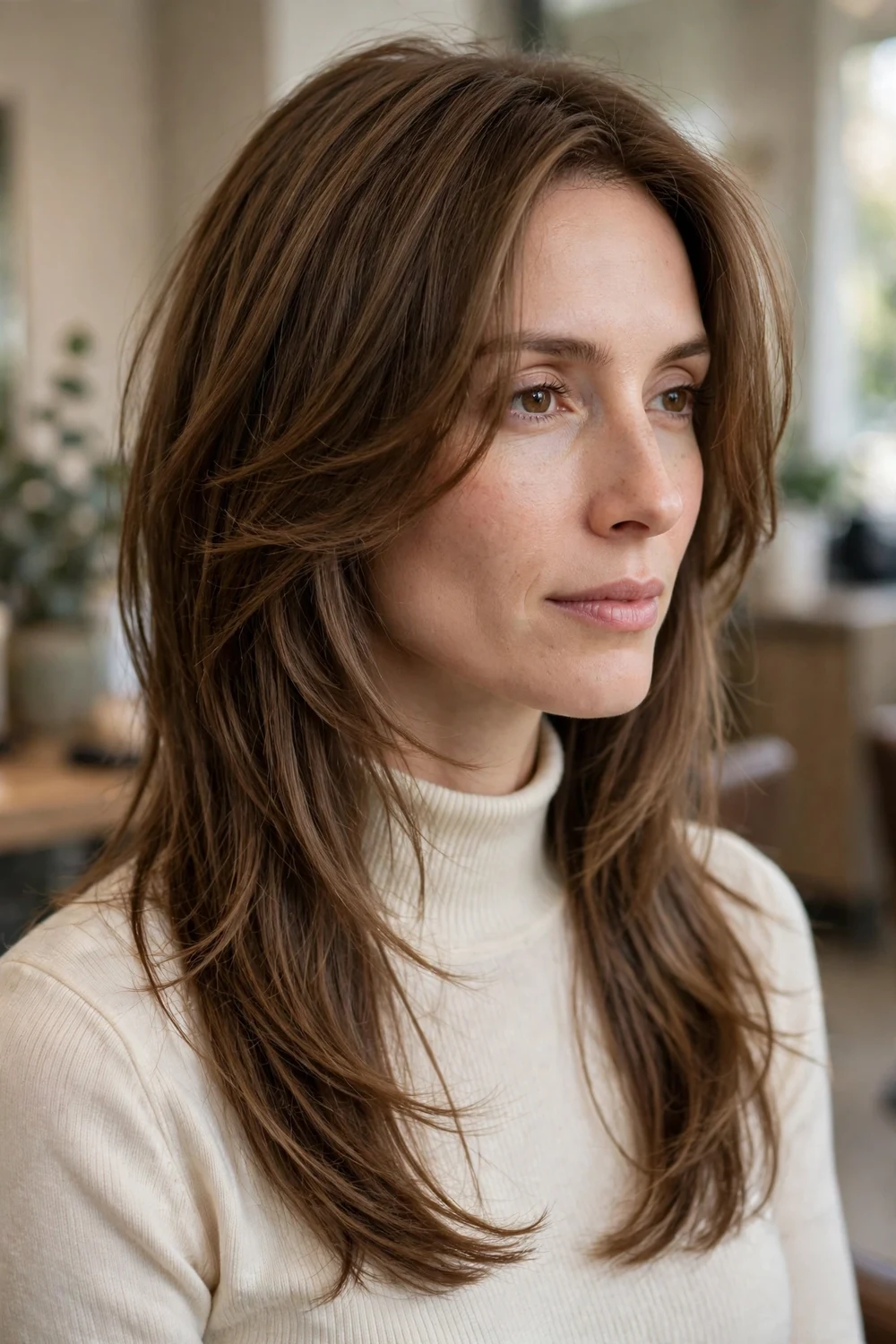
The butterfly cut pairs short layers around the face, starting at the cheekbones, with long lengths kept at the back. For a long face, the short front layers are the useful part: they spring outward at the cheeks and create the look of a shorter, wider cut from the front, while the back keeps the length you may not want to give up.
Ask for the shortest layer to land at the cheekbone and the next at the jaw, with the front sections cut to swing outward. Style the front layers with a round brush or a large roller so they hold their outward curve. It suits medium and thick hair. Fine hair can lose too much weight at the front, so keep the layers longer and fewer if your hair is fine.
Try this: pin the long back section up for a day and check the mirror. The front on its own mimics a lob, which tells you how the width is working.
Difficulty: Medium · Cost: $$ (salon)
24. Low Side Ponytail with Loose Face Pieces
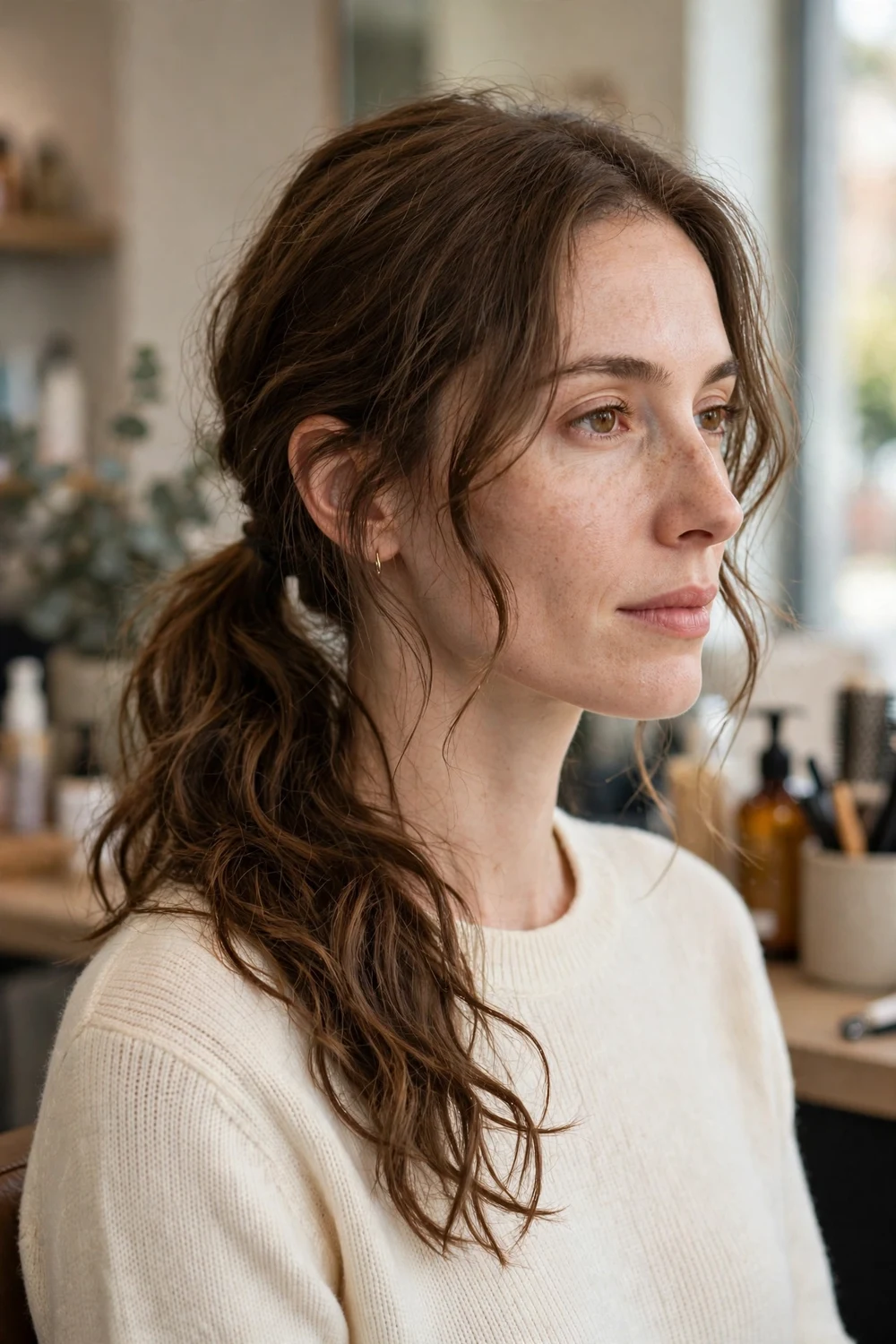
A ponytail worn low and to one side keeps pulled-back hair from stretching a long face. The low position avoids crown height, the side placement puts the tail over one shoulder as a wide diagonal, and loose pieces left out at the front soften the hairline and frame the cheeks.
Part the hair deeply to one side, gather it at the nape on the same side, and leave out two wavy pieces at the front plus a soft section above the ear on the other side. Add loose waves to the tail so it sits wide over the shoulder rather than hanging in one straight line. It suits medium and long hair and takes under five minutes.
Try this: wrap a small section of hair around the elastic and pin it underneath. The wrapped finish keeps the style neat enough for work.
Difficulty: Low · Cost: $ (salon)
Frequently Asked Questions
What hairstyle suits a long face best?
Styles that add width at the sides and reduce vertical lines suit a long face best. Chin-length and shoulder-length cuts, bangs in blunt, curtain, or side-swept form, and waves or curls that sit at cheekbone level all balance the proportions. Keep volume at the sides of the head rather than on top.
Do bangs make a long face look shorter?
Yes. Bangs cover part of the forehead, so the visible length of the face starts lower and reads shorter. A blunt fringe gives the strongest effect because it draws one solid horizontal line. Curtain bangs and side-swept bangs work through diagonal lines and suit anyone who wants a softer frame.
Can I keep long hair if I have a long face?
Yes, with layers and texture doing the balance work. Start layers at the cheekbones so the hair widens through the middle of the face, add waves or curls for side volume, and consider a side part. Long hair worn straight, flat, and one length with a center part is the version that adds length.
Which hairstyles should a long face avoid?
Avoid styles that add height or pull the eye straight down: volume piled at the crown, very long straight hair with no layers, flat center parts on long hair, tight slicked-back styles that expose the full forehead, and pixie cuts tapered tight at the sides with height left on top.
Is a side part or a center part better for a long face?
A side part is the safer choice for a long face. A deep side part sends a diagonal line across the head and moves the eye sideways. A center part can still work when it is paired with curtain bangs, face-framing layers, or waves that add width at the cheeks.
Final Thoughts
Balancing a long face comes down to one exchange: less height, more width. Put the volume at the cheekbones, draw a horizontal line with a fringe or a chin-length hem, and move the part to the side, and almost any length can work, from a wide curly pixie to long layered curls. Pick the idea that matches your hair texture and the styling time you will honestly give it each morning, book the cut, and judge the result by where the width sits in the mirror.

