

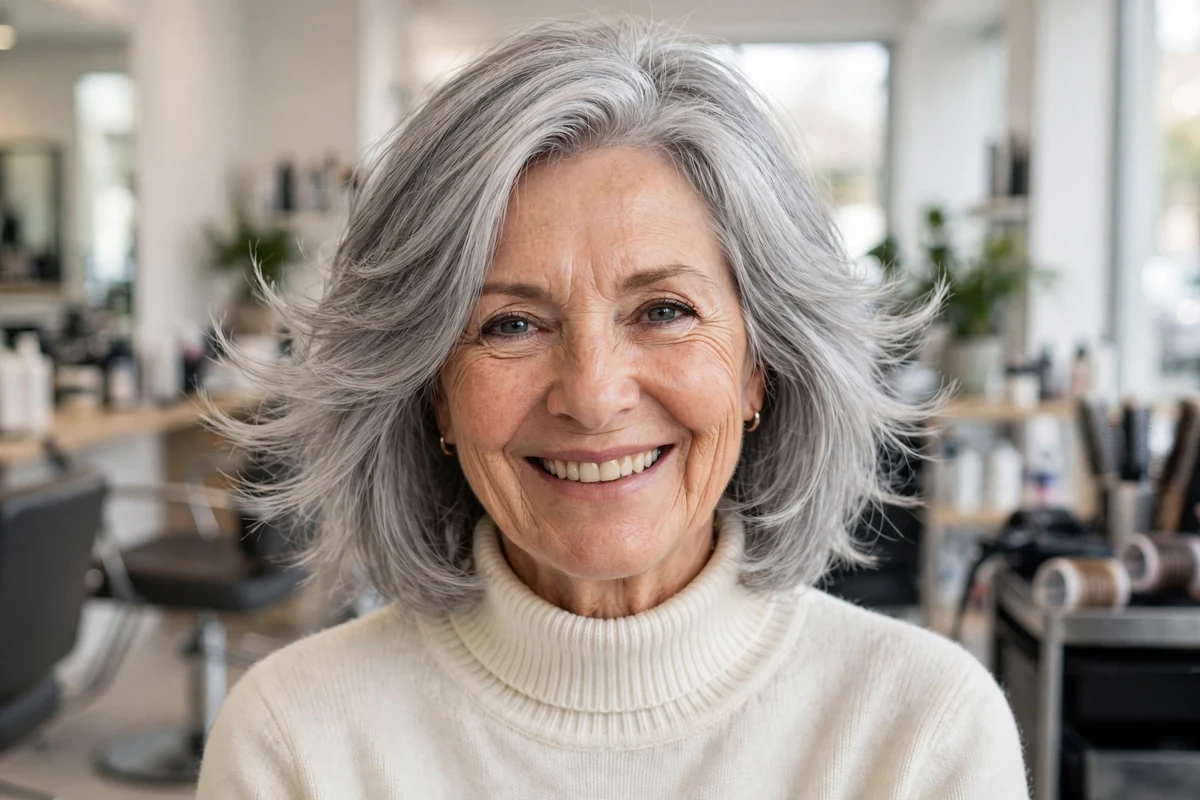
Feathered hair is built on one simple move: the ends are cut at an angle, tapered, and styled away from the face so each layer flicks out in a soft point. The result is a cut with visible movement through the sides and crown, and a lighter finish at the perimeter than a blunt cut of the same length. For women over 50, that shape does practical work. It lifts fine hair at the crown, takes weight out of thick hair, and frames the face with pieces that start at the cheekbones or jaw.
This list collects 27 feathered hairstyles for women over 50 and runs them in order: short pixies and crops first, then feathered bobs in every bang and back shape, then lobs, medium layers, shags, and long layers. Every idea explains how the feathering is cut, how the flicked ends are styled, who the cut suits, and how often it needs a trim. Several ideas keep natural grey front and centre, and the grey hair with lowlights guide shows how soft colour placement pairs with grey feathered layers.
Key Takeaways
- Feathering means angled, tapered ends styled away from the face. The flick at the ends is what separates a feathered cut from a general layered cut.
- Short feathered pixies and crops are the lowest upkeep route, with most styling done in five minutes or less.
- Feathered bobs come in the widest range: side bangs, wispy bangs, curtain bangs, stacked backs, angled fronts, and shaggy versions.
- Fine hair needs light feathering kept short to medium length, so the ends stay full enough to hold the flick.
- Most feathered cuts hold their shape for six to eight weeks before the ends lose their point and need a trim.
How to Choose Your Feathered Cut
Start with length, then with texture. Short feathered cuts suit women who want wash-and-wear styling and clear lift at the crown. Bobs suit women who want a defined shape around the jaw with more styling options. Medium and long feathered layers suit women keeping their length who mainly want weight removed and movement added through the sides. Texture decides how heavy the feathering can go: fine hair takes light, short feathering, while thick hair can carry deeper layers through the crown and back.
Then be honest about heat styling. The classic feathered flick comes from a round brush and a blow dryer turning the ends away from the face. If you air-dry most days, pick a wavy lob, a shaggy bob, or a curly feathered cut, where the flick follows your natural texture instead of fighting it. The table below matches each cut family to the hair and routine it suits.
| Cut family | Best for | Hair type | Upkeep |
|---|---|---|---|
| Feathered pixies and crops | Crown lift and fast morning styling | Fine to medium | Low |
| Feathered bobs | Defined shape around the jaw with bang options | Fine to thick | Low to medium |
| Feathered shags | Crown volume and a relaxed, piecey finish | Medium to thick, wavy | Low to medium |
| Feathered lobs and medium layers | Keeping length while removing weight | Medium to thick | Medium |
| Long feathered layers | Movement through long hair without losing length | Medium to thick | Medium |
1. Short Feathered Pixie in Soft Silver
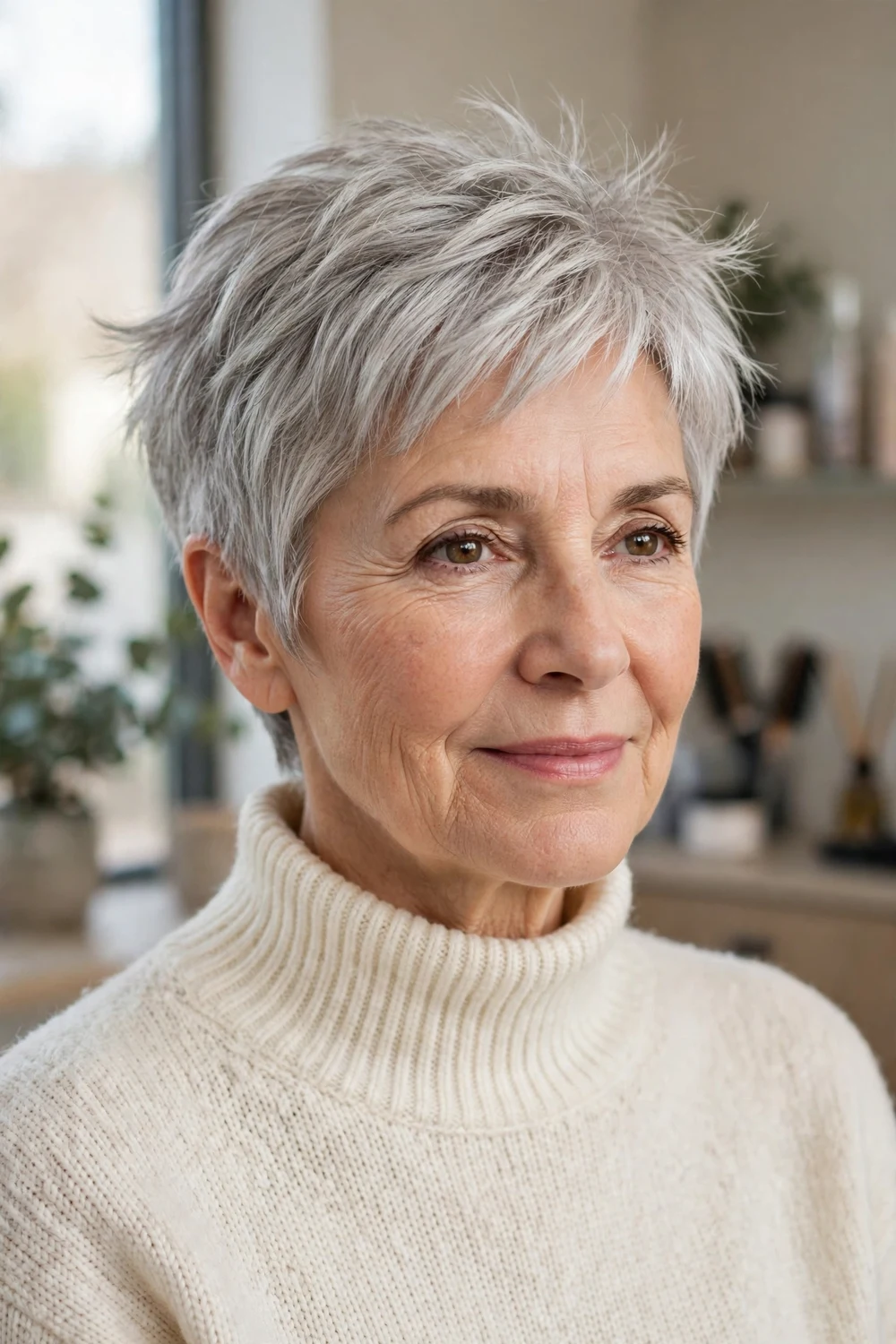
This pixie keeps a little extra length through the crown and cuts it into light, tapered layers that point away from the forehead. The sides stay close, and the feathered pieces around the hairline soften the whole outline. Soft silver shows every layer, since light and dark grey strands sit side by side through the top.
It suits fine hair well, because short feathering removes very little density while adding visible texture. Styling takes a small amount of mousse worked through damp hair and a quick blow-dry with the fingers lifting the crown. A trim every five to six weeks keeps the tapered shape tidy. Readers comparing short options can also browse pixie haircuts for fine hair for more fine-hair lengths.
Try this: ask your stylist to keep the top layers a touch longer than feels safe. That extra length is what lets the feathers sweep instead of standing up.
Difficulty: Low · Cost: $ (salon)
2. Wispy Feathered Pixie in Natural Gray

The wispy version thins the ends of the pixie down to fine points, so the hair sits in separate soft pieces around the crown and fringe. Natural grey works in its favour: the mix of silver and darker strands gives each wispy piece its own tone, and the texture reads clearly even on a short cut.
This is a wash-and-wear cut for women who style with their fingers. A pea-sized amount of lightweight cream, worked through dry hair, separates the pieces at the front. Heavy wax flattens the wisps, so keep product light. The cut grows out softly and can stretch to seven weeks between trims.
Try this: pinch the front pieces between your fingers after applying cream. That small step is what turns a plain pixie into a feathered one.
Difficulty: Low · Cost: $ (salon)
3. Tapered Feathered Pixie in Pearl Gray
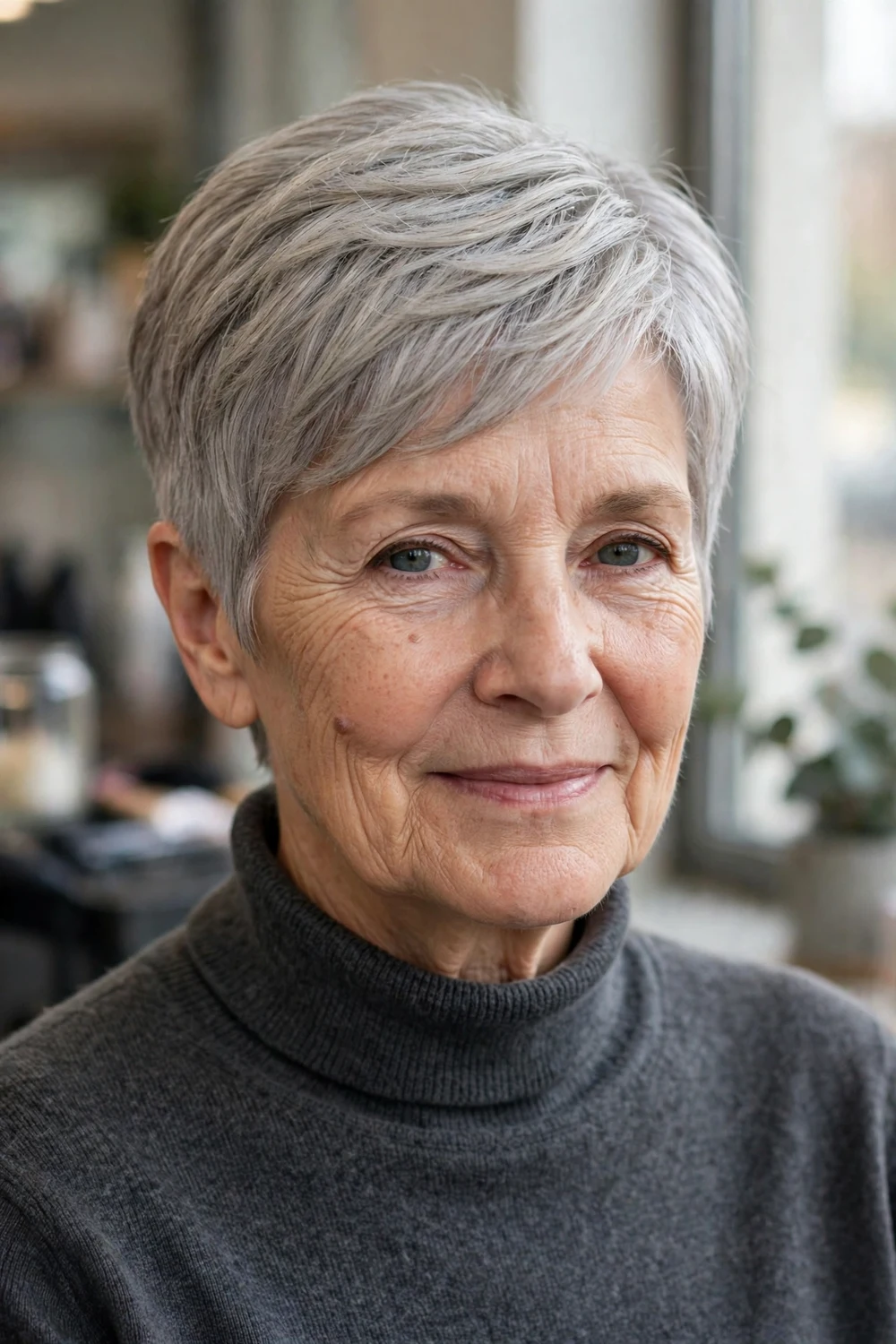
Tapering cleans up the neckline and the hair above the ears, while the top stays fuller and feathered. That contrast gives the pixie a neat back and a soft front, and pearl grey keeps the finish polished. The top can be brushed back, swept to one side, or worn forward depending on the day.
It suits women who like a tidy outline and glasses wearers in particular, since the tapered sides sit flat where frames rest. Daily styling is a quick blow-dry of the top section only. The taper needs attention sooner than the top, so plan trims at five weeks to keep the neckline clean.
Try this: show your stylist where your glasses arms sit, so the taper is cut to lie flat under them.
Difficulty: Low · Cost: $ (salon)
4. Feathered Pixie with Long Bangs

Here the sides and back stay short while the fringe is left long and feathered, then swept diagonally across the forehead. The long bangs carry the feathering: their ends are point-cut so the sweep looks soft across the brow rather than heavy. Layers through the crown stop the top from falling flat against the longer front.
Dark brown gives the shape depth and makes the diagonal fringe the clear feature. This pixie suits women who want short hair with one styling lever to play with, since the bangs can be swept, parted, or pinned. A flat brush and two minutes with a dryer set the sweep each morning.
Try this: blow-dry the bangs in the opposite direction first, then sweep them over. The switch adds lift at the root of the fringe.
Difficulty: Low to Medium · Cost: $ (salon)
5. Feathered Pixie Bob

The pixie bob sits between a pixie and a bob: short at the back, with enough length at the sides and top to sweep and tuck. Feathering runs through the longer top layers and around the neckline, so the shape moves instead of sitting in one solid block. Ash blonde keeps the layered texture easy to see.
It is a practical middle step for women growing out a pixie or cutting a bob shorter for the first time. Thick hair benefits from the tapered back, which removes bulk at the nape; the pixie bob haircuts for thick hair roundup covers that version in depth. Style with a round brush on the top layers and let the back fall as it dries.
Try this: tuck one side behind your ear and leave the other side forward. The asymmetry shows off the feathered front pieces.
Difficulty: Low to Medium · Cost: $$ (salon)
6. Side-Swept Feathered Crop

This crop pairs a fuller crown with short feathering around the ears and neckline, finished with a longer fringe swept to one side. Sandy blonde keeps the colour natural and gives the textured layers gentle definition. The side sweep does the face-framing work that a centre part gives longer cuts.
The crop suits fine to medium hair and oval or longer face shapes, where the diagonal fringe breaks up length at the front. Styling is minimal: dry the fringe across the forehead with a paddle brush, then push it into its sweep. Trims land every six weeks to hold the outline around the ears.
Try this: switch the sweep to the other side once a week. Alternating sides keeps the roots from training flat in one direction.
Difficulty: Low · Cost: $ (salon)
7. Textured Crop with a Feathered Fringe
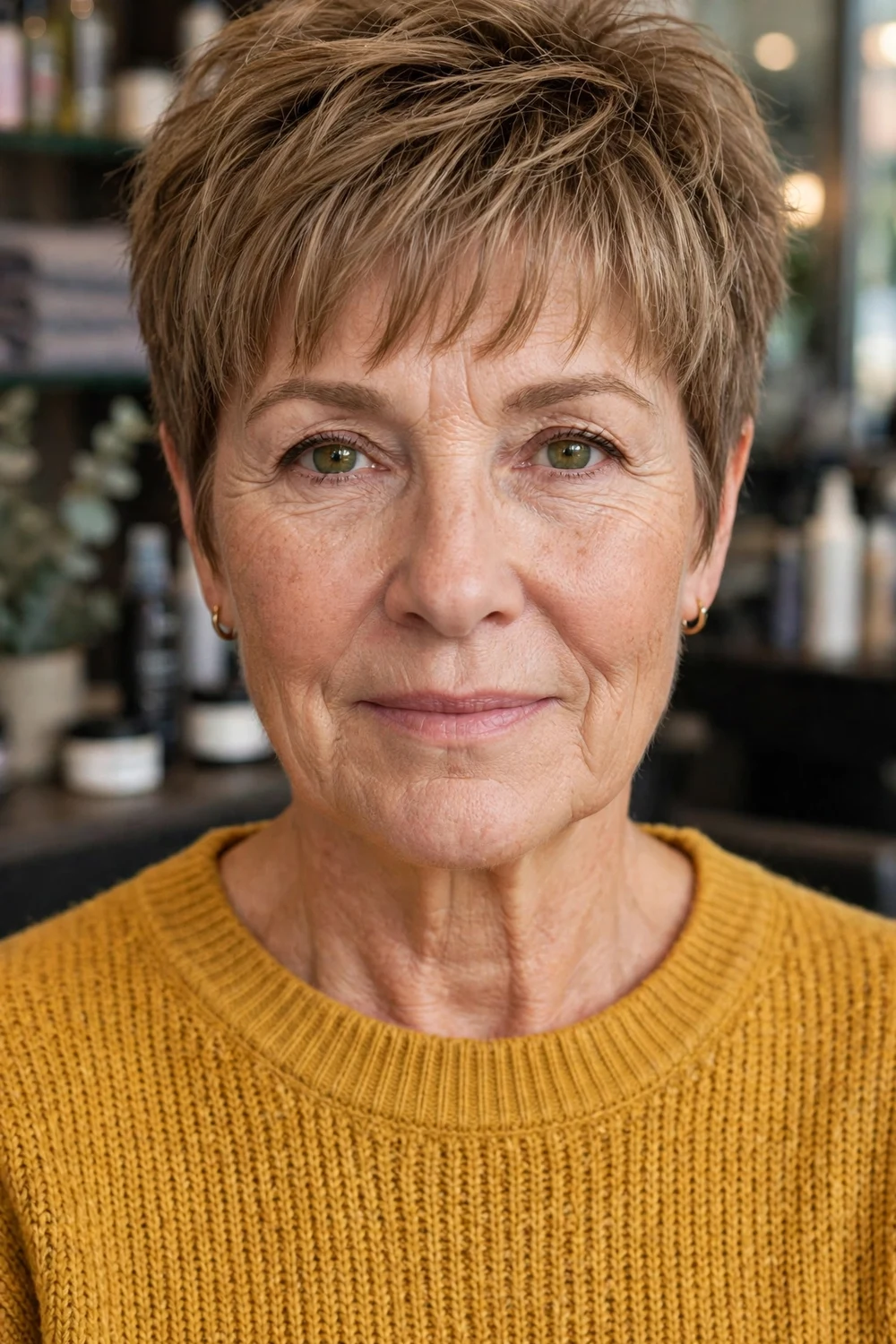
Short textured layers cover the top of this crop, and the fringe is feathered straight across the forehead in separated points. The fringe is the difference from a plain crop: it softens the hairline and gives the cut a clear front view. Light brown keeps the texture looking soft rather than edgy.
It suits women with straight to slightly wavy hair who want a short cut with some softness at the front. A matte styling paste, warmed between the palms and pressed through the top, defines the texture in under a minute. The fringe needs a quick trim between full appointments if it grows into the eyes.
Try this: ask for the fringe to be point-cut dry at the end of the appointment, so you see the feathered separation before you leave.
Difficulty: Low · Cost: $ (salon)
8. Short Feathered Shag
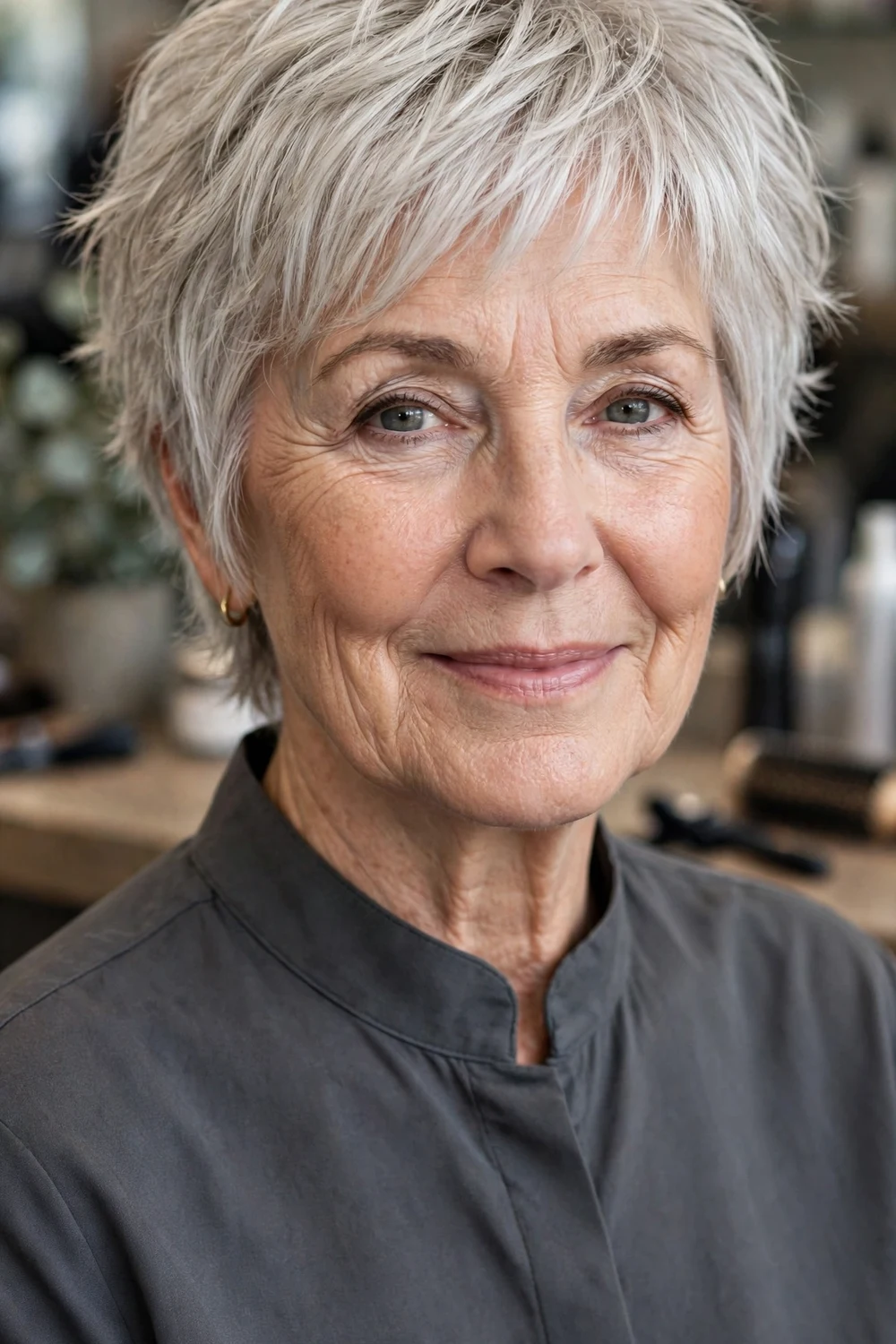
The short shag builds feathering into choppy, graduated layers: shorter at the crown for lift, longer and piecey toward the sides and nape. Silver blonde shows the different lengths clearly, especially where the layers stack around the crown. The finish is deliberately undone, with ends pointing in several directions.
This cut suits medium to thick hair and natural wave, since the shag layers follow texture instead of requiring a smooth blowout. Shake it out with a little mousse and let it air-dry, or diffuse for a few minutes. It is forgiving between appointments and still looks intentional at eight weeks.
Try this: scrunch the crown while the hair is damp and leave the ends alone. The crown is where a shag earns its volume.
Difficulty: Low to Medium · Cost: $$ (salon)
9. Classic Feathered Bob

The classic version runs graduated feathered layers through a chin to jaw length bob and styles every section away from the face. That backward direction is the signature: the sides open up, the ends flick out, and the face stays clear. Silver grey gives the layers natural dimension from root to tip.
It suits most face shapes and fine to medium hair, and it is the reference cut to show a stylist if you are new to feathering. The styling routine is a round brush blowout, section by section, turning the brush outward at the ends. Expect a trim every six weeks to keep the graduation in place.
Try this: dry the front sections last and roll them away from your face while they cool. Cooling in the rolled shape locks in the flick.
Difficulty: Medium · Cost: $$ (salon)
10. Chin-Length Feathered Bob

Cut to land right at the chin, this bob uses subtle graduation at the back and feathered ends that flick outward at jaw level. The flick draws the eye to the jaw and cheekbones, and honey blonde warms the whole shape. The back stays slightly shorter, which keeps the nape clean as it grows.
It suits women who want a bob with a clear outline and minimal length to manage. Fine hair holds this length well, since the ends stay thick enough to flick instead of trailing. A medium round brush and five minutes of drying give the everyday version; a trim at six weeks keeps it sitting exactly at the chin.
Try this: flick only the front two sections outward and let the rest curve under. The mixed finish looks modern and takes half the time.
Difficulty: Medium · Cost: $$ (salon)
11. Rounded Feathered Bob
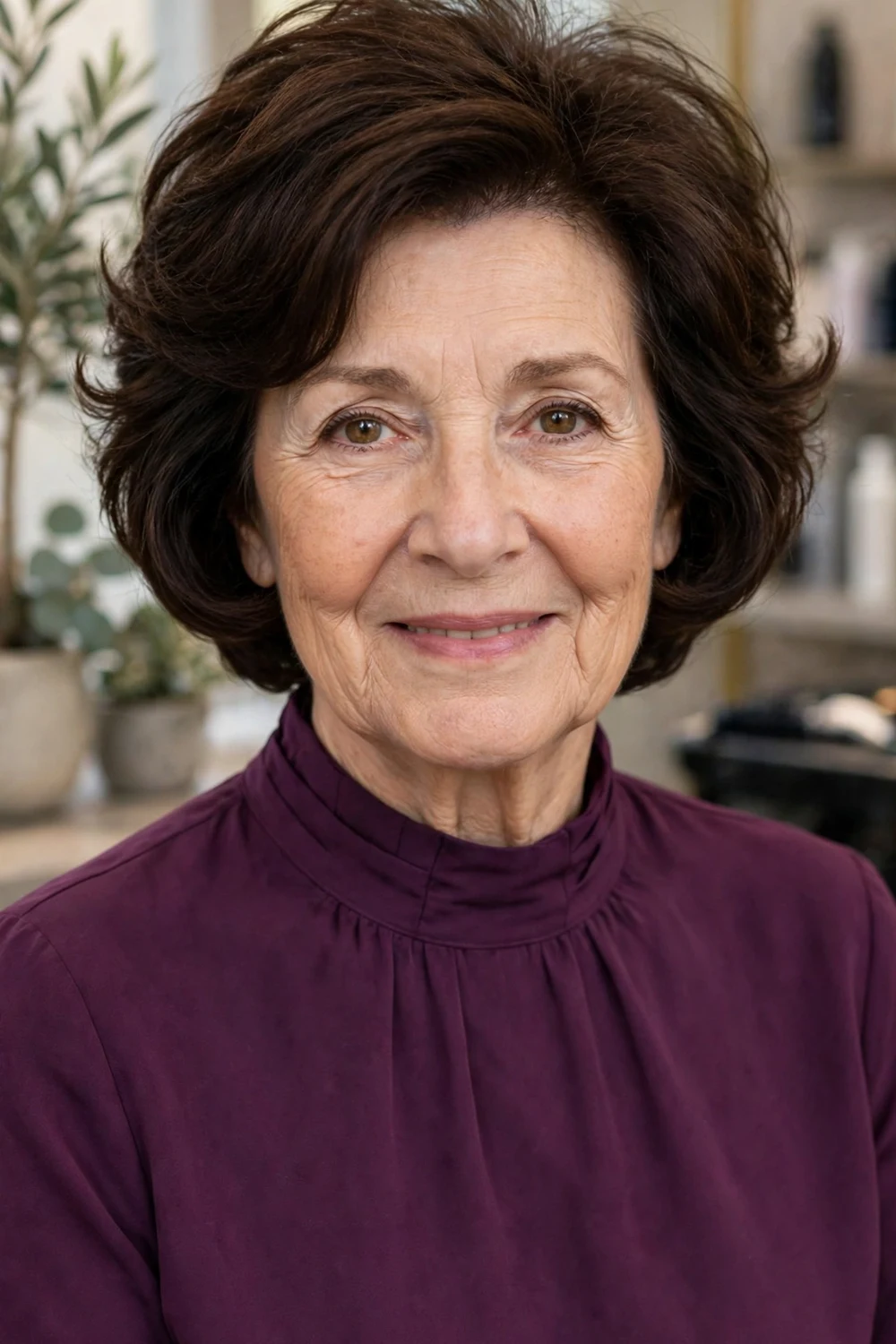
Rounded shaping gives this bob a curved silhouette: fullness through the crown and sides, with feathered ends that curve gently around the head instead of flicking straight out. Interior layering stops the rounded shape from turning heavy, and dark chocolate brown keeps the surface looking rich and even.
It suits round and oval faces and women who prefer a polished finish over a piecey one. Style it with a round brush pulling the sides down and around, then soften the ends with your fingers. The shape holds well between trims, with appointments at six to seven weeks.
Try this: ask for the feathering concentrated at the perimeter only. Keeping the interior fuller is what holds the rounded outline.
Difficulty: Medium · Cost: $$ (salon)
12. Feathered Bob with Side Bangs
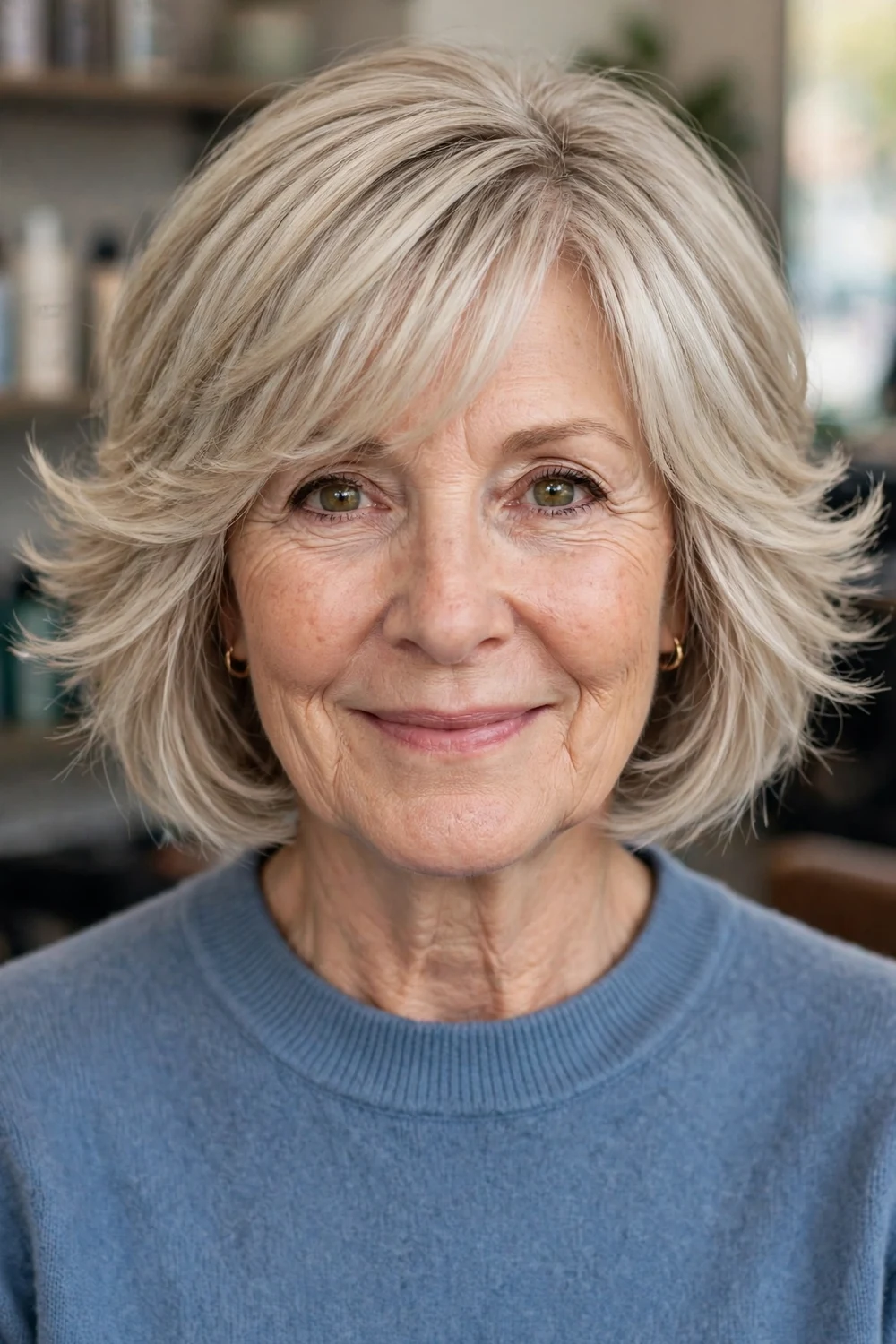
Side bangs change the front of a feathered bob more than any other detail. The fringe is cut long and light, then blended into the feathered layers at the cheek so there is no visible line where the bangs end and the bob begins. Ash blonde keeps the blend looking cool and even.
This version suits women who want forehead coverage with an easy grow-out, since long side bangs merge into the layers as they lengthen. Blow-dry the bangs across and down with a paddle brush, then flick the side layers away from the face. Bang trims between appointments are quick and keep the blend in the right place.
Try this: dry the bangs first, while they are fully wet. Side bangs set fast, and drying the rest first lets a cowlick take charge.
Difficulty: Low to Medium · Cost: $$ (salon)
13. Feathered Bob with Wispy Bangs

Wispy bangs are cut thin and separated, so slivers of forehead show through the fringe. Paired with lightly feathered bob ends, the whole cut reads soft from every angle. Beige blonde, a balance of warm and cool tones, suits the gentle finish and flatters a wide range of skin tones.
It is a good first bang for women who worry a full fringe will feel heavy or hot. The wisps dry in seconds with a brush or even with finger styling on fine hair. Keep the rest of the bob simple and let the fringe carry the detail; trims every six weeks maintain both.
Try this: ask for the wisps to start longer than you think you want. You can shorten them at the next visit once you know how your hairline behaves.
Difficulty: Low to Medium · Cost: $$ (salon)
14. Feathered Bob with Curtain Bangs

Curtain bangs part in the centre and curve away from the face on both sides, echoing the feathered flick of the bob itself. The fringe is longest at the edges, where it melts into the cheekbone layers, and shortest at the centre part. Medium brown keeps the look grounded and current at the same time.
This bob suits women growing out a fringe and women who wear a centre part already. Styling takes a round brush rolled away from the face on each side of the part. The curtain shape is forgiving as it grows, sliding into face-framing layers over eight weeks or more.
Try this: set each side of the curtain with a large roller while you do your makeup. Ten minutes of cooling gives the curve without extra heat.
Difficulty: Medium · Cost: $$ (salon)
15. Stacked Feathered Bob
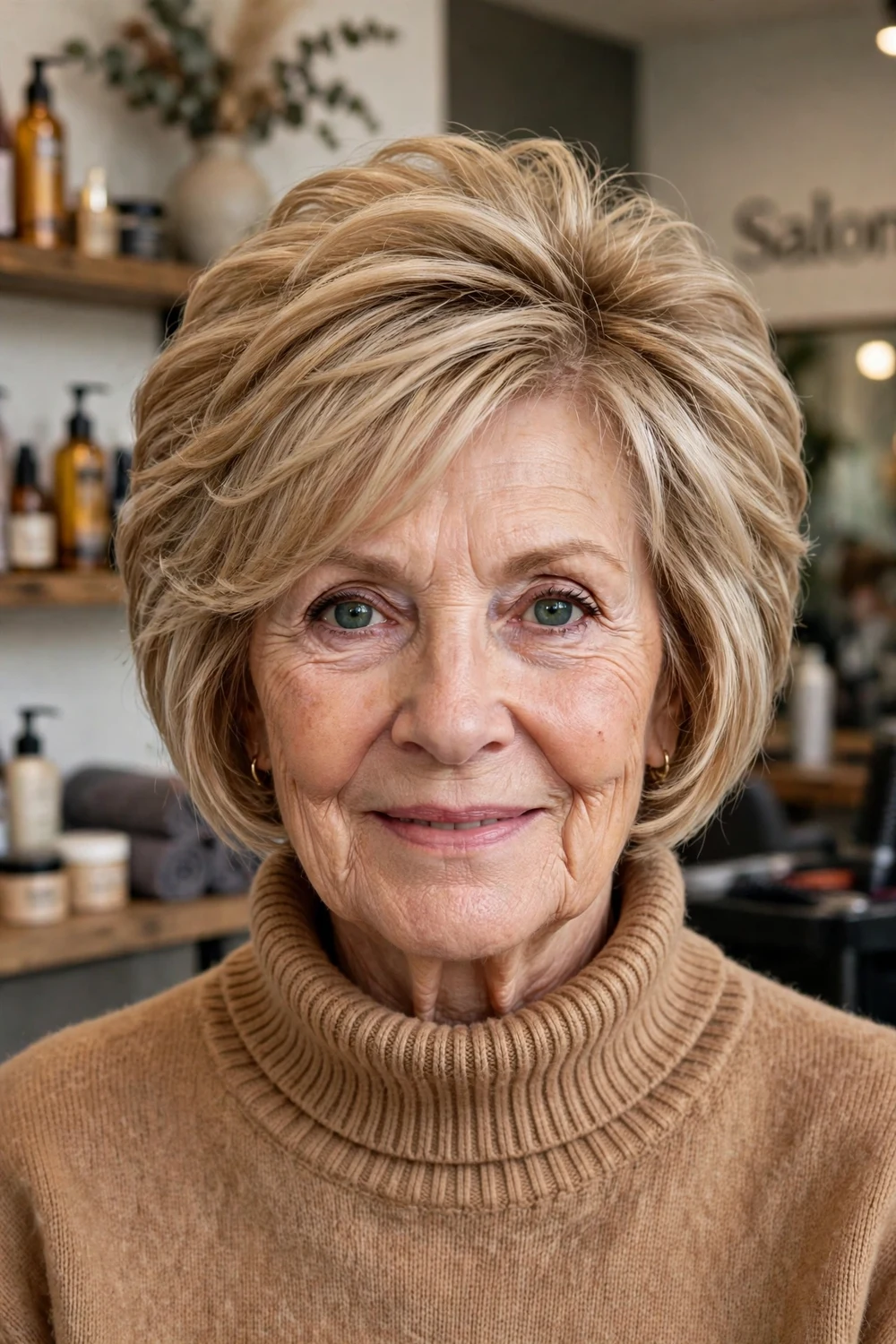
Stacking cuts short graduated layers into the back of the bob so the crown and occipital area build real volume, then transitions into longer feathered pieces around the face. Sandy blonde blends several close tones, which makes the stacked back look soft instead of severe.
It suits fine hair that falls flat at the back and women who want height without teasing or heavy product. The front stays long enough to tuck or sweep. Style by drying the back sections upward with a small round brush; the front needs only a quick flick outward. The stack needs a trim at five to six weeks to keep its lift.
Try this: bring a photo of the back view you want. Stacking heights vary a lot, and the back is the part you cannot describe by pointing at your own head.
Difficulty: Medium · Cost: $$ (salon)
16. Feathered Shaggy Bob

The shaggy bob spreads airy feathered layers through the whole cut, from the crown to a slightly irregular perimeter. Wheat blonde defines the individual pieces, and wispy sections at the front keep the face framed. Where the classic bob is smooth and directed, this version is loose and piecey on purpose.
It suits wavy hair and women who dislike precision styling; the shaggy bob hairstyles for fine hair collection shows how the same texture works on finer hair. Scrunch in a light mousse, air-dry or diffuse briefly, and separate the ends with your fingers. It grows out gracefully and tolerates eight weeks between cuts.
Try this: skip the brush entirely on day two. Finger-combing keeps the shaggy separation that a brush pulls out.
Difficulty: Low to Medium · Cost: $$ (salon)
17. Feathered Angled Bob
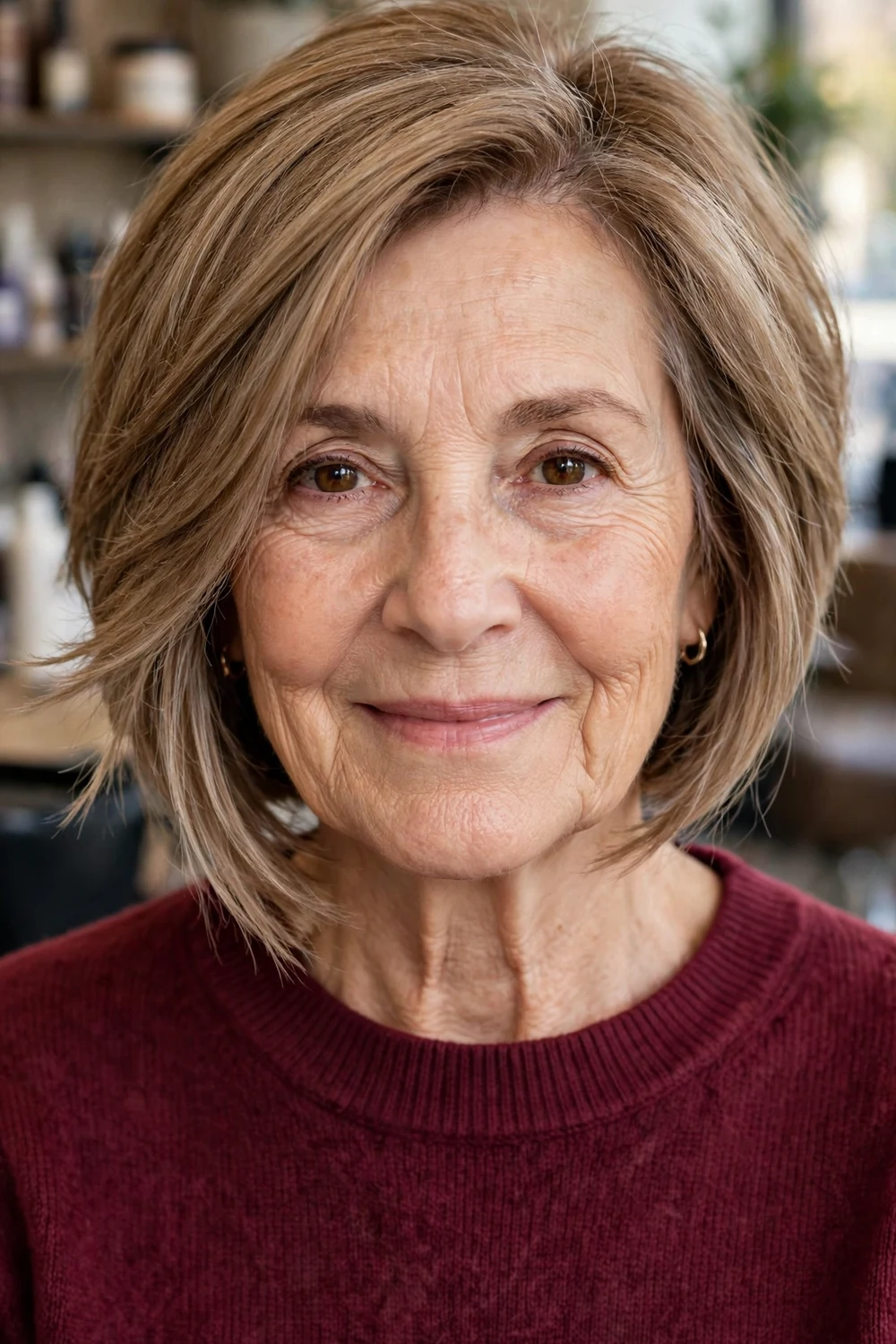
An angled bob runs shorter at the back and longer at the front, and feathering softens that sharp line. The front pieces reach toward the chin in tapered points, while the back carries stacked feathered layers for lift. Light brown keeps the angle looking wearable for everyday settings.
It suits women who want a bob with a stronger outline and a clear side profile. Straight to slightly wavy hair shows the angle best. Style the front sections with a flat brush angled down and forward, then flick the very ends. Trims at six weeks keep the angle from evening out.
Try this: keep the angle gentle, with front pieces about an inch longer than the back. A steep angle dates quickly and grows out unevenly.
Difficulty: Medium · Cost: $$ (salon)
18. Shoulder-Length Feathered Layers

At shoulder length, feathering starts around the cheekbones and repeats in tiers down to the ends, so each layer can flick away from the face. Honey blonde highlights the tiered lengths, and the cut keeps enough weight at the bottom to swing when you turn your head.
This is the most versatile length on the list: it pulls back into a low ponytail, clips up, and still shows the feathered front when worn loose. It suits medium hair of most textures. A large round brush through the front tiers gives the salon finish, and the ends hold their point for seven to eight weeks.
Try this: dry the layers in the direction they will fall, away from the face on each side. Drying them forward first builds a crease that fights the flick all day.
Difficulty: Medium · Cost: $$ (salon)
19. Medium Feathered Layers with Crown Volume

This cut concentrates graduated feathering through the crown, so the top layers lift and stack while the lengths stay smoother and fuller. Medium brown gives the crown height a rich base, and the contrast between a lifted top and calm lengths reads polished for work or events.
It suits hair that lies flat on top even at shorter lengths, and women comfortable spending ten minutes on a blowout. Root-lifting spray at the crown, a round brush dried upward, and a cool shot to set the lift are the whole routine. The layered crown grows out over six to seven weeks before the height drops.
Try this: dry the crown sections up and over to the opposite side, then flip them back. Overdirection is the simplest route to lasting crown lift.
Difficulty: Medium to High · Cost: $$ (salon)
20. Feathered Lob
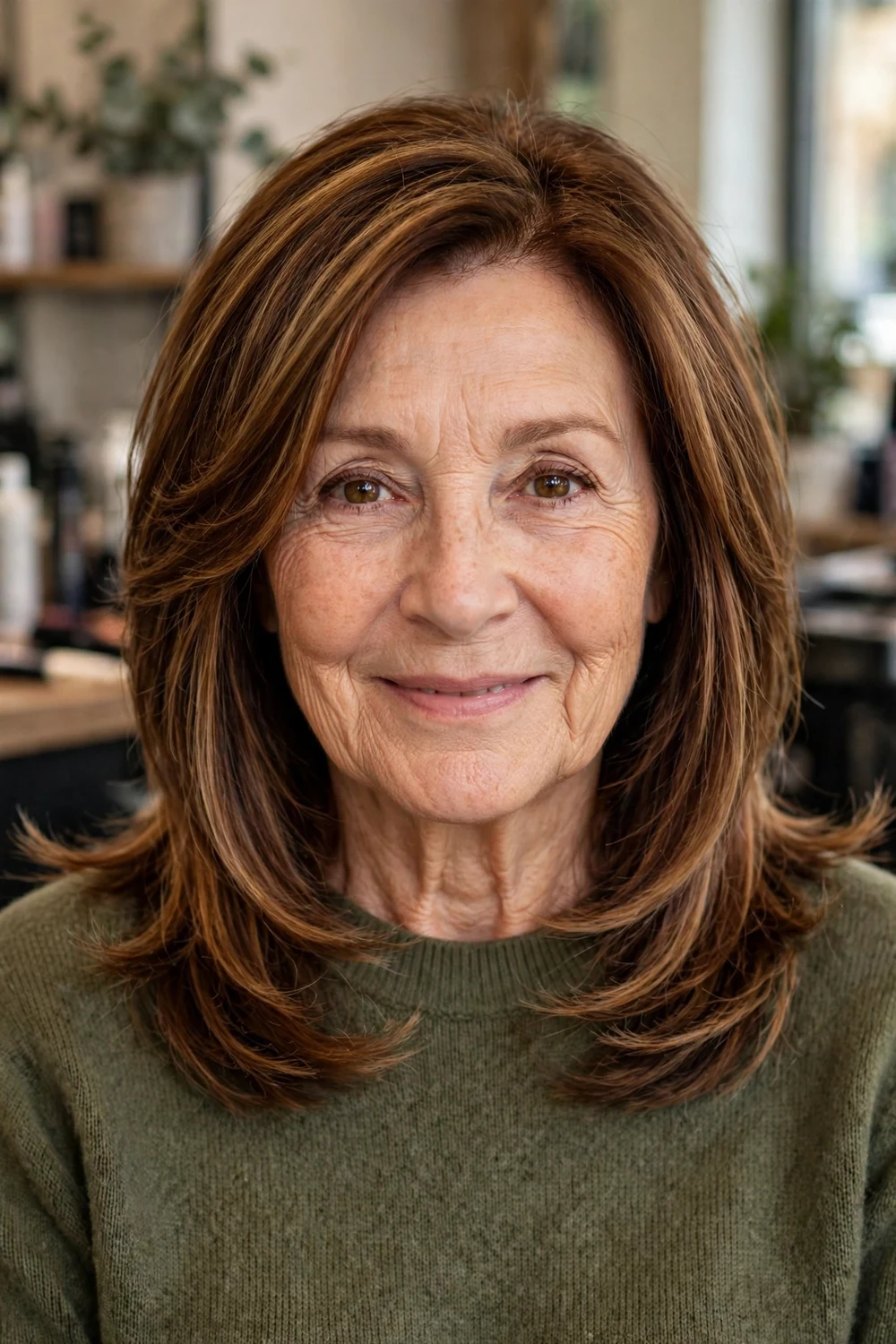
The lob, a long bob ending near the collarbone, takes feathering through its ends and front sections. Caramel highlights placed around the face and through the flicked ends make each feathered piece easy to see against the warm brunette base. The back stays one clean line, which keeps the lob tidy from behind.
It suits women stepping down from long hair who want to keep a ponytail option, and medium to thick hair that needs its ends lightened. Style with a large brush flicking the last two inches outward, or add a loose bend with a wide iron. Trims at seven to eight weeks refresh the ends.
Try this: ask for feathering only in the front third and the ends at your first appointment. You can extend it through the back once you see how your hair moves.
Difficulty: Low to Medium · Cost: $$ (salon)
21. Wavy Feathered Lob

For natural waves, the lob is cut with feathered ends that follow the wave pattern, so each wave finishes in a light point instead of a blunt shelf. Mushroom brown, a cool mix of brown and taupe tones, keeps the waves looking calm and blended.
This is the air-dry pick on the list. Work a lightweight wave cream through damp hair, scrunch once, and leave it alone while it dries. Touching wavy hair mid-dry breaks the waves apart and creates frizz at the feathered ends. The cut holds for eight weeks, since waves disguise small amounts of regrowth in the layering.
Try this: refresh day-two waves with a water mist and a quick scrunch rather than rewetting the whole head. The feathered ends spring back first.
Difficulty: Low · Cost: $$ (salon)
22. Collarbone Feathered Layers in Natural Gray

Long feathered sections frame the face on this collarbone cut, and the lengths keep their fullness all the way down. Worn in natural grey, the feathering shows as movement rather than colour contrast: the brushed-back front layers catch light along their edges and open up the face.
It suits women growing out colour and keeping their grey, since the length and layering give grey hair shape while the transition finishes. Purple shampoo once a week or less keeps grey bright without dulling the layers. A round brush on the front sections is the only heat styling this cut asks for, and trims at eight weeks are enough.
Try this: brush the front layers back and let them fall naturally instead of fixing a part. Grey feathered layers look best with that loose, swept finish.
Difficulty: Low to Medium · Cost: $$ (salon)
23. Face-Framing Feathered Layers

Here the feathering is concentrated where it shows most: two tiers of layers at the front, starting at the cheekbones and stepping down to the jaw, with the back left longer and simpler. Turning those front sections away from the face with a round brush creates the open, swept finish that defines the style. Light brown keeps the tiers soft and blended.
It suits women who like their current length and want a change that reads at the front, in photos and in the mirror, without a full restyle. Nearly every texture can wear it, with the tier depth adjusted to your density. Because the back is simple, appointments focus on refreshing the front, every seven weeks or so.
Try this: ask your stylist to cut the first tier at your cheekbone, measured with your head upright and your glasses on if you wear them. Small shifts change where the flick lands.
Difficulty: Medium · Cost: $$ (salon)
24. Feathered Shag with Bangs

The full shag takes the short version from idea 8 and adds length: graduated feathered layers through the crown and sides, wispy bangs across the forehead, and feathered ends around the cheeks and neckline. Dark brown gives the choppy layers a rich backdrop, and the silhouette stays light at the edges even with real volume on top.
It suits medium to thick and wavy hair, and women who enjoy a relaxed finish over a sleek one. The trendy shag haircuts for fine hair guide covers the lighter version of this layering. Style by diffusing or air-drying with mousse, then breaking up the crown with your fingers. Shags are forgiving and hold eight weeks easily.
Try this: keep the bangs wispy and the crown layers short. Those two choices keep a shag feeling current rather than costume-like.
Difficulty: Medium · Cost: $$ (salon)
25. Swept-Back Feathered Layers

This is the fullest expression of the feathered idea: medium layers throughout, every section styled back away from the face in soft wings. Honey brown warms the swept shape, and large round brush work gives the layers gentle bends instead of tight curls, so the feathering stays visible all day.
It suits women with medium to thick hair who enjoy a proper blowout and want maximum movement for events and photos. It is the highest effort cut on this list, at fifteen minutes or so of brush work, and it rewards that effort with the most dramatic flick. A trim every six weeks keeps the wings even on both sides.
Try this: work in four sections, two per side, and roll each one back and away. Fewer, larger sections give the smooth wing shape; small sections give curl.
Difficulty: Medium to High · Cost: $$ (salon)
26. Long Feathered Layers
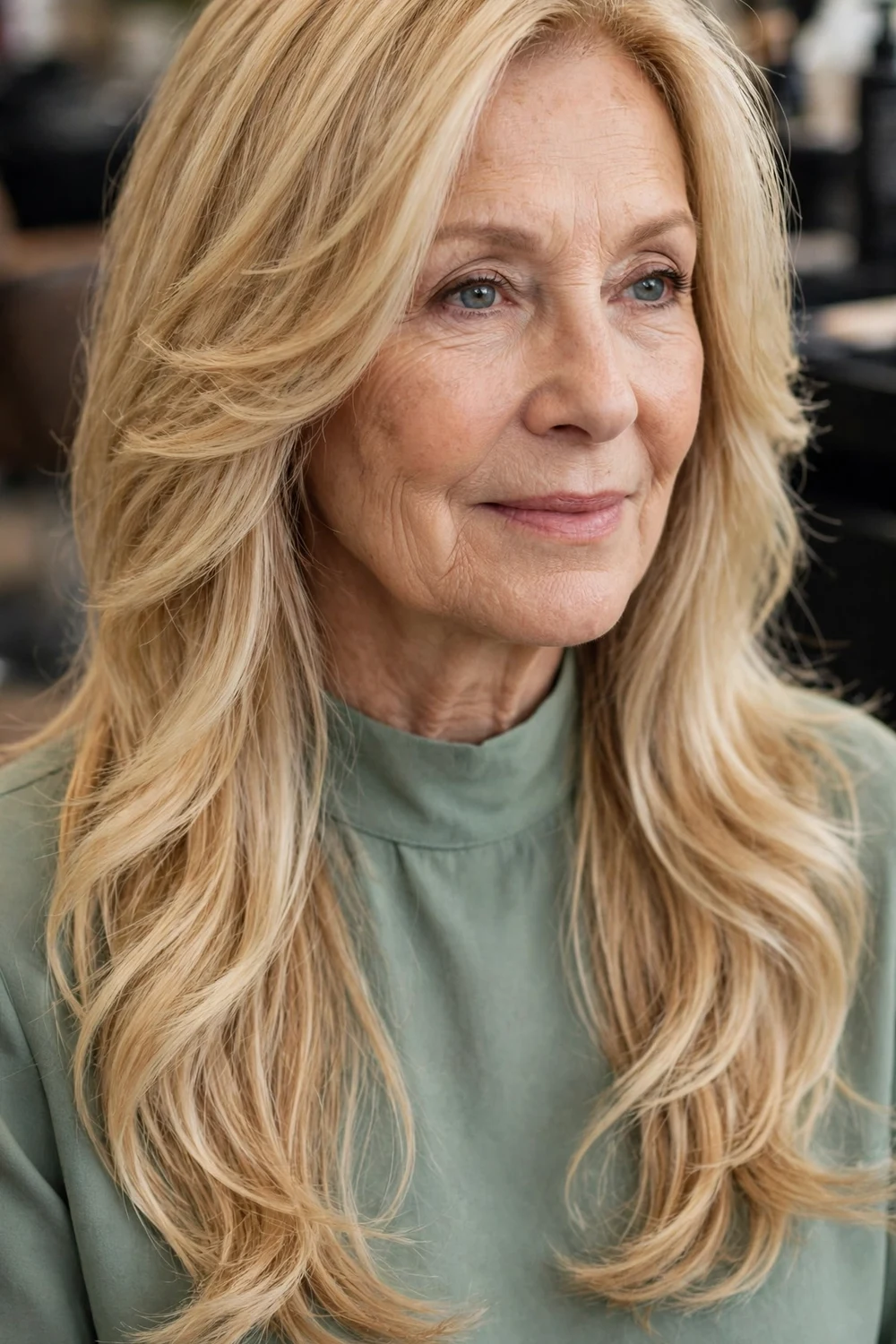
Long hair keeps its length here while feathered layers starting at the cheekbones cascade into light, flowing ends. The feathering removes the heaviness that makes long hair hang flat against the head, and golden blonde catches light differently on each layer, which makes the tiers easy to see.
It suits women over 50 who are keeping long hair by choice and have the density to support it: long feathering on fine hair can leave the ends looking thin, so fine hair should stop at the shoulder versions earlier in this list. Blow-dry the front tiers away from the face and let the back dry smooth. Trims at eight weeks tidy the ends without touching the length.
Try this: ask for the shortest layer at cheekbone level, no higher. Starting the layers lower protects fullness through the ends.
Difficulty: Medium · Cost: $$ (salon)
27. Feathered Layers for Curly Hair
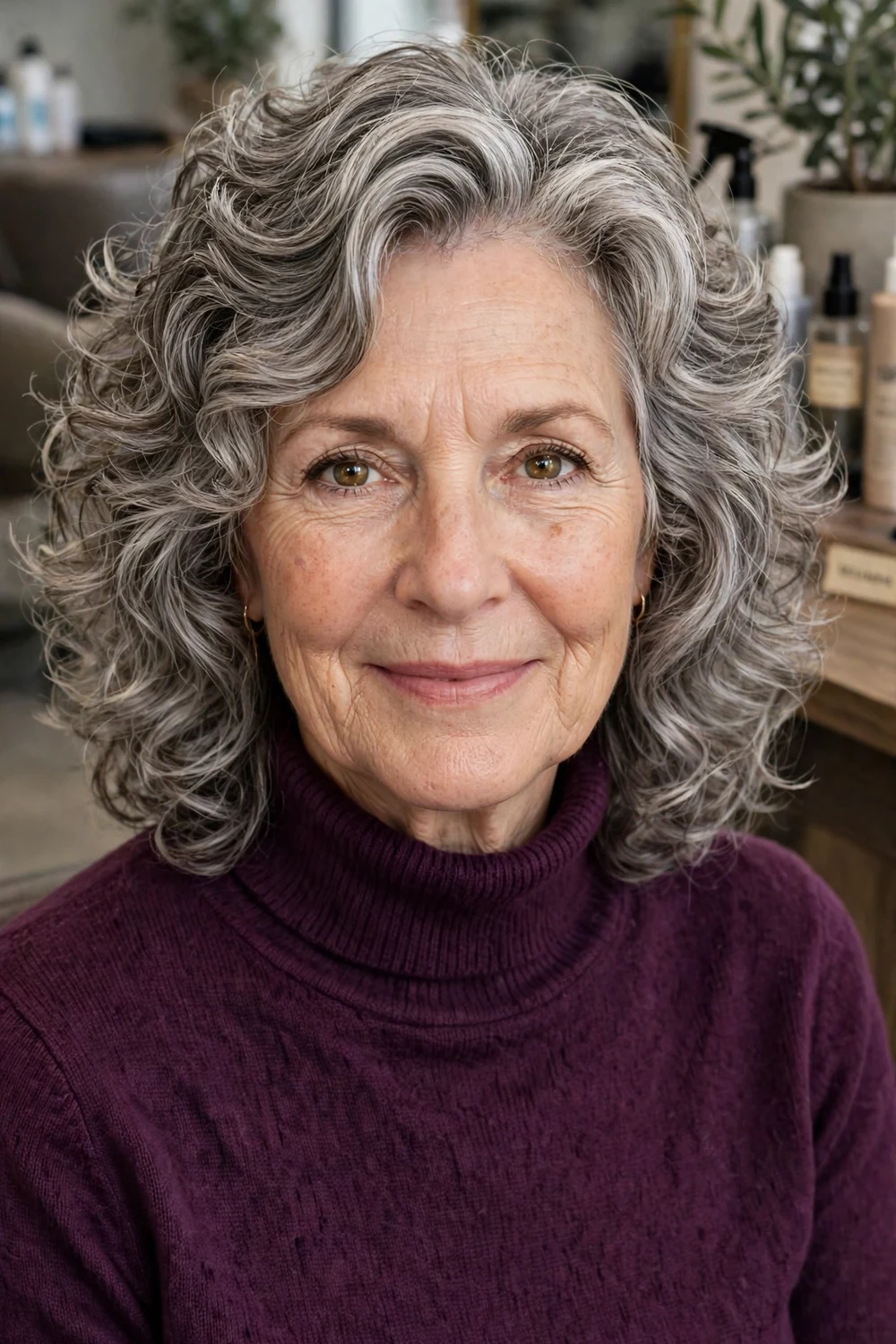
Feathering on curls is cut curl by curl, usually dry, so each tapered end follows the curl pattern instead of cutting across it. On shoulder-length salt-and-pepper curls, the feathered layers lighten the perimeter, lift the shape away from a triangle outline, and let individual curls flick out at the ends.
It suits women wearing their natural curl pattern full time. Styling follows standard curly care with a feathered twist: apply cream to wet hair, scrunch, diffuse or air-dry, and avoid brushes once dry, since brushing separates the feathered curl ends into frizz. Specialist curly cuts carry a higher salon band, and trims at eight to ten weeks are typical because curls hide regrowth in the layering.
Try this: book with a stylist who cuts curly hair dry and arrive with your curls worn as usual. The feathering has to be placed on the curls you actually live in.
Difficulty: Medium · Cost: $$$ (salon)
Frequently Asked Questions
What is a feathered haircut?
A feathered haircut is a layered cut where the ends are cut at an angle and tapered into soft points, then styled away from the face. The tapered ends flick out in layers that resemble the barbs of a feather, which is where the name comes from. Feathering can be added to a pixie, a bob, a shag, or long hair, and the amount of flick depends on how the ends are dried.
Do feathered hairstyles work on fine or thinning hair?
Yes, with light feathering and a shorter length. Short to medium feathered cuts add texture and crown lift, which helps fine hair look fuller. The limits matter: heavy feathering and long feathered layers remove too much density, and the ends can look thin. Pixies, crops, stacked bobs, and shoulder-length cuts are the safest feathered choices for fine hair.
How often does a feathered cut need a trim?
Most feathered cuts hold their shape for six to eight weeks. Short pixies and stacked bobs sit at the shorter end of that range, around five to six weeks, because their outlines are precise. Shags, lobs, and long layers can stretch to eight weeks or a little longer, since their finishes are looser and regrowth blends into the layering.
Can feathered layers work on grey hair?
Yes. Grey and silver hair shows feathered layering clearly, because the natural mix of light and dark strands gives each layer its own tone. Several cuts in this list are shown on natural grey, from the short silver pixie to collarbone grey layers. A purple shampoo used sparingly keeps grey bright, and regular trims keep the coarser texture of grey hair sitting smoothly in the layers.
How do I style feathered hair at home?
Start with damp hair and a small amount of mousse or root-lifting spray. Blow-dry with a round brush, rolling each section away from your face and turning the brush outward at the ends to create the flick. Let each section cool before moving on, since the shape sets as it cools. Short cuts can skip the brush and use finger styling with a light cream instead.
Final Thoughts
Feathered cuts earn their place after 50 because the technique solves specific problems: flat crowns, heavy lengths, blunt outlines that sit against the face. Pick your length first, match the feathering weight to your hair density, and be realistic about round brush time before you choose between a swept-back blowout and an air-dried shag. Bring two or three photos from this list to your appointment, including one back view for bobs and pixies, and ask your stylist to show you the flick on one section before you leave. Once you can recreate the ends at home, the cut will hold its shape until the next trim.

