


Fine hair can look polished in the morning and flat by lunch, and a long styling routine rarely fixes that for long. The cuts that hold up are the ones built into the shape itself: blunt ends that keep the outline full, short lengths that dry in minutes, and layers placed only where they help. I look for cuts that air-dry into place, need one light product at most, and still look tidy as they grow out.
Below are 23 low maintenance hairstyles for fine hair, merged from the top ranking guides for this search and checked against each other so nothing repeats. They run from tapered pixies to a collarbone cut with no layers at all. Each idea lists the real morning routine, how often it needs a trim, and a quick tip, so you can pick the cut that fits the time you actually have.
Key Takeaways
- Blunt ends are the easiest win for fine hair. A solid bottom edge looks full with no styling at all.
- Short cuts dry fastest and need the least daily work, with trims every 4 to 6 weeks.
- Lobs and midi cuts ask for a little more drying time and fewer trims, usually every 8 weeks.
- Keep layers light, low, or hidden inside the cut. Heavy layers through the ends make fine hair look thinner.
- One light product is enough for most cuts here: mousse, salt spray, or a leave-in on the ends only.
1. Air-Dry Pixie with Tapered Nape

This pixie keeps the sides and nape tapered close, with a little more length left on top. Fine hair dries fast at this length, and the short back removes the weight that pulls the crown flat. Wash it, towel dry, and push the top pieces forward or to one side with your fingers.
Ask your stylist to keep the top soft and point-cut rather than heavily thinned. Thinning shears can leave fine hair wispy at the ends. A trim every 4 to 6 weeks keeps the nape clean, and the shape still looks tidy as it grows between visits. If you want more short options first, browse these pixie haircuts for fine hair before you book.
Try this: Scrunch a pea-size amount of light mousse into damp roots, then leave the hair alone while it dries so the pieces stay separated.
Difficulty: Low · Cost: $
2. Wash-and-Go Blunt Bob

A blunt bob is cut straight across at jaw or chin length, with the ends left full and even. That solid bottom edge gives fine hair a thicker look with zero daily work. Part it in the middle or on the side, let it air-dry, and the line falls back into place on its own.
Keep layers out of this cut, or keep them very long and few. Layers through the ends can make the perimeter look thin. Book a tidy-up trim every 6 to 8 weeks to keep the bottom edge sharp, since split ends show faster on a straight line.
Try this: Smooth one drop of light serum over the ends only. Keep product away from the roots so the bob keeps its swing.
Difficulty: Low · Cost: $$
3. French Bob That Air-Dries in Place

The French bob sits at chin length and works with a slight bend or wave instead of fighting it. A soft, wispy fringe is common with this cut, and both the length and the fringe are meant to look a little undone. That makes air-drying a feature of the style rather than a compromise.
It suits straight to wavy fine hair well. Ask for the ends to be cut blunt with a soft edge, and keep the fringe light so it can air-dry flat without a round brush. Trims every 6 weeks hold the chin-length line.
Try this: Mist damp hair with a light leave-in spray, tuck it behind your ears while it dries, then shake it loose for a soft bend at the front.
Difficulty: Low · Cost: $$
4. Bixie Cut with a Forgiving Grow-Out

The bixie sits between a pixie and a bob: cropped through the back, with more length on top and around the face. Fine hair gets the lift of a short cut, while the longer pieces keep the finish soft. It also grows out in stages that still look like a style, which stretches the time between salon visits.
Style it by raking a small amount of texture spray through the top with your fingers. You can tuck the sides behind your ears on neat days or leave them loose. Plan a reshape every 6 to 8 weeks, and you can let it grow toward a bob without an awkward phase.
Try this: On second-day hair, wet only the fringe and crown with a spray bottle and re-scrunch. The rest of the cut rarely needs a redo.
Difficulty: Low · Cost: $$
5. Soft Pixie with Finger-Styled Top

This softer pixie leaves the edges feathered and the top long enough to sweep across. There are no hard lines to maintain, and styling is a 60-second job with your fingers and a fingertip of paste. It is a strong pick if you want the shortest routine on this list.
Readers who prefer a gentle, age-friendly finish often start here, and our guide to hairstyles for older women with fine hair shows how the same shape works at different lengths. Keep the paste light, since heavy wax weighs fine strands down and separates them.
Try this: Warm the paste fully between your palms first. A thin, even coat gives hold without clumping the top pieces together.
Difficulty: Low · Cost: $
6. Side-Swept Pixie for Straight Fine Hair

Straight, baby-fine hair often sits flat in longer cuts. This pixie leans into a sleek finish instead: short sides, a longer top, and a deep side sweep that crosses the forehead. The sweep builds a diagonal line across the front, which draws the eye up and away from the thin areas at the part.
There is no curl to encourage and no brush work to do. Comb the top across while the hair is damp, let it dry in that direction, and finish with a light smoothing balm on the ends. A trim every 4 to 6 weeks keeps the sweep at the right length.
Try this: If the sweep falls flat by midday, flip it to the opposite side. Roots trained one way lift when they are pushed the other way.
Difficulty: Low · Cost: $
7. Short 60s-Inspired Crop with Wispy Fringe

This short crop takes its shape from 1960s pixie cuts: closely tapered sides, a neat back, and longer layers on top with a wispy fringe that sits just above the brows. The shape is precise, yet the daily routine is tiny because there is so little hair to arrange.
It works best on straight to slightly wavy fine hair. The fringe is the one part that needs attention, so ask for it cut wispy rather than blunt. A light fringe grows out softer and needs a tidy trim less often. Book the full cut every 5 to 6 weeks.
Try this: Dry the fringe first, sweeping it side to side with your fingers as it dries. That stops a cowlick from splitting it in the middle.
Difficulty: Medium · Cost: $$
8. Textured Bob with Piecey Ends

A textured bob keeps a bob length, usually at the jaw or just below, and adds piecey ends with light layers through the last few centimetres. Air-dried fine hair gets natural separation at the ends, so the cut looks fuller without teasing or heat.
Ask for texture through the ends only, with the main body of the cut left solid. Too much layering through the middle can leave fine hair looking stringy. Scrunch in a salt spray or light mousse on damp hair, then let it dry untouched for the most separation.
Try this: Once the hair is fully dry, pinch a few ends with a tiny amount of paste. Piecey definition lasts longer when it goes on dry hair.
Difficulty: Low · Cost: $$
9. Rounded Bob with a Smooth Silhouette

The rounded bob curves under at the ends and follows the shape of the head, with a smooth outline from crown to jaw. Fine hair holds this shape well because the curve is built into the cut. It falls back into place after washing with little more than a comb-through.
Keep the length between the jaw and the shoulders, where fine hair still has enough body to hold the curve. A soft side part suits most face shapes with this cut. Trims every 6 to 8 weeks keep the curve clean at the ends.
Try this: Use a wide-tooth comb on damp hair and tuck both sides behind your ears as it dries. That sets a gentle turn-under at the front.
Difficulty: Low · Cost: $$
10. A-Line Bob with a Shorter Back

An A-line bob is cut shorter at the back and longer toward the front, with a subtle slope rather than a steep angle. The shorter back stacks lightly at the nape and gives fine hair a lifted shape, while the longer front pieces frame the face.
Because the shape comes from the cut, daily styling stays simple: wash, part, and air-dry or rough-dry. Ask for a gentle slope if you want a softer grow-out. A steeper angle looks sharper but needs trims more often to hold its line, usually every 6 weeks.
Try this: Rough-dry the back first with your head tilted forward. The nape area sets the lift for the whole cut.
Difficulty: Medium · Cost: $$
11. Bob with Soft Baby Bangs

Short baby bangs sit well above the brows and pair neatly with a jaw-length bob. On fine hair, a short fringe can look fuller than a long one, since there is less weight pulling it apart. The bob itself stays one length, so the body of the cut needs almost no styling.
Be honest about fringe upkeep before you choose this one. Baby bangs grow into your eyes faster than longer fringes, so plan a quick fringe trim every 3 to 4 weeks. Many salons offer a fast fringe trim between full cuts. The bob can wait 6 to 8 weeks.
Try this: Blow-dry or air-dry the fringe straight down first, before the rest of the hair. A fringe that dries in the wrong direction is hard to fix later.
Difficulty: Medium · Cost: $
12. Butterfly Bob with Light Face-Framing Layers

The butterfly bob keeps a full bob outline and adds two light, face-framing layers that start near the cheekbones. Those front layers flip and move as you walk, while the back stays solid and blunt. Fine hair gets movement at the front without losing thickness at the ends.
Keep the layers limited to the front sections. Ask your stylist to leave the back one length, which protects the perimeter. The cut air-dries well, and a quick finger-flip of the front pieces is the whole morning routine. Trim every 6 to 8 weeks.
Try this: Part the hair in the centre while it dries if you want the front layers to fall evenly on both sides.
Difficulty: Low · Cost: $$
13. Curtain Crop with a Centre-Part Fringe

A curtain crop pairs a short cropped back and sides with a centre-part fringe that opens around the face. The fringe blends into the sides, so there is no hard fringe line to grow out. That soft blend is what keeps this short cut low maintenance for fine hair.
The crop itself needs a trim every 5 to 6 weeks, yet the fringe can grow for months without looking messy. Style with a small amount of light cream raked through the top, then part the fringe with your fingers and leave it to dry.
Try this: If the centre part feels too strong at first, wear it slightly off-centre. The curtain shape still works and looks softer.
Difficulty: Low · Cost: $
14. Blunt Lob You Can Air-Dry

A blunt lob, or long bob, sits at the collarbone and is cut straight across with no layers. It is long enough to tie back on busy days and short enough that fine hair keeps a full bottom edge. Air-drying works well here because the weight of the length helps the hair fall straight and neat.
This is a good first step if you are growing out a bob or cutting long hair shorter. Keep conditioner on the ends only, and use a light detangling spray instead of heavy oils. Book trims every 8 weeks to keep the blunt edge from splitting and thinning.
Try this: Brush the hair smooth and clip it flat behind your ears while it air-dries. You get a sleeker finish with no heat at all.
Difficulty: Low · Cost: $$
15. Layered Lob with Hidden Interior Layers
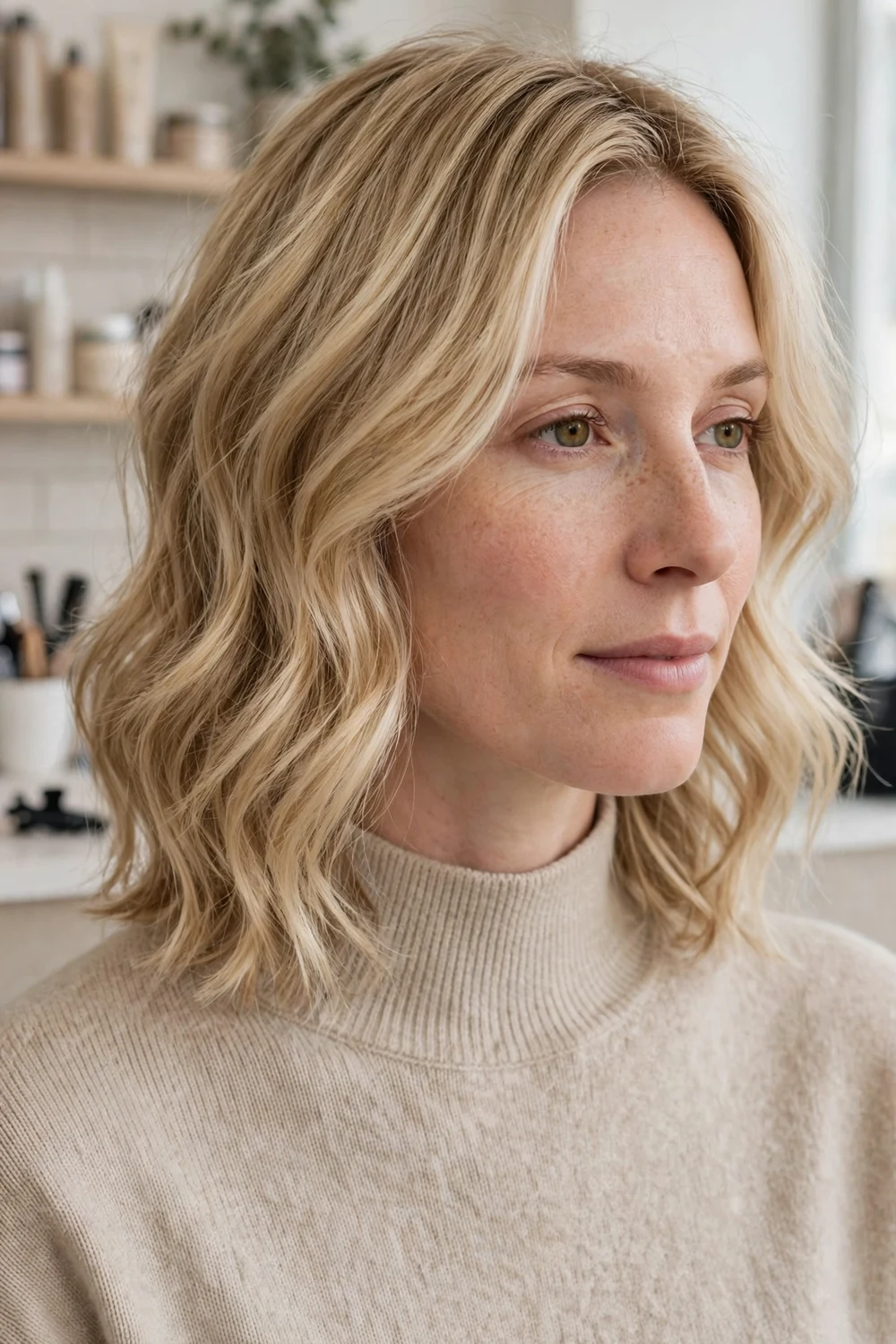
This lob keeps a solid surface and a blunt-looking outline, with short interior layers cut underneath. The hidden layers push the top layer outward, so fine hair looks fuller while the outside still reads as one smooth length. Grow-out is forgiving because the short pieces stay out of sight.
Tell your stylist you want interior layers only, with the perimeter left full. Scrunch a light mousse into damp hair and let the natural wave form as it dries. If your hair is straight, the hidden layers still give a gentle lift at the roots. Reshape every 8 weeks.
Try this: Flip your part to the opposite side once the hair is dry. The interior layers give instant lift when the roots change direction.
Difficulty: Low · Cost: $$
16. Tapered Lob with a Clean Nape Line
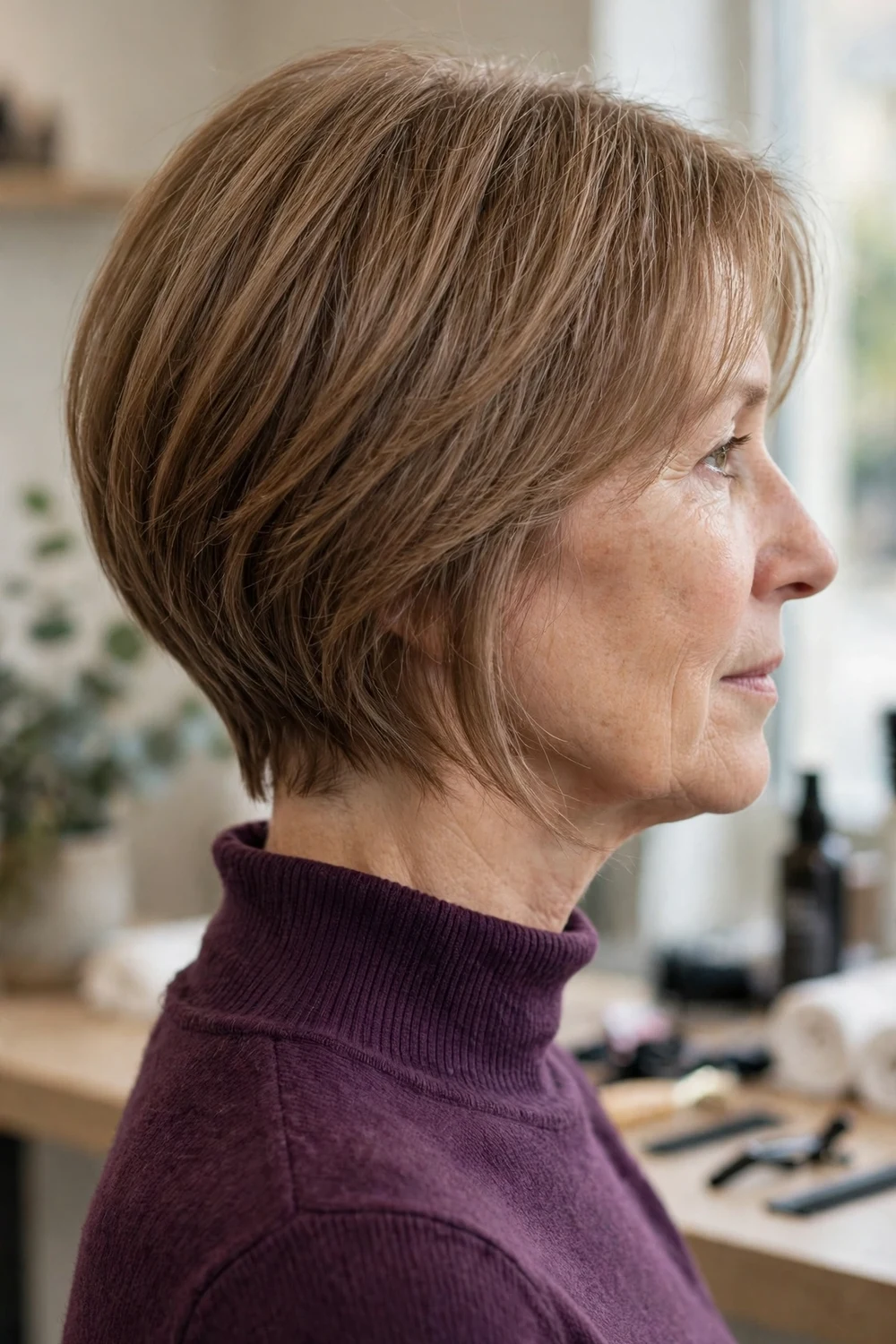
A tapered lob sits just above the shoulders, with the back cut slightly shorter and tapered neatly at the nape. The front keeps enough length to tuck behind the ears or pull into a small ponytail. The clean back is what keeps the cut looking tidy with very little effort.
Fine hair benefits from the shorter back because it removes the thinnest ends first. Ask for soft face-framing pieces if you want movement at the front. The nape needs a tidy trim every 6 to 7 weeks, and the rest of the shape grows out evenly.
Try this: Smooth the nape down with damp palms after washing. That small area decides how neat the back looks all day.
Difficulty: Low · Cost: $$
17. Soft Shag with Airy Crown Layers

A soft shag uses light, airy layers through the crown and a wispy fringe, with the ends left feathery rather than blunt. For fine hair, the key word is soft: layers stay long and few, so the hair gains lift at the top and keeps enough weight at the bottom.
This cut is made for air-drying and for hair with a natural wave. Work a light curl cream or mousse through damp hair, scrunch, and leave it alone. Heavy layering is the main thing to avoid, so ask for a restrained shag and check the ends still look full in the mirror before you leave the salon.
Try this: Refresh day-two shag layers with a water spray and a quick scrunch. Product from wash day usually reactivates on its own.
Difficulty: Low · Cost: $$
18. Shaggy Lob That Looks Better Tousled

The shaggy lob takes the shag idea to shoulder length, with tousled layers and often a curtain fringe. It is one of the most forgiving cuts for fine hair because a messy finish is the goal. Bedhead, hat hair, and a rushed morning all blend into the style. For more shapes in this family, see these shaggy lob hairstyles for fine hair.
Keep the layers longest around the face and lighter through the back, so the ends stay full. A salt spray on damp hair, a scrunch, and air-drying is the full routine. Trims can stretch to 8 to 10 weeks because the outline is meant to be loose.
Try this: Sleep with the hair in a loose top knot. You will wake up with the tousled bend this cut is built for.
Difficulty: Low · Cost: $$
19. Soft Layered Midi Cut at the Collarbone
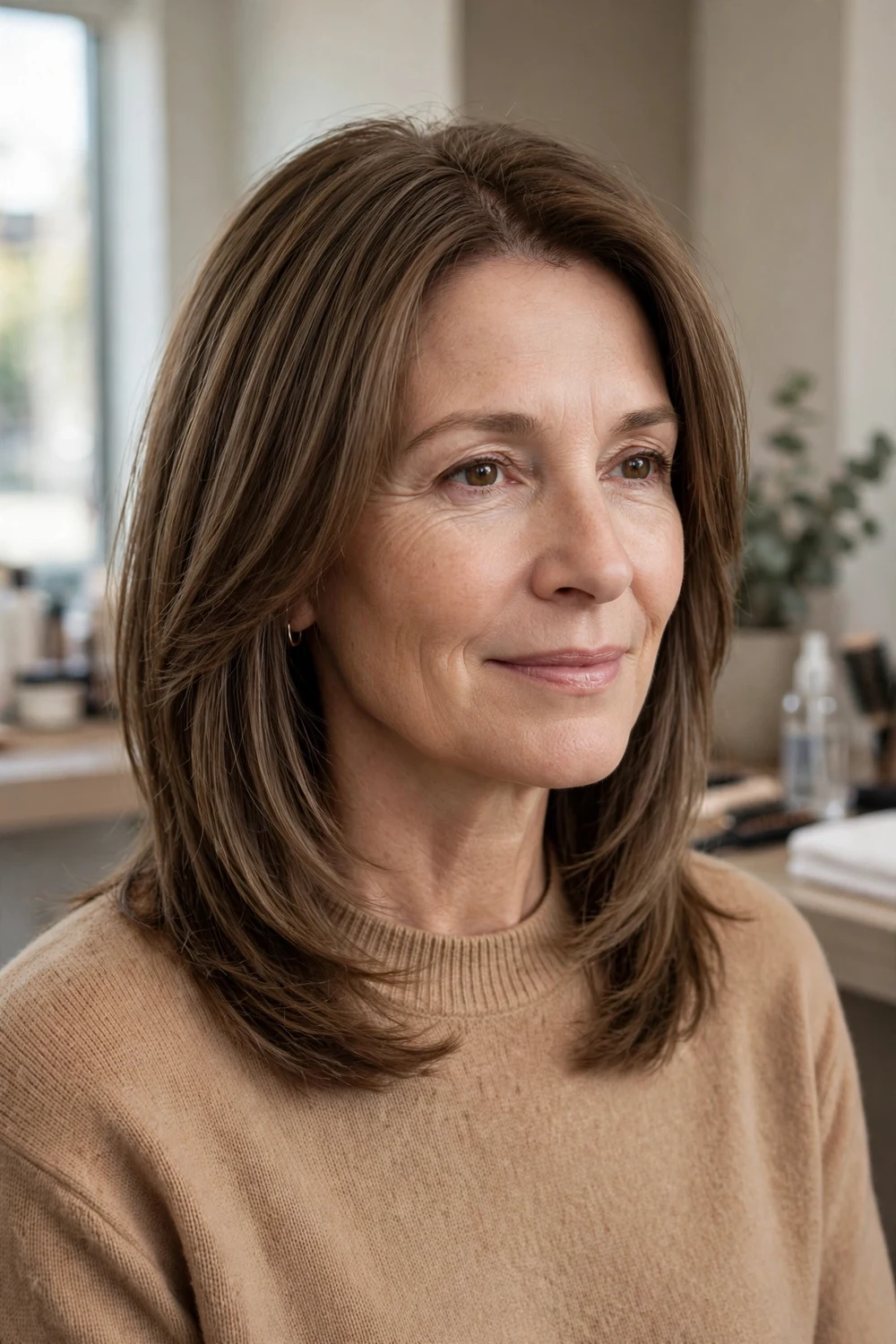
A midi cut sits between the shoulders and the collarbone, with gentle layers that start low, near the ends. Fine hair keeps its weight and fullness through the middle, while the low layers stop the bottom from looking flat and heavy. It is a calm, polished length that needs very little daily work.
Wear it straight with a centre or side part, or scrunch it for a soft wave on weekends. One cut covers both. Keep heat off most days and follow the American Academy of Dermatology hair care guidance on gentle handling to limit breakage on fine strands. Trim every 8 weeks.
Try this: Apply leave-in conditioner from mid-length down only. Fine midi hair goes flat fast when conditioner reaches the roots.
Difficulty: Low · Cost: $$
20. One-Length Collarbone Cut with Blunt Ends
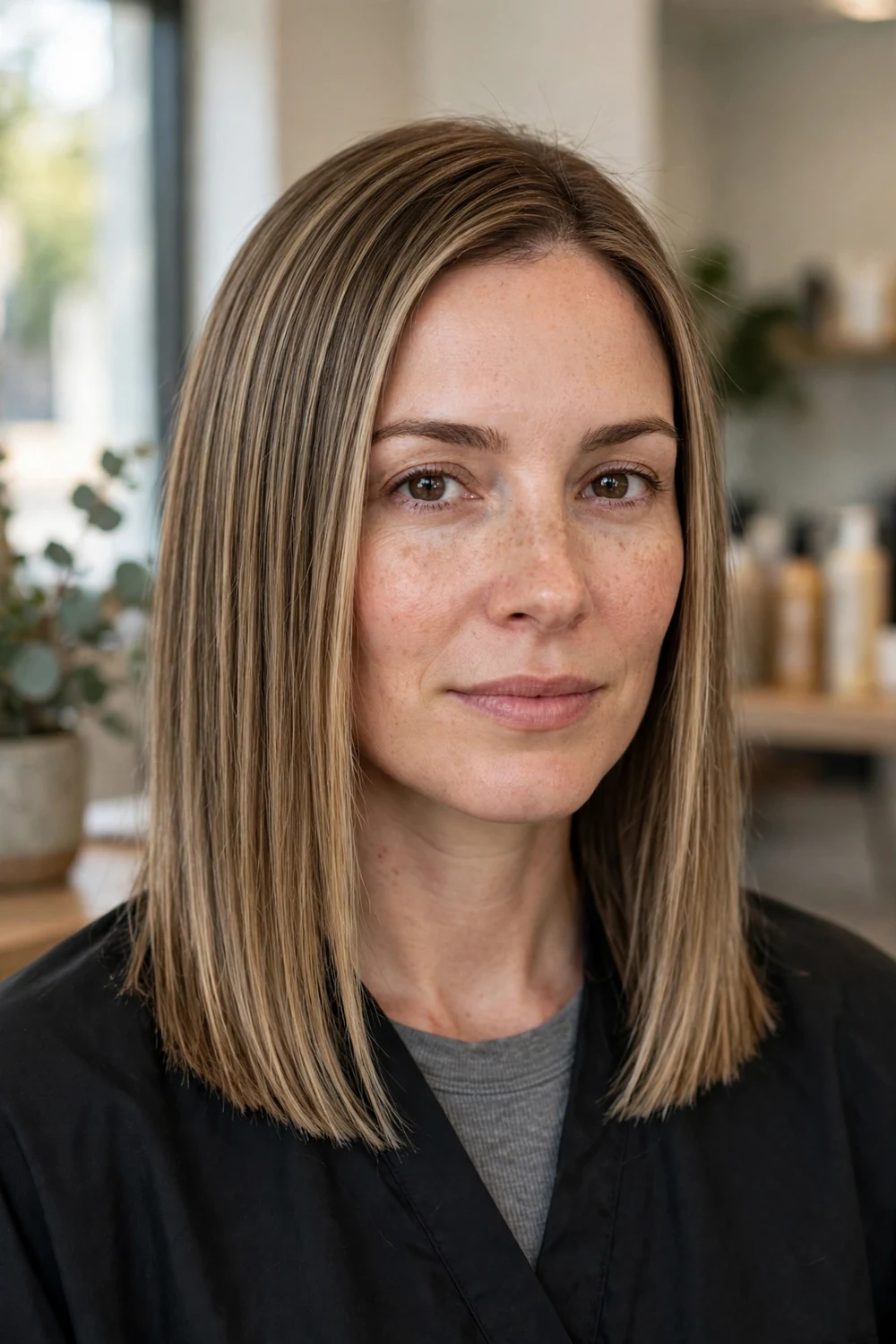
This is the simplest long option on the list: one length at the collarbone, blunt ends, and no layers at all. Fine hair looks thickest when every strand ends on the same line, and a single-length cut asks for nothing in the morning beyond a brush and a part.
It suits straight to slightly wavy hair best, since waves can puff out at one length. If your hair has a strong wave, ask about a slightly longer version below the collarbone so the weight calms the shape. Trims every 8 weeks keep the single line even.
Try this: Tuck one side behind your ear and leave the other side loose. The small asymmetry keeps a plain cut from looking flat in photos.
Difficulty: Low · Cost: $$
21. Long Fine Hair with Face-Framing Layers Only

If you want to keep your length, put the layers only at the front. Shorter pieces around the cheeks and jaw give movement where people see it, while the back stays one length and full. Fine long hair often looks thin because layers through the back remove too much bulk. This layout avoids that trade.
Styling stays simple: air-dry with a light leave-in, then smooth the front pieces with your fingers or a quick pass of a brush. The back needs no work. Trim the ends every 8 to 10 weeks and refresh the face frame at the same visit.
Try this: Ask for the shortest front piece to start at the cheekbone, not higher. Longer starting points grow out with no visible line.
Difficulty: Low · Cost: $$
22. Ghost Layer Cut with an Invisible Grow-Out

Ghost layers are short pieces cut inside the hair, under the top layer, at shoulder length or longer. From the outside, the hair looks smooth and one length. Inside, the short pieces support the top layer and stop fine hair from lying completely flat. There are no visible steps to grow out.
This is a salon technique, so ask whether your stylist cuts ghost layers before you book. The daily routine is wash, rough-dry or air-dry, and go. Because the layers are hidden, you can stretch trims to 10 weeks and the cut still looks even.
Try this: Rough-dry the roots with your fingers lifting upward for the first two minutes, then let the lengths finish air-drying on their own.
Difficulty: Low · Cost: $$$
23. Deep Side-Part Bob with Root Lift Built In

This bob is cut at chin length and worn with a deep side part. Moving the part far to one side pushes a larger section of hair across the top, and the roots lift as they dry in a new direction. The cut itself stays simple and blunt, so the part does the styling work for you.
Train the part while the hair is damp: comb it over, clip it flat for a few minutes if needed, and let it dry in place. Our roundup of wash and wear haircuts for easy everyday hair covers more cuts that use the same wash, part, and go routine. Trim every 6 to 8 weeks.
Try this: Keep the deep part on the opposite side of your natural part. Hair that dries against its usual direction holds lift for longer.
Difficulty: Low · Cost: $
Quick Comparison: Which Easy Cut Fits Your Routine?
Use this table to narrow the list by length and by how much time you want to spend each morning. Trim intervals are guide ranges for keeping the shape tidy, and fine hair that grows fast may sit at the shorter end of each range.
| Cut family | Ideas in this list | Daily styling time | Trim interval | Best for |
|---|---|---|---|---|
| Pixies and crops | 1, 4, 5, 6, 7, 13 | About 2 minutes | Every 4 to 6 weeks | Fastest mornings and fast-drying hair |
| Bobs | 2, 3, 8, 9, 10, 11, 12, 23 | About 3 to 5 minutes | Every 6 to 8 weeks | A full outline with a neat, tidy finish |
| Lobs and shags | 14, 15, 16, 17, 18 | About 5 minutes | Every 6 to 10 weeks | Length you can tie back, with a forgiving grow-out |
| Midi and longer cuts | 19, 20, 21, 22 | About 5 to 8 minutes | Every 8 to 10 weeks | Keeping length while cutting daily effort |
Frequently Asked Questions
What is the easiest hairstyle for fine hair?
A soft pixie or a blunt bob is usually the easiest. Both dry in minutes, fall into place with finger styling or a simple part, and need one light product at most. Pick the pixie for the fastest mornings and the blunt bob if you want a fuller outline around the face.
How often does a low maintenance cut for fine hair need a trim?
Short pixies and crops need a trim every 4 to 6 weeks to keep the nape and fringe tidy. Bobs usually hold for 6 to 8 weeks, and lobs, shags, and midi cuts can often stretch to 8 to 10 weeks because their outlines are softer as they grow.
Can fine hair air-dry without looking flat?
Yes, when the cut does the work. Blunt ends, a deep side part, and light layers at the crown or hidden inside the cut all help fine hair keep its shape as it dries. Keep conditioner and heavy oils on the ends only, since product at the roots pulls fine hair flat.
Should fine hair have layers for an easy routine?
Light layers can help, and heavy layers usually hurt. Layers at the front, at the crown, or hidden inside the cut add movement while the ends stay full. Long layers cut through the whole head remove bulk from the ends and can make fine hair look thinner.
What products does fine hair need for a wash-and-go routine?
One light product covers most cuts in this list. Use a light mousse or salt spray for texture and lift, or a leave-in spray for smooth one-length cuts. Apply a small amount to damp hair, keep it off the roots for smooth styles, and let the hair dry without touching it much.
Final Thoughts
For fine hair, low maintenance comes from the cut, and the styling routine stays small on purpose. Start with the length you know you will keep up, ask for blunt ends or light, well-placed layers, and plan your trims around your real schedule. A pixie, a blunt bob, a shaggy lob, and a one-length collarbone cut can all be wash-and-go hair. The right one is the one that still looks like itself on your busiest morning.

