


Long hair gives a bride options that shorter cuts cannot match. It can be coiled low at the nape, braided into a crown, twisted into a knot, or swept high so a neckline and earrings carry the detail. When I look at the updos that hold up through a full wedding day, the pattern is consistent: the style is built on a secure base first, and the soft pieces around the face come last.
This list collects 19 wedding updo ideas for long hair, merged from the leading bridal roundups and checked against each other so similar styles sit together as one idea. Every entry notes who it suits, how the style is built, and how well it holds. If your length sits closer to the shoulders, the medium hair updo ideas guide covers the same ground for mid-length hair.
Quick Takeaways
- Low styles hold longest on long hair, since the weight sits close to the head and the pins carry less strain.
- Match the updo to the dress neckline first: high styles clear detailed necklines, low styles suit high necklines and long veils.
- Braided and twisted styles grip better than smooth styles on freshly washed or very fine hair.
- Book a trial with your veil or hairpiece in hand, so pin placement is tested with the real weight.
- Second-day hair, or hair prepped with texture spray, holds pins far better than clean, slippery hair.
How to Choose a Wedding Updo for Long Hair
Start with the dress. A high or detailed neckline calls for hair lifted clear of it, so a ballerina bun, top knot, or high ponytail works well. A plain or open neckline gives low styles room: a chignon or low bun leaves space for a veil at the back and keeps the line calm in photos. Then weigh your hair itself. Thick, heavy lengths stay secure in low placements and braided builds, while fine long hair gains the most from texture, twists, and braids that create grip.
Weather and venue finish the decision. Outdoor and summer weddings reward styles pinned close to the head, with braids or twists that stay neat in humidity. Indoor formal weddings carry the smooth, glossy styles, since wind and heat are less of a factor. Texture changes the build too, and the updo hairstyles for Black women guide covers protective prep and stretched styles in depth.
| Updo family | Best dress neckline | Hold on long hair | Veil placement |
|---|---|---|---|
| Low buns and chignons | High or plain necklines | High | Above or below the bun |
| High buns and top knots | Detailed or high necklines | Medium to high | Behind the bun |
| Braided updos | Most necklines | High | At the crown or back |
| Twists and knots | Plain or sweetheart necklines | Medium to high | At the back, below the twist |
| Ponytail updos | Modern, clean necklines | Medium | At the ponytail base |
1. Sleek Low Chignon

The sleek low chignon gathers long hair into a smooth, coiled bun at the nape. The surface stays glossy and flat, with a centre or side part kept sharp. It suits formal and black-tie weddings, and it works with almost every veil length because the bun gives the veil comb a firm anchor.
The build starts with a low ponytail, smoothed with a brush and a light gel at the hairline. The length is twisted, coiled, and pinned flat, then finished with shine spray. Hold is among the strongest on this list, since the weight sits low and the pins cross in several directions.
Try this: ask your stylist to set the veil comb just above the chignon and test a head shake at the trial, so any wobble is fixed before the day.
Difficulty: Medium · Cost: $$ (salon)
2. Twisted Low Bun
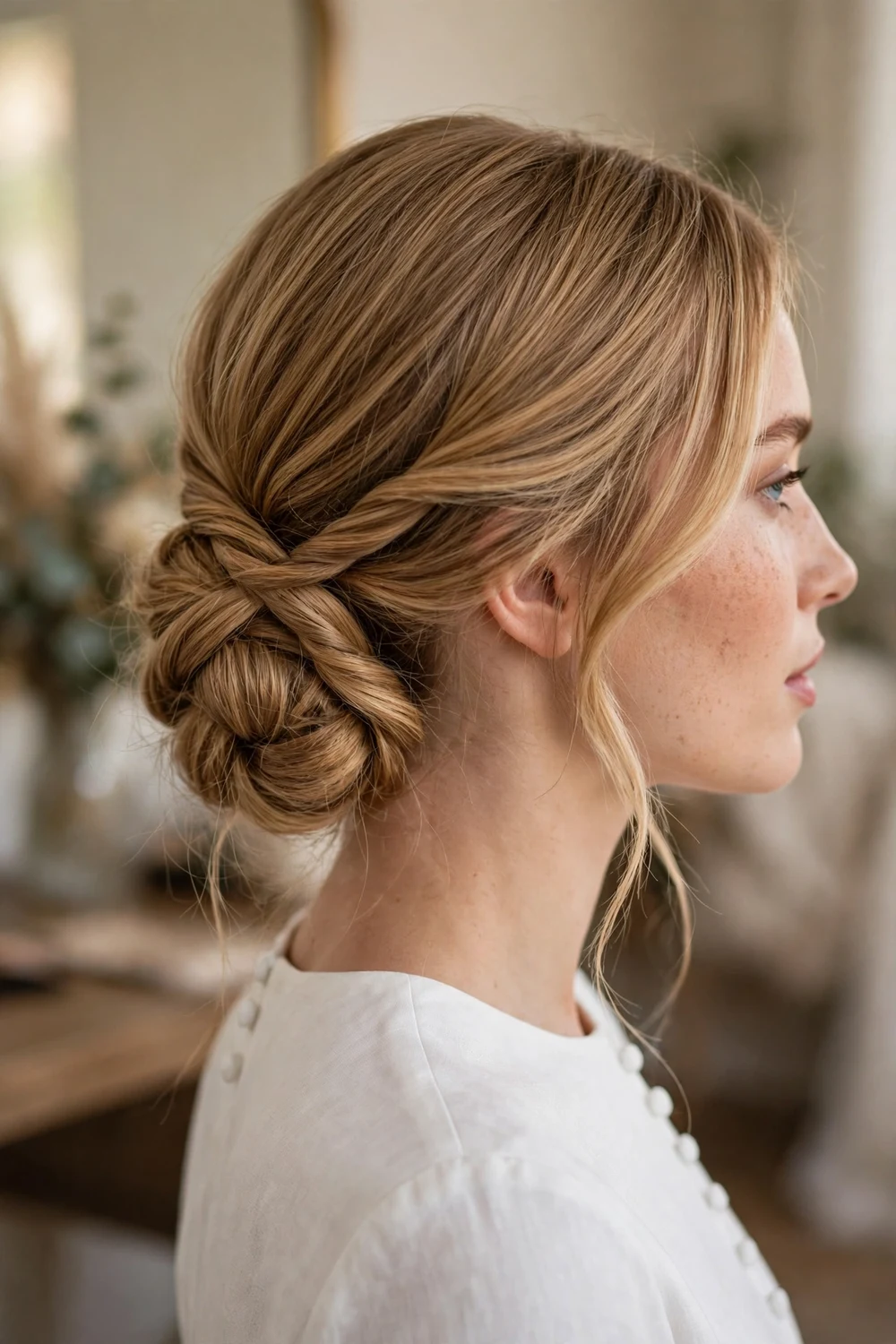
A twisted low bun splits the hair into two or three sections, twists each one, and crosses them into a soft bun at the nape. The twists add visible texture, which helps fine or straight long hair look fuller than it is. A side part softens the front and suits garden and traditional ceremonies alike.
Each twist is pinned as it is placed, and the ends are tucked under the bun so no tails show. The crossing pattern locks the sections against each other, so hold stays strong through dancing. Loose pieces at the front can be curled at the end for a softer frame.
Try this: have the twists started slightly loose and tightened only at the pins. Over-twisted sections spring back and can push pins out by the evening.
Difficulty: Medium · Cost: $$ (salon)
3. Braided Crown Updo
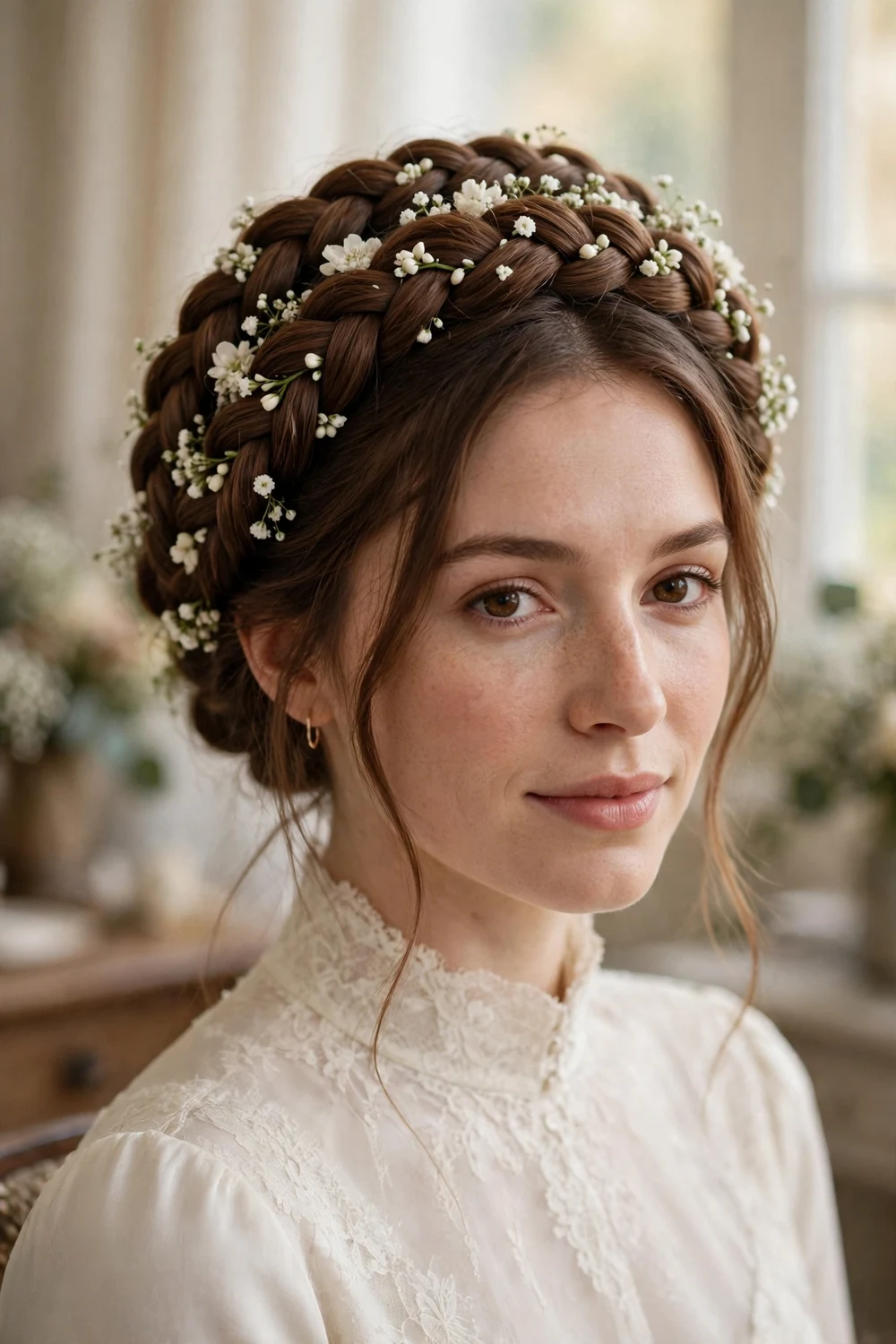
The braided crown wraps one or two braids across the top or around the head like a halo, with the remaining length pinned up at the back. Long hair is a real advantage here, since the braid needs length to travel the full circle without extensions. It suits outdoor, garden, and rustic weddings, and small flowers or pins tuck neatly along the braid.
A Dutch braid holds the crown shape best, because it sits on top of the hair and reads clearly in photos. The braid is gently pulled at the edges to widen it, then the loose length is coiled and pinned behind it. Hold is strong, since the braid distributes tension around the head instead of loading a few pins.
Try this: weave any flowers in after the braid is pinned, using short stems or wired blooms, so nothing drags on the braid as the day goes on.
Difficulty: Medium to High · Cost: $$ (salon)
4. Soft Textured Low Bun

This bun keeps the texture of waved or curled long hair visible. The hair is gathered loosely at the nape, pinned in sections, and finished with soft pieces left out around the face. It suits relaxed and outdoor weddings, and it flatters brides who find sleek styles too severe.
The base still needs structure: a small, firm ponytail or a pinned core hides inside the loose outer layer and carries the weight. The visible layer is then draped and pinned over it with texture spray for grip. Hold is good when the hidden base is solid, and the outer softness can be refreshed with a quick pin at any point.
Try this: curl the hair the day before or use a heatless hairstyle for long hair overnight, so the waves going into the bun already have bend and grip.
Difficulty: Medium · Cost: $$ (salon)
5. Braided Low Bun

A braided low bun braids part or all of the length first, then coils the braid into a bun at the nape. Common builds run a side braid into the bun or braid the ponytail itself before wrapping it. The braid pattern shows through the coil, which gives plain dresses a detailed focal point at the back.
Braiding before coiling also controls very long or thick hair, since the braid stops the length from slipping as it is wrapped. The end of the braid is tucked under the coil and pinned through the braid itself, which holds far better than pinning loose ends. This is one of the most secure styles on the list for heavy hair.
Try this: ask for the braid to sit slightly to one side if your veil is centred, so the braid and the veil comb do not compete for the same spot.
Difficulty: Medium · Cost: $$ (salon)
6. Crisscross Twisted Updo

The crisscross updo twists small sections from each side and overlaps them across the back of the head in an X pattern, finishing in a low bun or tucked ends. The detail sits at the back, so it rewards dresses with plain backs and photographs well during the ceremony, when guests see the back of the hair most.
Each section is twisted and pinned before the next one crosses it, which builds the hold layer by layer. The pattern also spreads long hair across the head, so thick hair feels lighter than it does in a single bun. Fine hair gains width from the pattern, since the eye reads the crossing lines as fullness.
Try this: bring a back-view photo to your trial and check the result in a mirror from behind. Symmetry is the whole point of this style, and it is easy to adjust at the trial stage.
Difficulty: Medium to High · Cost: $$$ (salon)
7. Wrapped Low Ponytail Updo

This style pulls long hair into a low ponytail, wraps a strand of hair around the base to hide the elastic, and either leaves the tail in soft waves over one shoulder or tucks it into a loose low bun. It suits modern weddings and brides who want an updo that still shows their length.
The wrapped base is the detail that lifts it above a plain ponytail, so the wrap strand is smoothed, wound tightly, and pinned underneath. A strong elastic and a small hook elastic inside the base keep heavy lengths from sliding down through the day. Hold is medium, and a travel-size spray helps if the tail is worn loose.
Try this: decide at the trial whether the tail stays out or tucks into a bun for the reception. A good stylist can build the base so the change takes two minutes.
Difficulty: Low to Medium · Cost: $ (salon)
8. Messy High Bun

The messy high bun piles long hair into a loose, textured bun at the crown, with soft strands left out at the front and nape. Height at the crown lengthens the face, and the undone finish suits beach, garden, and relaxed venue weddings. Tiaras and floral pins sit well against the texture.
Long hair is heavy, so a high bun needs a firm ponytail base, backcombing at the roots, and pins set in an X pattern to stop the bun tipping forward. Padding or a bun form can carry some of the weight on very long hair. Once built on that base, the outer layer stays deliberately loose and needs little upkeep.
Try this: wear the bun around the house for an hour after your trial. High styles reveal balance and weight problems within that time, while there is still room to fix them.
Difficulty: Medium · Cost: $$ (salon)
9. Ballerina Bun

The ballerina bun is a smooth, rounded bun set high on the crown, with every strand brushed flat and the part kept clean. It gives long hair a neat, lifted shape and clears the neck and shoulders fully, which suits detailed bodices and statement earrings.
Very long hair often needs a bun form or light padding to keep the bun round instead of sagging into a loop. The length is wrapped around the form, pinned at the base, and finished with a hair net in a matching shade for formal settings. Hold is strong once the form is anchored, and flyaways are handled with a fine brush and spray.
Try this: ask for the bun placed slightly behind the crown rather than on top of the head. The profile reads softer in photos and a veil sits more naturally behind it.
Difficulty: Medium · Cost: $$ (salon)
10. Top Knot with Curtain Bangs

A top knot wraps the length into a tidy knot at the very top of the head, and curtain bangs or long face-framing layers soften the front. The contrast between the sleek knot and the loose fringe suits modern and city weddings, and it keeps hair fully off the neck on warm days.
The knot is smaller and denser than a ballerina bun, so very thick hair may need the length split and wrapped in two passes. Curtain bangs are styled last, with a round brush, and left out of the hairspray pass so they keep some movement. Hold at the knot is strong; the fringe is the part that needs a midday check.
Try this: if you do not have a fringe, ask your stylist to leave two long front sections out and curl them as faux curtain bangs for the day.
Difficulty: Low to Medium · Cost: $ (salon)
11. Twist and Pin Curly Updo
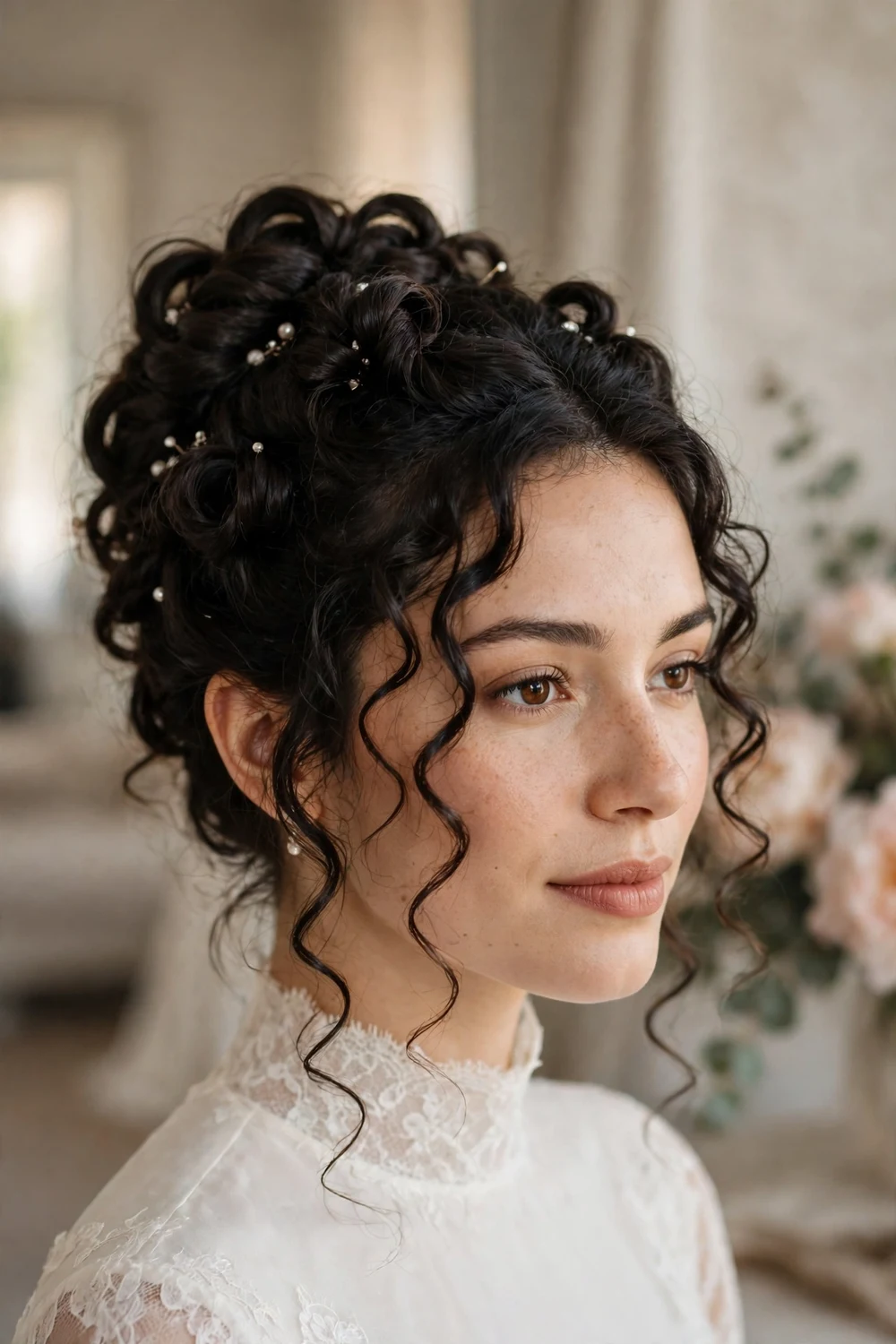
This updo works curl by curl. Small sections of long curly or waved hair are twisted and pinned one at a time, building a soft mound of curls at the back or crown, with a few curls left loose at the front. It suits natural curl patterns best, since the style uses the curl instead of fighting it.
Because each section is pinned on its own, the shape can be balanced as it grows: fuller where the hair is thin, flatter where it is dense. Curls give pins plenty to grip, so hold is strong with far less spray than smooth styles need. Small flowers or pins tuck into the gaps between curls and stay put.
Try this: have your stylist pin the curls while your hair is dry and fully cooled after curling. Pinning warm curls leads to drooping by the reception.
Difficulty: Medium · Cost: $$ (salon)
12. Rope Braid Bun

A rope braid bun twists two strands around each other to form a rope, then coils that rope into a bun. The spiral pattern shows clearly on long hair and reads more detailed than a plain wrapped bun, while using a technique that is quick for a stylist to build.
Rope braids hold tension well, since each strand is twisted in the opposite direction before the two are wound together. That tension keeps the coil neat on straight, slippery hair that escapes from plain buns. The end is tucked under the coil and pinned through the rope for a firm finish.
Try this: ask for two smaller ropes side by side instead of one thick rope if your hair is very long. The coil sits flatter and the pattern shows more detail.
Difficulty: Low to Medium · Cost: $ (salon)
13. Hollywood Waves Pinned Updo

This style shapes long hair into deep, glossy waves first, then sweeps the waves back and pins them into a low, wide shape at the back. The wave pattern stays visible across the surface, which gives it a formal, old-film feel that suits evening and ballroom weddings.
The waves are set with clips and left to cool fully before pinning, since warm waves relax and lose their shape. The pinning follows the wave ridges, so the pins hide in the dips of the pattern. Hold is medium: the shape is firm, though heavy lengths may need a hidden ponytail base under the pinned waves.
Try this: schedule this style with extra time in the morning plan. The setting and cooling stage cannot be rushed without flattening the waves.
Difficulty: High · Cost: $$$ (salon)
14. Low Knotted Updo
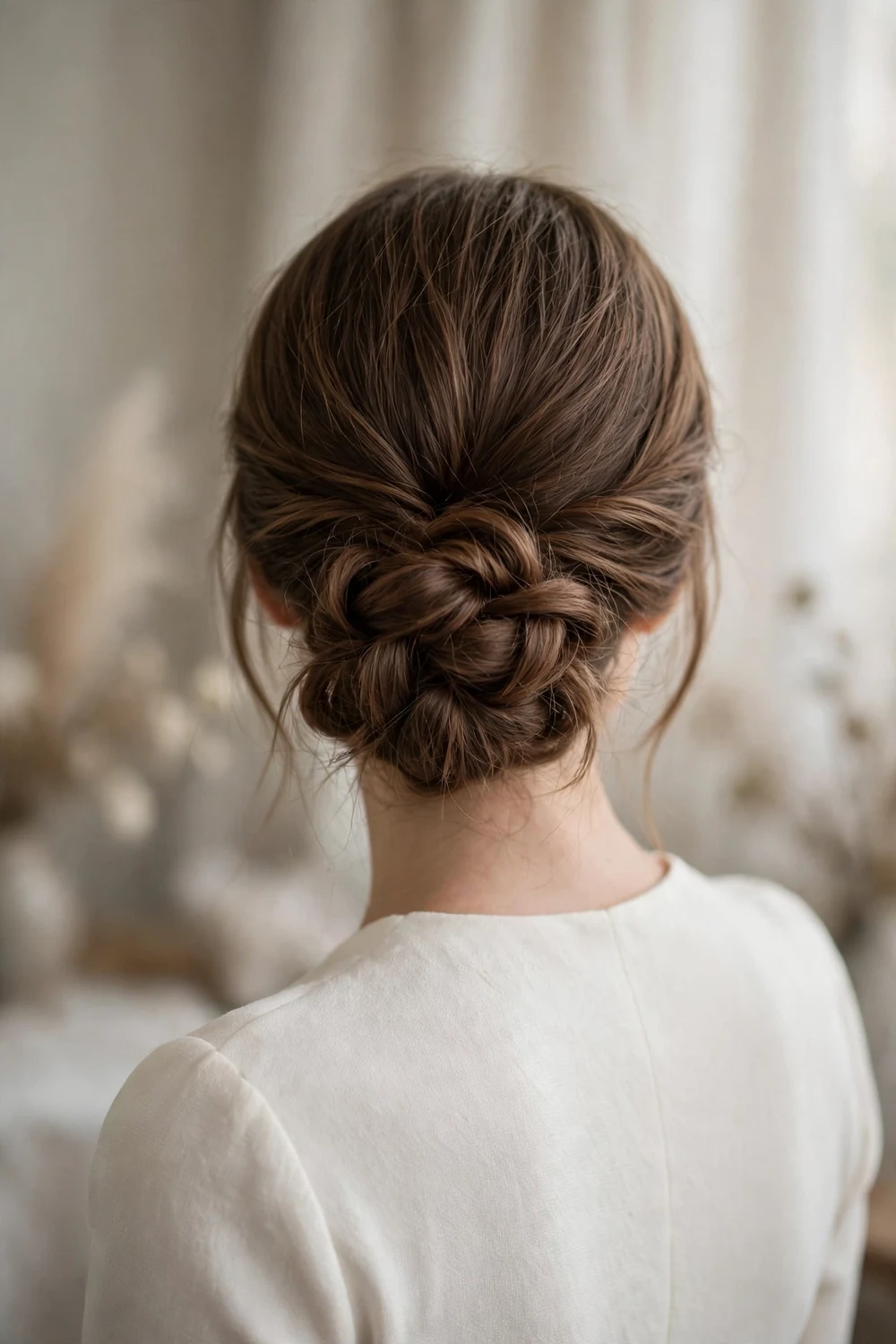
A knotted updo ties sections of long hair into real, simple knots and pins them at the nape or across the back of the head. The knots form the pattern themselves, so the style needs no braid and no bun form. It suits modern weddings and brides who want detail that reads up close rather than across a room.
Long hair knots cleanly because there is enough length to tie and still tuck the ends away. Each knot is pinned through its centre as soon as it is tied, and a light texture spray beforehand stops the knots sliding loose on smooth hair. Hold is good on textured hair and medium on very sleek hair.
Try this: test this style at the trial with your hair in its day-two state. Knots tied in freshly washed hair slip, and the trial should reflect the real grip.
Difficulty: Medium to High · Cost: $$ (salon)
15. High Ponytail with Braided Wrap
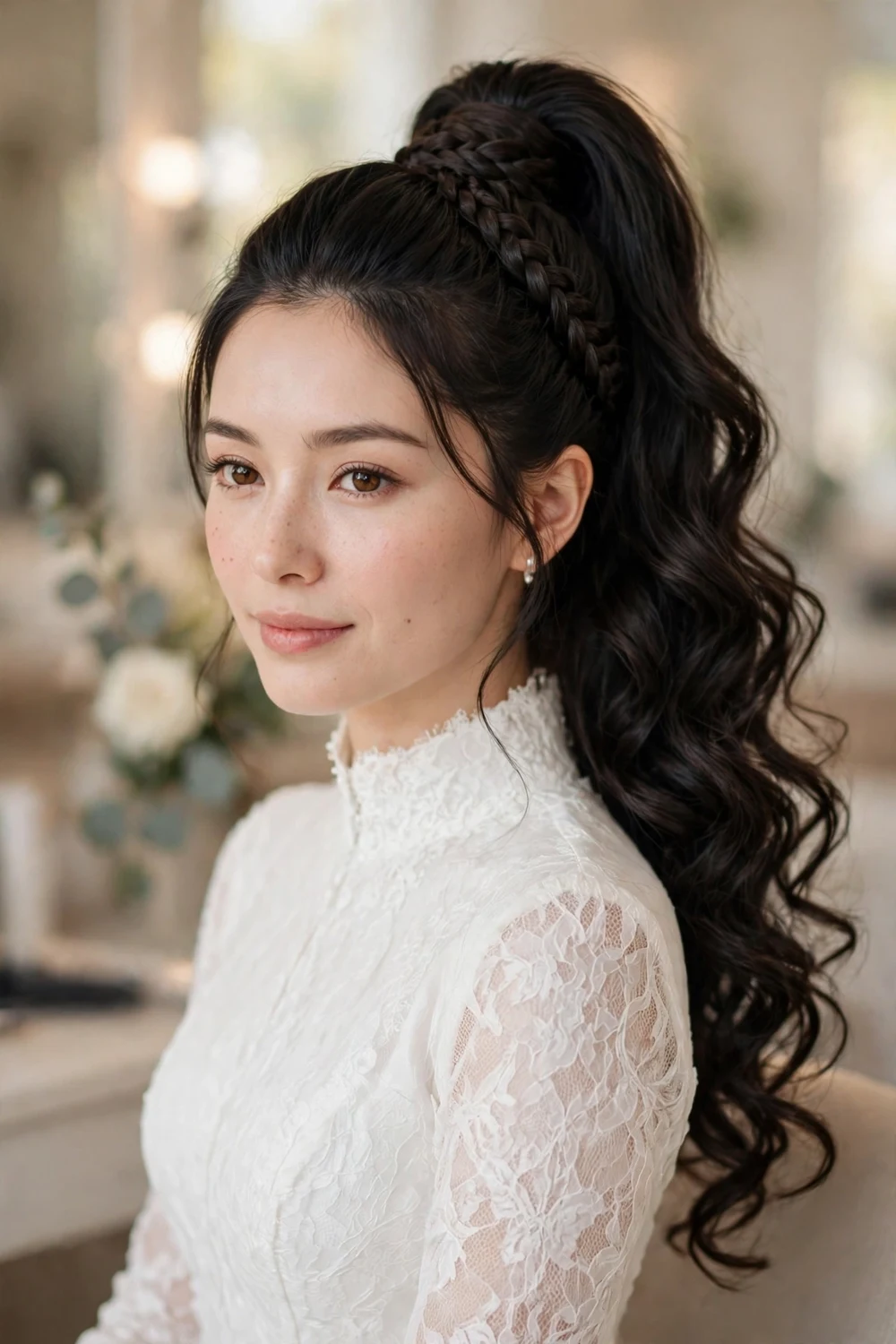
A high ponytail lifts long hair to the crown and lets the length fall in soft curls down the back. A small braid made from one side section wraps around the base and hides the elastic. The result reads modern and clean, and it keeps hair off the face for the full day.
Height plus weight is the challenge, so the base uses two elastics and a bungee or hook elastic pulled tight, set slightly behind the crown for balance. The tail is curled in large sections and brushed out once, so the curls move as one shape. Hold is medium, and the style is a strong pick for warm venues because the neck stays clear.
Try this: ask your stylist to tilt your head back while the base is secured. A ponytail tied with the head level often sags once you stand straight.
Difficulty: Medium · Cost: $$ (salon)
16. Classic French Twist
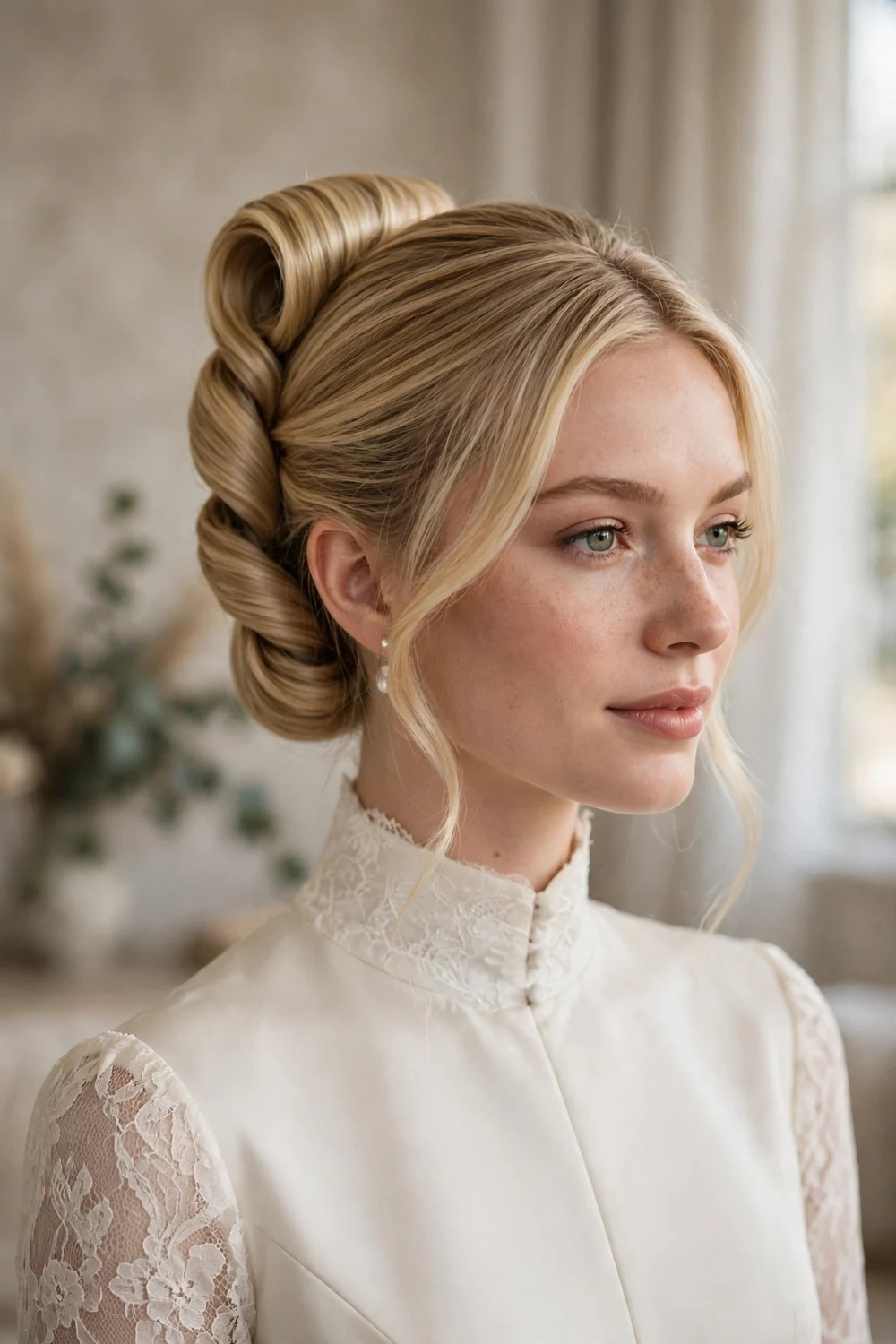
The French twist sweeps long hair to one side, twists it upward into a vertical roll at the back of the head, and tucks the ends into the fold. The line is smooth and upright, which lengthens the neck and suits formal ceremonies and classic dress shapes.
Long lengths need the ends folded down inside the roll in sections, so the seam stays slim rather than bulky. A row of long pins set along the seam carries the hold, helped by backcombing at the roots for grip. Once pinned, the surface is smoothed with a brush and finished with a firm spray. Hold is strong and the shape barely shifts.
Try this: place any comb or clip at the top of the roll, where the fold is thickest and grips accessories best.
Difficulty: Medium to High · Cost: $$ (salon)
17. Fishtail Braid Updo

A fishtail braid weaves small strands from the edges into a wide, herringbone pattern, and the finished braid is coiled or folded up and pinned at the back. The fine pattern shows best on long hair with some colour variation, where highlights trace the weave. It suits garden and outdoor weddings.
Fishtails take longer to build than standard braids, since the sections are small, though the payoff is a braid that holds its pattern under movement. Gently pulling the edges widens the braid and softens the finish before it is coiled. The coil is pinned through the braid at several points, giving it strong, even hold.
Try this: book the trial braid slightly tighter than you think you want. Fishtails loosen a little over the first hour, and the trial shows the true end result.
Difficulty: Medium to High · Cost: $$ (salon)
18. Side-Swept Low Bun
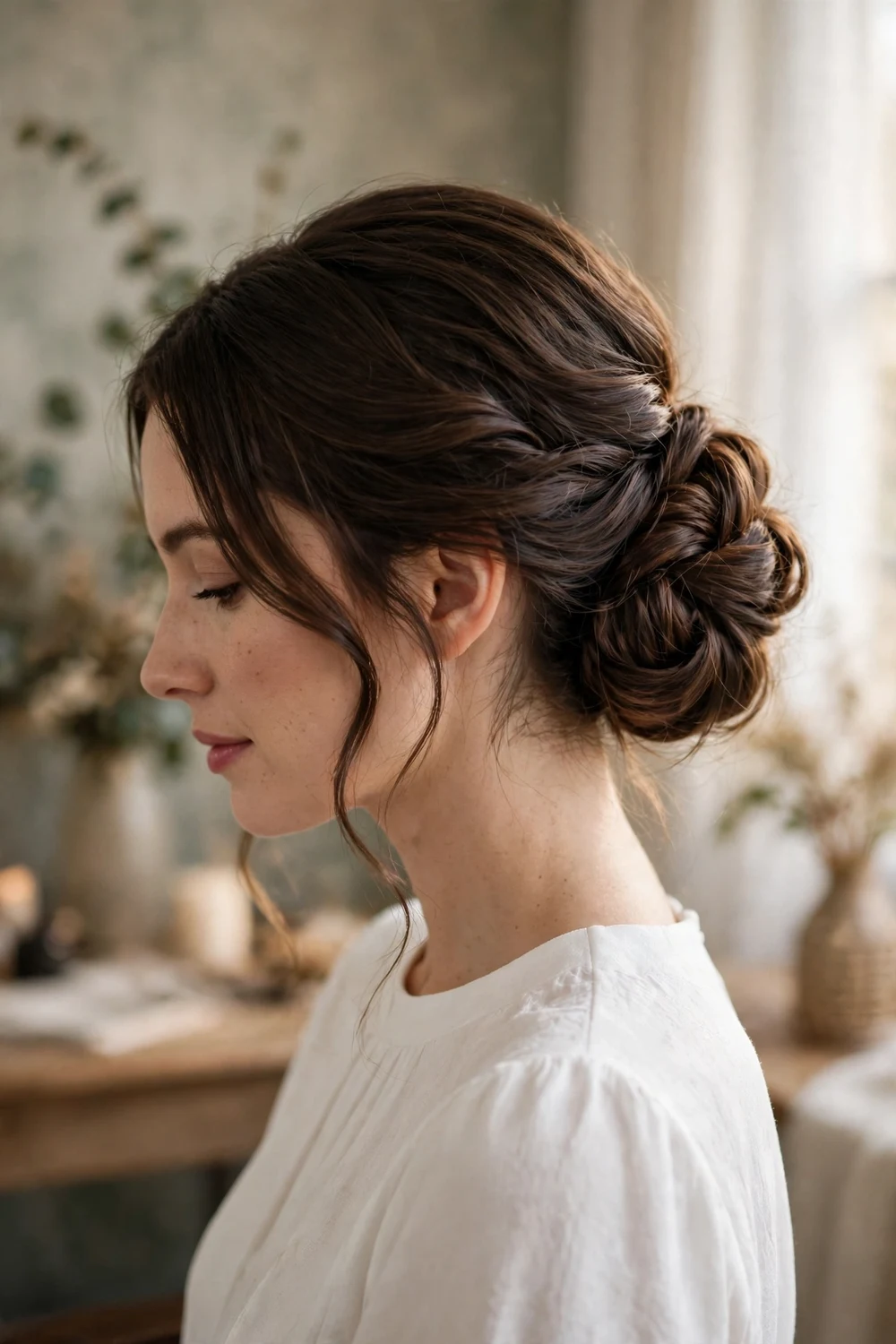
The side-swept low bun moves the bun off centre, tucking it behind one ear while the top sweeps across in soft waves. The asymmetry suits one-shoulder silhouettes and dresses with detail on a single side, and it gives profile photos a clear focal point.
The sweep is built first, with the top section waved and pinned across, then the remaining length is coiled into the side bun. Because the weight sits to one side, the bun needs pins crossed from two directions and a small elastic base to stop it rotating through the day. Hold is good once the base is set.
Try this: place the bun on the opposite side from your part for a balanced sweep, and check both profiles in trial photos before deciding.
Difficulty: Medium · Cost: $$ (salon)
19. Gibson Roll Updo

The Gibson roll pulls long hair into a low ponytail, then rolls the length upward and inward into a soft horizontal roll at the nape, tucking the ends inside. The shape has a vintage feel and a smooth, even line that suits classic and traditional weddings.
A roll spreads the weight of long hair across the full width of the nape, so it feels lighter than a bun of the same hair and puts less pull on any single pin. The roll is pinned along its length and holds well on straight and wavy hair. A decorative comb slides into the top of the roll and stays secure.
Try this: leave the roll slightly loose at the ends for a softer, wider shape, or roll it tight for a neat line. Decide at the trial, since the two versions photograph quite differently.
Difficulty: Low to Medium · Cost: $ (salon)
More Ideas to Explore
Frequently Asked Questions
How far ahead should I book a trial for a wedding updo?
Book the trial four to six weeks before the wedding, with your veil, comb, or hairpiece in hand. That timing leaves room to change the style if the trial shows a hold or balance problem, and it lets you test how the updo feels over several hours. Bring photos of the style from the front, side, and back, since an updo reads differently from each angle.
How do I make an updo hold all day on long hair?
Start with hair that has grip: second-day hair, or freshly washed hair prepped with texture spray or mousse and dried fully. A firm base does most of the work, whether that is a tight ponytail elastic, a pinned core inside a loose bun, or pins crossed in an X pattern. Finish with a firm-hold spray, avoid touching the style, and keep a few spare pins and a mini spray in your bag for the evening.
Can I wear a veil with an updo on long hair?
Yes. Low buns and chignons take a veil comb above or below the bun, French twists anchor a comb at the top of the roll, and high buns carry a veil behind the bun. Tell your stylist the veil length and weight before the trial, because a long, heavy veil needs a reinforced base and extra pins at the anchor point. Test the veil in and out at the trial, since removal should leave the style intact.
Should I wash my hair on the wedding morning?
Most stylists prefer hair washed the day before, since clean hair is often too soft and slippery to hold pins and braids. If your hair gets oily quickly, wash it the night before and dry it fully, then add texture spray in the morning. Curly styles are the exception in some cases: curls that will be pinned curl by curl are often styled from freshly washed, fully dried hair. Confirm the plan with your stylist at the trial.
How much does a wedding updo for long hair cost at a salon?
Costs on this list are shown as bands rather than fixed prices, since salon pricing varies by city and stylist. Simple builds such as a rope braid bun, top knot, or wrapped ponytail sit in the $ band. Most low buns, braided styles, and the French twist sit in the $$ band. Detailed or time-heavy builds such as the crisscross updo and the Hollywood waves pinned updo sit in the $$$ band. A trial session is usually charged on top of the day-of service, so ask for both figures when you book.
Final Thoughts
For my part, the low styles win on long hair most days: a chignon, a braided low bun, or a French twist carries the weight well, holds its shape in photos, and still looks like itself by the last dance. Pick the style that fits your neckline and your hair texture, test it at a trial with your veil, and the hair stops being a worry on the day. Bridesmaids with shorter cuts can look at the French bob hairstyles for a wedding roundup for a coordinated set of looks, and the fall hairstyle ideas for long hair guide carries the same length into the next season.

