

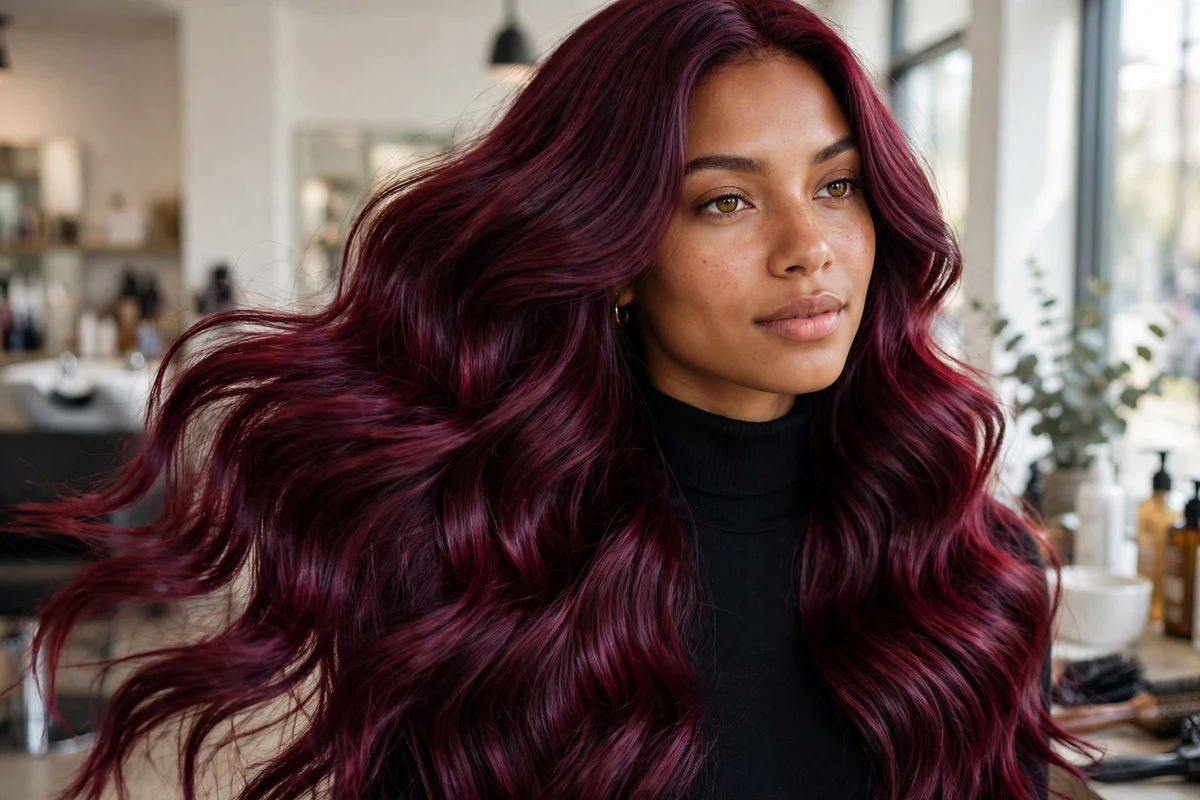
Plum sits between purple and red, and that in-between spot is what makes the family so wearable. At the deep end, plum over black or brown hair shows only as a purple sheen in daylight. At the bright end, magenta-plum and pastel plum read as full fashion color. Most shades in the middle, deep plum, classic plum, and burgundy-plum, give brunettes a clear color change with no bleach in many cases.
This list collects 27 plum hair color ideas and runs them in order: the deep and dark shades first, then the classic mid-tones, the soft and bright shades, the low-commitment routes, and finally the placement techniques. Every idea notes the undertone, the base it works from, how it fades, and how much upkeep it asks for. If you are still weighing plum against the wider cold-weather palette, the dark fall hair colors roundup shows the deep shades it sits beside.
Quick Takeaways
- Plum is a purple-red family: eggplant and purple-plum lean cool, while plum wine and burgundy-plum lean warm.
- Dark bases carry the deep half of this list with little or no lightening. Pastel and bright plum need a pale, pre-lightened base.
- Balayage, ombre, melts, and money pieces grow out softly and stretch salon visits to 8 to 10 weeks.
- All-over plum fades faster than brown or blonde color. Plan a gloss or toner refresh at 4 to 6 weeks.
- A plum gloss over your current color is the lowest-risk first step, and it fades out with no regrowth line.
How to Pick Your Plum Shade
Start with undertone. Cool skin pairs well with the purple-leaning shades: eggplant plum, purple-plum, cool-toned plum, and blackberry plum. Warm and olive skin carry the red-leaning shades with ease: plum wine, burgundy-plum, warm red-plum, and mulberry plum. Neutral skin can move either way, so depth becomes the deciding factor instead. Fair skin often suits a clear mid-tone or a soft shade, while medium and deep skin carry the saturated and deep shades with the most impact.
Then check your starting base and your calendar. Black and dark brown hair reach the first nine ideas on this list directly, and need lightening only for the bright and pastel shades. Light brown and blonde hair can reach almost every shade in one session, although dark plums may need a filler tone first so the color holds evenly. The warmth question matters too: plum is a cool-leaning family, and the fall copper hair colors guide covers the warm red-orange family if you find plum reads too cool on you. The wider autumn hair colors list is a useful side-by-side if you are choosing between families for the season.
| Shade family | Undertone | Best starting base | Upkeep |
|---|---|---|---|
| Deep plums (deep plum, black plum, eggplant) | Cool purple | Black to dark brown | Low to medium |
| Warm plums (plum wine, burgundy-plum, red-plum) | Warm red-purple | Medium brown to dark brown | Low to medium |
| Classic plums (classic, mulberry, blackberry) | Balanced purple-red | Light brown to dark brown | Medium |
| Bright and pastel plums (magenta, pastel, bright) | Violet and pink | Pre-lightened base | High |
| Placed plum (balayage, ombre, highlights, money piece) | Varies by shade | Any base | Low |
1. Deep Plum

Deep plum is the anchor shade of the family: a dark purple-red with enough depth to read as a near-brown indoors and a clear plum in daylight. The undertone leans cool, with purple ahead of red. It suits medium and deep skin well, and it gives fair skin a strong contrast that many wearers like in winter.
Dark brown and black bases reach deep plum with a single process color and no lightening. The shade fades slowly for a red-family color because the pigment load is high, and it settles toward a warm dark brown over six to eight weeks. A plum gloss at the halfway point keeps the purple side visible.
Try this: ask for the formula a half shade deeper than the swatch you pick. Deep plum lightens as it fades, so starting slightly deeper buys you extra weeks of true color.
Difficulty: Medium · Cost: $$ (salon)
2. Classic Plum

Classic plum holds purple and red in near-equal balance at a mid-tone depth. It is the reference shade for the whole family, the one most colorists picture when a client asks for plum with no other detail. The balanced undertone is why it suits such a wide range of skin tones, from fair to deep.
Light brown and medium brown bases reach it in one session. Very dark hair needs a gentle lift first, since the mid-tone needs room to show. Classic plum fades evenly toward a muted berry tone, and a color-depositing conditioner in a plum shade holds the balance between visits.
Try this: bring two photos to the appointment, one in daylight and one indoors. Classic plum shifts a lot between the two, and your colorist can tune the purple-to-red ratio to the light you live in most.
Difficulty: Medium · Cost: $$ (salon)
3. Plum over Black Hair

Plum over black hair keeps a near-black base and lays a deep plum tint across it. Indoors the hair reads black. In sun or bright light, a purple sheen moves across the surface. This is the quietest entry on the list, and a common first plum for anyone in a conservative workplace.
The color is usually done with a high-lift tint or a demi-permanent plum over the natural black, with no bleach involved. Because the base stays dark, regrowth is barely visible and appointments can stretch to eight weeks or more. The tint fades gradually, so there is no harsh line as it leaves.
Try this: ask for a demi-permanent plum tint first. It gives you the full sheen effect for a few weeks and fades back to your natural black if you decide plum is not for you.
Difficulty: Low to Medium · Cost: $$ (salon)
4. Chocolate Plum
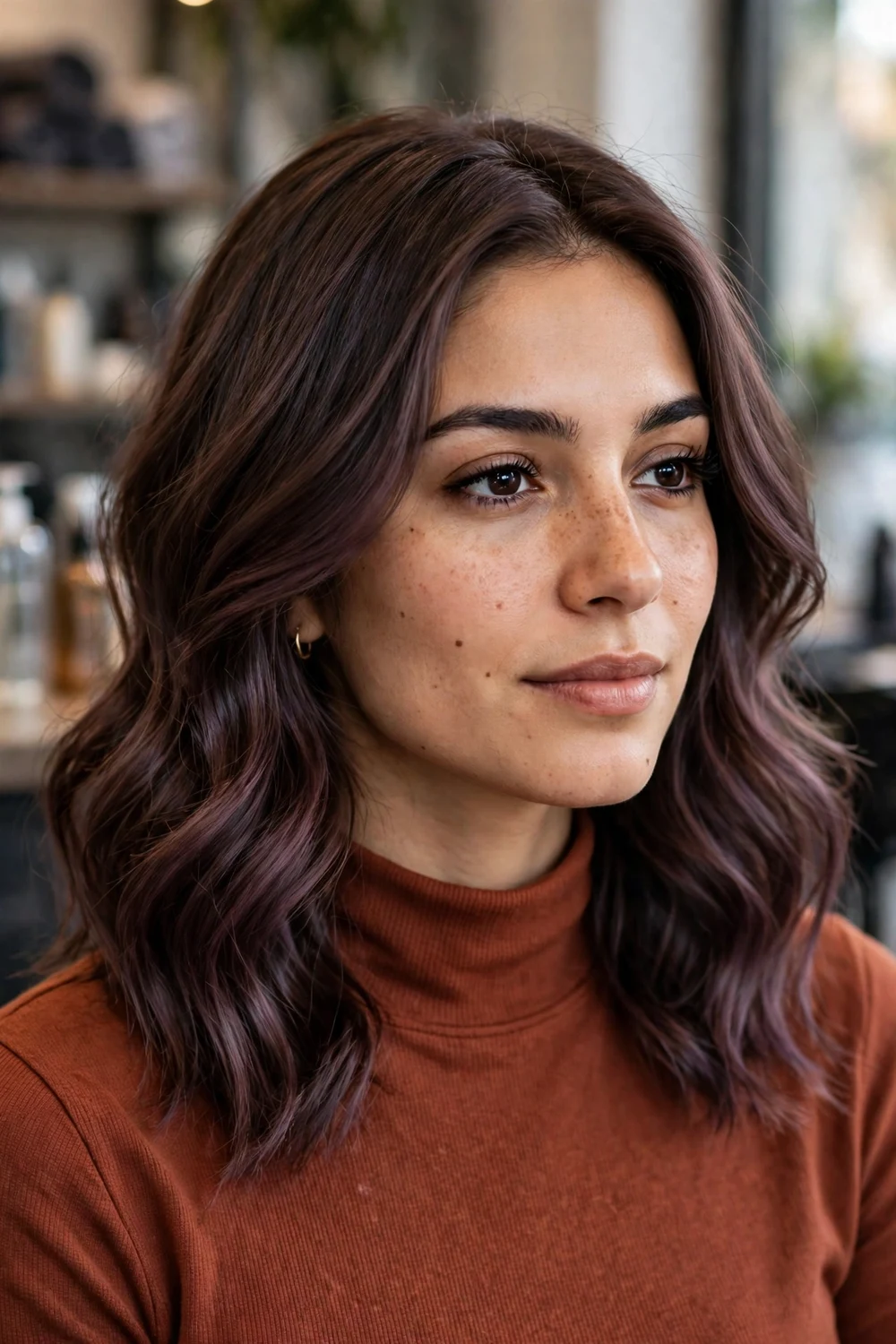
Chocolate plum starts from a warm brown base and adds a plum tint through the lengths, so the brown stays in charge and the plum shows as a cool reflection on top. The effect is subtle in shade and clear in daylight. It suits warm and olive skin, where a full purple shade can sometimes fight the skin.
Most brunettes reach chocolate plum with a gloss or a demi-permanent color over their existing shade, which keeps the appointment short and the hair undamaged. Upkeep is low: the tint fades back toward plain brown over five to six weeks, and a home gloss can refresh it between salon visits.
Try this: if your brown hair already has old highlights, let them stay. The plum tint grabs lighter pieces more strongly, and you get soft dimension with no extra foils.
Difficulty: Low to Medium · Cost: $$ (salon)
5. Eggplant Plum

Eggplant plum is the coolest of the deep shades: a dark purple with very little red in the mix. It reads almost like a soft black in low light, then shows its purple clearly outdoors. Cool and neutral skin tones carry it best, and it pairs well with silver jewelry and cool-toned makeup.
Dark bases reach eggplant with permanent color and no lightening. The shade holds well because the blue-violet pigments sit deep, although it can fade toward a dusky purple-gray on porous hair. A purple color-depositing mask once a week keeps the tone clean and stops it drifting warm.
Try this: skip red-toned styling products and color-depositing red glosses with this shade. Any added red pulls eggplant toward classic plum and changes the whole effect.
Difficulty: Medium · Cost: $$ (salon)
6. Blackberry Plum
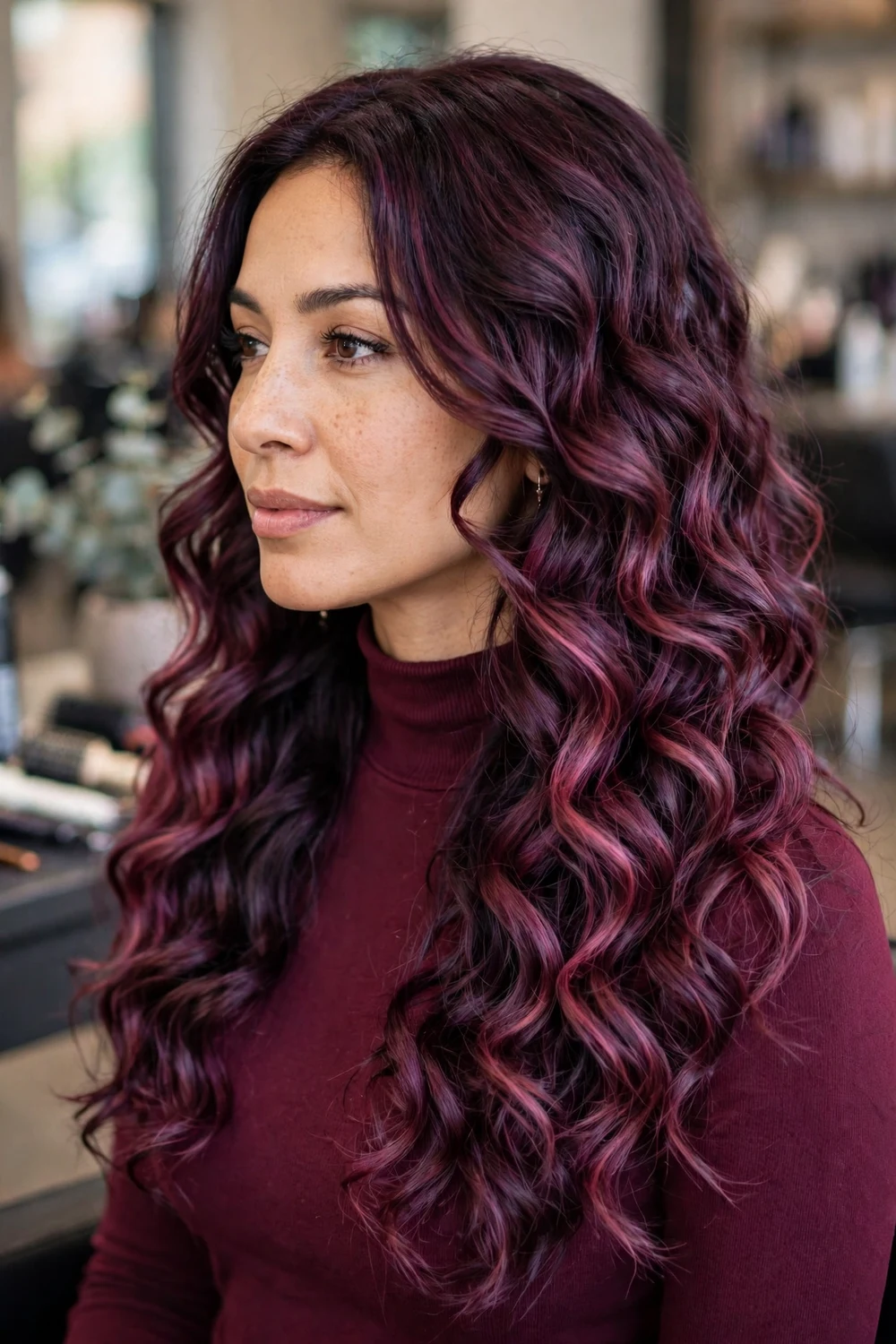
Blackberry plum is a deep berry shade that shifts as the light changes: dark plum in shade, then a pink-berry flash where light hits the curves of the hair. That shift is why it is usually worn in waves or curls, which give the color more angles to catch. It suits medium and deep skin especially well.
The shade is built with permanent color on dark bases, or with a plum base plus berry ribbons on lighter bases. It fades toward a softer berry-brown, which most wearers still like, so the grow-out period stays forgiving. Plan a toner refresh at five to six weeks to keep the berry flash bright.
Try this: ask for a few berry ribbons around the face only. The flash of lighter berry at the front gives the full blackberry effect with less color to maintain.
Difficulty: Medium · Cost: $$ (salon)
7. Burgundy-Plum
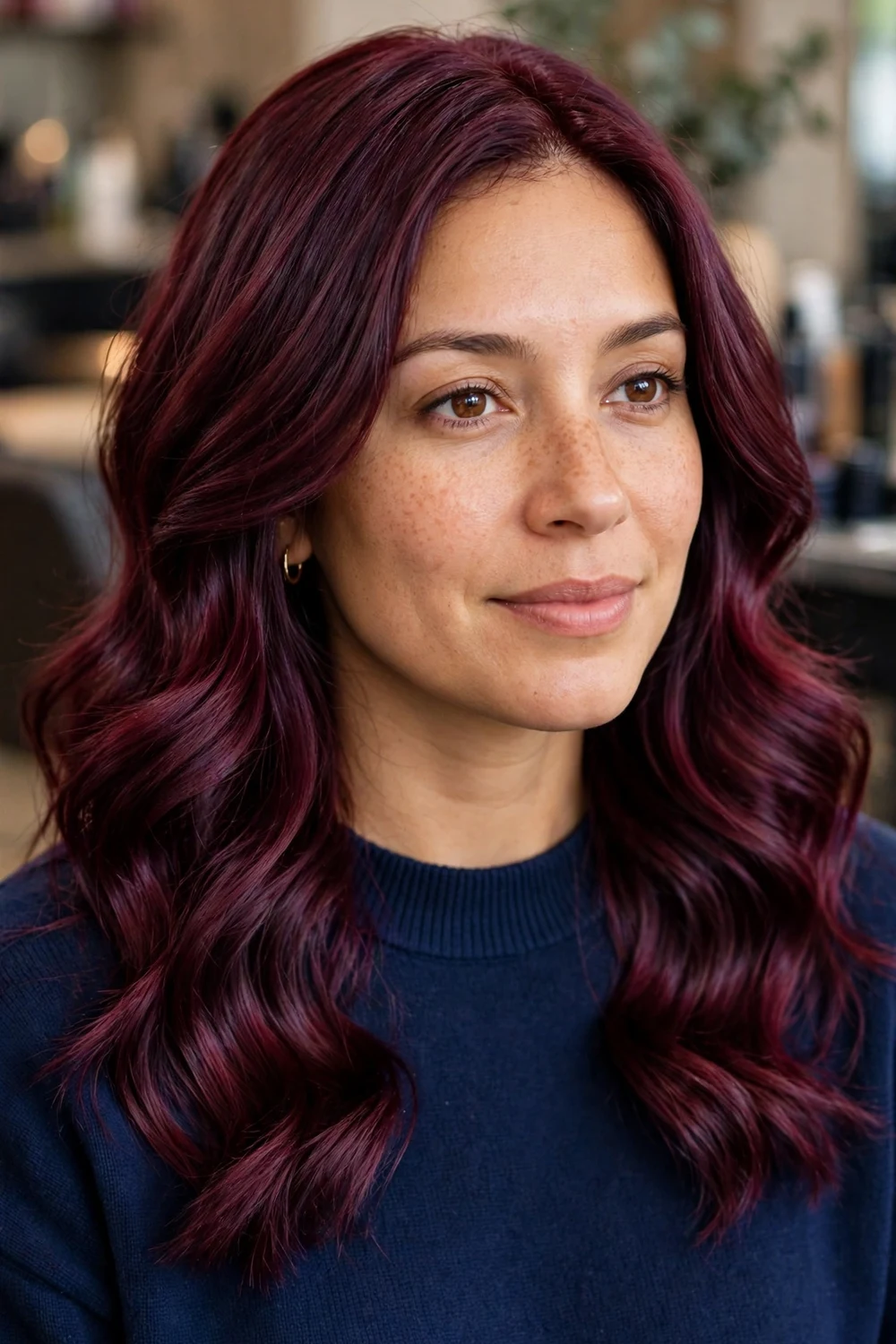
Burgundy-plum sits on the warm side of the family: a red-wine base with a clear purple cast over it. The purple is what keeps it in plum territory and stops it reading as a straight red. It suits warm and olive skin, and it is a steady pick for anyone who found cooler plums too blue against their skin.
Medium and dark brown bases reach burgundy-plum in one session with no lightening in most cases. Red-family pigments fade faster than purple ones, so this shade drifts warm and lighter over four to six weeks. A red-plum gloss at the halfway point restores the depth before it goes coppery.
Try this: ask your colorist to weight the formula slightly more purple than the swatch suggests. The red side fades first, so a purple-heavy start fades into balance rather than away from it.
Difficulty: Low to Medium · Cost: $$ (salon)
8. Plum Wine
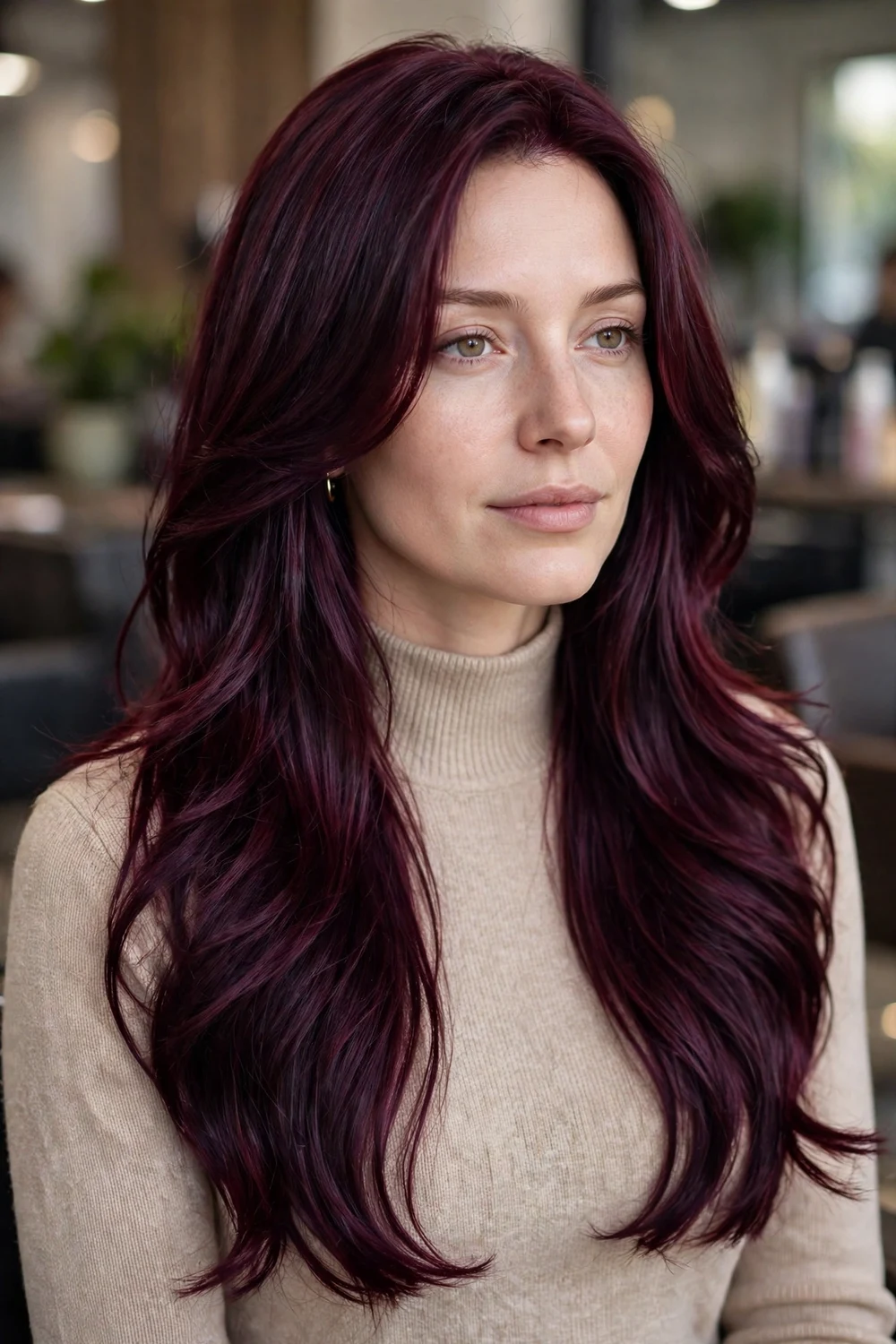
Plum wine is a warm, full-bodied shade modeled on dark red wine, with plum depth underneath the red surface. Compared with burgundy-plum, the red sits a touch higher and the overall tone feels warmer. It flatters warm skin tones and reads well in evening light, which makes it a frequent autumn and winter choice.
Dark brown bases take plum wine directly. Lighter bases may need the color applied in two steps so the red holds evenly from root to tip. Upkeep is middle of the road: the warmth fades first, so a gloss refresh at five weeks keeps the wine tone rich rather than rusty.
Try this: pair the first appointment with a clear gloss finish. Wine shades rely on surface shine to show their depth, and the gloss makes the color look freshly done for longer.
Difficulty: Medium · Cost: $$ (salon)
9. Mulberry Plum

Mulberry plum leans pinker than the rest of the deep group. The base is a berry plum, and a pink reflect runs through it, so the color feels softer than eggplant or deep plum at a similar depth. It suits a wide range of skin tones and works at almost any length, although it shows especially well on smooth, sleek cuts.
Medium brown bases reach mulberry in one session. Darker bases need a light lift so the pink reflect can show. The pink side of the shade fades first and the hair settles toward a berry plum, which keeps the in-between stage wearable. A pink-plum depositing conditioner helps if you want to hold the softer tone.
Try this: try mulberry as a lob or bob first if you usually wear your hair long. Shorter lengths need less product and less time to keep this shade even.
Difficulty: Medium · Cost: $$ (salon)
10. Purple-Plum
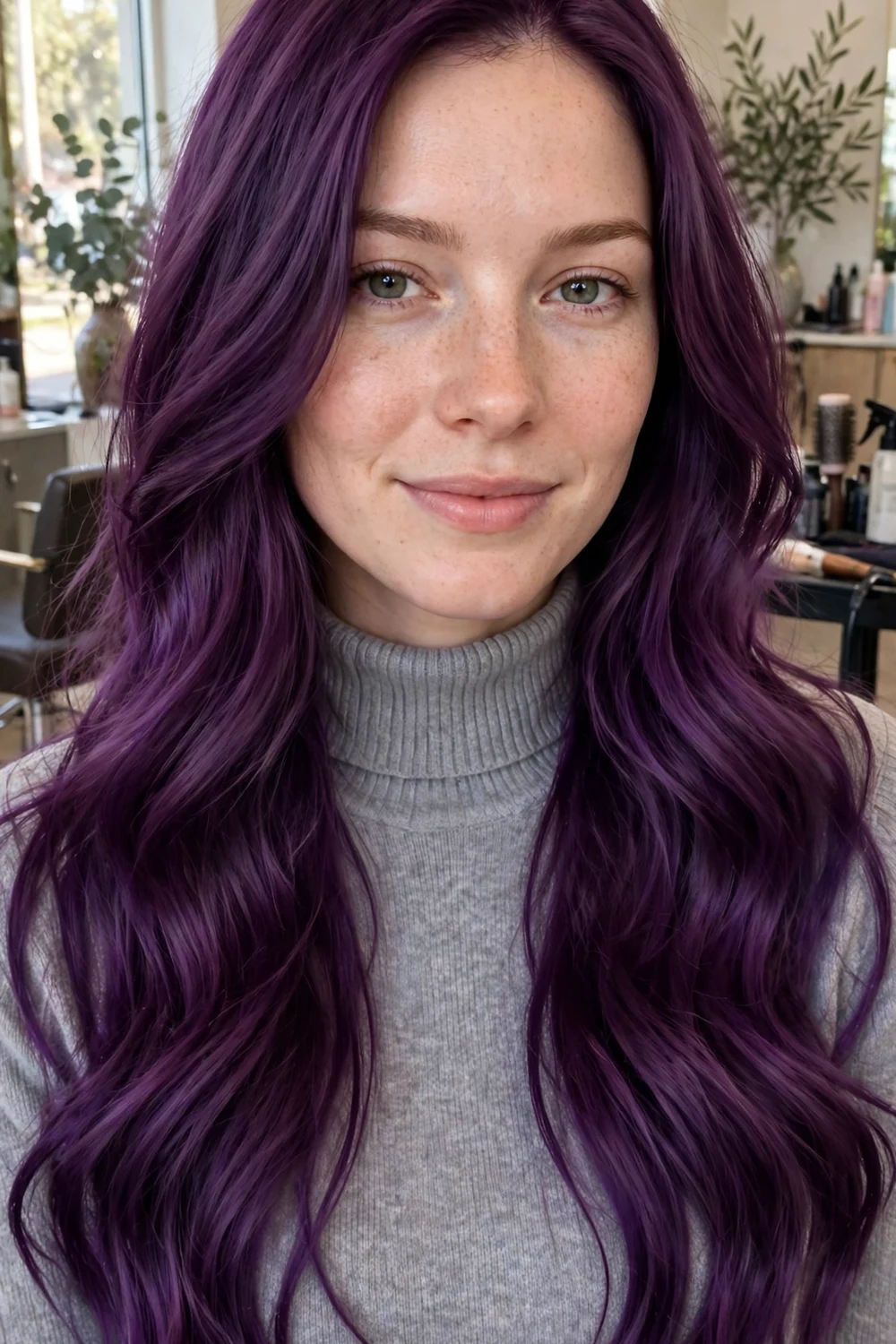
Purple-plum pushes the balance toward violet: purple clearly ahead of red, with just enough red left to keep the shade in the plum family rather than the violet fashion shades. The result is cooler and brighter than classic plum. Cool skin tones carry it best, and it makes green and hazel eyes stand out.
Most heads need some lightening for purple-plum, since the violet needs a clean base to show its true tone over dark hair. On dark brown hair with no lift, the same formula reads as a faint tint only. The shade fades toward a dusty violet, and purple shampoo used sparingly keeps the tone cool between visits.
Try this: ask for purple-plum through the mid-lengths and ends with a deep plum root. The darker root hides regrowth and gives you a longer stretch between appointments.
Difficulty: Medium to High · Cost: $$$ (salon)
11. Magenta-Plum

Magenta-plum is the brightest wearable shade on this list: a pink-purple plum with lighter ribbons run through it for movement. It sits at the bold end of the family while keeping the red content that makes it plum rather than pink. Warm and neutral skin tones handle the brightness well.
This shade needs a pre-lightened base on all but the lightest natural blondes, which is why the difficulty and cost sit at the top of the range. It also fades the fastest of the mid-tones, moving toward a soft pink-plum within three to four weeks. A magenta-plum depositing mask is close to required home care for this one.
Try this: start with magenta-plum ribbons over a classic plum base. You get the bright flash with far less lightening, and the base color carries the look as the ribbons fade.
Difficulty: High · Cost: $$$ (salon)
12. Rose Plum

Rose plum blends plum with rose gold tones, so the purple base warms up with a rosy surface. It is the softest of the pink-leaning plums and a natural step for anyone moving over from rose gold or strawberry shades. Warm fair and medium skin suit it best.
The rose side of the blend needs a light base to show, so blondes and light brunettes reach it in one session while darker hair needs lifting first. Rose tones rinse out quickly, and the shade fades toward a plain soft plum. That fade path is gentle, and many wearers book a rose gloss only, rather than a full recolor, at the refresh visit.
Try this: ask for the rose kept to the top layer and front sections. The plum underneath keeps the color grounded, and the rose refresh at later visits stays quick and cheap in salon time.
Difficulty: Medium to High · Cost: $$$ (salon)
13. Warm Red-Plum
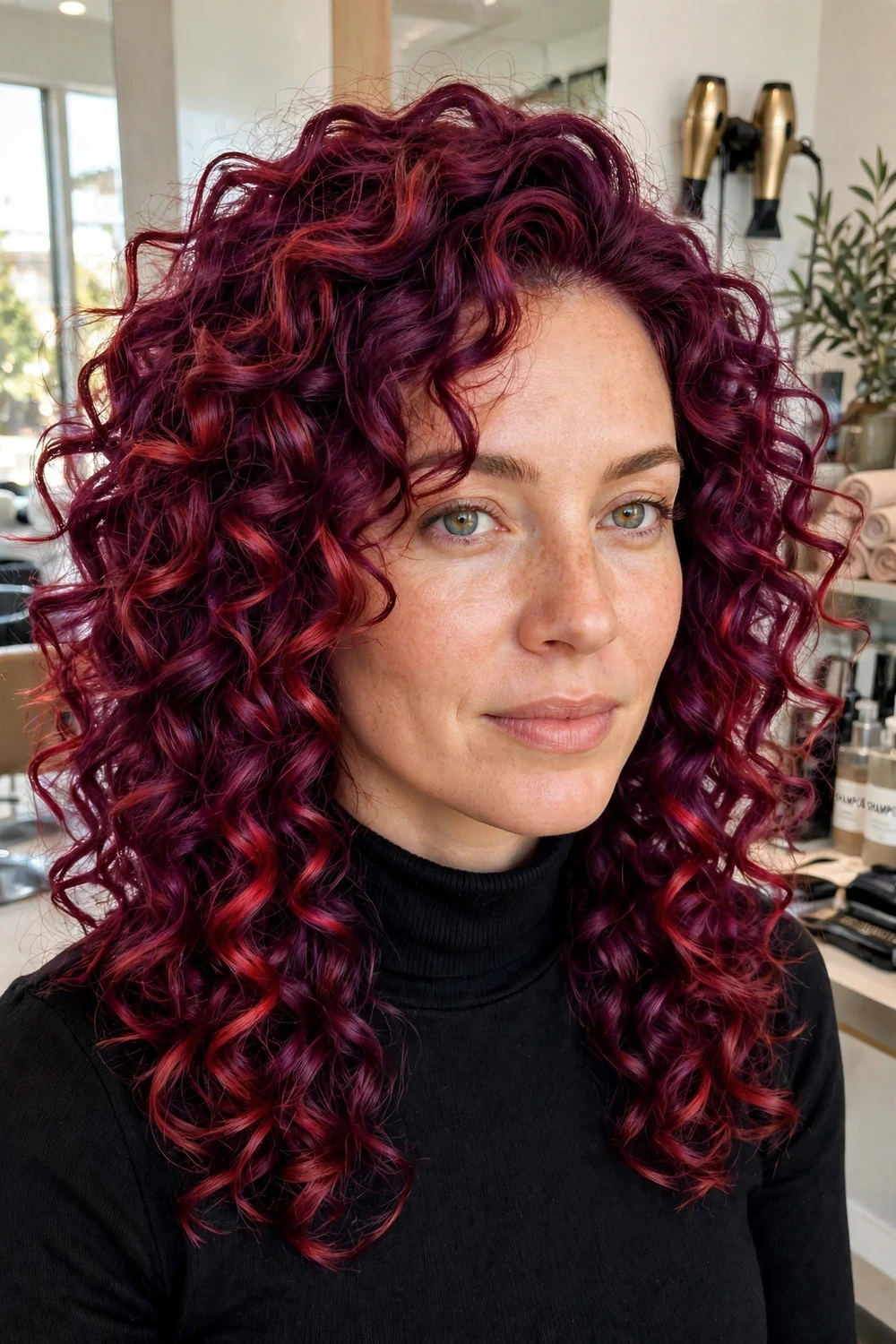
Warm red-plum is the reddest shade that still holds its plum identity: a plum base with a strong scarlet undertone laid over it. The purple base keeps the red deep and wine-like rather than coppery. It suits warm skin and light eyes, where the contrast between the red surface and the eye color does most of the work.
Medium and dark brown bases reach it without lightening, and the formula is a single process in most salons. Red pigments leave the hair faster than purple ones, so expect the shade to soften toward burgundy-plum by week five. A red-plum gloss restores the scarlet side in a short appointment.
Try this: if you are coming from a copper or red shade, this is the easiest route into plum. Your colorist can glaze plum over your existing red rather than stripping and starting again.
Difficulty: Medium · Cost: $$ (salon)
14. Cool-Toned Plum

Cool-toned plum strips the warmth out of the family: an even plum built on blue-violet undertones, worn best in sleek, smooth styles that show the uniform tone. It suits cool skin with pink undertones, the group that warm plums most often clash with.
Achieving a truly cool plum usually means toning over a lightened base, because natural warmth in dark hair pushes plum shades red as they fade. On unlightened dark hair the same shade reads as eggplant instead, which is a good fallback to discuss at the consultation. Upkeep centers on tone control: a blue-violet toner at four to five weeks stops the drift toward warmth.
Try this: bring a photo of your skin in daylight with no makeup. Cool plum is unforgiving when the undertone match is off, and a clear skin read helps your colorist set the formula.
Difficulty: Medium to High · Cost: $$$ (salon)
15. Dusty Plum
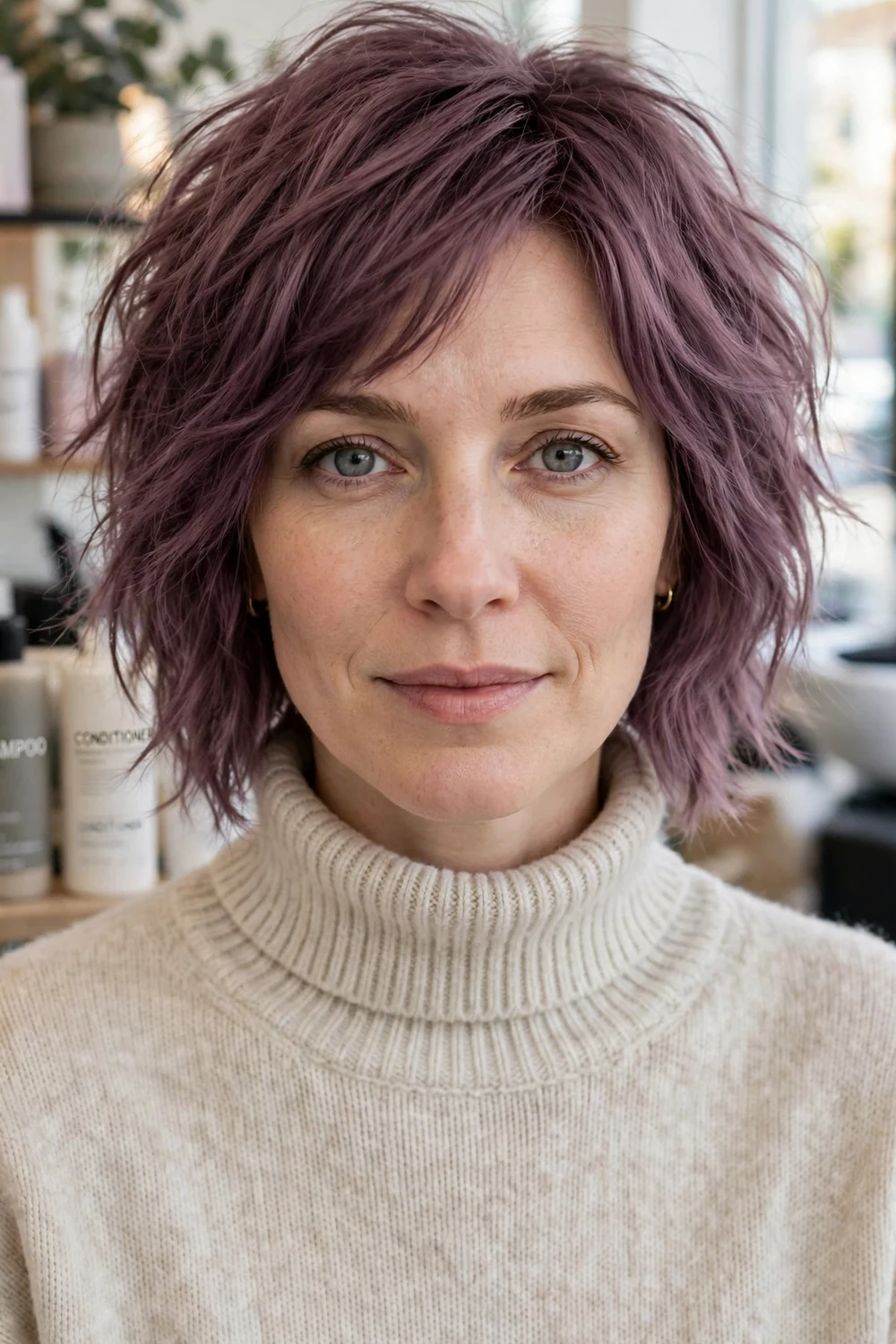
Dusty plum mutes the family down with mauve and a touch of gray, giving a smoky, low-saturation plum. It reads softer than classic plum at the same depth and suits people who want plum to feel understated at work. Cool and neutral skin tones carry the muted tone best.
The dusty effect needs a lightened or naturally light base, since gray-mauve pigment disappears over dark hair. On blonde and light brown hair it goes on as a toner over highlights or a full light base. It fades toward a pale mauve and then out, so plan a toner refresh every four weeks to hold the smoky quality.
Try this: ask for dusty plum as a toner over balayage you already have. The light and dark pieces take the toner unevenly, which suits the dusty, lived-in finish.
Difficulty: Medium to High · Cost: $$$ (salon)
16. Pastel Plum

Pastel plum is the palest shade in the family: a soft lilac-plum wash with the saturation turned right down. It keeps a hint of pink in the mix, which is what separates it from a plain lilac. Fair and cool skin tones suit it best, and it is a popular winter shade alongside the lighter options in the winter hair color ideas roundup.
Pastel plum has the strictest base requirement on this list. Hair needs lifting to a pale blonde first, evenly, or the pastel takes patchy and the darker areas read muddy. The color itself is a toner that fades within two to four weeks, so the upkeep is a standing toner appointment plus gentle washing at home.
Try this: test pastel plum on the underneath layer first. If the upkeep feels like too much, the hidden panel still gives you the shade in updos and braids with none of the full-head commitment.
Difficulty: High · Cost: $$$ (salon)
17. Bright Plum

Bright plum is the full-saturation version of the family: an electric plum that holds its intensity from root to tip. Short and medium lengths wear it best, since the even brightness is easier to keep uniform on less hair. Cool skin tones carry the intensity, and the shade photographs very true to how it looks in person.
Like magenta-plum, bright plum needs a pre-lightened base and regular toning, which puts it at the top of the difficulty range. It fades toward purple-plum, a graceful path that lets many wearers stretch the refresh to five weeks. Heat styling dulls this shade faster than washing does, so a heat protectant matters here.
Try this: book the lightening and the color as two appointments a week apart if your hair is dark and long. Splitting the process is gentler on the hair and gives a more even bright result.
Difficulty: High · Cost: $$$ (salon)
18. Soft Plum Gloss

A soft plum gloss lays a sheer plum tint over your existing color with a clear gloss finish. On brown hair it adds a plum reflection. On blonde or highlighted hair it tints the whole head a gentle plum. Nothing is lifted and nothing is permanent, which makes this the standard trial run before a full plum commitment.
The gloss fades evenly over four to six weeks and leaves no regrowth line, since there is no root color to grow out. The appointment itself is short, often under an hour, and the cost sits at the bottom of this list. The trade-off is depth: a gloss can tint dark hair, but it cannot make dark hair look mid-tone plum.
Try this: time a plum gloss two weeks before a big event. The tint is at its richest in the first few weeks, and any regret fades out on its own by the following month.
Difficulty: Low · Cost: $ (salon)
19. Plum Balayage on Brunette
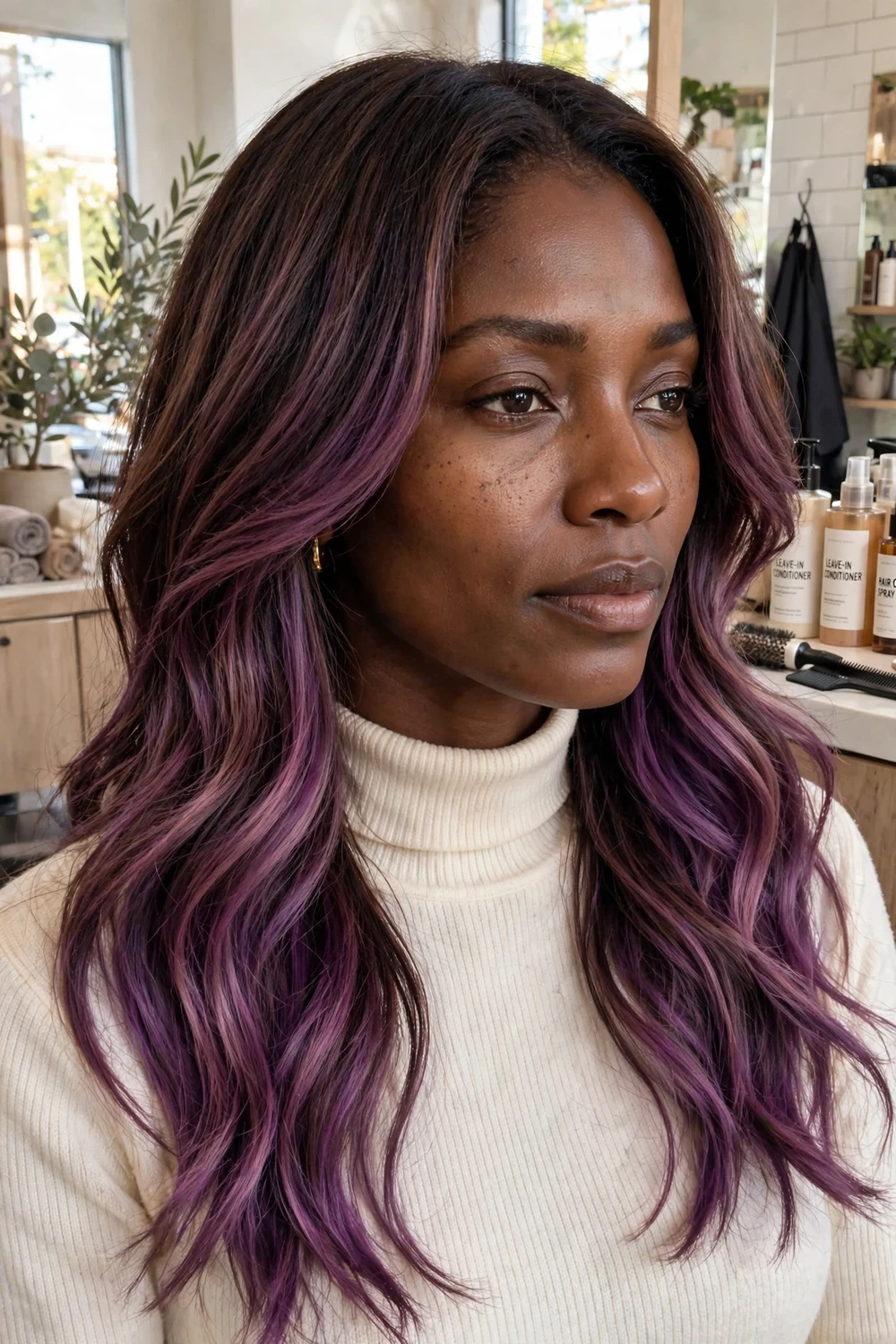
Plum balayage hand-paints plum through the mid-lengths and ends of a brunette base, leaving the roots natural. The painted placement keeps the brightest plum where light lands, so the color looks dimensional rather than flat. It suits almost every skin tone because the face-framing area stays close to your natural shade.
Most brunettes need lightening only on the painted pieces, which limits damage and keeps the appointment shorter than a full-head lift. The grow-out is the main draw: with no root line, visits stretch to eight to ten weeks, with a plum toner at the halfway point to refresh the painted sections.
Try this: ask for the balayage placed a little higher on one side of the part. The slight asymmetry looks natural and keeps the plum visible when you wear your hair down.
Difficulty: Medium · Cost: $$$ (salon)
20. Berry Plum Balayage
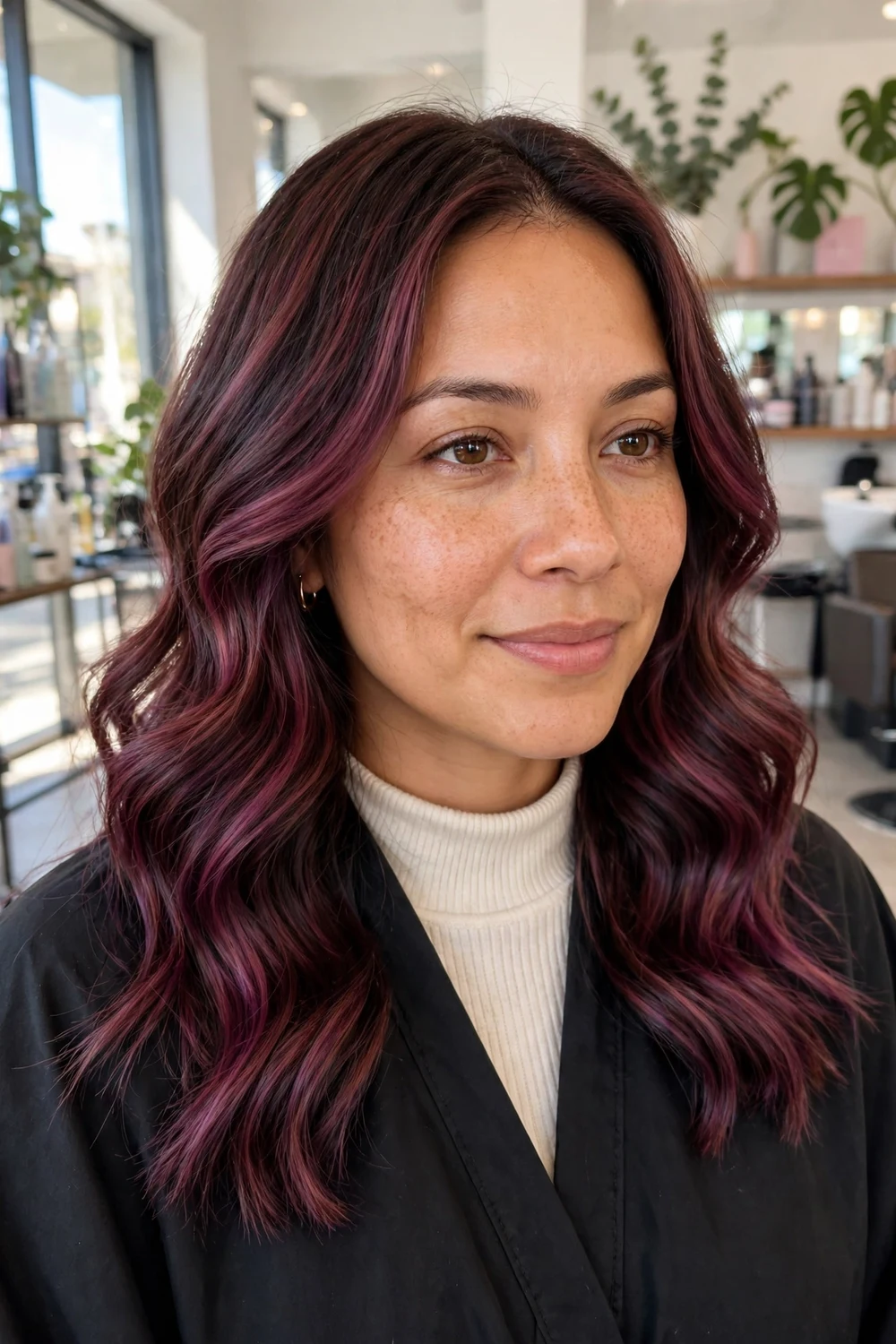
Berry plum balayage uses the same painted technique with a warmer, berry-toned plum. The berry pieces peek through a darker base and show most when the hair moves, so this version suits anyone who wants the color to appear and disappear through the day. Warm and medium skin tones get the most from the berry warmth.
The painted pieces are lightened, toned berry-plum, and blended at the root. Berry tones fade faster than cool plums, so expect the pieces to soften toward a rose-brown by week six. Because the base stays untouched, that fade still looks intentional rather than grown out.
Try this: keep the berry pieces off the very front hairline if your workplace is formal. The color then shows mainly in the lengths, and an updo can hide most of it when needed.
Difficulty: Medium · Cost: $$$ (salon)
21. Plum Ombre
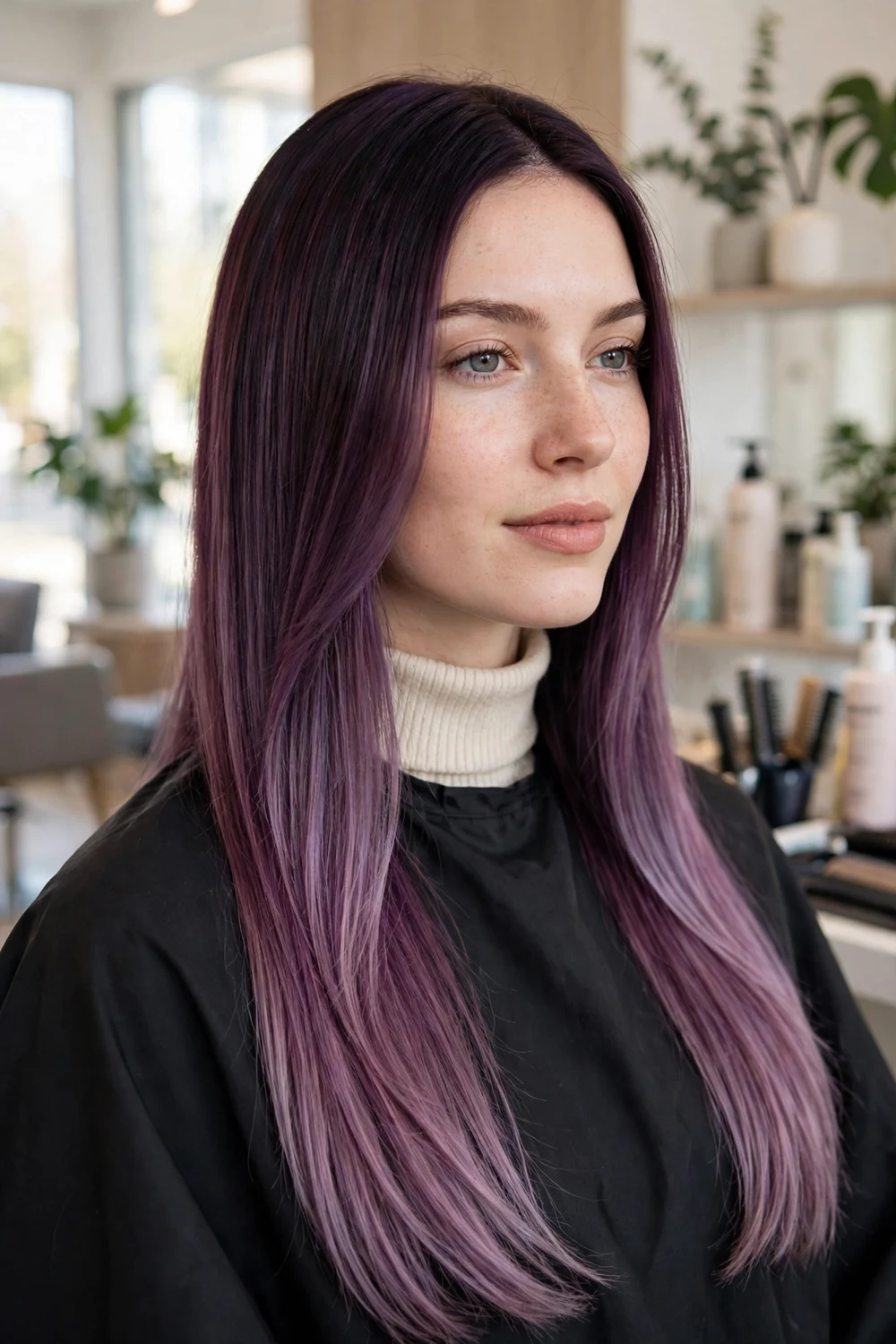
Plum ombre runs a dark root, natural or deep plum, into clearly lighter plum ends with a gradual blend between them. The contrast between root and ends is the point of the look, so it suits long hair best, where the gradient has room to develop. This is the one ombre entry on this list, included because the shade shift from dark plum to light plum is a plum story in itself.
The ends need lightening to reach the lighter plum, while the roots need little or no work. Upkeep sits at the ends only: a toner for the light section every five to six weeks, and trims to keep the lightened ends healthy. Root appointments can stretch for months.
Try this: ask for the blend to start lower, around chin level on long hair. A lower start keeps the look current for longer as your hair grows, since the gradient moves down with it.
Difficulty: Medium to High · Cost: $$$ (salon)
22. Plum Color Melt
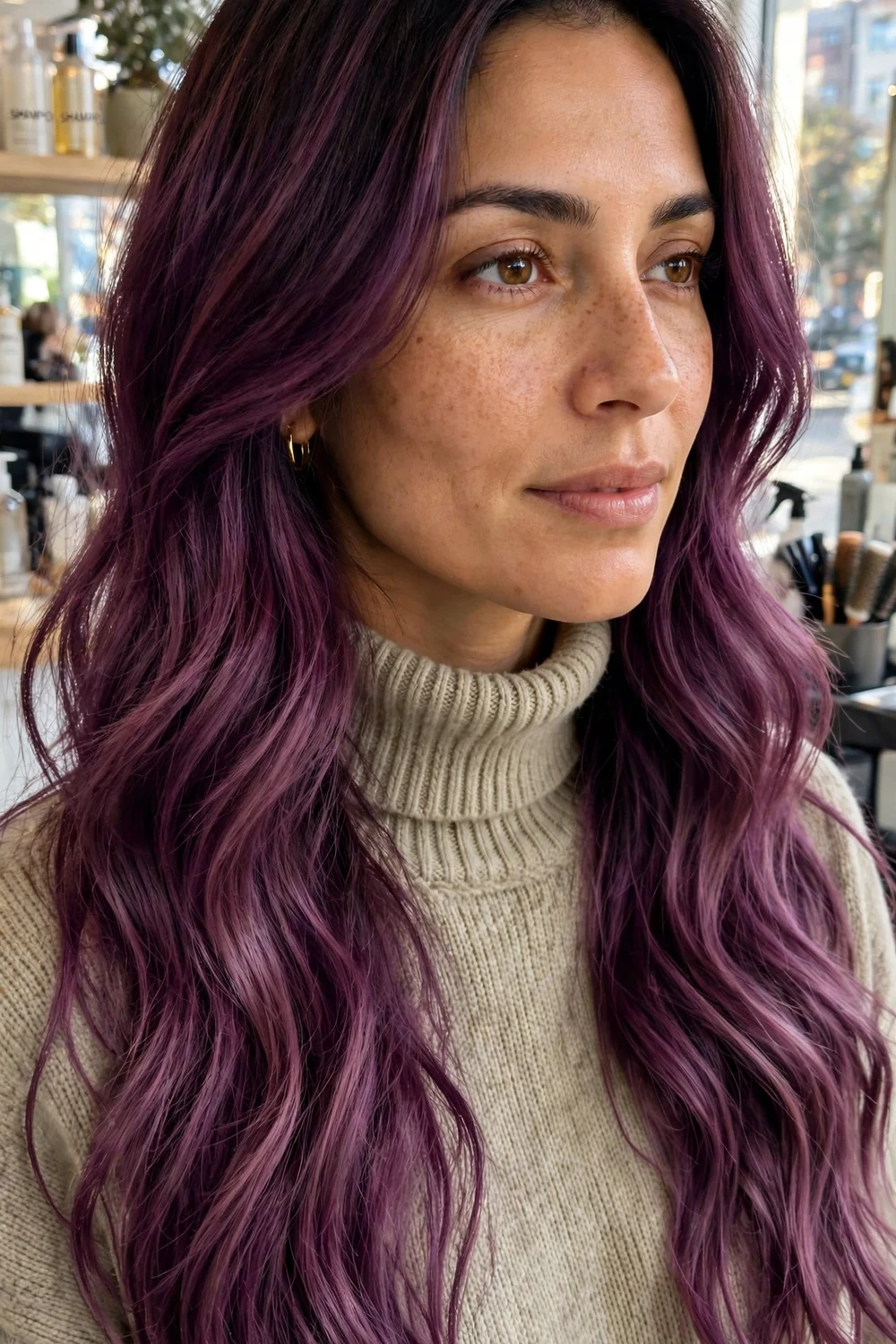
A plum color melt blends two or three plum depths down the hair with no visible line between them: a dark root shade, a deep plum through the mid-lengths, and a slightly lighter plum at the ends. Compared with ombre, the shift is smaller and the finish is smoother, which suits anyone who wants movement in the color without obvious contrast.
Melts are usually built with permanent color at the root and demi-permanent shades through the lengths, so many dark bases need no lightening at all. The soft boundaries hide regrowth well, and the refresh is a lengths toner rather than a full recolor. Expect eight weeks or more between full appointments.
Try this: choose melt shades from the same undertone side, all cool or all warm. Mixing a cool root with warm ends creates a muddy middle section where the two meet.
Difficulty: Medium · Cost: $$ (salon)
23. Plum Highlights
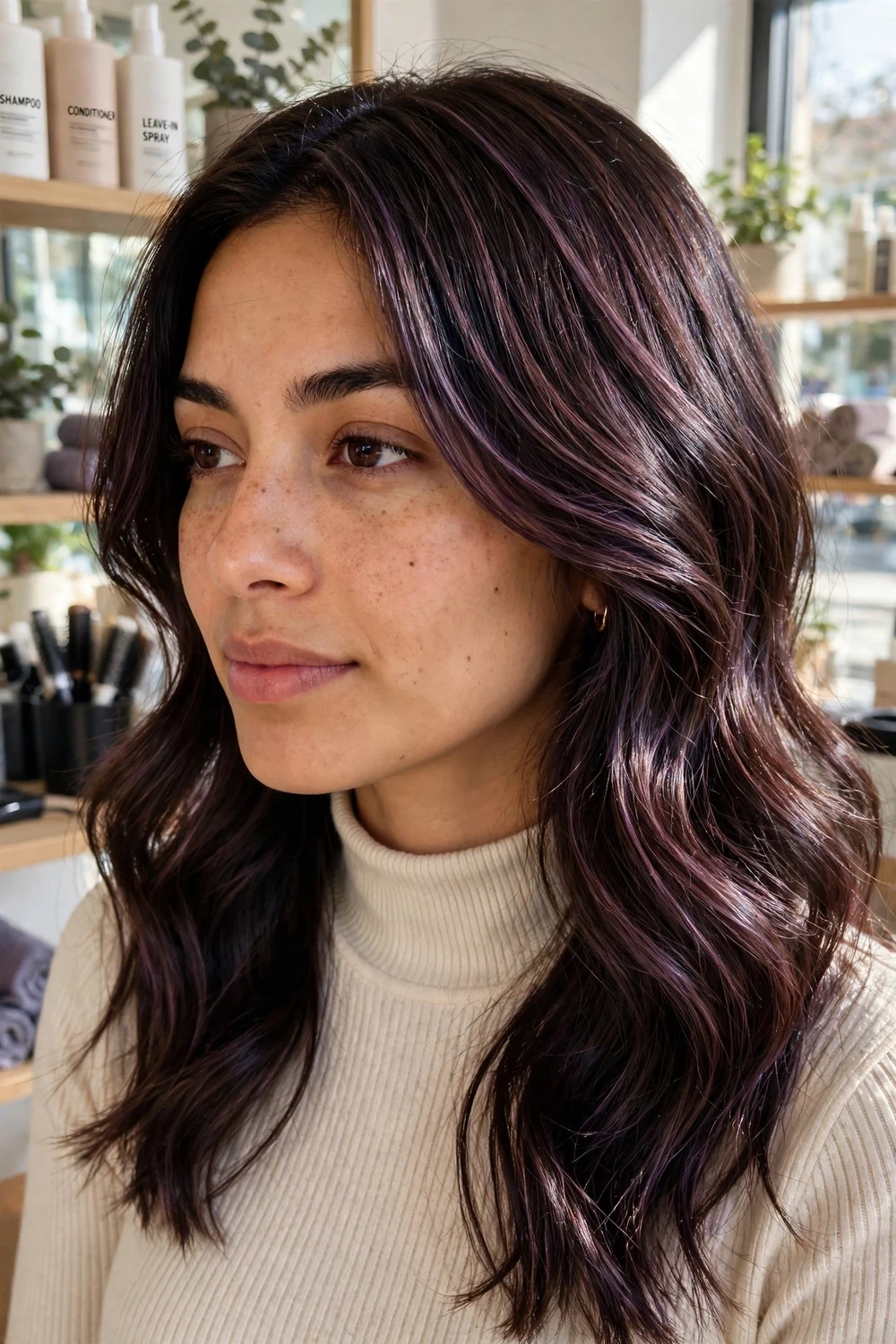
Plum highlights weave fine plum strands through a darker base, either scattered across the whole head or concentrated where you want the color to show. The base color does most of the visual work, and the plum reads as flashes of color in movement and light. It is the most adjustable idea on this list: a few foils read subtle, a full head reads bold.
Highlighted pieces are lightened and toned plum, so there is some lightening involved, but the untouched base keeps overall damage low. Plum toner on highlights fades in about five weeks, while the lightened strands stay in place and can be re-toned in a short visit. Regrowth is soft because the highlights start slightly off the root.
Try this: start with a partial highlight, top and sides only. If you want more plum after living with it, the back can be added at the next appointment for the same total cost spread over two visits.
Difficulty: Medium · Cost: $$$ (salon)
24. Plum Curls

Plum curls place dimensional plum through curly hair, with the lightest pieces on the top layers and around the face, where curls catch light first. Most plum roundups show straight or wavy hair, but curls take the color well when it is painted curl by curl rather than foiled flat. Deep and medium skin carry the rich plum depth especially well.
Curly hair runs drier than straight hair, and color adds to that dryness, so the care plan matters as much as the shade: weekly deep conditioning, gentle diffusing, and minimal heat. The dimensional placement grows out softly because the curl pattern hides regrowth lines, which stretches appointments to eight weeks or more.
Try this: book with a colorist who cuts and colors curly hair dry, so the plum lands on the curls as you actually wear them.
Difficulty: Medium · Cost: $$$ (salon)
25. Dimensional Plum Bob

A dimensional plum bob pairs a chin to shoulder length cut with two or three plum tones layered through it, so the color shifts between violet and wine as the head moves. Short hair shows color shifts clearly because there is less length to dilute them. The look suits anyone who styles their hair smooth or in soft waves most days.
The color work is a base plum plus a handful of lighter and deeper pieces, which is quicker on short hair than on long. The trade-off is root visibility: on a bob, regrowth sits close to the face and shows sooner, so touch-ups land at five to six weeks. The shorter length keeps each appointment shorter in turn.
Try this: keep one plum tone clearly dominant, around two thirds of the hair. Equal amounts of three tones can read patchy on a short cut.
Difficulty: Medium · Cost: $$ (salon)
26. Plum Money Piece

A plum money piece colors only the two front sections of hair in a clear plum, leaving the rest of the head in your natural or base shade. The front placement puts the color right against the face, so a small amount of plum has an outsized effect. It works on straight, wavy, and curly hair, and on almost any base color.
Only the front sections are lightened and colored, which keeps the cost and the damage low. The pieces fade faster than a full head of color because they get the most washing and styling attention, but re-toning two sections is a short, low-cost visit. It is also easy to grow out or color back if you change your mind.
Try this: match the money piece depth to how bold you want the contrast. A deep plum front on dark hair reads subtle, while a magenta-plum front on the same base reads bold, with identical upkeep.
Difficulty: Low to Medium · Cost: $$ (salon)
27. Plum for Gray Blending
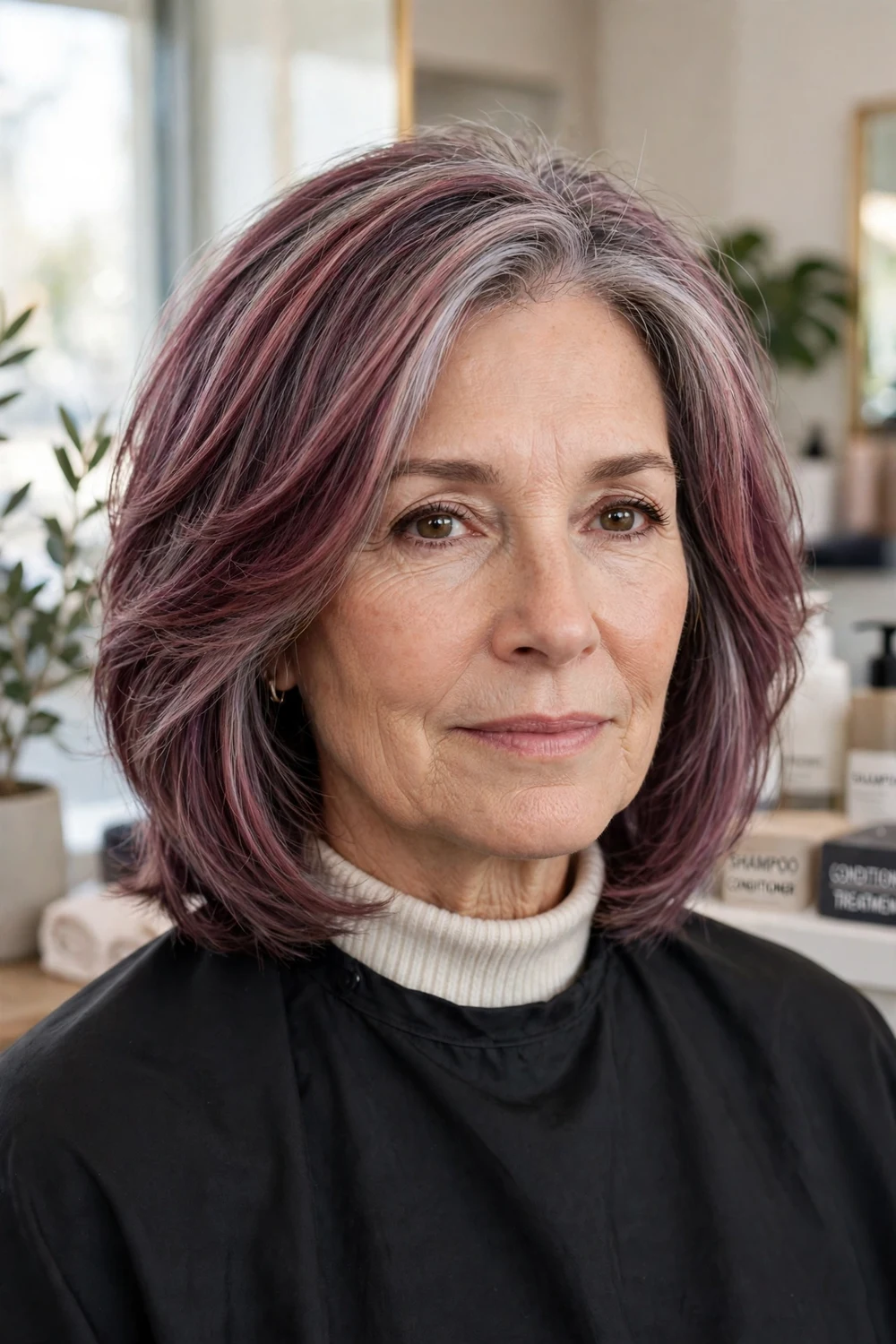
Plum is a practical gray-blending color. Soft plum and berry tones placed through silver roots blur the line between colored and gray hair, so new growth reads as part of the color rather than a stripe against it. Demi-permanent formulas do most of this work, since they stain the gray rather than covering it flat.
The grow-out is the selling point. Where solid dye leaves a hard line at four weeks, a plum blend stays soft for eight weeks or more, and each appointment simply rebalances the purple and berry tones. It suits cool and neutral skin tones and anyone moving away from full coverage color.
Try this: ask for blending, not full coverage, at the consultation. The goal is a soft mix of plum and silver, and the formula differs from a standard root color.
Difficulty: Low to Medium · Cost: $$ (salon)
Frequently Asked Questions
What color is plum hair, exactly?
Plum hair is a purple-red color, darker and more muted than violet and cooler than burgundy. The balance shifts by shade: eggplant and purple-plum lean purple, plum wine and burgundy-plum lean red, and classic plum holds the two in near-equal parts. On dark hair, plum often shows as a colored sheen in bright light rather than an obvious fashion shade.
Do I need to bleach my hair to get a plum color?
It depends on the shade and your starting color. Deep plum, plum over black hair, chocolate plum, burgundy-plum, and plum wine can usually go over dark bases with little or no lightening, although the result reads darker and subtler. Bright plum, magenta-plum, dusty plum, and pastel plum need a pre-lightened base to show their true color. Your colorist can confirm the lift you need in a consultation.
How long does plum hair color last?
All-over plum starts to fade visibly at four to six weeks, because red and purple pigments rinse out with every wash. Placed color lasts longer in practice: balayage, melts, and money pieces can go eight to ten weeks between refreshes since the grow-out is soft. Glosses fade out fully at four to six weeks and leave no line. Cool water, fewer washes, and a color-depositing conditioner stretch every version of the color.
Which plum shade suits dark skin tones?
Deep and saturated shades tend to suit dark skin best: deep plum, blackberry plum, purple-plum, and bright plum all hold enough pigment to show clearly and read rich against deep skin. Warm red-plum and mulberry plum also work well. The shades that can underwhelm are the sheer ones, a soft plum gloss or chocolate plum tint, which may show only faintly on dark bases.
How do I stop plum hair from fading so fast?
Wash less often, use lukewarm or cool water, and switch to a sulfate-free, color-safe shampoo. Add a color-depositing plum or purple conditioner once a week to replace the pigment that washing removes. Book a gloss or toner refresh at four to six weeks, use heat protectant before styling, and cover your hair in strong sun, since UV light fades purple and red pigments quickly.
Final Thoughts
Plum works because the family is wide enough to meet you where you are: a gloss over your current color if you want a trial run, a deep or classic plum if you want the core shade, or a balayage or money piece if you want the color with a soft grow-out. Pick by undertone first, then by the upkeep you will honestly keep, and the shade will hold. If you decide plum is one step too cool for you, the general fall hair colors guide lays out the warmer and neutral families side by side.

