

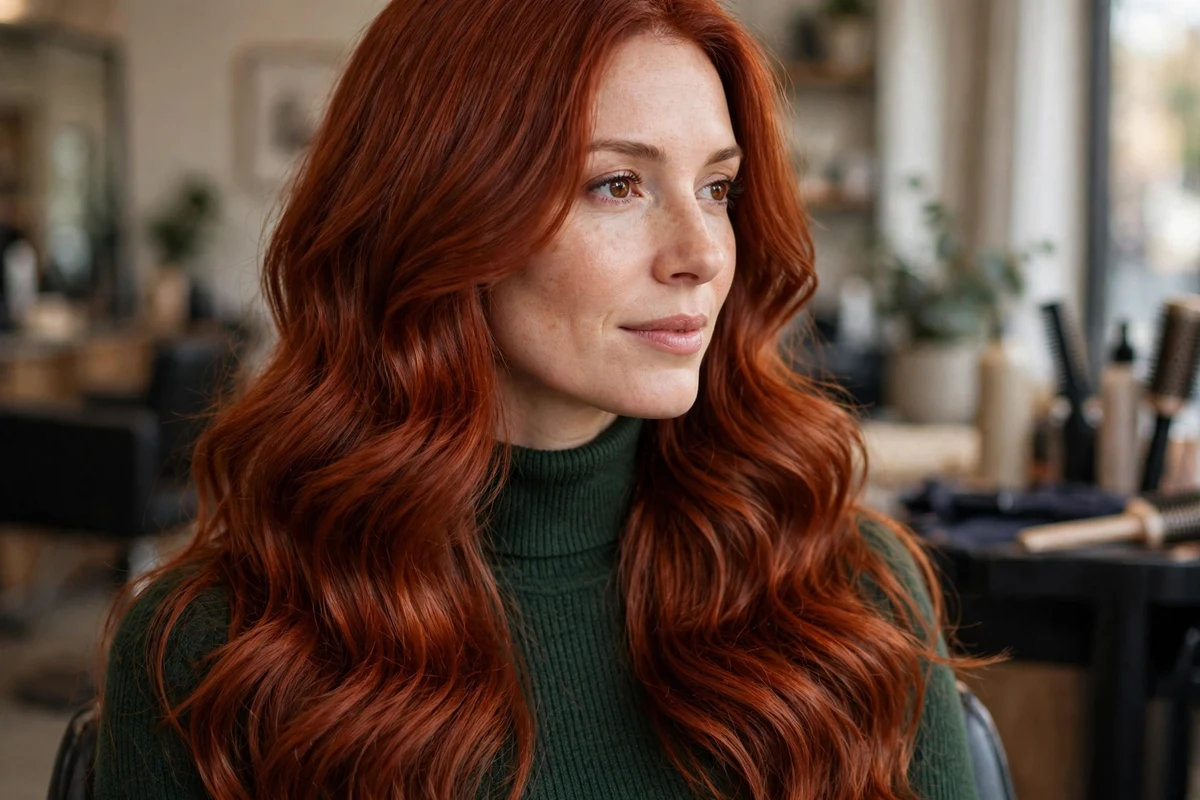
Red covers a wider range than any other hair color family I work with. At the light end there are strawberry blonde and copper blonde shades that warm up a blonde base in one gloss. At the deep end there are auburn, mahogany, and burgundy shades that add red to dark hair with no bleach at all. This roundup pulls that whole range into one place, so you can compare the soft, warm, bright, and deep reds side by side before you book.
The list below has 29 red hair color ideas and runs in a set order: light reds first, then the natural red-browns, the warm coppers, the bright and cool reds, and finally the placement and low-commitment routes. Every idea notes the undertone, the starting base it needs, and how fast that shade fades. If you want the seasonal version of this family, the fall red hair colors list covers the spiced, fall-leaning shades in depth.
Quick Takeaways
- Red runs from strawberry blonde at the light end to burgundy and violet red at the deep, cool end. Undertone matters more than depth when you choose.
- Warm reds have orange or gold in them: ginger, copper, cinnamon, and blood orange. Cool reds have blue, violet, or berry in them: cherry, ruby, crimson, and burgundy.
- Red pigment fades faster than brown or blonde pigment. Most all-over reds need a gloss plan at four to six weeks.
- Dark hair does not always need bleach. Auburn, mahogany, burgundy, wine red, and red gloss shades can sit over a brunette base.
- Balayage, highlights, and gloss routes grow out softly and stretch salon visits to eight weeks or more.
How to Pick Your Red Shade
Start with undertone. Warm skin suits the orange and gold side of the family: ginger, copper, copper bronze, and cinnamon chestnut. Cool skin suits the blue and violet side: cherry, ruby, red velvet, burgundy, and violet red. Neutral skin can move either way, so for neutral undertones the deciding factor is usually your starting base and how much upkeep you accept.
Then check your base. Blonde and light brown hair can reach almost every shade here in one session. Medium brown hair reaches the natural red-browns and coppers with a lift in some cases. Dark brown and black hair reach the deep half directly, and need lightening for the bright half. Red also fades on a predictable path, toward orange on warm shades and toward pink on cool shades, so pick a shade whose fade you can live with between visits.
| Shade family | Undertone | Best starting base | Upkeep |
|---|---|---|---|
| Light reds (strawberry blonde, rose gold, copper blonde) | Warm to neutral | Blonde to light brown | Medium |
| Natural red-browns (auburn, cinnamon, mahogany) | Warm to cool | Light brown to dark brown | Low to medium |
| Coppers (true copper, copper red, burnished copper) | Warm | Blonde to medium brown | Medium to high |
| Bright reds (true red, scarlet, cherry, ruby) | Neutral to cool | Lightened or light base | High |
| Deep cool reds (burgundy, wine, violet, raspberry) | Cool | Medium brown to black | Low to medium |
| Placement reds (balayage, highlights, gloss) | Any, matched to base | Any base | Low |
1. Strawberry Copper Melt
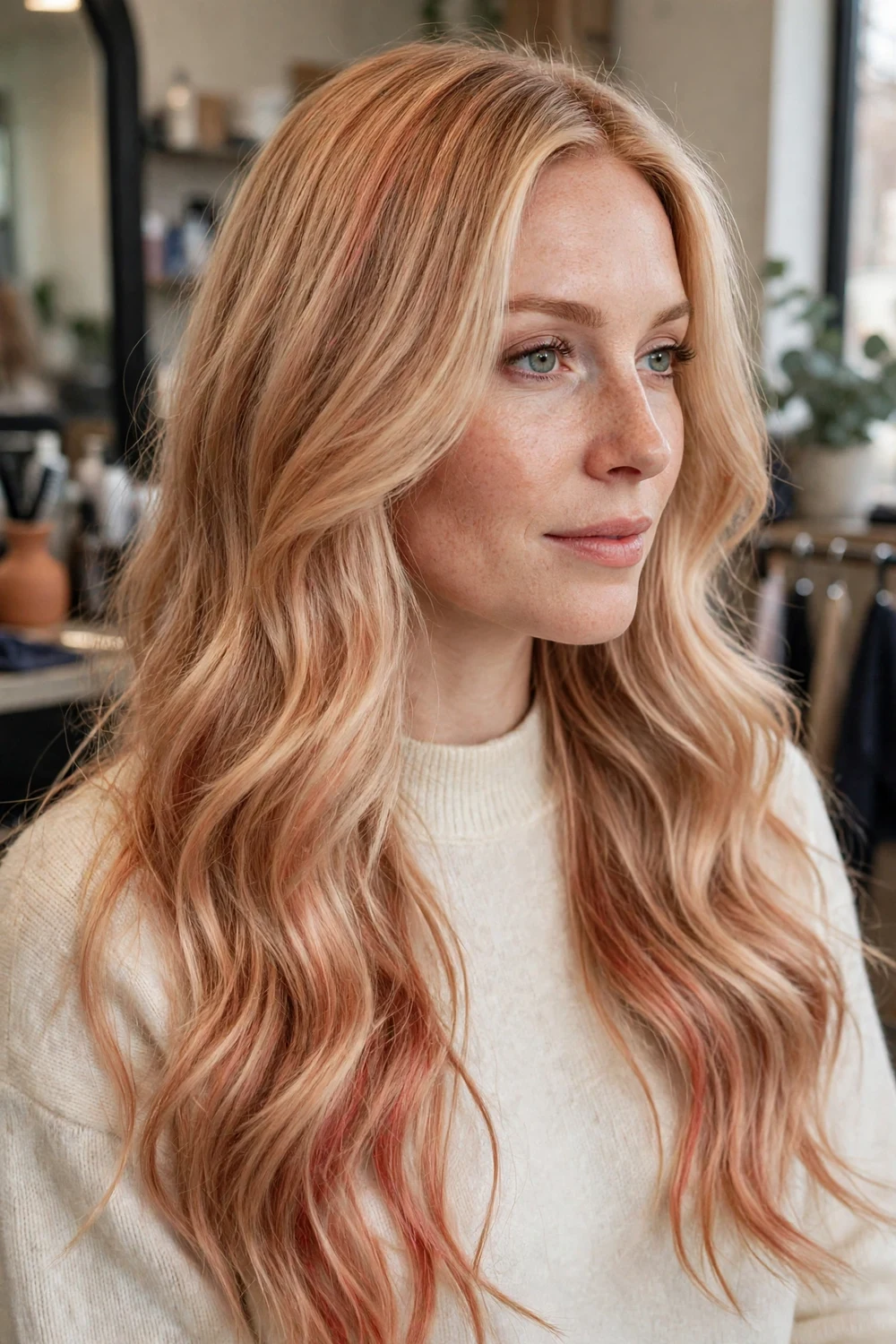
Strawberry blonde is the lightest red on this list. Blonde, peach, and a small amount of red sit together, so the result reads warm and soft in daylight and a little deeper indoors. It suits fair skin with warm or neutral undertones and light brown or blonde starting hair best.
Ask for a red gloss or demi-permanent color first if you are new to red. The tone fades evenly in about four to six weeks, and the regrowth line stays soft because the shade sits close to a light natural base.
Try this: Bring two photos, one in daylight and one indoors. Strawberry blonde shifts a lot between the two, and your colorist needs to see which version you mean.
Difficulty: Low to Medium · Cost: $$
2. Rose Gold Red

Rose gold red mixes copper, gold blonde, and a pink tone. It works on pre-lightened or naturally blonde hair, where the pink can show without a fight from a dark base. Fair and light medium skin with neutral undertones carry it well.
The pink part fades first, often within three to four weeks, leaving a warm copper blonde behind. A pink toning conditioner once a week slows that shift and keeps the shade in the rose family between salon visits.
Try this: Ask for the rose tone through the mid-lengths and ends only, with a slightly deeper root. The grow-out looks planned and the root service stays simple.
Difficulty: Medium · Cost: $$
3. Copper Blonde

Copper blonde sits between blonde and copper. Golden blonde carries the lightness, and copper adds warmth through the lengths. It is a good first step for blondes who want red warmth while keeping most of their lightness.
Light bases reach this shade in one session with a gloss or demi-permanent color. The copper tone needs a refresh at four to six weeks, because warm pigment on blonde hair washes toward pale gold as it fades.
Try this: Ask for copper ribbons around the face and a paler blonde at the very ends. The contrast makes the copper read clearly without pushing the whole head darker.
Difficulty: Medium · Cost: $$
4. Ginger Red

Ginger red is a warm orange-red with a natural look. It has less metallic shine than copper and more orange than auburn. Fair and medium skin with warm undertones suit it, and freckled skin pairs with it in a natural way.
A light or medium brown base can reach ginger in one color service. Dark brown hair needs lightening first, so plan for a longer appointment and a gloss at the same visit to set the tone.
Try this: Ask for a shine treatment at the end of the service. Ginger can look flat when the surface is dry, and gloss is what separates ginger red from light brown in photos.
Difficulty: Medium · Cost: $$
5. Light Auburn
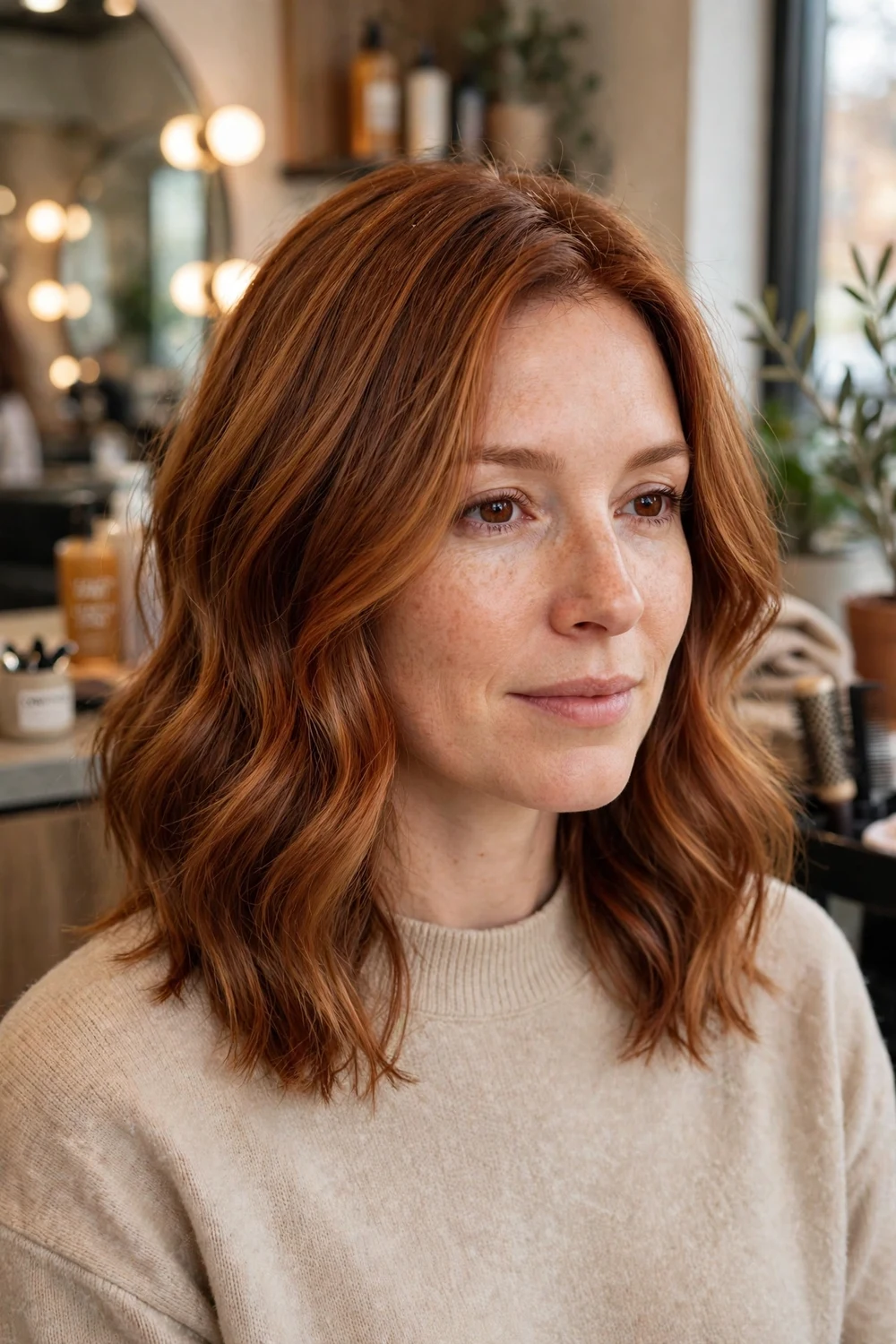
Light auburn blends light brown with a clear red tone. It warms up a brunette or dark blonde base without moving into bright red territory. Warm and neutral undertones suit it, and it is a low-risk first red for many people.
Most light and medium brown bases reach light auburn without bleach. The red tone fades toward warm brown over six to eight weeks, so the change stays gentle even when you stretch appointments.
Try this: Ask for a few finer red pieces around the face. A light face frame lifts the whole shade and tests how you feel about stronger red near your skin.
Difficulty: Low to Medium · Cost: $$
6. Classic Auburn

Classic auburn is an even mix of red and brown, worn all over. It looks natural in most light, suits medium and olive skin well, and gives brunettes a red change that still reads like their own hair, only warmer.
On a medium brown base this is often a single process color with no lightening. Keep a red-brown depositing conditioner at home, because the brown holds while the red leaves first, and the conditioner restores the balance.
Try this: Take a photo of your hair in shade before you book. Auburn is judged against your starting brown, and a shade photo shows your colorist your true base level.
Difficulty: Low to Medium · Cost: $$
7. Dark Auburn
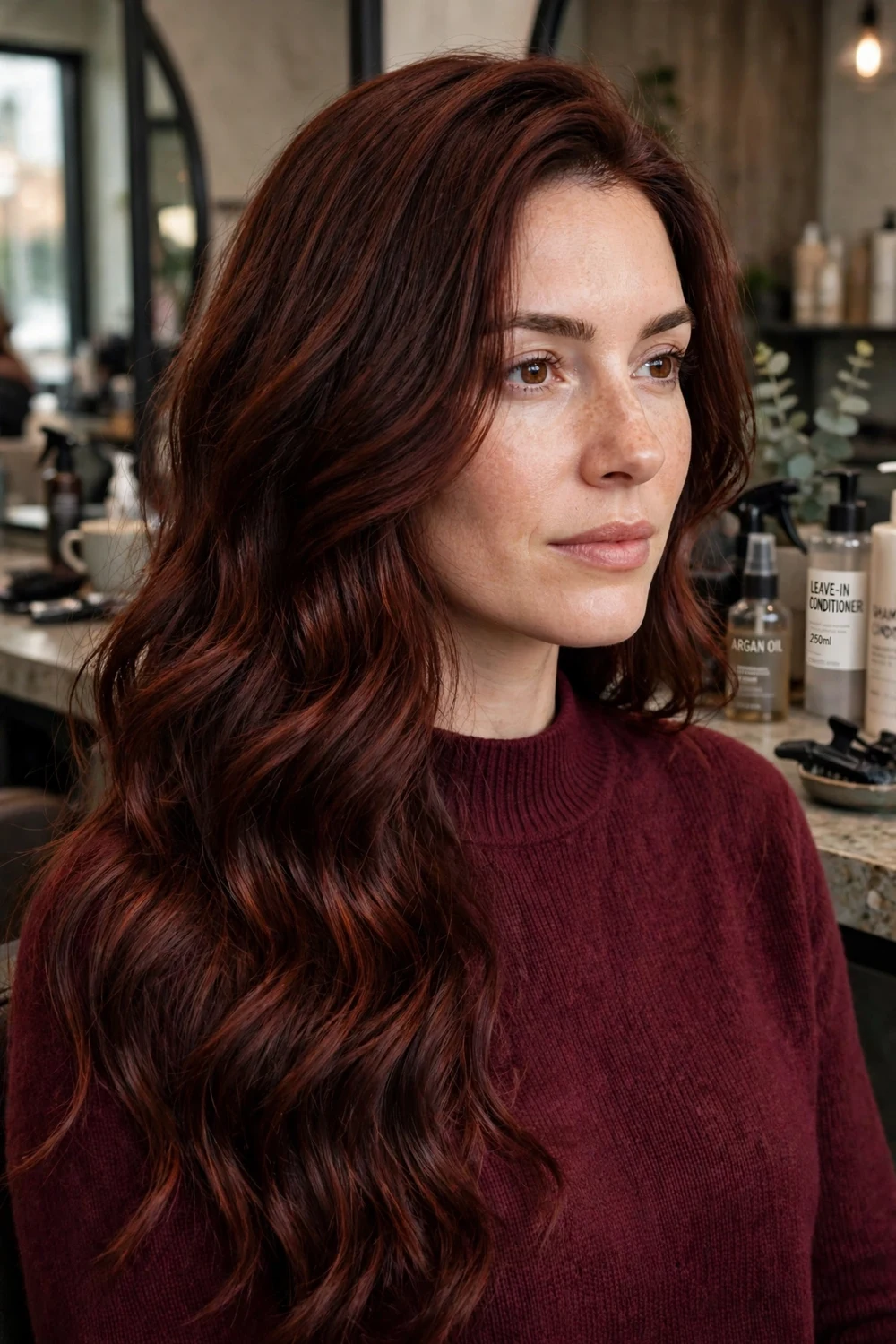
Dark auburn deepens the auburn mix with more brown and a deeper red. It suits medium, olive, and deep skin, and it is one of the easiest reds for dark brunettes because the base and the target shade sit close together.
No bleach is needed on most dark brown bases. The shade can look almost brown indoors and clearly red in sun, which is part of its appeal. A gloss every six weeks keeps the red visible in low light.
Try this: Ask for the red to sit a touch stronger through the mid-lengths. Ends hold color longer than roots, and a stronger middle stops the shade splitting into two tones.
Difficulty: Low to Medium · Cost: $$
8. Cinnamon Chestnut Red

Cinnamon chestnut red layers a warm spice tone over a chestnut brown base. Fine copper and red pieces run through the brown, so the hair moves between brown and red as it turns. Warm and neutral undertones suit it well.
This works as highlights or an all-over tint on a brown base. The placement version grows out softly for eight weeks or more, while the all-over version needs a root touch-up sooner but gives a stronger spice tone.
Try this: Ask your colorist to keep some of your natural brown showing at the root. That brown depth is what makes the cinnamon pieces read as dimension rather than a flat tint.
Difficulty: Low to Medium · Cost: $$
9. Garnet Red

Mahogany red is a deep brown with red and a small violet tone. It leans cooler than auburn, suits olive and deep skin, and gives dark hair a red shift that shows in daylight and in photos with flash.
Dark bases reach mahogany without lightening in most cases. The violet tone fades before the brown, so schedule a gloss at five to six weeks if you want to keep the cooler edge rather than a warm brown fade.
Try this: Check the shade against a cool-toned top at your consultation. Mahogany can clash with very warm clothing colors, and seeing that early helps you set the violet level.
Difficulty: Low to Medium · Cost: $$
10. True Copper

True copper is a clear orange-red with a metallic look. It is brighter than ginger and warmer than true red. Fair and medium skin with warm undertones carry it best, and green or hazel eyes stand out against it.
Blonde and light brown bases reach true copper in one session. Medium brown hair may need a lift first. Copper fades toward gold, so plan a gloss at four weeks and use a copper depositing mask between visits. For deeper and more seasonal copper shades, see the fall copper hair colors roundup.
Try this: Ask for a strand test if your hair has old brown dye on it. Old dye lifts unevenly, and copper shows every uneven patch.
Difficulty: Medium to High · Cost: $$$
11. Copper Red

Copper red pushes more red into copper, so the balance moves from orange-led to red-led. It suits warm and neutral undertones and gives a stronger result than true copper while keeping the same warm family.
This shade needs the base lifted to a clean light brown or blonde for the red to stay clear. On a base that is too dark, copper red turns muddy within a few washes. A red-copper gloss at four to five weeks holds the tone.
Try this: Decide the red to copper ratio with swatches at the salon. A small shift in that ratio changes the whole result, and swatches settle it faster than photos alone.
Difficulty: Medium to High · Cost: $$$
12. Burnished Copper

Burnished copper mixes copper red with rust and tan brown tones. The mix gives depth, so the shade suits medium and olive skin and works well on wavy and curly hair, where each curve catches a different tone.
The multi-tone mix is forgiving as it fades, because the rust and brown parts hold while the bright copper softens. Expect a tone refresh at six weeks rather than a full recolor.
Try this: Ask for the brightest copper on the top layers only. Curls and waves show the top layer most, so that is where the light-catching tone earns its place.
Difficulty: Medium · Cost: $$
13. Copper Bronze
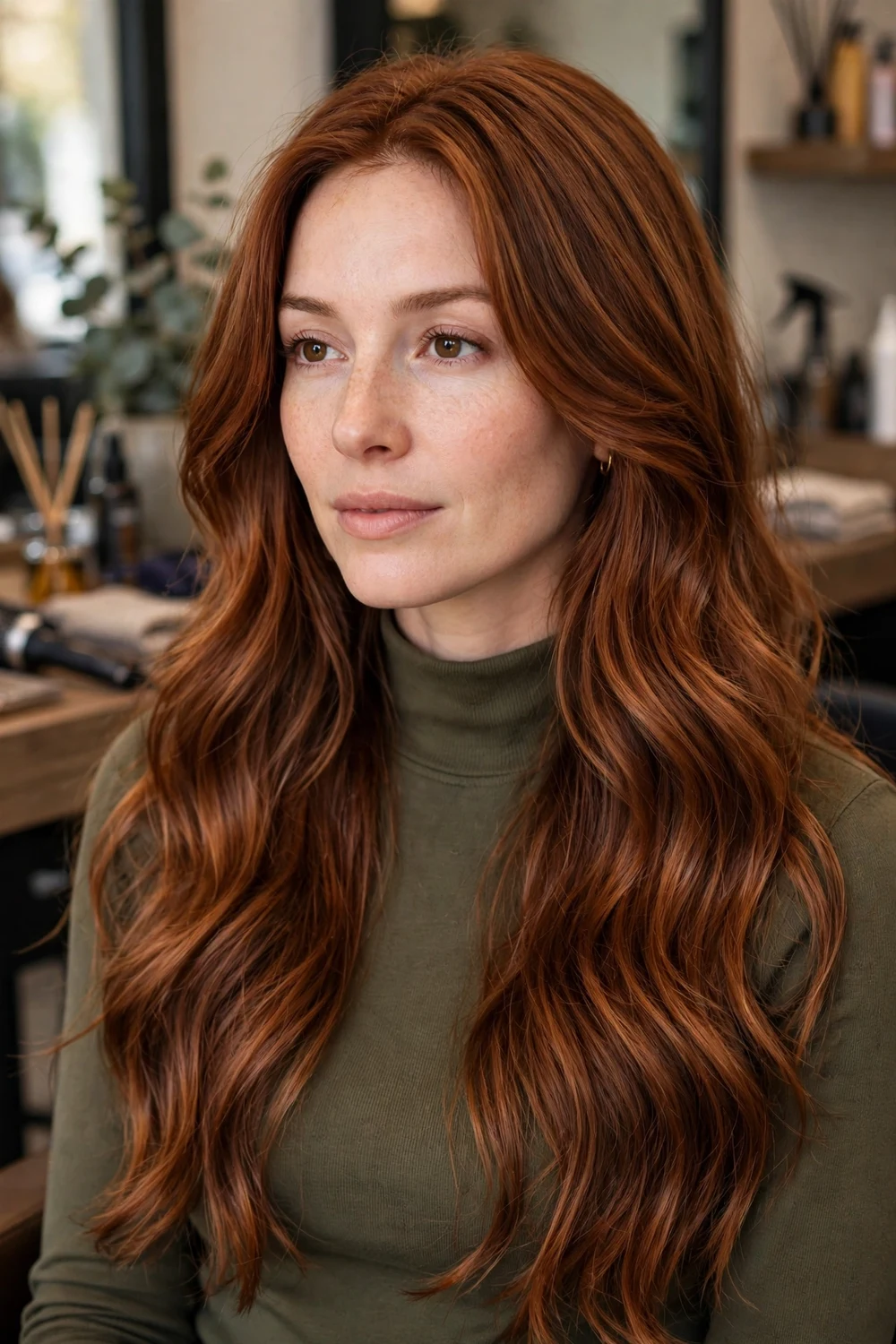
Copper bronze blends copper with a bronze brown. It is warmer than auburn and deeper than copper blonde, and it suits medium, olive, and deep skin with warm undertones. The brown in the mix makes it a steady year-round shade.
A medium brown base can take copper bronze as a balayage or all-over color. The balayage version needs less upkeep, with a gloss at eight weeks, while all-over color needs roots at five to six weeks.
Try this: Ask for bronze depth kept at the nape and underlayers. That hidden depth makes the copper on top look brighter by contrast.
Difficulty: Medium · Cost: $$
14. Blood Orange Red

Blood orange red blends copper, orange, and red into a bright, warm shade. It sits brighter than copper and softer than cherry red, and it suits fair and medium skin with warm undertones who want a clear statement shade.
Most bases need lightening to a pale level first, and the tone fades fast in sun and hot water. Cool rinses and a hat outdoors help. If you like the orange family in general, the orange hair color ideas list covers the full range beyond red.
Try this: Book this shade close to any event or photo date. Blood orange looks its strongest in the first two weeks, before the orange tone starts to soften.
Difficulty: High · Cost: $$$
15. True Red
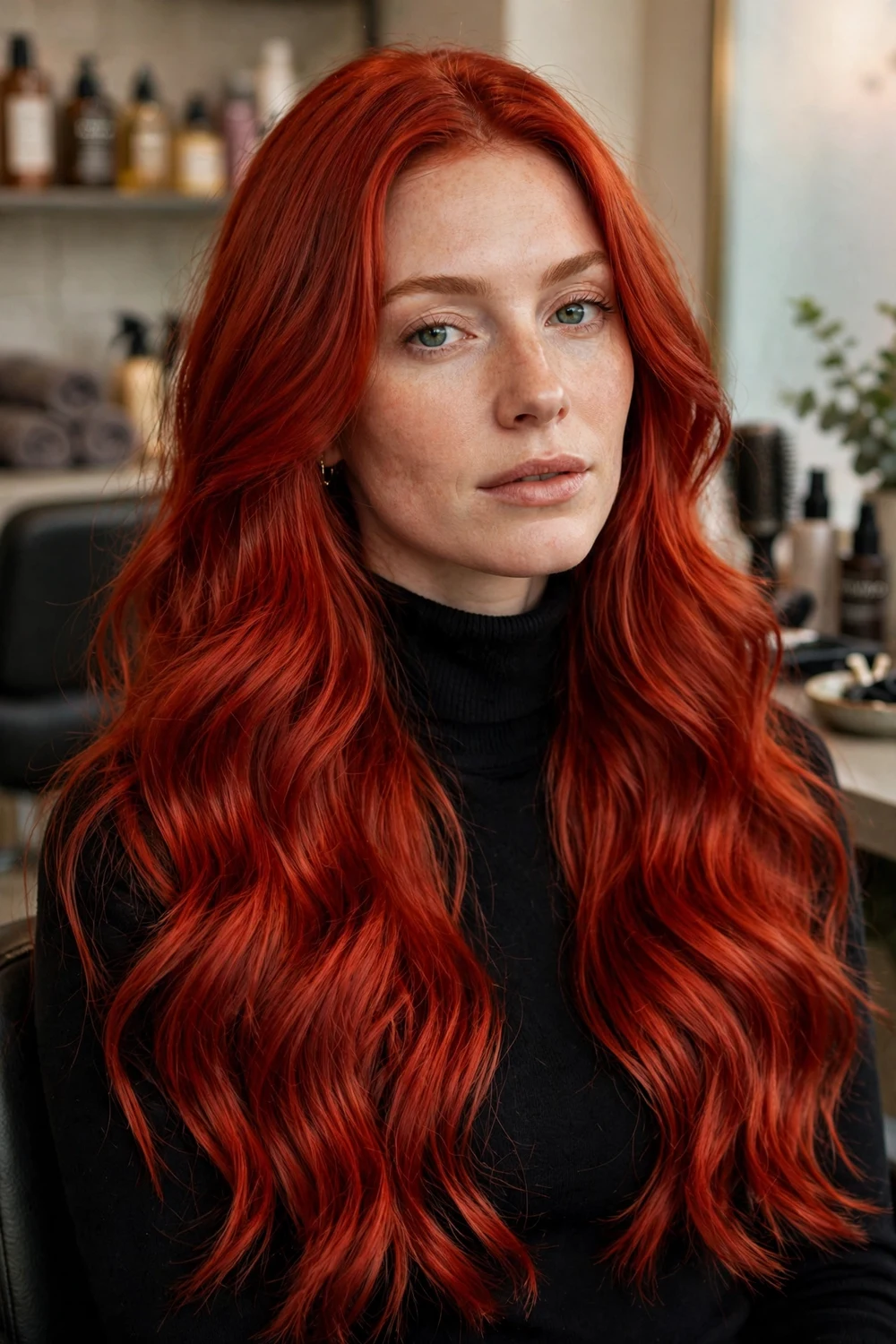
True red is the classic saturated red, with no strong orange or purple lean. It creates high contrast on fair skin and holds its own on deep skin. Cool, warm, and neutral undertones can all wear it, since the shade sits in the middle of the red family.
A clean, even base matters more here than with any other shade on this list. Patchy lift shows as patchy red. Plan for a gloss or toner refresh every four weeks, because true red loses its edge quickly as it fades toward pink-brown.
Try this: Ask for a full strand and porosity check before the first session. True red exposes uneven porosity as bands, and fixing that first saves a correction later.
Difficulty: High · Cost: $$$
16. Scarlet Red
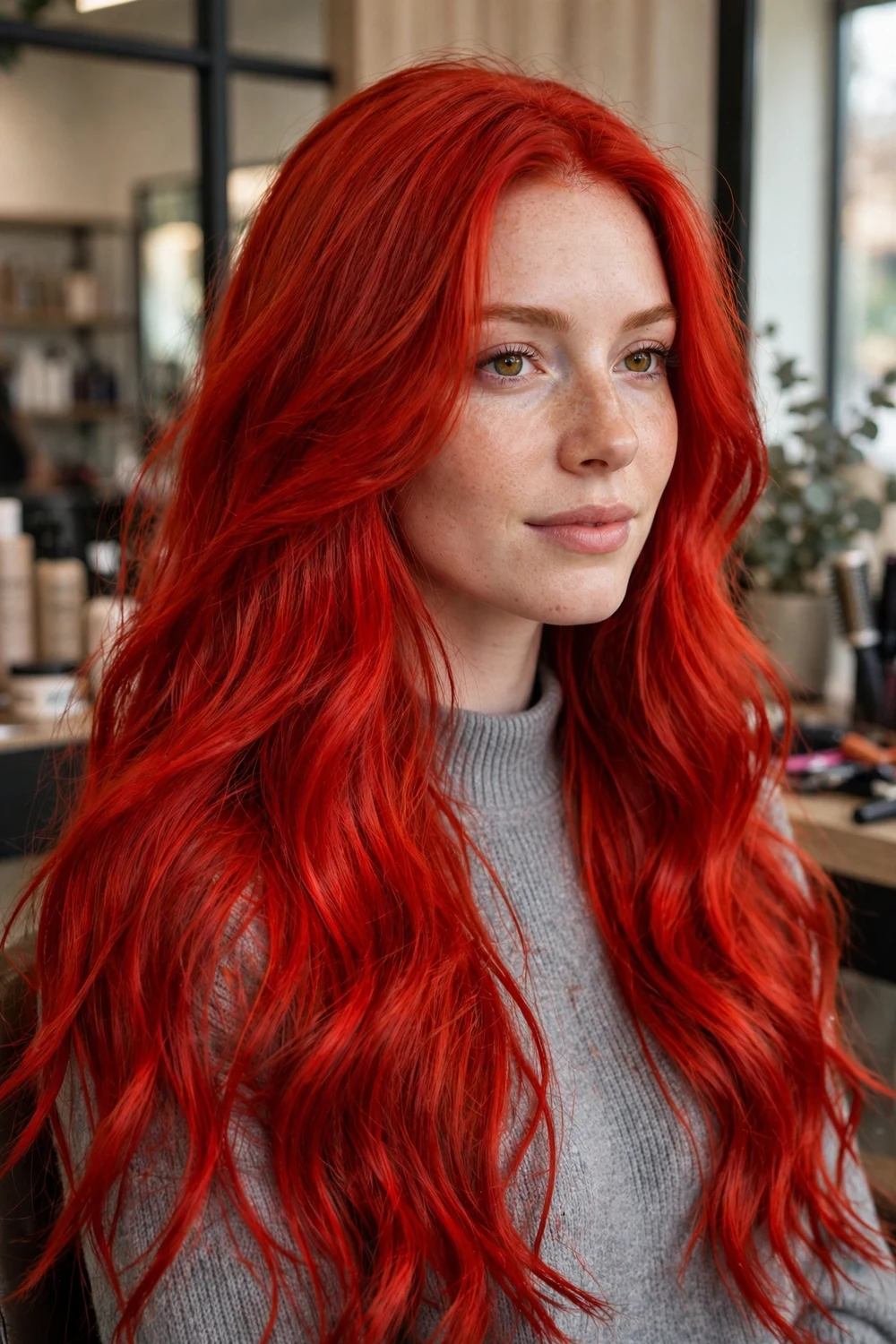
Scarlet red is a bright, clear red with a warm lean. It reads lighter and more vivid than true red and suits fair and medium skin, plus cool undertones that want warmth without orange. It is a shade that shows from a distance.
Lightening to a light base is standard, and the color needs a depositing conditioner at home from the first week. Wash with cool water and space out washes, because scarlet loses brightness with every hot wash.
Try this: Ask for scarlet a half level deeper than your target at the first appointment. It fades into your target within two weeks and stays there longer.
Difficulty: High · Cost: $$$
17. Cherry Red

Cherry red is a vivid red with a cool, blue-leaning tone. It suits fair, olive, and deep skin with cool or neutral undertones, and it gives dark bases a bright red option that still has depth at the root.
On dark hair, cherry red can be done as an all-over shade with lightening, or as strong highlights over a dark base for a lower commitment version. The cool tone fades toward pink, so a red gloss at four weeks keeps it in the cherry range.
Try this: Ask whether a permanent or demi-permanent formula fits your plan. Cherry as a demi fades softer and lets you change direction at the next season without a correction.
Difficulty: High · Cost: $$$
18. Ruby Red
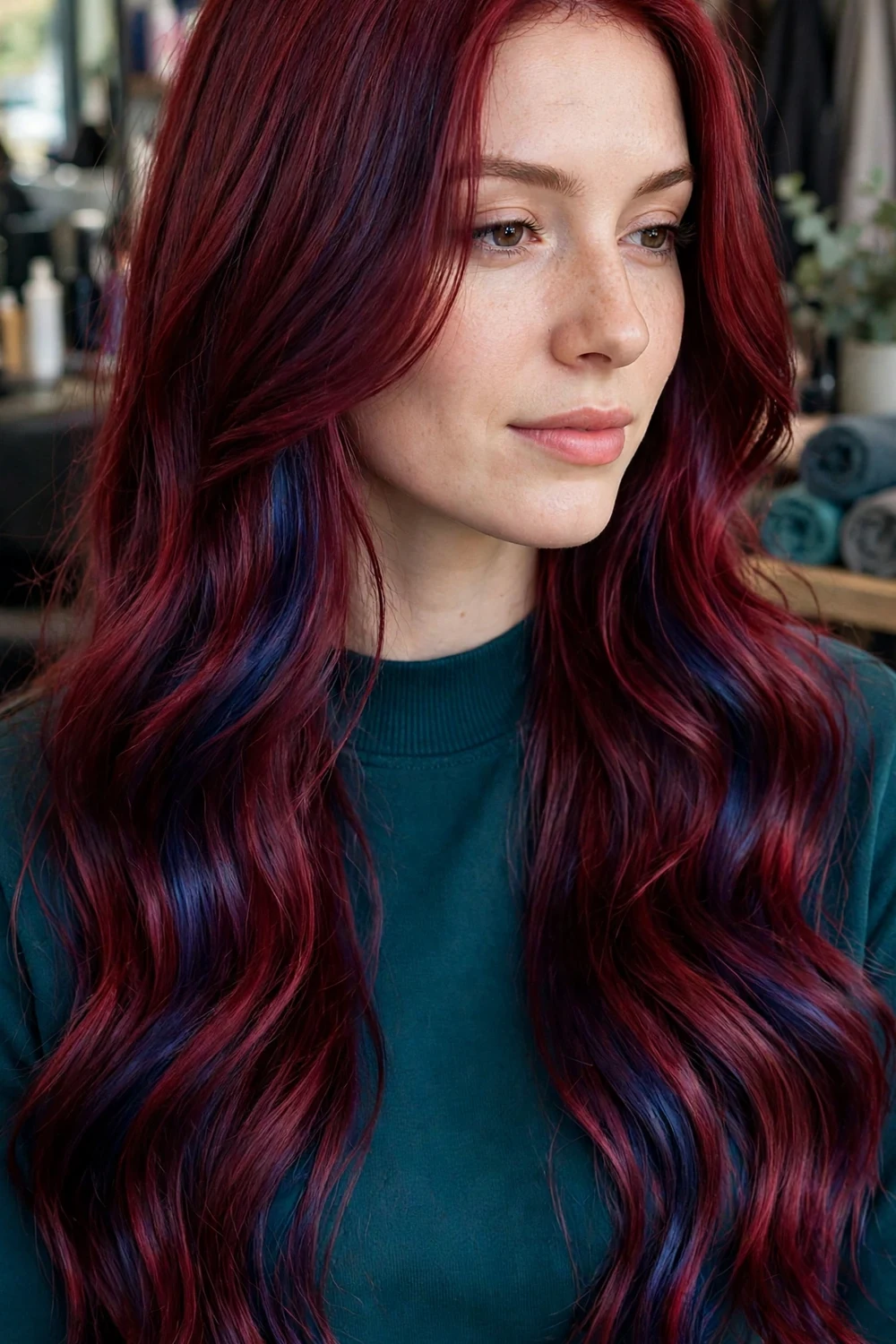
Ruby red is a jewel-toned red with a blue base and a hint of magenta. It suits deep skin and fair skin that suits high contrast, and it holds a rich look on long hair worn in loose waves, where the blue-red shifts in the light.
This shade needs an even, lightened base on dark hair and steady upkeep. A gloss at four weeks and a blue-red toning mask at home keep the jewel tone from sliding toward orange as underlying pigment shows through.
Try this: Style ruby red with smooth waves for the first photos. The blue-red tone reflects best on a smooth surface, and that is when you can judge the true shade.
Difficulty: High · Cost: $$$
19. Crimson Red
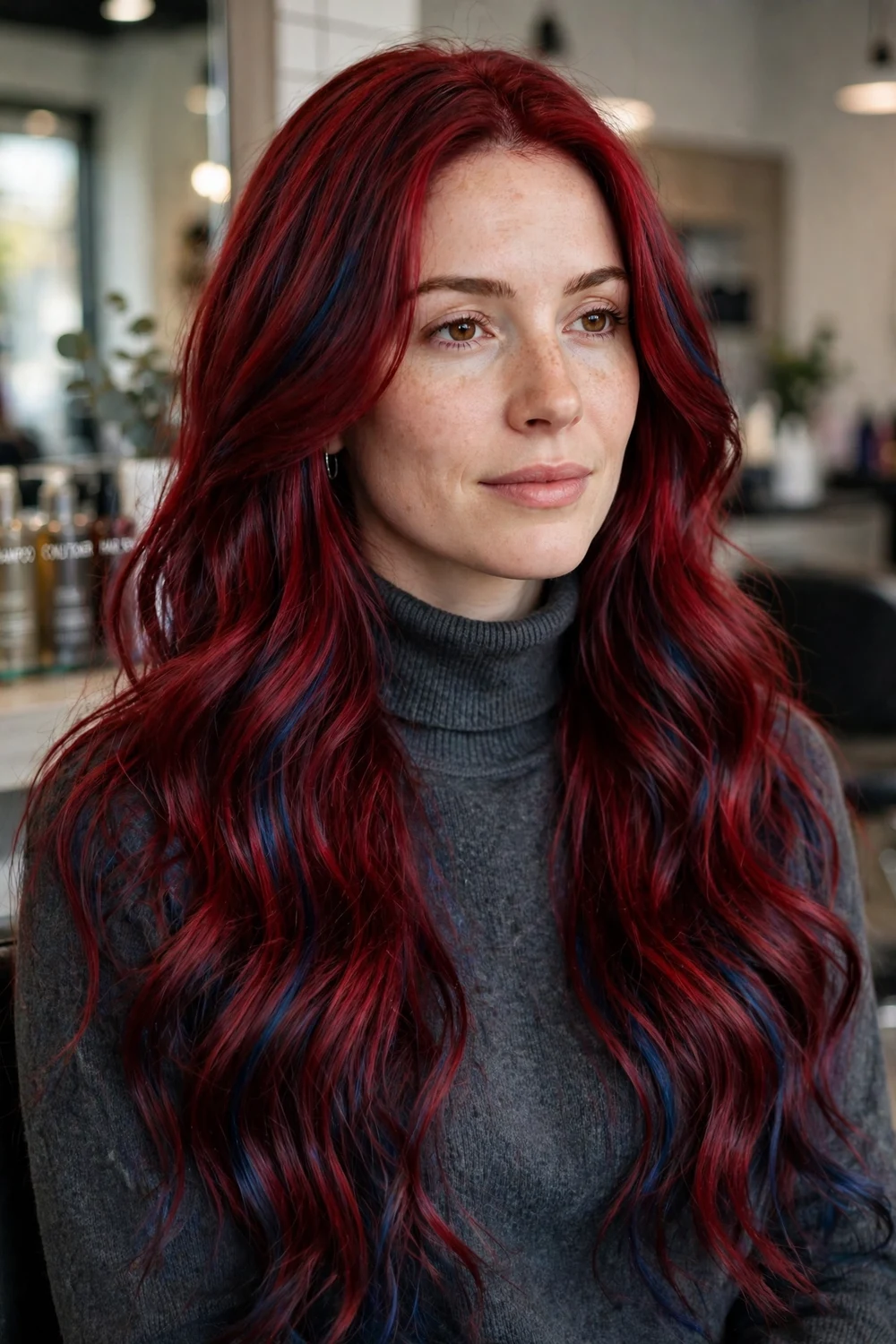
Crimson red is a deep, rich red with a small blue tone. It is darker than scarlet and more saturated than auburn. Fair, olive, and deep skin all suit it, and it is a strong choice for someone who wants bold red with more depth than brightness.
Medium and dark bases reach crimson with less lightening than the bright reds need. The depth hides regrowth better, so root visits can stretch to six weeks, with a gloss to restore the surface shine.
Try this: Ask for crimson through the lengths with your natural root smudged in. The smudge removes the hard root line and makes this deep shade one of the easier bold reds to grow out.
Difficulty: Medium to High · Cost: $$
20. Red Velvet
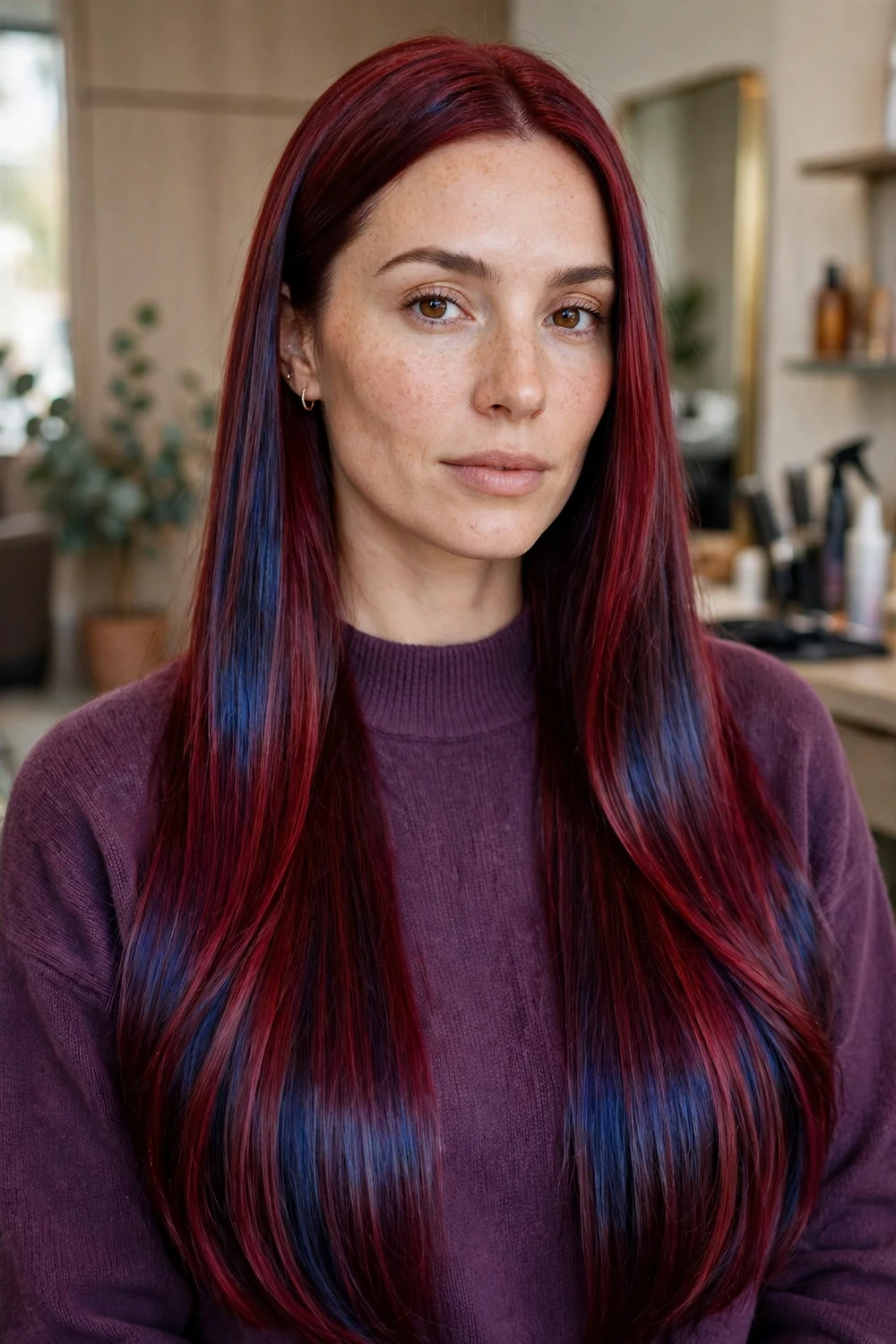
Red velvet is a deep red with berry and blue undertones, named for its smooth, dense look on sleek hair. It suits cool complexions across fair, olive, and deep skin, and it looks strongest worn straight or in a smooth blowout.
The berry tone is the first part to fade, leaving a plainer red behind. A berry-red gloss at four to five weeks restores the depth. Heat protection matters here, because heat dulls the smooth finish this shade depends on.
Try this: Ask for a smoothing gloss as the final step, even if your hair is straight. Red velvet is judged on surface shine as much as on the color itself.
Difficulty: Medium to High · Cost: $$
21. Burgundy Red

Burgundy red is a deep red with violet tones, close to red wine in color. It suits olive and deep skin with cool undertones, and it is one of the most requested reds for dark hair because the base and shade work together rather than against each other.
Most dark brown and black bases take burgundy without bleach, as a tint that shows red and violet in bright light. Upkeep is moderate, with a gloss at six weeks to bring back the violet tone as it fades.
Try this: Ask for burgundy a shade lighter than you think you want if your base is black. On very dark hair the result reads deeper than the swatch, every time.
Difficulty: Low to Medium · Cost: $$
22. Wine Red

Wine red is a rich red with warm brown under it, a step lighter and warmer than burgundy. It suits medium and deep skin and gives a softer result for anyone who finds burgundy too cool or too purple.
Wine red works over medium and dark brown bases with a single process color in many cases. The warm brown base means regrowth blends well, and a gloss at six to eight weeks is often the only upkeep between full colors.
Try this: Compare wine red and burgundy swatches side by side at the salon. The two sit close, and the warm versus cool choice is easier to make with both in your hand.
Difficulty: Low to Medium · Cost: $$
23. Violet Red
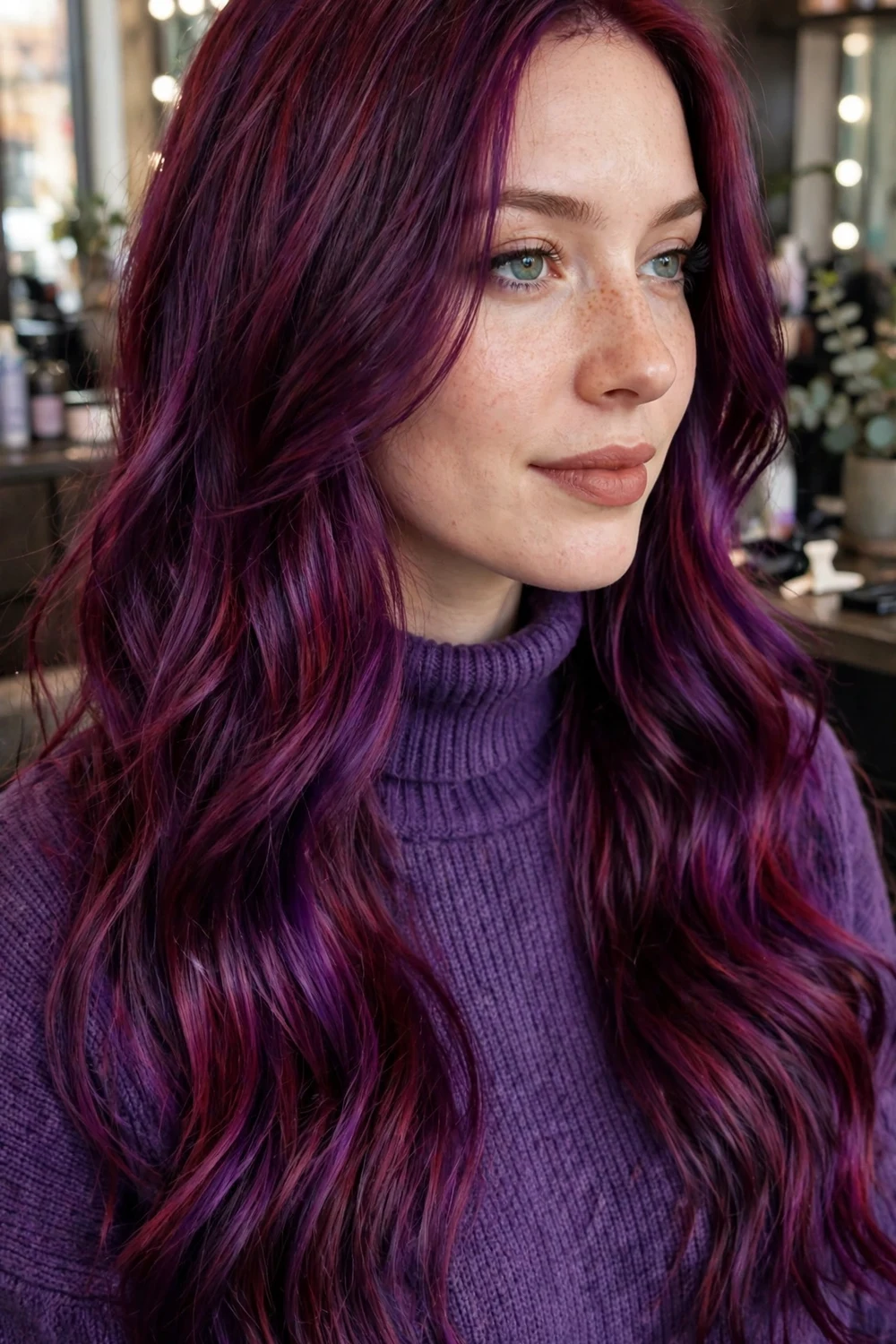
Violet red melts dark red with violet, so the hair shifts between the two as the light changes. It suits olive and deep skin with cool undertones and works as an all-over shade or as an ombre with the darkest tone at the root.
The violet part fades faster than the red, so the shade warms up over time unless you refresh it. A violet-red gloss at four weeks holds the balance. For the full purple-red family, see the plum hair color ideas roundup.
Try this: Ask for the violet kept strongest through the ends. Ends are seen against clothing and skin most, so that is where the color shift shows best.
Difficulty: Medium to High · Cost: $$$
24. Raspberry Red
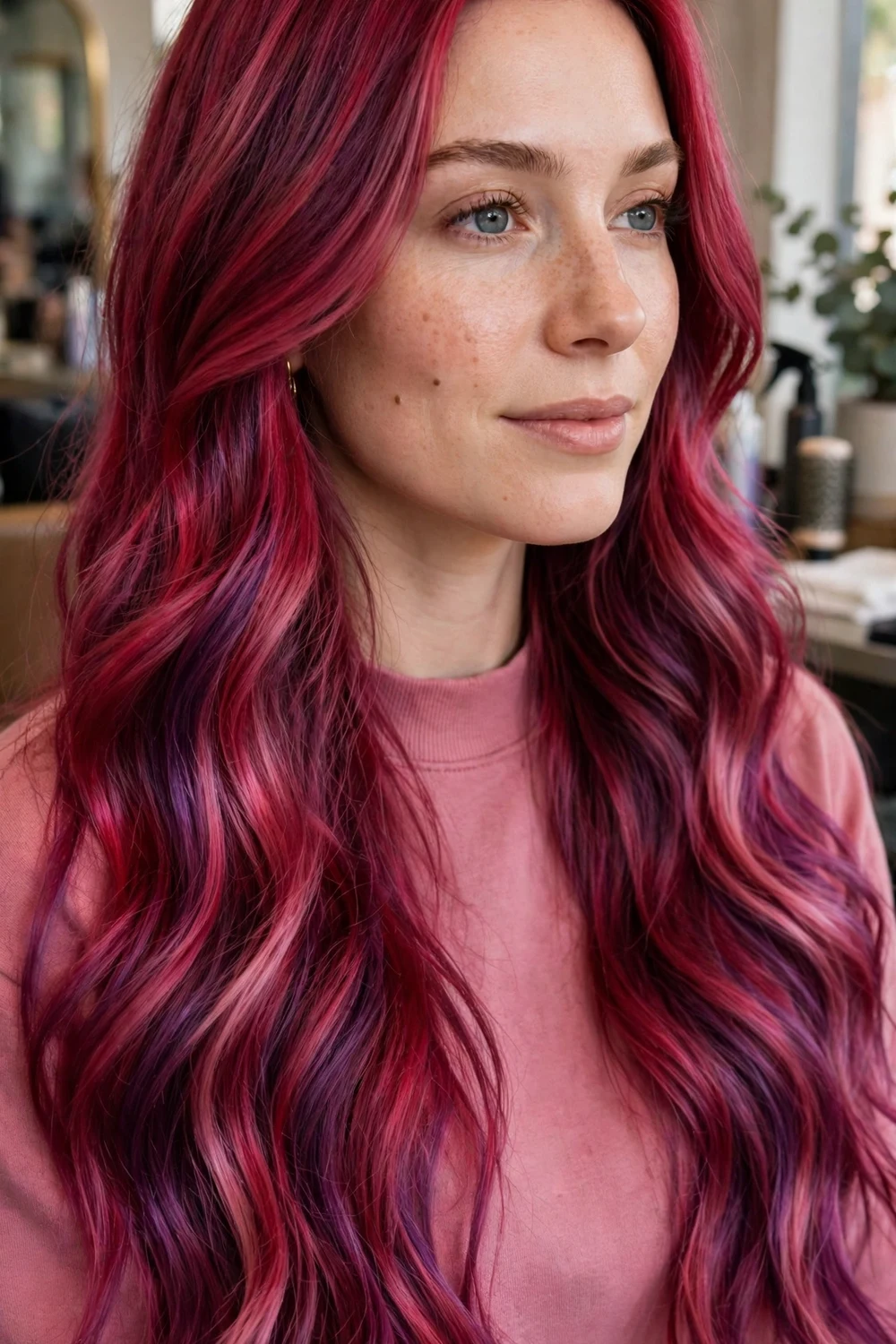
Raspberry red is a deep berry red with purple and pink tones. It suits cool and neutral undertones on medium and deep skin, and it gives a bright result that still has the depth to work on a darker base than cherry or scarlet need.
Plan for lightening on dark bases and a toning mask at home. Raspberry fades toward a softer berry pink, which many people like, but if you want the deep version to last, book the refresh gloss before you leave the first appointment.
Try this: Ask for a deeper raspberry at the root and a brighter one at the ends. The gradient adds length to the look and hides the fade at the root area.
Difficulty: High · Cost: $$$
25. Red Balayage on Brunette

Red balayage paints red through the mid-lengths and ends of a brunette base, with the root left natural or near-natural. Auburn, copper, and cherry balayage are all in use, so the red family can be matched to your undertone while the placement stays the same.
Balayage is the lowest upkeep route to red on this list. The painted pieces grow out without a hard line, and most people refresh the tone with a gloss at eight to twelve weeks and re-paint only two or three times a year.
Try this: Ask for the lightest red pieces to start below the cheekbone. That start point frames the face without putting the brightest color right at the root.
Difficulty: Medium · Cost: $$$
26. Red Highlights on Dark Hair

Red highlights add fine or chunky red pieces through dark hair. A brighter money piece at the front is often added to the same service, giving a strong face frame while the rest of the highlights stay finer and more spread out.
Highlights need less lightening overall than an all-over red, and the dark base keeps the result grounded as the red fades. Toning the highlights at six weeks keeps them red rather than orange-brown.
Try this: Choose highlight width before you sit down. Fine highlights read as a red tint in sun, while wider pieces read as clear red stripes in all light, and the two suit different goals.
Difficulty: Medium · Cost: $$
27. Red Gloss over Brunette
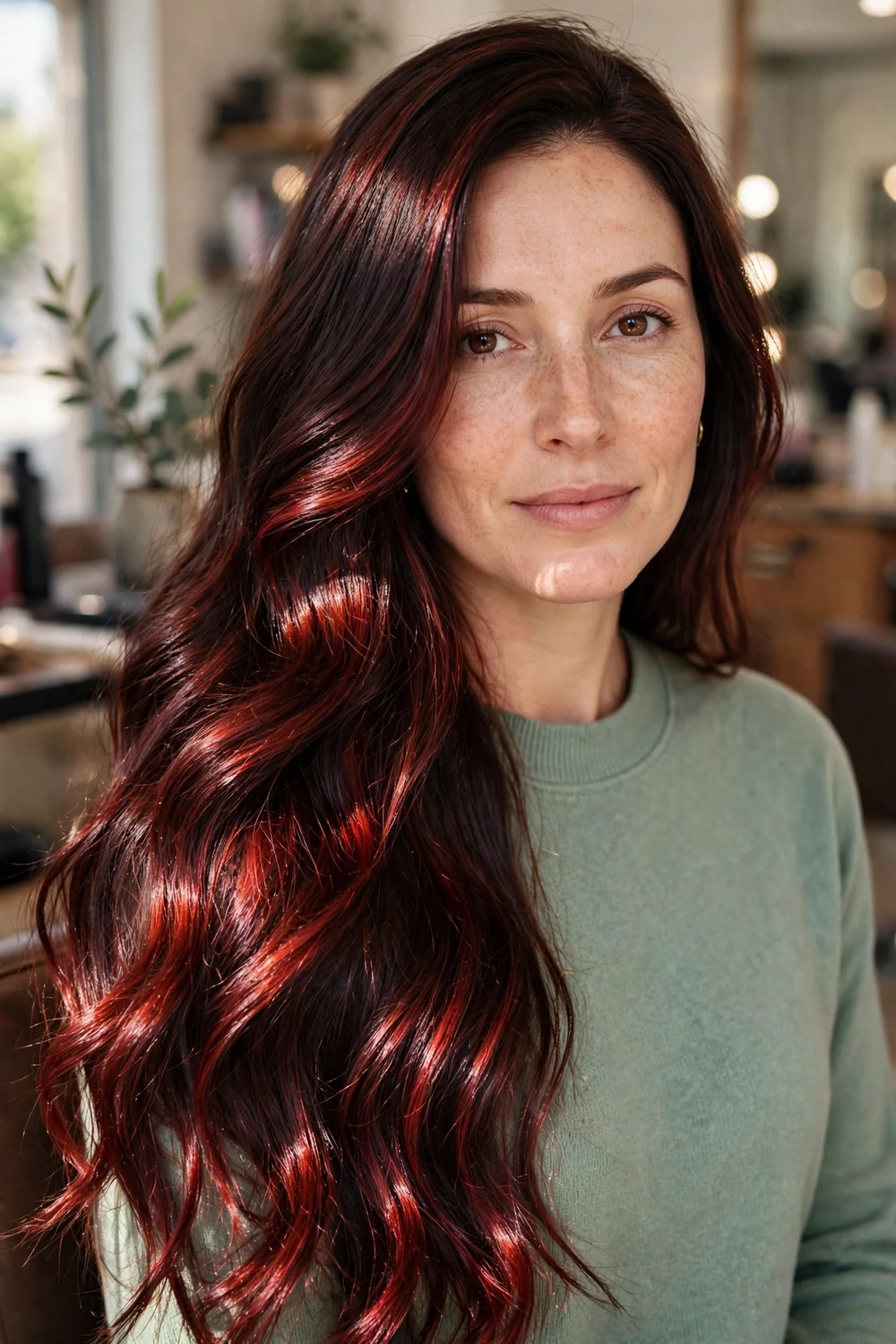
A red gloss over brunette adds a red tint and shine with no lightening and no permanent change. Indoors the hair reads brunette, and in sun the red tint shows. It is the trial route for anyone unsure about committing to red.
A gloss fades out fully in about four to six weeks, which is the point. There is no root line and no correction needed if you decide red is not for you. Salons also use this gloss to refresh faded all-over red between color visits.
Try this: Book the gloss in a stronger red than your end goal. A gloss is sheer, so the visible tint is always softer than the shade name suggests.
Difficulty: Low · Cost: $
28. Red Curls with Copper Dimension

Red curls with copper dimension place two or three red tones curl by curl, with brighter copper on the curls that sit on top and deeper red underneath. The placement follows the curl pattern, so the dimension stays visible when the hair dries naturally.
Curly hair is often drier, and color makes that more noticeable. Ask for the lightening to be kept to the pieces that need it, and use a deep conditioner weekly. The multi-tone mix fades evenly and can go eight weeks between glosses.
Try this: Ask your colorist to place the color on dry, styled curls. Placement on wet, stretched hair lands in different spots once the curls spring back.
Difficulty: Medium · Cost: $$
29. Red for Gray Blending

Red for gray blending uses demi-permanent auburn, copper, or mahogany tones to soften gray regrowth rather than cover it with a hard line. Gray strands take the red tone lighter than the pigmented hair, so they read as natural highlights through the red.
Demi-permanent color fades gradually, so there is no sharp root band as it grows. Refresh at five to six weeks, and choose a shade close to your natural level so the blend stays believable between visits.
Try this: Ask for the shade one level lighter than your old permanent color. Gray blending looks softer lighter, and the lighter tone is more forgiving as new gray comes in.
Difficulty: Low to Medium · Cost: $$
Frequently Asked Questions
How long does red hair color last before it fades?
Red hair color usually holds its strongest tone for four to six weeks. Red pigment leaves the hair faster than brown or blonde pigment, so most all-over reds need a gloss or toner refresh at four to six weeks, while balayage and gloss-only reds can go eight weeks or more between salon visits.
Can I go red without bleaching my hair?
Yes, if your target shade is darker than or close to your starting base. Dark and medium brown hair can take auburn, mahogany, burgundy, wine red, and red gloss shades without bleach. Bright shades such as scarlet, cherry, ruby, and blood orange need a lighter base, so dark hair needs lightening first.
Which red hair color suits cool undertones?
Cool undertones suit reds with blue, violet, or berry in them. Cherry red, ruby red, crimson red, red velvet, burgundy red, violet red, and raspberry red are the main cool options on this list. Warm reds such as copper, ginger, and cinnamon can make cool skin look flushed by comparison.
How often should I refresh red hair color?
Plan a gloss or toner refresh every four to six weeks for all-over reds, and every eight to twelve weeks for balayage, highlights, and gloss-only shades. At home, a color depositing conditioner once a week, cool rinse water, and fewer washes all slow the fade between visits.
Does red hair color cover gray hair?
Permanent red color can cover gray fully, while demi-permanent red blends gray so it reads as a lighter red highlight. Gray hair can resist color and fade faster, so many colorists pre-tone gray or use a slightly deeper red at the root. The gray blending idea on this list uses the demi-permanent route.
Final Thoughts
My advice is to choose the fade before you choose the shade. If you can get to a salon every four to six weeks, the bright and copper reds will stay strong and are worth the upkeep. If your visits are further apart, pick a deep red, a balayage, or a gloss route and let the grow-out work in your favor. For cold-weather depth, the winter red hair colors list shows how these same families read in deeper, glossier versions. Save two or three favorites from this list, take them to a consultation with a shade photo of your own hair, and let your colorist match the undertone to you.

