


A heart-shaped face is widest at the forehead and narrows to a smaller chin, so a pixie for this shape has a clear job: cover part of the forehead, keep the crown low, and put some width back at cheek or jaw level. Pixies that pile height on top or shave the sides bare do the opposite, which is why the versions below are chosen and cut differently from a standard pixie list.
Every idea here explains where its width sits and how its fringe handles the forehead, so you can match a cut to your hair texture and your styling time. If you are comparing face shapes, our edgy pixie haircuts for round faces and curly pixie haircuts for oval faces show how the same pixie family changes when the widest point of the face moves.
Key Takeaways
- Cover part of the forehead with a side sweep, rounded bangs, or curtain fringe to soften its width.
- Keep crown volume low. Height on top makes a wide forehead look wider.
- Add width low: jaw-length sides, cheek-level fullness, and ear-level waves support a narrow chin.
- The nape and back can go very short. Side fullness in front of the ears is the part to keep.
- Most of these cuts hold their balance for four to six weeks between trims.
The Three Rules Behind Every Cut Below
Rule one is fringe coverage. A diagonal sweep, a curved bang, or a curtain part all reduce the visible width of the forehead without a heavy blunt line. Rule two is a low crown. Texture is welcome on top, but lift and height are kept down, because vertical volume above a wide forehead stretches the top half of the face even further.
Rule three is low width. Cheek-level fullness, jaw-length front pieces, and waves concentrated at ear level all widen the lower outline. For general face-balancing background beyond short hair, hairstyles to slim a round face covers the opposite proportion problem, and short pixie haircuts for women with glasses is worth a look if frames are part of your daily picture.
1. Long Pixie with Chin-Length Front Pieces
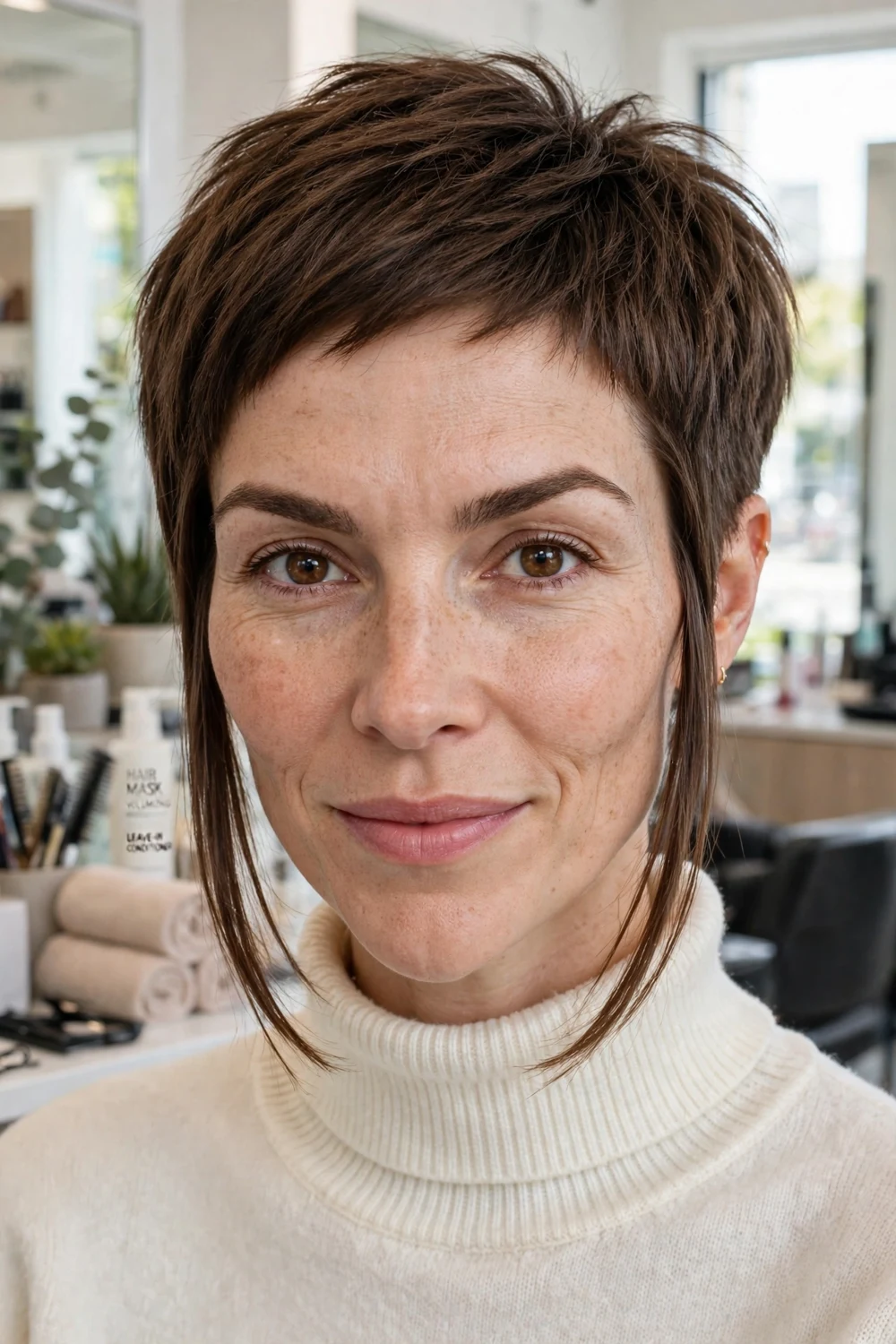
The front pieces are left long enough to reach the chin on both sides, while the back stays cropped and tidy. Those front lengths add width exactly where a heart-shaped face is narrowest, so the chin looks supported rather than pointed.
At home, plan on about 15 minutes of styling on a normal morning. The shape holds best with a trim every four to six weeks, and the low upkeep is mostly about keeping the outline clean rather than restyling it from scratch each day.
Try this: Keep the back trim on schedule even while the front grows. The contrast between a neat back and long front pieces is what holds the balance.
Difficulty: Easy | Cost: $$ | Time: 15 minutes
2. Side-Parted Pixie with Soft Fringe

A low side part sends a soft fringe diagonally across the forehead, covering part of its width. The lower sides stay smooth and close, so attention settles on the fringe line and the cheekbones instead of the widest point of the brow.
This cut works across a range of textures, with one adjustment: fine hair needs the layers kept a little longer so the ends stay full, while thick hair can take more weight out through the top. Daily styling runs about 10 minutes.
Try this: Part the hair while it is damp and dry it in place. A part trained daily for a week will start to fall that way on its own.
Difficulty: Easy | Cost: $ | Time: 10 minutes
3. Tapered Pixie with Fuller Sides

The nape tapers cleanly, but the sides above and in front of the ears keep more fullness than a standard taper. That side weight widens the lower half of the outline and stops the cut from looking top-heavy on a wider forehead.
For the salon visit, ask how the cut will grow out at week three and week six. A well-cut version keeps its outline as it lengthens, so you are booking maintenance trims rather than rescue appointments. Home styling takes about 10 minutes.
Try this: Ask your stylist to check the silhouette from the front in the mirror. The widest point of the hair should sit near the cheeks, level with or below the widest point of the forehead.
Difficulty: Easy | Cost: $ | Time: 10 minutes
4. Textured Pixie with Side-Swept Bangs

Choppy texture runs through the top in short layers, and longer bangs sweep to one side across the forehead. The sweep breaks the forehead into a smaller visible area, and the texture keeps the crown from forming one solid wide block.
Product needs stay small: one light styling cream or paste is enough for most hair types, worked through dry or nearly dry hair. Expect to spend about 10 minutes styling, with the finish set by your fingers rather than a brush for a softer result.
Try this: Define the texture on dry hair with a small amount of paste, pinching the ends of the bangs so the sweep holds its direction.
Difficulty: Easy | Cost: $ | Time: 10 minutes
5. Asymmetrical Pixie with Long Front Sweep
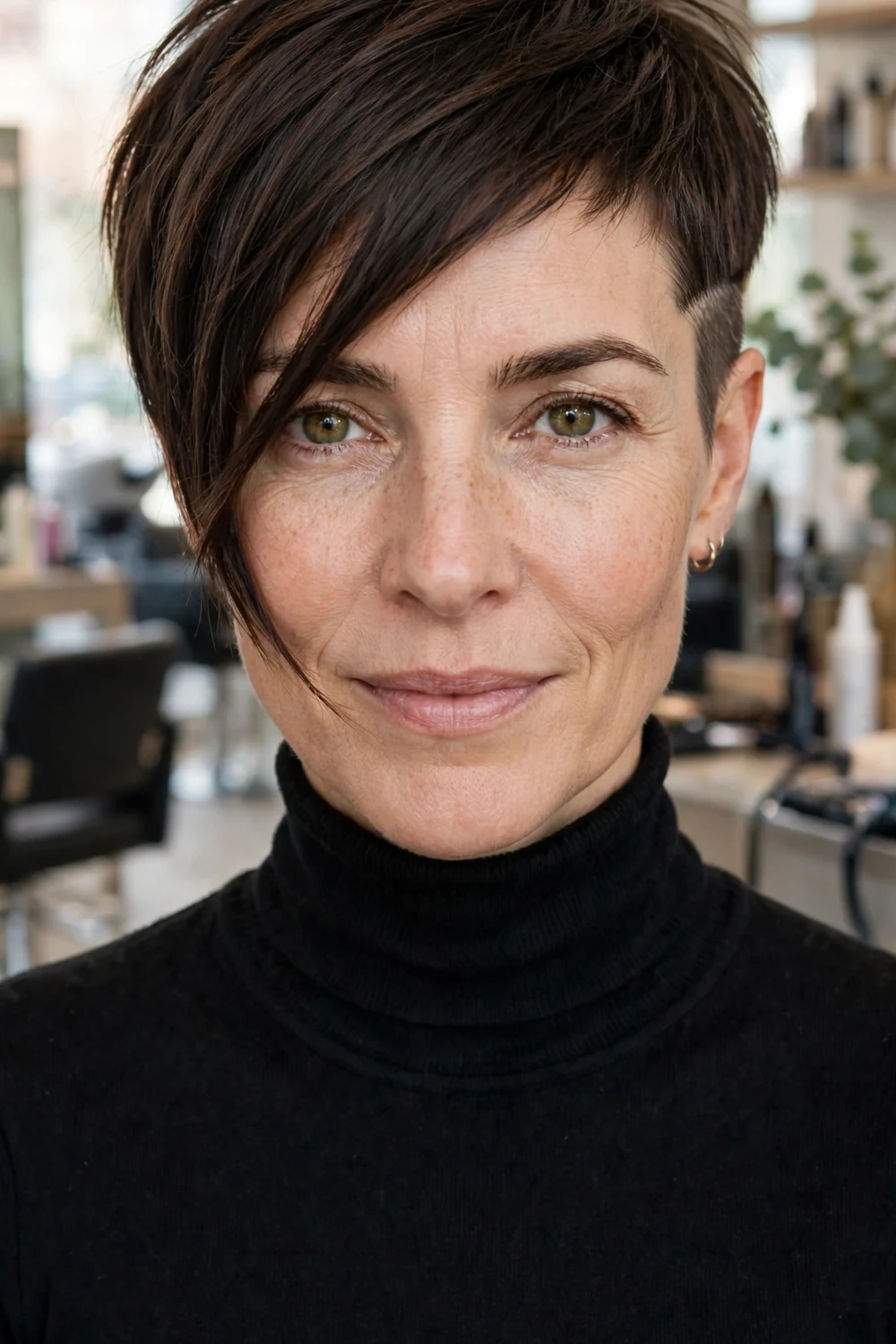
One side is cut shorter above the ear and the other keeps a long sweep that crosses the forehead and ends near the opposite cheekbone. The uneven outline draws the eye diagonally, which takes focus away from a straight-across wide forehead.
If your hair has a natural wave or curl, let the stylist cut to that pattern instead of straightening it first, so the length lands where it will actually sit. Straight hair can copy the same outline with point-cut ends. Styling runs about 10 minutes.
Try this: This shape needs its outline refreshed every four to five weeks. Once the short side grows out, the diagonal effect fades.
Difficulty: Medium | Cost: $$ | Time: 10 minutes
6. Pixie Bob with Jaw-Length Sides

Part pixie at the back and part bob at the sides, this hybrid keeps jaw-length pieces in front of the ears and a cropped nape behind. Jaw-level sides are the single most direct way to add width beside a narrow chin.
The trim cycle matters more than daily effort here. Short outlines show growth quickly at the nape and around the ears, so a tidy-up between full cuts keeps the shape looking deliberate. Day to day, styling is about 15 minutes.
Try this: If your chin is very pointed, ask for the side pieces to end right at the jaw rather than below it. Ends below the jaw pull the eye downward again.
Difficulty: Easy | Cost: $$ | Time: 15 minutes
7. Soft Wispy Pixie with Feathery Chin Pieces

Feathery layers soften every edge of this cut, and fine wispy pieces are left to brush the sides of the chin. The light pieces fill the narrow zone without bulk, and the soft fringe keeps the forehead from looking wide and bare.
At home, plan on about 10 minutes of styling on a normal morning. The shape holds best with a trim every four to six weeks, and the low upkeep is mostly about keeping the outline clean rather than restyling it from scratch each day.
Try this: Wispy pieces are cut conservatively at first. You can always take them shorter at the next visit once you see how they sit at home.
Difficulty: Easy | Cost: $ | Time: 10 minutes
8. Curly Pixie with Rounded Sides
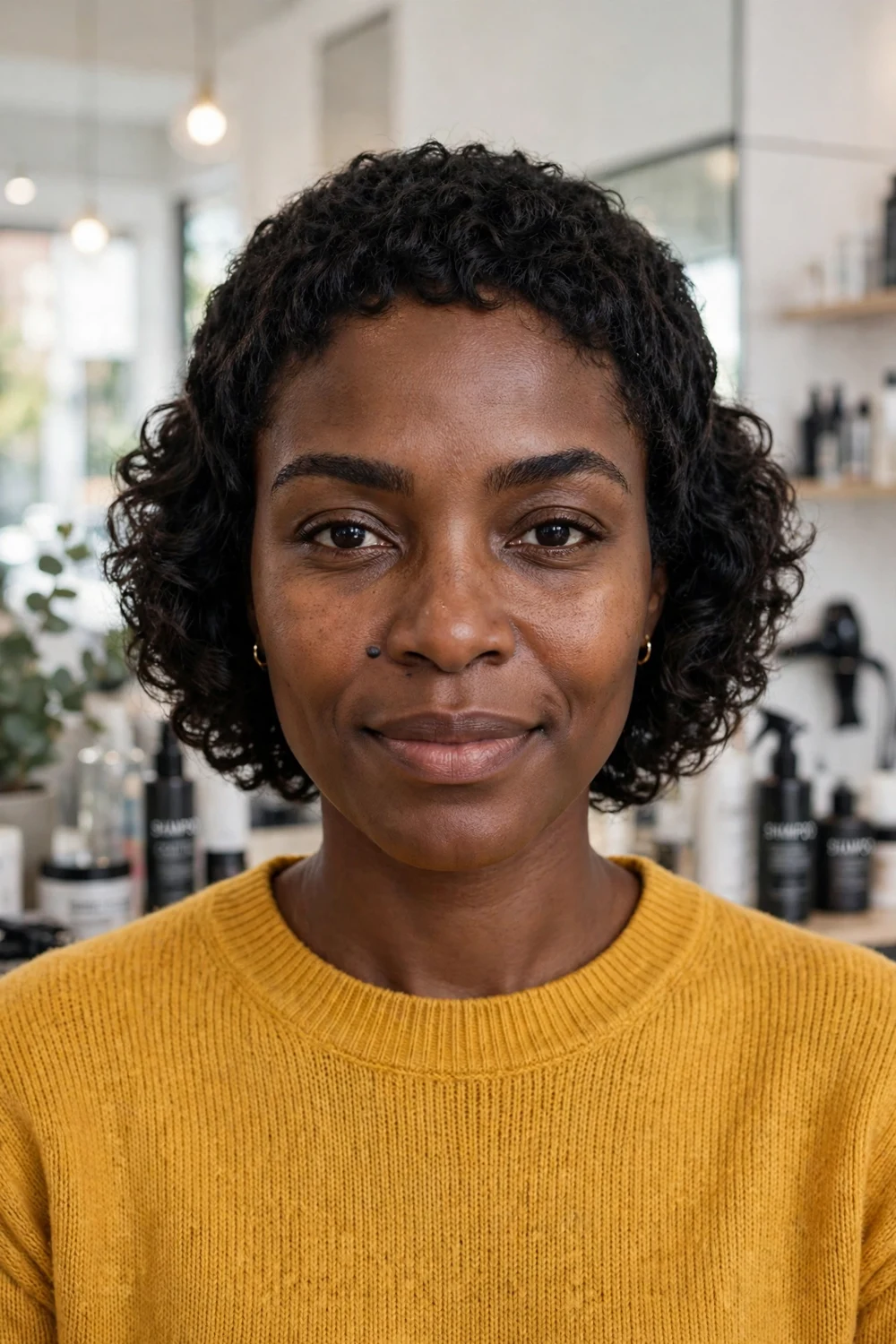
Natural curls form a rounded outline that stays widest at cheek level, with the top curls kept shorter and flatter. A rounded side profile adds the width a heart shape needs low on the face, while a flatter top avoids extra height over the forehead.
This cut works across a range of textures, with one adjustment: fine hair needs the layers kept a little longer so the ends stay full, while thick hair can take more weight out through the top. Daily styling runs about 15 minutes.
Try this: Have curls trimmed dry and in their natural pattern. A wet cut can leave the top shorter than intended once the curls spring back.
Difficulty: Medium | Cost: $$ | Time: 15 minutes
9. Feathered Pixie with Side Bang
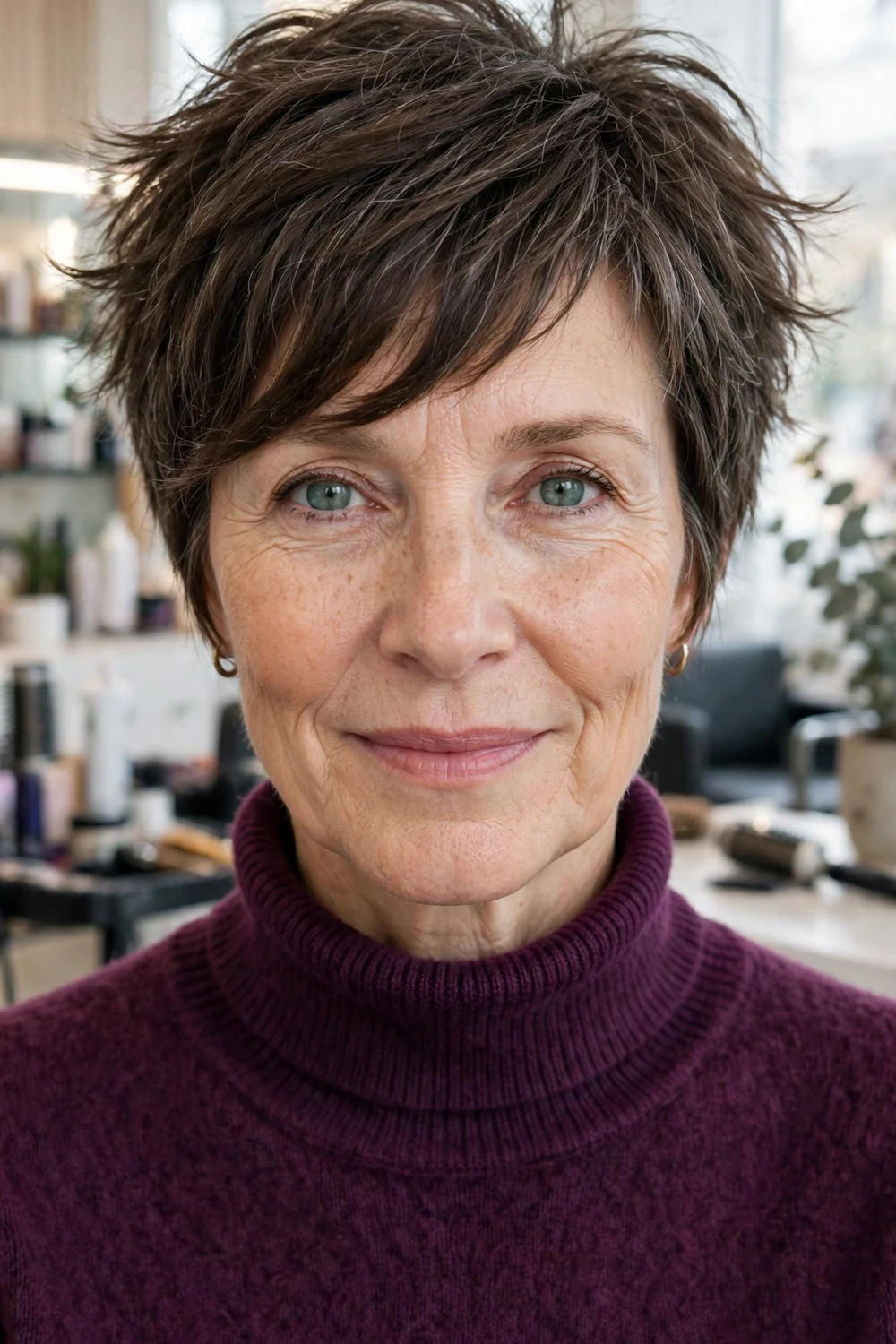
Feathered layers flip lightly outward at the sides, and a side bang covers one corner of the forehead. The outward flick at ear level widens the middle of the face, balancing a chin that tapers quickly below it.
For the salon visit, ask how the cut will grow out at week three and week six. A well-cut version keeps its outline as it lengthens, so you are booking maintenance trims rather than rescue appointments. Home styling takes about 10 minutes.
Try this: A small round brush or just fingertip drying outward at the sides sets the flick. Keep heat low on fine feathered ends.
Difficulty: Easy | Cost: $ | Time: 10 minutes
10. Pixie with Pointed Sideburn Pieces

Small pointed pieces are left in front of the ears and worn forward onto the cheeks. Those points add detail and width at cheekbone level, drawing the eye to the middle of the face instead of the forehead above or the chin below.
Product needs stay small: one light styling cream or paste is enough for most hair types, worked through dry or nearly dry hair. Expect to spend about 5 minutes styling, with the finish set by your fingers rather than a brush for a softer result.
Try this: Sideburn pieces grow out of shape quickly. A two-minute tidy with your stylist between cuts, or a careful trim following the original angle, keeps the points clean.
Difficulty: Easy | Cost: $ | Time: 5 minutes
11. Shaggy Bixie with Jaw-Level Layers

This bob-pixie mix carries shaggy layers that end around the jaw, with a cropped, textured crown worn flat rather than lifted. The shaggy lower layers are where the width sits, so the narrow lower face gains presence.
If your hair has a natural wave or curl, let the stylist cut to that pattern instead of straightening it first, so the length lands where it will actually sit. Straight hair can copy the same outline with point-cut ends. Styling runs about 15 minutes.
Try this: Shaggy layers suit wavy and thick hair well. On very fine hair, ask for fewer, longer layers so the jaw-level ends do not look stringy.
Difficulty: Medium | Cost: $ | Time: 15 minutes
12. French Bob Pixie Hybrid at the Jaw

The front and sides follow a jaw-length bob line, while the back is cut into a short pixie nape. From the front, the jaw-level line gives a heart-shaped face its missing width; from the back, the cut stays light and easy to dry.
The trim cycle matters more than daily effort here. Short outlines show growth quickly at the nape and around the ears, so a tidy-up between full cuts keeps the shape looking deliberate. Day to day, styling is about 15 minutes.
Try this: A blunt jaw line needs a trim every five to six weeks to stay level. Letting it grow past the jaw changes the balance of the whole cut.
Difficulty: Medium | Cost: $$ | Time: 15 minutes
13. Tapered Pixie with Low Crown Volume

Everything about this taper is kept low: the crown lies close, the top is short, and the sides keep a little length in front of the ears. Skipping crown height matters for heart shapes, because lift on top widens the look of the forehead further.
At home, plan on about 10 minutes of styling on a normal morning. The shape holds best with a trim every four to six weeks, and the low upkeep is mostly about keeping the outline clean rather than restyling it from scratch each day.
Try this: If your hair naturally lifts at the roots, dry the crown forward and down rather than back. Direction matters more than product for keeping volume low.
Difficulty: Easy | Cost: $ | Time: 10 minutes
14. Wispy Pixie with Round Bangs

Rounded bangs curve gently across the forehead and blend into longer temple pieces, while the rest of the cut stays soft and short. A curved bang line covers forehead width and echoes the softer lower outline of the face.
This cut works across a range of textures, with one adjustment: fine hair needs the layers kept a little longer so the ends stay full, while thick hair can take more weight out through the top. Daily styling runs about 10 minutes.
Try this: Round bangs should be cut to sit above the brows. Longer curved bangs close the eyes down and make the lower face look narrower by comparison.
Difficulty: Easy | Cost: $ | Time: 10 minutes
15. Choppy Pixie with Piecey Jaw Framing

Piecey choppy layers frame the jaw on both sides, with the pieces cut to kick slightly outward at the ends. The choppy top stays short and flat, so the framing pieces at the bottom carry the shape.
For the salon visit, ask how the cut will grow out at week three and week six. A well-cut version keeps its outline as it lengthens, so you are booking maintenance trims rather than rescue appointments. Home styling takes about 10 minutes.
Try this: Style the jaw pieces last, after the top is dry. A light bend outward with fingers and a warm dryer is enough; a curling iron can overdo the flick.
Difficulty: Medium | Cost: $ | Time: 10 minutes
16. Sleek Pixie with Diagonal Fringe

Worn smooth with a strong diagonal fringe, this pixie uses one clean angled line to divide the forehead. The sides are sleek and close at the top, then slightly fuller in front of the ears where the face begins to narrow.
Product needs stay small: one light styling cream or paste is enough for most hair types, worked through dry or nearly dry hair. Expect to spend about 10 minutes styling, with the finish set by your fingers rather than a brush for a softer result.
Try this: A shine spray used sparingly on the surface suits sleek cuts. Keep it off the roots so the diagonal fringe does not separate into strands.
Difficulty: Medium | Cost: $$ | Time: 10 minutes
17. Wavy Pixie with Ear-Level Fullness

Loose waves are concentrated at ear level, with the top waved flat and the nape kept short. Ear-level wave volume widens the face at its middle, which is the zone between a wide forehead and a narrow chin that needs support.
If your hair has a natural wave or curl, let the stylist cut to that pattern instead of straightening it first, so the length lands where it will actually sit. Straight hair can copy the same outline with point-cut ends. Styling runs about 15 minutes.
Try this: Scrunch waves into damp hair and let them dry mostly undisturbed. Brushing dried waves out will push the volume upward toward the crown.
Difficulty: Medium | Cost: $ | Time: 15 minutes
18. Layered Pixie with Curtain-Style Fringe
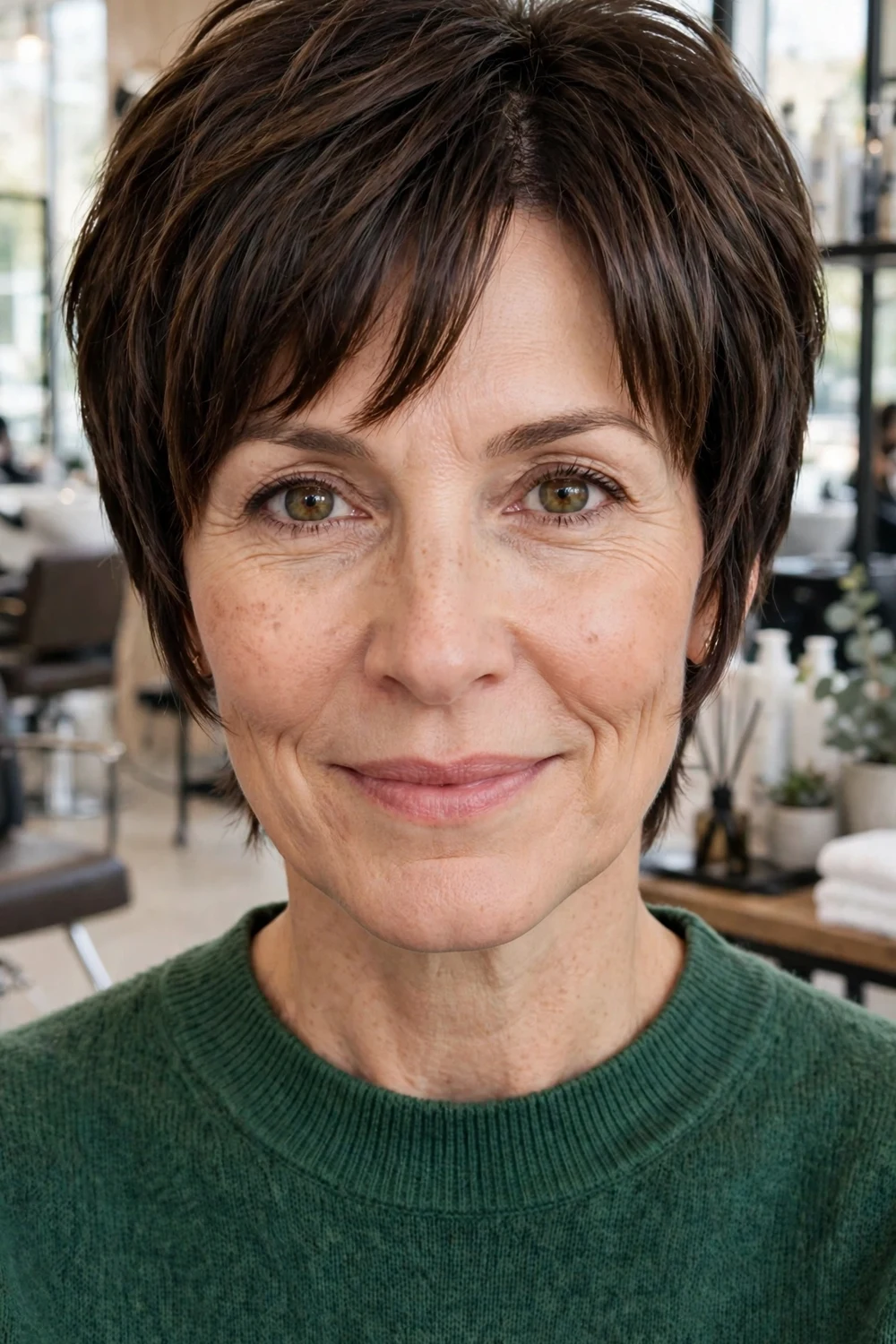
The fringe parts in the middle and falls in two soft curtains that end at the cheekbones, over short blended layers. Curtain pieces cover the outer corners of a wide forehead and land at cheek level, where their ends add width.
The trim cycle matters more than daily effort here. Short outlines show growth quickly at the nape and around the ears, so a tidy-up between full cuts keeps the shape looking deliberate. Day to day, styling is about 10 minutes.
Try this: Curtain fringe needs a center part trained while damp. If you usually wear a side part, expect a week of adjustment before it settles.
Difficulty: Easy | Cost: $ | Time: 10 minutes
19. Tousled Pixie with Longer Nape Pieces

The top is tousled and kept low, and the nape keeps longer soft pieces that brush the neck. Longer back pieces widen the outline low and behind, which counters a chin that comes to a point at the front.
At home, plan on about 10 minutes of styling on a normal morning. The shape holds best with a trim every four to six weeks, and the low upkeep is mostly about keeping the outline clean rather than restyling it from scratch each day.
Try this: This is a relaxed grow-out shape. The nape pieces still look intentional as they lengthen, so you can stretch appointments to seven or eight weeks.
Difficulty: Easy | Cost: $ | Time: 10 minutes
20. Rounded Pixie with Full Cheek-Level Sides

The outline is rounded and deliberately full at cheek level, with a short soft fringe and a close, neat nape. Maximum width at the cheeks is the goal here: it is the midpoint that balances a wide forehead above and a tapered chin below.
This cut works across a range of textures, with one adjustment: fine hair needs the layers kept a little longer so the ends stay full, while thick hair can take more weight out through the top. Daily styling runs about 10 minutes.
Try this: Ask for the sides to be scissor-cut rather than clippered. Scissor work keeps the soft fullness that this rounded shape depends on.
Difficulty: Easy | Cost: $ | Time: 10 minutes
21. Long Pixie with Voluminous Lower Sides

Length stays through the lower sides and front, styled with volume from the ears down, while the crown stays smooth and close. Putting the volume low is the reverse of a standard pixie, and that reversal is exactly what a heart-shaped face asks for.
For the salon visit, ask how the cut will grow out at week three and week six. A well-cut version keeps its outline as it lengthens, so you are booking maintenance trims rather than rescue appointments. Home styling takes about 15 minutes.
Try this: Blow-dry the crown smooth first, then add movement only below ear level with a brush or your fingers. Order matters, because crown volume is hard to remove once dried in.
Difficulty: Medium | Cost: $$ | Time: 15 minutes
| Idea | Difficulty | Cost | Daily Time |
|---|---|---|---|
| 1. Long Pixie with Chin-Length Front Pieces | Easy | $$ | 15 minutes |
| 2. Side-Parted Pixie with Soft Fringe | Easy | $ | 10 minutes |
| 3. Tapered Pixie with Fuller Sides | Easy | $ | 10 minutes |
| 4. Textured Pixie with Side-Swept Bangs | Easy | $ | 10 minutes |
| 5. Asymmetrical Pixie with Long Front Sweep | Medium | $$ | 10 minutes |
| 6. Pixie Bob with Jaw-Length Sides | Easy | $$ | 15 minutes |
| 7. Soft Wispy Pixie with Feathery Chin Pieces | Easy | $ | 10 minutes |
| 8. Curly Pixie with Rounded Sides | Medium | $$ | 15 minutes |
| 9. Feathered Pixie with Side Bang | Easy | $ | 10 minutes |
| 10. Pixie with Pointed Sideburn Pieces | Easy | $ | 5 minutes |
| 11. Shaggy Bixie with Jaw-Level Layers | Medium | $ | 15 minutes |
| 12. French Bob Pixie Hybrid at the Jaw | Medium | $$ | 15 minutes |
| 13. Tapered Pixie with Low Crown Volume | Easy | $ | 10 minutes |
| 14. Wispy Pixie with Round Bangs | Easy | $ | 10 minutes |
| 15. Choppy Pixie with Piecey Jaw Framing | Medium | $ | 10 minutes |
| 16. Sleek Pixie with Diagonal Fringe | Medium | $$ | 10 minutes |
| 17. Wavy Pixie with Ear-Level Fullness | Medium | $ | 15 minutes |
| 18. Layered Pixie with Curtain-Style Fringe | Easy | $ | 10 minutes |
| 19. Tousled Pixie with Longer Nape Pieces | Easy | $ | 10 minutes |
| 20. Rounded Pixie with Full Cheek-Level Sides | Easy | $ | 10 minutes |
| 21. Long Pixie with Voluminous Lower Sides | Medium | $$ | 15 minutes |
More Ideas to Explore
Frequently Asked Questions
What makes a pixie work on a heart-shaped face?
Three things: the forehead gets partly covered by a fringe or sweep, the crown stays low rather than lifted, and some width sits at cheek or jaw level. Cuts that do all three balance a wide forehead against a narrow chin.
Should heart-shaped faces avoid volume on top?
High crown volume usually widens the look of the forehead, so most cuts in this list keep the top flat, forward, or smooth. Texture on top is fine; height is the part to keep in check.
Are bangs a good idea for a wide forehead?
Yes, soft bangs are one of the simplest tools for this face shape. Side-swept, rounded, and curtain-style fringes all cover part of the forehead width. Very short blunt bangs cover less and can leave the forehead looking wider by comparison.
How short can the sides go on a heart-shaped face?
The back and nape can go very short without a problem. At the sides, keeping a little fullness in front of the ears helps the balance. Fully shaved sides remove width from the lower face and put all the emphasis back on the forehead.
Which of these cuts suits fine hair?
Feathered, wispy, and side-parted cuts with soft fringe work well on fine hair, because they rely on fringe and outline rather than thickness at the sides. Shaggy and jaw-level layered cuts need more hair to keep their ends looking full.
How often do heart-shaped pixies need trimming?
Four to six weeks keeps the fringe length and side balance in place. Shapes with longer front or nape pieces grow out more gracefully and can stretch to seven or eight weeks.
Final Thoughts
For a heart-shaped face, a pixie is a proportion tool: fringe across the forehead, a calm crown, and width restored at the cheeks or jaw. Choose the idea that matches your texture first, then check its silhouette from the front in the salon mirror before the final trim. The widest point of the hair should sit at or below cheek level. With that one check done, any of the cuts above will sit in balance as it grows out.

